This site is supported by our readers. We may earn a commission, at no cost to you, if you purchase through links.

Most kids fall in love with snakes before their parents feel ready for one. That gap—between a child’s enthusiasm and a parent’s comfort—is exactly where the right setup makes all the difference. A well-chosen snake enclosure for kids doesn’t just house a reptile; it turns a nervous “maybe” into a confident “yes.”
The good news is that today’s options make safe, low-stress snake keeping more accessible than ever. Knowing what to look for in size, materials, temperature control, and daily maintenance puts you firmly in charge of the experience.
Table Of Contents
Key Takeaways
- The right enclosure size, secure lid, and safe materials are the foundation of a setup that keeps your snake healthy and your kids safe.
- Nailing the temperature gradient and humidity range for your specific snake species matters more than any accessory you can buy.
- Teaching kids calm, two-handed handling and building a hand-washing habit after every session cuts the real risks down to almost nothing.
- A simple weekly routine—spot cleaning, fresh water, and quick gear checks—is all it takes to keep the whole setup running smoothly long-term.
Key Features of Snake Enclosures for Kids
Picking the right enclosure is honestly the most important decision you’ll make as a snake owner. A good setup keeps your snake healthy and makes daily care way easier for your whole family.
The substrate you choose plays a bigger role than most people expect—proper snake cage maintenance covers what actually works and why it matters.
Here’s what to look for before you buy.
Minimum Tank Sizes for Juvenile and Adult Snakes
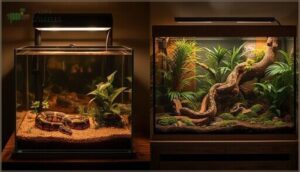
Size matters more than most first-time owners expect. A hatchling ball python fits fine in a 10-gallon tank, but you’ll tank up to a 4×2×2-foot enclosure once it’s fully grown. Growth planning from day one saves money and stress.
Match your species specifics to realistic enclosure requirements — corn snakes and ball pythons fit standard reptile tanks nicely, making enclosure sizing and enclosure footprint easy to manage at home. Be aware that larger snakes may require specific enclosure size requirements to safely accommodate their full length and natural behaviors.
Importance of Secure Lids and Proper Ventilation
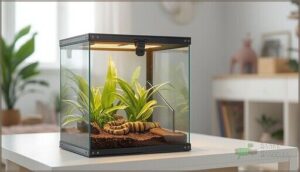
Once you’ve got the right tank size sorted, your next job is keeping your snake in it — and keeping little hands out.
Here’s what actually matters for escape prevention and child safety:
- Lids need to latch on every side, not just clip loosely in the middle
- Ventilation holes balance air quality and humidity balance without creating gaps snakes squeeze through
- Secure lids double as a disease barrier, lowering Salmonella risk for kids
- Good airflow helps reptile health and hygiene by drying damp spots between cleanings
Maintaining also plays a key role in keeping snakes healthy and safe for children.
Safe Materials for Child-friendly Enclosures
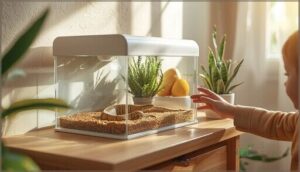
The lid keeps your snake in — but the materials keep your kids safe. Non-toxic plastics like food-grade polypropylene and acrylic tank enclosures won’t leach chemicals if little hands wander. Sealed wood with low-VOC coatings and child-safe coatings cut down on fumes in bedrooms. PVC enclosures and glass tank enclosures resist moisture well. Whatever reptile enclosure materials you choose, smooth edges and non-toxic finishes matter most.
Essential Accessories—hides, Branches, and Water Bowls
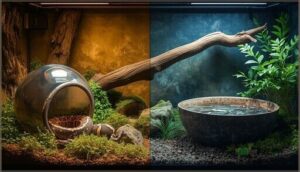
Good materials set the stage, but the right accessories make a snake feel at home. Here’s what every kid-friendly habitat setup needs:
- Hide Placement: One hide on the warm side, one on the cool side
- Branch Stability: Firmly anchored so it won’t shift under the snake’s weight
- Water Bowl Design: Heavy, shallow, and cool-side positioned for fresh water
- Material Choices: Opaque resin hides and smooth reptile branches
These four details cover the basics of solid reptile husbandry inside any terrarium.
Easy-to-clean Designs for Family Use
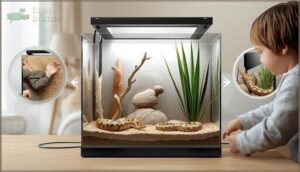
Cleaning a snake enclosure doesn’t have to be a Sunday project. Look for a terrarium with Front Access doors, Nonporous Surfaces, and Removable Components like slide-out substrate trays and clip-in hides. These features turn your habitat setup into a five-minute job instead of an hour-long hassle.
Smart Substrate Management and tight cable routing make these maintenance tips especially practical for families with a children’s python.
Maintaining Safe Temperature and Humidity
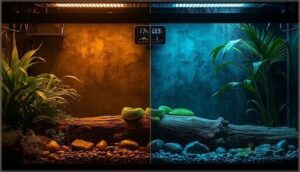
Getting the temperature and humidity right is probably the most important part of keeping a snake healthy. Too hot, too cold, or too dry — any of those can cause real problems fast. Here’s what you need to know to keep things dialed in.
Ideal Temperature Gradients for Common Pet Snakes
Every snake runs on temperature — get the gradient wrong and your pet pays the price. Think of your snake enclosure like a two-zone comfort map your snake navigates all day.
- Ball Python Needs: 75–85°F gradient, basking surface up to 92°F
- Corn Snake Ranges: cool end 75°F, basking zone around 90°F
- Kingsnake Zones: 70°F cool side, 85–90°F warm end
- Boa Temperatures: 75–80°F cool, 86–90°F basking area
- Thermal gradient basics: always use a reliable heat source with a thermostat
Reptile keeping gets easier once these numbers become second nature.
A solid snake terrarium heating options comparison can help you match the right heat source to your setup before you ever plug anything in.
Monitoring and Controlling Humidity Levels
Humidity quietly does a lot of heavy lifting in your snake’s terrarium. Most pet snakes thrive around 40–60%, while ball pythons need closer to 50–60% for solid Shedding Support. During a shed, bump it to 70–75%.
For Increasing Methods, try damp sphagnum moss or a wide water bowl on the warm side. Substrate Impact is real — coco husk holds moisture far better than sand, giving Snake Enclosures steadier humidity with less effort.
Tools for Accurate Temperature and Humidity Tracking
Guessing at temperature is a recipe for a sick snake. The right tools make health monitoring simple and even fun for kids.
Here are the essential tools for maintaining the ideal reptile environment:
- Digital Hygrometers with probe placement at snake level give real readings, not wall readings.
- Infrared Guns let adults instantly check hot spots without opening the enclosure.
- Smart Sensors send humidity and temperature alerts straight to your phone.
Maintaining ideal reptile environment conditions has never been easier.
Preventing Overheating and Maintaining Air Quality
A glass tank near a sunny window can spike to deadly temperatures within minutes — no joke. Smart heat source placement matters: mount overhead lamps outside the enclosure and keep heat mats under just one-third of the floor to preserve a healthy thermal gradient.
Room cooling, cross ventilation, and mold prevention all work together, cutting waste gas buildup and keeping reptile enclosure ventilation and heating balanced safely.
Safe Handling and Interaction Tips

Getting your snake used to being handled takes patience, but it’s totally worth it. The good news is that with the right approach, even kids can learn to interact with a snake safely and confidently.
Here are the key things every family should know before picking the snake up.
Adult Supervision During Child-snake Interactions
Focused supervision isn’t optional — it’s the whole foundation of safe handling and interaction with snakes. Before your child touches the snake, set clear rules: no grabbing the head, no squeezing.
For python care and maintenance routines, keep handling separate from feeding time. Modeling behavior matters too — show calm, two-handed holds.
And always have emergency preparedness basics ready, like your vet’s number nearby.
Recognizing Signs of Snake Stress or Discomfort
Even with close supervision in place, knowing how your python feels is half the battle in good pet care.
Watch for these stress signals inside the snake enclosure:
- Defensive posture — S-shaped coil, head raised, neck pulled back
- Escape behavior — nose rubbing against glass or lid
- Feeding changes — sudden refusal of meals
- Physical indicators — snout scuffs or stuck shed patches
Teaching Kids Gentle Handling Techniques
Once you know your snake’s stress signals, teaching kids the right moves comes naturally.
For safe handling and interaction with snakes, show children how to support the snake’s body with both hands and keep movements slow and steady. Start with 5-10 minute sessions, two or three times a week. That gentle touch builds real snake comfort — and kid confidence too.
Hygiene Practices to Prevent Salmonella Transmission
Gentle handling is just half the equation — good hygiene closes the loop on reptile care safety. After every reptile handling session, wash hands with soap and water for at least 20 seconds. Salmonella prevention isn’t optional with pet reptile safety and handling.
Good hygiene closes the loop on reptile safety — always wash hands for 20 seconds after handling
- Skip kitchen sinks for enclosure sanitization
- Use bleach solution for surface disinfection
- Kids under 5 should avoid direct snake contact
Hand hygiene protects everyone.
Top 6 Snake Enclosure Products for Kids
Now that you know what makes a good snake enclosure, it’s time to look at some solid options worth your attention.
These six products cover the key bases — space, heat, humidity, and lighting — so you’re not left guessing. Here’s what made the cut.
1. Reptizoo Large Reptile Terrarium Tank
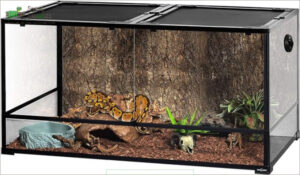
If your kid needs serious space to explore, the REPTI ZOO 120-gallon terrarium delivers exactly that. Its 48″ x 24″ x 24″ tempered glass build gives snakes room to stretch, hide, and actually behave like snakes.
The front sliding doors make feeding and spot-cleaning easy without startling your pet from above. Safety-wise, the anti-escape buckle and front door lock are genuinely reassuring when curious kids are nearby.
Just note it weighs over 90 pounds, so plan your setup spot before assembly.
| Best For | Reptile owners who want a spacious, secure home for larger pets like bearded dragons, snakes, or tortoises. |
|---|---|
| Brand | REPTI ZOO |
| Material | Tempered Glass |
| Weight | 90.8 lbs |
| Reptile Compatible | Yes |
| Easy Setup | Front sliding doors |
| Amphibian Compatible | Yes |
| Additional Features |
|
- Roomy 120-gallon space gives reptiles plenty of room to move and behave naturally
- Front sliding doors make feeding and cleaning easy without stressing your pet
- Anti-escape buckle and front door lock keep things secure, especially around kids
- At 90 pounds, you’ll need a second person and a solid plan before moving it
- Some users ran into assembly headaches or shipping damage out of the box
- The front door lock has been hit or miss for a few buyers
2. Vivosun Reptile Heating Pad Thermostat Combo
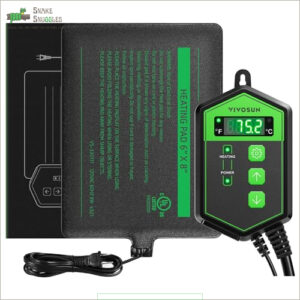
Temperature control doesn’t have to be complicated, and the Vivosun Reptile Heating Pad and Thermostat Combo proves it. The under-tank pad sticks to the outside bottom of the glass, so there’s no exposed heat source your child can accidentally touch.
The digital thermostat keeps the warm side locked between 40–108°F, cutting power once it hits your target temp. It’s low-wattage, easy to read, and genuinely takes the guesswork out of keeping your snake comfortable and safe.
| Best For | Parents and beginner reptile owners who want simple, safe temperature control for small snakes, lizards, or turtles. |
|---|---|
| Brand | VIVOSUN |
| Material | Not specified |
| Weight | 1.23 lbs |
| Reptile Compatible | Yes |
| Easy Setup | 3M adhesive mount |
| Amphibian Compatible | Yes |
| Additional Features |
|
- The digital thermostat cuts power automatically, so you’re not constantly watching the temp yourself
- IP67 water-tight rating and UL certification give you peace of mind about safety
- Super easy to set up—just stick it on and plug it in
- Not a great fit for large enclosures or aquariums
- Some users say temps aren’t always spot-on, so a backup thermometer is a smart idea
- The 3M adhesive can lose its grip over time, especially on certain surfaces
3. Fluker’s Ceramic Heat Emitter
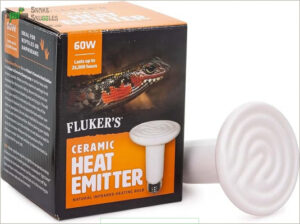
Infrared heat makes all the difference when you’re setting up a snake’s home. Fluker’s Ceramic Heat Emitter offers steady warmth without glaring light, so your snake can bask day or night—and your child can watch without bedtime disruption.
The 60-watt model fits most 20-gallon tanks and pairs with a clamp lamp for safe mounting. It’s tough, lasts years, and resists humidity.
Add a thermostat and digital thermometer for easy monitoring, and you’ve got a reliable heat source that’s safe for family spaces.
| Best For | Reptile and amphibian owners who need a 24-hour heat source that won’t disturb their pet’s natural light cycle. |
|---|---|
| Brand | Fluker’s |
| Material | Plastic |
| Weight | 6.4 oz |
| Reptile Compatible | Yes |
| Easy Setup | Clamp lamp ready |
| Amphibian Compatible | Yes |
| Additional Features |
|
- Emits steady infrared heat without any light, so it works around the clock without stressing your animal
- The large circular design gives a wider basking area, which is great for bigger reptiles
- Holds up well over time and handles humidity without breaking down fast
- At 60 watts, it may not cut it for larger enclosures or heat-hungry species
- You’ll need to buy a separate clamp lamp fixture to use it—it doesn’t come ready to hang
- Heat output can vary depending on how often it runs, so lifespan isn’t guaranteed
4. Zoo Med Reptisun LED Hood
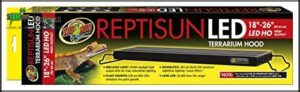
Good lighting does more than just brighten a tank—it keeps plants alive, lets your kid watch their snake at night, and creates a natural day-night rhythm that snakes actually thrive on.
The Zoo Med Reptisun LED Hood covers all three. Its 6500K daylight LEDs provide bright, natural-looking light, while red LEDs support live plants and a soft blue LED lets kids observe nighttime behavior without disturbing the snake.
With a 20,000-hour lifespan, you won’t be swapping bulbs every few months.
| Best For | Parents and hobbyists who want a single light that supports live plants, daytime viewing, and nighttime observation without disrupting their snake’s natural rhythm. |
|---|---|
| Brand | Unnamed |
| Material | Stainless Steel |
| Weight | 14.4 oz |
| Reptile Compatible | Yes |
| Easy Setup | Adjustable legs |
| Amphibian Compatible | Yes |
| Additional Features |
|
- The 6500K daylight LEDs and red grow lights actually keep live plants thriving, not just surviving
- A separate blue night light means kids can watch nocturnal behavior without stressing the snake
- At 20,000 hours, you’re looking at years of use before you even think about a replacement
- The single switch for red/white and white lights together is a bit clunky to manage
- It can slide around if you’re not careful about positioning, which gets annoying fast
- Not a great fit for misted enclosures—the packaging itself warns to keep it dry
5. Zilla Digital Reptile Terrarium Power Timer
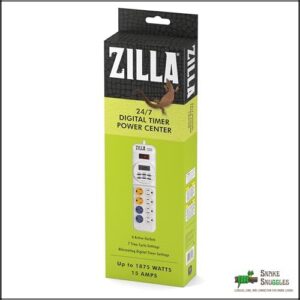
Think of the Zilla Digital Power Timer as the brain behind your kid’s snake habitat. Instead of remembering to flip switches every morning and night, you just program it once and let it run.
It controls 8 outlets total — four that cycle on a day/night schedule and four that stay on constantly for gear like thermostats. It’s rated at 1,875 watts, fits most standard setups, and keeps lights and heat running on a consistent schedule automatically.
| Best For | Parents setting up a reptile habitat who want automatic day/night control without having to manually adjust lights and heat every day. |
|---|---|
| Brand | Unnamed |
| Material | Plastic |
| Weight | 1 lb |
| Reptile Compatible | Yes |
| Easy Setup | LCD programming |
| Amphibian Compatible | Yes |
| Additional Features |
|
- Programs once and handles day/night cycling on its own — no more remembering to flip switches
- Eight outlets gives you room for lights, heat mats, thermostats, and more all in one place
- Backup battery means a power blip won’t wipe your whole schedule
- A handful of users ran into confusing setup and programming out of the box
- Some reported random resets that required reprogramming from scratch
- Only 15 amps of capacity, so it won’t cut it for larger or more complex setups
6. Repti Zoo Reptile Mister Fogger System
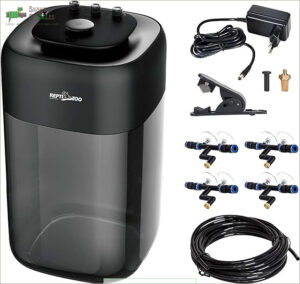
Keeping humidity steady is one of those things that sounds simple until you’re manually spraying the tank twice a day. The Repti Zoo TR05 takes that off your plate.
Its 10-liter tank connects up to 20 nozzles, and the 360-degree spray head with timed misting keeps levels right around that 50% sweet spot your snake needs.
The super-quiet pump won’t startle kids or the snake, and the auto shut-off kicks in when water runs low — no burnt-out pump to worry about.
| Best For | Reptile and amphibian owners who want to automate humidity control across one or multiple terrariums without the hassle of manual misting. |
|---|---|
| Brand | REPTI ZOO |
| Material | Not specified |
| Weight | 10.53 lbs |
| Reptile Compatible | Yes |
| Easy Setup | Timed spray system |
| Amphibian Compatible | Yes |
| Additional Features |
|
- Huge 10L tank means fewer refills, and connecting up to 20 nozzles makes it easy to run multiple enclosures at once
- The timed spray function keeps humidity consistent without you having to think about it
- Super-quiet pump won’t stress out your animals or anyone else in the room
- Setup needs to be done carefully — a wrong move and you could end up with flooding or nonstop spraying
- Nozzles and the tank require regular cleaning or they’ll clog and get gross fast
- Timer issues have been a complaint from some users, so it’s worth keeping an eye on it early on
Routine Care and Maintenance for Kid-Friendly Enclosures
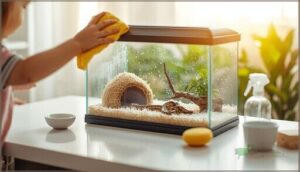
Keeping a snake healthy isn’t complicated, but it does take a little consistency. From cleaning routines to vet visits, the right habits make all the difference — especially when kids are involved.
Here’s what you need to stay on top of to keep the enclosure safe and your snake thriving.
Cleaning Schedules and Safe Disinfectants
A clean enclosure is the backbone of good reptile care. For daily cleaning routines, spot-clean feces and shed skin as soon as you see them — it takes under 10 minutes.
Monthly, do a full deep clean using safe disinfectant options like diluted bleach (1:10 ratio) or chlorhexidine.
For kid safety, let adults handle disinfectants while kids tackle safer tasks. Always wash hands after.
Regular Feeding and Water Replacement
Once the enclosure is clean, feeding and water care become your next daily rhythm. Getting these right keeps your python healthy and makes reptile care genuinely manageable for kids.
- Follow feeding schedules — juveniles eat every 5–7 days, adults every 10–14.
- Match prey size to the snake’s widest point for safe meal planning.
- Use tongs for food safety and child-snake food interaction.
- Replace fresh water every 1–2 days for proper hydration monitoring.
- Log every meal to track python health changes over time.
Checking for Wear or Damage in Enclosure Components
Beyond feeding routines, your snake enclosure itself needs regular eyes-on checks. Small problems — sealant failure along wooden seams, frame warping from humidity, or ventilation issues blocking airflow — can quietly snowball into bigger headaches.
Monthly walkthroughs keep your reptile housing safe and sound.
| Component | What to Check |
|---|---|
| Glass/Acrylic Panels | Chips, cracks, cloudy film |
| Silicone Seals | Peeling, bubbling, hairline gaps |
| Screen Lids | Bowing, frayed mesh, loose latches |
| Heating Elements | Burn marks, electrical safety hazards |
| Hides and Décor | Material deterioration, cracks, rust |
Scheduling Veterinary Checkups and Monitoring Health
Your snake also needs a yearly vet visit for a full reptile health and wellness checkup — weight, skin, eyes, the works. New snakes should see a reptile vet right away to catch any hidden issues early.
Keep a simple pet journal to track feedings, sheds, and behavior. That record makes vet visit schedules easier and gives your vet real, useful data.
Frequently Asked Questions (FAQs)
Do snakes prefer small enclosures?
No, not even close. Snakes actually thrive with room to roam — research shows they prefer larger terrariums for exploring and stretching.
Good habitat design with snug hides satisfies their snake space needs without cramping their world.
What age are snakes safe for kids?
Age restrictions matter here. Most health agencies say kids under 5 shouldn’t handle snakes at all.
From age 5 onward, supervised interaction with calm species is generally considered safe with proper parental guidance.
What snake species are best for kids?
Corn Snakes, Ball Pythons, Rosy Boas, King Snakes, and Milk Snakes are the top picks. Each one is calm, manageable, and forgiving — making snake care genuinely enjoyable for kids new to pet reptile ownership.
How often should juveniles be fed weekly?
Most juveniles do best with meals every 7 to 10 days. Feeding schedules tied to growth rates keep python health on track — too often causes digestive stress, too rarely slows development.
Can multiple snakes share one enclosure safely?
It sounds sweet, but sharing rarely works out. Cohabitation risks like resource competition, disease transmission, and stress indicators make it safer to separate snakes into their own reptile enclosure.
What bedding substrate is safest for children?
Plain paper towels are your safest bet. They’re non-toxic substrates with no loose pieces kids can mouth, and they double as child-friendly liners that make spotting messes—and staying hygienic—almost easy.
How long do pet snakes typically live?
Pet snake longevity surprises most families — it’s truly a long game. Ball pythons can live 20–30 years, while corn snakes usually reach 15–
Good reptile care and maintenance routines make all the difference in captive lifespan.
Conclusion
A nervous parent and an excited kid walk into a pet store—one sees risk, the other sees wonder. The right snake enclosures for kids close that gap completely.
When you choose secure materials, dial in the temperature, and build simple care routines, you’re not just housing a reptile. You’re handing your child a real responsibility they can grow into.
That’s not a compromise. That’s a pretty great outcome for everyone involved.
- https://www.zenhabitats.com/blogs/reptile-care-sheets-resources/3-simple-tips-on-keeping-your-pet-snake-secure-in-a-zen-habitats-enclosure
- https://www.reptiles.swelluk.com/help-guides/reptiles-and-children-should-they-mix/
- https://dubiaroaches.com/blogs/snake-care/children-s-python-care-sheet
- https://www.aussiepythons.com/threads/children-python-enclosure-size.229429/
- https://members.arav.org/search/custom.asp?id=3661