
This site is supported by our readers. We may earn a commission, at no cost to you, if you purchase through links.
Most snake breeders focus on perfecting temperature cycles and pairing genetics, then wonder why their gravid females refuse to lay or breeding pairs show aggression instead of courtship. The missing piece isn’t another tweak to your incubation setup—it’s the snake hides themselves.
A stressed female won’t oviposit in an exposed environment, no matter how ideal your conditions look on paper; she needs complete darkness, stable humidity, and uninterrupted privacy during her most vulnerable moments. The right breeding hide reduces cortisol levels, aids natural thermoregulation, and creates the secure microenvironment that separates successful clutches from reproductive failure.
Your breeding program’s weak point might be something as simple as inadequate cover, poor placement, or hides that can’t maintain the 60-90% humidity range gravid females require.
Table Of Contents
- Key Takeaways
- Why Snake Hides Matter for Breeding Success
- Essential Features of Breeding Snake Hides
- Natural Vs Artificial Hides for Breeding Snakes
- Top 9 Snake Hides for Breeding Setups
- Placement and Setup for Breeding Enclosures
- Maintenance and Hygiene for Breeding Snake Hides
- Frequently Asked Questions (FAQs)
- Conclusion
Key Takeaways
- Gravid females won’t lay eggs in exposed environments—proper hides must provide complete darkness, 60-90% humidity, and uninterrupted privacy to reduce cortisol levels and prevent reproductive failure.
- Breeding success depends on multiple hides positioned across temperature gradients (25-32°C warm, 22-28°C cool) so snakes can independently thermoregulate without territorial conflicts during courtship and gestation.
- Cork bark and ceramic hides retain moisture longest for egg protection, while non-porous materials like sealed resin or food-grade plastic prevent bacterial growth and simplify sanitation between breeding cycles.
- Replace hides annually in high-density breeding programs and inspect weekly for cracks or material breakdown, since damaged hides compromise humidity control and create stress during the most vulnerable reproductive phases.
Why Snake Hides Matter for Breeding Success
Breeding snakes successfully depends on more than just pairing the right animals—your setup needs to support their natural instincts and physiological needs throughout the entire reproductive cycle. When snakes feel secure and comfortable, they’re far more likely to breed, carry healthy clutches, and lay eggs without complications.
If you’re new to snake keeping, starting with beginner-friendly species like low-maintenance corn snake morphs can help you build confidence before tackling more demanding breeding projects.
Let’s look at why proper hides aren’t just nice to have, they’re essential for breeding success.
Without the right shelter, even well-fed ball pythons may refuse to breed, which is why choosing quality hides designed for small snakes makes such a difference in your breeding setup.
Stress Reduction During Breeding Season
Breeding season pushes your snakes’ cortisol levels up—stress that can derail reproduction entirely. Stable temperature regulation, consistent day-night cycles, and reduced handling create the calm breeding environment your animals need.
Recognizing early mating behaviors like chin rubbing and body alignment helps you time environmental adjustments before stress hormones spike.
Breeding season stress can derail reproduction entirely—stable temperature, consistent cycles, and minimal handling keep your snakes calm and fertile
When you maintain steady humidity control and offer retreat spaces with visual barriers, you’ll see fewer aggressive encounters, smoother courtship, and healthier weight patterns.
Think of stress management as your foundation for breeding success; thermal gradients and predictable conditions keep snake behavior on track.
If your snake refuses a meal, check whether oversized prey is triggering a stress response rather than a true lack of appetite.
Creating Safe Spaces for Gravid Females
Once your female is gravid, her metabolism shifts—she’ll spend days motionless, conserving energy for egg development.
Your snake hide design must offer complete darkness and uninterrupted privacy; even minor visual disturbances spike cortisol and threaten reproductive success.
Position a dedicated breeding habitat away from foot traffic, ensuring your reptile hide stays secure and inaccessible to curious hands—gravid female care demands zero compromise on shelter stability.
Temperature and Humidity Regulation for Reproduction
Your snake hide becomes a breeding microclimate controller—thermal cycles and temperature gradients inside the enclosure guide reproductive timing, while humid hide capability near 70–85% relative humidity aids gravid females through gestation.
Proper thermoregulation happens when you maintain:
- Basking zones at 28–32°C for daytime breeding activity
- Nighttime drops of 5–10°C to simulate natural reproductive environments
- Continuous humidity control through misting and moisture-retentive substrates
Snake habitat and environment stability determines clutch viability.
Encouraging Natural Breeding Behaviors
When you provide multiple, secluded retreats in your breeding enclosures, you lower predation stress—snakes display courtship behaviors more readily. Quiet hides with stable microclimates trigger reproductive health cues: pheromone trailing, tactile nudging, mating rituals.
Species-specific needs demand breeding box capability that balances natural vs artificial hides, humidity-retentive substrates, and environmental enrichment. That setup fosters ovulation, gravidity, and successful breeding cues without interruption.
Essential Features of Breeding Snake Hides

Not all snake hides work well for breeding—gravid females need specific features that standard hides often lack. The right breeding hide balances size, darkness, humidity control, and accessibility so your snakes feel secure while you maintain proper oversight.
Let’s look at the essential features you’ll want in any hide used during breeding season.
Size Requirements for Gravid Females
Think of your gravid female as needing her own comfortable nursery—not a cramped closet. Here’s what you need for proper Snake Space and Female Comfort:
- Interior width and length should allow full coiling without wall contact, reducing stress
- Vertical clearance must accommodate typical gravid postures in Ball Pythons
- Breeding Dimensions usually exceed 1.5 to 2 times her girth at late gestation
- Multiple gravid females require segmented Snake Hides for exclusive, undisturbed Reptile Habitat zones
Darkness and Privacy for Egg-Laying
A secluded retreat isn’t just comfortable—it’s essential for successful oviposition. Your female needs complete darkness and minimal disturbance during Egg Laying Habits, which directly reduces stress hormones and improves hatching rates. Research shows that female snake behavior in dim nesting environments shortens incubation periods and increases moisture retention around clutches.
Placing hides in cooler zones supports thermoregulation, and following a detailed corn snake care guide ensures every environmental factor works together for reproductive success.
| Hide Feature | Impact on Breeding | Setup Priority |
|---|---|---|
| Opaque walls | Blocks light exposure | High |
| Single entrance | Limits disturbance | Medium |
| Deep interior | Shields eggs naturally | High |
Position your reptile hide where privacy needs align with her instincts—secluded corners work best. Avoid transparent snake hides; solid materials like resin or wood replicate natural nesting environments. You’ll see reduced handling stress and better fertilization when your setup mirrors wild den conditions, giving her the security she craves during this vulnerable period.
Humidity Control for Optimal Breeding Conditions
Without calibrated Humidity Sensors tracking your Breeding Microclimates, you’re gambling with Egg Incubation outcomes—and that’s a risk no serious breeder takes. Pair digital hygrometers near your Humid Hide Capability zones with Temperature Gradients to lock in species-specific ranges; consistent Moisture Management reduces maternal stress markers during gestation, directly improving hatch success.
Sudden shifts correlate with deformities, so automate Humidity Control in your Reptile Habitat for stable Thermoregulation and enhanced Snake Care during this critical window.
Easy Access for Monitoring and Egg Collection
Egg Monitoring demands Access Points that let you check clutches in seconds, not minutes—because every second your gravid female is disturbed affects her physiological stress load.
When you’re positioning Snake Hides for Breeding Observations, build efficiency into the layout:
- Choose hides with removable lids or hinged tops for quick Clutch Management without lifting the entire structure.
- Position your Reptile Enclosure hides within arm’s reach from door access, minimizing repositioning during critical checks.
- Integrate Hide Placement with Humidity Control zones so you can verify moisture levels and collect eggs in one pass.
Non-Toxic and Safe Material Selection
Material Safety starts with eliminating volatile organic compounds and off-gassing risks—your gravid female can’t escape fumes in a closed enclosure.
Choose food-grade silicone, untreated cork, or sealed hardwoods for Chemical Free DIY Snake Hides that support Eco Friendly Reptile Care and Maintenance.
Avoid painted plastics or treated lumber; Toxicity Testing data for Snake Habitat Design confirms inert, non-porous surfaces prevent chemical leaching during critical breeding windows.
Natural Vs Artificial Hides for Breeding Snakes
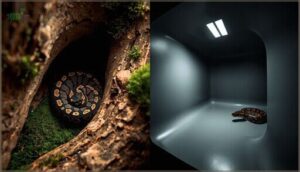
When you’re setting up breeding enclosures, the hide material you choose affects everything from humidity retention to how often you’ll be scrubbing between clutches. Natural options like cork and wood bring authenticity and moisture control, while artificial materials offer easy cleaning and long-term durability.
Let’s break down the real differences so you can match the right hide type to your breeding goals.
Natural Materials: Cork, Wood, and Stone Options
Natural materials bring authenticity to your breeding setup—and they perform. Cork Hideouts offer lightweight flexibility with excellent humidity buffering; you can reposition them without disrupting temperature zones. Wood Textures encourage nesting instincts, though sealing prevents warping between cycles. Stone Varieties retain heat beautifully but need secure mounting to avoid disturbance during egg-laying. Each material balances Natural Aesthetics with Material Durability, giving your gravid females the retreat they instinctively seek.
| Material | Key Breeding Advantage | Maintenance Need |
|---|---|---|
| Cork Bark | Low moisture absorption; stable microclimate | Periodic disinfection; fungal resistance |
| Hardwood | Thermal buffering; naturalistic texture | Sealing required; routine cleaning |
| Stone | High heat retention; sturdy shelter | Secure mounting; sanitation between cycles |
| Porous Stone | Humidity buffering for gravid females | Check for substrate-soak; seal as needed |
| Lightweight Wood | Easy reconfiguration; adjustable placement | Treatment to prevent mold growth |
Artificial Materials: Plastic, Resin, and Ceramic Choices
When you shift to Artificial Snake Hides, you gain control—Plastic Hides use polycarbonate or ABS for impact resistance and easy repositioning; Resin Formulas cast integrated nest boxes with water-resistant durability; Ceramic Hides deliver non-porous surfaces that resist mold. Each offers Hide Customization adjusted to your breeding goals, balancing Material Durability with Ceramic Safety and Plastic Alternatives that outperform many DIY Snake Hides.
| Material | Breeding Advantage | Handling Consideration |
|---|---|---|
| Plastic | Lightweight; easy transfer between enclosures | Check for UV-stable formulations |
| Resin | Water-resistant; integrated egg cavities | Verify proper curing to avoid fumes |
| Ceramic | Non-porous; stable microclimates | Secure mounting; fragile under impact |
Humidity Retention Comparison
Once you’ve picked your hide material, Humidity Retention becomes the deciding factor. Cork holds up to 75% RH for 24 hours, while plastic or resin drifts within 5–10 percentage points of your enclosure’s baseline. Ceramic outperforms wood by maintaining elevated humidity levels 6–12 hours longer. Porous substrates add another 5–15% stabilization, and well-sealed designs cut RH swings by 20–40%, giving you reliable Microclimate Control.
| Material | Retention Duration | RH Stability Boost |
|---|---|---|
| Cork | 24 hours at 75% | High buffering |
| Plastic/Resin | 12–24 hours (±5–10%) | Moderate stability |
| Ceramic | 18–36 hours | Excellent moisture hold |
Cleaning and Sanitation Between Breeding Cycles
After you’ve locked down the right humidity retention, your Sanitation Methods become the next priority. Remove soiled substrate and debris first, then apply a reptile-safe disinfectant—bleach diluted 1:10 or commercial sanitizer works—and rinse thoroughly. Let everything dry completely before reintroducing your snakes.
Here’s a quick Cleaning Schedules breakdown:
| Breeding Cycle Phase | Disinfection Protocol | Frequency |
|---|---|---|
| Pre-breeding | Full sanitization | Every 30 days |
| Active breeding | Spot-clean only | Weekly check |
| Post-egg collection | Deep clean & dry | Within 24 hours |
Document each session—date, product used, who handled it—so you maintain consistent Hygiene Standards across every cycle and protect Reptile Health.
Durability and Long-Term Cost Considerations
Once everything’s dried, think about how often you’ll circle back for a full swap. Material Longevity varies—cork or ceramic hides can push 5–10 years with steady cleaning, while natural wood may tap out in 1–3 years from mold or cracking. High humidity accelerates wear, so track Replacement Schedules closely. A quick Cost Analysis shows that upfront investment in Durable PVC Construction or resin cuts your Maintenance Costs long-term, especially if you’re running multiple breeding racks.
Here’s a practical breakdown of expected lifespans and cost impacts:
| Material Type | Average Lifespan | Humidity Resistance |
|---|---|---|
| Cork/Ceramic | 5–10 years | High—minimal decay |
| Quality Plastic | 7–12 years | Excellent—washable |
| Natural Wood | 1–3 years | Low—prone to mold |
| Resin/Stone | 5–8 years | Moderate to high |
| DIY Snake Hides | Variable | Depends on material |
Factor in Reptile Enclosure Design needs and Flexible Design options; a well-chosen Snake Hide pays for itself when you’re not replacing it mid-season.
Top 9 Snake Hides for Breeding Setups
You’ll need the right hide to support your breeding snakes through courtship, gravidity, and egg-laying—not just any cave will do.
The following nine options have proven themselves in breeding setups, each offering specific advantages for temperature control, humidity retention, or monitoring access.
Let’s look at what makes each one worth considering for your program.
1. Hollima Mossy Reptile Hide Cave
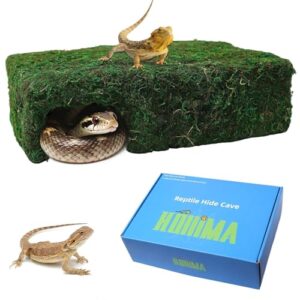
Your gravid females need a dark, cozy sanctuary during egg-laying—and the Hollima Mossy Reptile Hide Cave delivers exactly that. This reptile hide features a steel-framed, mossy cave design that mimics forest floor microhabitats, offering snug privacy for breeding-stage snakes.
At $17.99, it’s built with non-toxic materials and a 3-inch opening suitable for small to mid-sized adults. You’ll appreciate how it reduces stress during oviposition, though expect some initial moss shedding.
Clean it between breeding cycles with reptile-safe disinfectants to prevent mold in high-humidity setups.
| Best For | Reptile breeders looking for an affordable, stress-reducing hide that gives gravid snakes a dark, private spot for egg-laying in humid enclosures. |
|---|---|
| Material | Natural moss/metal |
| Primary Use | Hiding/breeding |
| Design Style | Natural moss cave |
| Target Species | Snakes/lizards/small mammals |
| Ease of Cleaning | Moderate |
| Price Range | $17.99 |
| Additional Features |
|
- Mimics natural forest floor environment with mossy design, helping reduce stress during breeding and oviposition
- Non-toxic materials with a cave-style structure that provides privacy and thermal stability for gravid females
- Budget-friendly at $17.99 and easy to clean between breeding cycles with reptile-safe disinfectants
- Fake moss tends to shed and fall off, especially during initial setup and handling
- 3-inch opening may be too small for larger gravid females or certain snake species
- Mossy exterior requires regular inspection for mold in high-humidity breeding setups
2. Leoterra Reptile Hide Box
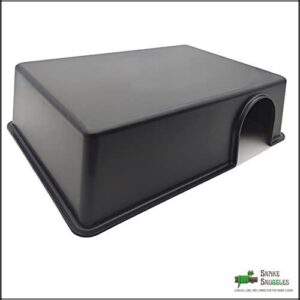
The Leoterra Reptile Hide Box offers a clean, functional design at 10.23″x7.48″x2.75″—plenty of room for medium-sized gravid females to coil comfortably. The top seal feature traps humidity for tropical species without constant misting.
The rounded edges prevent injury during restless pre-lay behavior, and the 2.75″ entrance lets you monitor without disturbing nesting snakes.
At this price point, it’s a solid choice for breeding hideouts, though the lightweight plastic may tip if you don’t add substrate weight around the base.
| Best For | Breeders housing gravid females of medium-sized snake species who need a humidity-retaining hideout that won’t stress their animals during egg-laying. |
|---|---|
| Material | Plastic |
| Primary Use | Hiding/humidity |
| Design Style | Modern rounded |
| Target Species | Snakes/lizards/small mammals |
| Ease of Cleaning | Easy |
| Price Range | Mid-range |
| Additional Features |
|
- Top seal design holds moisture well for tropical species without daily misting
- Rounded edges prevent injury when snakes are restless before laying eggs
- Easy to clean non-porous plastic that you can disinfect between breeding cycles
- Lightweight build tips over easily unless you anchor it with substrate
- Single entrance limits airflow compared to dual-opening hides
- May be too cramped for larger python or boa species when fully gravid
3. Inoscind Reptile Hide Box
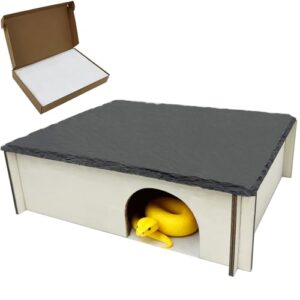
The Inoscind Reptile Hide Box offers solid construction and safety-first design, featuring smooth edges, non-toxic resin, and a 4.5–6.0 inch internal chamber that ensures comfort for gravid females.
The 1.75–2.25 inch entrance strikes a balance between privacy and monitoring access, allowing you to observe breeding progress without causing stress.
Humidity control is optimized by adding a damp substrate layer inside, paired with a nearby hygrometer to maintain stable conditions around 60–75%.
Weighing 0.6–1.2 pounds, the hide box remains stable during restless pre-lay behavior, facilitating natural snake behavior throughout breeding cycles.
| Best For | Breeders who need a stable, privacy-focused hide that supports gravid females with proper humidity control and minimal stress during egg-laying cycles. |
|---|---|
| Material | Wood/stone |
| Primary Use | Basking/hiding |
| Design Style | Natural stone/wood |
| Target Species | Ball pythons/corn snakes |
| Ease of Cleaning | Moderate |
| Price Range | $13.99 |
| Additional Features |
|
- Smooth, non-toxic construction with rounded edges keeps snakes safe during restless pre-lay movement
- Internal chamber size (4.5–6.0 inches) gives gravid females enough room to coil comfortably without crowding
- Balanced entrance aperture (1.75–2.25 inches) lets you monitor breeding progress without disrupting privacy
- Requires regular hygrometer checks and manual substrate adjustments to maintain the 60–75% humidity range
- Weekly inspections are needed to catch cracks or warping early, especially after cleaning cycles
- Not ideal for wet setups since prolonged moisture can lead to mold or material degradation over time
4. Reptile Humid Hide Snake Shelter
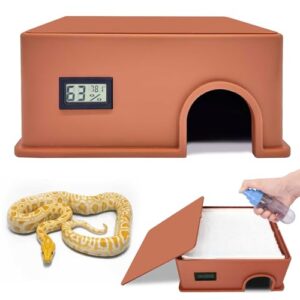
You’ll appreciate how this hide seamlessly integrates humidity control and thermoregulation. It ships with absorbent cotton, a spray bottle, and a top vent that maintains 70–90% moisture without trapping stale air.
The built-in sensor tracks conditions in real time, supporting reptile health during shedding and pre-lay behavior.
Measuring 9.8 × 7.87 × 4.1 inches with a 2.36-inch entrance, it suits corn snakes, milk snakes, and juvenile ball pythons perfectly.
The PLA hide materials clean easily between breeding cycles, ensuring your reptile habitat stays hygienic and your breeding success remains consistent.
| Best For | Owners of small reptiles like corn snakes, milk snakes, king snakes, and juvenile ball pythons who need a controlled humid environment for shedding and breeding. |
|---|---|
| Material | PLA plastic |
| Primary Use | Humid hide/shedding |
| Design Style | Modern with sensors |
| Target Species | Corn snakes/milk snakes |
| Ease of Cleaning | Easy |
| Price Range | Premium |
| Additional Features |
|
- Comes with absorbent cotton, spray bottle, and built-in temperature/humidity sensor to maintain optimal 70–90% moisture levels
- Top vent design promotes air circulation while preventing mold growth and respiratory issues
- Easy-to-clean PLA material fits compact enclosures at 9.8 × 7.87 × 4.1 inches with a 2.36-inch entrance
- Too small for medium or large snakes, limiting its use to juveniles and smaller species
- Some buyers reported receiving units without the advertised temperature and humidity sensor
- Higher price point compared to basic hides without integrated monitoring features
5. Leoterra Large Snake Hide

When you’re preparing breeding enclosures for full-size corn snakes, king snakes, or ball pythons, the Leoterra Large Snake Hide delivers the space gravid females need—13 × 8.66 × 3.15 inches with rounded edges that prevent injury during restless pre-lay movements.
The top seal design improves humidity retention without requiring complex DIY reptile hides and decor modifications, and the durable black plastic cleans quickly between cycles.
It’s heavier than standard reptile hides, so you won’t need to weight it down; just compare the entrance to your snake’s girth before ordering.
| Best For | Breeders managing full-size corn snakes, king snakes, or ball pythons who need a spacious, humid hide that stays put during pre-lay activity. |
|---|---|
| Material | Plastic |
| Primary Use | Hiding/security |
| Design Style | Modern rounded |
| Target Species | Corn snakes/ball pythons |
| Ease of Cleaning | Easy |
| Price Range | Mid-range |
| Additional Features |
|
- Large 13 × 8.66 × 3.15-inch interior gives gravid females room to move without stress
- Top seal design holds humidity without constant misting or complicated setup
- Heavy enough to stay in place—no need to weigh it down like lighter hides
- Too big for juvenile snakes or smaller species like sand boas
- Pricier than basic hides, which some keepers find hard to justify
- You’ll want to measure your snake’s girth against the entrance before buying to avoid sizing issues
6. Reptile Humid Hideout Cave Shelter
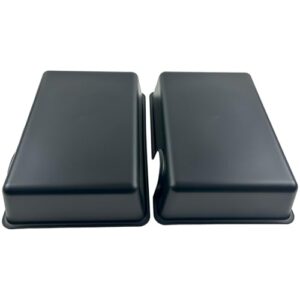
Gravid females demand a refuge that holds moisture without turning into a mold farm, and that’s where a well-designed humid hideout cave shelter earns its spot in your breeding setup. Look for cave designs with a narrow entrance leading to a deeper chamber—this mimics natural crevice retreats and facilitates reptile behavior during egg-laying.
Non-toxic shelter materials with smooth interiors prevent scale damage, while humidity control features maintain 60–100% relative humidity for breeding success. Pair it with proper thermoregulation zones, and you’ve built a reptile habitat that encourages natural nesting without constant intervention.
| Best For | Breeders managing gravid females who need a reliable humid retreat that maintains 60–100% humidity without promoting mold growth during egg-laying periods. |
|---|---|
| Material | Resin |
| Primary Use | Hiding/basking |
| Design Style | Natural rock texture |
| Target Species | Ball pythons/bearded dragons |
| Ease of Cleaning | Easy |
| Price Range | Budget-friendly |
| Additional Features |
|
- Narrow entrance with deeper chamber design mimics natural crevice retreats and encourages natural nesting behavior during breeding cycles
- Non-toxic, high-density resin construction with smooth edges prevents scale damage while withstanding bites and scratches from stressed or gravid reptiles
- Natural rock texture blends seamlessly with breeding enclosures while providing darkened interior spaces that reduce stress during reproductive periods
- Large size may still be too small for adult ball pythons or other large breeding specimens, limiting use to smaller species or juveniles
- Some users report the product arriving smaller than expected based on listed dimensions, which could affect suitability for specific breeding setups
- Single hide may not provide enough coverage in larger breeding enclosures, potentially requiring additional caves or decorations for optimal habitat complexity
7. Hoeine Reptile Hide Large Log
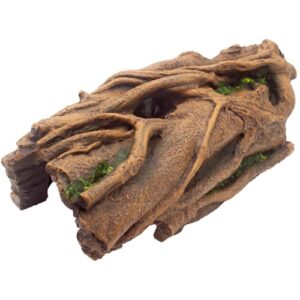
When you need a hideout that accommodates larger breeders—and you need it to last—the Hoeine Reptile Hide Large Log delivers on both fronts. This 14-inch resin log combines log design benefits with hide material safety, featuring a 4–6 inch entrance snug enough to comfort gravid females without restricting access.
The BPA-free construction and antimicrobial finish support snake stress reduction, while dual-surface textures aid thermoregulation across your breeding environment optimization zones.
It disassembles for deep cleaning, resists mold, and pairs perfectly with coconut fiber substrates for humidity control in reptile habitat creation.
| Best For | Breeders managing medium to large snakes who need a durable, easy-to-clean hide that supports gravid females and maintains stable humidity across multiple breeding cycles. |
|---|---|
| Material | Resin |
| Primary Use | Hiding/basking |
| Design Style | Natural log tunnel |
| Target Species | Bearded dragons/ball pythons |
| Ease of Cleaning | Easy |
| Price Range | Reasonable |
| Additional Features |
|
- BPA-free resin with antimicrobial finish disassembles completely for thorough sanitization between breeding cycles
- 4–6 inch entrance and 90% light-blocking interior create a secure microclimate that encourages resting and egg-laying behavior
- Dual-surface design with grippy exterior and smooth interior prevents handler slippage during inspections while protecting snakes from snags
- 14-inch length may overwhelm tanks smaller than 40 gallons or crowd compact breeding setups
- Weight and footprint limit repositioning flexibility once substrate and temperature gradients are established
- Some snakes may ignore the hide based on individual preference, regardless of optimal design features
8. USMOLA Mossy Cave Hideout
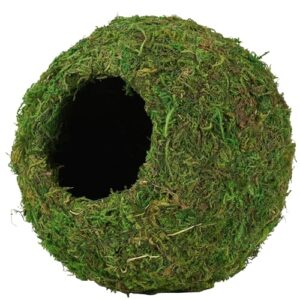
If you’re after a budget-friendly mossy cave design that still accommodates breeding success tips, the USMOLA Mossy Cave Hideout (4×4×4 inches) fits smaller species like young colubrids. Its woodland-green resin manages humidity control reasonably well—though reviews are mixed—and the natural moss aesthetic blends into any reptile habitat.
You’ll want to check stability; some breeders add weight to prevent tipping. For thermoregulation, pair it with moisture-retentive substrate. It’s best as a secondary reptile hide rather than your primary breeding retreat for gravid females.
| Best For | Hobbyists looking for an affordable, natural-looking hide for young colubrids or smaller reptiles, or anyone needing a secondary retreat to complement a main breeding setup. |
|---|---|
| Material | Moss |
| Primary Use | Hiding/enrichment |
| Design Style | Natural moss habitat |
| Target Species | Snakes/lizards/geckos |
| Ease of Cleaning | Moderate |
| Price Range | Budget-friendly |
| Additional Features |
|
- Budget-friendly option with a natural moss aesthetic that blends into planted terrariums
- Handles moderate humidity well enough for small species when paired with the right substrate
- Compact 4×4×4 size works great as an extra hide or for juveniles
- Too small for adult snakes or gravid females that need proper breeding dimensions
- Stability issues reported—may tip over without added weight or support
- Mixed reviews on long-term durability under high humidity and UV exposure
9. Reptile Hide And Basking Tree Roots Cave
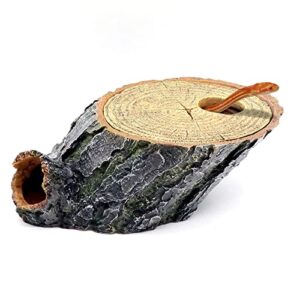
For larger gravid females demanding sturdy reptile habitat architecture, the Reptile Hide And Basking Tree Roots Cave (7.87×4.7×3 inches) offers a dual-purpose hide box—functioning as both cave design shelter and elevated basking spots. Its resin construction mimics tree root simulation with realistic bark texture, blending natural vs artificial hides advantages: inert material paired with authentic aesthetics.
You’ll appreciate the smooth cave mouths that prioritize reptile safety, eliminating sharp edges that could injure breeding females. Humidity control works well with porous substrate inside the hollow; just monitor thin inner edges during cleaning cycles to maintain structural integrity throughout your breeding program.
| Best For | Keepers of medium-sized reptiles like geckos or young snakes who need a dual-function hide that works for both humidity retention and basking. |
|---|---|
| Material | Resin |
| Primary Use | Hiding/shedding |
| Design Style | Realistic tree trunk |
| Target Species | Snakes/geckos/turtles |
| Ease of Cleaning | Easy |
| Price Range | Budget-friendly |
| Additional Features |
|
- Realistic bark texture and smooth cave openings create a natural-looking shelter without sharp edges that could injure your reptile
- Works well as both a humid hideaway and climbing surface, giving your pet options for different behaviors throughout the day
- Easy to clean resin material that won’t off-gas or degrade like some natural wood options
- At 7.87 inches long, it’s too small for large or gravid females that need more spacious nesting areas
- Some units arrive with thin or sharp inner edges despite the advertised smooth design, so you’ll need to inspect before use
- Crickets and feeder insects love hiding in the crevices, which can make feeding time frustrating if your reptile won’t hunt them out
Placement and Setup for Breeding Enclosures
Getting your breeding enclosure set up right makes all the difference when your snakes enter their reproductive cycle. Where you place each hide—and how many you use—directly impacts whether your animals feel secure enough to breed successfully.
Let’s walk through the key placement strategies that create an environment where breeding behaviors can unfold naturally.
Positioning Hides in Temperature Gradients
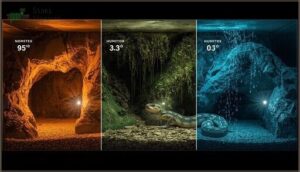
Think of your enclosure’s thermal gradient as a buffet—snakes will pick their ideal temperature zone based on their current needs. Position hides along the gradient spanning 25–32°C warm and 22–28°C cool to support thermoregulation during mating and gestation.
Snake behavior shows they’ll use multiple hides across temperature zones rather than claiming a single spot, so gradient design with proper hide placement and humidity control ensures breeding success.
Multiple Hide Strategy for Breeding Pairs
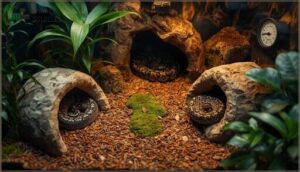
Pair dynamics shift dramatically when breeding begins—competition for prime real estate can derail even well-matched snakes. Your enclosure design should include at least two hides per snake, strategically distributed along the thermal gradient and humidity control zones to reduce territorial disputes and support breeding success.
Essential hide placement for breeding pairs:
- Position one hide per snake minimum—gravid females especially need their own secure retreat for pre-lay behavior and stress reduction.
- Distribute hides across temperature zones—warm-side and cool-side options allow independent thermoregulation without forced proximity during courtship.
- Create visual barriers—hides placed with sight obstruction between them reduce monitoring stress and aggressive posturing in active males.
- Vary hide styles—combine humid breeding box capability with standard reptile hide options to address changing physiological needs throughout the cycle.
- Monitor snake behavior patterns—if one individual dominates preferred hides, add a third option to restore balance and encourage natural breeding behaviors.
Proper snake hides selection and strategic placement transform enclosure design from basic housing into a functional breeding environment where pair dynamics support rather than sabotage reproductive outcomes.
Substrate Compatibility and Nest Box Integration
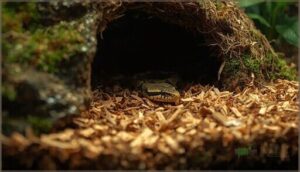
Your choice of substrate material directly impacts nest box performance—moisture retention varies dramatically between options, and that matters when gravid females seek humidity control for successful egg deposition. Cedar-free, dust-free substrates reduce respiratory irritants while supporting the stable microclimate management breeding snakes require.
| Substrate Material | Moisture Retention | Burrowing Behavior Support |
|---|---|---|
| Cypress Mulch | High | Excellent tunneling structure |
| Coconut Coir | Very High | Maintains nest box humidity |
| Paper-Based Bedding | Moderate | Easy monitoring, lower dust |
| Aspen Shavings | Low | Poor for humid hide box needs |
| Sphagnum Moss | Outstanding | Ideal for reptile hide lining |
Substrate depth of 2-3 inches encourages natural burrowing behavior—snakes instinctively excavate around snake hides when seeking concealment during gravidity, creating self-regulated microclimates that align with physiological breeding requirements.
Securing Hides to Prevent Disturbance
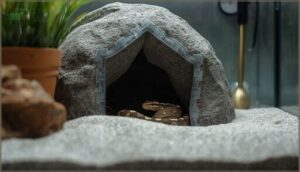
During breeding season, an unstable hide box creates stress spikes that disrupt courtship, nesting, and egg deposition—secure mounting techniques eliminate this variable entirely, protecting your investment in genetics and time.
- Position reptile hide units in low-traffic zones to minimize vibrations that trigger defensive snake behavior and enrichment setbacks
- Apply non-slip pads or aquarium-safe adhesive for hide stability, preventing displacement during feeding or shedding cycles
- Install secure locking systems on modular hides to maintain consistent retreat sites throughout gravidity
- Use interior dividers to reduce interference between breeding pairs, enhancing perceived security
- Inspect mounting hardware monthly to verify hide placement integrity remains undisturbed
Maintenance and Hygiene for Breeding Snake Hides
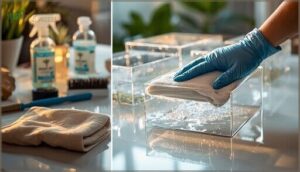
Keeping your breeding hides clean isn’t just about appearances—it’s about protecting your snakes from disease and ensuring successful reproduction cycles. During breeding season, hides accumulate shed skin, waste, and moisture that create perfect conditions for harmful bacteria and mold.
Let’s walk through the maintenance routines that’ll keep your breeding program healthy and your snakes thriving.
Cleaning Protocols Between Breeding Cycles
After each breeding cycle, you’ll want to pull all hides and sanitize them with a mild bleach solution—0.5% to 1% sodium hypochlorite works perfectly—or 70% ethanol. Rinse thoroughly, let them air-dry completely, then inspect for cracks that could harbor mold.
This cleaning schedule protects reptile health and welfare while keeping your breeding program running smoothly; damaged hides need immediate replacement to maintain proper disinfection methods and animal welfare standards.
Preventing Mold and Bacterial Growth
Moisture becomes the enemy when you’re trying to keep mold and bacterial growth in check—proper humidity control and consistent sanitization methods make all the difference. Here’s your defense strategy for reptile health and wellness:
- Choose non-porous hides with smooth surfaces that won’t trap moisture, making mold prevention and cleaning schedules far easier to maintain.
- Monitor enclosure humidity weekly to prevent condensation buildup that encourages bacterial growth while supporting proper thermoregulation.
- Inspect hides every seven days for discoloration or material breakdown, replacing compromised units immediately to protect your snake care and maintenance standards.
Inspection Schedule for Wear and Damage
You’ll want to check your reptile hide weekly during breeding season, looking for cracks, delamination, or surface damage that threatens snake hides integrity. Document wear patterns with photos to track material durability trends across your reptile enclosure.
When structural compromise appears—especially around humidity control zones affecting thermoregulation—plan replacement scheduling within 7–14 days to maintain ideal breeding conditions and prevent stress.
When to Replace Hides in Breeding Programs
Replace snake hides annually or biannually in high-density reptile breeding programs to support disease prevention and consistent results. Align replacement schedules with your breeding cycle length—if edges crack or substrate seeps in, swap them sooner to protect gravid females.
Track each hide’s age and condition; interim checks catch pest issues early, ensuring your reptile habitat maintains humidity control and supports healthy snake species throughout reproduction.
Frequently Asked Questions (FAQs)
How many hides does a breeding pair need?
You might think one hide is enough—it’s not. A breeding pair needs at least three hides: one warm-side, one cool-side, and a dedicated gravid retreat to reduce stress and encourage natural nesting behavior.
Can hides be reused for different snake species?
Yes—you can reuse hides across snake species if you thoroughly sanitize between uses. Cross-species compatibility depends on material durability and proper cleaning; non-porous surfaces resist bacteria while preserving reuse viability for your reptile habitat.
What hide materials best prevent egg dehydration?
Cork bark and unglazed ceramic hold moisture longest, essential for breeding microclimates and egg humidity control. Dense hardwoods work well too. These hide material science choices prevent dehydration while reducing snake stress during reproduction.
Should hides be removed after eggs are laid?
It depends on your snake species and breeding outcomes goals. Leaving hides aids post oviposition recovery and female stress reduction, while removal improves egg safety through better monitoring and hide sanitation for ball pythons.
Do male snakes need separate hides during breeding?
Ball Pythons and many species often share breeding hides, but providing distinct reptile hide options reduces male snake stress and territorial reduction issues.
Separate mating hide placement promotes natural snake social behavior, minimizing aggression during courtship while maintaining ideal breeding hide design.
Conclusion
Your incubator might be calibrated to the degree, your genetics flawless—but without proper snake hides for breeding, gravid females won’t cooperate. The difference between empty nesting attempts and healthy clutches often comes down to darkness, humidity retention, and uninterrupted security during oviposition.
Choose hides that prioritize function over aesthetics, maintain them between cycles, and position them strategically within your thermal gradient.
Your breeding success depends on these overlooked fundamentals more than any expensive equipment upgrade ever will.