This site is supported by our readers. We may earn a commission, at no cost to you, if you purchase through links.
Your ball python hasn’t left its hide in three days, and the nagging worry just escalated to full-blown panic. That’s the moment most snake owners realize something’s off—not when their pet stops eating, but when hiding shifts from normal behavior to concerning radio silence.
Snakes are masters of concealment by nature, spending up to 90 percent of daylight hours tucked away, but there’s a vital difference between a snake that hides strategically and one that’s genuinely unwell. Respiratory infections, parasites, and environmental stress all trigger the same defensive response: disappearing act meets survival mode.
The challenge is distinguishing between a content snake enjoying some alone time and one sending distress signals from the shadows.
Table Of Contents
Key Takeaways
- Snakes naturally hide 70-90% of the time, but excessive hiding paired with refusal to eat, weight loss over 5-10%, or complete immobility signals serious illness requiring immediate veterinary attention.
- Respiratory infections show up as wheezing, mucus bubbles from nostrils, open-mouth breathing, and labored chest movements—these symptoms demand antibiotics and won’t resolve on their own.
- Your enclosure’s temperature gradients (85-90°F basking, 78-82°F cool side) and humidity levels (40-70% depending on species) directly control whether your snake hides strategically or retreats in distress.
- Bring documented symptom timelines, environmental data, and medical history to your vet visit—guesses don’t diagnose diseases, but specific observable details and measurements do.
Why is My Snake Hiding Constantly?
Snakes are natural hiders—it’s hardwired into their survival instincts. But when your snake starts spending all its time tucked away, refusing to come out even for food, that’s when you need to pay attention.
If your snake is actively avoiding its hide or rejecting spots that should feel safe, that’s a red flag pointing to underlying stress, health issues, or environmental problems that need addressing.
Let’s break down what’s normal behavior versus what might be a red flag signaling something’s wrong.
If you notice patchy areas, dull coloring, or stuck skin after shedding, check out common causes of incomplete shed removal to address the issue quickly.
Normal Vs. Excessive Hiding Behavior
Your snake loves to hide—that’s just instinct kicking in. Most healthy ball pythons and corn snakes spend 70–90 percent of their time tucked away during daylight hours. But when hiding crosses into excessive territory, you’ve got a problem.
Some snakes feel safer in natural vs. artificial hides, and picking the wrong type can keep your pet stressed and hidden all day.
Here’s what separates normal from concerning:
- Normal hiders emerge at dusk to explore, thermoregulate, and hunt
- Excessive hiders never leave, even skipping feeding time
- Healthy snakes rotate between warm and cool zones; sick snakes stay put
- Behavioral changes like sudden refusal to move signal warning symptoms
- Weight loss paired with constant hiding screams “call a reptile veterinarian”
Watch for signs of illness beyond hiding patterns alone. Understanding environmental security is vital in addressing excessive hiding in snakes.
Environmental Factors That Encourage Hiding
Before blaming illness, check your enclosure design. Incorrect temperature control forces your snake into perpetual hiding—without proper gradients, thermoregulation becomes impossible.
Start with quality snake hides for beginners that fit your enclosure’s thermal zones, ensuring your snake can regulate body temperature while feeling secure.
Humidity management matters just as much; respiratory irritation from dry air drives retreat behavior.
Lighting effects and spatial arrangement create stress when hides aren’t strategically placed. Poor habitat maintenance and environmental factors in reptile enclosure and housing directly shape snake behavior and body language.
Fix the fundamentals of pet snake care first.
Signs Your Snake May Be Sick
Your snake’s behavior is talking—you just need to know what to listen for. When a snake is sick, it doesn’t complain or cry out, but it does give you visible clues that something’s wrong.
Sick snakes don’t cry out—they communicate distress through visible behavioral clues you must learn to recognize
Here’s what to watch for when you suspect your snake might be hiding because it’s not feeling well.
If your snake is also regurgitating its meals, that’s a serious sign something’s wrong—check out common causes of snake regurgitation and prey size issues to understand what might be happening.
Lethargy and Reduced Activity
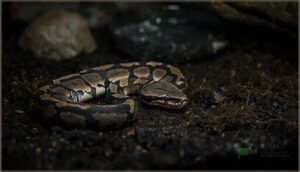
Sometimes, lethargy sneaks up on you. Your snake isn’t zipping around the tank—they’re practically cemented in place for days. That’s not normal resting; that’s energy loss screaming for attention.
Watch for these signs of illness:
- Barely reacting when you handle them
- Staying motionless for 24-72 hours straight
- Ignoring feeding attempts completely
- Sluggish responses to light or movement
- Weak, uncoordinated strikes
If your sick snake’s activity levels crash, call a reptile veterinarian immediately.
Loss of Appetite and Weight Changes
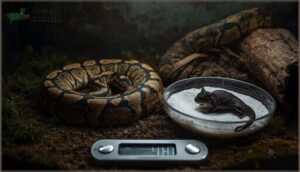
When your snake skips meals for more than two weeks straight, appetite changes signal metabolic issues or nutrition deficits. Weigh them weekly—sick snakes drop 5–20% of body mass, revealing signs of illness fast.
| Timeframe | Weight Decline | Action Required |
|---|---|---|
| 1–2 weeks | 5–10% lighter | Monitor feeding patterns closely |
| 2–4 weeks | 10–15% loss | Schedule veterinary attention now |
| 4+ weeks | 15–20%+ drop | Emergency vet visit—dehydration signs likely |
Appetite loss paired with visible muscle wasting? That’s your cue.
Abnormal Shedding and Skin Issues
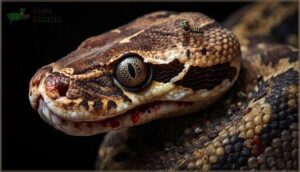
Incomplete skin removal—dysecdysis—screams trouble when your snake’s shed comes off in patches instead of one smooth piece. Check for retained spectacles over the eyes, mite infestations between scales, or blister-like skin lesions that signal infection.
Scale abnormalities and discoloration? Those shedding problems point to dehydration signs or humidity disasters. Normal shedding patterns shouldn’t leave your snake looking patchy or irritated.
Respiratory Symptoms and Other Red Flags
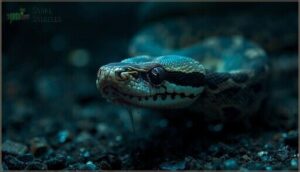
If your snake’s breathing sounds like a broken accordion—wheezing, gurgling, or gasping with its mouth wide open—you’re staring down a respiratory infection that won’t fix itself. Watch for mucus buildup bubbling from nostrils, labored breathing that forces the body upward, and airway obstruction causing open-mouthed gasps.
Snake pneumonia doesn’t wait around. Combine these respiratory signs with dehydration signs or lethargy? Your snake needs veterinary intervention now.
Common Illnesses Linked to Hiding
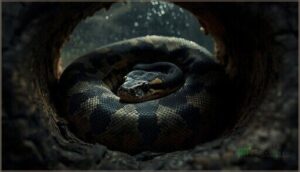
When your snake hides constantly, it’s often fighting something you can’t see yet. Several specific illnesses drive this behavior, and recognizing them early makes all the difference.
Let’s look at the most common culprits behind excessive hiding and what they mean for your snake’s health.
Respiratory Infections and Symptoms
Respiratory infections often trigger hiding because breathing difficulties drain your snake’s energy. Watch for these respiratory signs demanding veterinary attention:
- Nasal discharge or mucous buildup around the nares or mouth
- Open-mouth breathing or wheezing that sounds like rattling
- Mucus bubbles blown from nostrils during exhales
- Labored chest movements showing effort with each breath
- Lethargy combined with refusing food for multiple feedings
Early treatment options—usually antibiotics—prevent permanent lung damage.
Parasites, Mites, and Skin Disorders
Parasites and skin disorders can turn your snake’s scales into a battleground. Mite infestations manifest as tiny black dots crawling between scales, while skin lesions and scale abnormalities may signal bacterial dermatitis or fungal infections brewing beneath the surface.
Early parasite control and dermatitis treatment are crucial to prevent shedding problems and secondary mouth rot from taking hold.
| Parasite Issue | What You’ll Notice |
|---|---|
| Mite Infestations | Black specks moving on skin, soaking behavior |
| Skin Lesions | Red patches, crusty areas, abnormal shedding |
| Dermatitis | Swelling, discharge, reluctance to move |
Digestive Issues and Dehydration
When your pet snake stops eating and retreats, gastrointestinal stasis might be the culprit. Dehydration signs like sunken eyes and sticky saliva often accompany poor GI motility—your snake’s gut basically slows to a crawl.
Electrolyte imbalance and fluid balance disruptions worsen these signs of illness fast. If rehydration methods at home don’t restore activity within 48 hours, veterinary attention becomes critical for animal welfare.
How to Assess and Improve Your Snake’s Environment

Your snake’s enclosure isn’t just a box—it’s their entire world. When something’s off in that environment, your snake will tell you by hiding nonstop, refusing food, or showing other stress signals.
Here’s how to check the basics and make adjustments that can turn things around fast.
Checking Temperature and Humidity Levels
Your pet snake’s enclosure isn’t just a box—it’s climate-controlled real estate. Use digital thermometers at both the basking spot and cool side to verify thermal gradients stay within species-specific ranges.
Check hygrometers daily for humidity management, recording measurements to catch chronic deviations. Poor temperature control and inadequate enclosure monitoring directly impact reptile health, triggering hiding and stress that eventually demand veterinary attention.
Importance of Clean and Safe Hides
Temperature and humidity matter, but filthy hides sabotage your pet snake’s health faster than you think. Clean hides aren’t optional—they’re foundational snake care that prevents infections and parasites.
Follow these sanitation tips:
- Scrub hides weekly with reptile-safe disinfectant
- Inspect for cracks harboring bacteria
- Replace damaged components immediately
Proper hide maintenance protects your snake’s immune system while supporting reptile health through safe enclosure design.
Reducing Stress in The Enclosure
Clean hides set the stage—now dial in your enclosure design for real stress reduction. Your snake needs thermal choices: a basking zone at 85–90°F and cooler retreats around 78–82°F let it self-regulate.
Maintain species-appropriate humidity (40–60% for colubrids, 50–70% for pythons) using hygrometers. Multiple hides across temperature gradients encourage natural behavior without isolation.
Minimize handling and keep substrates fresh—chronic stressors wreck snake health faster than dramatic events.
When to Seek Veterinary Care

Sometimes you can’t afford to wait and see if things improve on their own. Knowing when your snake needs professional help—and what to bring to that appointment—can make the difference between a quick recovery and a serious medical crisis.
Let’s break down the red flags that demand immediate action and how to prepare for a productive vet visit.
Warning Signs Requiring Immediate Attention
If your snake’s breathing sounds like it’s trying to suck air through a straw, or it’s staring at the ceiling like it’s possessed, you need a vet—yesterday. Open-mouth breathing, mucus bubbles, bleeding, seizures, or total body stiffness demand urgent treatment.
Severe skin problems like rapid lesions or unresponsive lethargy signal critical care emergencies. These aren’t “wait and see” situations—your snake’s in distress, and veterinary attention can’t wait.
Preparing for a Vet Visit
Once you’ve decided your snake needs veterinary attention, don’t wing it. Your vet needs data—not guesses—to nail disease diagnosis and treatment options.
Bring this Vet Visit Checklist:
- Symptom timeline with dates and snake behavior changes
- Complete medical history including past health records
- Environmental data: temps, humidity, lighting specs
- Medication list with dosages and frequency
- Recent stressors or enclosure modifications
Veterinary medicine works best when you show up prepared.
Frequently Asked Questions (FAQs)
Can multiple snakes share the same hiding spot?
Most captive snakes won’t happily bunk together. Shared hides increase stress, aggression, and competition—dominant snakes hog prime spots while subordinates stay exposed. Provide individual hiding options to prevent territorial disputes and promote healthy snake behavior.
Do certain snake species hide more than others?
Absolutely—hiding habits vary wildly across snake species. Ball pythons are champion hiders, while king snakes often bask openly.
Desert species burrow longer for thermoregulation needs, and arboreal types prefer elevated cover over ground hides.
How long can a healthy snake hide continuously?
Like a thermostat that cycles on and off, healthy pet snake behavior includes brief hiding periods—rarely exceeding a few days straight.
Constant hiding beyond this signals potential thermal gradients, humidity control, or enclosure design problems requiring immediate attention.
Will adding more hides reduce hiding behavior?
Not necessarily. Your pet snake’s hiding behavior depends on temperament, hide placement, and enclosure design. Poor environmental enrichment or fragmented hiding patterns may increase anxiety, regardless of hide quantity.
Can overfeeding cause a snake to hide excessively?
Think of your pet snake’s belly like an overstuffed suitcase—it just wants to hunker down. Overfeeding symptoms include lethargy and excessive hiding as digestive issues create discomfort, disrupting normal snake behavior and nutrition balance.
Conclusion
You might hesitate to drag your snake to the vet over “just hiding,” but hesitation costs lives. When your snake hiding constantly sick becomes the new normal, you’re not overreacting—you’re being responsible.
Trust your instincts when something feels off. Check those temps, scrutinize those symptoms, and don’t wait for things to escalate. Your snake can’t ask for help, so stay vigilant, act quickly, and keep that reptile thriving.
- https://vcahospitals.com/know-your-pet/snakes-problems
- https://www.redwoodpetclinic.com/2019/09/15/marin-county-ca-vet-signs-of-illness-snakes/
- https://www.veg.com/post/my-snake-isn-t-eating-is-it-serious
- http://www.shutterstock.com/pic-126204578/stock-photo-ball-python-python-regius.html
- https://www.biorxiv.org/content/10.1101/2021.02.02.429328v1.full-text