This site is supported by our readers. We may earn a commission, at no cost to you, if you purchase through links.
Your snake vanished the moment its skin started looking dusty and dull—and now it’s buried under its hide like the world outside doesn’t exist. That’s not a problem.
That’s biology working exactly as it should. Shedding strips a snake of its two most critical defenses: clear vision and a fully intact skin barrier.
Hiding isn’t antisocial behavior; it’s survival instinct. Understanding what’s happening beneath that hide—and what your enclosure needs to support it—makes the difference between a clean, complete shed and a frustrating stuck patch that won’t budge.
Table Of Contents
Key Takeaways
- When your snake goes dull, cloudy-eyed, and hides away, that’s ecdysis doing its job — not a sign something’s wrong.
- Keep humidity between 50–70% normally and bump it to 80% during active shedding, with a warm side around 85–90°F, to set your snake up for a clean shed.
- Hands off during the cloudy-eye phase — impaired vision makes your snake stressed and defensive, so wait 48 hours after the shed completes before handling resumes.
- If skin patches, retained eye caps, or appetite loss linger more than two weeks post-shed, it’s time to call a reptile vet rather than wait it out.
Why Snakes Hide More When Shedding
If your snake has been disappearing into its hide more than usual, shedding is likely the reason. This phase, called ecdysis, triggers some very specific instincts — and once you understand them, the behavior makes complete sense.
Tracking these instincts alongside other shifts is why knowing the common signs snakes show when something’s off helps you tell normal shedding behavior from something worth watching.
Here’s what’s actually going on beneath the surface.
Natural Pre-Shed Behaviors
Before your snake even begins to shed, it sends clear signals.
Skin-color dullness appears first — scales lose their usual shine about 4 to 7 days out.
Then comes feeding cessation, as snakes skip meals for up to 14 days.
You’ll also notice lethargy patterns and reduced activity and increased hiding.
These pre‑shed behavior changes are normal, not alarming.
Humidity seeking follows naturally, driven by instinct.
They also show increased irritability and defensiveness.
Vision Impairment and Increased Vulnerability
Those cloudy or bluish eyes aren’t just cosmetic — they signal visual impairment and handling cautions matter now. A milky fluid builds under each eye cap, causing depth perception decline and predator detection loss.
Your snake compensates through reduced activity and increased hiding. Here’s what’s happening internally:
- Vision stays blurry for several days to a week
- Escape response delay means threats register slower, from shorter distances
- Sensory compensation shift kicks in — smell and vibration work harder
- Stress hormone surge makes defensive or unpredictable responses more likely
After shedding, many snakes become ravenous and should be fed promptly, especially during the [post‑shed hunger phase](https://enviroliteracy.org/animals/does-shedding-make-snakes-hungry/).
Defensive and Stress Responses
All that visual impairment and handling caution have a ripple effect — your snake’s stress response kicks into high gear.
Corticosterone spikes flood the system, triggering S-shaped coiling, body inflation, tail rattling, and rapid tongue flicks.
These stress responses often intensify in the days just before a shed, when cloudy eyes and restlessness signal the body is already deep into the cycle — a pattern explored in detail in this milk snake shedding and diet guide.
These aren’t attitude problems; they’re survival instincts.
Stress-related refusal to eat and increased hiding are completely normal during snake shedding stress.
Read those signals, back off, and let your snake feel safe.
Recognizing Shedding Stages and Signs
Once you know shedding is coming, spotting it early makes everything easier. Your snake’s body and behavior will both start sending signals — you just need to know what to look for.
Here are the key signs to watch across each stage.
Physical Changes Before Shedding
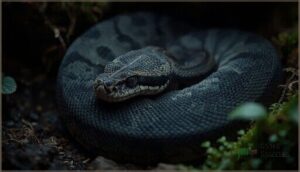
Your snake’s body gives clear signals before shedding begins. Dull Skin is one of the first giveaways — that faded or dull skin appearance happens because fluid builds between old and new layers. You’ll also notice:
- Cloudy Eyes: cloudy or bluish eyes that blur your snake’s vision
- Belly Color Shift: a pinkish or washed-out tone underneath
- Scale Looseness: loose skin around the neck and slight skin tightness elsewhere
Behavioral Clues Your Snake is Shedding
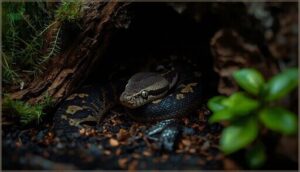
Beyond the physical signs, behavior shifts are just as telling. Appetite drops fast — your snake may ignore prey it’d normally strike at immediately. You’ll notice decreased activity and appetite loss paired with increased hiding, as your snake retreats to tight, humid spots.
Microhabitat selection changes noticeably. Stress vocalizations like hissing may appear.
Activity spikes briefly when eyes clear, signaling the shed is close.
Typical Duration and Frequency of Shedding

The full shedding cycle generally runs 9 to 14 days from first signs to finished shed. The juvenile shed cycle intervals hit every 4 to 6 weeks — rapid growth drives that pace. The adult shed interval slows to every 6 to 8 weeks.
Species variation matters too: ball pythons, corn snakes, and kingsnakes each run slightly different schedules. Growth impact is the biggest factor controlling snake shedding frequency and duration.
Optimizing The Shedding Environment

The right environment can make or break a shed.
A few simple adjustments to your snake’s enclosure go a long way toward keeping the process smooth and stress-free.
Here’s what actually matters regarding setting up the ideal shedding space.
Importance of Proper Humidity and Temperature
Think of your snake’s enclosure like a greenhouse — the right moisture and warmth make everything run smoothly.
For snake shedding care and management, aim for an Ideal Humidity Range of 50–70%, nudging it toward 80% when skin starts to dull. Use Misting Techniques carefully, and maintain a Temperature Gradient with a warm side near 88°F. Here’s what matters most:
- Keep humidity between 50–70% daily
- Raise to 70–80% during active shedding
- Maintain warm-side temps at 85–90°F
- Maintain Ventilation Balance to prevent mold
- Monitor Substrate Moisture to avoid soggy bedding
Providing Adequate Hides and Shedding Aids
Your snake needs more than one hide — that’s the core of a smart multi-hide strategy. Place a snug humid hide on the cool side, packed with damp sphagnum moss, as your main shedding box.
Add cork bark or rough surface aids throughout the enclosure so your snake can rub loose skin naturally. Match hide size selection to your snake’s coiled body, and choose safety-approved options like ceramic or plastic — never cedar.
Maintaining Enclosure Cleanliness During Shedding
Keeping things clean during a shed doesn’t have to be complicated. Here’s a simple routine that protects your snake’s ideal environment without adding stress:
- Spot Cleaning — Remove waste daily using tongs; it takes under three minutes.
- Deep Clean Schedule — Time your full clean just after the shed completes.
- Safe Disinfectants — Use F10SC or diluted chlorhexidine; skip bleach entirely.
- Substrate Mold — Scoop damp patches immediately, especially under hides.
- Water Bowl Care — Refresh water every one to two days during shedding.
Supporting Your Snake During Shedding
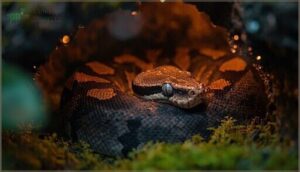
Shedding is a vulnerable time for your snake — and a little extra care from you goes a long way.
The good news is that supporting your snake through this process doesn’t take much.
Here’s what actually helps.
Minimizing Handling and Reducing Stress
During shedding, your snake’s world shrinks — and that’s intentional. Respect the Zero Handling Period: cloudy eyes mean impaired vision, and impaired vision means a stressed, defensive snake. Stress-related refusal to eat often follows unnecessary contact.
When a snake’s eyes go cloudy, the world goes quiet — hands off, no exceptions
Gentle lighting and zero enclosure rearrangements keep things predictable. Wait 48 hours post-shed before gentle handling resumes.
| Practice | Why It Matters | Timeline |
|---|---|---|
| Dark Hide Placement | Reduces visibility stress | Full shed cycle |
| Quiet Enclosure | Limits disturbances from sound/vibration | 7–14 days pre-shed |
| Consistent Routine | Prevents anxiety spikes | Ongoing |
Hydration and Nutrition Tips
Once handling is dialed back, your next focus is water and food.
Daily Water Access matters more than ever during shedding — refill the bowl every day and keep it large enough for soaking. Soaking Benefits include softening old skin so it slips off cleanly.
- Offer lukewarm soaks for 15–20 minutes
- Use Moisture‑Rich Prey — fresh, properly thawed only
- Accept decreased appetite and reduced activity as normal
- Try Feeding Size Adjustment — smaller meals reduce stress
- Add Electrolyte Supplementation only if sheds keep failing
When and How to Assist With Shedding
Most snakes shed fine on their own — but if large patches of skin remain stuck after 24 to 48 hours, it’s time to step in.
Start with a Humidity Hide or shedding box packed with damp moss. A 15-minute soak works well too — keep the soak timing lukewarm.
Afterward, try the Manual Cloth Method or Towel Wrap to gently coax skin off. Hit the Vet Referral Criteria if eye caps stay retained.
Shedding Complications and When to Seek Help
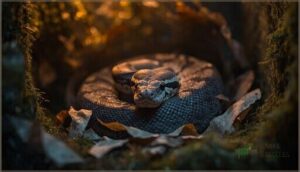
Most sheds go smoothly, but sometimes things don’t quite go as planned.
Knowing the warning signs early can make a real difference for your snake’s health.
Here’s what to watch for — and when it’s time to call a reptile vet.
Signs of Incomplete or Problematic Sheds
A bad shed is hard to miss — once you know what to look for. Incomplete shedding happens when old skin doesn’t come off cleanly, and it can cause real problems quickly.
Watch for these warning signs:
- Retained eye caps — eyes still look cloudy days after shedding
- Stuck tail shed — skin wrapping tight around the tail tip, cutting off circulation
- Body skin patches — dull, patchy scales where old skin clung on
- Constricted limbs — swollen, hourglass‑shaped areas from shrinking retained skin
- Infection signs — red or blackened scales, foul odor, or raised blisters
You might also notice dull skin coloration, sagging skin under the chin, or stress‑related refusal to eat lingering well past the shed.
When to Consult a Reptile Veterinarian
Some shedding complications go beyond a warm soak and a humid hide. If your snake shows persistent appetite loss for more than two weeks after shedding, that is your signal to call a reptile vet.
Eye cap retention that doesn’t clear up, weight loss indicators like a visible spine, or skin infection signs — redness, blistering, foul odor — all need professional eyes.
Respiratory distress, including clicking or wheezing sounds, moves this into urgent territory.
Don’t second-guess yourself when stress-related refusal to eat overlaps with incomplete shed patterns. A reptile vet can tell the difference.
Frequently Asked Questions (FAQs)
What are signs of stress in a snake?
Like a closed fist, a stressed snake signals clearly. Watch for aggressive posture, dull skin coloration, tongue flick reduction, respiratory distress, weight loss, and stress-related refusal to eat.
Why is my snake shedding more than usual?
More frequent shedding usually points to rapid growth spurts, overfeeding frequency, parasite infestation, or low humidity levels.
An inadequate enclosure size adds stress too — and stress-related refusal to eat often follows.
Do different snake species shed at different rates?
Yes — species timing varies widely.
Ball pythons shed every 4–6 weeks as adults, while corn snakes shed roughly every 3 months.
Growth rate, habitat temperature, and parental care all influence how often your snake sheds.
How does illness or stress affect shedding frequency?
Illness and stress both speed up shedding.
Parasite‑induced shedding can cut cycles to every two weeks.
Bacterial infection shedding, fungal disease shedding, and hormonal stress impact push frequency well beyond normal.
Can shedding snakes safely cohabitate with other reptiles?
Generally, no. shedding snake’s cloudy vision and slower reactions make cohabitation risky.
Stress monitoring, species compatibility, and enclosure setup all matter — most experienced keepers separate tank mates until the shed is complete.
What role does diet play in healthy skin turnover?
Diet drives healthy shedding.
Protein intake builds keratin, vitamin A speeds cell renewal, essential fatty acids seal moisture in, and antioxidant‑rich foods protect new cells.
Micronutrient balance keeps every shed clean and complete.
Conclusion
shed skin left behind is more than discarded scales — it’s proof that your snake moved through something difficult and came out whole. When your snake is hiding more while shedding, it’s following instincts older than any enclosure you could build.
Your job is simple: keep humidity steady, leave the hide alone, and trust the process. Get those conditions right, and your snake manages the rest with quiet, unhurried precision.
- https://www.reconnectwithnature.org/news-events/the-buzz/nature-curiosity-why-do-snakes-shed-their-skin/
- https://animalhotels.com/gb/blog/reptiles-and-amphibian/snake-skin-why-and-how-often-do-snakes-shed-their-skin
- https://a-z-animals.com/animals/snake/how-often-do-snakes-shed/
- https://www.furrycritter.com/pages/health/snakes/excessive_hiding.htm
- https://enviroliteracy.org/animals/why-wont-my-corn-snake-come-out-of-his-hide/