This site is supported by our readers. We may earn a commission, at no cost to you, if you purchase through links.

A snake that stops eating, sheds in patches, or rubs itself raw against enclosure walls is telling you something is wrong. Parasites are often the reason, and they move fast through a collection if you miss the early signs.
External parasites leave visible clues. Mites appear as red-brown dust near the head or water dish, and their presence demands action that same day. Internal parasites are harder to catch: weight loss despite a good appetite, persistent regurgitation, and loose stools are the signals you cannot afford to ignore.
Effective snake parasite control methods follow a strict sequence. Identification comes first, then isolation, then treatment.
Table Of Contents
- Key Takeaways
- Identify Snake Parasites Before Treatment
- Quarantine The Snake and Prevent Transmission
- Control Snake Mites and Other Ectoparasites
- Treat Worms and Protozoa With Veterinary Care
- Prevent Reinfection and Confirm Parasite Clearance
- Frequently Asked Questions (FAQs)
- What is the best dewormer for snakes?
- What kills parasites quickly?
- What will vinegar do to a snake?
- How can you tell if your snake has parasites?
- How to get rid of parasites in snakes?
- What are 4 ways of controlling parasites?
- What is the medicine for snakes with parasites?
- How to tell if your snake has parasites?
- How can parasites impact a snakes lifespan?
- Are wild-caught snakes more prone to parasites?
- Conclusion
Key Takeaways
- Mites and internal worms require different treatments, so accurate identification through fecal testing and vet diagnostics must come before any medication.
- Immediate isolation of the affected snake is non-negotiable, since parasites spread rapidly through shared tools, water sources, and contaminated surfaces.
- Clearing a mite infestation means treating both the snake and its entire enclosure simultaneously — targeting only one lets surviving eggs restart the cycle.
- A single negative fecal test doesn’t confirm clearance; run at least two follow-up tests weeks apart before returning your snake to the main collection.
Identify Snake Parasites Before Treatment
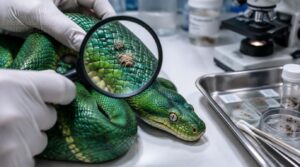
Treatment starts with accurate identification. Before you reach for any medication, you need to know exactly what you’re dealing with. There are three areas to check: external signs on the snake’s body, internal signs from its behavior and output, and veterinary diagnostic tests that confirm what you can’t see.
Tracking these details in advance—and reviewing a comprehensive guide to recognizing signs of illness and shedding problems in pet snakes—puts you and your vet in a much stronger position from the start.
External Parasite Signs
Scale discoloration and relentless flashing are your first alerts to snake mites. Ectoparasites leave unmistakable evidence on the skin. Look for these five signs:
- Red-brown dust or speckling on scales
- Rubbing or flashing against enclosure walls
- Patchy retained shed rather than full-body slough
- Focal reddening at scale margins
- Tiny moving dots clustered near the head or water dish
Act immediately.
Internal Parasite Signs
Skin signs are visible. Endoparasites stay hidden but send clear signals. Watch for persistent regurgitation after feeding, especially if it repeats across multiple meals. That’s not a feeding error; it’s a red flag.
Weight loss without reduced appetite points to intestinal worm burden. Loose, watery, or mucus-heavy stools suggest helminths damaging your snake’s gut. Schedule fecal flotation and fecal exams. At home, a reptile fecal float test kit lets you screen for helminth eggs between vet visits, catching problems early.
Early detection is key, so familiarizing yourself with the full range of warning signs outlined in this guide on recognizing intestinal parasite symptoms in snakes can help you catch an infestation before it becomes life-threatening.
Veterinary Diagnostic Tests
Those signs demand confirmation. Your vet won’t guess; they’ll test properly.
Run all five diagnostics:
- Fecal exams to visually identify parasite eggs or oocysts
- Fecal flotation to concentrate low-shedding stages missed on direct smear
- Blood tests to detect systemic infection or anemia
- Radiography and ultrasound to locate internal tissue-stage parasites
- PCR screening for definitive species-level identification when morphology is ambiguous
Quarantine The Snake and Prevent Transmission
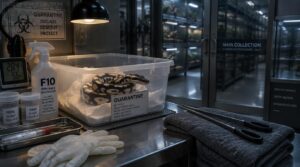
Once you’ve identified a potential parasite, act immediately. Isolation isn’t optional. Move the affected snake to a dedicated quarantine enclosure in a physically separate area before anything else.
Keep all quarantine supplies, towels, tubs, and tools in that space only. Don’t carry equipment between areas. Parasite transmission happens through fomites, contaminated surfaces, mites, and shared water sources, so your hands and tools are vectors too. Use biosecurity measures consistently: wash thoroughly between handling groups, change gloves, and work through your collection in order, with quarantine last.
Don’t end isolation after the first clear result. Intermittent parasite shedding means one clean fecal test isn’t confirmation. Run repeated checks and wait for follow-up diagnostics before returning the snake to the main collection.
Control Snake Mites and Other Ectoparasites
Controlling mites takes a three-part approach, and you need to get all of them right. Each step builds on the last, so skipping one means the infestation survives. Here’s what that process looks like.
Knowing which mite species you’re dealing with shapes every decision that follows — identifying snake parasites at home helps you match the right treatment to the actual infestation before you begin.
Safe Ectoparasite Treatment
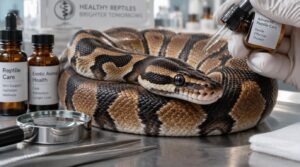
Don’t guess the product. Ectoparasites like snake mites require veterinarian-approved formulations only. Permethrin-based treatments work, but concentration and application method determine safety.
Confirm your snake:
- Isn’t in pre-shed or actively shedding
- Has no open wounds or severe dermatitis
- Hasn’t been recently fed or disturbed
- Is quarantined from other reptiles
Predatory mites offer a biological option worth discussing with your vet.
Enclosure Decontamination Steps

Strip the enclosure. Environmental decontamination starts with substrate, feces, and shed skin removal. Organic debris shields parasites from disinfectants. If fecal exams confirmed internal parasites, treat the entire space as contaminated. Once the enclosure is stripped bare, applying a dedicated reptile-safe disinfectant spray to all nonporous surfaces helps eliminate any pathogens organic debris was hiding.
| Item | Cleaning Action | Disposal or Reuse |
|---|---|---|
| Substrate | Remove and bag immediately | Discard entirely |
| Water bowl | Bleach soak | Reuse after fully drying |
| Hides | Steam-clean thoroughly | Replace if porous |
| Glass walls | Scrub, then disinfect | Keep; dry fully first |
| Décor | Bake or soak in bleach | Replace if porous |
Enclosure sanitation means scrubbing biofilm off nonporous surfaces before disinfecting.
Maintain strict biosecurity measures: dedicate tools to dirty work. Quarantine fails the moment your soiled gloves touch clean surfaces.
Stocking up on disposable nitrile gloves for reptiles means you can swap pairs between dirty and clean tasks without ever breaking the contamination barrier.
Breaking The Mite Life Cycle

Imagine treating your snake twice but skipping the enclosure. Snake mites bounce back from off-host eggs every time. Break the parasite lifecycle by striking every stage at once:
- Apply permethrin-based treatments to the snake.
- Run environmental decontamination, removing substrate and scrubbing all hides.
- Repeat within the mite development window to catch newly hatched stages.
Predatory mites can support long-term control.
Treat Worms and Protozoa With Veterinary Care
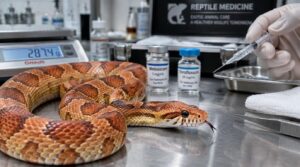
A corn snake presenting with chronic weight loss and loose stools recently tested positive for both Strongyloides and Cryptosporidium at the same time. The vet prescribed two entirely separate treatment courses.
Endoparasites don’t yield to one drug. Nematodes respond to Fenbendazole, while tapeworms need Praziquantel. Protozoal infections require antiprotozoal medication, because standard dewormers can’t clear protozoa from gut tissues.
| Parasite Type | Drug Class Used |
|---|---|
| Nematodes | Fenbendazole |
| Tapeworms | Praziquantel |
| Protozoa | Antiprotozoals |
Your vet calculates each dose by your snake’s exact body weight, not a rough estimate. Reptile veterinary medicine uses staged dosing protocols to catch life-cycle stages that survive the initial drug exposure. Complete the full prescribed course. Stopping early because your snake’s symptoms improve doesn’t mean the infection is cleared.
Prevent Reinfection and Confirm Parasite Clearance

Treatment isn’t the finish line. Parasites persist in the environment long after your snake tests clean, and one missed life stage puts you right back to square one.
Treatment ends the symptoms, not the threat—one missed life stage starts the cycle over
Confirm clearance with repeated fecal testing. Fecal flotation misses parasites that shed intermittently, so request PCR where it’s available. A single negative result means nothing. Run follow-up tests at least twice, a few weeks apart, before you trust them.
Keep your snake in quarantine until both results are negative. Substrate hygiene during this window is critical. Remove feces immediately, replace porous materials, and sanitize hard surfaces only after clearing organic debris first. Switching to reptile substrate liner paper bedding makes daily fecal removal faster and cuts the risk of recontamination between cleanings.
Disciplined reptile husbandry and consistent reptile health monitoring close the loop. That’s what separates a one-time treatment from lasting control.
Frequently Asked Questions (FAQs)
What is the best dewormer for snakes?
There’s no single best dewormer.
Fecal flotation first identifies which endoparasites your snake has, nematodes, cestodes, or protozoa. Fenbendazole targets roundworms; Praziquantel clears tapeworms. Anthelmintic therapy only works when it matches your confirmed parasite type.
What kills parasites quickly?
A single female snake mite can lay dozens of eggs, so slow treatments fail. What kills fastest: veterinary parasiticides. Use Ivermectin or approved topicals for mites, Fenbendazole for worms, Metronidazole for protozoa.
What will vinegar do to a snake?
Here’s the truth: vinegar won’t kill snake mites or penetrate scales.
It lowers skin pH briefly, irritates sensitive respiratory tracts with fumes, and fails against hidden eggs.
Skip it.
In fact, snakes’ protective scales repel liquids, which is why vinegar as a snake repellent is considered unreliable even for deterring them.
How can you tell if your snake has parasites?
Exaggeration aside, missing parasites can kill your snake. Check for moving dark specks, rubbing, dull skin. Watch for weight loss, abnormal stools, regurgitation. Confirm with fecal flotation and blood tests at your vet.
How to get rid of parasites in snakes?
Isolate your snake immediately and clean the enclosure. Get a vet to determine whether you’re facing ectoparasites like mites or endoparasites like worms, prescribe targeted drugs including fenbendazole, and use fecal flotation to confirm clearance.
What are 4 ways of controlling parasites?
A single infested snake can contaminate your entire collection within weeks.
Quarantine new arrivals, decontaminate enclosures to break the mite cycle, feed only parasite-free prey, and don’t skip preventive veterinary care with routine fecal flotation.
What is the medicine for snakes with parasites?
Studies show over 90% of captive snakes carry at least one parasite. Fenbendazole takes care of roundworms, Praziquantel eliminates tapeworms and flukes, Ivermectin targets mites, Metronidazole fights protozoa, and Paromomycin treats cryptosporidiosis. Always confirm vet dosing first.
How to tell if your snake has parasites?
Lethargy, weight loss, and regurgitation are often the first clear warning clues. Visible mites or foul stools push suspicion higher. Confirm with oocyst detection via fecal testing, or radiography and ultrasound for deeper internal assessment.
How can parasites impact a snakes lifespan?
Even a minor infestation quietly devastates your snake’s health. Weight loss, lethargy, and cachexia develop gradually, damaging gut tissue and essential organs. Without snake parasite control, parasitology confirms these infections become a slow death sentence.
Are wild-caught snakes more prone to parasites?
A wild-caught boa fresh from the field will almost certainly carry nematodes, Cryptosporidium, or ectoparasites picked up from prey, soil, or infected animals. Captive-bred snakes face far less risk. Always quarantine your wild-caught snake immediately.
Conclusion
A single missed mite check wiped out a breeder’s entire ball python collection in under six weeks. Parasites don’t wait, and neither should you.
Snake parasite control methods only work when you commit to acting on the earliest warning signs, not the obvious ones. Isolate fast. Treat completely. Confirm clearance with follow-up fecals. Your snake can’t tell you it’s struggling, but it’s showing you every day. Learn to read those signals before they become irreversible.