This site is supported by our readers. We may earn a commission, at no cost to you, if you purchase through links.
Your ball python seems off. She’s soaking more than usual, ignoring her prey, and her last shed came out patchy and incomplete. Most owners chalk it up to stress or humidity. Parasites rarely cross their minds until things get much worse.
That’s the problem. Snakes are quiet about suffering, hiding symptoms until a parasite load becomes serious. External mites can multiply by the thousands before you spot a single one. Internal worms silently steal nutrients while your snake slowly loses weight. Knowing how to identify snake parasites early is the difference between a quick fix and a genuine health crisis.
Table Of Contents
- Key Takeaways
- How to Identify Snake Parasites
- What Common Snake Parasites Look Like
- Signs Your Snake May Have Parasites
- How Veterinarians Diagnose Snake Parasites
- What to Do After Finding Parasites
- Frequently Asked Questions (FAQs)
- How to tell if your snake has a parasite?
- How do you identify snake mites?
- How can you tell if an organism is a parasite?
- How can I identify a parasite?
- How can snake parasites affect their behavior?
- Are there natural remedies for snake parasites?
- Can parasites be transmitted to humans?
- Do snake parasites affect breeding success?
- How do environmental changes impact parasite loads?
- Can snake parasites spread to other pets?
- Conclusion
Key Takeaways
- Snakes hide suffering well, so watching for early red flags like excessive soaking, refused meals, and patchy sheds can mean the difference between a quick fix and a serious health crisis.
- Mites, ticks, roundworms, and protozoa each look and behave differently, so knowing what you’re actually searching for — on the skin, in the waste, and in the water bowl — makes early detection far more reliable.
- A single clean fecal test doesn’t rule out parasites, since many shed eggs only intermittently, which is why vets often combine multiple stool samples, blood panels, and sometimes imaging or endoscopy to get the full picture.
- Once parasites are confirmed, isolation, full enclosure disinfection, and completing the entire prescribed treatment course are non-negotiable — cutting any of those steps short gives surviving parasites a clear path to reinfect your snake.
How to Identify Snake Parasites
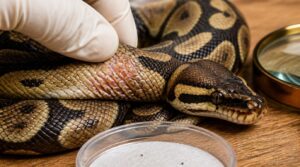
Catching parasites early makes treatment far easier, so a little detective work goes a long way. You don’t need a lab coat, just a good eye and a consistent routine when checking your snake. Here’s where I recommend you start, from nose to tail.
If you spot anything unusual on the belly or lower scales, it’s worth brushing up on ball python scale rot symptoms and causes so you can rule it out quickly.
Inspect Skin and Scales
Start at the skin, because that’s where parasites announce themselves first parasites announce themselves. Run your fingers along your snake’s body, feeling for bumps under the scales or rough, uneven texture. Look closely for tiny black dots between scales, mite debris that won’t wipe away like ordinary dirt. Watch for crusty patches, dull skin irritation, or swelling that makes the body look lumpy.
Keep in mind that a thorough reptile dermatologic examination often includes skin cytology, acetate tape impressions, and skin scrapings to confirm ectoparasite infestations.
Check Eyes, Chin, and Vent
Once you’ve checked the body, move to the three spots mites love most: eyes, chin, and vent. These warm, moist areas are prime real estate for unwanted hitchhikers.
- Eyes – look for moving specks or cloudy discharge
- Chin – inspect the mental groove for black dots
- Vent – check for redness or swelling
- Skin folds – use white paper to dislodge mites
Any skin irritation here warrants a veterinary physical examination and fecal test soon.
Examine Feces and Urates
Your snake’s waste tells a story, so learn to read it. Collect fresh fecal samples within 30 minutes, since parasites die quickly outside the body. Keep them cool, never frozen. A reptile fecal sample collection kit makes the process easier, keeping samples properly contained and at the right temperature until your vet can run the test.
| What You See | What It Might Mean |
|---|---|
| Loose, watery stool | Protozoan infection |
| Blood or mucus | Intestinal parasites |
| Visible worms | Heavy roundworm load |
| Normal stool, poor weight | Still test; shedders hide |
| Green urates | Liver or kidney concern |
A fecal test catches what your eyes miss.
Track Appetite and Weight
Waste tells one story, but your scale tells another. Pair a weekly gram weigh-in with your feeding log, since meals and sheds skew short-term numbers. Watch for:
- A refused meal after a normal routine
- On-again, off-again feeding
- Falling weights across several weeks
- Flat growth in a juvenile
- Weight loss despite normal stools
Record dates, grams, and body condition tracking notes. Progressive loss plus poor appetite suggests parasites hiding from fecal examination. Call your vet.
A detailed look at snake parasite symptoms and treatment options can help you recognize warning signs like visible mites or bloody stool before your vet appointment.
Watch for Behavior Changes
Your snake’s behavior is a quiet but reliable report card. Watch for sudden hiding, unusual soaking, or unexpected aggression during handling. Lethargy, reduced tongue flicking, and repetitive rubbing against décor all signal discomfort. Parasites like mites cause constant irritation, turning even a calm snake irritable. Log any changes, since behavioral shifts often surface before diarrhea or regurgitation does.
Behavioral shifts in your snake often surface before diarrhea or regurgitation does
What Common Snake Parasites Look Like
Not all parasites are created equal, and knowing what you’re actually looking for makes a huge difference. Snake parasites come in a few distinct forms — some you can spot with the naked eye, others only show up under a microscope. Here’s a closer look at the most common ones you might encounter.
Snake Mites
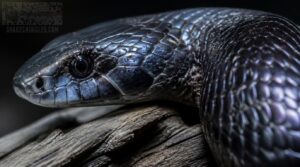
If you see what looks like tiny moving black specks on your snake, you may be dealing with mites. These ectoparasites, scientifically known as Ophionyssus natricis, measure just 0.5 to 1 millimeter and move quickly when disturbed.
They hide around the eyes and vent, causing skin irritation and serious anemia over time. A solid quarantine protocol stops them from spreading.
Ticks and Leeches
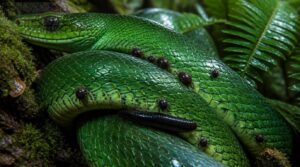
These external parasites look like small, brownish bumps clinging tight to the scales. Ticks latch onto thinner skin near the neck, vent, or between scales, causing real irritation. Engorged ticks swell visibly as they feed, making them easier to spot.
Leeches are flatter and worm-like, usually found on snakes from aquatic environments. Both need prompt veterinary attention to remove safely.
Roundworms and Hookworms
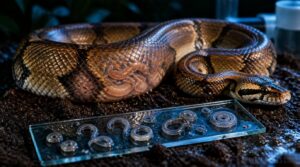
Unlike external parasites, roundworms and hookworms are hidden inside your snake’s digestive tract. You won’t spot them on the scales, but a fecal examination can reveal their eggs under a microscope.
Hookworms attach to the intestinal lining and feed on blood, sometimes triggering weight loss and poor appetite. Roundworms shed eggs through waste, quietly building up without obvious warning signs.
Pinworms
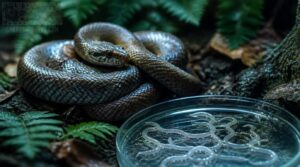
Pinworms are small, white worms that mainly affect lizards and tortoises, though snakes can carry them too. A veterinary diagnosis usually involves fecal flotation or a direct fecal examination to spot their oval eggs.
If detected, anthelmintic therapy clears the infection. One catch: rodent pinworm eggs sometimes appear in snake feces after a rodent meal but won’t infect your snake.
Protozoan Parasites
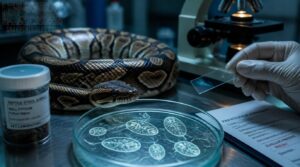
Protozoa are single-celled parasites completely invisible to the naked eye.
Species like Entamoeba invadans and Cryptosporidium quietly damage your snake’s gut lining over time.
Sarcocystis zuoi can be particularly dangerous.
Only diagnostic testing with fresh stool samples can catch them reliably. Common signs to watch for:
- Loose or bloody stools
- Unexplained weight loss
- Vomiting or regurgitation
- Lethargy and poor appetite
Signs Your Snake May Have Parasites
Snakes can’t tell you when something’s off, so you’ll need to read the signs they leave behind. A few key changes in behavior, appearance, or digestion are usually the first red flags that parasites might be at play. Here’s what to watch for:
Excessive Soaking or Rubbing
When your snake won’t leave its water dish, mites are often the reason. Excessive soaking is how snakes try to drown those unwanted hitchhikers.
Watch for scale rubbing behavior against walls or decor, too.
During symptom observation, check the water bowl for tiny black specks, which are usually drowned mites or droppings.
Prolonged soaking can also lead to retained shed.
Poor Appetite and Weight Loss
Soaking isn’t the only red flag worth watching. Poor appetite and weight loss are among the clearest signs that parasites are quietly draining your snake from within.
Parasites steal nutrients directly, so your snake can lose weight even while feeding normally. Watch for:
- Refusing meals or losing interest in prey
- Visible spine and rib definition when you handle them
- Progressive weight loss over two to four weeks
These clinical signs warrant prompt veterinary attention.
Vomiting or Regurgitation
Weight loss isn’t always the only gut-level warning sign. Parasites can also trigger vomiting or regurgitation in snakes, and knowing the difference matters. Regurgitation is passive, happens within an hour or two of eating, and brings up mostly undigested food. Vomiting is forceful, with visible abdominal effort. Either one, especially repeatedly, is a signal to collect fecal samples and call your vet.
Diarrhea and Abnormal Stools
Gut issues don’t stop at vomiting. Diarrhea and abnormal stools are equally telling, especially when droppings turn watery or smell noticeably worse than usual.
Watch for:
- Watery, unformed droppings
- A stronger or foul odor than normal
- Mucus or blood in stool
- Off-color or chalky urates
Protozoa and strongylid nematodes are often the culprits. A fecal flotation test confirms it.
Skin Lesions and Poor Shedding
Skin problems and bad sheds often go hand in hand. If you spot crusty patches, irregular scales, or tiny black dots moving along the skin, those are red flags.
Mites, fungal infections, or blister disease from poor humidity can all cause skin irritation and trigger retained shed. Prolonged soaking is your snake’s way of asking for help.
How Veterinarians Diagnose Snake Parasites
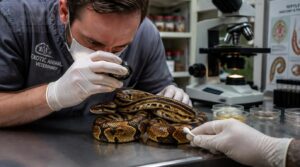
Once you suspect something’s off with your snake, the next step is getting a proper diagnosis — and that means a visit to a reptile-savvy vet. Vets don’t just take a quick look and guess; they use a range of tools and tests to figure out exactly what you’re dealing with. Here’s what the diagnostic process usually looks like.
Physical Examination
Your vet starts by looking your snake over from nose to tail, checking scale texture and skin for crusty patches, black dots, or irritation that suggest mites or secondary infections.
Vent inspection is critical too, since parasites love warm, protected areas. They’ll also feel along the body for lumps or muscle tone changes — things even a careful owner can miss.
Multiple Fecal Tests
One negative result doesn’t rule out infection. Many snake parasites shed eggs intermittently, so a single fecal float test or fecal flotation can miss them entirely.
Your vet may collect multiple fecal samples and use centrifugal flotation to concentrate any hidden eggs or cysts. If signs persist after a clean result, fecal reexamination with fresh samples is the next step.
Blood and Laboratory Testing
Blood tests dig deeper than fecal analysis alone. Your vet may run a complete blood count (CBC) to catch anemia or rising white blood cell counts, both signs of parasitic stress.
A blood chemistry panel checks organ function, since heavy infections can quietly damage the liver or kidneys.
For blood-borne parasites like Hepatozoon, a blood smear reveals the culprit directly.
X-Rays and Ultrasound
Imaging is like a window into your snake’s body. X-rays reveal bone-level changes and can highlight dense parasite masses built up inside. Ultrasound steps in where X-rays fall short, picking up soft tissue problems like fluid pockets or cysts that radiation simply can’t define well.
Your vet won’t always need both, but together they give a much fuller picture.
Endoscopic Examination
Even with radiology and imaging techniques, some parasites still hide in plain sight.
Endoscopic examination sends a camera inside your snake’s body cavity or stomach for endoparasite identification:
- Cryptosporidium oocysts in the stomach lining
- Pentastome parasites lodged in airways
- Mucosal thickening or damage
- Biopsy samples for histology
This lifts diagnostic accuracy a lot. Anesthesia is required, but recovery is usually smooth.
What to Do After Finding Parasites
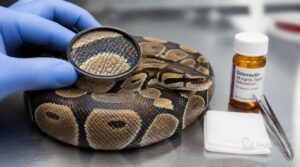
Finding parasites on your snake isn’t a reason to panic — it’s a reason to act. The good news is that most cases are very treatable when you follow the right steps. Here’s exactly what you need to do.
Isolate The Affected Snake
The moment you suspect parasites, isolate your snake right away. Move it to its own enclosure with dedicated tools (tongs, a water bowl, a hide) that never touch your other, healthy snakes. A simple plastic tub quarantine enclosure works perfectly for this — easy to clean, cheap to replace, and dedicated solely to the sick animal.
Quarantine is practical environmental control that stops parasites from spreading. Always handle the affected snake last, and don’t lift isolation until a vet gives you the official all-clear.
Contact a Reptile Veterinarian
Once your snake is isolated, your next step is finding a reptile-experienced vet. Not every clinic works with snakes, so use the ARAV Find a Vet tool to locate a specialist near you.
Bring to your appointment:
- Daily behavior and appetite notes
- A fresh stool sample for fecal flotation or direct smear
- Records of any past treatments
- Skin and shedding observations
Follow Prescribed Treatment
Once your vet hands you a treatment plan, follow it exactly, even when your snake starts looking better.
Anthelmintic therapy (deworming medication) usually runs for several weeks, and stopping early seriously undermines treatment efficacy. Stick to the vet-recommended protocol, dose at consistent times, and note any side effects. A follow-up fecal flotation will confirm whether the deworming protocol actually worked.
Disinfect The Entire Enclosure
Your treatment plan targets parasites inside your snake, but environmental disinfection matters just as much. A dedicated reptile enclosure cleaning kit takes the guesswork out of sanitation, bundling the brushes, sprayers, and reptile-safe solutions you need in one place.
Throw out all contaminated substrate (no reusing it), remove hides and décor, then scrub every surface with soap and water. Apply a reptile-safe disinfectant following the label’s exact dilution and contact time.
Fresh solution every session. Skipping enclosure sanitation lets surviving parasites reinfect your snake.
Schedule Follow-Up Testing
Clearing parasites isn’t a one-and-done event. Follow-up fecal testing two to four weeks post-treatment confirms the job is done. Your vet will use fecal flotation and direct smear to catch any remaining eggs or adults.
Even if your snake looks healthy, subclinical monitoring matters. Stick to the vet-recommended protocol and watch for symptom progression, because some parasites stage quiet comebacks.
Frequently Asked Questions (FAQs)
How to tell if your snake has a parasite?
How do you know something’s wrong before it gets serious? Watch for poor appetite, weight loss, vomiting, or abnormal stools, and always check your snake’s skin for irritation or tiny moving dots between the scales.
How do you identify snake mites?
Ophionyssus natricis, the common snake mite, appears as tiny moving black specks on scales. Look for skin irritation near the eyes and vent, then ask your vet about a skin scraping to confirm ectoparasite irritation.
How can you tell if an organism is a parasite?
A parasite thrives by slowly destroying its only home. It feeds off a host, causing real harm like skin irritation and weight loss. External parasites cling to the surface, while internal parasites lurk within.
How can I identify a parasite?
You can spot a parasite by looking for weight loss, abnormal stools, or vomiting. Visible mites and ticks may appear right on the skin, while a vet’s skin scraping or fecal flotation confirms the rest.
How can snake parasites affect their behavior?
Ever wonder why your snake suddenly seems "off"? Parasites steal nutrients, triggering weight loss, poor appetite, vomiting, and abnormal stools. That constant stress compromises immunity too, leaving your snake lethargic and much less responsive.
If your corn snake keeps refusing meals or hiding constantly, it’s worth reviewing the common signs of stress in pet corn snakes to rule out underlying issues.
Are there natural remedies for snake parasites?
Natural remedies like neem or garlic can’t replace antiparasitic medication like fenbendazole, a proven anthelmintic therapy. Proper deworming really does need a vet, even during quarantine. Your snake’s health is genuinely worth the real thing.
Can parasites be transmitted to humans?
Yes, some snake parasites can jump to you. Zoonotic transmission happens mainly through fecal contact or direct handling. Strong biosecurity habits and thorough handwashing keep that risk manageable, but check with your vet if you’re worried.
Do snake parasites affect breeding success?
Think of parasites as silent thieves, quietly robbing your snake of the energy it needs to reproduce. High parasitic load suppresses the immune system, reduces clutch sizes, and can cut fertility by up to 20%.
How do environmental changes impact parasite loads?
Temperature swings and poor humidity control can throw off the parasite life cycle, speeding up egg hatching. Stress from an unstable thermal gradient also weakens your snake’s immune defenses, making parasites far harder to clear.
Can snake parasites spread to other pets?
Imagine your dog sniffing around your snake’s enclosure, then licking his paws minutes later. Cryptosporidium oocysts in shed feces can survive on shared surfaces and infect dogs or cats through exactly that kind of contact.
Conclusion
Investigate this: most snake keepers don’t lose their animals to a sudden illness. They lose them to slow, invisible problems they never noticed in time.
Knowing how to identify snake parasites early changes that story entirely. Your snake can’t tell you something’s wrong, so your eyes and instincts have to speak for her.
Healthy scales should look smooth and evenly textured, so a guide to abnormal snake skin texture helps you spot rough, raised, or crusty patches before they become serious.
Stay observant, act fast, and work closely with a reptile vet. That’s the real difference between a close call and a tragedy.