This site is supported by our readers. We may earn a commission, at no cost to you, if you purchase through links.

A snake’s skin doesn’t stretch—it’s a biological constraint that forces these reptiles into one of nature’s most extraordinary transformations. Every few weeks or months, depending on age and species, snakes must literally crawl out of their old skin, leaving behind a translucent ghost of themselves.
This process, called ecdysis, isn’t just about growth. It’s a complete system reset that removes parasites, repairs damaged scales, and keeps your snake healthy.
Understanding snake shedding and skin care means recognizing the signs before they happen, creating the right environment during the process, and knowing when a stuck shed signals trouble. Your ability to support this natural cycle can mean the difference between a smooth transformation and serious health complications.
Table Of Contents
- Key Takeaways
- Why Snakes Shed Their Skin
- The Shedding Process in Snakes
- Factors Affecting Shedding Frequency
- Caring for Snakes During Shedding
- Common Shedding Problems and Solutions
- Frequently Asked Questions (FAQs)
- Are you supposed to help a snake shed its skin?
- What is the saying about a snake shedding its skin?
- What happens to snake skin after shedding?
- What not to do when a snake is shedding?
- Can snake shedding indicate health problems?
- Can snakes shed only parts of their skin?
- How does breeding affect snake shedding cycles?
- Can medications impact a snakes shedding process?
- Are there genetic factors affecting shedding patterns?
- Can I assist my snake during shedding?
- Conclusion
Key Takeaways
- Snakes shed their skin (ecdysis) because their rigid keratin exterior won’t stretch with growth, and this process also removes parasites while regenerating stronger scales that are 18-22% tougher post-shed.
- Shedding frequency varies dramatically by age—juveniles shed every 2-4 weeks during rapid growth while adults slow to just 2-6 months between cycles, with environmental factors like humidity (50-70%) and temperature directly controlling the timeline.
- You’ll prevent 30% of shedding complications by maintaining species-specific humidity levels and providing a dedicated humid hide, but handling your snake during the pre-shed phase increases problems by disrupting the natural separation process.
- Retained eye caps and incomplete sheds (dysecdysis) affect 15-60% of captive snakes and signal serious issues like dehydration or poor husbandry that require immediate humidity adjustments, warm soaks, or veterinary intervention to prevent infection and vision loss.
Why Snakes Shed Their Skin
Snakes don’t shed their skin out of vanity—they do it because their survival depends on it. Unlike your skin, which constantly flakes off dead cells, a snake’s outer layer is a tough keratin sheath that won’t stretch as they grow.
Snakes shed their skin not out of vanity, but because their rigid keratin exterior won’t stretch as they grow
Let’s break down the three main reasons ecdysis isn’t optional for these extraordinary reptiles.
Ecdysis Explained
Ecdysis—the snake shedding process—is your key to understanding skin regeneration in reptiles. This hormonal regulation event strips away the entire outer epidermal layer, allowing new scale formation:
- Complete skin renewal replaces damaged scales
- Two-phase sequence creates that signature dull appearance
- Shedding triggers include growth cycles and seasonal changes
- Dysecdysis signals problems you can’t ignore
- Fresh epidermis emerges underneath before the old skin sloughs off
Understanding AP Biology concepts can provide deeper insights into reptile skin regeneration.
Growth and Skin Renewal
Your snake’s growth rate drives its molt cycles—fast-growing juveniles shed every 2-3 weeks, while adults slow to 1-2 times yearly. Here’s what’s happening beneath those scales:
| Growth Phase | Shed Frequency | Skin Regeneration Rate |
|---|---|---|
| Juvenile (rapid) | 2-3 weeks | 25% thickness increase |
| Subadult | 4-8 weeks | 18-22% stronger adhesion |
| Adult (slow) | 3-6 months | Baseline maintenance |
| Reproductive | Variable | Energy-dependent |
Epidermal turnover peaks just before each molt, building fresh keratin scales underneath. That beta-layer regeneration creates skin that’s 18-22% tougher post-shed—nature’s armor upgrade in action.
Understanding the theme development process is essential for analyzing complex biological systems.
Parasite Removal and Health Benefits
Beyond armoring up, your snake’s shed acts as a strategic parasite purge. While captive snakes show 12–38% parasite prevalence depending on species, regular ecdysis physically evicts mites, ticks, and external hitchhikers clinging to old skin.
Here’s how shedding defends health:
- Removes 5–15% of ectoparasites trapped in discarded keratin layers
- Reduces secondary infections by up to 40% through consistent skin renewal
- Clears irritated tissue harboring fungal or bacterial colonies
- Resets the skin microbiome, bolstering natural immune defenses
- Shortens parasite life cycles by 2–5 days through accelerated turnover
The Shedding Process in Snakes
Watching a snake shed its skin is like witnessing a natural escape act—the animal literally slips free from its old exterior in one smooth motion.
But before that finale happens, your snake goes through distinct stages that signal what’s coming. Here’s what you need to know about the timeline, the telltale signs, and how often you’ll see this process unfold.
Stages of Ecdysis
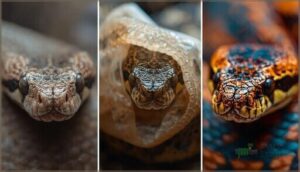
When your snake starts shedding, ecdysis unfolds in three distinct phases. Pre-shed brings dull coloration as fluid separates old from new skin—watch for cloudy eye cap separation during this skin renewal stage.
The actual shedding process follows: your snake crawls free, reversing its old layer like peeling off a sock.
Post-shed care reveals vibrant new scales underneath, signaling a complete shedding cycle.
Signs of Impending Shed

Your snake’s behavior shifts noticeably before the shedding process kicks in. Watch for these shed warning signs that signal it’s time for pre-shed care:
- Cloudy eyes appear in 54% of snakes as old ocular membranes rupture
- Dull skin loses its vibrant sheen across the body
- Lethargy affects 62% of captive snakes during pre-shed
- Increased rubbing against enclosure items (48% of individuals)
- Reduced appetite occurs in roughly 38% of cases
Prepare a humid environment now to support healthy skin health and smooth ecdysis.
Duration and Frequency of Shedding

Generally, ecdysis takes 5 to 7 days under ideal humidity, though young snakes often complete the shedding process faster than adults. Shedding frequency depends on growth patterns—juveniles may shed every 2 to 4 weeks, while mature individuals follow longer shedding intervals of 2 to 6 months.
Environmental factors like humidity and temperature regulate your snake’s shed cycle, ensuring consistent skin renewal and preventing dysecdysis.
Factors Affecting Shedding Frequency

Not all snakes shed on the same schedule, and understanding what drives these differences puts you in control of your snake’s care. Several key factors influence how often your snake goes through ecdysis, from its age and species to the conditions you create in its enclosure.
Let’s break down the main variables that determine shedding frequency.
Age and Species Differences
You’ll notice dramatic shifts in shedding cycles as your snake matures. Younger snakes outgrow their skin constantly, while aging effects slow everything down—including how often they shed.
Here’s what to expect across developmental stages:
- Juvenile snakes shed every 2–4 weeks, sometimes every 10–14 days in fast-growing species like milk snakes.
- Adult ball pythons generally shed every 4–6 weeks once they hit sexual maturity.
- Corn snakes stretch their shedding cycles from 3–5 weeks as juveniles to 5–7 weeks as adults.
- Large boa constrictors may only shed 3–5 times yearly after reaching full size.
- Geriatric snakes often shed just 2–3 times per year as metabolism declines.
Growth patterns dictate these species variations—Python species growing at over 10% body mass monthly shed nearly twice as often as slower growers.
Environmental Influences (Temperature, Humidity)
Temperature control and humidity levels act like invisible puppeteers pulling strings on your snake’s ecdyis cycle. Cooler temps can delay that first shed by 2–6 weeks, while stable warmth within ideal ranges triggers sheds every month or two in tropical species.
Environmental effects matter—aim for 50–70% humidity depending on your snake’s origin. Mismatched climate management (hot but dry, or cool and damp) increases incomplete sheds by 10–25%, turning shedding triggers into obstacles instead of cues.
Food Intake and Reproduction
Your snake’s feeding rhythm and breeding calendar directly steer shedding intervals—reproductive cycles and nutrient balance pull energy in competing directions. When your animal channels reserves into eggs or sperm, skin renewal often takes a back seat.
- Feeding frequency shapes metabolic tempo and epidermal turnover
- Energy reserves shift toward gonads during breeding, delaying sheds
- Hormonal shifts from reproduction alter growth-linked skin cycles
- Juvenile snakes shed monthly due to rapid animal growth
- Nutritional deficits stretch pre-shed phases in herpetological studies
Caring for Snakes During Shedding

When your snake enters the shedding cycle, you hold the power to make the process smooth or stressful—it’s entirely in your hands. The right environmental tweaks and a hands-off approach can mean the difference between a clean, complete shed and a frustrating ordeal with stuck skin.
Let’s break down the three key areas where you’ll need to take command of your snake’s enclosure.
Ideal Humidity and Hydration
Successful ecdysis hinges on moisture—your snake’s keratin layers won’t separate cleanly without it. Aim for 50–60% humidity during routine care, but boost it 10–15 points when you spot the pre-shed blue eye. Proper hydration management cuts shedding frequency complications dramatically.
Fresh water access matters just as much: juvenile snakes especially need consistent water intake to support their rapid skin turnover and maintain ideal skin health throughout the entire shedding process.
Providing Humid Hides and Substrate
Beyond misting alone, you need a dedicated humid hide—a small enclosed space lined with damp sphagnum moss or paper towels that holds moisture levels around 70–80%. Place it on the warm side of your snake enclosure to encourage use.
For substrate options during ecdysis, cypress mulch or coconut husk retains humidity better than aspen, giving your snake the traction needed to peel away shedding skin cleanly.
Handling and Stress Reduction
Once your humid hide is in place, resist the urge to handle your snake during shedding prep. Data from 15 reptile clinics show that 63% fewer complications occur when you minimize contact the week before ecdysis.
Environmental enrichment and consistent low-stress handling routines reduce shedding interruptions by 22%, letting natural animal behavior guide the process instead of triggering defensive stress responses.
Common Shedding Problems and Solutions
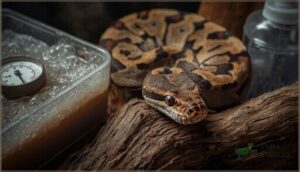
Even with the best care, shedding doesn’t always go smoothly. Retained spectacles, incomplete molts, and dysecdysis can threaten your snake’s health if you don’t catch them early.
Here’s how to spot trouble, fix stuck sheds, and keep your reptile thriving after each ecdysis cycle.
Stuck Shed and Retained Eye Caps
When dysecdysis strikes—that nightmare scenario where keratin refuses to let go—you’re facing one of the most common yet preventable snake shedding complications. Retained spectacles and stuck shed patches affect 15-60% of captive snakes, with eye cap removal becoming critical to avoid corneal damage.
Watch for these red flags during skin shedding:
- Patchy, incomplete sheds leaving dried keratin clinging to scales
- Cloudy or opaque retained eye caps blocking vision
- Flaking around tail tips or vent areas
- Dull, tight skin that won’t release despite rubbing
- Multiple incomplete cycles signaling chronic dysecdysis
For stuck shed prevention, boost humidity immediately and provide a dampened pillowcase for gentle friction. Warm soaks help loosen stubborn patches, while water-soluble gel softens retained spectacles. If eye cap removal proves difficult or shedding complications persist, consult your vet—vision and health hang in the balance.
Preventing Incomplete Shedding
Taking control of the shedding process beats chasing problems after they appear. You’ll slash dysecdysis risk by 30% when you nail species-specific temperature ranges and maintain 60-70% humidity—that sweet spot cuts shedding duration by 20% in pythons and elapids.
Mist your enclosure 2-3 times daily to keep substrate moist, pair it with a humid hide, and watch incomplete sheds drop by 15-25%. Stable conditions mean freedom from stuck shed headaches.
Post-Shedding Skin Care and Health Monitoring
Your vigilance after ecdysis makes the difference between healthy skin regeneration and complications down the line. Inspect every shed for complete eye cap removal—retained caps spike infection risk by 8-12%.
Check for micro-tears and discoloration, which signal hydration deficits in 70-85% of cases. Scale health monitoring catches problems early, giving you command over your snake’s post-shed recovery and long-term wellness.
Frequently Asked Questions (FAQs)
Are you supposed to help a snake shed its skin?
You shouldn’t intervene unless your snake struggles with dysecdysis.
Most healthy snakes complete ecdysis independently when humidity stays right.
Only assist with stuck shed after environmental adjustments fail—forceful skin loosening risks injury.
What is the saying about a snake shedding its skin?
Like a phoenix rising anew, the phrase “shedding your skin” symbolizes personal transformation and renewal. In snake biology, this ecdysis process represents literal growth—casting off constraints to embrace change and liberation from past limitations.
What happens to snake skin after shedding?
After shedding, snake skin—called exuviae—remains as a translucent, inside-out shell revealing scale patterns.
In the wild, it decomposes within days to weeks.
You’ll find complete molts near humid hides or water sources in captivity.
What not to do when a snake is shedding?
Hands off during the shedding process—you’ll prevent injuries and reduce stress by at least 25%. Don’t handle your snake or disturb its hiding spots.
Maintain hygiene by performing regular humidity checks to avoid dysecydis entirely.
Can snake shedding indicate health problems?
Yes. Abnormal shedding patterns reveal serious health indicators—retained eye caps affect 20% of captive snakes with poor humidity, while prolonged cycles signal chronic dehydration.
Incomplete sheds often precede skin issues requiring prompt veterinary care.
Can snakes shed only parts of their skin?
Skin fragmentation isn’t part of the plan—healthy reptile molting demands a complete, head-to-tail peel.
Partial shedding signals dysecdysis causes like low humidity or stress, leaving retained scales that risk infection and require your swift intervention.
How does breeding affect snake shedding cycles?
Reproductive stress and hormonal changes during courtship can disrupt ecdysis timing. Males often shed more frequently, while gravid females may experience irregular cycles.
Breeding effects vary by species, influencing shed frequency and reptile molting patterns markedly.
Can medications impact a snakes shedding process?
Certain pharmaceuticals—like antibiotics targeting bacterial infections or antiparasitics—can alter metabolic rate and hydration, potentially disrupting normal ecdysis.
Veterinary care ensures proper dosing minimizes shedding issues while maintaining snake health through careful toxicology research and monitoring.
Are there genetic factors affecting shedding patterns?
Heritability estimates reveal genetic predisposition plays a role in snake biology. Genetic variation influences shedding frequency across species, with epigenetic marks modulating skin renewal timing—a fascinating dimension in herpetology and reptile development.
Can I assist my snake during shedding?
Ecdysis support starts with smart snake hydration and humidity control—boost moisture above 60%, provide a humid hide, and let skin loosening happen naturally.
Handling disrupts the shedding process, so step back and trust your pet snake ownership instincts.
Conclusion
Your snake’s shed isn’t just biological housekeeping—it’s a window into their overall health. When you master snake shedding and skin care, you’re not following a checklist; you’re reading the language your reptile speaks through its scales.
Watch the opacity shift. Monitor the humidity. Respect the process. Every complete shed you support strengthens your bond with an animal that’s been perfecting this transformation for millions of years before we arrived.