This site is supported by our readers. We may earn a commission, at no cost to you, if you purchase through links.
A baby snake’s first home can make all the difference between calm curiosity and constant stress. One wrong move—like using dusty pine shavings or gritty sand—and you’ll end up with a wheezy, miserable hatchling.
That’s why finding the right snake substrate beddings for baby snakes matters so much. The right choice keeps delicate lungs clear, tiny bellies safe from impaction, and humidity right where it should be.
With so many options out there, it’s easy to feel lost, but a few proven picks can turn a risky setup into a thriving nursery. Let’s sort through the safest, most reliable bedding options for your little reptile.
Table Of Contents
- Best Bedding Types for Babies
- Matching Bedding to Snake Needs
- Unsafe Substrates to Avoid
- Preventing Impaction and Ingestion
- Cleaning and Replacing Bedding
- Top 8 Baby Snake Bedding Picks
- Frequently Asked Questions (FAQs)
- Where do snakes go in October?
- What type of bedding is best for snakes?
- What to keep a baby snake in?
- What can I use for my snakes bedding?
- What kind of bedding to use for snakes?
- What is the best substrate for a baby corn snake?
- How often should baby snake enclosures be disinfected?
- Can baby snakes share a enclosure with siblings?
- What temperature range suits most baby snake substrates?
- How does substrate choice affect baby snake shedding?
- Conclusion
Best Bedding Types for Babies
Choosing the right bedding for baby snakes makes all the difference in their health and comfort. Each type offers unique benefits depending on your hatchling’s needs and setup. Let’s look at the safest and most reliable options for their enclosures.
For a deeper dive into safe bedding choices, check out this beginner’s guide to snake substrate and bedding options for practical tips and recommendations.
Aspen Shavings for Dry-loving Hatchlings
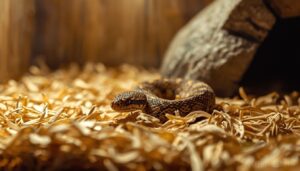
If you’re raising dry‑climate or low‑humidity snakes, Aspen bedding is a smart pick. Its Low Dust Benefits protect hatchlings’ lungs, and Rapid Drying fights mold. Lightweight Handling makes cleaning a breeze. You’ll appreciate Easy Spot-Cleaning for impaction prevention, especially with new, sick, or hatchling snakes. Here’s why Aspen shines:
Its high absorbency and odor control keep the enclosure fresh for longer periods.
- Low Dust Benefits
- Rapid Drying
- Lightweight Handling
- Mold Resistance
- Easy Spot-Cleaning
Coconut Fiber for Higher Humidity
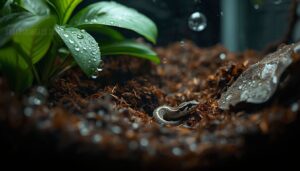
If your hatchlings need more humidity, coconut fiber is your best friend. Thanks to its Gradual Moisture Release and Fiber Porosity Benefits, it creates steady Humidity Buffering Effect for high-humidity snakes.
You get reliable Microclimate Buffering and Absorption Rate Control, all with a natural substrate that facilitates burrowing and impaction prevention.
It’s safe, easy to clean, and keeps baby snakes thriving.
Coconut fiber offers high water retention, holding 6–8 times its dry weight in water.
Cypress Mulch for Moisture Balance
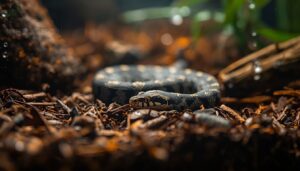
Looking for steady humidity without soggy spots? Cypress mulch offers Evaporation Slowdown and Thermal Insulation, keeping moisture levels stable for baby snakes.
Its fibrous texture creates Microhabitat Humidity and prevents surface drying, while Organic Matter Release promotes soil health.
You get reliable Humidity Buffering, natural substrate appeal, and chemical‑free bedding—perfect for moisture retention and humidity regulation, especially on warm days.
Paper Towels for Quarantine Setups
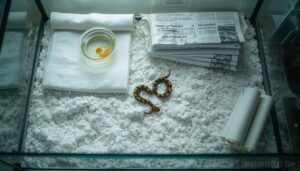
When you need reliable Contamination Control for new, sick, or hatchling snakes, newspaper or paper towels shine. Absorbency Efficiency means spills vanish fast, and Rapid Sheet Turnover keeps hygiene practices simple.
Their smooth surface lets you track Moisture Baseline and do Visual Health Checks without guesswork.
Plus, you lower impaction risk—no loose particles, just a clean bed for your babies.
Paper-based Bedding for Easy Cleaning
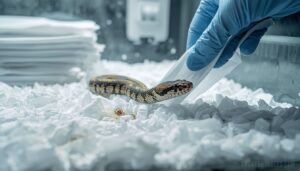
Even if you dread the mess, a paper-based substrate makes cleaning a breeze. Absorbent Layering locks in moisture, while Waste Visibility means you’ll spot trouble before it spreads.
Hygiene Efficiency shines—just lift, toss, and refresh. Lightweight Handling and Quick Disposal save your back and your time, making paper towels or newspaper the go-to for easy to clean setups:
- Spot soiled areas in seconds
- Swap out layers with zero fuss
- Keep surfaces dry and safe
- Toss old bedding straight in the trash
Mixed Substrates for Burrowing Support
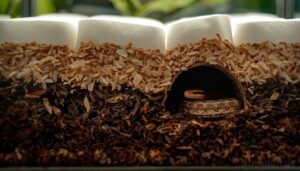
Because baby snakes crave safe tunnels, a Layered Substrate Design works wonders.
Mix coconut fiber, aspen shavings, and a pinch of Aeration Additives like vermiculite for Compaction Prevention and Microhabitat Diversity. Substrate mixing techniques let you dial in burrowing depth and Temperature Gradient Integration.
For quarantine, tuck in a layer of paper towels up top—easy to swap, gentle on tiny scales.
Matching Bedding to Snake Needs
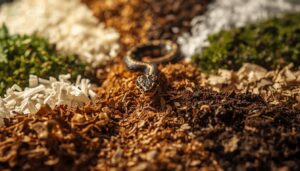
Choosing the right bedding means looking at your snake’s unique needs, from humidity to burrowing habits. Every baby snake has its own preferences and safety concerns.
Let’s walk through which substrates fit each situation best.
Humidity Needs by Baby Snake Species
Humidity isn’t just a number—it’s the heartbeat of snake health.
Humidity is the pulse of snake health, shaping every hatchling’s comfort, shedding, and survival
Ball python humidity should stay between 60–80%, while Corn snake humidity thrives at 40–60%. Rosy boa humidity sits lower, around 30–50%. Tree python humidity demands 70–90%, and Rainbow boa humidity likes 50–70%.
Match substrate moisture retention to your species; high humidity snakes need damp bedding, low humidity snakes need drier setups.
Burrowing Habits and Substrate Depth
Ever notice how hatchlings dig tunnels longer than their bodies? That’s nature’s way of keeping them cool and secure.
Aim for a substrate depth gradient—2 to 4 inches—so they can burrow and thermoregulate.
Choose a burrowing material with good substrate cohesion; newspaper or chemical-free bedding works for new, sick, or hatchling snakes.
Multiple access points prevent entrapment.
Enclosure Size and Bedding Volume
Think of your enclosure setup as a puzzle—every square inch counts. Floor Area Calculations help you scale bedding volume, so a 10-gallon tank needs about 3.5 quarts at a 1-inch depth.
Volume Scaling Factors matter for Growth Development Planning, especially with new sick or hatchling snakes.
Spill Impact Management is easier with paper-based substrate and careful Bedding Depth Guidelines.
Hatchling Safety and Particle Size
You’d be surprised how much particle size shapes hatchling safety. Stick with Particle Size Guidelines—2 to 6 mm is ideal for natural digging and low impaction risk.
Uniform Grain Consistency and Dust-Free Substrates, like coconut fiber or paper towels, protect Hatchling Respiratory Health.
Burrow Depth Limits matter too; shallow setups let your snake breathe easily and stay visible for checks.
Odor Control in Small Enclosures
Keeping odors in check starts with smart bedding and tight lidded covers.
Waste segregation and daily spot cleaning matter more than you might think.
Organic reptile bedding like coconut fiber or natural cypress mulch trap smells, while carbon filters and proper ventilation design help freshen the air.
Enzyme cleaners break down waste, making your setup easy to clean and odorabsorbing.
- Use odorabsorbing bedding
- Tight lidded covers
- Carbon filters for air
- Enzyme cleaners for waste
- Smart ventilation design
Moisture Retention Without Soggy Spots
Soggy bedding is just as dangerous as dry bedding.
A layered moisture gradient works best — coconut fiber or cypress mulch on the bottom for moisture retention, with newspaper or paper towels on top as a dry layer.
Mist lightly based on your humidity sensor readings, and don’t skip ventilation management. That high absorbency underneath keeps things damp where it counts, not on the surface.
Unsafe Substrates to Avoid
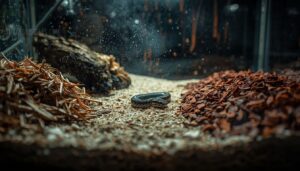
Not every substrate sold at the pet store is safe for your baby snake, and some can cause serious harm faster than you’d expect. A few common options look harmless on the shelf, but hide real risks — from toxic oils to impaction dangers.
Here’s what to keep out of the enclosure entirely.
Pine, Cedar, and Fir Shavings
Pine, cedar, and fir shavings might seem like budget-friendly, cushioning-soft choices for your snake enclosure — but resin toxicity makes them genuinely dangerous for hatchlings.
Unlike aspen shavings, pine, cedar, or fir shavings release harmful oils that irritate delicate respiratory systems.
Avoid:
- Pine shavings — resin-laced, not biodegradable materials
- Cedar shavings — strongest toxic oils
- Fir bark — resin toxicity risk
- Any softwood with scent
Sand and Calci Sand Risks
Sand and Calci sand look harmless, but both carry serious impaction risk for hatchlings. Calci sand is especially deceptive — marketed as “digestible,” yet Calcium Overdose from repeated ingestion can damage kidneys.
Fine Particle Aerosols trigger respiratory infections in snakes, while Moisture Unevenness creates hygiene nightmares.
| Risk | Why It Matters |
|---|---|
| Digestive Blockage | Sand clumps in tiny guts |
| Calcium Overdose | Disrupts kidney function |
| Particle Aerosols | Causes respiratory infections |
| Moisture Unevenness | Breeds bacteria and odor |
Gravel and Crushed Walnut Hazards
Gravel and crushed walnut shells might look natural, but they’re genuinely dangerous for hatchlings.
Sharp edges cause Skin Abrasions, fine dust triggers Eye Irritation, and walnut proteins act as an Allergen Trigger in sensitive snakes.
Both create serious Mold Growth Risk when moisture builds up.
Feeding Contamination is another concern — tiny particles cling to prey, increasing impaction risk considerably.
Scented and Clumping Litter Dangers
Scented and clumping cat litter might seem like a convenient option, but it’s one of the worst choices for a baby snake’s enclosure.
Fragrance Volatility means those artificial scents flood the air, causing Respiratory Stress in tiny hatchlings.
Clump Swelling after moisture contact creates a Gastrointestinal Blockage risk if swallowed.
Residue Persistence makes thorough cleaning nearly impossible — choose chemical-free bedding instead.
Dusty Substrates and Respiratory Irritation
Even fine dust can wreak havoc on a hatchling’s delicate respiratory system.
Tiny Dust Grain Dimensions make particles easy to inhale, triggering Respiratory Irritation Risks before you even notice a problem.
Prioritize dustfree options for effective dust control for reptiles:
- Coconut coir bedding stays low-dust and humidity-friendly
- Paper based substrate is clean and safe
- Avoid loose, powdery mixes entirely
Airborne Dust Exposure adds up fast in small enclosures.
Sharp or Chemically Treated Materials
Some substrates look harmless but hide real dangers. Sharp bark fragments or chemically treated wood can cut delicate hatchling skin or leach harmful oils into the enclosure.
Unlike tools engineered for edge retention and corrosion resistance through micro-porous coatings or chemical etching, your snake’s bedding should be the opposite — chemical-free, splinter-free, non-toxic, and dust-free.
Always choose materials made specifically for reptiles.
Preventing Impaction and Ingestion
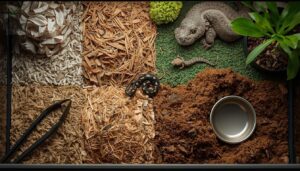
Impaction is one of the sneakiest risks for baby snakes, and it usually comes down to how you feed them.
A few simple habits can make a big difference in keeping your hatchling safe. Here’s what to do before, during, and after feeding time.
Feed on a Dish or Lid
One simple rule can save your hatchling from a dangerous mouthful of substrate: always feed on a dish. shallow reptile feeding plate, about 4–6 centimeters wide with a non-slip base, keeps prey in a designated feeding zone placement, and off the bedding entirely.
Ceramic or glass dishes win on hygiene maintenance — they’re easy to scrub clean. Dish Material Choice and Dish Size Guidelines really do matter here.
Keep Prey Dry During Feeding
Wet prey on damp substrate is a recipe for accidental bedding ingestion. Keep things simple with these three steps:
- Wipe each prey item with a dry tissue — Temperature Stable Prey at room temperature avoids condensation.
- Place it on a Paper Towel Base inside your Prey Isolation Zone dish.
- Spot Clean Feeding areas on coconut fiber, aspen bedding, or dry substrates after every meal.
A Low Condensation Enclosure makes feeding safety easy.
Use Paper Towels for Weak Feeders
For weak feeders — hatchling ball pythons especially — paper towels are your best friend. They create a Low Dust Environment with Reduced Ingestion Risk, so impaction stays off the table.
Quick Surface Cleanup takes under a minute, keeping Hygiene Efficiency high without stressing fragile babies. They also support Temperature Stability and feeding safety, giving humidity-sensitive snakes a clean, consistent surface every single time.
Choose Safer Particle Sizes
Particle size matters more than most people realize. Anything under 2mm — like fine dust — can get inhaled or swallowed by tiny hatchlings.
Aim for Ideal Chip Dimensions between 2 and 4mm, which hits that sweet spot of Burrow-Friendly Textures with Dust-Free Limits.
Coconut fiber and Microchip Fine Coconut Substrate nail Consistent Sizing naturally, keeping impaction risk low without sacrificing comfort.
Spot-clean Waste Before Feeding Time
Before feeding, do a quick Pre-Feeding Waste sweep. Grab your flashlight — Flashlight Waste Detection takes under two minutes — and check corners, under hides, and damp substrate edges.
Slip on Disposable Gloves, scoop out any waste, and set your Prey Dish on clean ground.
This simple Ammonia Reduction habit keeps scent cues fresh and your hatchling eating confidently.
Watch for Accidental Bedding Swallowing
Even after a clean feeding station, keep watch for Drooling Indicators or Wheezing Symptoms — subtle red flags that your hatchling may have swallowed bedding. Respiratory Distress Signals and Abdominal Pain Alerts often follow impaction.
Run routine Mouth Swab Checks to catch lodged particles early.
Chemical-free bedding with safe particle sizes dramatically cuts these health risks of inappropriate snake substrates, supporting burrowing and security without hidden dangers.
Cleaning and Replacing Bedding
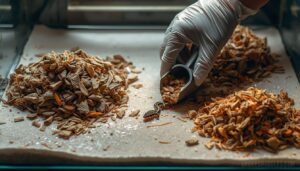
Keeping your hatchling’s enclosure clean isn’t complicated, but it does require a consistent routine. How often you clean — and what you’re watching for — depends a lot on the bedding you’ve chosen.
Here’s what you need to know to stay ahead of the mess.
Daily Spot-cleaning Routine
Think of spot cleaning as your daily two-minute check-in.
Remove waste promptly using sanitized tweezers or a small scoop — Tool Sanitization after every use keeps harmful bacteria from spreading.
Blot spills within 15 minutes for smart Moisture Control, then ventilate briefly for Odor Management.
Jot readings in a simple Log Documentation notebook.
consistent hygiene keeps your hatchling’s home safe between full replacements.
Full Replacement by Bedding Type
Each bedding type runs its own hygiene cycle. Aspen needs a full substrate turnover every three to four weeks — coconut fiber stretches to four to six. Cypress mulch and mixed substrates can go six to eight weeks with diligent spot-cleaning.
Paper towels? Swap them weekly, minimum. Nailing your replacement frequency and change timing is honestly one of the simplest ways to protect your hatchling’s health.
Mold, Mites, and Odor Checks
A musty smell lingering after cleaning is your first clue that something’s wrong beneath the surface. Stay ahead of problems with these three checks:
- Moisture Inspection – Press into the substrate; soggy spots breed mold fast.
- Mite Presence – Gray dust or biomass signals an infestation needing immediate mite control.
- Odor Source Identification – Persistent smell means mold prevention is overdue.
Chemical-free bedding and regular dust residue analysis keep your hatchling safe.
Safe Moisture Monitoring Habits
Your hygrometer is only as useful as where you put it. Place one near the warm hide and another at the cooler end for a true humidity control picture.
Use digital models with data logging frequency built in — they catch overnight moisture spikes you’d miss.
Do a calibration routine monthly, run ventilation checks weekly, and do a quick moisture indicator inspection daily by pressing your finger into the substrate.
When to Refresh Humid Substrates
Humid substrate doesn’t last forever, and waiting too long to refresh it is one of the most common rookie mistakes. Follow these Refresh Timing Guidelines:
- Normal conditions: Replace every 14 days
- Mold Detection Signs present: Refresh within 3–7 days
- Misting After Refresh: Mist twice in the first 24 hours
Use a Layer Replacement Strategy — add fresh substrate on top only, preserving the deeper moisture zones. This helps the Humidity Stabilization Period and steady moisture retention without disrupting your humidity control methods.
Keeping Hatchling Enclosures Hygienic
A clean enclosure is your hatchling’s first line of defense. Spot-clean waste daily using chemical-free bedding that’s easy to clean and won’t trap bacteria.
Follow solid Waste Disposal Practices — remove soiled substrate immediately. Apply Enclosure Surface Sterilization weekly, and practice UV Sanitization on hides.
Good Ventilation Management reduces odor control issues and goes a long way toward preventing mite infestations in wood-based bedding.
Top 8 Baby Snake Bedding Picks
Now that you know what to look for, picking the right bedding comes down to matching your snake’s needs with a product that actually delivers. These eight options cover a solid range of species, humidity levels, and enclosure setups.
Here’s what made the cut.
1. Zoo Med Forest Floor Substrate
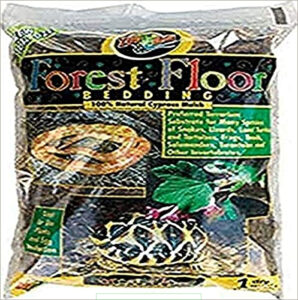
Zoo Med Forest Floor Substrate is one of the best all-around choices for baby snakes that need moderate to high humidity. It’s made from natural cypress mulch, so it mimics a real forest floor — and that matters more than you’d think.
Your hatchling gets a soft surface for gentle burrowing, steady humidity without soggy patches, and a low-dust environment that won’t stress their tiny respiratory systems.
At $29.98 a bag, it’s solid value, especially when mixed with coconut fiber for extra moisture control.
| Best For | Reptile and amphibian owners keeping tropical or humidity-loving species like snakes, frogs, skinks, or tortoises who want a natural-looking substrate that actually holds moisture well. |
|---|---|
| Brand | Zoo Med |
| Material | Cypress mulch |
| Main Use | Humid terrarium bedding |
| Weight | 10.6 lb |
| Dimensions | 18 x 12 x 6 in |
| Price | USD 29.98 |
| Additional Features |
|
- Holds humidity better than most wood-chip or aspen substrates, which is a big deal for shedding and tropical species
- Low-dust and soft underfoot — easy on your animal’s respiratory system and body
- Versatile and long-lasting; mix it with coconut fiber and one bag goes a long way
- A bit pricey per volume, especially if you’re running a large enclosure and doing frequent full changes
- Waste can hide in the mulch pretty easily — you’ll need to do a smell check or dig around to catch it
- It dries out over time, so you’ll need to mist regularly or it loses its humidity benefits
2. Zoo Med Eco Earth Coconut Fiber Substrate
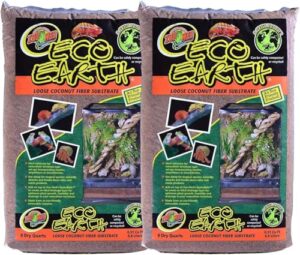
Another strong pick from Zoo Med, Eco Earth coconut fiber substrate is built from renewable coconut husks — not wood, not sand. That’s a big deal for tropical or humidity-loving hatchlings.
It absorbs waste and breaks down odors naturally, so your enclosure stays fresher between cleanings.
You can use it damp for species that need 60–80% humidity, or dry it out a bit for lower‑moisture setups. It even pairs with HydroBalls for a proper drainage layer in bioactive builds.
| Best For | Tropical and humidity-loving reptiles, amphibians, and invertebrates that thrive in naturalistic, bioactive terrarium setups. |
|---|---|
| Brand | Zoo Med |
| Material | Coconut fiber |
| Main Use | Naturalistic terrarium substrate |
| Weight | 6.4 lb |
| Dimensions | 16 x 15 x 5.5 in |
| Price | Not listed |
| Additional Features |
|
- Made from renewable coconut fiber — great for maintaining humidity in tropical enclosures
- Naturally absorbs waste and breaks down odors, keeping things fresher between cleanings
- Works with Zoo Med’s HydroBalls for a proper drainage layer in bioactive builds
- May arrive dry from older stock, which can be annoying if you need it ready to go
- Some buyers feel the price is steep, especially since packaging may include one bag instead of the advertised two
- Not ideal for arid or desert species that need consistently dry substrate
3. Zoo Med Aspen Snake Bedding
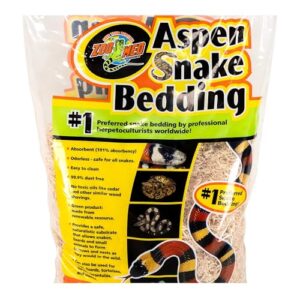
If your hatchling prefers things on the drier side, Zoo Med Aspen Snake Bedding is your go-to. It pulls in moisture at 191% absorbency and stays virtually dust-free — 99.9%, to be exact — so you’re not dealing with respiratory irritation or cloudy enclosures.
It’s odorless, free of toxic oils, and soft enough for baby snakes to burrow naturally.
Corn snakes, hognose, and similar dry-climate hatchlings do really well on it.
Just keep it at least two inches deep.
| Best For | Dry-climate hatchlings like corn snakes and hognose that love to burrow and need a safe, low-dust substrate. |
|---|---|
| Brand | Zoo Med |
| Material | Wood |
| Main Use | Snake bedding |
| Weight | 2.2 lb |
| Dimensions | 15.3 x 8.8 x 4.8 in |
| Price | Not listed |
| Additional Features |
|
- Insane 191% absorbency keeps the enclosure dry without constant spot-cleaning
- No toxic oils or strong smells, so it’s safe for sensitive baby snakes
- Nearly dust-free at 99.9%, which means no irritation for you or your snake
- Only comes in 8 quarts, so bigger enclosures will need multiple bags
- May be hard to find in local stores — you’ll likely need to order online
- Not ideal for humidity-loving species that need a moisture-retaining substrate
4. ReptiChip Organic Coconut Substrate
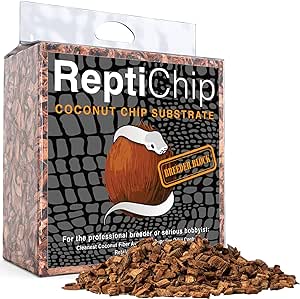
Now, if your baby snake leans toward the tropical side — think ball pythons, boas, or young tree pythons — ReptiChip is worth serious consideration. One compressed 10-pound block expands to a full 72 quarts of clean, organic coconut husk substrate.
It holds humidity beautifully without getting soggy, and the triple-washing process keeps tannin staining minimal. Your hatchling can burrow through it easily, and it controls odors well enough that spot-cleaning two or three times a week is usually plenty.
| Best For | Tropical reptile keepers — especially ball python, boa, and gecko owners — who want a natural, humidity-friendly substrate that lasts and cuts down on cleaning time. |
|---|---|
| Brand | Reptichip |
| Material | Coconut husk |
| Main Use | Tropical reptile substrate |
| Weight | 9.92 lb |
| Dimensions | 12 x 6 x 12 in |
| Price | USD 34.95 |
| Additional Features |
|
- Expands massively from one compact block, so you get a ton of substrate without hauling bags home every month
- Holds humidity really well without turning swampy, which is perfect for tropical species that need that warm, moist environment
- Controls odors naturally and lets animals burrow comfortably, making spot-cleaning just a few times a week totally doable
- Breaking the dry block kicks up dust, which can irritate sensitive animals if you’re not careful about fully hydrating it first
- Overwatering is a real risk — skip proper moisture management and you’re inviting mold
- The $34.95 upfront price is higher than basic alternatives, and you’ll need your own container for soaking since the packaging is minimal
5. EvaGO Long Curved Aquarium Tweezers
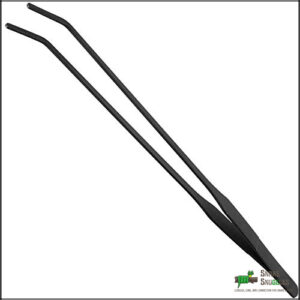
Feeding a defensive hatchling is nerve-wracking — and that’s exactly where the EvaGO Long Curved Tweezers earn their place.
At 15 inches long, they keep your hand well clear of a striking baby snake while letting you position prey precisely on a feeding dish.
The serrated, curved tips grip worms or pinky mice without slipping, and the stainless steel construction resists rust in humid enclosures.
At $7.99, it’s a small investment that makes feeding time safer and less stressful for both of you.
| Best For | Anyone feeding small, defensive reptiles or handling delicate aquarium tasks where keeping a safe distance matters. |
|---|---|
| Brand | EvaGO |
| Material | Stainless steel |
| Main Use | Feeding and handling |
| Weight | 4.16 oz |
| Dimensions | 14.96 x 0.79 x 0.20 in |
| Price | USD 7.99 |
| Additional Features |
|
- Extra-long length keeps your hands safely away from striking animals.
- Serrated, curved tips provide a secure grip on slippery prey or plants.
- Durable, rust-resistant stainless steel holds up in humid or aquatic environments.
- Length can be awkward in small tanks or tight spaces.
- Serrated tips may be too rough for very delicate prey.
- Protective coating may wear down with frequent exposure to harsh chemicals.
6. Microchip Fine Coconut Substrate
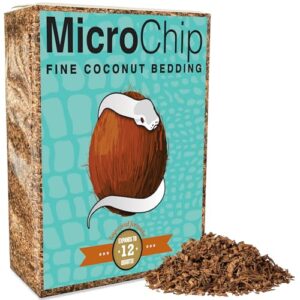
If you’re looking for a substrate that balances humidity and airflow, Microchip Fine Coconut Substrate stands out.
Its tiny chips—just 1 to 8 millimeters—spread moisture evenly, so you won’t get soggy spots or dry patches. This texture lets your snake burrow easily, while keeping air pockets open to reduce mold risk.
It’s easy to wash and expands quickly when wet, making setup a breeze. You’ll appreciate how it stays crumbly yet cohesive, supporting both plant roots and your snake’s comfort.
| Best For | Reptile keepers and indoor gardeners who want a clean, moisture-balancing substrate that supports burrowing and plant growth. |
|---|---|
| Brand | Zoo Med |
| Material | Cypress mulch |
| Main Use | Humid terrarium bedding |
| Weight | 0.3 kg |
| Dimensions | 17.6 x 9.9 x 4.6 in |
| Price | Not listed |
| Additional Features |
|
- Fine chips spread moisture evenly and prevent soggy spots.
- Clean, dust-free texture minimizes respiratory irritation.
- Expands quickly with water, making setup easy and efficient.
- Higher price compared to bulk substrates.
- Initial coconut odor can be strong until moistened.
- Bag size may be too small for larger tanks, requiring multiple bags.
7. Zoo Med ReptiSand Desert White
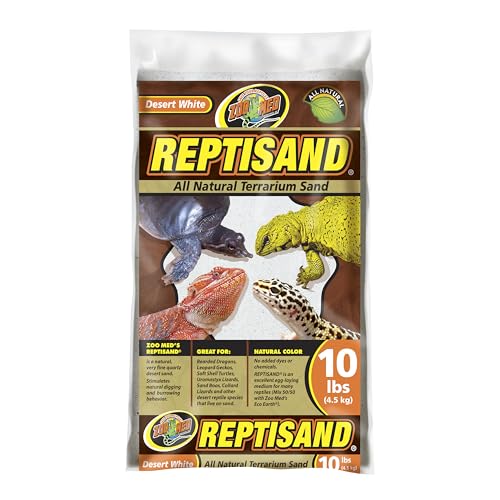
If you’re raising desert-loving snakes, Zoo Med ReptiSand Desert White offers a clean, natural look and a soft, fine texture that’s easy on tiny scales. Its pure quartz sand conducts heat well, so your snake can bask comfortably and dig to its heart’s content.
You won’t have to worry about added dyes or chemicals, and the low dust keeps breathing easy. Just keep an eye out for accidental ingestion—sand works best for species adapted to arid habitats and active burrowers.
| Best For | Desert-adapted reptiles and small pets that love digging and burrowing in a natural, low-dust environment. |
|---|---|
| Brand | Zoo Med |
| Material | Aspen fiber |
| Main Use | Burrowing snake bedding |
| Weight | 5.35 lb |
| Dimensions | 21.1 x 13.3 x 5 in |
| Price | USD 22.98 |
| Additional Features |
|
- All-natural quartz sand with no dyes or chemicals.
- Fine texture is gentle and encourages natural behaviors.
- Excellent heat conductivity for proper thermoregulation.
- Higher price than generic play sand.
- Quantity may be less than expected for bigger tanks.
- Fine particles can be accidentally ingested, so monitoring is needed.
8. Galapagos Cypress Tank Mulch Bedding
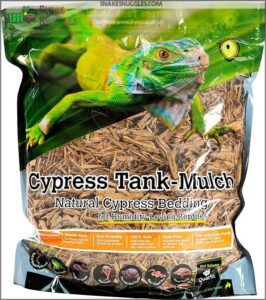
Ever wish your hatchling’s enclosure could mimic a damp forest floor? Galapagos Cypress Tank Mulch delivers just that—chunky, soft, and perfect for burrowers who crave a humid hideaway.
This 100% cypress mulch locks in moisture, stays low on dust, and comes washed and sieved for safety. You’ll spot-clean easily and enjoy a subtle, earthy scent. It’s a smart pick for humidity-loving species, though you might need more than one bag for larger setups or extra-deep bedding.
| Best For | Reptile and amphibian owners who want a natural, humidity-boosting bedding that supports burrowing and is gentle on sensitive respiratory systems. |
|---|---|
| Brand | Reptichip |
| Material | Coconut husk |
| Main Use | Expandable reptile substrate |
| Weight | 1.96 lb |
| Dimensions | 14.13 x 9.33 x 4.53 in |
| Price | USD 19.95 |
| Additional Features |
|
- High absorbency keeps humidity up for tropical species
- Washed, sieved, and low in dust for cleaner, safer habitats
- Soft, chunky pieces encourage digging and natural behaviors
- One bag may not be enough for large enclosures or deep bedding
- Pricier than basic paper or coconut substrates
- Occasional packaging damage can cause messy spillage
Frequently Asked Questions (FAQs)
Where do snakes go in October?
Imagine: while you’re swapping out VHS tapes, snakes are heading for their winter dens in October—rock crevices, burrows, or logs—drawn by cooler weather and shorter days, settling in until spring’s warmth returns.
What type of bedding is best for snakes?
The best bedding for snakes depends on their species and needs. Aspen shavings suit dry-loving types, coconut fiber keeps humidity steady, and cypress mulch balances moisture.
Avoid pine, sand, or dusty substrates—these can cause health problems or impaction.
What to keep a baby snake in?
Funny how baby snakes don’t need a silk pillow—just a secure, escape-proof enclosure with a tight-fitting lid, gentle heat, and safe bedding like paper towels, aspen, or coconut fiber.
Cleanliness and humidity matter more than fancy decorations.
What can I use for my snakes bedding?
You can use aspen shavings, coconut fiber, cypress mulch, or paper towels for your snake’s bedding. Each option facilitates burrowing, absorbs moisture, and keeps the enclosure clean.
Avoid pine, cedar, sand, and dusty materials for safety.
What kind of bedding to use for snakes?
For snakes, choose bedding that matches their species’ humidity needs, helps burrowing, and avoids toxins. Aspen shavings work for dry habitats, coconut fiber for humid setups, and paper towels for easy cleaning or quarantine.
Avoid pine, cedar, and sand.
What is the best substrate for a baby corn snake?
For baby corn snakes, paper towels are safest—no risk of swallowing bedding or impaction. Coconut fiber and cypress mulch also work well, holding moisture and supporting healthy sheds.
Avoid pine, cedar, sand, or dusty substrates for hatchlings.
How often should baby snake enclosures be disinfected?
Did you know most keepers disinfect enclosures weekly, but spot cleaning happens daily? For healthy hatchlings, scrub surfaces and replace bedding every week.
If you notice waste, mold, or strong odor, clean immediately—don’t wait for the schedule.
Can baby snakes share a enclosure with siblings?
Housing hatchlings together sounds convenient, but it often leads to stress, competition for food and hides, and faster disease spread.
If you want each baby to thrive, separate enclosures are the safest, healthiest choice.
What temperature range suits most baby snake substrates?
Let’s warm up to the topic: most substrates work best with a warm side around 85–90°F and a cool side near 75–80°F.
This gentle gradient keeps hatchlings comfortable, helps digestion, and prevents overheating.
How does substrate choice affect baby snake shedding?
Substrate affects shedding by controlling humidity and texture. Dry aspen can cause flaky sheds, while coconut fiber and cypress mulch support moist, clean sheds.
Paper towels make sheds easy to monitor but limit natural rubbing and burrowing behavior.
Conclusion
Choosing the right snake substrate beddings for baby snakes is like planting seeds in fertile soil—it nurtures growth from day one. By prioritizing safety, species-specific needs, and hygiene, you’ll create a sanctuary where tiny scales thrive.
Avoid shortcuts with unsafe materials; instead, opt for proven options that balance humidity, comfort, and cleanliness.
With vigilance in feeding and maintenance, you’ll shield your hatchling from hidden dangers.
This foundation of care transforms a fragile start into a confident, healthy journey—turning curiosity into calm, one careful step at a time.
- https://reptilesmagazine.com/kenyan-sand-boa-information-and-care/
- https://www.health.vic.gov.au/environmental-health/airborne-dust
- https://americanfabricfilter.com/lungs-breathing-dust/
- https://www.zehnder-cleanairsolutions.com/en/blog/dust-in-the-lungs
- https://pmc.ncbi.nlm.nih.gov/articles/PMC7078739/