This site is supported by our readers. We may earn a commission, at no cost to you, if you purchase through links.
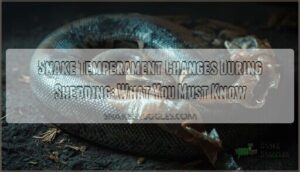
Your snake didn’t turn aggressive overnight. That defensive strike, the tight coiling, the refusal to eat—it all started the moment the shedding cycle began. Snake temperament changes during shedding are predictable, physiologically driven, and temporary. But they catch owners off guard every time.
Reduced vision from cloudy eyes, heightened skin sensitivity, and an instinct-level feeling of vulnerability combine to flip a calm snake into a defensive one.
Knowing what’s driving the behavior changes everything—how you handle the enclosure, when you intervene, and when the problem is bigger than shedding alone.
Table Of Contents
Key Takeaways
- Shedding triggers real physical stress—cloudy eyes, tender skin, and a deep sense of vulnerability turn even a calm snake defensive, and that’s biology, not bad behavior.
- Stop feeding attempts 5–7 days before a shed and expect appetite to return within 3–5 days after a clean peel; skipping meals during this window is completely normal.
- Keep humidity between 50–70%, maintain a warm side around 85°F, and add a snug humid hide—your enclosure setup does more to protect your snake during a shed than anything else.
- Two consecutive incomplete sheds, retained eye caps, or sudden weight loss aren’t shedding quirks—they’re red flags that need a reptile vet, not a wait-and-see approach.
Common Temperament Changes During Shedding
Shedding flips a snake’s personality like a switch. Your normally calm ball python may suddenly refuse meals, disappear for days, or strike without much warning.
It’s completely normal—ball pythons often stop eating during a shed, and most bounce back to their regular feeding schedule once the old skin is off.
Here’s exactly what to expect during this phase.
Increased Hiding and Seclusion
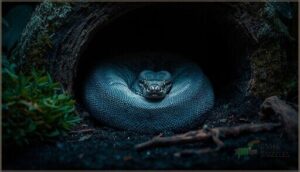
Almost every pet snake disappears into its hide box days before a shed begins. This isn’t avoidance — it’s pure snake security instinct. Shedding behavior triggers a predictable shift in seclusion patterns driven by vulnerability, not illness.
Watch for these environmental triggers that deepen hiding:
- Cloudy eyes prompt retreat to the tightest, darkest hide
- Reduced vision makes open enclosure spaces feel unsafe
- Dull, loosening skin increases physical sensitivity
- Bright lighting drives snake behavior toward deeper cover
- Missing hides push reptile behavior toward corner-pressing or burrowing
Snakes often exhibit changed behavior due to skin shedding processes.
Decreased Appetite and Food Refusal
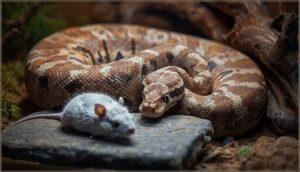
Once your snake retreats, appetite usually follows it into hiding. Food refusal during shedding patterns is normal — most pet snakes stop eating 5 to 7 days before the shed begins. Dull skin and cloudy eyes signal the body is prioritizing skin renewal over digestion. Don’t panic. Appetite loss rarely means illness. Expect your snake’s feeding strategies to resume within 3 to 5 days after a clean shed.
Understanding the snake shedding process is essential for identifying potential issues during this time.
Heightened Irritability or Defensiveness
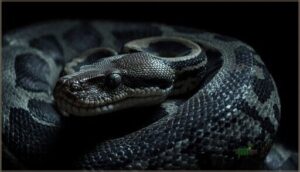
Appetite returns after a clean shed — but before that happens, you might notice something sharper: irritability. Shedding stress turns even docile snakes defensive.
Cloudy eyes reduce vision, making your hand look like a threat. That’s when snake aggression spikes.
Defensive posturing — tight coiling, S-shaped neck, bluff strikes — signals "back off." Respect it. Most irritability triggers disappear within days of a complete shed.
Reduced Activity and Lethargy
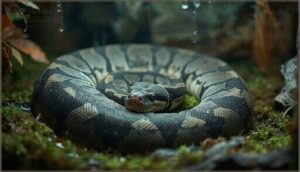
Beyond the attitude, there’s stillness. A lethargic snake coiled in one spot for days is simply conserving energy during its shedding cycle.
Dull skin, cloudy eyes, and reduced appetite tend to cluster together — that’s normal shedding behavior.
Environmental factors like low humidity or poor temperatures make it worse. Most snakes bounce back within a day or two post-shed.
If humidity is the culprit, fixing low humidity to improve snake shedding is usually a straightforward fix that makes a big difference.
Why Shedding Causes Behavioral Shifts
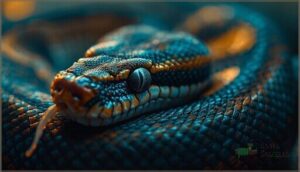
Your snake’s attitude shift during a shed isn’t random — there are real physical reasons behind it. The body goes through genuine stress during ecdysis, and the behavior follows. Three things drive most of it.
Impaired Vision From Cloudy Eyes
Cloudy eyes aren’t a flaw — they’re a feature of the preshed phase. During snake shedding, fluid builds between old and new eye caps, cutting visual clarity markedly. That’s when reptile health concerns spike for keepers. Here’s what vision impacts actually mean:
- Your snake can’t identify shapes clearly
- Movement triggers defensive strikes
- Feeding accuracy drops
- Hiding increases for security
- Eye cap issues resolve after shedding completes
Monitor cloudy eyes closely — Visual Recovery confirms a clean shedding cycle. Cloudy Eye Care means patience, not intervention.
Skin Sensitivity and Discomfort
Discomfort is real during the preshed phase — don’t underestimate it. Fluid buildup between skin layers creates tight pressure, while low humidity causes dry scale irritation and cracking. New skin underneath is genuinely tender, similar to a sunburn.
That itchy skin relief your snake seeks drives the hiding and rubbing you’ll notice. Good humidity, around 50–70%, eases shedding pain considerably.
Feeling Vulnerable to Predators
Vulnerability is baked into every shedding cycle. With cloudy eye caps blocking clear vision, your snake genuinely can’t see predators coming — and it knows that.
Defensive posturing, tight coiling, and readiness to strike are survival strategies, not attitude problems. These predator avoidance instincts peak during vulnerability periods, so respect the shedding cues your snake broadcasts.
A shedding snake’s strikes and coiling are survival instincts, not attitude — respect the warning
Back off, keep the enclosure calm, and let reptile care do the rest.
Environmental Factors Affecting Shedding Behavior
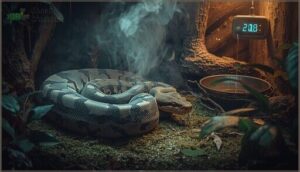
Your snake’s behavior during a shed doesn’t happen in a vacuum — the enclosure itself plays a bigger role than most owners realize. Humidity, temperature, hydration, and the right setup can mean the difference between a clean shed and a stressed, defensive snake.
Here’s what to get right.
Importance of Humidity and Temperature
Think of your enclosure as a shedding environment your snake depends on entirely. Aim for 50 to 70 percent humidity — use a hygrometer, not guesswork. When skin turns dull, nudge humidity slightly higher to support the shedding cycle.
Temperature gradients matter too: 85°F warm side, 75°F cool side. Environmental monitoring isn’t optional. Get it wrong, and retained shed follows.
Impact of Hydration and Enclosure Setup
Hydration does more heavy lifting than most keepers realize. A dehydrated snake sheds poorly — wrinkled skin, retained eye caps, and a cranky disposition to match. Your enclosure design directly controls this.
To ensure proper hydration and a healthy shedding process, consider the following:
- Place a shallow, wide water bowl on the warm side
- Refresh water daily to prevent bacterial buildup
- Choose cypress mulch or coconut fiber for moisture retention
- Keep enclosure length appropriate for full-body movement
Environmental balance starts with your setup choices.
Role of Hides and Shedding Aids
A snug humid hide is your snake’s best ally during shedding. It creates a targeted microclimate — around 60 to 80 percent humidity — that loosens old skin evenly without soaking the whole enclosure.
Textured surfaces near the hide entrance give your snake something to catch and peel against.
Pair secure enclosures with commercial shedding aids for stubborn spots, and you’ve covered most problems before they start.
When Temperament Changes Signal Health Problems
Not every temperament shift during shedding is just "part of the process." Sometimes, behavior changes are your snake’s way of flagging something more serious. Here’s what to watch for.
Prolonged or Incomplete Shedding
Most snakes complete ecdysis within 7–14 days. When the shedding process drags past two weeks, that’s not slow — that’s a signal.
Shedding complications like skin retention often trace back to poor humidity management. Stuck patches tighten around the tail and can cut off circulation.
Repeated incomplete shedding cycles compound the health risks fast, so don’t wait and watch.
Signs of Dehydration or Infection
Incomplete sheds don’t just stall — they sometimes mask something worse. Watch for these dehydration signs and infection symptoms:
- Sunken, cloudy eyes that stay dull long after a shed
- Wrinkled, accordion-like skin that tents when gently pinched
- Hard, yellow-orange urates instead of soft white ones
- Open-mouth breathing or mucus near the nostrils
These shedding symptoms aren’t normal pre-shedding symptoms. That’s compromised snake health.
When to Consult a Reptile Veterinarian
If those symptoms show up, don’t wait. Two consecutive incomplete sheds, retained eye caps after soaking, or a 10 percent body weight drop all call for veterinary care fast.
Shedding issues this persistent aren’t just inconvenient — they signal real snake health problems. A reptile vet can screen for parasites, malnutrition, or infection before a shedding symptom becomes a reptile emergency.
Top 3 Products for Supporting Shedding Snakes
The right products can make a real difference during your snake’s shed cycle. A few well-chosen items help maintain humidity, reduce stress, and give your snake the support it needs.
Here are three worth keeping in your setup.
1. Snowsun Vintage Metal Snake Sign
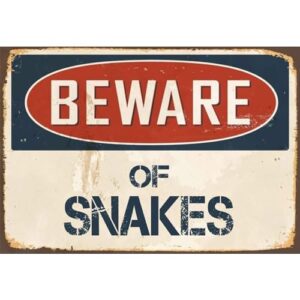
If you keep snakes, labeling their space clearly matters — for housemates, guests, and anyone who might open the wrong door. The Snowsun Vintage Metal Snake Sign manages that job simply.
At 8×12 inches, it’s readable at a glance without taking over your wall. Aluminum construction means it won’t warp or fade in a humid reptile room. Four pre-drilled corner holes make mounting straightforward — screws, nails, or zip ties all work.
At under $9, it’s a practical, low-effort addition to any reptile setup.
| Best For | Snake owners who want a clear, no-fuss warning sign that pulls double duty as a fun piece of wall decor. |
|---|---|
| Material | Aluminum |
| Mounting Holes | 4 pre-drilled holes |
| Theme | Beware of snakes |
| Use Case | Home, garden, bar, wall |
| Dimensions | 8″ x 12″ |
| Weather Resistance | Waterproof and durable |
| Additional Features |
|
- Aluminum build holds up in humid reptile rooms without warping or fading
- Four pre-drilled holes make hanging dead simple — no extra prep needed
- Hard to beat at under $9 for something practical and personality-filled
- Thin metal construction might feel a little flimsy to some buyers
- Can get lost against busy backgrounds like brick — a border or frame helps
- No mounting hardware included, so you’ll need to supply your own screws or nails
2. SmartSign Alligators And Snakes Warning Sign
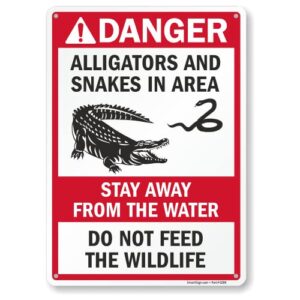
If you’re near water, this sign earns its place. The SmartSign Alligators And Snakes Warning Sign is built from 40 mil rustproof aluminum with laminated, weather-resistant protection — it holds up near docks, lakes, or humid outdoor enclosures without warping or fading.
At 14×10 inches, the red, black, and white design is hard to miss. Four pre-drilled corner holes make installation quick.
For Airbnb hosts or property owners near wildlife areas, it’s a straightforward, durable warning that does exactly what it promises.
| Best For | Property owners, Airbnb hosts, and anyone near lakes, docks, or wildlife areas who needs a clear, durable warning sign. |
|---|---|
| Material | Aluminum |
| Mounting Holes | 4 corner holes (3/16″) |
| Theme | Alligators and snakes warning |
| Use Case | Boat docks, lakes, wildlife areas |
| Dimensions | 14″ x 10″ |
| Weather Resistance | Laminated, weather resistant |
| Additional Features |
|
- Built tough — 40 mil rustproof aluminum with laminated coating handles rain, humidity, and sun without fading
- Easy to put up fast with four pre-drilled corner holes, no extra prep needed
- Bold red, black, and white design is hard to overlook at 14×10 inches
- Mounting hardware isn’t included, so you’ll need to grab that separately
- One fixed size and design means it won’t work for every situation or aesthetic
- Could get lost visually if there’s already a lot of signage in the area
3. Ylens Metal Snake Warning Sign
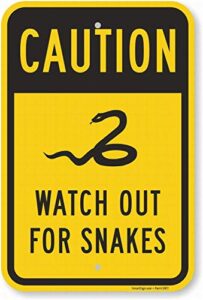
The Ylens Metal Snake Warning Sign keeps things simple — and sometimes that’s exactly what you need. At 12×8 inches, it’s compact enough for a garden gate or enclosure room door. The tin construction is lightweight and recyclable, with pre-drilled holes for quick mounting.
It’s not heavy-duty, but for indoor use or low-traffic outdoor spots, it does the job. Think of it as a no-fuss visual cue — a reminder to visitors that your space is home to something that bites.
| Best For | Anyone who keeps snakes and wants a simple, low-cost way to warn visitors — great for home enclosure rooms, garden gates, or garage doors. |
|---|---|
| Material | Tin/Metal Iron |
| Mounting Holes | Pre-drilled holes |
| Theme | Watch out for snakes |
| Use Case | Home, office, bar, restaurant |
| Dimensions | 12″ x 8″ |
| Weather Resistance | May rust or fade over time |
| Additional Features |
|
- Lightweight and easy to hang right out of the box thanks to pre-drilled holes
- Recyclable tin construction with a fun vintage look that fits a lot of spaces
- Affordable and doubles as a quirky gift for reptile lovers
- Some signs arrive bent or damaged, so quality control can be hit or miss
- The tin is pretty thin and may rust or fade over time, especially outdoors
- Pre-drilled holes might not line up where you’d expect them to
Frequently Asked Questions (FAQs)
Do different snake species shed more aggressively?
Yes — species vary like personalities at a party. Ball pythons tend to stay calm, while kingsnakes and colubrids often get noticeably nippy. Individual temperament matters just as much as species.
How does age influence shedding behavior in snakes?
Age matters a lot. Juveniles shed every 4–6 weeks due to rapid growth. Adults slow to 3–6 times yearly. Older snakes may shed once annually — or less.
Can stress trigger more frequent shedding in snakes?
Stress doesn’t reliably speed up healthy shedding cycles. It more often causes dysecdysis — incomplete, ragged sheds that repeat in patches.
Those messy partial sheds can look frequent, but they signal a problem, not growth.
Does shedding frequency change during breeding season?
Like clockwork, breeding season rewrites the schedule. Snakes shed up to twice as often during this period. Hormonal surges, heightened activity, and courtship demands all accelerate skin renewal — especially in spring.
Conclusion
Picture your snake sealed in low light, skin stretched tight, every nerve on edge. That’s not aggression—that’s survival mode. Snake temperament changes during shedding follow a clear biological script, and now you can read it.
Cloudy eyes clear. Sensitivity fades. Appetite returns. Your job is simple: reduce handling, boost humidity, and watch closely for signs that go beyond the usual cycle.
Understand the pattern, and you’ll rarely be caught off guard again.