
This site is supported by our readers. We may earn a commission, at no cost to you, if you purchase through links.
A snake’s spine contains between 200 and 400 vertebrae, far more than humans have, but that flexibility comes with a cost. Without proper support, their elongated bodies experience strain that can lead to serious injury or chronic stress.
When you lift a snake by gripping only one section, the unsupported weight pulls against delicate joints and muscles, triggering a defensive response that makes handling dangerous for both of you. Supporting a snake’s body correctly means creating multiple contact points that distribute weight evenly, mimicking how the animal would naturally rest on branches or ground.
This approach keeps the spine aligned, reduces anxiety, and builds the trust needed for safe interaction. Master these techniques, and you’ll transform tense encounters into calm, controlled handling sessions.
Table Of Contents
Key Takeaways
- Support your snake at multiple points along its body to distribute weight evenly and prevent spinal strain, vertebral dislocation, or muscle tears that result from holding at just one spot.
- Keep your hands on the mid-body section and avoid touching the head or tail, since contact near these areas triggers defensive strikes, thrashing, and stress responses that make handling dangerous.
- Watch for stress signals like rapid tongue flicking, rigid S-curves, hissing, or tight coiling during handling, and immediately adjust your technique or end the session to prevent escalation.
- Limit handling sessions to 10-15 minutes for most snakes and wait at least 48 hours after feeding to avoid regurgitation and digestive stress.
Why Proper Snake Body Support Matters
When you handle a snake, how you support its body makes all the difference between a calm interaction and a stressful one.
If your snake seems tense during handling, adjusting your acclimation approach can help build trust over time.
Proper support protects both you and the snake, setting the foundation for safe handling every time. Here’s why getting this right matters so much.
Preventing Stress and Defensive Behavior
Proper body support keeps your snake calm and you safe. When you support at least one third of the snake’s body length, muscles stay relaxed and stress drops. This prevents defensive postures and helps with behavior modification in even defensive species.
Effective snake handling techniques include:
- Keeping the body in a natural S shape
- Using slow, predictable movements
- Avoiding sudden shifts in support
- Approaching from the side, not above
These snake handling safety practices build trust while reducing stress. It’s also vital to recognize to make safe interactions possible.
Reducing Risk of Injury to Snakes
Beyond keeping stress low, good snake handling techniques protect the animal’s body from real physical harm. A snake’s spine runs the entire length of its body, and poor support can lead to vertebral strain or even dislocation. When you hold a snake at multiple points, you keep spinal alignment natural and reduce the chance of muscle tears, rib damage, or internal injuries.
Poor support during handling can strain a snake’s spine, tear muscles, or even dislocate vertebrae—proper technique protects the entire body
Understanding snake anatomy guides injury prevention and makes your safety protocols effective. To prevent serious injuries, it’s vital to be aware of the risks of improper snake handling methods to help prevent serious injuries to both the handler and the snake.
Enhancing Trust and Handling Success
When you support a snake correctly using proper technique, you’re not just preventing injury—you’re building trust through gentle interaction.
Handling snakes with consistent, calm environments and comfortable snake handling postures teaches them that your hands mean safety, not threat.
Over time, this snake socialization turns tense encounters into smooth sessions. That’s how handling techniques create real handling success and make snake handling safety second nature.
These foundations in snake handling for improved bonding help keepers build trust while keeping stress levels low for both handler and snake.
Essential Hand Placement Techniques
Where you place your hands makes all the difference between a calm snake and one that feels trapped or unsafe. The key is to think like an architect—you’re building support from the ground up, spreading the load so no single point bears too much weight.
Let’s walk through the three core techniques that’ll keep both you and your snake comfortable.
Supporting at Multiple Body Points

When you hold a snake with just one hand, you’re asking its spine to bear all the weight at a single spot—a recipe for stress and injury. Instead, use both hands to create two or three contact points along the body. Support the midsection with one hand and let the remaining length rest on your forearm or opposite hand.
This gentle restraint method keeps the snake’s weight evenly distributed, mimics natural support like branches, and helps your animal feel secure instead of dangling. Heavier snakes may need your lap or a soft surface as an extra anchor point.
Avoiding Head and Tail Contact

When you keep your hands away from the head and tail, you sidestep the triggers that cause snakes to hiss, coil, or strike. Here’s why gentle touch on the mid-body wins every time:
- Fingers near the face spark defensive postures and S-coils
- Tail grabs cause violent thrashing and spine strain
- Head contact can be mistaken for prey, triggering feeding strikes
- Mid-body support keeps the snake calm and exploratory
- Proper handling builds trust faster than invasive grabbing
Distributing Weight Evenly
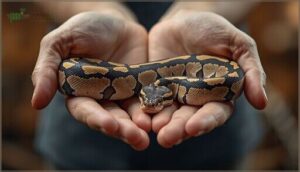
With both hands under your snake’s midsection, you create even balance that protects hundreds of vertebrae from strain. Weight distribution across multiple contact points prevents sharp bends and microfractures, especially in heavier constrictors.
Proper handling techniques mean body support at every three to four feet, letting the animal drape in shallow curves. This gentle restraint turns frantic writhing into calm exploration, building trust through comfortable snake handling postures and proven snake handling safety.
Safe Handling Tools and Equipment
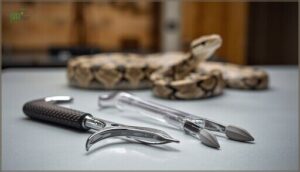
Sometimes your hands aren’t enough to safely handle every snake species, especially when dealing with larger species or defensive individuals.
The right tools create distance and control without compromising the snake’s comfort or your safety. Let’s look at three essential pieces of equipment that belong in every handler’s toolkit.
Choosing The Right Snake Hooks
A snake hook acts like an extension of your hand, letting you lift and move snakes safely without grabbing. Hook lengths from 24 to 57 inches suit different species—longer models keep distance from venomous snakes, while shorter ones give precision with calmer animals.
Material choices like stainless steel or carbon fiber affect durability and weight. Match hook shapes and weight capacity to your snake’s size for safe handling techniques.
Selecting Appropriate Gloves
Safety gloves bridge the gap between protection and control when handling snakes. Your choice depends on the species you’re working with and the level of venom resistance you need.
Match glove materials and protection levels to your snake’s risk profile:
- Layered SuperFabric or Kevlar gloves offer ANSI A8 or A9 cut resistance for venomous species
- HexArmor models stop hypodermic needles and long fangs from vipers and cobras
- Heavy leather gloves work for non-venomous pythons and large colubrids
- Puncture-resistant designs balance hand dexterity with snake bite protection
- Proper glove sizing prevents loose material that reduces grip and control
Thick protective clothing sacrifices finger sensitivity, so choose models with pre-curved shapes and silicone grip surfaces for better handling during snake safety tasks.
Using Restraint Bags for Safety
When moving venomous species, restraint bags are your best line of defense. Tightly woven cotton or polyester stops fangs from punching through while you transport the animal.
| Bag Design Features | Safety Benefit |
|---|---|
| Double-stitched seams | Holds adult snake weight during transport |
| Dark fabric interior | Calms defensive species naturally |
| Reinforced corners | Prevents tears when snake handling techniques require secure containment |
| Open-frame mounting | Increases working distance from strike zone |
Guide the snake in gently with a hook, let gravity settle it to the bottom, then twist and tie the top securely—no gaps. Always inspect bags for holes before each use.
Recognizing and Responding to Snake Behavior

Reading your snake’s signals is just as important as learning the physical mechanics of handling. A snake’s body language tells you when to proceed and when to back off, and ignoring these cues can lead to stress, injury, or a defensive bite.
Let’s break down the key behaviors you need to recognize and how to adjust your approach accordingly.
Signs of Stress or Discomfort
When your reptile suddenly hisses, strikes at air, or curls into a tight ball during handling, you’re seeing clear stress signals and defensive postures that demand immediate attention.
Body language like rapid tongue flicking, rigid muscle tension, and constant pulling away are discomfort cues revealing handling anxiety. Recognizing these snake behavior patterns helps you adjust your snake handling techniques before defensive species escalate to biting.
Interpreting Body Language During Handling
Reading your reptile’s body language during snake handling means paying attention to Tongue Flick Patterns, Muscle Tension, Movement Speed, Head Posture, and Tail Signals all at once. Slow, steady tongue flicks and loose coils show comfort, while rapid flicking, stiff S-curves, or Tail Vibrations signal mounting stress.
When the body tightens and movement becomes jerky, your snake is telling you it needs a break right now.
Adjusting Techniques for Defensive Species
Defensive species demand extra patience. Start with short five-minute sessions so your snake doesn’t feel overwhelmed.
Use a hook to tap its mid-body before lifting—this cue separates handling from feeding time and cuts down on strikes.
Support heavier constrictors along their entire length, and keep arboreal types higher up on your arm to mimic their natural perches and create calm.
Creating an Ideal Handling Environment

Your snake’s surroundings during handling matter just as much as your handling technique. A well-controlled environment keeps stress levels low and makes each interaction safer for both of you.
Let’s look at the three key factors that turn any space into an ideal handling zone.
Controlling Temperature and Humidity
Before snake handling, check that your room stays between 75 and 80°F—a comfortable thermal gradient that keeps your snake responsive and calm. Humidity levels should match your species: tropical pythons thrive around 60–80%, while desert species prefer 30–50%.
Use digital thermometers and hygrometers to monitor ambient conditions closely. Proper climate management prevents thermal shock and promotes healthy reptile care throughout every herpetology session.
Limiting Handling Time to Reduce Stress
Once your environment is dialed in, timing handling limits protects animal welfare. Most calm pet snakes tolerate 10 to 15 minutes before stress behaviors surface.
Start young snakes at five minutes or less, watching for muscle tension or escape attempts. These stress reduction techniques keep interactions positive.
Corn snakes often do best with brief sessions a few times weekly, giving them recovery time and building comfortable snake handling holds through patient reptile handling and gentle handling practices.
Ensuring Escape-Proof and Calm Spaces
Before you begin snake handling, select a secure room setup with a single door and no open vents—escape prevention starts here. Proper snake proofing transforms any space into safe handling areas.
- Seal gaps under doors with draft guards or towels
- Cover floor vents with fine mesh to block ductwork access
- Clear clutter so dropped snakes remain visible
This calm environment fosters comfortable snake handling postures while honoring natural reptile behavior and ensuring solid animal handling through thoughtful snake care practices.
Frequently Asked Questions (FAQs)
How do you tell if a snake is comfortable with you?
Watch for loose curves instead of tight coils. A comfortable snake explores slowly with steady tongue flicks, rests calmly on your hands, and tolerates gentle support without flinching or pulling away.
How often should I handle my pet snake?
Most pet snakes thrive with handling frequency of one to four times per week. This balanced approach to snake socialization fosters stress reduction while maintaining proper handling routines, preventing the handling limits that compromise snake safety and overall pet snake care.
Can I handle my snake after feeding it?
No—wait at least 48 hours after feeding. Handling too soon triggers regurgitation risks, damages the esophagus, and stresses your snake during its vulnerable digestion phase when proper handling precautions matter most.
Whats the best way to transport a snake?
Use a cloth snake bag inside a secure plastic tub with ventilation holes and a tight latching lid.
This double-layer containment keeps your snake calm, safe, and prevents escape during travel.
How do I handle a snake during shedding?
Like a sunburn, you don’t want touched, a shedding snake feels vulnerable with tight, cloudy skin.
Limit handling to brief checks, support the midbody gently, and boost humidity to 60–70 percent for comfort.
Should I wash my hands before handling snakes?
Yes, always wash your hands before handling snakes. Hand hygiene prevents bacterial risks like Salmonella, removes food scents that trigger bites, and protects your snake from lotions or chemicals on your skin.
Conclusion
Think of your hands as a network of branches—each contact point a place where the snake finds stability. Supporting a snake’s body correctly isn’t about controlling the animal; it’s about creating balance that lets both of you relax.
When you distribute weight across multiple points, avoid sudden movements, and read the signals your snake sends, handling becomes predictable and safe. That predictability builds trust, and trust transforms every interaction from a gamble into a skill.
- https://www.africansnakebiteinstitute.com/articles/how-to-use-snake-handling-equipment/
- https://powlesslaw.com/chiropractic-malpractice-understanding-the-risks-of-spinal-manipulation-errors/
- https://todaysveterinarynurse.com/behavior/low-stress-veterinary-visits-for-reptiles/
- https://www.allanglescreatures.com/blogs/news/how-to-handle-and-tame-your-corn-snake-safely
- https://www.onepethouse.co.uk/post/essential-snake-handling-tips-for-new-pet-owners