
This site is supported by our readers. We may earn a commission, at no cost to you, if you purchase through links.

A friend once watched a supposedly calm ball python latch onto bare skin during what seemed like a routine tank cleaning. The bite itself wasn’t dangerous, but the shock sent the handler stumbling backward into a glass terrarium.
Understanding when you need gloves for snakes isn’t about fear—it’s about reading situations where protective gear shifts the odds in your favor. Defensive cobras, powerful constrictors, unfamiliar wild-caught specimens, and medical care scenarios each demand different approaches to hand protection.
Some handlers reach for gloves reflexively, while others reserve them for specific high-risk moments. The real skill lies in recognizing which encounters call for that extra barrier between you and several million years of predatory evolution.
Table Of Contents
- Key Takeaways
- When Gloves Are Needed for Snake Handling
- Safety Considerations When Using Gloves
- Choosing The Right Snake Handling Gloves
- Top Snake Handling Gloves to Consider
- Maintaining and Inspecting Snake Handling Gloves
- Frequently Asked Questions (FAQs)
- Should you wear gloves when handling snakes?
- When should you start handling your snake?
- Can copperheads bite through leather gloves?
- Can gloves be used for handling aquatic snakes?
- Do gloves affect snake stress or behavior patterns?
- When should handlers avoid using gloves altogether?
- How do temperature conditions affect glove performance?
- Conclusion
Key Takeaways
- Gloves are essential for handling venomous snakes, large constrictors, defensive or unfamiliar species, and during medical care or enclosure cleaning when strikes are unpredictable—but they’re not truly bite-proof and must be paired with proper hooks, tongs, and handling techniques.
- The best snake handling gloves feature Kevlar or thick leather construction with 12-24 inch forearm coverage, balancing puncture resistance with enough dexterity to feel the snake’s body language and maintain controlled movements without startling the animal.
- No glove material guarantees complete protection—even heavy-duty options only reduce venom injection by 60-66%, can be penetrated by large viper fangs exceeding one inch, and degrade over time from repeated bites, moisture, and UV exposure.
- Regular inspection for tears, punctures, and seam separation is non-negotiable since compromised gloves create false confidence, and proper maintenance includes manufacturer-specific cleaning methods, air drying away from heat, and immediate replacement when wear appears.
When Gloves Are Needed for Snake Handling
Not every snake encounter calls for gloves, but certain situations shift the risk-reward balance firmly in favor of protection. You’ll want gloves when a snake’s behavior, size, or background makes handling more unpredictable or dangerous.
Gloves also help when you’re still learning proper snake handling techniques for improved bonding, giving you confidence while you build muscle memory for safe restraint.
Here are five scenarios where gloves become your safety net, not just a nice-to-have accessory.
When handling feeding tools or positioning prey, keeping a safe distance from your snake helps prevent accidental strikes while gloves protect your hands if things get unpredictable.
Handling Defensive or Aggressive Snakes
When a snake coils tight, flares its neck, or rattles that tail, you’re looking at defensive postures that signal imminent danger.
Recognizing these warning signs early—and knowing how to respond calmly—can prevent escalation, as detailed in this guide on interpreting common snake body language.
Certain cobras and vipers are especially prone to aggression triggers when cornered or stressed during handling. Snake handling gloves offer vital bite prevention in these moments, though understanding snake behavior and psychology remains your first line of defense.
Before working with any venomous species, familiarize yourself with calmer alternatives like the rough green snake, which offers excellent hands-on experience without the risk.
Safety precautions for snake handling mean recognizing warning signs before strikes happen.
Working With Large or Powerful Species
Think of large constrictors like pythons or boas as living hydraulic presses, each coil capable of crushing bone. Heavy duty gloves paired with snake handling tools become non-negotiable here.
These powerful snake handling scenarios demand cut-resistant protection extending well up your forearms, because large species safety isn’t about snake bite proof gear alone—it’s about preventing tissue damage from repeated strikes while you maintain control.
Managing Unfamiliar or Wild-caught Snakes
You don’t know what you’re dealing with until you identify an unfamiliar species from a safe distance. Wild snake encounters demand gloves as part of your safety precautions for snake handling, never as solo protection.
Before any contact, observe the animal’s posture and behavior, then use hooks or tongs to guide it into secure transport. Venomous snakes require trained experts, proper handling techniques, and emergency planning—gloves alone won’t cut it.
Administering Medical Care or First Aid
When you’re cleaning wounds or applying medication, disposable nitrile gloves protect both you and your snake. They prevent salmonella exposure, reduce infection risk during wound cleaning, and give you the dexterity to handle delicate tasks safely.
For emergency response involving defensive or venomous snakes, combine disposable gloves with proper restraint tools—never rely on gloves alone as your safety precautions for snake handling.
For more information on safe handling practices and appropriate equipment, review these tips on using protective clothing and tools.
Cleaning Enclosures With Snakes Present
Even routine maintenance can turn risky when your python decides the water bowl you’re reaching for is worth defending. Reptile owners should always be aware of disease transmission risks when handling snakes and their enclosures.
Gloves protect you during cleaning by:
- Preventing bites from territorial or defensive snakes during enclosure design modifications
- Blocking bacterial exposure from contaminated substrate and waste during sanitation methods
- Reducing injury risk when moving sharp décor or cleaning tools near your snake
- Maintaining hazard control if your snake strikes while you’re spot-cleaning
- Adding essential protection and safety precautions when working with venomous snakes
Always combine snake handling gloves with proper techniques for complete snake safety.
Safety Considerations When Using Gloves

Gloves aren’t a magic shield, and treating them like one is where handlers get into trouble.
Even the toughest leather or Kevlar can’t guarantee protection against determined fangs, which means you’ll need to pair them with the right tools and mindset.
Let’s walk through the real-world safety considerations that keep you protected when gloves are part of your handling strategy.
Limitations of Glove Protection Against Bites
Here’s a reality check: no snake handling gloves are truly snake-proof, and that matters more than you might think. Even thick leather won’t guarantee protection against fang penetration from large venomous snakes. Venom resistance is partial at best—studies show denim-covered gloves reduce venom injection by 60-66%, not 100%. Your gloves need regular inspection because glove degradation from bites, moisture, and UV exposure steadily weakens puncture resistance.
No snake handling gloves are truly snake-proof—even thick leather can’t guarantee protection against large venomous fangs, and venom resistance is partial at best
Coverage gaps from poor fit expose skin to strikes, while reduced dexterity from heavy gloves creates handling risks that can actually increase your danger. The limitations of snake handling gloves are critical to understand for those who work with or handle venomous snakes.
| Protection Limitation | Real-World Impact |
|---|---|
| Fang penetration through thick materials | Large vipers’ fangs exceed 1 inch, can breach leather |
| Partial venom blocking only | Envenomation still possible despite fabric layers |
| Material degradation over time | Repeated bites and weather weaken glove integrity |
Combining Gloves With Proper Handling Tools
Snake handling gloves work best when paired with the right tools and equipment—think hooks, tongs, and restraining tubes. Hooks let you maintain distance while your gloved hands stabilize containers or doors, reducing bite risk.
Tongs grasp mid-body as protective gloves support the remaining length, preventing tissue damage from excessive squeezing. This tool integration follows safety protocols that pros rely on daily.
Recognizing Risky Behaviors and Warning Signs
Reading snake body language keeps you one step ahead of disaster. Defensive postures and venomous signals give you critical seconds to back off before a strike occurs.
Watch for these bite precursors that demand immediate threat awareness:
- S-shaped neck coiling with head elevated and tracking your movement
- Rattling, hissing, or tail vibration that intensifies as you approach
- Hood expansion or mouth gaping signaling escalated defensive readiness
- Sudden freezing followed by subtle forward head shifts indicating strike preparation
- Handling attempts while intoxicated accounting for roughly 28% of bites
Understanding snake behavior and body language transforms safety precautions and measures from guesswork into smart, evidence-based decisions when handling venomous snakes.
Emergency Response in Case of a Bite
Despite your best snake handling gloves and protection, bites happen—call emergency services immediately, even if bite symptoms seem minor.
Move away from venomous snakes calmly, keep the limb still, and remove rings or tight safety equipment before swelling starts. Don’t cut, ice, or apply tourniquets. Clean the wound gently, note snake identification details if safe, and get to a facility equipped for antivenom administration fast.
Choosing The Right Snake Handling Gloves
Not all snake gloves are created equal, and choosing the wrong pair can leave you vulnerable or fumbling during critical handling moments.
The material, fit, and coverage you need depends on the species you’re working with and the tasks you’re performing. Here’s what to look for when selecting gloves that balance protection with the control you need to handle snakes safely.
Comparing Materials: Leather, Kevlar, Synthetics

Choosing the right glove materials can feel like picking armor for battle—you’ll want protection that doesn’t turn your hands into clumsy mitts. Here’s what you need to know:
- Leather gloves offer serious durability and abrasion resistance, especially thick split cowhide with reinforced bite zones, though they’re less flexible than synthetic options.
- Kevlar-lined gloves provide outstanding cut and puncture resistance while maintaining surprising dexterity, combining aramid fibers with leather or synthetic shells.
- Synthetic alternatives like nitrile-coated fabrics resist chemicals well but generally can’t match leather or Kevlar systems for bite protection.
Importance of Dexterity and Fit

You can wrap your hands in bulletproof material, but if you can’t actually grip the snake, you’ve just built yourself an expensive pair of oven mitts.
Finger dexterity matters because controlled movements prevent startling your animal—stiff protective gloves turn gentle repositioning into clumsy wrestling. Look for snake handling gloves with flexible wrist support and multiple sizing options that let you feel the snake’s body language through the glove materials while maintaining comfort and hand mobility.
Full Hand and Forearm Coverage

Dexterity means nothing if your wrist is exposed during a strike—that’s why proper snake handling gloves extend 12 to 24 inches up the forearm, creating continuous snake bite resistance from fingertips to elbows. This full hand coverage eliminates dangerous gaps where fangs slip past shorter glove materials.
Professional forearm protection delivers three advantages:
- No exposed skin between glove cuffs and sleeves during complex handling
- Uniform snake proof construction across the entire lower arm using Kevlar or SuperFabric layers
- Overlap zones with outer clothing that maintain arm safety when restraining venomous snakes
Evaluating Durability and Reinforced Features

Full coverage only works when materials survive the strike. Look for puncture resistance rated under EN 388 or ANSI standards—Kevlar and reinforced fabrics like SuperFabric withstand concentrated fang forces far better than basic leather.
Durability testing reveals cut resistance and real-world longevity. Reinforced palms, fingers, and seams in snake handling gloves turn protective gloves into reliable safety protocols, not false comfort.
Top Snake Handling Gloves to Consider
Now that you know what to look for, let’s talk about specific gloves that actually hold up in the field. These aren’t your average garden gloves—they’re built with snake handlers in mind, offering the durability, coverage, and dexterity you need.
Here are six solid options worth considering, each with its own strengths depending on the snakes you’re working with.
1. Steiner Long Welding Gloves
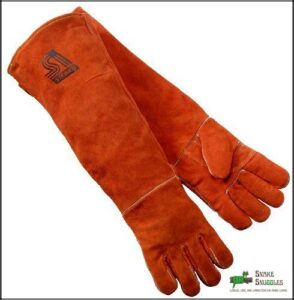
When the unexpected happens—a defensive python lunges or an escaped king snake refuses to cooperate—heavy-duty protective gloves matter more than you’d think.
Steiner’s long welding gloves, particularly the 21923 model with its 23-inch cuff length, offer outstanding thermal protection and hand protection that translates surprisingly well to snake handling. The shoulder split cowhide and foam-insulated back create serious bite resistance, while the full cotton lining keeps your hands comfortable during extended sessions.
Though designed for welding safety, these glove materials deliver reliable defense against powerful constrictor strikes and scratches.
| Best For | Welders needing extended forearm and upper arm protection from heat and sparks, or anyone handling animals like snakes or raptors who need serious bite and scratch defense. |
|---|---|
| Material | Foam, Leather |
| Length | Standard |
| Primary Use | Welding and animal handling |
| Stitching | Welted construction |
| Lining | Full cotton |
| Heat Resistance | Yes |
| Additional Features |
|
- 23-inch cuff length covers all the way past your elbow, protecting way more of your arm than standard gloves
- Foam insulation and shoulder split cowhide create solid barriers against heat, bites, and punctures
- Cotton lining keeps your hands from getting sweaty and uncomfortable during long work sessions
- Too thick and stiff for any task requiring precision or fine motor control
- Large sizing means they might feel loose or awkward if you have smaller hands or arms
- Some users report the leather starts breaking down after 3-4 years of regular use
2. Hand Max Kevlar Leather Gloves
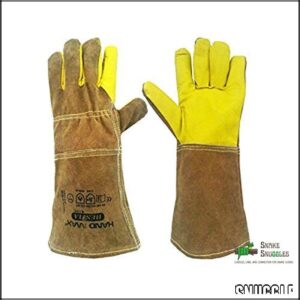
When budget meets real-world protection, HESTIA’s HandMax gloves with their Kevlar-leather construction offer sensible middle ground. At just under 13 inches, the gauntlet design extends forearm coverage while the split cowhide exterior paired with Kevlar thread reinforcement delivers respectable bite resistance—though manufacturers stress these aren’t snakebite proof.
The leather durability and Kevlar thickness balance finger dexterity with hand protection better than bulky welding options, making them practical protective gloves for non-venomous species like ball pythons. Multiple glove materials and manufacturing layers create reasonable defense without sacrificing control during routine snake handling.
| Best For | Budget-conscious reptile handlers working with non-venomous snakes who need solid bite protection without sacrificing finger control. |
|---|---|
| Material | Leather and Kevlar |
| Length | 14-inch |
| Primary Use | Animal handling |
| Stitching | Kevlar thread |
| Lining | No padding |
| Heat Resistance | Yes |
| Additional Features |
|
- Kevlar-reinforced leather construction offers better puncture resistance than plain leather gloves while maintaining decent dexterity for handling tasks
- 14-inch gauntlet design protects forearms from strikes and prevents snakes from reaching exposed skin at the wrist
- Lightweight at 8.8 ounces and flexible enough for extended wear during grooming, medical care, or routine snake handling
- Not puncture-proof despite Kevlar reinforcement—manufacturers warn these won’t stop determined bites from larger or venomous species
- Lack of internal padding can lead to bruising and pain even when fangs don’t fully penetrate the material
- Some users report the gauntlet length falls short for full forearm protection during handling of longer or more aggressive animals
3. Caiman Premium Welding Gloves
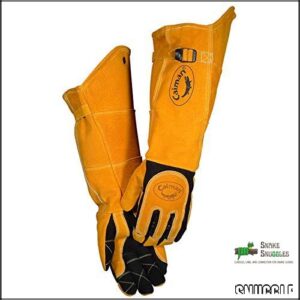
When extreme durability matters more than nimble fingerwork, Caiman’s 21-inch premium welding glove brings industrial-grade heat resistance into snake handling territory. The American deerskin leather paired with Kevlar-stitched seams and flame-resistant fleece lining creates outstanding protective gloves designed for MIG welding, but these premium features translate into serious bite defense for powerful constrictors.
Welding glove materials like reinforced cowhide patches and heavy forearm padding offer protection you won’t find in standard animal gloves—though the thick insulation trades dexterity testing for maximum coverage during risky snake handling situations requiring industrial applications-level armor.
| Best For | Professional welders or snake handlers managing large constrictors who need maximum heat and bite protection over finger dexterity. |
|---|---|
| Material | Leather |
| Length | 21-inch |
| Primary Use | Welding |
| Stitching | Kevlar thread |
| Lining | Sock lined foam/fleece |
| Heat Resistance | Yes |
| Additional Features |
|
- 21-inch length with heavy forearm padding provides elbow-to-fingertip coverage that standard gloves can’t match
- American deerskin leather with Kevlar stitching and reinforced cowhide patches delivers industrial-grade durability against heat, abrasion, and punctures
- Flame-resistant fleece insulation adds warmth and an extra protective layer without completely sacrificing tactile feel
- Thick insulation and heavy construction significantly reduce finger mobility for delicate handling tasks
- At around $87 per pair, the premium welding-grade materials put these well above budget snake glove options
- The bulky design and 1-pound weight can cause hand fatigue during extended use
4. Defences Animal Handling Gloves
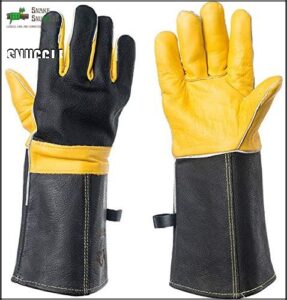
Built for reptile handling from the ground up, Defences’ 15-inch gauntlet-style gloves combine premium cowhide leather with Kevlar stitching to tackle cage cleaning and small-to-medium snake restraint. The 7.5-inch sleeve extends protection beyond your wrist, where climbing snakes often strike, while cotton lining keeps your hands comfortable during extended handling techniques.
These gloves deliver bite-resistant construction—not bite-proof armor—so you’ll want to pair them with proper tools when managing defensive species. The thick leather offers solid durability against scratches and moderate bites without sacrificing too much dexterity.
| Best For | Veterinarians, groomers, and reptile keepers who need reliable hand and forearm protection during snake cage maintenance and handling of small to medium animals. |
|---|---|
| Material | Premium cowhide leather |
| Length | 15-inch |
| Primary Use | Animal handling and heat tasks |
| Stitching | Kevlar stitching |
| Lining | Cotton |
| Heat Resistance | Yes |
| Additional Features |
|
- 15-inch gauntlet design with 7.5-inch sleeve protects your forearm from climbing snakes and unexpected strikes
- Premium cowhide leather with Kevlar stitching delivers solid durability against scratches and moderate bites
- Cotton lining keeps hands comfortable during extended handling sessions without overheating
- Bite-resistant but not bite-proof—won’t stop powerful jaws from large or aggressive animals
- Thick leather construction limits dexterity for detailed work or fine manipulation
- May not provide complete puncture protection against very sharp teeth or extreme bite force
5. Animal Handling Anti Bite Gloves
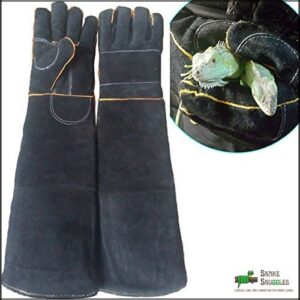
At 23.6 inches, these thickened cowhide gloves deliver serious forearm coverage—critical when large constrictors coil or defensive species strike high.
The cotton lining adds comfort during extended handling, though you’ll notice the arm area runs thinner than advertised, making bite resistance less reliable near the elbow. Hand protection stays solid for pythons and nonvenomous colubrids, but don’t trust these with venomous snakes—they’re designed for animal safety scenarios where scratches matter more than fangs.
Quality control issues like uneven stitching pop up occasionally, so inspect carefully before first use.
| Best For | Reptile keepers, groomers, and kennel staff handling mid-sized animals like pythons, parrots, and defensive cats where scratch protection matters more than fang defense. |
|---|---|
| Material | Thickened cowhide |
| Length | 23.6-inch |
| Primary Use | Animal handling |
| Stitching | Standard stitching |
| Lining | Cotton |
| Heat Resistance | Limited |
| Additional Features |
|
- Extended 23.6-inch length covers most of your forearm, protecting against coiling snakes and high strikes from birds or climbing animals.
- Thickened cowhide construction with cotton lining balances durability with comfort during long handling sessions.
- Effective against scratches, claws, and bites from non-venomous species like ball pythons, corn snakes, and most companion animals.
- Arm area runs noticeably thinner than the hand section, leaving your forearm more vulnerable than the glove’s overall design suggests.
- Quality control inconsistencies—uneven stitching and variable thickness mean you need to inspect each pair carefully before trusting them.
- Not suitable for venomous snakes or powerful biters; these prioritize scratch resistance over true bite-proof protection against animals with serious fangs.
6. Kim Yuan Fire Resistant Gloves
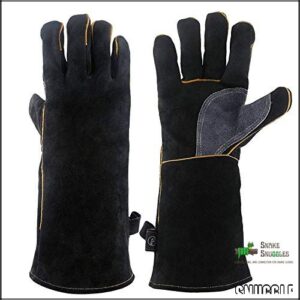
These 14-inch split cowhide gloves aren’t marketed for snake handling, but many keepers use them with nonvenomous species where heat resistance and leather durability matter.
The 1.0–1.2mm thickness provides modest protection against python or kingsnake bites, though you won’t find reinforced fingertips or forearm coverage. Kevlar stitching holds up well, but glove sizing runs large and one-size-fits-most limits dexterity.
They’re acceptable for casual handling of docile colubrids, not defensive or venomous species—think backup pair for routine enclosure work, not primary snake handling gloves.
| Best For | Reptile keepers who occasionally handle docile, nonvenomous snakes like ball pythons or kingsnakes and want affordable gloves that double as welding or fireplace gear. |
|---|---|
| Material | Split cow leather |
| Length | 14-inch |
| Primary Use | Heat tasks and animal handling |
| Stitching | Kevlar stitching |
| Lining | Cotton |
| Heat Resistance | Up to 662°F |
| Additional Features |
|
- Thick split cowhide and Kevlar stitching hold up to repeated handling of mildly defensive colubrids without tearing
- Extended 14-inch cuff protects your forearm from scratches during routine enclosure maintenance or feeding
- Heat resistance up to 662°F means you can use the same pair for adjusting basking lamps or handling ceramic heaters
- One-size-fits-most design sacrifices grip precision, making it harder to control smaller or faster snakes
- 1.0–1.2mm leather won’t stop bites from large constrictors or any venomous species—strictly for low-risk handling
- Bulky construction limits dexterity compared to purpose-built reptile gloves, so delicate tasks feel clumsy
Maintaining and Inspecting Snake Handling Gloves

Your gloves won’t protect you if they’re falling apart, so regular maintenance isn’t optional—it’s part of your safety protocol.
Proper cleaning, inspection, and storage can extend their lifespan and guarantee they’re ready when you need them most.
Here’s how to keep your snake handling gloves in working condition.
Cleaning and Drying Procedures
Your gloves just wrestled a three-foot python—now they’re covered in debris, shed skin, and who knows what else. Proper cleaning isn’t just about hygiene; it’s about extending the life of protective gear that literally stands between you and fangs.
Here’s how to clean and dry your snake handling gloves safely:
- Check manufacturer labels first—leather care differs dramatically from synthetic washing, and using the wrong method can ruin your gloves’ protective integrity.
- For leather gloves: brush off debris, then wash gently in lukewarm water with mild soap (never bleach), avoiding aggressive scrubbing that weakens fibers.
- For synthetic or Kevlar gloves: hand wash with mild detergent, skipping fabric softeners that compromise cut-resistant strength over time.
- Air dry completely away from direct heat—leather needs room temperature drying methods to prevent cracking, while synthetics should dry flat in shade.
Once dry, condition leather gloves to restore flexibility. Remember: hand hygiene matters even after glove conditioning, so wash thoroughly post-handling regardless of how clean your protective gear looks.
Checking for Wear and Tear
Clean gloves won’t protect you if they’re developing holes, so inspecting them regularly isn’t optional—it’s the difference between safe handling and a hospital visit. Wear detection means checking seams, palms, and finger joints after every use for material degradation.
| Inspection Zone | What to Check For |
|---|---|
| Seams and stitching | Fraying, gaps, separation |
| Palm and fingers | Punctures, thin spots, tears |
| Cuffs and closures | Loose fasteners, rips |
Tear repair isn’t worth risking—replace compromised hand protection immediately.
Storing Gloves for Longevity
Spotting a tear means it’s time for careful glove storage—think cool, dry shelves and breathable containers, not a sweaty garage or sunlit windowsill.
Humidity control and ventilation methods keep Snake Handling Gloves, especially Leather Gloves, in top shape. Protective Wrapping, like mesh bags, prevents mildew, while rotating pairs extends Material Durability.
Glove Storage Tips matter as much as Glove Selection and Care.
Improving Comfort and Flexibility
Break-in periods aren’t just for hiking boots—stiff new gloves need a few flexes and conditioning treatments before they’ll feel like a second skin during handling sessions.
Leather conditioners boost Flexibility Tests and Wear Resistance without sacrificing Hand Dexterity.
Work the Glove Materials gently, targeting stiff joints and seams. Comfort Features improve with use, so rotating pairs during Glove Selection and Care ensures your Snake Handling Gloves mold to your grip while maintaining protection.
Frequently Asked Questions (FAQs)
Should you wear gloves when handling snakes?
It depends on the situation. For venomous species, defensive snakes, or medical care, you’ll want gloves as a secondary barrier. With calm, non-venomous snakes, bare hands often give better control.
When should you start handling your snake?
Patience feels impossible when you’re enthusiastic, but rushing slows progress.
Wait one to two weeks after bringing your snake home, allowing acclimation before that first handling session to reduce stress and build trust.
Can copperheads bite through leather gloves?
Yes, copperheads can bite through most leather gloves. Their fangs, measuring up to 5 centimeters, routinely penetrate standard leather and even some “bite-proof” gloves during strikes, making direct handling extremely risky.
Can gloves be used for handling aquatic snakes?
Thick leather or synthetic gloves work for water snakes, offering grip on wet, smooth bodies.
They’re never bite-proof, though—especially against venomous aquatic species—so combine them with hooks and tongs for real protection.
Do gloves affect snake stress or behavior patterns?
Gloves can exacerbate snake stress factors when stiff materials reduce your tactile sensitivity, prompting firmer grips that trigger defensive behaviors.
Bulky designs also slow handling technique effects, prolonging restraint and delaying behavioral adaptation in nervous animals.
When should handlers avoid using gloves altogether?
When handling calm pets that tolerate bare hand techniques, gloves can reduce tactile feedback and increase handling errors.
Skip gloves for routine interaction with docile species you know well.
How do temperature conditions affect glove performance?
Extreme cold stiffens leather and reduces dexterity, while heat causes sweating that compromises grip. You’ll need moisture-wicking materials and thermal protection to maintain both comfort and control during temperature swings.
Conclusion
An ounce of prevention beats a pound of cure, especially when fangs are involved. Knowing when you need gloves for snakes means recognizing defensive postures, unfamiliar temperaments, and moments when protective gear outweighs bare-hand confidence.
The right gloves won’t replace proper technique, but they’ll give you breathing room when a situation turns unpredictable. Keep them accessible, inspect them regularly, and remember—you’re working with animals that don’t forgive hesitation.
- https://snakebootguide.com/snake-proof-gloves/
- https://www.rapicca.com/products/rapicca-animal-handling-gloves-bite-proof-kevlar-reinforced-leather-padding-dog-cat-scratch-bird-handling-falcon-gloves-grabbing-reptile-squirrel-snake-bite-22in
- https://www.batcopetsitting.com/emergency-first-aid-kits-for-reptiles/
- https://www.avma.org/resources-tools/pet-owners/emergencycare/first-aid-tips-pet-owners
- https://www.tvmf.org/articles/turtles-and-salmonella/