This site is supported by our readers. We may earn a commission, at no cost to you, if you purchase through links.

Pick up a banana ball python and a piebald side by side, and you’ll notice something breeding charts never capture: one retreats, one investigates. That behavioral gap isn’t random. It traces to genetics, enclosure conditions, and handling history in ways most keepers never measure systematically.
The assumption that morph choice is purely cosmetic has driven a lot of poor decisions. Ball python morph temperament variations are real, measurable, and partly predictable once you know what signals to track.
Behavioral baselines, light sensitivity in albinos, wobble syndrome in spider morphs. The picture is more complex than any blanket generalization suggests.
Table Of Contents
- Key Takeaways
- How Ball Python Temperament is Assessed
- Do Morphs Affect Ball Python Temperament?
- Popular Ball Python Morph Temperaments Compared
- Spider Morph Temperament and Wobble Risks
- Husbandry Factors That Shape Temperament
- Choosing a Calm, Healthy Ball Python
- Frequently Asked Questions (FAQs)
- Do different ball python morphs have different temperaments?
- What is the rarest ball python morph?
- Which ball python morphs to avoid?
- What is the best morph of a ball python?
- Can temperature changes affect ball python temperament?
- Do ball pythons recognize their owners over time?
- How does feeding frequency influence defensive behavior?
- Are female ball pythons calmer than males?
- Can multiple morphs mixed create unpredictable temperaments?
- Can diet affect a ball pythons mood?
- Conclusion
Key Takeaways
- Your ball python’s morph label predicts its color, not its temperament — individual genetics and handling history are the real behavioral drivers.
- Albino morphs aren’t difficult; they’re photosensitive, and dimming their enclosure below 1,000 lux is the single most effective way to reduce stress-driven reactivity.
- Spider morphs are genuinely docile, but their neurological wobble syndrome is stress-amplified and unpredictable in severity — feeding management and ethical sourcing aren’t optional.
- Husbandry variables — thermal gradient, hide fit, handling consistency, and photoperiod — shape temperament more reliably than any morph reputation ever will.
How Ball Python Temperament is Assessed
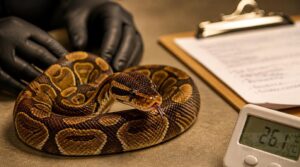
How do you separate a genuinely calm snake from one that’s simply tired? Temperament testing starts with structured observation: place the snake in a neutral enclosure and record tongue-flick rate, head position, and movement patterns over 15–30 minutes. Those behaviors establish a reliable behavioral baseline before any handling begins.
Pairing this observation method with species-specific guidance — like those offered for beginner-friendly snake morphs — helps you set realistic temperament expectations before you ever pick up the animal.
Behavior scoring during handling sessions follows a clear protocol. Note latency to retreat, coiling tightness on a 0–3 scale, and whether the animal attempts unprovoked defensive strikes. One session tells you almost nothing. Repeat the process across three to five consecutive days to account for individual variation tied to feeding cycles, shed status, or enclosure temperature.
Document everything. Date, conditions, feeding status, and observer initials all belong on every assessment record.
Do Morphs Affect Ball Python Temperament?
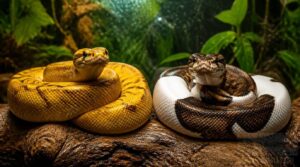
Once your assessment data is in, the next question is obvious: does the ball python morph you’re working with actually predict anything? The short answer is no, not reliably.
Morph phenotype and temperament are separate variables. Genetic expression controlling color and pattern has no proven causal link to behavioral disposition. What drives temperament is individual genetics and rearing history, full stop. A banana raised in an unstable environment with inconsistent handling sessions will present far more reactive than a properly conditioned piebald.
Anecdotal reports of morph-specific behavioral quirks circulate in keeper communities, but controlled data doesn’t support broad generalizations. Individual variation consistently outweighs morph category as a predictor. Morph label tells you what the animal looks like. It doesn’t tell you how it behaves.
Popular Ball Python Morph Temperaments Compared
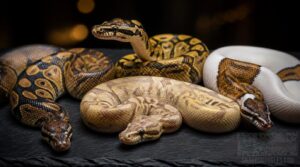
Not every morph behaves the same way, and that distinction matters when you’re choosing your next snake. Some differences are subtle, others are neurological or sensory and will shape every handling session you have. Here’s how the most popular morphs actually compare.
Banana, Piebald, and Pinstripe
Though often grouped and sold together, these three morphs show distinct temperament profiles worth knowing before you commit.
- Banana morph: shyer baseline, expect head tilt and tail wobble under stress; habituates within 6–12 weeks.
- Piebald morph: calm in familiar enclosures, brief stress responses; consistency is your tool.
- Pinstripe morph: mildly exploratory, often approaches hands quickly; fastest individual variation to settle.
Albino and Light Sensitivity
Where Banana and Piebald stress under handling, the Albino morph introduces something different: light-triggered behavioral disruption.
The genetic mutation behind the albino’s eye color strips ocular pigment entirely, flooding the retina with unfiltered light. Temperament shifts fast under bright conditions.
| Light Level | Snake Response |
|---|---|
| Above 2,000 lux | Irritation, retreat behavior |
| 500–1,000 lux (shaded) | Manageable handling window |
| Direct overhead light | Tongue flicking, head-turning |
| Diffuse, low-wavelength | Calm, minimal stress |
Light sensitivity isn’t a flaw. It’s physiology. Dim the enclosure; you’ll get a calmer snake.
Morphs prone to neurological issues—like the Spider or Powerball Spotnose—may be especially reactive to light, so understanding ball python head wobble triggers and stress responses can help you tell genuine distress from morph-related wobble.
Black Pastel, Leopard, and Mahogany
When you combine Black Pastel, Leopard, and Mahogany, you’re working with a trio that trends toward mild initial defensiveness but calms quickly within minutes of consistent handling.
Individual variation matters more than morph labels here. Enclosure temperature directly affects skittishness; cooler setups heighten reactive responses. Track feeding consistency and habituation speed; those behavioral metrics predict actual temperament far more reliably.
Puzzle and Other Designer Morphs
The puzzle morph carries a reputation that outpaces the evidence. Temperament traces back to handling history and lineage, not color genetics. Individual variation within puzzle lines routinely exceeds any between-morph differences.
When you’re evaluating a puzzle, genetic inheritance doesn’t reliably predict docility. The snake’s early socialization does. Some lines show heightened stress responses, but that remains anecdotal and breeding-line specific.
Spider Morph Temperament and Wobble Risks
The Spider morph brings a paradox to the table: genuinely docile by nature, yet carrying a neurological condition that shapes every aspect of its care. Before you commit to one, you need to understand what wobble syndrome actually means in practice.
What follows breaks down the key factors that define the Spider morph experience.
Generally Docile Temperament
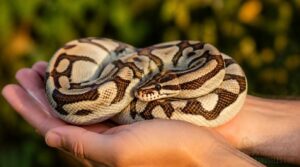
Spider ball pythons have a reputation that precedes them: generally calm, slow to defensive posturing, and tolerant of routine contact. Individual variation still dominates, though.
A spider from a consistently handled breeding line with solid early socialization will outperform temperament predictions based on morph alone. Assess the animal in front of you, not the label.
Wobble Syndrome Severity
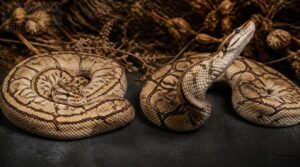
The neurological symptoms aren’t uniform. Every spider morph carries the wobble, but severity varies dramatically between individuals — from a subtle head tilt you’d barely notice to full corkscrewing episodes that compromise posture entirely.
Stress amplifies it fast. Handling, temperature swings, or feeding arousal can escalate symptoms that seemed mild just hours before.
You can’t predict offspring severity from parental mildness.
Balance And Feeding Risks
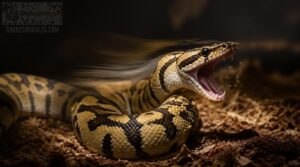
The wobble doesn’t stay contained to movement alone. During feeding, balance disruption mid-strike causes missed targets, prey thrashing, and repeated stress responses that spike a Spider’s reactivity. That elevated temperament state compounds over time.
Space feeding sessions to allow full recovery, use tongs to steady prey positioning, and monitor strike accuracy and engulf time closely. Feeding stress reduction isn’t optional here.
Ethical Breeding Considerations
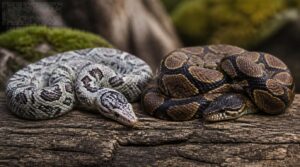
Breeding Spider morphs demands real accountability. Ethical breeding means fully disclosing wobble syndrome severity to every prospective buyer, no exceptions. You should demand genetic testing records and full lineage transparency before any purchase commitment.
If a breeder can’t quantify temperament outcomes across generations, simply walk away. Responsible ownership starts with sourcing from programs that prioritize long-term welfare over aesthetic novelty.
Husbandry Factors That Shape Temperament
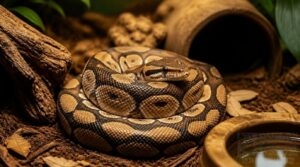
Genetics explains what your ball python looks like—husbandry shapes how it behaves. Every environmental factor inside that enclosure influences whether your snake stays calm or stressed, and most behavioral problems trace back to a setup issue, not a morph. Here’s what to get right.
Temperature And Humidity
Because temperature control is the backbone of reptile care, your enclosure’s climate determines everything from feeding response to defensive posturing.
- Set basking zones to 88–92°F during daylight hours
- Sustain humidity management at 50–60% with spikes pre-shed
- Keep cool ends above 75°F to support digestion
Your thermal gradient is the foundation of sound husbandry. Let temperatures slip and behavioral problems follow.
Secure Hides
Once your thermal gradient is dialed in, shelter becomes the next pressure point. A secure, correctly sized hide resets baseline stress. Size the opening to 60–75% of trunk diameter, tight enough to trigger the compression-equals-safety instinct. Position hides within the preferred thermal gradient, not placed arbitrarily. Oversized or unstable hides sustain low-grade stress that compounds during handling.
Consistent Gentle Handling
With hides calibrated, handling becomes your primary temperament-shaping tool.
Early, consistent socialization builds habituation faster than any morph label predicts. Start sessions under 90 seconds, scaling only when the snake shows zero retreat cues. Repeated, low-stress contact reinforces owner recognition over time, nudging even skittish individuals toward reliable docile temperament.
Enclosure Stability
Socialization only holds when the enclosure itself stays predictable. A shifting enclosure, loose substrate, or unstable decor creates **unpredictable sensory disruption that resets behavioral progress fast. Secure lids, non-slip mats, and locked hides eliminate micro-disturbances your snake detects before you do. Structural consistency reinforces calm. An enclosure that doesn’t shift, rattle, or drift produces a snake that doesn’t either.
Lighting Conditions
The lighting environment directly shapes your ball python’s stress threshold. Maintain a 12:14 light-dark cycle and use flicker-free LED fixtures positioned 15–25 cm above substrate. Overly bright environments increase startle responses, particularly in light-sensitive morphs.
Dim enclosure lighting during feeding to reduce aggression. Consistent photoperiods also support predictable shedding behavior, a reliable welfare indicator across any ball python morph temperament.
A reptile dimmer lamp lets you fine-tune brightness at feeding time without disrupting your python’s established photoperiod.
Feeding And Health
Because feeding response quality is a direct health proxy, a sudden refusal after consistent feeding signals a problem worth investigating.
Watch for:
- Missed feeds paired with measurable weight loss
- Bubbles or discharge during feeding attempts
- Regurgitation post-meal
- Incomplete shedding causing mouth discomfort
- Sluggish postfeeding behavior and reduced activity
Feeding frequency and shedding behavior together reveal your snake’s true health status.
Choosing a Calm, Healthy Ball Python
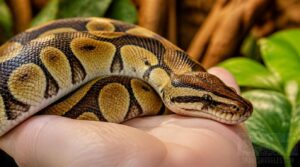
Selecting the right ball python comes down to direct behavioral observation, not morph reputation. A calm, healthy animal will show consistent responses across multiple interactions and carry a clean bill of health from a reputable source.
The criteria below give you a structured way to evaluate every candidate before you commit.
Observe Behavior Across Several Days
Don’t judge a ball python’s temperament after just one session. Track it.
Behavior scoring across days reveals whether defensiveness is situational or hardwired.
| Day Range | Behavior Indicator | Temperament Signal |
|---|---|---|
| Days 1–2 | Strikes, tight coils | High arousal state |
| Days 3–4 | Slower body retraction | Early acclimation |
| Days 5+ | Calm, open extension | Docile temperament |
Early handling exposes defensive mechanisms before acclimation masks them.
Check Health and Feeding Response
A python’s health status directly masks temperament. Before evaluating personality, confirm:
- Consistent feeding schedule acceptance across multiple meals
- No regurgitation history or open-mouth breathing
- Normal body condition without lethargy or visible swelling
Poor husbandry skews every behavioral read. A snake refusing prey during early handling isn’t inherently mean. It’s stressed or unwell. Resolve health status before drawing any temperament conclusions.
Ask About Lineage Temperament
Morph labels tell you nothing about behavioral history. Ask your breeder for documented parental temperament records spanning multiple clutches, not just a single hatchling’s handling session. When both dam and sire show calm responses, offspring trends reliably calmer.
Cross-check feeding responses too. Require verifiable breeder or vet assessments, not anecdotal assurances. Lineage transparency separates serious breeders from clever marketing.
Prioritize Personality Over Morph Labels
The label on a morph tag tells you color. It doesn’t tell you what you’re actually working with.
Individual temperament outweighs pattern every single time. Watch the animal’s response to your hand, its return to hides, its feeding consistency. A calmer breeder line consistently beats a striking phenotype. Choose behavior you can build on, not aesthetics you can only admire.
Choose behavior you can build on, not aesthetics you can only admire
Frequently Asked Questions (FAQs)
Do different ball python morphs have different temperaments?
The theory holds until it doesn’t. Morphs rarely dictate temperament. Environment, handling history, and individual personality consistently outweigh any morph-linked behavioral reputation in documented observations.
What is the rarest ball python morph?
There’s no single answer. Rarity shifts with allele frequency, founder-effect bottlenecks, and documented lineage. Today’s ultra-rare designer combination becomes tomorrow’s standard as breeding programs scale.
Which ball python morphs to avoid?
No morph is categorically off-limits. Spider morph wobble warrants serious consideration — neurological instability affects welfare. Prioritize individual temperament and ethical sourcing over blanket avoidance.
What is the best morph of a ball python?
There’s no single best morph. Personality beats phenotype every time. Prioritize calm temperament, consistent feeding response, and solid husbandry over label-chasing.
Can temperature changes affect ball python temperament?
Think of temperature as a dimmer switch for your ball python’s nervous system. Thermal instability directly skews temperament, turning a docile animal defensive within minutes of suboptimal exposure.
Do ball pythons recognize their owners over time?
Ball pythons loosely tell owners from strangers through repeated scent exposure and handling routines over weeks, showing reduced flight response and faster calm behavior with familiar handlers.
How does feeding frequency influence defensive behavior?
Hunger sharpens edges. Feed too rarely, and your python’s defensive threshold drops, triggering escape or strike during handling. Overfeed, and post-feeding agitation spikes just as fast. Stick to 7–14 day intervals to maintain behavioral stability.
Are female ball pythons calmer than males?
The short answer: no. Sex doesn’t reliably predict calmness. Individual personalities, early handling, and husbandry conditions outweigh any sex-based temperament differences across standardized behavioral assessments.
Can multiple morphs mixed create unpredictable temperaments?
Mixing morphs doesn’t reliably shift temperament. Individual history and husbandry matter far more than combo genetics. No consistent morph-to-behavior mapping exists across designer lineages.
Can diet affect a ball pythons mood?
Diet directly drives disposition. Consistent, appropriately sized prey promotes calmer snake behavior, while erratic feeding schedules spike defensive responses, elevating mouth avoidance and tail-twitching as clear animal temperament stress markers.
Conclusion
Morph isn’t just skin deep. Ball python morph temperament variations reveal a layered picture where genetics, husbandry, and handling history converge into something measurable and genuinely meaningful.
Your banana’s curiosity, your spider’s wobble, your albino’s light sensitivity: these aren’t quirks to casually dismiss. They’re behavioral signals worth tracking carefully.
Choose the animal that fits your experience level, your setup, and your patience. The morph you pick says something. Make sure it says the right thing.