This site is supported by our readers. We may earn a commission, at no cost to you, if you purchase through links.

Coil a ball python into a defensive knot and you’ll find its head tucked so deep inside that a predator has nothing to grab. That single trick, curling into a tight ball rather than fleeing, gave this snake species its name and helped it dominate the exotic pet trade for decades. Native to the grasslands of West and Central Africa, Python regius spends its nights ambushing rodents with heat-sensing pits most reptiles can’t match.
Calm, manageable, and remarkably patient with handling, it’s become the go-to species for first-time snake owners. But there’s real science behind its size, its shedding cycles, and what keeps it thriving for 30 years or more.
Table Of Contents
- Key Takeaways
- Ball Python Species Overview
- Ball Python Habitat, Behavior, and Reproduction
- Ball Python Care and Pet Suitability
- Ball Python Feeding and Nutrition
- Ball Python Lifespan, Health, and Conservation
- Frequently Asked Questions (FAQs)
- How many species of ball pythons are there?
- What type of snakes are ball pythons?
- What snakes are similar to ball pythons?
- Is a ball python a friendly snake?
- Can ball pythons live together in one enclosure?
- How do you breed ball pythons successfully?
- What are signs of stress in ball pythons?
- Do ball pythons recognize their owners over time?
- How often should ball pythons shed their skin?
- How much does a pet ball python cost?
- Conclusion
Key Takeaways
- Ball pythons get their name from their signature defensive move of curling into a tight ball with their head tucked safely inside, and this calm, predictable temperament is exactly what makes them such a great choice for first-time snake owners.
- Give your ball python a 4x2x2 foot enclosure with a basking zone of 88–92°F, humidity around 50–60% (bumped up to 60–70% during sheds), and secure locking latches, since getting the habitat right is the foundation of keeping them healthy.
- Feed based on your snake’s age and prey girth rather than a fixed schedule—hatchlings every 5-7 days, adults every 10-14 days—and always use frozen-thawed rodents to avoid the injury risks that come with live prey.
- With proper care, a ball python can live 15-30 years (sometimes 40-50), so catching early warning signs like wheezing, mouth discharge, or head tremors and scheduling routine vet checkups makes a real difference in how long and how well your snake lives.
Ball Python Species Overview
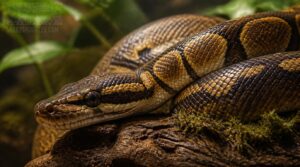
Before you set up an enclosure or plan a feeding schedule, it helps to know exactly what kind of animal you’re working with. Ball pythons carry a distinct set of traits, from their compact build to the sensory tools that make them such efficient hunters. Here’s what sets this species apart, starting with the basics.
If you’re curious how ball pythons stack up against other popular pet snakes, this Mexican black kingsnake care guide offers a useful point of comparison for first-time keepers.
Once you understand their physical traits, you’ll be better equipped to match prey size to their needs—these tips for feeding ball pythons walk you through getting it right.
Scientific Classification and Common Names
Every snake carries a scientific identity card, and for this species it reads Python regius, first described by Blanford in 1879. Nested in the family Pythonidae and genus Python, it’s known worldwide as the ball python or royal python. Both names refer to the same nocturnal and crepuscular native of West and Central Africa.
This two-part naming system, known as binomial nomenclature and scientific naming, ensures the species is universally identified regardless of the common name used.
Adult Size and Sexual Dimorphism
Size tells you a lot before you even check the tag on an enclosure. Females stretch to 120-150 cm, males stay near 90-110 cm, a clear female size advantage rooted in reproductive size needs.
Males mature and grow faster early on, then plateau leaner. That dimorphism shapes husbandry choices from day one, favoring reptiles built for captive breeding success.
Coloration, Patterns, and Morphs
Wild ball pythons wear brown to tan bodies with dark saddle markings, sometimes a rusty wash. Captive breeding exploded that palette: albino morphs run pale yellow with red eyes, piebald individuals show bold white patches, and clown lines flatten pattern into smoother swirls.
Genetics drive it all, recessive and co-dominant traits producing thousands of documented color morphs beyond anything nature alone would craft.
Sensory and Survival Adaptations
Beyond flashy morphs, ball pythons survive on senses built for darkness. Heat-sensing pits along the jaw detect warm prey through leaf litter, while slit pupils sharpen night vision for hunting.
- Camouflage patterning that vanishes into fallen leaves
- Burrow shelter offering safety from predators
- Defensive ball curling when threatened
- Thermoregulation guiding survival choices
- Habitat loss threatening these adaptations
Differences From Other Pythons
Set a ball python next to a Burmese or reticulated python and the body shape comparison tells the story instantly: stockier, shorter, rounder-headed, with modest muscular bulk. Their heatsensing pits cover a narrower thermal sensing range, tuned for ground-level ambush rather than climbing.
Add pelvic spurs, pronounced sexual dimorphism, and devoted maternal care, and you’ve got a distinctly terrestrial specialist.
Ball Python Habitat, Behavior, and Reproduction
Understanding where ball pythons come from tells you a lot about how they act in your home. From the grasslands of West Africa to the burrows they borrow rather than build, every habit connects back to survival in the wild. Here’s what shapes their world, from range to reproduction.
African Range and Native Habitats

Picture a landscape stitched from gold grass and scattered acacias, that’s ball python country. Their range spans West and Central Africa, reaching subSaharan pockets from Nigeria to Kenya, across savanna grassland ecosystems and open woodland.
If you’re curious how that native habitat translates into captive husbandry, this corn snake breeding timeline from start to hatching offers a useful point of comparison for understanding brumation and incubation cycles.
- Termite mound shelters
- Riverine forest habitats
- Rocky outcrop utilization
Elevations climb to 1,500 meters, and seasonal moisture adaptation lets them thrive from dry spells to wetlands.
Shelter and Burrow Use
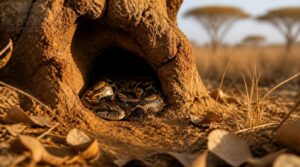
A ball python rarely digs its own home. Instead, it borrows one, tucking into termite mounds, rodent burrows, or leaf litter with hidden, narrow entrances that deter predators.
Shelter selection favors spots with steady humidity and thermal buffering, ideal savanna microhabitats where substrate depth traps moisture.
When burrowing does occur, it’s shallow, just enough refuge from midday heat.
Nocturnal Activity and Ambush Hunting

Darkness is when the real work begins. Ball pythons rely on heat sensing pits along their jaws, paired with sharp low-light vision, to detect warm bodies moving through leaf litter.
They coil, wait, and strike with startling speed, constricting rodents before retreating to digest, quiet and unseen until the next hunt.
Defensive Balling and Temperament
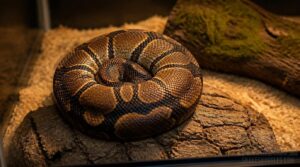
Named for its signature move, the species curls into a tight defensive ball, head tucked safely inside, when startled by sudden motion.
This defensive curl beats retreating for most individuals, who are otherwise calm and docile once acclimated. Illness, poor hides, or handling right after feeding are common stress triggers pushing a snake toward this defensive posture instead of curiosity.
Breeding, Eggs, and Maternal Care
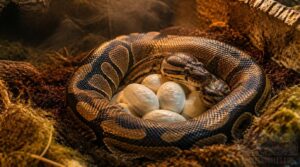
Breeding season runs September through November, when courtship rituals give way to egg incubation lasting 55-60 days at 82-90°F.
Females coil protectively, generating warmth through muscular shivering, not true parental care.
Clutch size scales with body size:
- Small females: 3-5 eggs
- Average females: 4-10 eggs
- Large, well-fed females: 6-10+ eggs
Hatchlings emerge independent, genetic lineage shaping their eventual coloration.
Ball Python Care and Pet Suitability

Bringing a ball python home means recreating its natural rhythms, not just filling a tank with décor. Getting the setup right from day one saves you headaches down the road and keeps your snake calm and healthy. Here’s what actually matters when you’re building out the enclosure.
Adult Enclosure Size and Security
A roomy adult enclosure isn’t optional, it’s the foundation of good husbandry. Aim for a 4x2x2 foot minimum enclosure (roughly 36 to 60 inches long), giving your snake 4 to 6 times its body diameter to stretch out comfortably.
Security matters just as much. Choose escapeproof latches, two or more locking mechanisms, and PVC construction for heat retention and a stable thermal gradient.
Temperature Gradient and Heating
Once the enclosure’s secure, thermoregulation takes over. Set a basking zone of 88–92°F and a cool side near 78–82°F, letting nighttime dip 5–10°F but never below 72°F.
- Calibrate thermostats within ±2°F
- Use two thermometers, warm and cool
- Check readings twice daily
Precise calibration prevents thermal stress and helps healthy digestion.
Humidity, Shedding, and Hydration
Moisture matters as much as heat. Keep ambient humidity at 50–60%, rising to 60–70% during sheds. A humidity hide with damp substrate creates a microclimate; a hygrometer confirms readings.
| Sign | Healthy | Problem |
|---|---|---|
| Shed | Single piece | Retained caps |
| Eyes | Clear | Cloudy/dull |
| Skin | Supple | Wrinkled, tight |
Fresh water aids hydration and softens skin before shedding.
Substrate, Hides, and Enrichment
What’s beneath your snake matters as much as what’s above it. Choose dust-free substrate like coconut husk or cypress mulch for humidity control and odor reduction.
- Solid, opaque hides on warm and cool sides
- Cork bark or PVC tubes for enrichment structures
- Spot-clean daily; replace substrate every 1–3 months
- Sanitize hides between uses to prevent fungal buildup
Handling and Beginner Suitability
A calm temperament makes ball pythons remarkably beginner-friendly. Most stay docile during handling, tolerating gentle contact once acclimated. Support the whole body, keep sessions to 5-10 minutes, and always wait 48 hours post-feeding.
Watch for a defensive curl, tightening, or hissing; these signal stress. Handle at stable room temperature, using slow motions. Consistency and short, frequent sessions build trust, easing snakes accustomed to nocturnal activity into confident daytime interaction.
Ball Python Feeding and Nutrition

Feeding might look simple from the outside, but there’s real biology behind every meal you offer your ball python. Getting it right means matching prey size, schedule, and technique to your snake’s age and habits, not just tossing in a rat and hoping for the best.
Here’s what you need to know, starting with what these snakes actually eat in the wild.
Wild Diet and Prey Species
What does a wild ball python actually eat? Mostly rodent prey diversity: gerbils, shrews, and soft-furred rats snatched from burrows.
Opportunistic feeders at heart, they’ll grab birds near farmland, fall back on lizards when mammals run scarce, and take frogs during wet seasons. Juveniles even snack on large insects, showing real wild prey diversity beyond the usual menu.
Captive Prey Types and Sizing
Since captive rodents replace that varied wild menu, sizing matters more than species. Match prey to your snake’s girth at its widest point, not its length.
Hatchlings take pinkies or fuzzies; adults do fine on small-to-medium rats.
Always offer prey thawed or fresh, never larger than one and a half times the snake’s head width, and rotate types occasionally for balanced nutrition.
Age-Based Feeding Schedules
How often should you feed? It depends entirely on age.
Hatchlings eat every 5 to 7 days; juveniles stretch to 7 to 10.
Adults settle into a 10-to-14-day rhythm, matching prey size to midbody girth throughout.
Come cooler months, don’t panic if appetite dips. Seasonal fasting is normal, mirroring wild breeding-season behavior, not illness.
Frozen-Thawed Feeding Best Practices
Why do vets push frozen-thawed rodent prey over live? Live prey risks include bites and scratches during feeding.
- Warm prey to 30-32°C
- Use tongs for presentation
- Match prey size to girth
- Remove uneaten prey within 2 hours
- Never refreeze thawed rodents
Feed in a quiet, distraction-free enclosure for calm, confident strikes.
Food Refusal and Feeding Problems
A ball python skipping meals isn’t automatically an emergency, it’s often just biology.
Stress from new environments can suppress appetite for weeks.
Shedding, cooler months, and breeding season bring normal fasting.
Check prey sizing and temps first.
If refusal passes three months or weight drops over 10%, call your vet.
Ball Python Lifespan, Health, and Conservation
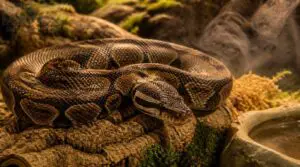
A well-kept ball python can outlive a family dog, but that longevity only holds up when you know what to watch for.
A well-kept ball python can outlive a family dog, but only if you know what to watch for
Health isn’t just about reacting to problems, it’s about catching the small signs before they become big ones.
Here’s what shapes a ball python’s lifespan, from everyday wellness checks to the bigger picture of where these snakes come from.
Captive and Wild Lifespans
Longevity tells a captivity story. Wild pythons average 10 years; captive-bred snakes reach 15-30 years, some topping 40-50 with veterinary care.
That extended lifespan gives keepers plenty of time to watch the heat-sensing pits at work, a survival tool explored further in this python snake species guide.
- Stable thermal gradients
- Routine vet checkups
- Steady prey access
- Lower reproductive stress
- Secure, escape-proof enclosures
Females often outlive males, and non-breeders frequently surpass reproducing counterparts, proof that reduced physiological cost extends life.
Common Illnesses and Warning Signs
That extended lifespan only holds if you catch trouble early. Watch for wheezing or clicking sounds, mucus around the nostrils, or open-mouth breathing, all signs of respiratory infection.
If you’re unsure whether your boa’s breathing sounds normal, this boa constrictor care sheet breaks down healthy respiratory patterns by size and age.
Darkened, blistered belly scales point to scale rot; cheesy discharge near the gums signals mouth rot.
Head tremors or stargazing suggest inclusion body disease.
Mite infestations and septicemia demand fast action too.
Preventive Care and Veterinary Checkups
Catching respiratory infections, scale rot, or mouth rot early starts with routine wellness exams, not crisis visits. A good vet performs baseline diagnostics, fecal parasite screening for mites and internal parasites, and weight monitoring to track body condition.
Dental checks, though less critical for snakes, and vaccination risk reviews round out a proper checkup, suited to your python’s age and health status.
Conservation Status and Wild Threats
Wild populations face real pressure. Habitat loss from farming, poaching pressure, and wildlife trafficking for skins and pets all take a toll, worsened by climate impact and disease spread through crowded markets.
CITES Appendix II regulates trade, but enforcement gaps persist. Trade monitoring and habitat restoration remain essential for population stability.
Ethical Breeding and Pet Trade
Since wild capture strains populations, captive breeding and ranching programs matter enormously. Reputable breeders follow facility standards, genetic health testing, and transport welfare protocols, keeping detailed records for full transparency.
Buying a ball python? Ask about lineage and consumer education resources first. Selective breeding thrives when the exotic pet trade helps wildlife conservation rather than undermining it.
Frequently Asked Questions (FAQs)
How many species of ball pythons are there?
Like a single thread woven through many colored fabrics, there’s just one true species: Python regius. Despite thousands of morphs, taxonomic consensus confirms no subspecies exist, only genetic variation within one sub-Saharan African population.
What type of snakes are ball pythons?
You’re looking at nonvenomous constrictors, scientifically classed as Python regius. Native to Africa, they’re ambush predators using heat-sensing pits to locate prey, then coiling into their signature defensive ball when threatened, hence the "royal python" alias among herpetology enthusiasts.
What snakes are similar to ball pythons?
Rosy boas and short tail pythons offer similar size and temperament, with calm dispositions suited for handling. Garter snakes share easy husbandry too, but green tree pythons, despite comparable nocturnal, constrictor habits, demand arboreal enclosures unlike a Royal Python’s ground-dwelling, defensive ball posture.
Is a ball python a friendly snake?
Picture a shy guest at a party, quiet but never hostile. That’s this snake’s nature: docile by design, rarely striking, tolerating gentle handling well, and rewarding patience with calm trust over time.
Can ball pythons live together in one enclosure?
No. Cohabitation stress, resource competition, and aggression risk make shared enclosures dangerous. These solitary hunters may bite or cannibalize tankmates. Give each snake its own space, hides, and basking spot, then monitor for defensive behavior daily.
Setting up a proper individual habitat for each snake is easier when you follow a solid guide to desert snake habitat creation that covers species-specific temperature gradients, hides, and substrate choices.
How do you breed ball pythons successfully?
Success hinges on Mating Readiness Assessment: females over 1,500g, males near 800g. Follow Environmental Cycling Setup, confirm Copulation Behavior Observation, then run precise Egg Incubation Protocol at 88°F, 90% humidity, ensuring solid Hatchling Care Essentials.
What are signs of stress in ball pythons?
Watch for excessive hiding, a tight defensive curl, hissing, or nose-rubbing. Feeding refusal, weight loss, discoloration, and shedding problems also signal distress, often tied to handling, noise, or unstable enclosure conditions.
Do ball pythons recognize their owners over time?
Weeks of consistent handling matter more than most owners think. Not through cognition, but scent recognition built over time. Vision plays a minor role; your owner scent association develops through routine, calming stress responses without true individual identification.
How often should ball pythons shed their skin?
Frequency shifts with age: juveniles shed every 3–4 weeks to keep pace with rapid growth, while adults settle into a 4–6 week cycle. Intervals stretching past eight weeks aren’t cause for alarm if appetite and body condition stay solid.
How much does a pet ball python cost?
Think a basic morph runs under $150, and you’d be right, but that’s just the start. Between initial purchase price, enclosure setup, and monthly feeding expenses, budget $300 to $800 for captive bred beginners with common morph genetics.
Conclusion
Feed it right, house it right, handle it right. That’s the whole formula behind this snake species ball python enthusiasts have trusted for generations.
Its calm temperament isn’t luck, it’s biology, shaped by millions of years balancing predator avoidance with quiet patience.
Give it a secure enclosure, a proper thermal gradient, and consistent care, and you’ll have a companion that outlives most pets.
Master these basics, and you’re not just keeping a snake. You’re keeping a promise.