This site is supported by our readers. We may earn a commission, at no cost to you, if you purchase through links.
Picture a heat-sensing pit so precise it detects a temperature shift of 0.001°C, the warmth of a mouse’s breath from across a dark burrow. That’s the kind of engineering you’re dealing with when you study pythons, snakes built by millions of years of trial and error into some of nature’s most efficient hunters. Eight genera, dozens of species, and a range stretching from African savannas to New Guinea’s rainforest canopy, all sharing that same triangular head and muscular, coiling build.
This python snake species guide breaks down what makes these constrictors tick, how to tell a Ball Python from a Reticulated giant, and where each species calls home.
Table Of Contents
- Key Takeaways
- What Are Python Snakes?
- Python Snake Species by Region
- How to Identify Popular Python Species
- Python Habitats, Behavior, and Feeding
- Python Reproduction, Captivity, and Conservation
- Frequently Asked Questions (FAQs)
- What is a python snake?
- How many Python snakes are there?
- How many types of pythons are there?
- Where do python snakes live?
- What is the scientific name for a Python?
- Are pythons common in New Guinea?
- Are python bites dangerous to humans?
- How do wild pythons interact with other animals?
- What diseases can pythons carry or transmit?
- Do pythons face predators in the wild?
- Conclusion
Key Takeaways
- Pythons hunt using heat-sensing pits so sensitive they can detect temperature shifts of just 0.001°C, letting them "see" warm-blooded prey in total darkness.
- The python family spans eight genera and roughly forty species across Africa, Asia, Australia, and New Guinea, ranging from the compact Ball Python to the massive Reticulated Python, which can top 10 meters.
- Female pythons typically grow larger than males, since bigger bodies mean bigger, healthier egg clutches.
- Pythons are a genuine long-term commitment as pets, often living 20 to 30 years in captivity, and irresponsible releases have fueled serious ecological damage, like the Burmese Python invasion of Florida’s Everglades.
What Are Python Snakes?
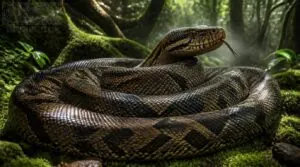
Picture a snake that can swallow prey twice its own girth, then rest for weeks without eating again—that’s the world you’re stepping into. Pythons pack an entire toolkit of specialized traits into one body, from their build to their senses to how they’re classified. Here’s what actually makes a python a python.
That digestive marvel relies on a python digestive system that dissolves bone while carefully filtering out excess minerals for safe absorption.
A python can swallow prey twice its own girth, then rest for weeks before eating again
Pythonidae Classification and Genera
Family Pythonidae splits into eight genera, sorted by DNA and body shape alike. The Python genus dominates in reach; Morelia, Antaresia, Leiopython, and Simalia cover Australia and New Guinea; African lineages branch separately.
Curious how scientists draw these lines? Genetics keeps redrawing them, proof that classification is a living, breathing science. Some researchers now propose applying a coded taxonomic description system to standardize how such species distinctions are recorded and shared across the field.
Shared Physical Characteristics
Beneath all that genetic hair-splitting, pythons share a body plan you can spot anywhere: a triangular head, smooth overlapping scales, and a thick, muscular build made for constriction. They’re nonvenomous constrictors, relying on jaw flexibility and raw strength instead of fangs. Whether it’s a:
- Ball python
- Reticulated python
- Rock python
…that build stays consistent.
Heat-Sensing Pits and Scales
That muscular build hides a sixth sense: heat-sensing pits lining the upper lip, detecting infrared radiation like a built-in thermal camera. This infrared detection mechanism spots temperature shifts of just 0.001°C, nerve pathways firing prey coordinates straight to the brain.
Meanwhile, glossy, overlapping scale morphology grants flexibility and thermal camouflage, proving pythons hunt with senses far sharper than eyesight alone.
Python Size and Sex Differences
So who’s really bigger in the python world? Females, hands down. Female size advantage shows up across nearly every species, with broader girth and heavier builds than males.
Males grow steadily toward mating readiness sooner, while females mature later but pack on length, a tradeoff that pays off through clutch size correlation, since bigger mothers lay bigger clutches.
Pythons Versus Boas
Since every python is a nonvenomous constrictor, you’d think boas were twins, but they’re cousins at best.
- Family: Pythonidae vs. Boidae
- Range: Africa/Asia/Australia vs. Americas
- Reproduction: egg-layers vs. live birth
- Hunting: ambush strikes, shared constriction technique
Habitat preference varies too, boas favor rainforests to deserts, pythons lean tropical.
For a deeper look at how these traits shape their survival, check out this detailed python vs. boa comparison guide.
Python Snake Species by Region
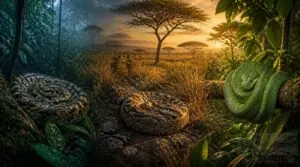
Where a python lives says a lot about who it is, from the snake itself to the terrain that shaped it. Different continents have produced strikingly different species, each adapted to its own corner of the map. Here’s how python diversity breaks down by region.
Asian Python Species
Picture a python longer than a school bus, that’s the reticulated python, Asia’s crown jewel stretching nearly 7 meters through Southeast Asia’s rainforests.
- Sun-baked scrublands hiding Indian pythons
- Marshy riverbanks cradling Burmese pythons
- Netlike gold patterns rippling across reticulated skin
- Swampy Sumatran forests sheltering deep-red blood pythons
Habitat loss and the pet trade threaten many, making conservation status a growing concern across the region.
African Python Species
Savannas, wetlands, and riverbanks across sub-Saharan Africa host the continent’s heavyweight, the African rock python, often exceeding 5 meters. Its blotched, patterned camouflage hides it in dappled grass. Females lay 20-40 eggs, coiling around clutches for warmth.
| Trait | Detail |
|---|---|
| Habitat | Savanna, wetland, riverbank |
| Size | 2-5 meters |
| Clutch | 20-40 eggs |
Prey preference skews toward mammals and birds. Habitat loss and the pet trade strain populations, though conservation status remains stable for now.
Australian Python Species
No continent shows off python diversity quite like Australia. From arid outback to coastal woodland, species carve out niches: the Woma hunts rocky, semiarid terrain, while Carpet Pythons and the semiarboreal Jungle Carpet Python favor trees near coasts.
- Arid zone specialists like the Woma python
- Scrub and Black-Headed Pythons ranging across Queensland and Northern Territory
- Arboreal Carpet Pythons exploiting woodland canopies
This regional distribution reflects Australia’s remarkably varied ecosystems.
New Guinea Island Species
Ever wonder why New Guinea packs in over 100 snake species on one island? Isolation breeds endemic python species like the Papuan Olive Python and Irian Jaya Python, thriving from montane cloud forests to steamy lowland forests.
Toss in the Bismarck Ringed Python and Halmahera Python nearby, and you’ve got serious island biodiversity, though habitat loss threatens it all.
Geographic Range Comparison
Zoom out and python range starts looking like a world tour: Africa’s savanna belts, Southeast Asia’s monsoon jungles, Australian scrublands, and New Guinea’s cloud forests.
- Africa: Senegal to South Africa
- Asia: India through Vietnam
- Australia: coastal to arid zones
- New Guinea: highland-lowland gradient
- Overlap zones: rainforest corridors
Each region shapes its own species boundaries.
How to Identify Popular Python Species
So how do you tell one python from another when they’re coiled up and staring back at you? Size, pattern, and head shape all tell part of the story, and once you know what to look for, the differences start jumping out fast. Here’s a rundown of the species you’re most likely to come across.
Ball and Children’s Pythons
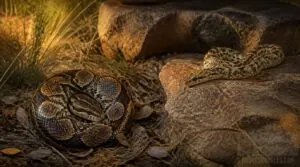
Picture a snake shy enough to knot itself into a ball rather than fight, that’s your ball python, prized in captive breeding for its calm nature and manageable 90-120 cm size.
Its cousins, the Antaresia genus Children’s pythons of Australia, share that same coiling defensive behavior and nocturnal hunter instincts, staying small, docile, and endlessly fascinating.
Burmese and Indian Pythons
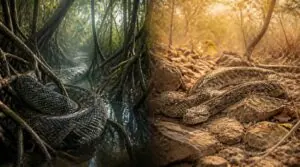
Now scale things up. The Burmese python dwarfs its ball python cousin, often reaching 3-6 meters. In Florida’s Everglades, it’s a destructive invasive species.
The Indian python, its close relative, tops 4 meters across dry Asian forests. Both lay dozens of eggs, but habitat loss threatens Indian populations while Burmese numbers explode unchecked.
Reticulated and Rock Pythons
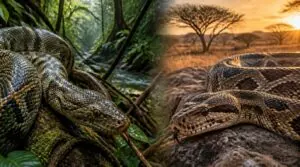
The reticulated python dwarfs nearly every snake alive, stretching past 10 meters, while the African rock python tops out near 6. Their patterns differ too: reticulated snakes wear net-like lattices, rock pythons bold cross-bands. Both use heat-sensing pits and constriction to hunt.
- Reticulated pythons: 4-10+ meters
- Rock pythons: 3-6 meters
- Lattice versus banded patterns
- Shared ambush hunting style
- Popular in the pet trade
Tree and Carpet Pythons
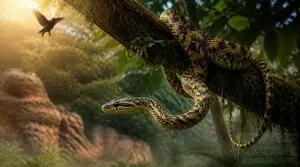
Where giants like retics rely on brute length, carpet pythons win through versatility.
The Jungle Carpet Python flaunts bold yellow-black contrast; the Centralian Carpet Python favors arid outcrops. Watch for the Roughscaled Python and elusive Oenpelli Python too.
All use prehensile tails for arboreal hunting, ambushing rodents and birds whose size rarely exceeds a third of their body length.
Species Size Comparison
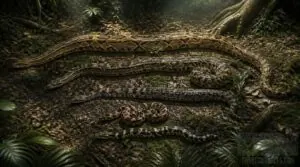
Line them up nose to tail and the size gap is staggering. Reticulated pythons top the charts near 33 feet; Burmese pythons follow at 16 to 23 feet captive, more in the wild.
African rock pythons run 10 to 16 feet, ball pythons stay compact at 3 to 5 feet, and carpet pythons hover around 6 to 8 feet, proving bigger isn’t always better.
Python Habitats, Behavior, and Feeding
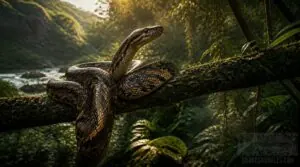
Where a python lives shapes almost everything it does, from when it hunts to how it hides. You’re about to see how these snakes read their environment like a survival manual, turning heat, shadow, and stillness into tools. Let’s look at the habits and habitats that make each species so well-suited to its corner of the world.
Habitats and Environmental Adaptations
Drop a python into desert, rainforest, or riverbank, and you’ll see three totally different survival kits at work. Arid survival tactics rely on light bellies and burrowing; rainforest dwellers get muscular climbing bodies; wetland species navigate with submerged stealth.
Every scale, every hue of thermal camouflage, reflects one ambush predator perfecting itself across wildly different terrain.
Nocturnal and Seasonal Activity
Ever wonder why you’ll spot pythons cruising at midnight but rarely at noon? They’re nocturnal hunters, peaking between 8 pm and 4 am, with crepuscular pushes at dawn and dusk.
Nighttime temperatures around 24 to 30°C trigger activity, while rain often sparks sudden foraging. Hot afternoons send them into hiding, proving thermoregulation drives every move they make.
Camouflage and Defensive Behavior
A python’s best weapon isn’t its bite, it’s staying invisible. Background matching in browns and olive blends bodies into leaf litter, while lighter belly scales create countershading against shadows.
Some species even shift shade with seasonal humidity. Threatened? They’ll flatten wide, hiss, thrash coils, or freeze instantly, betting stillness beats fighting every time.
Ambush Hunting and Constriction
Patience is a python’s real weapon. It waits along game trails, coiled where heat-sensing accuracy guides a strike to the neck. Contact triggers instant coiling, pressure building with each struggle until circulation stops.
That’s efficient hunting: one committed strike, minimal wasted energy, maximum control over prey many times its own size.
Diet, Digestion, and Ecology
What’s on the menu depends entirely on where you find the snake. Asian pythons key in on rodents and birds, while Australian species hunt wallabies and lizards through microhabitat foraging in burrows and hollows.
Once swallowed, digestive enzymes, proteases, lipases, break down that meal over days, with energy transfer efficiency feeding ecosystem-wide pest control and, sadly, habitat loss from invasive spread.
Python Reproduction, Captivity, and Conservation

From hatchling to full-grown constrictor, a python’s life follows a pretty great arc—and if you’re bringing one into your home, that arc becomes your responsibility. Understanding how they mate, grow, and age helps you know what you’re really signing up for.
So before you set up house for one, let’s look at the enclosure options that’ll keep your python thriving at every stage.
Mating and Egg-Laying
Courtship starts subtly: males track pheromone trails left by receptive females, then confirm the match with tail rattling and head bobbing, usually at dusk.
Mating behavior stays brief, just minutes of coupling, but it triggers delayed ovulation.
Every python is oviparous, and clutch size swings wildly, from a handful of eggs to over a hundred, depending on species and body condition.
Maternal Incubation and Hatching
Once eggs are laid, mothers coil tightly around the clutch, using maternal shivering to raise incubation temperature. Ideal conditions hover around 88 to 93°F, with humidity near 90% late on. She’ll reposition eggs every 12 to 24 hours, preventing deformities.
After 45 to 90 days, hatchlings use an egg tooth to pierce the shell, emerging independent.
Growth, Maturity, and Lifespan
That egg tooth marks the start of a growth sprint. Hatchlings pack on 20 to 45 percent length in year one alone, reaching half their adult size by age two or three.
Wild pythons mature around 4 to 7 years, live 15 to 20 years; captive snakes, with steady meals and warmth, often mature faster and reach 20 to 30 years.
Pet Species and Care Needs
That decades-long lifespan means picking a pet python is a real commitment. Ball Pythons suit beginners with modest 4×2×2 enclosures, while Reticulated Pythons demand serious space and two-handler safety.
Whatever species you choose, thermostat-controlled temperature gradients, proper humidity levels, and a steady feeding schedule keep them thriving.
Even docile Children’s Pythons need patient, trust-building handling before those slow, watchful eyes learn you’re not dinner.
Invasiveness, Threats, and Protection
Beyond the terrarium, released pets fuel real environment disruption. Florida’s Everglades prove it: escaped Burmese Pythons became top predators, decimating native mammals through unchecked invasive species spread.
Quarantine measures and import inspections curb accidental introductions, while public awareness programs recruit citizen scientists for early detection. Combined with habitat protection, these efforts keep the exotic wildlife trade from writing more chapters in this cautionary tale.
Frequently Asked Questions (FAQs)
What is a python snake?
A python is a nonvenomous constrictor in the Pythonidae family, using coiled muscle instead of venom. Heat-sensing pits guide this nocturnal ambush predator toward warm-blooded prey across dozens of distinct species.
How many Python snakes are there?
Ask ten taxonomists and you might get ten answers. The genus Python holds about ten recognized species, but the wider Pythonidae family, spanning Morelia, Simalia, and Leiopython, pushes the true count closer to forty.
How many types of pythons are there?
Ten species make up the true Python genus, but the wider Pythonidae family, including Morelia, Simalia, Leiopython, Liasis, and Aspidites, pushes global python diversity closer to forty recognized species across regional distributions.
Where do python snakes live?
From sub-Saharan savannas to Southeast Asia’s rainforests, pythons occupy notable habitat range diversity. You’ll find them across Australia, New Guinea, and beyond, adapting to arid zones, wetlands, and even human settlement overlap through impressive climate adaptation zones and shelter flexibility.
Pythons also tend to settle wherever they find shelter, prey, and water, and this guide to where pythons live and how they’re distributed shows how their range varies by region.
What is the scientific name for a Python?
Every true python falls under Genus Python, the family’s type genus, within Pythonidae. Related genera like Leiopython, Apodora, Morelia, and Liasis round out roughly ten valid species, though taxonomic history keeps species naming under active debate.
Are pythons common in New Guinea?
Picture a Papuan olive python coiled along a riverbank at dusk, patient as the island itself.
New Guinea python species thrive at moderate population density, though habitat destruction pushes conservation status toward growing concern across Southeast Asia’s neighboring archipelago.
Are python bites dangerous to humans?
Yes, but mostly from mechanical injury, not toxins, since pythons aren’t a venomous snake. Wash wounds immediately, watch for infection, and seek medical attention if bleeding, swelling, or constriction-related crush injuries occur.
How do wild pythons interact with other animals?
Like shadows stitched into the leaf litter, wild pythons weave quiet chaos through their world: ambush predators raiding nests, sparking predator competition, and occasionally colliding with livestock, all while keeping prey regulation and ecological balance intact.
What diseases can pythons carry or transmit?
Zoonotic risks stay low, but pythons can harbor nidovirus infections, stomatitis pneumonia, and Salmonella. Wild populations show parasite spillover and bacterial transmission risks, especially where wildlife trade and captive breeding bring snakes into closer human contact.
Do pythons face predators in the wild?
Adult pythons rarely face threats, but juvenile vulnerability runs high, with birds of prey, mongooses, and wild dogs hunting them. Crocodilians and big cats target smaller snakes, while habitat destruction and wildlife trade compound these natural predator-prey relationships.
Conclusion
A million years of evolution couldn’t build a smarter hunter than the python, coiled patience wrapped in muscle and heat-sensing precision. That’s the real takeaway from this python snake species guide: every scale, pit, and pattern has a purpose.
Whether you’re spotting a Ball Python’s blotches or marveling at a Reticulated giant’s length, you’re witnessing survival perfected. Respect these animals, learn their needs, and you’ll understand why they’ve thrived since long before humans ever walked upright.