This site is supported by our readers. We may earn a commission, at no cost to you, if you purchase through links.

A corn snake that stretches 4 feet needs a floor at least 8 feet of total length to move the way nature built it to. Most keepers give it half that.
Cramped snakes don’t complain. They push against walls, pace after meals, and coil tighter than they should, and owners mistake it for normal behavior. The appropriate size snake enclosure gives your animal room to stretch, turn, and hide without stress.
Since hides and water bowls eat into usable space, this guide to choosing the right snake habitat size shows how to match dimensions to your snake’s length.
Sizing also shifts as your snake grows, and species, girth, and habits all change the math. Here’s how to measure, calculate, and upgrade with confidence at every stage.
Table Of Contents
- Key Takeaways
- Why The Right Snake Enclosure Size Matters
- How to Measure Your Snake and Determine Enclosure Dimensions
- Enclosure Size by Species and Natural Behavior
- When to Upgrade a Growing Snake’s Enclosure
- Choosing an Enclosure With Enough Usable Space
- Frequently Asked Questions (FAQs)
- How big should a snake’s enclosure be?
- Can a ball python live in a 36x18x18?
- Can an enclosure be too big for a snake?
- Is a 10 gallon tank big enough for a snake?
- Can multiple snakes share one enclosure safely?
- How often should enclosure size be upgraded?
- What are signs my snake needs more space?
- Do baby snakes need smaller starter enclosures?
- Can two snakes safely share the same enclosure?
- How often should a snake enclosure be cleaned?
- Conclusion
Key Takeaways
- Size your snake’s enclosure by measuring snout to tail three times, then make the enclosure length at least 1.5 times that, and go up to 2 times for ground-dwelling species like corn snakes.
- Match the layout to your species, giving terrestrial snakes wide floor space and climbers height, and plan for adult size so you don’t have to replace the enclosure.
- Upgrade when your snake reaches 50 to 75 percent of its adult length, or sooner if it keeps pushing on walls, pacing after meals, or can’t keep a steady temperature and humidity.
- Make the space usable with snug hides, regularly rotated enrichment, and secure, front-opening enclosures, and house adult snakes alone to keep stress and injury down.
Why The Right Snake Enclosure Size Matters
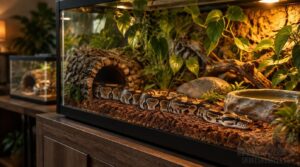
Because your snake can’t tell you when its home is too small, you have to read the signs yourself. Enclosure size and immune function are tightly linked: a cramped tank keeps stress hormones elevated, and chronic stress weakens your snake’s defenses against respiratory infections and mouth rot.
If you’re unsure whether your setup measures up, a guide to how much space a pet snake needs can help you match enclosure dimensions to your snake’s species and size.
Habitat size and stress reduction go hand in hand. Some keepers report stress indicators by up to 35 percent lower once a snake moves into proper space, with less glass-surfing and fewer defensive strikes.
Enclosure length matters most. Aim for at least 1.5 times your snake’s body length, then build a species-appropriate terrarium setup around that footprint. A right-sized home isn’t a luxury. It’s basic welfare. Get it wrong, and husbandry fights you.
A right-sized home isn’t a luxury but basic welfare, so give your snake an enclosure at least 1.5 times its body length
How to Measure Your Snake and Determine Enclosure Dimensions
Once you know why size matters, you need numbers. Start with a snouttotail measurement, taken with your pet relaxed and fully stretched.
Since a snake’s length can change after a shed, it helps to know how often a snake should shed and what’s healthiest before you take your final measurement.
- Lay a flexible tape from snout to vent, then note tail length separately.
- Repeat three times and average the results.
- Multiply by 1.5 to 2.5 for enclosure length.
- Set width using a Minimum Width Ratio of at least one-third of your snake’s length.
Next, check the Inside Perimeter by measuring the interior walls, since your snake needs room to loop along them. Your Clear Space Ratio should leave 30 to 50 percent of the floor open. The Turning Space Requirement is simple: allow 1.5 to 2 times girth clearance, using your mid-body circumference. Write every figure down today.
Enclosure Size by Species and Natural Behavior
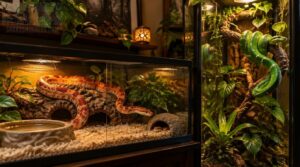
Your measurements are only a starting point, because Enclosure Size by Species and Natural Behavior determines how you use them.
A ball python, for example, needs very different space and climbing options than a corn snake, so check this snake species habitat requirements guide before settling on a final enclosure size.
Terrestrial species like corn snakes need floor area, so run your minimum enclosure calculations at two times total length. Arboreal pythons and tree boas want height instead, with vertical space reaching 1.5 times body length and branches to climb.
Burrowers need deeper substrate and wide floors. Active foragers need continuous floor with several hides. Shy species want enclosed edges for retreat.
Plan for growth. Multiply your expected adult snake length by 1.5 to size a species-appropriate terrarium setup that won’t need replacing. Buying for the adult isn’t overkill, it’s welfare, as long as hides keep a small juvenile feeling secure.
When to Upgrade a Growing Snake’s Enclosure
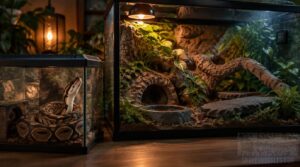
Even when you plan for adult size, your juvenile will outgrow each setup in stages, so When to Upgrade a Growing Snake’s Enclosure depends on what you see, not just what you buy.
If you’re planning the next stage, these ball python vivarium setup ideas show how to layer hides, climbing spots, and warm-end placement as your snake grows.
Upgrade once your snake reaches 50 to 75 percent of adult length, or when enclosure length drops below 1.5 times its body. Watch girth. Growth of 2 to 4 percent a month means space is running out. For a clearer sense of how length and floor space should scale with your snake’s body, check this minimum enclosure size guide for snakes before you buy the next setup.
Behavior tells you faster. Constant wall pushing, pacing after feeding, or a shrinking floor space for coiling all signal stress. If you can’t hold a steady temperature gradient, or humidity dips below your shedding threshold because the snake crowds the water bowl, move sooner.
Finish within two to four weeks.
Choosing an Enclosure With Enough Usable Space
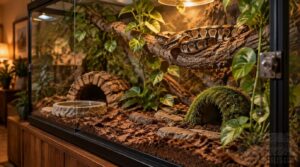
Floor space gets all the attention, but usable space is what your snake actually lives in. A big tank packed with clutter or built with weak latches can still fail your snake. Here are the two features that decide whether your enclosure works, starting with how you’ll fill it.
Space for Hides and Enrichment
Your snake can’t relax in open space. Hides, water and privacy come first: fit each hide snugly, with a 1–2 cm gap around a curled body.
Add Climbing and Behavioral Enrichment, rotated monthly, using Safe Substrates and Materials. Check Snake Enclosure Sizes by Species and Life Stage, then plan modular expansion options so hides never crowd your growing animal’s space.
Secure, Accessible Terrarium Design
For escape-proof enclosure design, start with front-opening terrariums, since they let you feed and clean without looming over your snake. Choose secure lid mechanisms, like dual-action latches and gasket-sealed lids, so a determined coil can’t pry them loose.
Plan modular expansion options early, and keep ventilation and humidity control steady with smooth, rounded openings and tool-free substrate panels.
Frequently Asked Questions (FAQs)
How big should a snake’s enclosure be?
Picture a snake coiled in a shoebox: cramped. Your appropriate size snake enclosure should span 15 times its adult body length in floor space, prioritizing horizontal room over height for most terrestrial species.
Can a ball python live in a 36x18x18?
Think of 36x18x18 as a snug studio, not a mansion. Ball pythons thrive there when hides and heat are right.
Juvenile housing? Generous. Adult size prediction: three to four feet, so this enclosure size works.
Can an enclosure be too big for a snake?
Yes. An appropriate size snake enclosure follows species-specific requirements: vertical space reaching 15 times body length for climbers. Oversized setups create cold zones. Reassessing enclosure size every 6-12 months reveals signs the enclosure is small.
Is a 10 gallon tank big enough for a snake?
A hatchling corn snake thrives in a 10 gallon tank, until month six arrives.
That’s short-term juvenile snake housing only. Start growth rate monitoring now, and use enclosure expansion planning to match snake enclosure size.
Can multiple snakes share one enclosure safely?
Rarely, and only with expert care.
Feeding time spikes aggression, stress hormones climb 18%, and disease spreads 14% faster. Reptile keeper guidelines say you should house adults alone; stress reduction in snakes starts there.
How often should enclosure size be upgraded?
Plan on reassessing enclosure size every 6–12 months. Juvenile snake housing upgrades follow growth, so use growth ratio planning for upgrade timing and budget planning.
Trouble stretching out or repeated escape attempts mean upgrade now.
What are signs my snake needs more space?
Your snake is practically screaming for room when it’s glass-surfing nonstop.
Spot the Signs The Enclosure is Small: constant pacing, excess hiding, incomplete sheds, sluggishness, or refused meals. Upgrade promptly to protect thermoregulation in snakes.
Do baby snakes need smaller starter enclosures?
A snug burrow is a cradle, not a cage. Yes, Juvenile Housing and Upgrades start small: Corn snakes and Ball pythons feel safest in 10–20 gallons.
Add escapeproof enclosure design and substrate depth for burrowing.
Can two snakes safely share the same enclosure?
Usually, no. Good reptile husbandry favors housing snakes alone, because feeding competition causes injuries. If you try sharing, build a speciesappropriate terrarium setup with escapeproof design, tight enclosure security, and watch territorial mapping behavior daily.
How often should a snake enclosure be cleaned?
A tidy enclosure is a quiet alarm system, and neglect sets it off. Spotclean waste daily, follow weekly cleaning schedules and deep-clean monthly.
Reptile enclosure hygiene protocols demand sooner action if odor or mold appears.
Conclusion
Picture a corn snake flowing across its enclosure, tongue flicking, body stretching to full length before slipping under a hide. That’s what good husbandry looks like. Stillness isn’t always calm, and it’s often just a snake with nowhere to go.
Measure your animal, match the space to its species, and upgrade before it outgrows its home. The appropriate size snake enclosure isn’t a luxury. It’s the foundation of a healthy, confident snake. You build it.