This site is supported by our readers. We may earn a commission, at no cost to you, if you purchase through links.
Lavender corn snakes carry a recessive mutation that strips out the warm orange and brown pigments typical of wild-type animals, leaving behind a cool, desaturated palette that shifts between blue-lilac in daylight and gray-purple under dim light.
Two copies of the gene are required to produce a visually lavender snake—a detail that trips up many buyers who unknowingly purchase heterozygous animals that look completely normal.
Beyond the pure form, lavender corn snake color variations multiply fast once pattern genes like motley, stripe, and tessera enter the picture, and combo morphs such as opal and plasma push the coloration into genuinely unusual territory.
Table Of Contents
- Key Takeaways
- Pure Lavender Morph Traits
- Lavender Pattern Variations
- Lavender Combo Morph Colors
- How Lavender Colors Change
- Identifying and Buying Lavender Variations
- Frequently Asked Questions (FAQs)
- What is the rare color of corn snakes?
- What makes a lavender corn snake?
- Do corn snakes recognize people?
- Where can I buy lavender corn snakes?
- How much do lavender morphs typically cost?
- Are lavender corn snakes legal everywhere?
- Do lavender colors fade with age?
- Can lavender morphs breed with wild corn snakes?
- Can lavender corn snakes live with other snakes?
- How long do lavender corn snakes typically live?
- Conclusion
Key Takeaways
- The lavender corn snake’s signature cool, purple-gray color only shows up when a snake inherits two copies of the recessive lavender gene—one copy leaves the animal looking completely normal, which catches a lot of buyers off guard.
- Pairing the lavender gene with pattern genes like motley, stripe, or tessera—or combo morphs like opal and plasma—dramatically shifts the final look, ranging from soft pastels to near-silver tones depending on what’s stacked in the genetics.
- Color isn’t fixed at birth; lavender hatchlings start out pale and washed, then gradually deepen into their true purple-gray palette over the first 18 months, with lighting, temperature, and individual gene expression all influencing how the adult looks.
- Before buying, always ask for parentage records and multi-angle photos under neutral lighting, since lavender corn snakes are frequently confused with anerythristic or snow morphs—and without documented genetics, you’re essentially guessing.
Pure Lavender Morph Traits
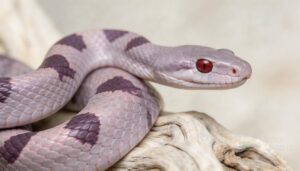
The pure lavender morph has a look that’s easy to misread if you don’t know what you’re looking for. From body color to eye tone, each trait tells you something specific about what makes this morph distinct.
The subtle purple cast over that gray base is exactly what sets it apart—lavender corn snake color traits and morphs break down how to spot the difference.
Here’s what to pay attention to when evaluating a true lavender corn snake.
Base Body Color and Lavender Undertones
The lavender corn snake carries a base hue saturation that sits firmly in pale lilac territory — cool, desaturated, and unlike anything in a wild-type animal.
Undertone contrast modulation shapes how the body reads under different lights:
- Daylight shifts color temperature toward blue-lilac
- Low light pulls it gray-purple
- Mid-body scales show the most even lavender gene expression
Saddle Color, Contrast, and Frosting
The saddles on a pure lavender corn snake range from warm gray to muted mauve, rarely hitting true purple.
Saddle frosting patterns — those pale, powdery edges — are most visible in juveniles and tend to soften with age, a shift called frosting age dynamics.
Contrast sharpness levels vary widely: some animals show clean borders, others blend smoothly into the surrounding hue variation spectrum through the recessive gene’s expression.
Belly Pattern and Tail Coloration
Flip your snake over and you’ll notice the belly carries a pale, cream‑lavender base with subtle Scale Contrast — some lines even show Ventral Freckles, tiny dark flecks running loosely along the midline.
Tail Rim Intensity deepens with age, forming a narrow dorsal outline near the tip.
Lighting Influence can wash out saturation, while Lighting Influence — especially cool‑white LED — restores that soft lilac clarity.
This pattern may function as a concealing coloration strategy to blend with its surroundings.
Eye Color Differences in Lavender Morphs
Eye color gives you one of the clearest clues about what genetics you’re actually working with. In visual lavender corn snakes, expect deep ruby to wine‑toned irises — Ruby Eye Intensity at its most obvious.
Lavender hatchlings show this richness early, while lavender adults may develop subtle Age Lightening. Ghost Eye Rim effects soften iris definition in ghosted combos, and Amel Pink Hue brightens eyes noticeably when the lavender gene pairs with amelanistic traits. Lighting Influence matters too — diffuse light reveals true eye color best.
- Pure visual lavender — deep ruby or burgundy eyes
- Ghost-combo lavenders — pale, softened iris with Ghost Eye Rim
- Amel lavender crosses — bright pink to light ruby from Amel Pink Hue
- Lavender hatchlings — consistently rich eye color from first emergence
- Lavender adults — possible Age Lightening toward amber or gray tones
How Pure Lavender Differs From Wild-type Corn Snakes
What truly separates a lavender corn snake from a wild-type comes down to Pigment Reduction driven by a fully recessive gene affecting chromatophore distribution across the skin.
Where wild-types carry warm orange and brown tones with sharp saddle edges, lavender individuals shift toward cool gray-pink backgrounds with softer contrast.
These color differences become even more striking once lavender hatchlings complete their first shed, a milestone covered in this guide to breeding and raising pet snakes.
Color genetics and recessive inheritance — not thermal regulation, behavioral temperament, or habitat preference — drive every visible difference between wild versus captive corn snake types.
Lavender Pattern Variations
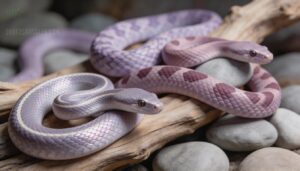
The lavender gene doesn’t just change color — it also reshapes how pattern genes express themselves on a snake’s body. Pair it with motley, stripe, tessera, or diffused, and you get looks that are noticeably different from what those same pattern genes produce on a normal or amelanistic background.
Here’s what each combination actually looks like.
Lavender Motley Appearance
The lavender motley trades sharp contrast for something more painterly. Its Pale Body Tone carries a soft pinkish-lavender base, while broad saddles blur at their edges through Frosted Saddle Halo effects. Ladder Pattern Softness replaces crisp blotches with gentle chains, and Minimal Ventral Markings mean the belly stays nearly clean.
Here’s what visually defines a lavender motley corn snake:
- Pale lavender to pinkish-lavender base with warm undertones
- Broad, uneven saddles softened by Soft Saddle Edges
- Frosting that creates a powdery halo around each dark patch
- Reduced belly pattern with little to no checkerboard
- Muted contrast throughout, producing a uniform, pastel silhouette
Lavender Stripe Appearance
Where the lavender motley blurs its edges, the lavender stripe commits to clean lines. Stripe Edge Sharpness is one of its most recognizable traits — a bold lavender dorsal stripe runs neck to tail with little ambiguity.
Stripe Width Variation appears subtly at midbody, while Stripe Color Intensity can deepen with age. The lavender gene’s recessive expression here feels confident and structured.
Lavender Tessera Appearance
The tessera morph brings something neither the lavender motley nor the lavender stripe offers — a checkered dorsal scale shade that runs in a distinct lateral pattern.
In a lavender corn snake, tessera produces:
- crisp dorsal stripe with checkered side blotches
- eye iris iridescence with coppery tones
- soft head stripe faintness along the jawline
- ventral cream shift and tail gradient hue
Lavender Diffused and Reduced-pattern Looks
When diffused genetics meet lavender, subtle pattern blending takes over — saddle edges soften, borders lose their crispness, and the whole body shifts toward diffused color uniformity. Reduced pattern genetics suppress those sharp markings you’d see on motley, stripe, or tessera variations.
The result is pastel contrast management in action: a velvety, almost smooth lavender body.
Breeding for softness targets exactly this look.
How Pattern Genes Change Lavender Contrast
Pattern genes don’t just decorate a lavender corn snake — they rewrite how you read its contrast entirely.
Gene dosage effects mean one copy of a dominant pattern modifier shifts the look differently than two copies.
Recessive pattern interaction and pattern gene epistasis explain why your lavender motley looks bolder than lavender stripe, and why visual lavender intensity depends heavily on genetic inheritance layered beneath the surface.
Lavender Combo Morph Colors
When you cross lavender with other genes, the results can look completely different from a pure lavender snake. Each shifts the base color in its own direction — some brighter, some softer, some almost silver.
Here’s what to expect from the most common lavender combinations.
Opal: Lavender With Amelanistic Traits
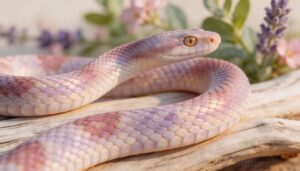
Opal is what you get when you cross an Amelanistic x Lavender corn snake — and the result is genuinely striking.
The Amelanistic influence strips away black pigment entirely, leaving a pastel dorsum that glows soft pink-lavender rather than cool gray. Eye color shifts toward a light iris hue, often pale amber.
Breeding compatibility is strong across lavender lines, though expect a modest price premium reflecting this morph’s novelty.
Plasma: Lavender With Diffused Traits
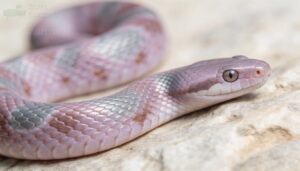
Plasma pairs the lavender recessive gene with the Diffused trait, producing a Plasma Lavender x Diffused combination that softens everything.
You’ll notice a Scale Halo Effect where saddle edges blur into the background — that’s Diffuse Pattern Blur at work.
Midline Desaturation gives the dorsum a slightly washed tone, while Light Scattering creates a Glossier Iris.
The result feels quieter than Opal, but deliberately so.
Lavender Bloodred Color Expression
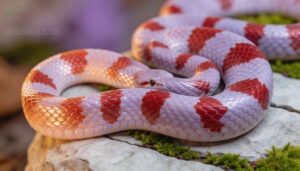
Lavender Bloodred takes everything Plasma does quietly and turns up the contrast. The Bloodred gene pushes rich red tones into the saddle areas, creating strong Red Saddle Contrast against a pale lavender base.
Scale Sheen shifts under different light — warmer indoors, more vivid in daylight.
Photographic Angle matters here too.
Breeding Consistency depends on stable Pigment Interaction between both genes across generations.
Multi-gene Pastel and Ghosted Combinations
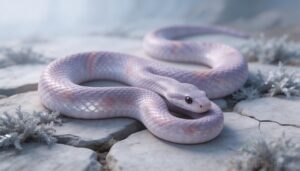
When you combine lavender with ghost and pastel traits, the result is a Frosted Multi-Blend that softens everything — pattern, contrast, even depth. Ghosted Pastel Spectrum combos reduce melanin gradually across each recessive gene layer.
Tri-Gen Ghost builds on that Silvery Ghost Fusion, while Pastel Gene Synergy lightens the ground color further.
multitrait morph combinations produce some of the most quietly striking lavender corn snake expressions.
Which Combos Look Brightest, Softest, or Most Silver
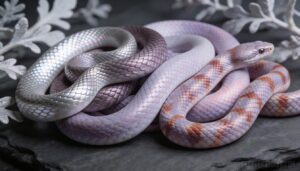
If you’re chasing the brightest, most silver look in a lavender corn snake, opal lavender takes the top spot — its Opal Silver tone reflects light across pale scales with striking clarity.
Plasma Soft gives a smoky, satin finish, while Ghosted Lavender and Pastel Fusion quiet the contrast beautifully.
Triple combos adding ghost and opal genes deliver Blood-red Warmth undertones, lavender motley depth, and lavender stripe elegance in one animal.
How Lavender Colors Change
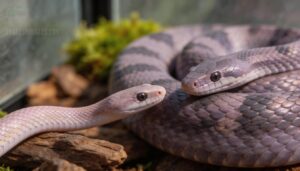
Lavender corn snakes don’t stay the same color their whole lives — they shift, deepen, and sometimes surprise you as they grow. A hatchling and a two-year-old adult can look like completely different animals under the same light.
Lavender corn snakes shift so dramatically with age that a hatchling and adult can look like entirely different animals
Here’s how that color journey unfolds from first shed to full maturity.
Hatchling Lavender Coloration
At birth, lavender hatchlings don’t look like much—pale gray bodies with faint lavender undertones that most beginners miss entirely. The recessive genetics behind the lavender gene means visual lavender expression starts subtle. Watch for these traits when identifying lavender hatchlings vs adults:
- Pale gray base with cool lavender undertones
- Softened saddles, minimal black markings
- Light belly with faint checkered pattern
- Dark gray eyes, sometimes with a pale pupil ring
Temperature Impact, Humidity Influence, Substrate Reflectivity, and Photographic Angle all affect how vivid that lavender reads in photos. Growth Rate Effect also plays a role—faster-growing animals can appear slightly washed out early on.
First Shed and Early Color Shifts
The first shed—usually 5 to 14 days post-hatch—is where lavender hatchlings begin revealing their true palette. Watch for scale loosening, eye slit darkening, and a belly color shift from pale yellow toward soft pink. These are your clearest hydration indicators too.
Under consistent lighting and proper temperature gradients, that subtle gray base starts warming into its signature silver-lavender tone.
Juvenile-to-adult Color Development
Between 6 and 18 months, lavender corn snakes undergo their most dramatic color transformation timeline from hatchling to adult. Pigment gene expression gradually deepens the silver-lavender base, while saddle contrast softens into dusty rose tones.
Adult color stabilization usually completes around 18 months, when visual lavender becomes unmistakable — a cool purple-gray body with mauve saddles, distinct from the pale, washed-out look of lavender hatchlings versus adults.
Why Some Adults Look More Pink or Gray
Two lavender corn snakes from the same clutch can look completely different as adults — and genetics explains most of it.
Here’s what drives the pink-versus-gray divide:
- Age-Related Pigment Shift — pigment suppression deepens the purple-gray base over time
- Frosting intensity — higher frosting cools saddle tones, reducing pink saturation
- Scale Edge Definition — subtle warm edging along scale margins adds perceived pinkness
- Environmental Temperature Impact — temperature gradient exposure during development influences chromatophore expression
- Genetic Mosaicism — uneven gene expression creates inconsistent color fields across individual visual lavender animals
Lighting and Background Effects on Appearance
Lighting rewrites what you see. Warm light deepens yellow undertones, pushing lavender toward cream, while a cool white LED light reveals the truest desaturated lavender tone with minimal color cast.
Background contrast matters equally — a neutral gray or white surface gives the most accurate read, whereas dark substrate contrast amplifies saturation.
Reflective surfaces and light intensity shift perception just as dramatically as genetics does.
Identifying and Buying Lavender Variations
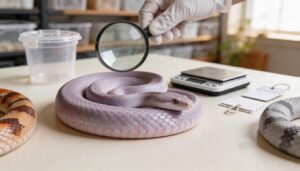
Knowing what a lavender corn snake should look like is only half the battle — the other half is making sure you’re actually getting what you pay for. From spotting a true visual lavender versus a het, to understanding why some listings get mislabeled as anery or snow, there’s more to the buying process than picking the prettiest photo.
Here’s what to look for before you commit.
Visual Lavender Vs Het Lavender
When you’re buying a lavender corn snake, knowing the difference between visual lavender and het lavender shapes your entire breeding strategy. Visual lavender carries two copies of this fully recessive gene, showing clear Color Intensity Metrics you can see. Het lavender looks normal but needs Genotype Confirmation through records.
Price Premiums reflect that gap—and so does Market Demand Trends.
Common Mix-ups With Anery, Amel, and Snow
Even with a confirmed visual lavender in hand, Misidentification Risks don’t disappear.
Anerythristic snakes share similar gray tones, while Amelanistic individuals can look pale enough to cause confusion.
Snow combines both, and Color Dilution Effects can blur those lines further under poor lighting.
Without Parentage Records and Allele Confirmation, Genetic Testing remains your most reliable safeguard against buying a mislabeled lavender corn snake.
What Breeder Photos Should Show
Photos are your first line of defense after confirming you’re not dealing with an anomaly or snow mislabel. Ask for multiple angles—dorsal, lateral, and ventral—alongside scale close-ups that reveal true lavender undertones.
Neutral background and consistent lighting matter more than you’d think, since lighting effects on lavender coloration shift perceived tone dramatically.
Eye detail photos confirm iris coloration, a key visual marker for morph identification.
Genetics Records and Parent Verification
Good photos tell part of the story—genetic records finish it. For lavender corn snakes, parentage certificates and marker panels confirm whether you’re buying a true visual lavender or an unverified het.
Reputable breeders maintain audit trails, data access controls, and paternity probability scores tied to each animal.
Without documented parent genetics, morph identification becomes guesswork.
Typical Price Ranges by Lavender Variation
Pure lavender hatchlings generally run $250–$800, shaped by breeder reputation impact and supply-demand dynamics. Pattern combos climb higher—lavender motley reaches $400–$900, while opal and plasma morphs push $600–$1,200.
Market seasonal trends spike prices 10–20% each spring.
Certification premium adds another $100–$300 when parentage is documented.
Regional price differences apply, so always compare listings before committing.
Frequently Asked Questions (FAQs)
What is the rare color of corn snakes?
Some of the rarest corn snake colors include the Palmetto Patternless, Snow Albino, Blood Red, Charcoal Morph, and Jungle Hybrid — with triple combos and complex lavender corn snake genetics and inheritance pushing morph rarity even further.
What makes a lavender corn snake?
A lavender corn snake forms when the recessive lavender gene is inherited from both parents.
This recessive inheritance means only visual lavender individuals — carrying two copies — display that signature pale purple coloration.
Do corn snakes recognize people?
Corn snakes don’t recognize faces, but they do scent memory over time.
Your lavender corn snake learns your smell, links it to safe handling, and responds more calmly with you than with strangers.
Where can I buy lavender corn snakes?
You can find lavender corn snakes through Reputable Breeder Listings, Online Reptile Marketplaces like MorphMarket, Local Herpetology Shows, and Reptile Expos.
Pet Store Availability varies, so verify documented lineage before purchasing.
How much do lavender morphs typically cost?
Prices usually range from $400 to $1,200 for hatchlings, with combo morphs reaching $2,300. Breeder Premiums, verified genetics, and Rarity Surcharges all influence final cost considerably.
Are lavender corn snakes legal everywhere?
Not everywhere. State regulations vary, and some areas enforce permit requirements or shipping restrictions.
Captive-bred documentation helps, but wild capture rules, import restrictions, and enforcement penalties mean you’re responsible for local regulation compliance before buying.
Do lavender colors fade with age?
Like a watercolor left in sunlight, lavender corn snake colors do shift with age.
Pigment Degradation, Scale Cell Maturation, and UV Exposure Effects all drive phenotypic changes during growth stages from lavender hatchlings to visual lavender adults.
Can lavender morphs breed with wild corn snakes?
Yes, lavender morphs can technically breed with wild corn snakes, but genetic compatibility is limited. Offspring won’t show lavender visually, since both parents must carry the recessive allele for expression.
Can lavender corn snakes live with other snakes?
Solitary by nature, lavender corn snakes shouldn’t share space. Territorial Aggression, Feeding Competition, and Disease Transmission make cohabitation risky.
Separate enclosures with proper Species Compatibility checks and Enclosure Partitioning remain the safest standard in Reptile Husbandry Standards for Morphs.
How long do lavender corn snakes typically live?
With proper reptile care and husbandry for corn snakes, your lavender corn snake generally lives 15 to 20 years in captivity, with some individuals reaching 25 or more under consistent veterinary care and stable conditions.
Conclusion
Ironically, the elusive beauty of lavender corn snakes lies not in their rarity, but in the intricate dance of genetics that creates their mesmerizing color variations. As you’ve explored, the interplay of recessive mutations, pattern genes, and combo morphs yields a stunning array of lavender corn snake color variations.
With this knowledge, you’re now equipped to appreciate the subtle nuances of these snakes, including the enchanting lavender corn snake color variations that make each one unique.