This site is supported by our readers. We may earn a commission, at no cost to you, if you purchase through links.

Most new snake owners underestimate their pet’s escape artistry—corn snakes can squeeze through gaps one-quarter the diameter of their body. You’ll need more than a glass box with a lid to create a secure, thriving environment for your first snake.
Snake terrariums for beginners require precise temperature zones, carefully selected substrates, and humidity control that mimics natural habitats. Corn snakes and ball pythons make excellent starter species because they tolerate minor environmental fluctuations better than more delicate species.
Setting up your terrarium correctly from day one prevents common issues like respiratory infections, feeding refusal, and those dreaded 3 a.m. snake-hunt emergencies. Here’s how to build an enclosure that keeps your snake healthy, secure, and comfortable for years.
Table Of Contents
Key Takeaways
- Corn snakes and ball pythons make the best starter species because they tolerate minor environmental mistakes, accept frozen-thawed prey, and need enclosures only 4-5 feet long with basic temperature gradients of 78°F ambient to 88-92°F basking zones.
- Your terrarium must create a precise temperature gradient using heat mats with thermostats, maintain 50-60% humidity with proper substrate like coco coir or cypress mulch, and include at least two hides—one on each temperature zone—to prevent respiratory infections and feeding refusal.
- Escape-proofing requires mechanical locks on lids, cross-ventilation vents positioned high and low, and weekly inspections of all gaps since snakes squeeze through openings one-quarter their body diameter.
- Bioactive setups with springtails, isopods, and oak leaf litter over organic substrate eliminate most cleaning work by breaking down waste naturally, but colonies need 4-6 weeks to establish before you introduce your snake.
Choosing The Best Beginner Snake Species
Your first decision as a new snake keeper centers on species selection—this choice dictates every aspect of your terrarium setup and daily care routine. Corn snakes and ball pythons dominate the beginner market, but they offer distinctly different experiences in temperament, space requirements, and husbandry demands.
Let’s compare these two species across the factors that matter most for long-term success.
Corn Snakes Vs. Ball Pythons
You’ll find corn snakes and ball pythons at the top of every beginner list for good reason. Corn snakes usually reach 4–5 feet and show curious, active snake behavior, while ball pythons average 3–5 feet with famously calm temperaments. Both species accept frozen-thawed prey, simplify terrarium setup with modest space needs, and adapt well to consistent handling techniques—making your first snake terrarium a manageable, rewarding project.
When creating a care guide, it’s vital to follow proper writing research papers to guarantee accuracy and clarity.
Assessing Temperament and Handling Needs
Start with short, 2–5 minute handling sessions after a week of quarantine acclimation. Corn snakes often tolerate gentle handling quickly, while ball pythons may ball up or coil—normal stress signals that fade with routine.
Support the body along its length, approach from the side, and watch for persistent hissing or refusal to feed. Log your snake’s responses to improve your handling techniques and maintain long-term snake health in your terrarium.
Understanding research methodology is vital for analyzing animal behavior.
Sizing Enclosures for Adult Snakes
Once you’ve tracked your snake’s temperament, it’s time to focus on adult sizing. Choose an enclosure depth that lets your snake stretch out—aim for at least twice its body length.
Prioritize secure enclosure latches, smooth surfaces, and a stable temperature gradient. Proper enclosure size facilitates natural movement, humidity control, and healthy behavior in your snake terrarium as your pet matures.
Understanding Natural Habitat Requirements
Habitat research shapes everything from temperature gradients to humidity control. Study your species’ native range—corn snakes need drier substrate selection than ball pythons, who crave moisture pockets.
A naturalistic environment mirrors these microclimates, letting your snake thermoregulate across a proper temperature gradient. When ecosystem balance aligns with biology, your snake terrarium becomes more than a box—it’s a functional, self-regulating home.
A naturalistic snake terrarium transforms from a simple box into a self-regulating home when microclimates and biology work in harmony
Setting Up a Beginner Snake Terrarium
Once you’ve chosen your snake, it’s time to build a home that keeps them healthy and secure. Your enclosure choice sets the foundation for temperature control, humidity retention, and long-term maintenance ease.
Let’s walk through the key decisions you’ll make during setup.
Glass, Plastic, or Wood Enclosures

You’ll choose between glass, plastic, or wood for your snake terrarium setup. Glass terrariums offer excellent humidity control and clear viewing, though they cost more upfront. Plastic enclosures are budget-friendly and lightweight—perfect for beginners testing reptile care. Wood provides natural aesthetics but demands careful sealing against moisture.
Consider ventilation systems and maintenance costs when selecting enclosure materials for your first terrarium.
Selecting The Right Terrarium Size
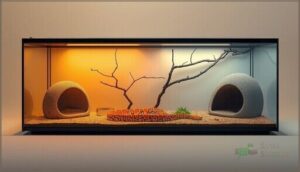
Your terrarium setup demands at least four feet of enclosure length for adult corn snakes or ball pythons. Match enclosure size to adult snake length—not current hatchling dimensions.
Plan for two hides, a water dish, and open floor area within the enclosure volume. Terrarium depth matters less than horizontal space efficiency, which facilitates thermal gradients and natural movement patterns essential for healthy growth.
Planning for Ventilation and Escape Prevention
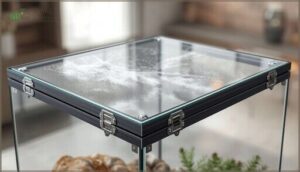
Without proper airflow, your snake terrarium becomes a breeding ground for respiratory infections. Balance ventilation systems with escape proofing to maintain humidity control and a stable temperature gradient while keeping your snake inside its secure enclosure.
- Install cross-ventilation vents positioned high and low to promote steady airflow management without stagnant pockets.
- Select secure lids with mechanical locks—not just snap closures—to eliminate pry points.
- Seal all gaps around doors, vents, and seams using locking mechanisms or hardware-rated fasteners.
- Add secondary latches as fail-safe containment during handling and maintenance routines.
- Inspect weekly for worn seals, loose hinges, or substrate buildup that compromises enclosure integrity.
Safe and Suitable Substrate Options
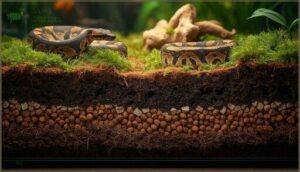
Your substrate choice directly impacts snake health, humidity control, and moisture management in ways most beginners underestimate. Coco coir and sphagnum moss blends offer eco-friendly, bioactive substrate options that absorb humidity without dusty irritation.
Kiln-dried pine or cypress mulch works for drier setups, while Leca clay balls create drainage layers beneath substrate material.
Paper-based bedding minimizes impaction risk—prioritize substrate safety over aesthetics every time.
Heating, Lighting, and Temperature Gradients
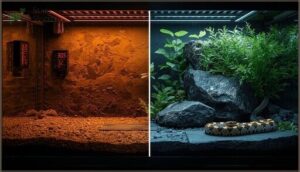
Temperature control starts with gradient design—position heat mats on one side to create a 30–32°C basking zone and an 18–22°C cool retreat.
Install thermostats with probes near heat sources to prevent thermal stress. Full-spectrum LED grow lights support 10–12 hour lighting cycles without overheating.
Dual thermometers let you verify thermal gradients daily—precise monitoring prevents respiratory issues and shedding complications.
Creating Hides and Enrichment Zones
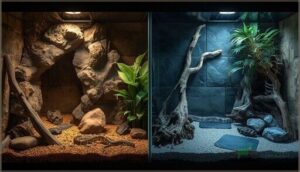
Your snake needs at least two hides—one on the warm side, one on the cool zone—to thermoregulate without stress. Choose hides 1.5 times your snake’s girth with smooth edges and non-toxic materials.
Add visual barriers like cork or silk plants to reduce perceived threats. Rotate enrichment materials monthly to prevent habituation and encourage natural exploration in your animal enclosure.
Essential Terrarium Maintenance Tips
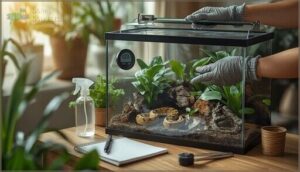
Your snake’s health depends on consistent maintenance—not just during setup, but every week after. You’ll need to monitor environmental conditions, handle feeding safely, and catch problems before they escalate.
Here’s what your weekly and monthly routine should include.
Cleaning Routines and Disinfection
Establishing a consistent cleaning schedule protects your snake from pathogens and maintains a thriving bioactive substrate. Use reptile-safe disinfectants after each handling session, following label contact times carefully.
Disinfect water dishes daily and scrub hides weekly with dedicated tools. Wear disposable gloves and wash hands before and after cleaning to minimize cross-contamination.
Your cleanup crew—springtails and isopods—will handle organic waste naturally between deep cleans.
Monitoring Humidity and Temperature
Once your enclosure is clean, accurate readings become your best defense against stress and illness. Place a digital hygrometer at snake head-height and a probe thermometer on the basking surface—never directly on heat mats.
Maintain 50–60% humidity and a temperature gradient from 78°F ambient to a 88–92°F warm zone using thermostats. Check daily and adjust microclimate management after substrate changes.
Feeding Schedules and Safe Prey Handling
After stabilizing your climate controls, proper prey selection and feeding frequency become your next critical focus. Feed juveniles every 5–7 days and adults every 7–14 days with frozen-thawed prey warmed to body temperature—never live rodents.
Size prey at 1.0–1.5 times your snake’s girth to prevent digestion issues and choking. Wait 24–48 hours post-feeding before handling to avoid regurgitation and support ideal snake nutrition.
Health Checks and Shedding Support
Beyond feeding, routine health monitoring catches problems early and ensures animal welfare. Check your snake weekly for clear eyes, smooth skin, and active behavior—signs of proper Snake Hydration and terrarium balance.
During shedding, boost Humidity Control to 60–70% to prevent Skin Problems like retained shed on tail tips or eye caps. A proper temperature gradient and consistent reptile care prevent most Shedding Issues before they escalate.
Troubleshooting Common Beginner Issues
When something feels off, quick diagnostics save your snake‘s health. Most Troubleshooting Common Issues in Snake Terrariums stem from four fixable errors:
- Snake Escapes: Secure all latches and seal gaps with aquarium-safe tape.
- Humidity Issues: Adjust misting frequency or substrate depth for proper retention.
- Feeding Problems: Confirm Temperature Control maintains 85–90°F basking zones.
- Health Alerts: Observe for lethargy or respiratory sounds requiring veterinary assessment.
Top 5 Products for Snake Terrariums
You’ve learned the essentials of setup and maintenance—now let’s talk about the specific products that make bioactive snake terrariums work. The right substrate, mesh barriers, and cleanup crew supplements transform a basic enclosure into a thriving ecosystem.
Below are five proven products that beginners consistently rely on for long-term success.
1. Zilla Reptile Terrarium Bedding Mix
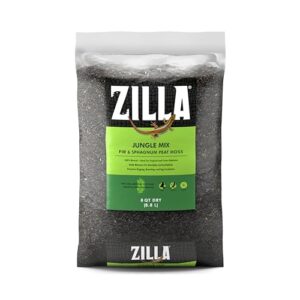
You need a substrate that balances humidity control with substrate safety, and Zilla Reptile Terrarium Bedding Mix delivers both. This bioactive substrate blends Douglas fir bark with sphagnum peat moss—an 8-quart bag that suits most beginner snake terrarium setups.
It absorbs moisture reliably, facilitates natural digging behaviors, and works well in tropical enclosures for corn snakes or ball pythons. Rinse it first to remove clay dust that can irritate respiratory systems.
Replace it regularly during terrarium maintenance to prevent mold and keep your bioactive ecosystem thriving.
- Blends Douglas fir bark and sphagnum peat moss for effective moisture absorption and natural humidity regulation
- Soft, organic texture encourages natural digging, nesting, and breeding behaviors
- Works well in bioactive setups and tropical enclosures for various reptile and amphibian species
- Contains clay dust that requires rinsing before use to avoid respiratory irritation
- Some users have reported finding splinters in the substrate
- Needs regular maintenance and replacement to prevent mold growth
2. Zoo Med Terrarium Mesh Screen
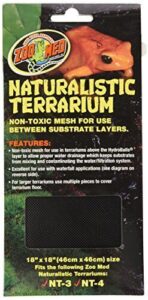
Proper ventilation keeps your snake terrarium environment stable, and Zoo Med Terrarium Mesh Screen locks in airflow while preventing escapes. This lightweight screen fits standard enclosure models, covering ventilation openings with durable mesh that blocks insects and debris.
Installation is straightforward—align fastening tabs, tighten securely, and inspect periodically for wear. The screen aids consistent humidity regulation and reduces mold risk in damp substrates.
Clean it with a soft brush during routine terrarium setup maintenance. Replace promptly if punctured to maintain your ventilation system’s integrity and your snake’s safety.
- Fits standard Zoo Med enclosures with easy alignment of fastening tabs for quick installation
- Maintains steady airflow that regulates humidity and reduces mold growth in substrates
- Lightweight mesh design blocks debris and insects without compromising ventilation efficiency
- May leave gaps on sides or middle if sizing doesn’t match your specific terrarium model
- Some units arrive with a chemical smell that requires airing out before use
- Fine particles like sand can sometimes pass through the mesh openings
3. NOW Foods Brewers Yeast Powder

Yeast Nutrition isn’t a snake food—it’s a microorganism fuel for your bioactive snake terrarium. NOW Foods Brewers Yeast Powder (1 lb, debittered) feeds springtails and isopods, the cleanup crew processing waste in your terrarium setup. Sprinkle 1–2 teaspoons monthly across substrate to sustain microfauna populations without overfeeding.
This isn’t a reptile care supplement or Reptile Enrichment product. It’s Terrarium Supplements for ecosystem balance. Store sealed in cool, dry conditions. Monitor for Yeast Allergens if handling sensitive species. Supplement Safety demands moderation—excess yeast disrupts your snake habitat’s microbial equilibrium.
- Affordable fuel source for terrarium microfauna—1 lb lasts months with minimal monthly feeding
- Debittered formula reduces odor concerns when maintaining enclosed habitats
- GMP-certified quality ensures consistent feeding for your cleanup crew without contamination risks
- Not suitable for direct snake nutrition—strictly for terrarium ecosystem support
- Overfeeding disrupts microbial balance and can create substrate mold issues
- Requires careful moisture management during storage to prevent clumping in humid terrarium environments
4. Live Oak Leaf Litter Substrate
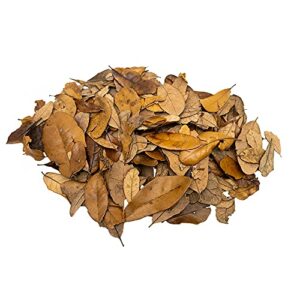
Live oak leaf litter is the bioactive substrate top layer that ties your snake habitat design together. Spread ½ to 1 inch of these thick, waxy leaves over coco coir and organic topsoil to trap humidity, shelter springtails and isopods, and create a naturalistic terrarium microclimate.
Oak leaf substrate decomposes slowly—3 to 6 months—so you won’t replace it constantly. One gallon covers roughly 1.5 square feet.
The leaf litter benefits your cleanup crew and provides hiding zones, making bioactive ecosystems thrive with minimal intervention.
- Thick waxy leaves last 3–6 months before decomposing, so you’re not constantly buying more
- Creates natural hiding spots and humidity pockets that help snakes feel secure and shed properly
- Feeds springtails and isopods while keeping the bioactive ecosystem running smoothly
- Some bags arrive with mostly small leaf fragments instead of full pieces
- Can be pricey compared to collecting your own leaves if you have access to pesticide-free oak trees
- You’ll need to add fresh leaves every few months as the cleanup crew breaks them down
5. Bugzy Bugs Isopod Food Blend
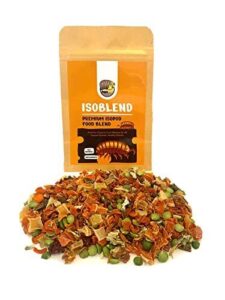
Your cleanup crew needs fuel to turn waste into nutrients—and Bugzy Bugs Isopod Food Blend delivers vitamins, minerals, and split peas in one complete formula. Sprinkle 1 to 2 tablespoons once or twice weekly across your bioactive substrate to support isopods, springtails, and microfauna that maintain terrarium ecosystems.
This blend promotes isopod nutrition, keeps your bioactive balance steady, and removes uneaten organic matter that can spike ammonia.
Store it sealed and dry for up to 12 months, keeping your snake feeding cycle and cleanup crew thriving together.
- Complete nutrition blend with split peas, carrots, and minerals supports breeding and growth across all isopod life stages
- Simple feeding schedule of 1–2 tablespoons once or twice weekly keeps cleanup crews active without overfeeding
- Long 12-month shelf life when stored in a sealed, dry container makes it cost-effective for long-term bioactive setups
- Can develop mold in humid terrariums if uneaten portions aren’t removed promptly
- May not appeal to all isopod species as a primary food source, requiring supplemental feeding options
- Requires careful storage and monitoring to prevent moisture exposure that degrades freshness
Frequently Asked Questions (FAQs)
Can I house multiple snakes in one terrarium?
Housing multiple snakes together invites trouble—species mixing triggers aggression, feeding competition, and chronic snake stress. Cohabitation risks outweigh any convenience. You’ll need separate enclosures to guarantee proper reptile care and maintain each snake’s wellbeing.
How do I introduce springtails and isopods effectively?
Seed your bioactive substrate with springtails and isopods before introducing your snake. Allow 4–6 weeks for colonies to establish.
Monitor microfauna balance weekly, adjusting food sources to sustain ecosystem cycling and prevent die-off.
What plants are safe and thrive with snakes?
Non-toxic foliage like pothos and spider plants flourishes under full-spectrum LED grow lights while supporting humidity management.
These bioactive landscaping choices thrive in natural day cycles, complementing terrarium mosses for humidity control without plant toxicity risks.
How often should I replace the substrate layer?
Replace your substrate every 1–3 months, or sooner if you notice odor or visible soiling. Spot-clean weekly to maintain humidity control and support snake health between full terrarium maintenance cycles.
Conclusion
Getting your snake terrariums for beginners right the first time isn’t rocket science—it’s about precision and consistency. Measure your temperature gradients with a reliable thermometer, maintain humidity at species-specific levels, and secure every gap larger than your snake’s smallest body width.
Your corn snake or ball python won’t thrive on guesswork. Follow the substrate, heating, and enclosure guidelines exactly, and you’ll prevent 90% of common health issues before they start.
- https://academichelpexpress.blog/2024/08/please-use-the-bulleted-points-and-the-rubric-below-to-guide-your-work-your-pa/
- https://x.com/godofprompt/status/1990526288063324577
- https://www.writingclearscience.com.au/category/writing-guides/writing-research-papers/page/2/
- https://www.sciencedirect.com/science/article/pii/S0749208123000268
- https://liveoakleaflitter.com