This site is supported by our readers. We may earn a commission, at no cost to you, if you purchase through links.
A burrowing snake that can’t dig is a stressed snake. Underground retreats regulate body temperature, support healthy shedding, and give fossorial species the psychological security they need to thrive.
Most keepers don’t realize that the wrong substrate doesn’t just limit burrowing—it can trigger respiratory infections, gut impactions, and chronic dehydration.
The difference between a snake that feeds confidently and one that refuses meals for weeks often comes down to what’s beneath its belly. Choosing the right reptile substrates for burrowing snakes requires matching particle size, moisture retention, and depth to your specific species.
Table Of Contents
- Key Takeaways
- Best Burrowing Snake Substrates
- Humidity and Moisture Retention
- Burrowing Depth and Microclimates
- Safety Risks and Impaction
- Maintenance and Cleaning Schedules
- Species-Specific Substrate Matches
- Frequently Asked Questions (FAQs)
- What substrate is good for burrowing snakes?
- What is a good substrate for hognose snakes?
- What can I use as snake substrate?
- Is ReptiChip good for burrowing?
- Can I mix different substrates for my snake?
- How deep should substrate be for burrowing snakes?
- What substrates work best for hatchling burrowing snakes?
- Do burrowing snakes need substrate during winter brumation?
- How do I transition my snake to new substrate?
- Can burrowing snakes share enclosures with substrate?
- Conclusion
Key Takeaways
- Coconut fiber and cypress mulch outperform sand, gravel, and synthetic carpet because they hold moisture for days, support stable tunnels, and won’t cause deadly gut blockages if swallowed.
- Substrate depth isn’t optional — small burrowing snakes need at least 3–4 inches, while larger species like boas require 6–12 inches to maintain the humidity gradients and thermal stability they depend on underground.
- Cedar, fine sand, clumping litter, and sharp gravel are genuinely dangerous — they cause phenol poisoning, respiratory infections, impaction, and soft‑tissue damage, often before you notice anything is wrong.
- When a burrowing snake finally gets the right substrate, feeding refusals, poor sheds, and stress behaviors typically resolve on their own — because security for a fossorial snake starts beneath its belly, not above it.
Best Burrowing Snake Substrates
Not every substrate works for a snake that spends half its life underground. The right bedding has to hold moisture, stay safe if swallowed, and give your snake enough depth to actually burrow.
If you want to get it right, this guide on snake substrate bedding for burrowing species breaks down exactly which materials actually mimic what’s underground.
Here are five options worth your attention.
1. Zoo Med Bioactive Terrarium Soil
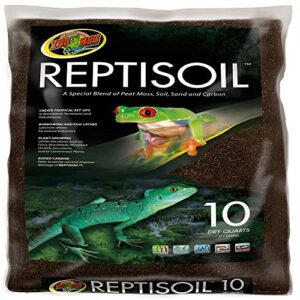
Zoo Med Bioactive Terrarium Soil (model RSS-10) is a smart pick if your snake likes to dig and explore. It blends humus, peat moss, sand, and coconut carbon — a porous material that feeds beneficial bacteria and cuts down on odors naturally.
That combination keeps moisture stable without turning soggy. It also nourishes live plants, so your setup stays cleaner longer through natural waste breakdown.
One bag covers smaller enclosures well, but larger tanks will need multiple bags for proper depth.
| Best For | Reptile and amphibian owners running bioactive setups who want a substrate that supports burrowing, holds humidity, and keeps live plants happy. |
|---|---|
| Price | $10.99 |
| Brand | Zoo Med |
| Odor Control | Coconut carbon reduces odors |
| Moisture Retention | High; retains humidity well |
| Burrowing Support | Yes; soft stable medium |
| Suitable Species | Reptiles, amphibians, invertebrates |
| Additional Features |
|
- Coconut carbon naturally cuts odors and feeds the good bacteria your bioactive setup needs
- Holds moisture well without getting waterlogged — great for tropical species that need humidity
- Supports live plants, so your terrarium kind of takes care of itself over time
- Gets dusty or sticky when too wet, which makes cleanup a bit of a hassle
- Occasional wood chips or small stones can be a problem for tiny or delicate species
- One 30g bag won’t cut it for larger tanks — you’ll need to grab several for anything over 30 gallons
2. Zilla Reptile Terrarium Liner Carpet
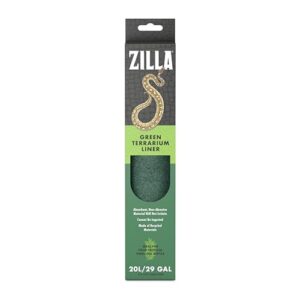
Not every keeper wants to manage loose substrate — and that’s where the Zilla Reptile Terrarium Liner Carpet earns its place. It’s a washable, enzyme-treated carpet roll made from polyethylene and polypropylene that cuts to fit your tank exactly.
No loose particles mean no ingestion risk during feeding strikes. It won’t support burrowing, though.
Species that need to dig will feel restless on a flat surface. Best suited for beginner setups or snakes that prefer surface exploration over tunneling.
| Best For | Beginner reptile keepers with non-burrowing species like ball pythons, bearded dragons, or leopard geckos who want a simple, low-fuss substrate. |
|---|---|
| Price | $10.90 |
| Brand | unlisted |
| Odor Control | Enzyme-treated surface |
| Moisture Retention | Low; absorbent but not humidity-focused |
| Burrowing Support | No; does not support burrowing |
| Suitable Species | Snakes, lizards, geckos, dragons |
| Additional Features |
|
- Easy to clean — just rinse it off or toss it in the washing machine
- Enzyme-treated to keep odors down between cleanings
- No loose particles, so there’s no ingestion risk during feeding
- Doesn’t support burrowing, so diggers will feel right at home elsewhere
- Hardened waste sticks if you let it sit too long
- Can catch small claws or teeth during feeding strikes
3. Zoo Med Natural Forest Floor Bedding
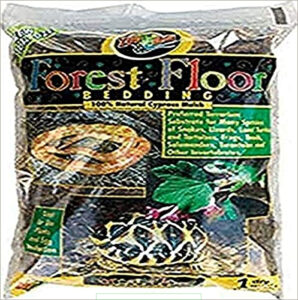
If your snake actually needs to dig, this is where the Zilla carpet falls short — and Zoo Med’s Natural Forest Floor Bedding steps in.
It’s 100% cypress mulch, 10.6 lb per bag, and it holds moisture without turning soggy. Snakes can press into it and form stable tunnels. Keep it 2–4 inches deep.
It works well for ball pythons and boas. Spot-clean every couple of days, and do a full swap every 3–6 months.
| Best For | Snake and reptile owners who need a natural, digging-friendly substrate that holds moisture for burrowing species like ball pythons, boas, and tortoises. |
|---|---|
| Price | $29.99 |
| Brand | Zoo Med |
| Odor Control | Natural mulch absorbs odors |
| Moisture Retention | High; mist to increase humidity |
| Burrowing Support | Yes; digging-friendly substrate |
| Suitable Species | Snakes, lizards, turtles, frogs, tarantulas |
| Additional Features |
|
- Holds moisture well without getting soggy, making it great for tropical reptiles and amphibians that need consistent humidity.
- Cypress mulch lets snakes actually dig and form stable tunnels — something most other substrates can’t pull off.
- Easy to spot-clean and works in bio-active setups, so it looks natural and cuts down on maintenance stress.
- At $29.99 a bag, it gets pricey fast if you’re filling a large enclosure and doing regular full swaps.
- Some bags have shown up with mites or pests, so baking it before use is a smart precaution most people don’t think about until it’s too late.
- Shipping delays of several weeks have been reported, which is a real problem if you’re setting up a new enclosure and need it now.
4. Zilla Alfalfa Reptile Bedding
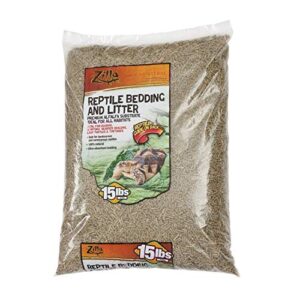
Not every snake needs deep, moisture-rich mulch. For drier-habitat burrowers like juvenile bearded dragons or hognose snakes, Zilla’s Alfalfa Reptile Bedding is worth a look.
It’s 100% natural alfalfa pellets — no dyes, no fillers. At 15.65 lb per bag, you get solid coverage.
Since alfalfa naturally absorbs moisture, it pairs well with humidity control tips for snake terrariums to keep that 30–40% sweet spot in check.
The pellets won’t cause impaction if accidentally swallowed, which matters during feeding. They clump when wet, making spot-cleaning straightforward.
One caution: keep water bowls elevated or on a dish. Moisture causes the pellets to mold quickly.
| Best For | Reptile owners keeping drier-habitat species like bearded dragons, hognose snakes, tortoises, or water dragons who want a safe, natural substrate for a dedicated dig zone. |
|---|---|
| Price | varies |
| Brand | Zilla |
| Odor Control | Bacteriostatic agent limits odors |
| Moisture Retention | Low; pellets expand when wet |
| Burrowing Support | Partial; suitable for dig zones |
| Suitable Species | Dragons, tortoises, omnivorous reptiles |
| Additional Features |
|
- Safe if accidentally eaten — won’t cause impaction, so feeding time is less stressful
- Clumps when wet, making spot-cleaning quick and easy
- 100% natural alfalfa with no dyes or fillers, plus a reptile-safe bacteriostatic agent to keep things fresh
- Has a strong farm-like smell that can be noticeable in smaller indoor spaces
- Moisture causes pellets to expand and mold fast, so water bowls need constant monitoring
- Not great as a full enclosure substrate — thick layers can be hard for some reptiles to walk on
5. Zoo Med Coconut Fiber Bedding
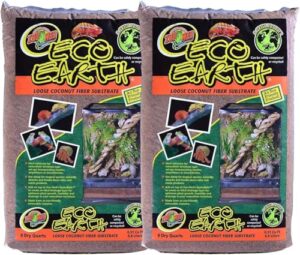
Switching to coconut fiber opens up a lot of options for tropical burrowers. Zoo Med’s Coconut Fiber Bedding is 100% natural, expands when moistened, and holds humidity well — ideal for species needing 60–80% like ball pythons.
The soft, loose texture encourages digging without compaction. It resists clumping, so impaction risk stays low.
Spot-clean daily; full replacement every 6–12 months. One heads-up: dried-out batches can go powdery, so check moisture levels before setup.
| Best For | Reptile and amphibian keepers who need a natural, humidity-holding substrate for tropical burrowers like ball pythons, geckos, and tarantulas. |
|---|---|
| Price | $25.99 |
| Brand | Zoo Med |
| Odor Control | Naturally breaks down odor |
| Moisture Retention | High; designed for damp use |
| Burrowing Support | Yes; soft diggable texture |
| Suitable Species | Snakes, geckos, tortoises, tarantulas |
| Additional Features |
|
- Holds moisture really well, making it easy to keep humidity in that 60–80% sweet spot
- Soft and loose texture lets animals dig naturally without the substrate packing down
- Breaks down waste and odor on its own, so you’re not swapping it out every few weeks
- Some buyers report getting one bag instead of the advertised two, which is a frustrating surprise
- Batches can arrive dry, and once it fully dries out it gets powdery and messy to deal with
- At $25.99 for about 6 lbs, it runs a bit pricier than similar coconut fiber options on the market
Humidity and Moisture Retention
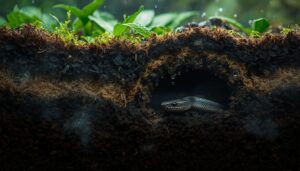
Humidity isn’t just a number on a gauge — it’s the difference between a snake that thrives and one that’s constantly stressed. Burrowing species rely on moisture trapped deep in their substrate to regulate shedding, hydration, and body temperature.
Humidity isn’t a number on a gauge — it’s the difference between a snake that thrives and one that suffers
Here’s what you need to know about choosing a substrate that actually holds humidity where it counts.
How Substrate Holds Humidity in Burrow Tunnels
Think of your substrate as a living sponge. Moisture fills the pore spaces, and capillary action pulls it downward and back up through burrow tunnels.
This pore space retention and substrate porosity create a natural moisture gradient — damp at the tunnel base, drier at the surface.
Coconut fiber substrate excels here. At 3–4 inches deep, it delivers reliable humidity buffering and strong burrowing behavior support in enclosures.
A recommended mix of 40% topsoil, 40% coconut coir, and 20% sphagnum moss provides ideal burrowing substrate mix.
Matching Moisture Levels to Tropical Vs. Dry Species
Not all burrowing snakes want the same underground environment. Tropical snake humidity targets run 60–80%, while dry‑climate snake bedding stays around 30–40% at tunnel depth.
Match your substrate moisture management to your species:
- Tropical species — aim for moist subsurface layers
- Desert species — prioritize quick‑draining, low‑retention blends
- Both — use humidity monitoring and adjust watering frequency seasonally
That moisture gradient makes all the difference.
Why Coconut Fiber and Forest-floor Blends Perform Well
Coconut fiber substrate holds moisture like a slow-release sponge — keeping tunnel walls damp for days, not hours. Its fibrous structure facilitates aeration and gas exchange deep in burrows, reducing anaerobic pockets.
Pair it with a forest-floor blend — think organic topsoil use, leaf litter benefits, and microbial activity benefits — and you get natural temperature buffering, dust reduction, and a renewable sustainability story.
Burrowing snakes genuinely thrive in that bioactive mix environment.
Avoiding Substrates That Dry Out Too Quickly
Some substrates fail fast — sand and gravel lose moisture within hours, leaving tunnel walls brittle and dry. For burrowing snakes, that’s a real welfare risk.
Fiber blend ratios matter here: adding vermiculite additives boosts humidity retention considerably.
Use moisture monitoring tools to catch drying early. Microclimate buffer layers and seasonal humidity adjustments keep dry climate substrate recommendations practical year‑round without constant misting.
Burrowing Depth and Microclimates
Depth matters more than most keepers realize. The right amount of substrate doesn’t just give your snake room to dig — it creates a natural moisture gradient, with a humid zone at the bottom and a drier surface above.
Here’s what you need to know about getting that depth right for your specific species.
Recommended Depth for Small Burrowing Snakes
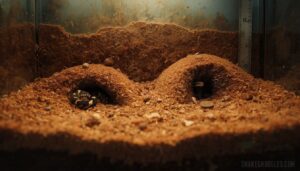
Small burrowing snakes — hognose, sand boas — need at least 3 to 4 inches of substrate. That’s your minimum depth standard.
Use a ruler along the enclosure wall to verify depth measurement techniques stay consistent.
Uniform depth maintains microclimate consistency and burrow stability factors by preventing hot or dry pockets.
A substrate compaction balance of moist-but-not-soggy fiber keeps tunnels from caving in.
Deeper Bedding for Larger Fossorial Species
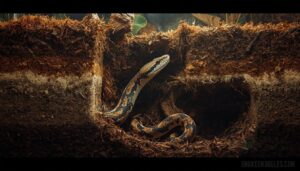
Larger fossorial snakes — think boa constrictors or larger hognose variants — need 6 to 12 inches of deep substrate. That extra depth isn’t luxury; it’s functional.
Layered composition with coconut fiber substrate at 40–60% aids moisture retention and tunnel stability through depth zoning. Burrow collapse prevention depends on it.
Thermal buffering improves too, keeping temperature gradients stable where your snake retreats.
How Substrate Depth Creates Humid Burrow Zones
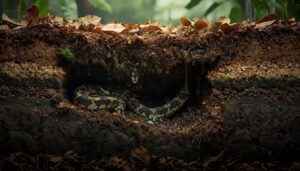
Depth does more than give your snake room to dig — it builds a living humidity system underground.
Here’s what happens at each layer:
- Pore water pressure keeps tunnel walls damp as deeper particles hold moisture under light compression.
- Substrate compaction reduces airflow, locking humidity inside burrow channels.
- Capillary action pulls water upward continuously, feeding moisture back into mid-level zones.
- Moisture gradients form naturally — wet at the bottom, drier near the surface — exactly what burrowing snakes seek.
- Thermal buffering stabilizes temperature swings, so your snake’s retreat stays cool and humid even when surface conditions shift.
That’s microclimate creation within burrows working quietly in your favor. Substrate moisture retention improves with every inch of depth you add.
Sloped Tunnels and Stable Burrow Entrances
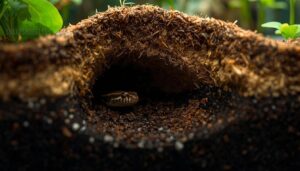
Once your depth is right, burrow shape matters too. Gentle entrance slopes — around 10 to 25 degrees — support tunnel ceiling stability and drain water away naturally. That’s drainage pathway design working passively.
Reinforce entrances with slightly compacted substrate shoulders. Coconut fiber blends excel here; their cohesion mechanics resist collapse as snakes move through repeatedly.
Slope angle optimization keeps the burrow intact long-term.
Safety Risks and Impaction
The substrate you choose can quietly cause harm if you’re not paying attention to a few key details. Particle size, material composition, and digestibility all matter more than most keepers realize.
what to watch for before you fill that enclosure.
Particle Size and Accidental Ingestion Risk
Dust particle size matters more than most keepers realize. Fine inhalation risk increases as particles shrink — tiny fragments stay airborne longer and reach deeper airways.
Surface area reactivity rises too, meaning more tissue contact per gram swallowed. Swallowing dust exposure happens naturally during burrowing, drinking, and feeding.
Particle size thresholds around 10 micrometers separate upper-airway deposits from lung penetration. Sand irritation for snakes compounds this — fine sand raises both impaction risk and digestive safety concerns simultaneously.
Non-impactive Materials for Feeding Safety
Feeding safety starts with what’s under your snake when it strikes.
- Food-grade fibers like coconut won’t leach toxins if ingested
- Stainless steel dishes resist bacteria and clean in seconds
- Silicone feeding mats stay moisture-resistant and non-toxic
- Paper feeding liners offer an inert, dust-free strike zone
- Inert clay bases add impaction prevention without chemical risk
Substrates to Avoid for Burrowing Snakes
Some substrates look fine in the bag but cause real harm in the enclosure.
| Substrate | Main Risk | Why It Fails |
|---|---|---|
| Cedar Pine | Phenolic oil toxicity | Damages lungs and liver |
| Fine Sand | Sand irritation | Causes impaction, collapses tunnels |
| Sharp Gravel | Gravel abrasion issues | Cuts soft tissue while burrowing |
| Clumping Litter | Clumping cat litter danger | Expands in gut, fatal blockage |
| Synthetic Carpet | Blocks burrowing entirely | Traps ammonia, tears skin |
Avoid all five.
Respiratory and Digestive Hazards From Poor Bedding
Poor bedding doesn’t just block tunnels — it attacks your snake from the inside out.
Dust inhalation irritates airways and triggers respiratory infections. Ammonia irritation from decomposing waste burns lung tissue over time. Mold spore exposure worsens breathing in already-stressed animals.
Nostril contamination happens when wet substrate clings to the face during burrowing. Contaminated ingestion raises impaction risk with every feeding.
Maintenance and Cleaning Schedules
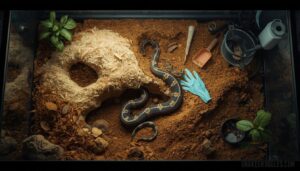
Even the best substrate won’t stay healthy without a consistent cleaning routine. How often you clean depends on what’s in the enclosure—some options make that job a lot easier than others.
Here’s what you need to know about keeping things fresh.
Spot-cleaning Waste Before Odor Builds Up
Waste left in a burrow for even 48 hours starts breaking down fast — ammonia rises, mold follows. Daily inspections keep that cycle from starting.
- Use a hand tool for Burrow Waste Extraction in narrow tunnels; disinfect it after every use — Hand Tool Disinfection isn’t optional.
- Practice Glove Change Practices between burrow sections to avoid spreading bacteria.
- Refill cleaned spots immediately to restore Substrate Re-porosity and airflow.
- Trust your nose as one of the best Odor-Detecting Indicators — if you smell it, you’re already behind on your spot cleaning schedule.
When to Replace Paper-based Vs. Loose Substrates
Not all bedding wears out on the same schedule — and confusing the two will cost your snake’s health.
| Substrate Type | Replace When |
|---|---|
| Paper towels | Every 1–2 weeks, or at first Odor Persistence Indicator |
| Loose substrate | Every 2–6 weeks; sooner if Compression Collapse Signs appear |
| Paper (dry setups) | When fraying or depth loss shows |
| Loose (post-feeding) | Immediately after any Feeding Spill Response |
Seasonal Humidity Shifts also reset your cleaning schedules for different bedding types — check more often in summer.
Managing Mold, Ammonia, and Excess Moisture
Mold doesn’t announce itself — it builds quietly in damp, airless pockets while ammonia creeps in right behind it. Staying ahead of both comes down to balance.
- Practice Ventilation Optimization by ensuring steady airflow prevents stagnant wet zones
- Apply Temperature Gradient Control so warm areas evaporate surface moisture consistently
- Use Water Source Isolation to stop leaking bowls or overspray from soaking bedding
- Schedule Drying Cycle Scheduling — allow brief surface-dry periods between mistings
- Add Odor-Absorbing Additives like coconut husk, which naturally encapsulates ammonia
Low-maintenance Options for Busy Keepers
Not everyone has an hour to spare on enclosure upkeep. That’s where Low-Maintenance Substrate Solutions earn their place.
Pre-moistened Bedding cuts prep time instantly. Quick-Swap Liners and Reusable Carpet Pads — like Zilla’s Terrarium Liner — make spot cleaning fast and full substrate changes rare.
Modular Substrate Tiles and Dust-Free Form options simplify ease of cleaning further, so your quick reference routine stays under ten minutes weekly.
Species-Specific Substrate Matches
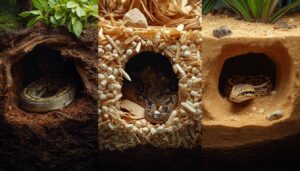
Not every snake thrives on the same bedding — what works for a ball python can stress out a corn snake. Getting the match right starts with knowing what each species actually needs.
Here’s a breakdown of the best substrate choices for some of the most popular burrowing snakes.
Ball Python Substrate Choices for Humid Setups
Ball pythons need 60–80% humidity — and the right substrate makes that easy to hold. Coconut fiber excels here; its humidity retention creates natural moisture pockets that support burrowing behavior.
For students setting up their first enclosure on a budget, these ball python starter kits for college students often include coconut fiber substrate already sized and ready to go.
Cypress mulch advantages include mold resistance and steady moisture release. A bioactive mix goes further, with bioactive microfauna role handling waste breakdown naturally.
Aim for 4–6 inches of substrate depth guidelines. Both options support temperature-humidity synergy, are budget-friendly in substrate cost comparison, and allow eco-friendly disposal methods like composting.
Corn Snake Bedding for Moderate Humidity
Corn snakes sit in a sweeter spot than ball pythons — 40–60% humidity works well, though burrowing tunnels benefit from slightly higher moisture around 60–70%.
Here’s what performs best:
- Coconut fiber ratio blended with forest floor additives helps humidity retention without sogginess.
- Substrate depth recommendations for burrowers start at 3–4 inches.
- Enrichment rotation prevents waste buildup and helps microbial decomposition.
Temperature-humidity balance keeps shedding cycles smooth.
Boa Constrictor Substrate for Deep, Damp Burrows
Here’s the section:
Where corn snakes tolerate drier conditions, a boa constrictor demands more — deeper substrate, stronger moisture retention, and room to truly disappear underground.
Aim for at least 3–4 inches of deep substrate. Adults and gravid females benefit from 4–6 inches, which prevents substrate compaction and maintains stable tunnel walls over weeks of use.
Coconut fiber shines here. Coconut husk expansion during soaking produces a loose, fibrous layer that holds moisture without going soggy — ideal for maintaining 60–75% ambient humidity. Pair it with a bioactive mix (organic topsoil, leaf litter, sphagnum moss) to activate Microfauna Decomposition, which quietly processes waste without full substrate changes.
Burrow Aeration matters too. A soil-fiber blend with pumice or bark resists compaction and keeps oxygen moving through tunnel walls — critical for respiratory health along the Temperature Gradient from warm end to cool.
| Feature | Coconut Fiber | Bioactive Mix |
|---|---|---|
| Moisture Retention | High | Very High |
| Burrow Stability | Moderate | Excellent |
| Maintenance Frequency | Every 3–6 months | Rare top-ups only |
Choosing The Right Mix for Burrowing Behavior
No single substrate does everything. That’s why mixing works better — coconut fiber substrate manages Moisture Buffering, while aspen shavings improve airflow and Dust Control.
Blend Composition directly shapes Burrow Stability and promotes Microbial Colonization in bioactive setups.
Follow substrate depth recommendations for burrowers — 5 to 8 inches minimum. Mixing substrates for best performance means matching your snake’s burrowing behavior in reptiles to the right layered foundation.
Frequently Asked Questions (FAQs)
What substrate is good for burrowing snakes?
Coconut fiber substrate and bioactive mix top the list. Both hold moisture, allow deep tunneling, and last months.
For cost efficiency and environmental impact, they’re hard to beat — especially in a DIY substrate mix.
What is a good substrate for hognose snakes?
Hognose snakes thrive in coconut fiber mixed with organic soil — a cost-efficient, eco-friendly option that facilitates natural digging. Aim for 4–5 inches of depth to honor their instinct to burrow deep.
What can I use as snake substrate?
Aspen shavings, cypress mulch, coconut husk, and fine coco coir all work well.
Zoo Med Eco Earth Coconut Fiber Substrate is a reliable, eco-friendly material and a cost-effective option with strong substrate longevity.
Is ReptiChip good for burrowing?
Yes. ReptiChip’s Chip Structural Integrity keeps tunnels open without collapse. Its Moisture Buffering Speed and Aeration Capacity support stable burrow microclimates — making it a reliable pick for burrowing snakes.
Can I mix different substrates for my snake?
Mixing works well when done right. A 60/40 coconut fiber to forest floor blend maintains stable microclimates.
Test small batches first — compatibility testing prevents mold, ensures microbial balance, and keeps burrowing behavior natural and stress‑free.
How deep should substrate be for burrowing snakes?
Small burrowing snakes need 3–4 inches of substrate. Larger fossorial species need 4–6 inches. That depth maintains tunnel structural integrity, thermal zone zoning, and proper headroom clearance for safe, natural burrowing behavior.
What substrates work best for hatchling burrowing snakes?
Coconut fiber substrate gives hatchlings ease of digging without impaction risk.
It’s a renewable substrate option that facilitates humidity management for tropical snakes while staying low dust — safe bedding for hatchlings from day one.
Do burrowing snakes need substrate during winter brumation?
Absolutely. During brumation, substrate isn’t optional — it’s critical.
Proper substrate depth recommendations for burrowers support humidity control, Winter Temperature Stability, and Air Pocket Prevention, keeping your snake safely buried, hydrated, and metabolically stable throughout the cold season.
How do I transition my snake to new substrate?
Start with a gradual introduction — place new substrate beside the old. Monitor behavior daily. Use layer expansion over 10–14 days. This change timeline facilitates calm habitat acclimation without stress.
Can burrowing snakes share enclosures with substrate?
Most burrowing snakes don’t co-habit well. behavioral interactions cause stress, disrupt substrate zoning, and collapse shared tunnels.
Watch for stress indicators like surface pacing. Separate enclosures with species-specific substrate recommendations work best.
Conclusion
Here’s a thought worth sitting with: the moment you fix the substrate, everything else usually falls into place.
Feeding improves. Shedding gets cleaner. Stress behaviors quietly disappear.
That’s not coincidence—it’s what happens when a burrowing snake finally feels safe beneath its belly.
Choosing the right reptile substrates for burrowing snakes isn’t a minor detail. It’s the foundation your animal builds its entire sense of security on. Get the ground right, and the rest follows.