This site is supported by our readers. We may earn a commission, at no cost to you, if you purchase through links.
A corn snake that looked tiny and vivid orange last spring can seem like a completely different animal by fall. That’s not your imagination—corn snake age characteristics shift quickly, especially in the first two years.
Color fades, patterns soften, shed schedules slow down, and a snake that once explored everything now prefers staying tucked in a hide.
Knowing normal at each stage keeps you from panicking over changes that are actually healthy milestones.
Whether you’re raising a hatchling or caring for a senior snake, understanding what age looks like helps you stay one step ahead.
Table Of Contents
- Key Takeaways
- Corn Snake Age Stages
- Size Benchmarks by Age
- Growth Rate and Maturity
- Shedding Frequency by Life Stage
- Color Changes With Age
- Behavior Changes by Age
- Factors Affecting Age Characteristics
- Estimating Your Corn Snake’s Age
- Frequently Asked Questions (FAQs)
- How can I tell how old my corn snake is?
- How old is a 30 inch corn snake?
- What smell do corn snakes hate?
- How long do corn snakes live in captivity?
- Do corn snakes recognize their owners over time?
- Can you tell a corn snakes age from scales?
- How does genetics influence corn snake size and color?
- What health issues are most common in senior corn snakes?
- Conclusion
Key Takeaways
- Corn snakes change fast — colors fade, shedding slows down, and behavior shifts are totally normal signs of healthy aging, not problems.
- Size and shedding frequency are your best clues for estimating age, since hatchlings shed every 2–4 weeks while adults stretch to every 2–3 months.
- diet, temperature, and enclosure setup quietly drive how fast your snake grows, so nailing those basics early makes a real difference.
- Senior snakes (8+ years) eat less, hide more, and move slower — that’s just retirement mode, but regular vet checks keep real health issues from sneaking up on you.
Corn Snake Age Stages
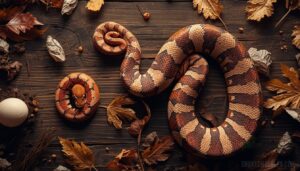
Corn snakes go through some pretty distinct life stages, and each one looks and acts a little differently. Knowing where your snake falls helps you give it exactly what it needs.
From hatchling to adult, each stage brings new needs—this guide on corn snake husbandry and longevity breaks down exactly what to expect and how to keep up.
Here’s a quick rundown of the five main stages you’ll want to know.
Hatchlings: 0–6 Months
Hatchlings are a whirlwind of activity in those first six months. They hatch at just 20–25 cm and weigh around 10–15 grams — tiny but mighty.
Nail your prey size selection early (pinkie mice work perfectly), keep up hydration practices, and manage your light cycle consistently.
First shed happens within a week. Eye clarity checks and early socialization tips matter hugely here.
Maintaining the species‑specific temperature range is critical for healthy development.
Juveniles: 6 Months–2 Years
Once your corn snake clears that hatchling phase, things really pick up. Between 6 months and 2 years, you’re watching a serious growth curve — they shoot from around 18 inches to nearly 3 feet.
Nail your prey size selection as they graduate to fuzzies and small mice.
Watch stress indicators during handling techniques, and keep your enclosure layout interesting.
Behavior differences between juvenile and adult corn snakes become obvious fast.
Subadults: 2–3 Years
By ages 2–3, your subadult is settling into its identity. Growth slows a bit, but size benchmarks for age still matter — expect 3–4 feet and 100–250 g. These are solid age markers in reptiles.
- Feed 1–2 prey items weekly
- Keep humidity management at 40–60%
- Watch for territorial behavior during feeding
- Schedule monthly health monitoring weigh‑ins
- Add enclosure enrichment to reduce stress
Adults: 3+ Years
By year three, your corn snake has hit its stride. Growth levels off around 4–5 feet — a reliable adult size comparison and solid growth chart reference.
Metabolic rate slows, so feeding every 10–14 days works well.
Watch for behavior changes in maturity: more hiding, calmer handling, and reduced territorial displays.
Breeding season prep starts here too. Respiratory health checks become part of your routine, and enclosure enrichment keeps things interesting for them.
Seniors: 8+ Years
Eight-plus years in? Your snake is basically a wise old timer now.
Metabolic slowdown is real — think slower digestion, longer rest periods, and a calmer overall vibe.
Senescence in snakes brings age-related behavior and physiological changes worth watching:
- Joint health and mobility gradually decrease
- Immune function needs support through veterinary screening
- Seasonal brumation periods may stretch longer
Senior corn snakes still thrive with good care.
Size Benchmarks by Age
Knowing your corn snake’s size at each stage takes the guesswork out of care. A snake that’s too small — or surprisingly large — for its age can tell you a lot about its health and feeding history.
Here’s how the numbers break down from hatching to old age.
Hatchling Length and Weight
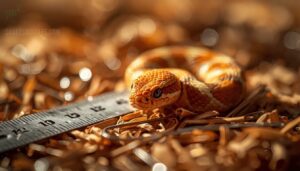
Fresh out of the egg, hatchlings are about 10–15 inches long and weigh just 2–8 grams — barely heavier than a few paperclips. Birth size variation is totally normal. Clutch size correlation and maternal nutrition impact both play a role here.
When you measure its length early, you’re already tracking reliable early growth indicators. Sexual dimorphism early on? Minimal — they look nearly identical.
Juvenile Growth Measurements
Once juveniles hit six months, growth really picks up.
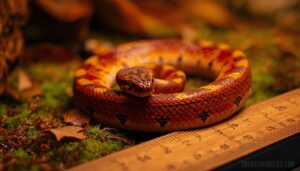
Snout-vent length (SVL Recording) becomes your best measurement tool — use a flexible, non-stretch ruler for accuracy.
Scale Calibration Methods matter here: even small errors skew your growth chart.
Juveniles usually grow 0.5–1.5 inches monthly, reaching 20–36 inches by 24 months.
Feeding Frequency Impact and Temperature Variance Effects shape everything — consistent meals at 75–85°F keep Growth Curve Modeling predictable.
Subadult Size Range
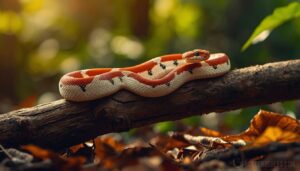
Around ages 2–3, your corn snake hits the subadult sweet spot — and the size benchmarks for age really start telling a story. Most land between 24–36 inches and 150–350 grams, but morph‑specific size and genetic size potential shape where yours falls.
Watch for these growth chart signals:
- Seasonal feeding patterns slow gains in cooler months
- Regional size variation means some lines run leaner
- Metabolic rate influence affects weight by age noticeably
- Corn snake growth stages and size benchmarks overlap here
Adult Length and Body Mass
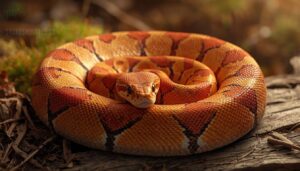
By age 3, your corn snake has basically clocked in at its final size. Most adults settle between 4–5 feet and 250–900 grams — though sexual dimorphism means males run heavier, while females stay leaner.
regional size variation also plays a role. Track weight measurement regularly using a body condition index to stay on top of adult size.
| Metric | Adult Range |
|---|---|
| Length | 4–5 ft |
| Male Weight | 700–900 g |
| Female Weight | 500–700 g |
Senior Weight Changes
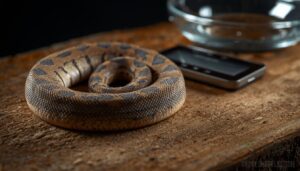
Once your corn snake hits 8+, weight becomes unpredictable. Muscle loss occurs gradually, while fat redistribution alters body appearance even if the scale barely moves. Appetite reduction is normal — seniors just eat less.
Monitor hydration fluctuations, since low fluid intake can affect readings. Consistent weight monitoring and proper nutrition help track real changes.
Growth Rate and Maturity
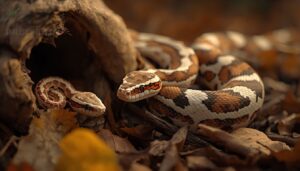
Corn snakes don’t stay small for long — they grow surprisingly fast in their early years. A few key factors shape how quickly they develop and when they finally hit their full size.
Here’s what you need to know about each stage of that growth journey.
When Corn Snakes Grow Fastest
The first 6 to 18 months are your corn snake’s explosive growth window.
Ideal Feeding Frequency — every 5 to 7 days with proper Prey Size Matching — drives serious gains.
Keep your Peak Temperature Range stable (mid-80s basking, 78–82°F ambient), because Metabolic Hormone Levels drop when it gets cold.
Humidity Impact matters too; 40–60% keeps sheds smooth.
Nail these growth rate factors and watch your snake thrive.
When Corn Snakes Stop Growing
After that fast early sprint, growth slows dramatically around year three. Growth Cessation Signals are easy to spot — shedding frequency drops, monthly weight gains flatten out, and your snake just looks… settled.
Metabolic Slowdown kicks in as Age-Related Hormones stabilize. Most reach full adult size between 4–5 feet by year four.
Seasonal Growth Spurts can still happen, but they’re minor blips.
Reproductive Maturity Timeline
Sexual maturity sneaks up quietly after growth slows. Most males reach sperm development around 18–24 months, but full mating readiness typically emerges closer to two years.
Females require more time — ovulation usually begins around 2.5–3 years.
Hormonal triggers linked to seasonal breeding cues and body condition thresholds both play critical roles. Your snake simply won’t breed until it’s truly ready.
Male Vs Female Growth Differences
Male and female corn snakes grow differently — and that’s sexual dimorphism in action. Hormonal growth drivers push males toward longer bodies, while females tend to carry more body fat relative to length. These skeletal development differences and the maturity timing gap make sex useful as a size and age indicator.
Sexual dimorphism shapes corn snakes visibly: males grow longer, females carry more fat
- Males grow longer but lean
- Females mature faster, plateau sooner
- Body fat distribution differs noticeably after year one
- Growth rate differences between sexes sharpen around 18 months
Captive Vs Wild Growth Patterns
Wild corn snakes grow in bursts — feast during prey-rich seasons, stall when food’s scarce. That’s the prey availability impact and seasonal growth spurt playing out in real time.
Captive snakes skip the chaos. Stable temps, consistent meals, and zero stress stunting mean steadier gains.
Genetic growth potential stays the same, but captivity lets snakes actually reach it.
| Factor | Captive vs. Wild |
|---|---|
| Metabolic Rate Differences | Stable in captivity; fluctuates seasonally in wild |
| Prey Availability Impact | Consistent feeding vs. feast-or-famine cycles |
| Seasonal Growth Spurt | Minimized in captivity; pronounced in wild |
| Stress Stunting | Rare in captivity; common in wild |
| Genetic Growth Potential | Same baseline; better realized in captive care |
Shedding Frequency by Life Stage
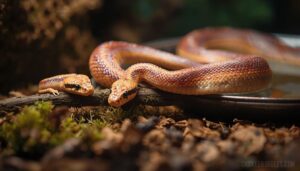
Shedding tells you a lot about where your corn snake is in life. How often they shed shifts pretty dramatically from hatchling to adult.
what to expect at each stage.
First Shed After Hatching
Your hatchling’s first shed usually happens within one to two weeks after hatching — it’s basically their debut announcement. Watch for eye cloudiness, which signals the process is starting.
Keeping moisture levels steady and temperatures in the right range helps guarantee shedding success. Once that first skin drops, post-shed feeding generally follows smoothly, kicking off their regular shedding cycle frequency.
Hatchling Shedding Schedule
Once that first shed wraps up, your hatchling kicks into a pretty predictable rhythm. During this rapid hatchling development phase, expect a new shed every four to six weeks — shedding frequency stays high because they’re growing fast.
Keep these shedding support techniques in mind:
- Substrate Moisture: Maintain 55–65% humidity to ease shedding duration and avoid stuck patches
- Misting Routine: Light misting once or twice daily during pre-shed keeps skin loose
- Post-shed Hydration: Always offer fresh water right after a completed shed
- Lighting Impact: Consistent light cycles help regulate shedding patterns and overall stress levels
Juvenile Shedding Intervals
As your corn snake enters the juvenile stage, shedding frequency shifts noticeably. Growth spurts correlate with molting cycle timing, meaning sheds occur every four to six weeks — sometimes stretching to once monthly during steadier stretches.
| Age | Shed Interval | What to Watch |
|---|---|---|
| 6–9 months | Every 3–4 weeks | Skin condition indicators: dull tone |
| 9–15 months | Every 4–5 weeks | Shedding hormones trigger eye cloudiness |
| 15–24 months | Every 5–6 weeks | Lighting effects influence cycle regularity |
Irregular shedding patterns often signal humidity or stress issues — catch them early.
Adult Shedding Cycles
Once your snake hits adulthood, shedding patterns slow way down — expect every two to three months. That’s the skin regeneration cycle settling into its mature rhythm.
Molting seasonality plays a role too; warmer months can nudge frequency up slightly.
Watch for Eye Cap Retention, which signals humidity issues.
Post-Molt Hydration matters more now, so always keep fresh water available.
Stress-Related Molts can also disrupt normal shedding frequency as an indicator of snake maturity.
Using Sheds to Estimate Age
Sheds are basically your snake’s personal growth diary. Track the dates, and you’ll start seeing patterns that reveal a lot about age.
- Frequent sheds (every 2–3 weeks) = young, fast-growing snake
- Slowing intervals signal the skin regeneration cycle maturing
- Environmental impact on shedding — temps and humidity shift timing
- Clean, one-piece shed quality indicates a healthy growth spurts correlation
Historical shed records beat guesswork every time.
Color Changes With Age
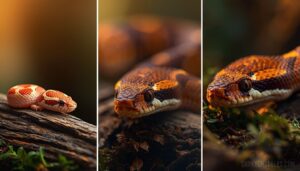
Your corn snake’s colors actually shift quite a bit as it ages — it’s one of the cooler things to watch over time. From hatchling to adult, the patterns and tones go through some real changes.
what to expect at each stage.
Hatchling Color and Pattern Traits
Baby corn snakes arrive looking almost painted — a bright orange background broken up by bold dorsal saddles, each framed with tiny black borders.
Pattern density gradient runs heaviest down the spine, softening toward the sides.
Ground color shades range from tan to deep red-orange depending on genetics.
| Feature | Description | Notes |
|---|---|---|
| Ground Color | Tan to red-orange | Brightens after early sheds |
| Saddle Shape Variations | Diamond or rectangular blocks | Sharpens with age |
| Tiny Black Borders | Outline each saddle | May fade or crisp up |
Juvenile Dulling and Pattern Changes
That bright, painted look won’t last forever. Around 9–12 months, pigment cell maturation starts shifting things — the dulling onset timing is gradual but real.
Edge softening rate picks up across successive sheds, blurring those crisp saddle borders.
Orange tones can dim 20–30%.
Lineage dulling variation means your snake’s timeline may differ slightly, so track shedding pattern links across consecutive molts.
Adult Color Development
Once that juvenile dullness settles in, your adult corn snake‘s coloration and pattern changes throughout corn snake life stages, basically stabilize. By age 2–3, colors plateau into a consistent, warmer tone — orange to red with smooth-edged brown saddles.
Melanistic forms stay reliably dark.
UV light influence maintains health but won’t trigger new color morph changes.
Genetic color divergence, not diet or season, drives most variation now.
Regional Color Variation
Where snake comes from shapes its look as much as genetics do.
Carolina orange tones differ from vivid Florida reds, and Gulf Coast muted browns blend into marshy backgrounds. Great Plains marks sit tight and small on lighter bodies, while Trans-Pecos desert snakes run pale with darker contrast.
Regional coloration and pattern reflect real phenotypic variation — not color morph changes or genetic morphs in corn snakes.
Scale Texture Changes
Touch a hatchling and you’ll notice it — that soft, almost velvety feel.
Keratin thickening kicks in gradually, and scale gloss progression takes over as your corn snake matures. The embossed saddle pattern sharpens through juvenile years, while belly scale rigidity stays consistent for grip.
Older snakes show scale elasticity loss, making texture feel slightly leathery. Shedding frequency as an indicator of snake maturity tracks these shifts well.
Behavior Changes by Age
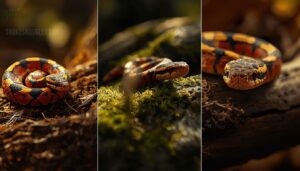
Your corn snake’s behavior tells you a lot about where it’s in life. A hatchling acts nothing like a five-year-old adult — and that’s completely normal.
Here’s how behavior shifts from one stage to the next.
Hatchling and Juvenile Activity
Hatchlings are curious little explorers from day one — quick movements, constant head flicks, microhabitat exploration through leaf litter and warm patches.
Juveniles kick it up a notch. Their activity levels increase noticeably, and you’ll see thermal preference shifts as they bounce between warm and cool zones.
They’ll use vertical space, test hiding spots, and show sharper prey detection tactics. Enrichment engagement really shines at this stage.
Feeding Response by Age
Feeding behavior shifts a lot as your corn snake ages. Hatchlings strike fast and need food every 3–5 days — tiny prey, roughly a quarter of their neck width. Hunger cue variation is easy to spot: head flicks, tongue flicking, restless movement.
Juveniles settle into 7–10 day intervals.
Adults stretch to 14–21 days.
Prey size scaling and digestive rest periods both grow with age.
Adult Hiding and Resting Habits
Adult corn snakes are champion nappers — don’t be surprised if yours disappears for 14–18 hours daily. Microhabitat preference drives everything here.
Hide box placement near the warm end of your temperature gradient matters most. Substrate heat retention, especially coconut fiber, keeps them cozy longer.
Dim enclosure lighting effects reinforce that "stay hidden" instinct. Multiple hides reduce stress noticeably.
Senior Activity Decline
Once your corn snake hits eight, think of it as entering retirement mode. Activity levels drop noticeably — and that’s completely normal.
Watch for these senior behavior changes in maturity:
- Reduced locomotion — shorter, less frequent movement sessions
- Microhabitat preference shifts toward warmer hides
- Feeding burst frequency decreases; expect slower meal interest
- Enrichment response fades — new toys just don’t excite it
- Health monitoring becomes essential to catch real problems early
Handling Response Over Time
Your snake’s handling response is basically a timeline of trust. Young snakes are quick to react — almost jumpy. But as they age, that latency trends slower, and adults settle into calmer routines.
Think of it like cache effects: the more consistent your handling frequency, the easier sessions become.
Stress reduction strategies, like short, regular holds, reinforce trust and smooth out age-related behavior and physiological changes over time.
Factors Affecting Age Characteristics
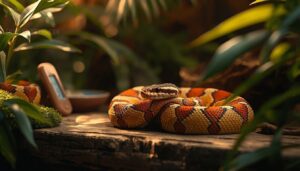
Not every corn snake ages the same way, and that’s actually pretty normal. A few key factors — like diet, temperature, and health — can speed things up, slow them down, or change what your snake looks like at any given stage.
Here’s what has the biggest impact.
Diet and Feeding Schedule
What you feed your corn snake — and how often — shapes how fast it grows at every stage. Think of it as fine-tuning an engine.
- Hatchlings need pinky mice every 5–7 days
- Juveniles thrive on fuzzies weekly
- Adults do best with mice every 10–14 days
- Seniors may need Feeding Frequency Adjustments if weight shifts
Match Prey Size Guidelines to midbody width, and always keep fresh water available for Hydration Management.
Temperature and Humidity
Just like diet, temperature and humidity quietly drive how fast your corn snake grows. Nail your Ideal Basking Gradient — warm side at 28–34°C, cool side around 22–26°C — and metabolism hums along nicely. That’s Thermal Microclimate Management in action.
Keep humidity between 40–60% using smart Humidity Zone Design, and shedding stays smooth. Small adjustments in Moisture Balance Strategies genuinely change everything.
Enclosure Size and Setup
Space matters more than you’d think. A cramped enclosure slows movement, limits exploration, and honestly stresses your snake out.
Aim for at least 36 inches of floor space for juveniles, with proper Vertical Space using hides and climbing spots at different heights.
Good Ventilation Design keeps airflow steady, while layering 2–4 inches of Substrate Depth lets hatchlings burrow comfortably.
Solid enclosure design and environmental control for snakes tie everything together.
Health Issues That Affect Growth
Even the best setup can’t help if your snake is dealing with health problems.
A heavy parasite load quietly drains nutrients and stunts growth. Mouth rot makes eating painful, so meals get skipped. Respiratory infections slow everything down. Metabolic bone disease weakens developing bones. Digestive issues block nutrient absorption entirely.
Regular veterinary health monitoring catches these stress factors in reptiles before they derail nutrition and growth.
Estimating Your Corn Snake’s Age
You don’t always know how old a corn snake is when you get one — and that’s totally fine. Simple clues can point you in the right direction.
Here’s what to look at.
Measuring Length Accurately
Getting accurate measurements starts with the right setup. Lay your snake flat against a ruler or use flexible tape that follows its body without compression.
Always read at eye level to avoid parallax error. Take multiple measurements and average them for consistency.
Record everything in centimeters — standardized units make your corn snake growth chart far easier to read across time. Timing matters too; measure at the same time each day.
Tracking Weight Over Time
Baseline Weight Recording — weigh your snake weekly on the same scale, at the same time. Log everything. Calculate a 7-Day Moving Average to smooth out random spikes. That’s your Weight Trend Analysis in action.
Simple Visualization Techniques, like a hand-drawn chart, reveal your corn snake’s growth rate clearly. Normalization Practices keep your data honest.
Comparing Size to Life Stages
Once you’ve got consistent weight and length data, matching it to life stages gets pretty straightforward.
A 10-inch snake under 30 grams? Classic hatchling.
Hitting 4 feet with a solid 500-gram body mass? That’s your adult zone.
Growth ratios, length-to-weight index shifts, and sex-based size divergence all sharpen your read.
Captive size variability and regional size differences mean benchmarks are guides, not rules.
Checking Shed Frequency
Shed frequency tells you a lot. Hatchlings replace skin every 2–4 weeks — fast skin replacement matches fast growth. Juveniles slow to 3–4 weeks; adults every 4–8 weeks.
Use shedding calendar tracking to spot patterns over time. Watch for partial shed identification and eye cap cloudiness as health clues.
Seasonal shedding variation happens, and molting weight correlation helps confirm age determination methods.
When Age Estimates Can Be Wrong
Age estimates aren’t always a sure thing. Misreading growth spurts, species reference errors, and observer bias can throw you off by months — sometimes years.
- Data gaps from unknown birth records make precision tricky
- Environmental fluctuations like temp swings reset growth signals
- Genetic factors and past health issues quietly skew results
Use multiple clues together, never just one.
Frequently Asked Questions (FAQs)
How can I tell how old my corn snake is?
You can use size, scale pattern analysis, shedding frequency, and behavioral timing to get a solid estimate.
Eye color shifts and metabolic rate changes are helpful clues too — no single method nails it perfectly.
How old is a 30 inch corn snake?
A 30-inch corn snake is likely around 6–12 months old. At that length, it’s comfortably in the juvenile stage, past the rapid hatchling sprint but still actively growing.
What smell do corn snakes hate?
Corn snakes hate strong smells — ammonia repellent, cinnamon oil deterrent, garlic odor, vinegar, citrus scent, and naphthalene, all trigger avoidance.
Skip naphthalene, though; its toxicity makes it dangerous for pets and people.
How long do corn snakes live in captivity?
With proper captive husbandry, most corn snakes live 15–20 years. Some hit 25+ with great genetics and veterinary care. Wild lifespan? Just 6–8 years. Captivity genuinely changes everything.
Do corn snakes recognize their owners over time?
Not exactly — but sort of. Your snake learns your scent over time.
That scent familiarity triggers a calm demeanor, fewer strikes, and relaxed body language.
Consistent, gentle handling builds trust more than anything else.
Can you tell a corn snakes age from scales?
Not exactly — scales don’t tell the whole story.
Scale Ring Count and Scale Thickness Variation offer minor clues, but size, shedding frequency as an indicator of snake maturity, and pattern fading with age are far more reliable.
How does genetics influence corn snake size and color?
Genetics runs the show here. Size and color both follow polygenic inheritance — meaning many genes team up, not just one.
That gene‑environment interaction means your snake’s potential is written in its DNA, but care unlocks it.
What health issues are most common in senior corn snakes?
Senior corn snakes face respiratory infections, mouth rot, parasite burden, skin rot, and digestive constipation. Age-related changes make reptile health monitoring essential.
Regular veterinary care catches these health and disease issues early.
Conclusion
What if every change you noticed actually meant your snake was thriving? That’s the quiet truth behind corn snake age characteristics—fading colors, slower sheds, and longer hide sessions aren’t problems.
They’re progress. A hatchling exploding with orange energy and a calm adult curled in its hide are the same animal at different chapters.
Learn each stage, trust the signs, and you’ll never mistake healthy aging for something wrong. Your snake’s got this. So do you.