This site is supported by our readers. We may earn a commission, at no cost to you, if you purchase through links.

A corn snake can become fertile before it’s physically ready to breed—and that gap matters more than most keepers realize. Fertility and breeding readiness aren’t the same thing, and confusing the two puts your animals at risk. Knowing the difference—and the exact benchmarks that signal a corn snake is genuinely ready—separates responsible breeding from a costly mistake.
In captivity, some individuals hit sexual maturity around 18 months, driven by consistent warmth and aggressive feeding schedules. Wild counterparts often take three years or longer, shaped by cold seasons and scarce prey. This disparity highlights how environmental factors influence developmental timelines.
The distinction between fertility and physical readiness cannot be overlooked. Rushing breeding before a snake’s body is fully developed risks health complications, underscoring the need for patience and precise husbandry practices.
Table Of Contents
- Key Takeaways
- When Corn Snakes Reach Sexual Maturity
- Sexual Maturity Versus Breeding Readiness
- Growth Milestones by Age
- Physical Signs of Maturity
- Factors That Affect Maturity
- Male and Female Maturity Differences
- Safe Breeding Health Criteria
- Seasonal Breeding and Reproduction
- Frequently Asked Questions (FAQs)
- Conclusion
Key Takeaways
- Sexual maturity and breeding readiness aren’t the same thing — a corn snake can become fertile at 18 months but still lacks the body reserves to breed safely.
- The rule of threes sets the minimum bar: at least 3 years old, 300 grams, and 3 feet long before pairing any snake.
- Diet, temperature gradients, enclosure size, and stress levels all shift the maturity timeline — your husbandry choices matter more than the calendar.
- Females carry a heavier metabolic load than males, so rushing a young female into breeding risks egg binding, clutch failure, and months-long recovery.
When Corn Snakes Reach Sexual Maturity

Corn snakes don’t hit maturity on a fixed schedule — several variables push that timeline earlier or later. Captive snakes usually reach maturity faster than their wild counterparts, but even within captivity, the range is wider than most keepers expect.
Things like feeding frequency and temperature gradients play a bigger role than most realize — corn snake breeding age and maturity factors break down exactly how those variables shift the timeline.
Here’s what actually drives the timing.
Average Maturity Age in Captivity
Most captive corn snakes hit sexual maturity between 24 and 36 months. Cohort age analysis, however, places the median onset closer to two years when feeding schedules and temperatures remain consistent.
Statistical growth curves confirm this benchmarking for captive age ranges reliably.
Some individuals reach maturity as early as 18 months — diet quality and enclosure warmth drive that variation greatly.
Average Maturity Age in The Wild
Wild corn snakes follow a different clock. Without the steady meals and stable temperatures you’d provide in captivity, most don’t reach sexual maturity until two to three years old — sometimes longer. The Corn snake growth and maturity timeline in the wild shifts based on several overlapping pressures:
- Regional Age Variation — northern populations mature later than southern ones
- Prey Availability Impact — lean years delay fat accumulation and reproductive readiness
- Climate-Driven Shifts — cooler seasons slow metabolism and extend the maturity window
- Population Density Effects — competition for resources can push average maturity ages higher
- Long-Term Age Trends — habitat degradation increasingly delays maturation across affected populations
Recent vertebrate studies employing elastic net regression show that snake maturation timing can differ widely across taxa.
Earliest Possible Maturity at 18 Months
Captivity accelerates corn snake maturation through factors like consistent prey and warm temperatures. Accelerated feeding and fast-growth genetics are primary drivers, enabling rapid mass gain and compressed growth timelines, allowing sexual maturity as early as 18 months.
Warm temperature cycles elevate metabolism, prompting earlier hormonal activation even before full adult size is reached. Shedding frequency serves as an age and growth indicator, with higher rates correlating to accelerated development. Additionally, early brumation acts as a breeding readiness signal, preparing the reproductive cycle.
| Factor | Effect | Timeline Impact |
|---|---|---|
| Accelerated feeding | Rapid mass gain | Maturity by 18 months |
| Warm temperature cycles | Elevated metabolism | Earlier hormonal triggers |
| Fast-growth genetics | Compressed growth timeline | Sexual maturity by 18 months |
| Shedding frequency | Age and growth indicator | Higher frequency = faster growth |
| Early brumation | Breeding readiness signal | Prepares reproductive cycle |
Why Some Corn Snakes Mature Closer to 36 Months
Not every corn snake hits the 18-month mark. Genetics play a real role — some lineages simply run slower growth timelines.
Neuroendocrine development, hormonal regulation, photoperiod influence, and gut microbiome health all shape how quickly sexual maturity arrives.
A vitamin deficiency alone can push breeding readiness back by months.
For these individuals, 36 months isn’t a failure — it’s biology.
Sexual Maturity Versus Breeding Readiness

Reaching sexual maturity doesn’t mean it’s ready to breed — those are two very different things. Fertility can kick in before a snake has the body reserves to handle it safely.
Sexual maturity opens the door to fertility, but a snake’s body may not yet be ready to handle it
Here’s what you actually need to check before pairing your snake.
Why Fertility Does Not Equal Safe Breeding
Fertility and breeding readiness aren’t the same thing — not even close. A corn snake can reach sexual maturity and still fail to carry a clutch successfully.
Here’s what can go wrong when you skip proper breeding readiness criteria for corn snakes:
- Hidden parasites suppress embryo survival despite active mating.
- Nutrient deficiencies leave females without reserves for egg development.
- Hormonal imbalance disrupts reproductive tract health mid-gestation.
- Stress-induced infertility causes early embryo loss even after fertilization.
Body condition scoring for reproductive health isn’t optional — it’s your safety net.
Minimum Age for Responsible Breeding
Most breeders land on 24 months as the safe breeding age minimum — and for good reason. Ethical Breeding Guidelines consistently point to this threshold because sexual versus physical maturity in corn snakes don’t align neatly. Breeding readiness criteria require skeletal maturity, not just fertility signals.
Waiting until 30 months promotes long-term line health, underscores the importance of genetic diversity, and reduces maternal risk considerably. This extended timeline prioritizes the snake’s full physical development over premature fertility, aligning with ethical standards for sustainable breeding practices.
Recommended Weight Before Pairing
Weight is one of the clearest signals of breeding readiness. Your female should hit 300 grams before pairing — not 250 grams, where hormonal activity begins but body reserves aren’t solid yet.
A consistent feeding regimen matters more than a last-minute spike. This ensures stable body reserves critical for successful breeding.
Factor in thermal mass influence on metabolism, as environmental conditions can affect energy expenditure and weight maintenance.
Recommended Length Before Breeding
Length matters as much as weight. Your corn snake should measure at least 30 inches — roughly 3 feet long — before considering pairing. This threshold marks practical breeding readiness and reliable sexual maturity.
Females reaching adult size produce superior clutches; the length-to-clutch correlation is real. This relationship underscores the importance of size in reproductive success.
While morph-specific targets and regional size guidelines may slightly adjust this baseline, 30 inches holds as a solid standard.
Risks of Breeding Too Early
Breeding before full readiness isn’t just risky — it’s a cascade. Nutrient depletion hits fast when a young female diverts energy to follicle development, triggering a growth plateau mid-cycle.
Reduced clutch size, egg binding, and prolonged lay difficulties follow. Offspring weakness compounds the problem, creating a cycle of strain.
Post-breeding health decline can delay recovery by months, pushing her next viable breeding season even further out.
Growth Milestones by Age
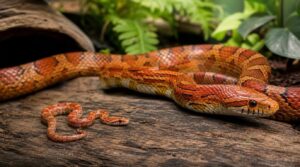
Corn snakes don’t grow on a fixed schedule, but there are reliable checkpoints along the way. Tracking your snake’s size at each stage tells you a lot about its health and how close its to breeding condition.
Here’s what to expect from hatch day through adulthood.
Hatchling Size and Early Growth
Corn snake hatchlings arrive small but primed for rapid change. Maternal egg size and incubation temperature impact how a neonate emerges — typically 10–14 inches and 8–25 grams. That neonatal scale pattern sharpens noticeably within weeks. Before tracking hatchling size or plotting a corn snake growth chart, know these early anchors:
- Length at hatch: 10–14 inches
- Weight at hatch: 8–25 grams
- First shed timing: within 7–10 days
- Hatchling hydration needs: critical for clean sheds and digestion
Six-month Length and Weight Range
Six months in, and the numbers start telling a real story. By this point, your snake usually stretches 18–26 inches, gaining roughly 0.5–1.5 inches weekly. Weight ranges between 120–300 grams, with feeding schedule‘s effects clearly visible in body condition.
| Metric | Six-Month Range |
|---|---|
| Length | 18–26 inches |
| Weekly Length Gain | 0.5–1.5 inches |
| Weight | 120–300 grams |
| Male-Female Size Gap | 1–2 inches |
Weight consistency benchmarks matter here — uneven growth spurts’ frequency can signal husbandry gaps.
One-year Growth Expectations
By month twelve, most corn snakes reach 24–36 inches in total length — a solid one-year length achievement worth logging in your corn snake growth chart. Monthly length gain usually runs 0.5–1 inch, with seasonal growth spikes in spring pushing that higher. Weight gain ranges land between 150–450 grams.
Match ideal prey size to girth, not age, for steady progress.
18. to-24-month Maturity Benchmarks
Between 18 and 24 months, growth velocity peaks, and hormonal onset begins reshaping priorities—your snake shifts energy toward reproduction. Lengths hit 48–72 inches; weights reach 500–900 g.
Seasonal feeding patterns and metabolic temperature thresholds drive individual variation here.
Sexual versus physical maturity in corn snakes diverge at this stage, so do not confuse size with breeding readiness.
Health screenings should begin at this stage.
Growth Slowdown After Two Years
After two years, the growth plateau sets in, with annual length gains dropping to under 6 inches. Weight gain stabilizes, meaning snakes add only 250–400 g yearly. Metabolic rate declines drive this shift, as energy is redirected toward maintenance rather than expansion.
Adjust feeding strategies to maintenance levels now, prioritizing health monitoring post-plateau. Condition matters far more than size when evaluating breeding readiness.
Physical Signs of Maturity
You don’t need a calendar to tell you a corn snake is maturing — the body gives it away first. Certain physical changes signal reproductive development long before any breeding attempt should happen.
Here’s what to look for in both males and females.
Male Tail Length and Shape
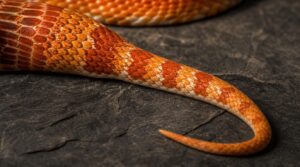
A male corn snake’s tail tells you more than you’d expect. Tail muscle density, hemipenal base size, and tail taper profile all shift as he matures.
Look for:
- A firmer, less floppy tail base housing developed hemipenes
- Subtle tail curvature when viewed laterally
- Increased tail flick frequency during handling
- A more pronounced taper from base to mid-tail
These reflect sexual vs physical maturity in corn snakes more reliably than length alone.
Female Body Fullness and Condition

Female corn snakes don’t hide maturity — they show it in their shape. Gynoid fat distribution shifts weight toward the midsection and tail base, giving a distinctly fuller profile. Midsection girth increases as oviduct expansion begins and clutch energy reserves build up under the ventral scales. Tail fat stores become palpable near the cloaca.
| Condition Indicator | Immature Female | Reproductive-Ready Female |
|---|---|---|
| Midsection Girth | Slender, uniform | Noticeably fuller mid-body |
| Tail Fat Stores | Minimal | Firm, palpable near tail base |
| Body Condition Score | 2–3 | 4–5 |
Body condition scoring — done by feel along the dorsal and ventral midline — is your most reliable tool here. This method assesses fat reserves critical for reproduction.
Nutrition adjustments for gravid female corn snakes matter too. Energy allocation for egg production is high, so reproductive readiness depends on fat reserves, not just length. Female reproductive capacity and clutch size both drop when condition scores fall below 4.
Subcaudal Scale Differences

Subcaudal scale differences offer a surprisingly reliable window into maturity. Males develop longer tails with higher subcaudal scale counts — a classic example of sexual dimorphism in corn snakes.
Subcaudal Row Types (single or divided) affect your total count, so anal shield position matters for accurate Longitudinal Scale Tracking.
Consistent methodology turns these Diagnostic Morph Traits into a practical Scale Count Correlation tool for evaluating individual growth progression.
Weight-based Reproductive Capability

Weight signals hormonal readiness more accurately than scale readings alone. Around 250 grams, sexual maturity becomes biologically plausible, as weight directly correlates with reproductive potential.
Heavier snakes exhibit better follicle development and stronger sperm quality, demonstrating a clear link between weight and reproductive health.
Diet quality drives the growth rate essential for achieving this threshold. Without proper weight management protocols, the fertility window may close prematurely, preventing reproductive success.
Length Thresholds for Maturity

Length tells a clearer story than age alone. A corn snake reaching 30 inches—roughly the one-year milestone in length—signals the approach of physical maturity. Most females must attain 3 feet in length before breeding becomes advisable.
Key length thresholds tied to sexual maturity:
- 30 inches — baseline signal of physical maturity
- 36–48 inches — safer breeding minimum for most morphs
- Morph-specific growth patterns shift these numbers slightly
- Temperature-driven length gains accelerate progress in warmer setups
- Sexual dimorphism in length means females are generally larger at equivalent ages
Factors That Affect Maturity

Maturity doesn’t follow a single fixed timeline — your husbandry choices shape it more than most keepers realize. Several key variables can push development forward or hold it back by months.
Here’s what actually moves the needle.
Diet Quality and Feeding Frequency
Diet is the engine behind maturity. Feeding Schedule Consistency matters more than most keepers realize — irregular meals stall growth, while steady schedules drive reliable progress. Protein Balance is equally critical: prey too small underfuels development; prey too large risks regurgitation.
| Variable | Impact on Maturity |
|---|---|
| Prey Size Matching | Optimizes protein and calorie intake |
| Gut Loading Practices | Improves prey nutritional quality |
| Overfeeding Risks | Shifts mass toward fat, not lean growth |
| Feeding frequency | Must decrease as snakes mature |
Get this right, and maturity follows on schedule.
Temperature Gradients and Metabolism
Temperature does what diet cannot do alone. A proper temperature gradient — warm side near 85°F, cool side around 75°F — drives Metabolic Rate Shifts that directly influence growth rate and reproductive readiness.
Thermal Microhabitat Preference lets your snake self-regulate ATP Production Variation, boosting Carbohydrate Oxidation Increase when active.
Without this range, Cooling-Induced Activity Reduction slows metabolism, quietly stalling sexual maturity.
Enclosure Size and Activity Level
Space shapes behavior — and behavior shapes development. A cramped enclosure limits locomotion, reduces caloric demand, and quietly slows growth toward maturity.
Follow these enclosure size recommendations based on snake size:
- Floor Space Ratio — a minimum of 20 gallons per foot of snake length
- Coil Capacity — adult enclosures should span 4–6 feet horizontally
- Horizontal Enrichment — prioritize floor space over height
- Hide Distribution — place hides at both thermal ends
- Climbing Structures — cork rounds support sex-specific activity levels and enrichment needs without crowding
Humidity, Shedding, and Development
Humidity works quietly behind the scenes, with moisture gradients directly influencing shedding frequency and, by extension, developmental pace. When humidity dips below 60%, incomplete molts become routine—retained skin stalls growth signals. Consistent humidity regulation, paired with smart hydration management, keeps molt cycles clean.
Watch shedding frequency as an age indicator: smoother, more frequent sheds generally reflect a snake on track developmentally.
Stress and Delayed Growth
Chronic stress is a quiet growth thief. Elevated cortisol suppresses the growth hormone and IGF-1 axes, directly slowing tissue development — a measurable cortisol impact you can’t afford to ignore.
Stress-induced anorexia compounds this: missed feedings mean fewer calories for new mass. This caloric deficit further hinders recovery and development.
Frequent handling stress triggers immune trade-offs, diverting energy toward defense rather than growth. Such disruptions force the body to prioritize survival over tissue expansion.
Recovery gaps between disruptions matter. Stack stressors too close together, and you’ll hit a growth plateau. Adequate intervals allow hormonal and metabolic systems to reset, enabling progress.
Genetic Growth Variation
Genetics quietly set the ceiling. Growth gene alleles vary between individuals, meaning two snakes on identical diets can diverge noticeably in size over time. Heritable size differences run through lineages — some families consistently produce larger adults.
- Epigenetic nutrition effects alter gene expression early, locking in growth trajectories
- Metabolic rate variants shift daily energy use
- Lineage growth trends reveal morph variation and occasional genetic defects
- Genetic lineage and growth variability affect sexual versus physical maturity in corn snakes
Male and Female Maturity Differences

Male and female corn snakes do not follow the same maturity timeline, and that gap matters more than most keepers realize. Their bodies have different reproductive demands, which means breeding readiness rules aren’t one-size-fits-all.
Here’s what sets them apart.
Why Males May Mature Earlier
Males often hit reproductive milestones first — and endocrinology explains why. A testosterone surge, triggered by Kisspeptin activation of GnRH neurons, accelerates early gonadal development in males. Growth hormone bias channels resources toward testes earlier than females allocate reserves to ovarian tissue. Male metabolic allocation simply favors speed.
| Factor | Male Advantage |
|---|---|
| Hormonal onset | Testosterone rises earlier |
| Gonadal readiness | Sperm production precedes ovulation |
| Length threshold | Reached 6–12 weeks sooner |
Why Females Need More Body Reserves
Female corn snakes carry a far heavier metabolic load than males. Egg production demands yolk lipid reserves, pregnancy energy budgeting, and extended incubation support — all drawing from stored fat.
That’s why energy allocation for egg production in female snakes requires consistent, high-quality feeding well before breeding season.
Disease resilience and early-season breeding advantage both depend on strong body condition scoring before a female corn snake reaches sexual maturity.
Female Weight and Egg Viability
Weight near 250 grams isn’t just a number — it’s the threshold where egg viability starts to climb. Fat reserve impacts everything from follicle development to clutch size. Hormonal weight correlation is real: excess or deficit weight disrupts ovulation cycles.
Weight fluctuation risks peak around breeding time, so pre-breeding weight stabilization matters. Nutrient balance effects and steady energy allocation for egg production in female snakes keep a gravid female on track.
Male Fertility Versus Ideal Breeding Condition
Fertility and ideal breeding condition aren’t the same thing. A male can reach sexual maturity at 18 months, but his sperm viability index and hemipenal musculature won’t hit their peak until his metabolic energy reserves stabilize — usually around 300 g.
Dietary protein ratio, lighting cycle influence, and consistent thermoregulation and temperature gradients in captive corn snakes all drive that readiness.
Don’t confuse early fertility with breeding-ready condition.
Avoiding Pressure to Breed Young Females
Breeding pressure from owners is real — and it’s one of the biggest risks to young females. Owner education matters here.
A female may reach sexual maturity at 18–24 months, but physical maturity comes later. Ethical guidelines recommend waiting until she’s at least 24 months old, weighs 300 g, and shows stable growth.
Decision autonomy belongs to the breeder, not the timeline. A calm environment fosters healthy development — not rushed reproduction.
Safe Breeding Health Criteria
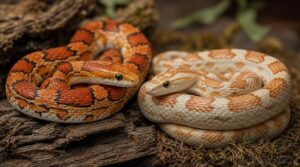
Sexual maturity is just the starting line — breeding readiness is a different race entirely.
Before you pair your corn snakes, a few health criteria need to be met. Here’s what to check before anything else.
The Rule of Threes Explained
Before pairing your corn snakes, experienced breeders apply what’s called the rule of 3s — a triadic structure built on three non-negotiables: age of at least 3 years, weight of 300 g or more, and length of 3 feet minimum.
This framework isn’t arbitrary. It aligns physical maturity with sexual maturity in corn snakes, reducing breeding risks substantially.
Body Condition Scoring Before Breeding
Once the rule of threes is met, run a body condition scoring check before anything else. Palpate along the spine and mid-body — your palpation reference guide.
A consistent scoring protocol ensures you track condition trends over time, not just one-off impressions.
The target BCS should reflect moderate fat reserves. Build a pre-breeding nutrition plan around that score, not guesswork.
Veterinary Health Checks
A body condition score tells you a lot — but not everything. A prebreeding health check fills the gaps. Your vet will cover essential sign monitoring, parasite screening, lymph node palpation, and a basic dental examination.
Elevated cortisol in reptiles signals chronic stress, which suppresses reproductive function. Don’t skip this step.
Health assessment before breeding confirms your snake is physically and hormonally ready — not just heavy enough.
Avoiding Obesity From Overfeeding
Rapid overfeeding to hit weight targets is a real trap. Fixed Meal Intervals prevent calorie creep better than hunger-based feeding.
Match Appropriate Prey Portion to body width — not ambition. Uniform Prey Selection keeps metabolic rate and nutrient absorption predictable.
Regular Weight Checks catch fat gain early. Adequate Water Access facilitates digestion.
Obesity stresses organs before breeding even begins.
Selecting Unrelated Breeding Pairs
Inbreeding avoidance begins with understanding your animals’ genetic lineage. Pedigree verification—confirming no shared ancestors within four to six generations—serves as your foundational step.
When records are incomplete, enhance accuracy through kinship analysis and DNA profiling. These methods provide critical insights beyond traditional documentation, ensuring thoroughness in genetic assessments.
Implement a solid outcrossing protocol and apply genetic diversity scoring to maintain truly unrelated breeding pairs. This proactive approach minimizes risks and strengthens offspring viability.
The result? Fewer genetic defects, stronger offspring, and a healthier selective breeding program overall.
Morph Genetics and Responsible Pairing
Morph genetics shape more than just looks — they determine your program’s long-term health. Understanding dominant trait stacking, recessive carrier testing, and codominant super forms helps predict outcomes and avoid surprises.
- Track genetic lineage and inbreeding coefficient for every pairing
- Confirm recessive carrier status before breeding
- Document codominant super forms and their offspring ratios
- Avoid stacking traits that mask genetic defects
- Follow captive breeding guidelines to prioritize animal welfare over aesthetics
Seasonal Breeding and Reproduction

Corn snakes are seasonal breeders, and getting the timing right makes a real difference in reproductive success. Their natural cycle runs from brumation through spring pairing, egg laying, and hatchling emergence — each stage with its own requirements.
Here’s what you need to know about each phase.
Brumation and Reproductive Conditioning
Think of brumation as the biological reset your corn snake needs. This process triggers hormonal shifts that prime reproductive cycles.
Cooling to 10–15 °C for 8–12 weeks initiates this phase. Fat reserve utilization sustains basic metabolism while activity drops significantly.
Combine temperature ramping with photoperiod manipulation—gradually shortening light exposure—to mimic natural winter cues. This dual approach ensures a synchronized physiological response.
Post-brumation health rebounds quickly, with hormonal cycles driving follicular development in females and spermatogenesis in males.
Spring Breeding Season Timing
Once brumation ends, the breeding clock starts ticking.
Three environmental cues drive activation of hormonal rhythms:
- Day length — longer photoperiods trigger gonadal activity
- Temperature spikes — sustained highs above 20°C accelerate courtship behavior
- Prey surge — spring prey abundance restores fat reserves fast
Natural breeding peaks March through May, though regional timing shifts mean southern populations may initiate cycles earlier.
Post-brumation Shedding and Receptivity
Shedding signals the start. After brumation, your corn snake’s first shed marks a key hormonal reset — hydration’s impact on skin pliability directly reflects metabolic recovery. Watch for patchy shedding patterns early; incomplete sloughs are normal.
Temperature-driven receptivity follows once shedding completes. Females usually display receptive behavior about two weeks post-brumation, as post-brumation appetite returns and estrogen climbs.
Egg Laying After Successful Mating
After mating, oviposition timing runs 30–60 days, depending on temperature and season. Oviposition is straightforward if you’ve done your prep work—nest site preparation is crucial.
Provide damp sphagnum moss in a snug box, away from direct heat.
Run routine egg viability checks: fertile eggs look pale, slightly translucent.
Maintain temperature-humidity balance around 28–29°C with 80–90% humidity for ideal incubation period outcomes.
Female post-laying care starts immediately after egg laying.
Clutch Size and Female Condition
Clutch size ties directly to how well your female was conditioned before laying. A snake running on depleted seasonal fat reserves simply can’t build 20+ viable eggs.
Four factors drive output:
- Pre‑breeding nutrition and caloric density
- Calcium balance for eggshell integrity
- Hydration impact on yolk development
- Parasite management and energy allocation for egg production
Poor reproductive health assessment shows up fast — smaller clutches, lower egg viability, skipped seasons entirely.
Incubation and Hatchling Development
Incubation temperature is your primary control once eggs are laid. Maintain it at 29–30°C with 70–90% humidity. Stable conditions preserve shell integrity.
Proper egg ventilation is critical—poor airflow invites mold that can devastate clutches quickly.
After 60–75 days, hatchlings emerge. Wait until their first shed, then offer a pinky. That first feed sets the trajectory for their development.
Frequently Asked Questions (FAQs)
How long is corn snake mating season?
Corn snake mating season usually runs March through May — roughly 10 to 12 weeks of peak activity.
Temperature triggers and photoperiod influence drive this seasonal timing of breeding in corn snakes.
What smell do corn snakes hate?
Corn snakes detect scent through their Jacobson’s organ, making cinnamon oil, clove oil, garlic scent, vinegar deterrent, and citrus repellent effective avoidance triggers — these overwhelm chemoreception and disrupt normal pheromone detection behavior.
Can corn snakes breed without brumation in captivity?
Yes, corn snakes can breed without brumation in captivity. With controlled lighting cycles and consistent feeding, successful mating behavior has been documented.
Though brumation often improves egg viability and long-term health outcomes, it is not strictly necessary for reproduction in managed environments.
How do you sex a juvenile corn snake accurately?
Probing technique is the most reliable method. A lubricated probe inserted at the vent advances 6–8 scales in males.
Popping and visual sexing serve as backups, but both carry higher error rates in juveniles.
What happens if a corn snake never reaches maturity?
A snake that grows but never reproduces is biologically stalled. Hormonal imbalance effects accumulate, chronic health risks mount, and stunted growth syndrome may follow.
Your vet faces real veterinary diagnostic challenges pinpointing why.
Conclusion
Breeding a corn snake before its body is ready is like building on an unstable foundation—everything looks fine until it collapses. Corn snake sexual maturity is just the starting line, not the green light. Weight, length, age, and overall condition all need to align before introducing a mate. Hit those benchmarks, and you’re setting both animals up for a successful, sustainable breeding season.
Rush them, and you’re gambling with lives you’re responsible for.