This site is supported by our readers. We may earn a commission, at no cost to you, if you purchase through links.

A corn snake can live 15 to 20 years in captivity, yet most owners couldn’t tell a 2-year-old from a 5-year-old without guessing.
That gap matters more than people realize—age shapes feeding schedules, handling expectations, and health baselines.
A juvenile shedding every three weeks is thriving.
An adult doing the same might be telling you something’s wrong.
Reading corn snake aging indicators isn’t about satisfying curiosity; it’s how you catch problems early and keep your snake comfortable at every life stage.
The clues are written in their scales, behavior, and shed cycles—you just need to know where to look.
Table Of Contents
Key Takeaways
- Shedding frequency is your most reliable age clock — juveniles shed every 3–5 weeks, while healthy adults slow down to every 2–3 months, so a faster adult cycle is a warning sign, not a quirk.
- Size alone can’t pin down your snake’s exact age, since feeding history, temperature, sex, and morph all shift the growth curve in ways a simple length measurement can’t correct for.
- Color changes follow a predictable arc — vivid, high-contrast saddles in hatchlings gradually mute toward rust, then gray-tinged tones after age six to eight, though morph genetics can blur that timeline considerably.
- Senior corn snakes need biweekly weigh-ins, annual vet exams (twice yearly after age seven), and close attention to muscle loss and appetite shifts, because gradual decline looks normal right up until it isn’t.
Corn Snake Age by Size
Size is one of the first clues you’ll notice when trying to gauge a corn snake’s age.
Younger snakes tend to be noticeably slimmer and shorter, and pairing size observations with other physical traits — like those covered in this corn snake size and gender identification guide — gives you a much clearer picture of where your snake falls on the age spectrum.
hatchling and a three-year-old adult look strikingly different, and those differences follow a pretty predictable pattern.
Here’s how size shifts at each life stage.
Hatchling Length and Weight Indicators
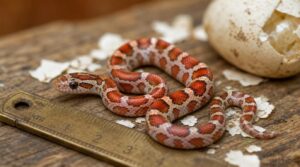
Fresh out of the egg, a hatchling generally measures 8–12 inches (20–30 cm) and weighs between 8–12 grams — though initial weight variability across a clutch is completely normal. Egg size correlation and incubation temperature impact how big they hatch.
Mouth gape size stays around 1–1.5 inches, so prey selection matters early.
Track weight weekly — it’s your clearest growth rate reference point.
Juvenile Growth Ranges From 6 Months to 2 Years
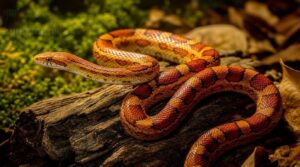
Once your corn snake clears that first shed, growth really picks up speed. Between 6 months and 2 years, juvenile growth rates move fast — expect 20–40 inches by month 12.
Track these benchmarks:
- Length hits 20–40 inches by 12 months
- Weight averages 5–15 grams monthly gain
- Shedding frequency settles to every 3–5 weeks
- Prey size scaling matters — match girth to mid-body width
- Temperature impact is real: warm setups push faster growth
Ensuring the minimum enclosure size for adults helps maintain ideal growth.
Subadult Size and Body Mass Clues
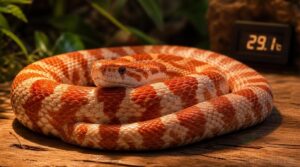
Around ages 2–3, your subadult hits 30–48 inches and 120–320 grams — that’s when the weight-to-length ratio becomes your real growth chart.
Mid-body girth tells you more than length alone. Use condition scoring: a healthy subadult feels rounded, never sharp-spined. Prey size matching that girth keeps gains steady.
Temperature influence still matters here — warm setups consistently outperform cooler ones.
Adult Size Stabilization After 3 Years
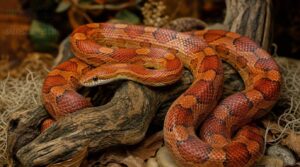
By 3 years, length quietly plateaus — that’s your clearest growth plateau as indicator of maturity. Adults settle at 48–60 inches, but weight still shifts with prey size optimization, seasonal hormonal shifts, and temperature gradient effects.
Use condition scoring methods and consistent weight and length measurement techniques to confirm stabilization. Steady shape across several feeding cycles beats any single weigh-in.
Senior Weight Loss Despite Unchanged Length
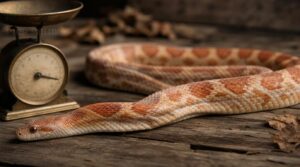
Here’s something that trips up a lot of keepers: your senior corn snake might measure the same 4–5 feet as always, yet quietly drop grams every month.
That’s metabolic slowdown in reptiles at work — muscle and fat reserves shrink while length stays put.
Body Condition Scoring and weekly Caloric Intake Monitoring catch this early.
Unexplained Weight Changes often signal Subclinical Disease Detection territory, not just normal aging.
Why Size Alone Cannot Confirm Exact Age
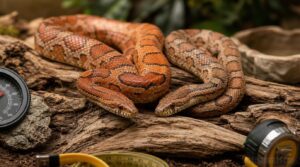
Size tells part of the story — never the whole thing. Two snakes can share the same length yet differ in age by a full year. Here’s why a Corn Snake Age Chart only gets you so far:
- Feeding Frequency shifts the Growth Curve — more meals mean faster gains.
- Temperature Influence speeds or slows metabolism directly.
- Sexual Dimorphism means females often outsize males at the same age.
- Morph Growth Variation creates size overlaps across bloodlines.
- Health History — past illness, stress, or missed meals — quietly distorts Weight-to-Length Ratio.
Shedding Patterns That Reveal Age
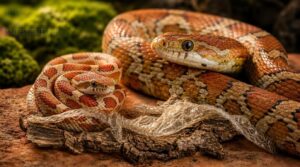
Shedding is one of the clearest windows into how old your corn snake actually is. A young snake growing fast sheds far more often than a calm, settled adult — and that difference is pretty reliable.
Juveniles can shed every few weeks, while adults slow to a few times a year — a pattern that tracks closely with the corn snake’s full lifespan stages in captivity.
Here’s what each life stage looks like regarding shedding frequency.
First Shed After Hatching
The first shed usually happens within 7–14 days after hatching — sometimes sooner with good Temperature Regulation and Humidity Management around 50–60%.
Watch for cloudy eye caps; that’s your clearest signal. Avoid Handling Stress during this window.
The First Shed Skin often comes off in one clean piece, revealing vivid color and sharp saddle patterns beneath.
Hatchling Shedding Every 2–4 Weeks
After that first shed, your hatchling hits its stride fast. Expect shedding frequency of every 2–4 weeks — sometimes tightening to every 2–3 weeks by 6–8 weeks old. Watch for Pre‑shed Signs: color fades slightly, appetite drops, and hiding increases.
Three things to have ready:
- Humidity Optimization — keep it 60–70%
- Temperature Gradient — 82–88°F warm side
- Substrate Selection — soft, non-abrasive bedding
Post‑shed Care matters too: check for retained skin.
Juvenile Shedding Every 3–5 Weeks
Once your corn snake clears the hatchling phase, juvenile shedding settles into a 3–5 week rhythm — your clearest window into healthy growth. Shed Date Logging makes patterns obvious fast.
| Factor | Effect on Juvenile | Ideal Range |
|---|---|---|
| Temperature Gradient Effects | Speeds metabolism and molt cycles | 82–93°F warm side |
| Prey Frequency Schedule | Fuels tissue renewal and shedding | Every 7–10 days |
| Molt Skin Brightness | Signals hydration and health | Vivid, even color post-shed |
Stress shedding or skipped cycles? Check humidity first — it’s usually the culprit.
Adult Shedding Every 2–3 Months
Once your snake hits adulthood, the metabolic rate slows — and shedding frequency drops with it. Shedding Cycle Monitoring every 2–3 months becomes your age‑estimation baseline. Watch for these signals:
- Skin Color Dulling appears a week before each shed
- Seasonal Temperature Fluctuations can shift timing by weeks
- Prey Size Matching directly affects how quickly cycles turn over
- Stress-Free Handling matters most when eyes cloud over
- Age-related color and pattern changes become visible post‑shed
Irregular Sheds Versus Normal Aging
Not every irregular shed is an age thing. Adults molt every 2–3 months — so if yours is cycling much faster or slower, that’s worth a closer look. Stress Molting, Heat Gradient Shifts, Tank Rearrangement Effects, and Water Access Issues can all throw off Shedding Frequency and Age Estimation.
True aging slows gradually; big timing swings usually signal a short-term problem.
| Shed Pattern | Likely Cause |
|---|---|
| Every few weeks in an adult | Stress Molting or health issue |
| Patchy, incomplete removal | Water Access Issues |
| Timing shifts after tank move | Tank Rearrangement Effects |
| Repeated stuck eye caps | Humidity or Heat Gradient Shifts |
| Gradual slowdown over months | Normal aging |
Humidity Problems That Mimic Aging Signs
Low humidity is one of the sneakiest things in reptile keeping — it can make a young corn snake look years older overnight. Incomplete shedding, dry skin texture, and scale cloudiness all come from humidity fluctuations, not aging.
- cloudy eye caps that linger, signal stuck shed, not senior decline
- bacterial skin infection risk rises when damaged patches go untreated
- fixing humidity levels for reptiles often reverses these signs within days
Color and Scale Aging Signs
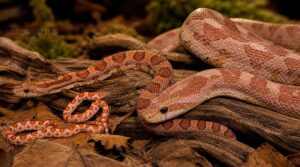
A corn snake’s colors tell a story — you just need to know how to read them. From the sharp, vivid saddles of a hatchling to the muted tones of an older snake, these changes follow a predictable pattern tied directly to age.
A corn snake’s colors age like a signature, vivid and sharp in youth, quietly muted by time
Here’s what to look for at each stage.
Bright Hatchling Coloration and Sharp Saddles
Fresh out of the egg, hatchlings are hard to miss — their neon dorsal hue practically glows. Those high contrast saddles run sharp and geometric, a true zigzag saddle geometry down the back.
| Feature | Hatchling Trait |
|---|---|
| Ground color | Neon orange to yellow |
| Saddle edge sharpness | Crisp, defined borders |
| Pigment concentration zones | Neck and shoulder-heavy |
| Pattern | Zigzag, high-contrast |
That pattern softens later — but right after the first shed, it’s at peak intensity.
Pigment Changes Around 9–12 Months
Around 9–12 months, those sharp hatchling patterns soften noticeably. This is melanin expansion rate in action — saddle rim darkening deepens the borders, while a ground hue shift pulls bright orange toward muted rust or brown.
Light exposure impact and shedding cycle correlation both influence how fast juvenile age-related color and pattern changes appear. Some corn snakes shift faster than others.
Adult Orange-red Color Stabilization
By age two to three, your corn snake’s orange-red tones settle into their final form — genetic pigment consistency locks the hue in place.
Dietary carotenoids, UV lighting impact, and temperature influence all play supporting roles, but dramatic shifts stop here.
Seasonal hue variation becomes subtle at best. These age-related color and pattern changes are a reliable sign your adult corn snake‘s care is on track.
Thicker, Glossier Scales in Mature Snakes
As your corn snake matures, its scales tell the story clearly.
Keratin layer density increases, making the surface visibly thicker and tougher.
Scale interlock tightness improves too — adjacent scales overlap more snugly, closing gaps.
Microstructure rugosity smooths out over time, which drives gloss retention factors upward.
What you’re seeing isn’t just age-related color and pattern changes — it’s structural growth you can actually observe.
Gray-tinged Coloration in Older Corn Snakes
Once your corn snake hits 6–8 years, watch for a slow gray wash settling along the dorsum — it’s one of the clearest age-related color and pattern changes in corn snakes. Lighting influence and humidity effects can intensify it, while dietary carotenoids may soften the tone.
The scale matte texture deepens this look.
Photographic documentation over months reveals it best — gradual, never sudden, like graying around the muzzle in an old dog.
Morph and Regional Differences to Consider
Not every color shift means old age — sometimes it’s just your snake’s genetics talking. Regional Color Morphs and Breeder Lineage Influence can complicate how you read age-related color and pattern changes in corn snakes.
Keep these four in mind:
- Okeetee lines show sharper, darker saddle borders at any age
- Miami phase preserves brighter orange well into adulthood
- Pattern Density Variation differs across Geographic Scale Counts by region
- Habitat Camouflage Adaptation creates subtle regional variations in corn snake appearance that mimic fading
Behavior Changes Across Life Stages
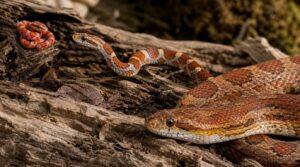
Behavior tells you a lot about where your corn snake is in life — sometimes more than size or color ever could. A hatchling and a senior snake can look surprisingly similar, but watch them for five minutes, and the difference becomes obvious.
Here’s what to look for at each stage.
Hatchling Activity and Hiding Responses
Hatchlings are tiny bundles of pure instinct. From the moment after their first shed, they’ll dart for cover within minutes of any disturbance — light exposure, vibrations, even your shadow.
About 70% seek shelter within five minutes of feeling exposed. Their shelter humidity preference sits around 60–80%, and thermal refuge usage kicks in fast if temps climb past 30°C.
Stress response is real but manageable — keep sessions calm and brief.
Juvenile Feeding Response and Climbing Behavior
Juveniles are noticeably more driven at feeding time. Their prey size preference shifts toward smaller, agile items — roughly 1–5 grams — matching their developing bite force.
A consistent feeding schedule for snakes this age matters more than you’d think; they often strike within a predictable ±60-minute window daily.
Watch their climbing motor coordination improve, too. Vertical strike technique and branch texture influence capture success as they explore enclosure enrichment naturally.
Adult Reduced Movement and Longer Resting Periods
Once that juvenile energy settles, adults shift into a completely different rhythm. Thermoregulatory settling takes over — your snake picks a warm spot and stays.
Movement burst intervals shrink noticeably, and exploration frequency drops as metabolic rate slows with age. Resting site fidelity becomes the norm; many adults return to the same hide daily.
Body stiffness indicators appear too, with slower, more deliberate repositioning after rest.
Senior Preference for Warmer Hiding Spots
That narrowing of movement carries right into where seniors choose to sleep. Older corn snakes lean hard on microclimate selection — specifically the warmest safe hide available. Here’s what that looks like in practice:
- Heat Gradient Utilization drops as they stick to one warm zone
- Hide Placement Strategy matters more — warm-side hides win consistently
- Thermostat Accuracy keeps that hide in the 85–88°F sweet spot without spiking
- Post-Feeding Warmth pulls them back repeatedly, since digestion needs steady heat
Good thermal gradient and humidity management make this predictable, not puzzling.
Slower Handling Response in Older Corn Snakes
Pick up a senior corn snake and you’ll notice the difference right away.
Grip Strength Decline means the body feels looser, less coiled. Extended Settling Time kicks in too — they take longer to stop exploring your hands.
Reduced Escape Reflex, Spinal Stiffness Impact, and Thermal Seeking Delay all signal decreased activity levels.
These behavior shifts across life stages are completely normal aging patterns.
Distinguishing Normal Aging From Illness
That slower handling response fits normal aging — but pair it with sudden weight changes, skipped meals, or failing Skin Integrity, and the picture shifts.
Weight Trend Analysis tells you a lot: gradual loss is one thing, a sharp drop is another.
Activity Fluctuations that break an established pattern, not just slow things down, are your real signal to establish a Veterinary Baseline fast.
Health Checks for Senior Corn Snakes
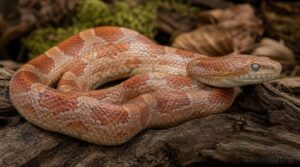
Once your corn snake hits its senior years, regular health checks become your most important tool.
You’re not just watching for illness — you’re tracking the slow, natural shifts that come with age.
Here’s what to monitor as your snake gets older.
Weight Tracking as an Aging Indicator
A monthly weight log tells you more than a single number ever could. Weigh your snake before feeding; same scale every time — that’s your baseline for weight trend analysis. Track the prey size ratio alongside those weight measurements.
If your corn snake keeps eating but the body condition index keeps dipping, aging-related feeding efficiency drift is likely the culprit, not hunger.
Muscle Loss and Body Condition Changes
As your corn snake ages, mid-body girth quietly tells the story before the scale does. Lean mass monitoring catches what length measurements miss entirely.
Watch for these three condition shifts:
- Mid-body girth looks flatter, less filled between scales
- Tail muscle tone weakens, tapering more sharply toward the tip
- Energy reserve loss causes handling fatigue — the snake tires noticeably faster
Body condition scoring beats guesswork every time.
Joint Stiffness and Reduced Mobility
Stiffness in joints becomes more noticeable once your corn snake passes the 8-year mark. Cartilage wear, ligament tightening, and reduced joint lubrication all compound over time — creating a real mobility limitation.
You might notice slower, more hesitant movement during handling, key behavior shift worth tracking.
Muscle weakness adds pressure on already compromised joints. These changes are core to senior corn snake health and care.
Appetite Changes in Older Corn Snakes
Appetite is one of the clearest signs of aging in corn snakes. As metabolic rate changes over lifespan, feeding frequency naturally drops — every 10 to 14 days is normal for seniors.
Watch for these practical cues:
- Feeding Frequency: Shift from weekly to biweekly meals
- Digestive Pace: Longer gaps between hunger signals
- Prey Size: Match to current body condition, not past habits
- Weight Monitoring: Log weight biweekly to catch real decline early
Environmental stress and metabolic slowdown can look identical — so track trends, not single meals.
Veterinary Exams After Maturity
Once your corn snake hits maturity, regular vet checks shift from optional to essential. Annual veterinary wellness exams catch early health indicators for aging snakes before problems snowball.
After year seven, bump that to twice yearly.
Your vet will cover examination frequency, parasite screening, blood panel analysis, imaging diagnostics, and reproductive health checks — the full picture of senior corn snake health and care, not just a quick weigh-in.
When Aging Signs Need Medical Attention
Some signs of aging are normal — others are your snake asking for help. Knowing the difference is part of senior corn snake health and care.
Watch for these health indicators for aging snakes:
- Stuck shed around toes or eyes that won’t clear
- Respiratory distress — wheezing or open-mouth breathing
- Mouth rot with swelling, redness, or discharge
- Persistent lethargy paired with weight loss or swollen eyes
Veterinary care for reptiles catches these early.
Frequently Asked Questions (FAQs)
How do you know if your snake is getting old?
Your snake tells you plenty if you know what to watch.
Feeding too soon after a meal is a common misstep, so brushing up on how long it takes a snake to digest food can help you time handling and meals safely.
Metabolic rate shift, skin elasticity loss, and age-related color and pattern changes are the clearest early signals that time is moving.
How old is a 15 inch corn snake?
At 15 inches, your corn snake is likely 2–3 months old — still very much a hatchling edging into early juvenile territory. Most reach this length quickly with consistent, proper feeding.
How does genetics influence corn snake aging speed?
Genetics quietly sets the clock. Hormonal gene variants, mitochondrial DNA effects, and epigenetic inheritance all shape how fast your corn snake ages — sometimes more than husbandry does.
Do male and female corn snakes age differently?
Not really. Male and female corn snakes follow similar aging timelines. Reproductive energy costs can affect females temporarily, but lifespan variability between sexes stays minimal with proper care.
What enrichment activities benefit aging corn snakes most?
Low-ledge ramps, scent trail puzzles, and burrowing substrate depth keep aging corn snakes mentally active without overtaxing them.
Add water access enrichment and thoughtful climbing branch placement for well-rounded senior reptile care.
How does brumation affect a corn snakes lifespan?
Think of brumation as a long exhale for your snake’s body.
Seasonal brumation triggers metabolic slowdown, which aids organ stress reduction and hormonal balance — quietly adding years to your corn snake’s lifespan.
Conclusion
Most snake owners spend hours researching heating mats and feeding schedules, yet never think twice about the animal living right in front of them. That’s the quiet irony of reptile keeping.
Mastering corn snake aging indicators doesn’t require a lab or a veterinary degree—just consistent observation and knowing what signals matter. Size, shed cycles tell a complete story.
Once learn the language, your snake is always talking.