This site is supported by our readers. We may earn a commission, at no cost to you, if you purchase through links.
Your corn snake hasn’t moved in three days, and part of you wonders if it’s just being a snake. Snakes rest for hours by nature, so how do you know when stillness turns into a problem?
Here’s the tell: a healthy snake still responds. It flicks its tongue, tenses when handled, seeks out its basking spot on schedule. Lethargy in pet snakes looks different, floppy muscle tone, ignored food, a body pressed against the cool glass like it’s hiding from its own tank.
The cause could be a thermostat two degrees off, or something demanding immediate attention. Knowing which is which starts with reading the signs correctly.
Table Of Contents
- Key Takeaways
- How to Recognize Lethargy in Pet Snakes
- What Causes Lethargy in Pet Snakes?
- Fix Husbandry Problems Safely at Home
- When to Monitor or Call a Vet
- How Exotic Vets Diagnose and Treat Lethargy
- Frequently Asked Questions (FAQs)
- Can stress from handling cause lethargy in snakes?
- Do different snake species have varying activity levels?
- How long does normal shedding-related lethargy last?
- Can overfeeding lead to sluggish behavior in snakes?
- Can lethargic snakes still be handled safely?
- Is it normal for new snakes to seem lethargic?
- Can stress alone cause a snake to become lethargic?
- Does tank size or enclosure change cause lethargy?
- Can overfeeding make a pet snake lethargic?
- Conclusion
Key Takeaways
- A truly sick snake stops responding altogether, no tongue flicks, no tensing when handled, no seeking out its basking spot, so don’t confuse normal stillness with real trouble.
- Wrong temperature or humidity is behind most lethargy cases, so check your gradient with a digital probe thermometer (83-88°F basking, 75-82°F cool side) before assuming the worst.
- Give husbandry fixes 48 hours to work; if your snake’s still sluggish after that, it’s time to call the vet instead of waiting longer.
- Open-mouth breathing, wheezing, nasal discharge, or loss of righting reflex skip the waiting period entirely and need emergency care right away.
How to Recognize Lethargy in Pet Snakes
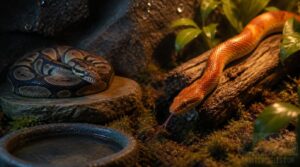
Snakes rest a lot by nature, so telling normal downtime from real trouble takes a trained eye. You need to know what’s actually a red flag versus just your snake being, well, a snake. Here are the five signs worth watching for.
Sudden lethargy paired with a lost appetite often means it’s worth learning to spot common eye infection symptoms in snakes before things get worse.
Reduced Activity Versus Normal Rest
A motionless snake isn’t automatically a sick one. Normal rest still shows steady breathing, tongue flicks, and quick eye tracking, plus thermoregulation, moving toward a basking spot or cooling off along the gradient.
Watch timing too: reduced activity versus normal rest often follows feeding (a natural digestion slump) or precedes brumation cycles. True lethargy ignores these patterns entirely, and when paired with an inability to right itself, it signals critical illness requiring immediate veterinary care.
Weak Muscle Tone and Responses
Pick your snake up. Does it drape like a rope or hang like wet spaghetti? That’s muscle tone loss, not shyness.
Healthy snakes grip and coil against your hand. Sick ones show floppy handling, joint laxity, and posture maintenance issues, sliding rather than gripping. This passive resistance change often accompanies dehydration signs or brewing respiratory infections, and it demands a vet call within 48 hours.
Feeding and Drinking Changes
That floppy grip often shows up alongside a bowl nobody’s touched. Healthy adults eat every 7-14 days; skipping past 21 days means anorexia, not pickiness. Watch for:
- Untouched water for 5+ days
- Wrinkled skin, sunken eyes
- Weight dropping 2-3 grams weekly
Post-shed delays past 10 days, or seasonal dips beyond 70%, still need your attention.
Unusual Hiding or Temperature Seeking
Where your snake camps out tells you a lot. Constant cool side preference, water dish soaking, or damp underground hides all point to thermal stress, not comfort.
| Behavior | Likely Meaning |
|---|---|
| Cool side only | Can’t tolerate warm zone |
| Water soaking | Overheating |
| Damp hide | Compensating for temp |
| Wrong-time hiding | Illness |
| Nighttime heat seeking | Inadequate daytime warmth |
Check your temperature gradient before assuming the worst.
Breathing, Discharge, and Weight Loss
Gaping, wheezing, or bubbly nasal discharge? Don’t wait. These signal respiratory infections, sometimes with open-mouth breathing as your snake struggles for air.
If you catch these symptoms early, our guide on identifying snake respiratory infection symptoms can help you decide how urgently to call your vet.
Track weight weekly. Steady loss paired with breathing trouble or dehydration signs (wrinkled skin, sunken eyes) demands immediate attention.
Recovery monitoring matters too. After treatment, expect discharge to clear and weight to rebound within one to two weeks.
What Causes Lethargy in Pet Snakes?
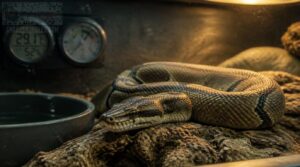
Once you’ve spotted the signs, the next step is figuring out why your snake’s slowed down. Lethargy usually traces back to one of a handful of culprits, and some are far more urgent than others. Here’s what usually is behind it.
Incorrect Temperature or Humidity
Get the numbers wrong and your snake pays for it. Corn snakes need an 83–88°F basking spot, 72–78°F cool side, and 30–40% humidity.
A digital thermometer and hygrometer combo makes hitting those targets—and catching dangerous dips below 70°F at night—far easier.
Slugish thermoregulation, digestive slowdown, and suppressed immunity follow when gradients fail. Use an infrared thermometer, not guesswork, to check basking spot accuracy and confirm your enclosure temperature actually allows normal snake behavior.
Poor Lighting and Ventilation
UVB bulbs only work at the right distance, too far and your snake basks without absorbing anything useful. Check screen placement and fixture cleanliness too.
Lighting schedules matter just as much. Keep a consistent day-night cycle, roughly 12 hours each, using a timer.
Poor ventilation lets stale air build up, raising respiratory infection risk and dragging activity down.
Infections, Parasites, and Disease
Sometimes lethargy isn’t husbandry, it’s illness. Respiratory infections bring wheezing, nasal discharge, open-mouth breathing. Mites and worms cause anemia and hiding. Mouth rot makes eating painful; fungal infections complicate breathing.
- Wheezing or crusty discharge
- Visible mites or worms
- Painful, swollen mouth
- Reproductive tract swelling
Females developing eggs may go quiet, but don’t wait, systemic illness spreads fast.
Dehydration or Nutritional Problems
Water bowls that sit dirty breed bacteria fast, and a snake avoiding contaminated water dehydrates quietly. Watch for sunken eyes, wrinkled skin, and weight loss.
Nutrient imbalances matter too. Poor feeding frequency or unbalanced prey nutrients leaves gaps electrolyte supplements can’t fully patch. Fix it with clean water daily and rehydration techniques like soaking, don’t wait for body condition to crash.
Shedding, Brumation, and Aging
Not every quiet snake is sick. Pre shed lethargy brings cloudy eyes and dull skin 7-14 days before a shed. Brumation fasting slows metabolism for weeks, even months. Aging mobility naturally declines too, with immune aging making seniors vulnerable.
Know your snake’s normal shedding patterns and brumation cycles, check the temperature gradient and humidity levels, and watch for genuine changes.
Fix Husbandry Problems Safely at Home
Before you call a vet, rule out the basics you can fix tonight. Most lethargy traces back to something in the enclosure, not a mystery illness. Here’s what to check first, and how to correct it safely.
Verify The Temperature Gradient
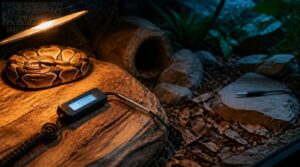
Grab a digital probe thermometer, not a sticker gauge. Place it directly on the warm side surface where your snake rests: 83-88°F, cool side 75-82°F. Air temperature lies, surfaces don’t.
Check nightly too; warm side shouldn’t dip below 75°F. Adjust wattage seasonally, since winter rooms run colder and quietly wreck your gradient.
Restore Species-Specific Humidity
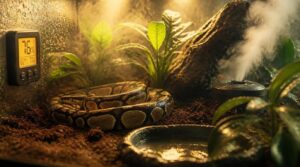
Once temperature’s dialed in, humidity’s next. Ball pythons need 50-60%, tropical species like emerald tree boas want 70-80%.
Use a digital hygrometer, not a dial gauge. Mist by hand or add a fogger for quick recovery. Swap dry substrate for coco fiber to hold moisture, and check twice daily until stable.
Improve Lighting and Ventilation

Lighting matters as much as heat. Mount UVB tubes 11-13 inches above basking spots, never through glass. Run 12-hour on/off cycles consistently.
For airflow:
- Low intake vents, high exhaust
- USB fans for circulation
- Wipe daily condensation
Poor ventilation breeds respiratory trouble fast. Don’t wait for wheezing to fix it.
Provide Water and Monitor Hydration

Once airflow’s sorted, check the water dish. Keep it clean, stable, and reachable, refreshed regularly so it never smells stale.
Watch drinking behavior after misting or soaking. Check urate consistency: dry, crumbly urates signal dehydration.
Offer warm water baths in a shallow, safe container to support fluid balance without stressing your snake.
Keep The Habitat Consistent
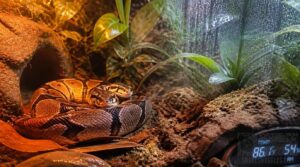
Think of your snake’s enclosure like a heartbeat: it needs a steady rhythm, not random spikes. Temperature gradient control and humidity level stability only work if you maintain them daily, not just after a bad week.
A snake’s enclosure needs a steady heartbeat, not random spikes, so temperature and humidity must stay consistent daily
Log readings weekly. Keep lighting schedules, substrate moisture, and ventilation airflow consistent. Solid husbandry practices prevent lethargy before it starts, and consistency beats correction every time.
When to Monitor or Call a Vet
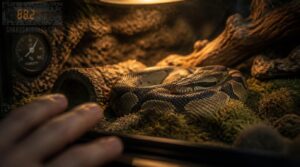
So you’ve fixed the husbandry and your snake’s still sluggish. Now comes the harder part: figuring out if this is normal snake behavior or something that needs a vet. Here’s how to tell the difference.
Normal Pre-Shed Behavior
A dull, grayish snake with milky eyes isn’t sick, it’s molting. Skin dulling and eye clouding appear 1-2 weeks pre-shed, alongside appetite loss and hiding increase. You’ll notice surface rubbing against branches too.
This is normal shedding patterns at work, not lethargy in pet snakes demanding action. Confirm your temperature gradient and humidity levels support it.
Changes Lasting Beyond 48 Hours
Two days is your line in the sand. Once you’ve fixed the temperature gradient and humidity, give it 48 hours.
Still sluggish? That’s not shedding patterns or brumation cycles anymore, that’s your body telling you something’s wrong, whether it’s respiratory infections, dehydration, or parasites brewing beneath the surface. Don’t wait past that window.
Breathing and Neurologic Emergencies
Some signs skip the 48-hour wait entirely. Open-mouth breathing, nasal discharge, wheezing, or visible chest heaving demands immediate attention, full stop.
Watch for:
- Star gazing behavior or head tremors
- Loss of righting reflex
- Body twisting or sunken eyes
These neurological signs paired with respiratory distress mean emergency ventilation care might be needed. Don’t wait, don’t watch, call now.
Fasting With Weight Loss
A snake that skips meals isn’t automatically sick. Metabolic suppression kicks in fast, dropping activity as the body conserves fuel, and mild weight loss is normal short-term.
But if weeks pass with no feeding response, ongoing weight loss, or your snake feels lighter and floppier, that’s past normal fasting. Rule out temperature swings or stress first, then call your vet.
Preparing for The Vet Visit
Walking in prepared saves time and gets better answers. Before your vet visit, gather essentials:
- Fresh fecal sample (collected that morning)
- Medication list with dosages
- Diet log documentation
- Secure transport carrier
Bring waiting room essentials like a towel-covered carrier to reduce stress. Your detailed husbandry review speeds up history taking, letting the exotics veterinarian focus faster on the physical exam.
How Exotic Vets Diagnose and Treat Lethargy

So you’ve made the call and you’re headed to the vet, or maybe you’re already in the exam room. Good vets don’t guess with a lethargic snake, they work through a clear process to find the real cause. Here’s what that process actually looks like, step by step.
Physical Exam and Husbandry Review
Before running tests, your vet does a nose-to-tail physical exam: skin for retained shed, mouth for redness or odor, belly palpation for masses, cloaca for impaction, muscle tone scored 1-5.
Then comes the husbandry interview, temperature and humidity readings, substrate, hide boxes, water source, cleaning frequency.
Two exams, one picture: is this lethargy environmental or medical?
Blood, Fecal, and Imaging Tests
When physical exam and husbandry review don’t explain things, blood tests take over. A CBC analysis flags anemia, infection, or dehydration, while blood chemistry markers check kidney and liver function.
Fecal flotation catches parasites hiding in the gut.
Radiograph interpretation reveals egg binding or bone density loss.
Ultrasound findings expose organ masses standard exams miss entirely.
Fluids, Oxygen, and Supportive Care
Once bloodwork confirms dehydration or organ strain, treatment shifts fast. Vets start fluid replacement therapy, choosing IV routes and crystalloids like lactated Ringer solution based on electrolyte status.
- Hydration status checks (skin turgor, weight)
- Oxygen equipment checks (tubing, flow rate)
- Monitoring response escalation if unstable
Supportive care means nutritional support too, not just fluids and oxygen support alone.
Infection and Parasite Treatments
Once fluids are on board, your vet targets the actual culprit. Fecal testing pinpoints parasites like mites or worms, guiding antiparasitic drug selection by organism type. Respiratory or mouth rot infections get antibiotics; fungal cases need antifungals.
Dosage schedules run days to weeks, with side effects monitoring and follow-up testing confirming the infection’s actually gone.
Treatment Costs and Follow-Up
Money talks, so let’s talk numbers. That initial veterinary visit runs about $125, and diagnostics (bloodwork, x-rays, fecal exams) add $100-$380 more.
- Hospitalization: $289-$722 per day
- Antibiotics/antifungals: $25-$120
- Follow-ups: $70-$174 each
- Annual cost of care: $200-$600
Recheck visits at 1, 2, and 4 weeks confirm treatment protocols worked. Don’t skip them.
Frequently Asked Questions (FAQs)
Can stress from handling cause lethargy in snakes?
Yes, like a rubber band pulled too tight, stress builds until something gives. Handling stress signs, frantic movement, musking, heavy breathing, often precede prolonged hiding and genuine snake lethargy afterward.
Do different snake species have varying activity levels?
Absolutely, species activity patterns vary widely. Nocturnal vs diurnal snakes, plus crepuscular hunters, follow different clocks.
Habitat-based movement levels, seasonal shifts, and brumation timing all mean one species’ normal activity level looks completely different from another’s, even with identical temperature and humidity levels.
How long does normal shedding-related lethargy last?
Picture a snake so committed to napping it could win an Olympic medal in it. Normal shedding lethargy runs 5 to 14 days, varying by species, with post-shed recovery in 24 to 48 hours.
Can overfeeding lead to sluggish behavior in snakes?
Overfeeding definitely causes sluggish behavior. Large meals demand heavy digestive effort, and power feeding or oversized portions extend that low-activity window.
Watch body condition and feeding frequency closely, since rapid weight gain plus sluggishness usually means you’re offering too much, too often.
Can lethargic snakes still be handled safely?
Should you keep petting a snake that feels limp in your hands? Not really. Handling minimization matters here: a lethargic, heavy-feeling snake needs a secure carrier, a temperature verification, and hydration check before care resumes.
Is it normal for new snakes to seem lethargic?
Yes. Your new snake needs a settling-in period, often hiding and staying still for its first week while it adjusts to temperature and enclosure changes. Give it 5-7 days before offering food; that’s normal, not concerning.
Can stress alone cause a snake to become lethargic?
Absolutely, and temperament plays a big role.
Chronic stress from poor enclosure design or temperature fluctuations often triggers stress-induced hiding, appetite changes, and lethargy, all reflecting real welfare impact, even without infection. When in doubt, schedule a vet visit.
Does tank size or enclosure change cause lethargy?
A cramped tank is a locked door, and your snake feels every inch of that confinement. Undersized space or a sudden move disrupts thermal regulation and humidity, triggering temporary lethargy until proper enclosure size and stable husbandry restore normal activity.
Can overfeeding make a pet snake lethargic?
Overfeeding definitely slows your snake down. Too-large or too-frequent meals cause digestion stress, bloating, and sluggish basking. Check body condition, feel for the spine, and adjust meal size before power feeding turns your snake into a drowsy, overweight problem.
Conclusion
The stillest snake often hides the loudest warning, that’s the paradox of a body built to conserve energy even while it’s failing. Trust the timeline, not the excuse. Two days of ignored food is normal. Two weeks isn’t.
Lethargy in pet snakes rarely announces itself with drama, just small absences: a skipped meal, a cool tank, a tongue that stops flicking. Notice early, act calmly, and your snake stays a snake, not a decorative paperweight.