This site is supported by our readers. We may earn a commission, at no cost to you, if you purchase through links.

Your snake’s mouth shouldn’t be hanging open while it breathes—and if it is, you’re looking at a potential emergency situation. Healthy snakes are silent breathers, drawing air effortlessly through their nostrils with their mouths firmly closed.
When that changes, when you notice your reptile gasping or holding its jaw ajar, something has gone seriously wrong with its respiratory system or environment. This isn’t quirky behavior or a harmless phase. Open-mouth breathing signals distress signals, ranging from life-threatening infections to enclosure failures that are slowly suffocating your pet.
Understanding what triggers this response and recognizing the warning signs early can mean the difference between a full recovery and a devastating outcome.
Table Of Contents
- Key Takeaways
- What Does Open-Mouth Breathing Mean in Snakes?
- Common Causes of Open-Mouth Breathing
- Recognizing Symptoms of Respiratory Problems
- Environmental Factors Affecting Snake Breathing
- When to Seek Veterinary Care for Your Snake
- Frequently Asked Questions (FAQs)
- Why is my snake breathing with its mouth open?
- How to tell if your snake has respiratory issues?
- What does it mean if a snake has its mouth open?
- Can snakes breathe underwater with mouth closed?
- Do all snake species breathe the same way?
- How long can snakes hold their breath naturally?
- Is occasional mouth gaping during shedding normal behavior?
- Conclusion
Key Takeaways
- Open-mouth breathing in snakes signals a respiratory emergency—healthy snakes breathe silently through their nostrils with mouths closed, so gaping indicates infection, airway obstruction, or environmental failure requiring immediate veterinary attention.
- Respiratory infections, mouth rot, and enclosure failures (wrong temperature gradients, humidity levels, or poor ventilation) are the three critical triggers that force snakes into distress breathing patterns you can’t ignore.
- Watch for wheezing sounds, mucus discharge, labored chest movements, and lethargy alongside open-mouth breathing—these symptoms escalate fast and demand same-day professional intervention before treatable issues become fatal.
- Prevention beats emergency treatment: maintain precise temperature gradients (species-specific), humidity control (60-75%), proper ventilation with cross-flow vents, and daily spot-cleaning to protect your snake’s respiratory system from infections and stress.
What Does Open-Mouth Breathing Mean in Snakes?
You’ve spotted your snake with its mouth hanging open, and now you’re wondering if something’s wrong. The truth is, mouth breathing in snakes can signal anything from a harmless feeding behavior to a serious respiratory infection that needs immediate attention.
If you notice mucus discharge from your snake’s nose alongside the open mouth, that’s a strong indicator of a respiratory infection requiring veterinary care.
Understanding the difference between normal and abnormal breathing patterns is vital to keeping your snake healthy and catching problems before they become life-threatening.
If you notice wheezing, clicking, or labored breathing, checking why your snake is breathing heavily can help you determine whether veterinary care is needed.
Normal Vs. Abnormal Breathing
Breathing patterns tell the whole story. A healthy snake keeps its mouth sealed tight, breathing quietly through its nostrils with minimal body movement. Open-mouth breathing signals trouble—usually respiratory infection or airway obstruction threatening your snake’s respiratory health.
Dry air often triggers these symptoms, so watch for signs of low humidity in snakes like cloudy eyes or difficulty shedding alongside breathing changes.
Immediate attention to respiratory problems in reptiles can make a critical difference in their recovery.
Three critical differences between normal and abnormal snake behavior:
- Sound: Normal breathing is silent; abnormal breathing produces wheezing, clicking, or gurgling noises
- Effort: Healthy snakes breathe effortlessly; sick snakes show labored heaving and raised posture
- Discharge: Clean nostrils mean good respiratory health in snakes; bubbles or mucus indicate respiratory issues
How Snakes Usually Breathe
Your snake’s respiratory system runs on precision machinery. Air enters through nostrils, passes down the trachea—a reinforced tube with incomplete cartilage rings—and flows into the dominant right lung.
The glottis, a vertical slit behind the tongue, controls airflow dynamics and stays shut between breaths. Rib muscles handle breathing mechanics without a diaphragm, expanding the body cavity to pull air through.
This efficient tracheal function keeps respiratory health in snakes ideal when conditions are right. You can learn more about the unique lung structure and function that allows snakes to breathe effectively.
Signs of Respiratory Distress
When that precision machinery breaks down, your snake’s body sends distress signals you can’t ignore. Watch for persistent mouth-open breathing between breaths—a red flag for respiratory infection or airway obstruction.
Labored breathing patterns with visible chest strain, wheezing sounds, and elevated posture all scream respiratory failure. These openmouth breathing episodes paired with lethargy demand immediate health monitoring, because respiratory issues escalate fast in snake behavior.
If temperature gradients are off due to inadequate heating, respiratory stress can worsen quickly—especially in cold climates where proper heating equipment and thermal regulation become critical for recovery.
Common Causes of Open-Mouth Breathing
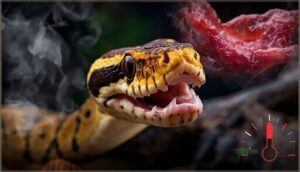
When your snake breathes with its mouth open, you’re not just witnessing odd behavior—you’re seeing a distress signal that demands your immediate attention.
If you notice wheezing or labored breathing, your snake likely has a respiratory infection that needs veterinary care right away.
The root cause often falls into one of three critical categories: infections that attack the respiratory system, painful oral conditions that force the mouth open, or environmental failures that compromise your snake’s ability to function normally. Understanding these triggers separates snake owners who react in time from those who wait too long.
Respiratory Infections and Illnesses
When bacteria invade your snake’s airways, you’re facing a respiratory crisis that won’t resolve itself. Respiratory infections—including snake pneumonia and other forms of airway disease—commonly trigger open-mouth breathing as your pet struggles against breathing difficulties.
These infections cause fluid buildup, mucus production, and inflammation that can escalate to respiratory failure. Immediate intervention is vital because snakes can’t cough to clear their lungs like mammals can.
Mouth Rot and Other Oral Issues
Infection in your snake’s mouth—called mouth rot or infectious stomatitis—creates a cascade of snake health issues that force oral infections to spread beyond the gums. When Aeromonas or Pseudomonas bacteria colonize damaged tissue, you’ll see three critical warning signs:
- Swollen, bleeding gums with cottage cheese–like pus along the dental line
- Necrotic tissue appearing as gray or black patches inside the mouth
- Open-mouth resting due to pain, airway narrowing, and breathing obstruction
This gum disease often triggers secondary respiratory issues that demand immediate veterinary intervention.
Environmental Stressors and Temperature
Beyond disease, environmental factors in your snake’s enclosure silently trigger open-mouth breathing when thermal gradients collapse or humidity levels swing wildly. A proper temperature gradient—warm basking zone paired with a cooler retreat—lets your snake regulate its core temperature; without it, heat stress or cold exposure forces labored breathing, weakened immunity, and visible respiratory distress that ventilation systems alone can’t fix.
| Environmental Factor | Impact on Breathing |
|---|---|
| Improper Thermal Gradients | Prevents thermoregulation; causes chronic stress and respiratory infection risk |
| Excessive Heat Exposure | Triggers open-mouth panting, dehydration, and rapid shallow breaths |
| Low Temperature Stress | Slows metabolism, thickens mucus, and weakens airway clearance |
| Inadequate Humidity Levels | Dries airways, interferes with mucus flow, and irritates lung tissue |
| Poor Ventilation Systems | Traps ammonia and irritants, inflaming airways and forcing labored breathing |
Recognizing Symptoms of Respiratory Problems
Your snake’s breathing pattern can shift from normal to critical faster than you’d expect. Recognizing the warning signs early isn’t just helpful—it’s essential for your snake’s survival.
Here’s what you need to watch for when respiratory distress takes hold.
Wheezing, Clicking, and Labored Breathing

Listen closely when your snake breathes—wheezing sounds signal serious respiratory infection or airway obstructions that demand immediate attention. You’ll notice labored breathing through visible chest movements and an elevated posture, often with the mouth open to bypass respiratory obstruction.
These breathing patterns reveal lung disease or tracheal issues threatening your snake health, so act fast when silence turns to struggle.
Excess Mucus and Nasal Discharge
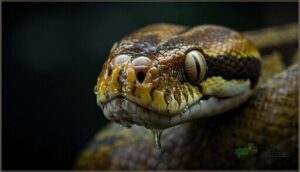
Watch for wet patches around your snake’s nostrils—clear fluid signals early respiratory infection, while thick yellow discharge screams bacterial trouble demanding immediate action.
Bubbles at the nose, called “bubble blowing,” flag upper respiratory disease. Cottage cheese-like mucus points to necrotic stomatitis or mouth rot. Heavy, stringy discharge means serious viral or bacterial respiratory issues threatening your snake’s respiratory health. Don’t ignore these red flags.
Lethargy and Loss of Appetite

When your snake stops hunting and starts hiding, you’re witnessing a silent alarm—lethargy signs and appetite loss often mean respiratory issues are already severe, since snakes instinctively mask weakness.
- Refusal of two or more scheduled feedings signals serious health monitoring concerns requiring emergency care
- Visible spine or sunken appearance indicates dangerous weight loss from prolonged illness
- Extreme limpness when handled suggests your snake’s respiratory issues have progressed beyond mild stress and anxiety
Don’t wait—persistent changes in snake behavior and reptile health, especially with mouth open breathing, demand immediate veterinary attention.
Environmental Factors Affecting Snake Breathing

Your snake’s enclosure isn’t just a life support system—it’s a home that directly impacts respiratory health. Get the temperature, humidity, or ventilation wrong, and you’re setting the stage for breathing problems that can escalate fast.
Let’s break down the three critical environmental factors you need to monitor and adjust to keep your snake’s lungs functioning properly.
Temperature and Humidity Levels
Your snake’s enclosure must maintain precise temperature gradients and humidity control—this isn’t optional. Ball pythons need 88-92°F on the warm side with 60%+ humidity, while corn snakes thrive at 75-82°F with 65-75% humidity levels.
Poor temperature regulation causes heat stress and respiratory failure. Without proper thermoregulation and temperature and humidity management, you’re inviting pneumonia.
Reptile care and maintenance demands constant monitoring.
Enclosure Ventilation and Cleanliness
Maintaining proper airflow management and cleaning schedules are just as critical as temperature control. Your enclosure ventilation systems need cross-flow vents—small openings under 12mm—positioned low on the cool side and high on the warm side. Stagnant air breeds bacteria and ammonia buildup, leading directly to respiratory issues.
Here’s what poor enclosure maintenance creates:
- Ammonia fumes from waste irritating your snake’s airways
- Bacterial colonies thriving in soiled substrate
- Mold spores multiplying in damp corners
- Stale air pockets trapping humidity and pathogens
- Dust particles inflaming delicate respiratory tissues
Spot-clean waste daily. Deep-clean every 1-3 months. These ventilation systems and cleaning protocols aren’t busywork—they’re your frontline defense against pneumonia and reptile care and maintenance disasters.
Stress-Inducing Conditions
Beyond clean air and proper temps, you’re overlooking invisible threats that hit your snake hard. Noise pollution from slamming doors or barking dogs sends ground vibrations that mimic predator attacks, triggering defensive open-mouth postures.
Poor handling techniques—grabbing from above, restraining too tight—compress ribs and force gaping breaths. Visual threats like prowling cats outside the glass keep stress hormones spiked, weakening immunity and worsening respiratory issues fast.
When to Seek Veterinary Care for Your Snake

Knowing when your snake needs professional help can be the difference between a quick recovery and a serious health crisis. Some symptoms demand immediate action—waiting even a day can let a treatable infection spiral into something far worse.
If you notice sunken eyes, labored breathing, or a spine that’s become too prominent, check this guide to recognizing and treating snake lethargy before symptoms worsen.
Here’s what to watch for and how vets diagnose and treat respiratory problems in snakes.
Warning Signs Requiring Immediate Attention
Immediate veterinary intervention becomes critical when your snake gasps with its mouth open while showing labored breathing, thick mucus discharge, or persistent wheezing. These critical symptoms signal potential respiratory failure or respiratory obstruction that can’t wait.
Frantic movements paired with lethargy, repeated refusal to eat, or foul odors from the mouth all point to emergency care needs—stress and anxiety aside, these snake behavior patterns demand same-day action.
Diagnosis and Treatment Options
Once you’re at the vet, your snake’s diagnostic tests will map the battlefield. Expect X-rays to reveal lung opacity or fluid, blood panels to check inflammation, and possibly tracheal washes or PCR testing to identify the exact pathogen.
Treatment plans usually include injectable antibiotics like enrofloxacin for four to ten weeks, fluid therapy, oxygen support for severe respiratory obstruction, and immediate husbandry corrections to boost recovery.
Preventing Future Breathing Issues
Proper enclosure maintenance and humidity control form your first line of defense against respiratory issues. You’ll shield your snake’s respiratory system by managing air quality, dialing in nutrition, and cutting stress and anxiety at the source.
Regular veterinary guidance keeps reptile health and wellness on track—because one bout of respiratory distress is enough. Prevention beats treatment every single time in snake care.
Prevention beats treatment every time—regular veterinary guidance keeps your snake healthy and stops respiratory crises before they start
Frequently Asked Questions (FAQs)
Why is my snake breathing with its mouth open?
Your snake’s open-mouth breathing likely signals respiratory infection, mouth rot, or environmental stress.
Healthy snakes breathe through their nostrils with closed mouths—this behavior demands immediate veterinary attention and enclosure assessment.
How to tell if your snake has respiratory issues?
Watch for abnormal breathing patterns like wheezing or clicking sounds, visible mucus at the mouth or nose, and behavior changes such as lethargy or appetite loss—all diagnostic signs of respiratory infections in snakes.
What does it mean if a snake has its mouth open?
When your snake sits with its mouth open, it’s signaling serious trouble—usually respiratory distress or mouth rot.
This mouth gaping isn’t normal defensive behavior; it means breathing has become a struggle requiring immediate attention.
Can snakes breathe underwater with mouth closed?
Think of a submarine running on battery power—that’s how snakes operate below the surface.
Most species hold their breath for 15-25 minutes with mouth closed, relying on stored lung oxygen while diving limits prevent true underwater respiration.
Do all snake species breathe the same way?
No—species variations in breathing anatomy are significant. Arboreal snakes have larger air sacs for flexibility, while heavy-bodied boids face more respiratory challenges than slender colubrids due to distinct lung structure and airflow mechanisms.
How long can snakes hold their breath naturally?
You’d think creatures without diaphragms couldn’t manage much, yet most terrestrial snakes comfortably hold their breath 15 to 25 minutes through specialized oxygen storage and breath control mechanisms in their unique respiratory anatomy.
Is occasional mouth gaping during shedding normal behavior?
Yes, brief gaping during shedding is normal behavior. Snakes use mouth open movements to loosen tight skin around the jaw.
Monitor gaping frequency—constant breathing with mouth open signals respiratory trouble requiring veterinary care.
Conclusion
Think of your enclosure like a telegraph system—every environmental signal matters, and one broken wire can crash the whole network. When you spot your snake breathing with mouth open, you’re witnessing a mayday call from a compromised respiratory system.
Don’t second-guess the symptoms or wait for improvement. Act immediately: verify temperatures, check humidity levels, eliminate stressors, and contact your exotic vet. Your snake’s survival depends on your swift, decisive intervention right now.
- https://en.wikivet.net/Snake_Respiratory_System
- https://reptilesmagazine.com/snake-health-101/
- https://vcahospitals.com/know-your-pet/snakes-diseases
- https://www.petmd.com/reptile/conditions/mouth/snake-mouth-rot-symptoms-causes-and-treatment
- https://voyopets.com/7-reasons-why-your-snakes-mouth-is-open/