This site is supported by our readers. We may earn a commission, at no cost to you, if you purchase through links.
You’re checking on your snake, and there it is: foam at the corner of the mouth. Your stomach drops. Before you spiral into worst-case scenarios, take a breath, because bubbles coming from a snake’s mouth don’t always mean what you fear.
Sometimes it’s stress froth from a defensive huff. Sometimes it’s shed stuck on the lips. And sometimes, yes, it’s the first visible sign of a respiratory infection that needs a vet yesterday. The trick is knowing which one you’re looking at, because the difference between "monitor at home" and "emergency visit" comes down to a handful of telltale clues.
Let’s decode them.
Table Of Contents
- Key Takeaways
- What Snake Mouth Bubbles Look Like
- Common Causes of Snake Mouth Bubbles
- Respiratory Infection and Mouth Rot Warning Signs
- What to Do Right Away
- When to See a Reptile Veterinarian
- How Vets Diagnose and Treat Bubbles
- Preventing Bubbles in Ball Pythons and Other Snakes
- Frequently Asked Questions (FAQs)
- Can snake mouth rot go away on its own?
- What are the signs of mouth rot in snakes?
- Can snake respiratory infection go away on its own?
- What are common problems with a snake’s mouth?
- How to tell if a snake has mouth rot?
- What are the early signs of mouth rot?
- Can snakes blow bubbles while swimming?
- Do all snake species blow bubbles equally?
- Are bubbles different between venomous and non-venomous snakes?
- Can diet changes trigger bubble blowing behavior?
- Conclusion
Key Takeaways
- Mouth bubbles in snakes have three main causes—defensive stress froth, retained shed or low humidity, or a respiratory infection—and the pattern (clear foam that comes and goes vs. thick, recurring discharge with wheezing) tells you which you’re dealing with.
- Bubbles that persist beyond 24 hours, return after you’ve fixed heat and humidity, or come with open-mouth breathing, lethargy, or appetite loss mean you’ve crossed from monitoring into needing a reptile vet immediately, since snakes hide illness until they can’t.
- Neither respiratory infections nor mouth rot resolve on their own—treatment requires vet diagnostics (radiographs, cultures, tracheal washes) and targeted antibiotics, nebulization, or oral flushing, with recovery taking weeks to months.
- Prevention comes down to husbandry: keep humidity at 50–60% (up to 70% during shed), maintain a proper temperature gradient, spot clean daily, disinfect weekly, and minimize handling stress.
What Snake Mouth Bubbles Look Like
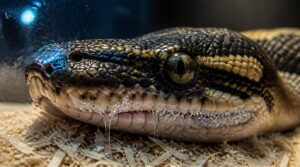
A mouthful of froth can look dramatic, but let’s get precise about what you’re actually seeing. Bubbles coming from snake mouth commonly appear as small, clear, foam-like clusters collecting at the lips or lower jaw. The fluid often looks mucous or slightly cloudy, not watery.
If the discharge turns thick, yellow, or cheese-like instead of clear foam, that shift often points to a fungal infection in snake mouth rather than simple saliva buildup.
Watch the pattern, too. These bubbles arrive in brief bursts, then clear, especially after handling or when your snake shifts position and fluid moves through the oral cavity. You may notice saliva stringing from the mouth corners, a persistent "wet mouth" look, or pooling along the lip line.
If your snake holds its mouth slightly open mouth with heavy froth that rapidly returns after wiping, that’s not a one-off spill. Recurring bubbles over multiple days, paired with wheezing sounds or visible throat effort, point toward mucus-filled bubbles signaling a possible respiratory infection.
Common Causes of Snake Mouth Bubbles

Not every bubble from your snake’s mouth is a five-alarm emergency, and knowing the difference can save you a panicked midnight drive to the vet. The trick is reading the context: defense, shedding, and infection each tell a very different story. Here’s what’s behind those bubbles, from harmless to hurry-up-and-call-your-vet.
Defense and Stress
Why do snakes sometimes spit when you approach? Often it’s pure defense and stress. When your snake perceives threat cues, it may rear back, hold its head away, and gape with an open mouth, ejecting aerated saliva that looks like bubbles. This stress response triggers gular pumping and rapid exhalations, mechanically frothing oral mucus.
If bubbling happens mainly during handling, you’re likely seeing defensive behavior, not respiratory distress. Chronic environmental stress factors like frequent disturbance or bright light increase this.
Shedding and Low Humidity
Not every case is defensive, though. Shedding skin is a common culprit behind bubbles coming from snake mouth, especially when humidity control slips. During ecdysis, retained shed around the lips can irritate the mouth lining and disrupt normal saliva flow, producing transient froth. Low humidity also thickens oral mucus, so bubbles form more easily with breathing.
Fix your temperature gradients and humidity first; true openmouth breathing comes next.
Respiratory Infections
Here’s where things get serious. A respiratory infection is the cause you can’t fix with humidity tweaks alone. Bubbling foam appears when air passes through mucus discharge in the airways, often paired with wheezing sounds, open-mouth breathing, or gurgling. Watch for:
These infections usually start with improper humidity or temperature, so checking reptile health advice on habitat setup can help you catch the root cause early.
- Lethargy and appetite loss
- Head tilted upward while resting
- Nasal discharge alongside oral foam
- Worsening signs despite corrected temperature gradients
Infections spread through shared water dishes, contaminated hides, or new arrivals carrying pathogens. Stress weakens immunity, letting opportunistic bacteria flourish. Worse, biofilm formation lets pathogens persist in airways, causing flare-ups even after conditions improve. Correct your humidity control, then book the vet.
Respiratory Infection and Mouth Rot Warning Signs
Because bubbles rarely travel alone, you’ll want to scan the whole animal for company. A respiratory infection announces itself through open-mouth breathing, audible wheezing sounds, clicking noises on exhale, and that telltale tail-bobbing effort with each breath. Pair those with nasal discharge or thickened mucus discharge, and the picture sharpens considerably.
Mouth rot (infectious stomatitis) shows its hand differently. Look for caseous yellow-white plaques, ulcerated tissue along the gumline, and redness concentrated at the mouth’s corners. When both patterns overlap, you’re likely facing mixed upper-airway disease, and that’s a fast-mover.
Add in lethargy, refused meals, or visible weight loss, and you’re no longer watching a stress event. You’re watching disease progress. Trust that instinct.
What to Do Right Away
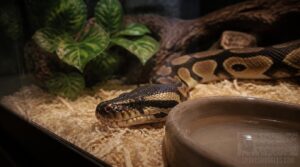
Your first sixty minutes matter more than the next six days. Stop handling your snake immediately and move it to a quiet, secure enclosure where stress-related breathing strain can settle. Skip the aerosols, perfumes, and smoke; respiratory irritants turn mild bubbling into a serious problem fast.
- Check your husbandry basics. Verify temperatures and humidity sit within normal captive ranges so your snake can breathe and shed effectively.
- Support the airway. Look for stuck shed or debris around the lip margins and nostrils, but don’t attempt removal if it resists.
- Watch breathing posture. Note whether your snake holds its head elevated or gapes while breathing, and log it.
Provide fresh water availability around the clock, and prioritize enclosure cleaning to clear dust and soiled bedding. Continue handling reduction until symptoms resolve. If bubbling worsens over hours, make vet contact promptly.
A heavy, tip-resistant reptile water dish keeps clean water available without spills that could spike humidity and worsen breathing trouble.
When to See a Reptile Veterinarian
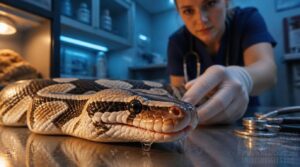
How do you know it’s time to stop watching and start dialing? When bubbles persist beyond 24 hours, or return after you’ve stabilized heat and humidity, you’ve crossed the line from wait-and-see into respiratory distress in reptiles territory.
| Sign at Home | What It Means |
|---|---|
| Open-mouth breathing, gaping | Airway obstruction, urgent visit |
| Abnormal breathing sounds, wheezing | Lower-airway inflammation |
| Bubbles plus lethargy, refusing food | Systemic disease likely |
| Head tilt, gagging, repeated coughing | Don’t wait another day |
Trust your instincts. If you’re noticing discharge tracking that’s worsening, or your snake’s tongue flicks have dropped off, that’s your cue. Make that vet contact for worsening signs immediately, because snakes hide illness masterfully until they can’t. Knowing When to See a Reptile Veterinarian means acting before your pet’s breathing does the deciding for you.
Snakes hide illness masterfully until they can’t, so worsening discharge or fewer tongue flicks means call your reptile vet immediately
How Vets Diagnose and Treat Bubbles

Once you’re at the vet’s office, you’ll want to know exactly what happens next, because diagnostic testing takes the guesswork out of your snake’s bubble trouble. A reptile veterinarian won’t just eyeball those bubbles; they’ll run specific tests to pinpoint the cause, whether it’s bacterial pneumonia or something less sinister.
Here’s a walkthrough of the diagnostic process and the treatment options that follow.
Diagnostic Tests
So your vet suspects something’s brewing. What now? Diagnosis blends art and science.
- Radiographs reveal pneumonia or lung involvement hiding below the surface.
- Oral or tracheal sampling, sometimes via tracheal wash, collects material for culture and sensitivity testing and PCR testing, identifying the culprit and guiding antibiotics.
- Bloodwork assesses whether infection stays localized or turns systemic.
Sampling happens before antibiotics start, so don’t delay that visit.
Treatment and Recovery
So your snake has a diagnosis. Now what? Treatment depends on the culprit.
For a respiratory infection, expect injectable antibiotics, often enrofloxacin or amikacin, guided by culture results. Severe cases may need nebulization therapy to reach deep lung tissue. Supportive care matters too: fluid therapy, heat support, and nutritional assistance keep weakened snakes fighting.
If mucus discharge stems from mouth rot, daily oral flushing with diluted chlorhexidine reduces bacterial load, while topical ointments protect healing tissue. Meloxicam controls pain and swelling. In serious cases, tooth loss and discharge signal that the infection has progressed and needs aggressive treatment.
Recovery takes weeks, sometimes months. Correcting humidity levels and temperature at home isn’t optional; it’s half the cure. Schedule regular rechecks so your veterinarian can adjust the plan.
Preventing Bubbles in Ball Pythons and Other Snakes
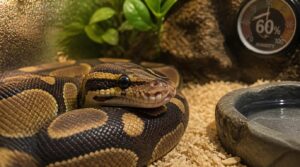
The good news is that most bubble-causing problems are entirely preventable with smart husbandry. Prevention beats treatment every time, and your snake’s enclosure is where the battle is won or lost. Here’s how to set up ball python care and enclosure maintenance that keep those airways clear year-round.
Ball Python Care
Think of your ball python’s husbandry as its immune system’s bodyguard. Get humidity levels right (50–60%, up to 70% during shed) and maintain a proper temperature gradient so mucous membranes stay moist and functional.
- Hydrate well: fresh water and appropriate prey sizes
- Minimize handling stress, especially pre-shed
- Watch for early respiratory infection signs
Good care today prevents panic tomorrow.
Enclosure Maintenance
Your husbandry bodyguard needs a clean gym. Enclosure cleanliness is your frontline defense against the bacteria behind mouth rot and respiratory infections.
- Spot clean daily: remove feces and soiled substrate immediately
- Disinfect weekly: reptile-safe cleaners, plus water bowls snakes love to foul
- Replace paper substrate weekly
- Verify temperature gradient with probes, not guesswork
Pair that with humidity control and good ventilation improvement, and bubbles stay where they belong: in your imagination.
Frequently Asked Questions (FAQs)
Can snake mouth rot go away on its own?
No, snake mouth rot rarely resolves on its own. This mouth infection needs antibiotic therapy. Bacteria persist under caseous debris, worsening tissue damage. Early treatment prevents spread. Schedule a reptile vet promptly.
What are the signs of mouth rot in snakes?
Spot these signs early, and you’ll save your snake’s life. Mouth rot shows swollen, red gums, caseous debris (yellow-white plaque), sores, and foul odor. Watch for open-mouth breathing or appetite loss.
Can snake respiratory infection go away on its own?
No, and hoping otherwise is a gamble you’ll lose. Respiratory infections in snakes rarely self-resolve; bacterial infections progress to pneumonia. Mucus-filled bubbles mean respiratory distress demanding prompt veterinary care. Snakes can’t cough, so delay turns deadly.
What are common problems with a snake’s mouth?
Common problems include stomatitis (mouth rot), excess oral mucus, thick saliva, and cheesy discharge. These usually signal infection, poor husbandry, or stress, so you’ll want veterinary attention promptly.
How to tell if a snake has mouth rot?
Spot mouth rot (infectious stomatitis) during an oral exam: pale or yellow gums, ulcers, thick saliva, foul odor, discharge, or sloughing tissue. Pair these with appetite loss and lethargy—your snake needs a vet promptly.
What are the early signs of mouth rot?
Think of mouth rot as a whisper before it screams. Early infectious stomatitis signs include mild gum discoloration, redness, crusty oral mucus, sour breath, and thick saliva along teeth. Catch oral lesion identification early—prompt mouth rot treatment saves lives.
Can snakes blow bubbles while swimming?
Yes, snakes blow bubbles while swimming—usually harmless exhaling that keeps water out of their airways. Watch for mucus-filled bubbles, though, since those hint at respiratory infections rather than playful bubble blowing.
Do all snake species blow bubbles equally?
Aquatic species like Northern Water Snakes blow bubbles routinely; ball pythons usually don’t. For terrestrial snakes, Snake Bubbles From Nose or Mouth often signal respiratory infections or husbandry problems.
Are bubbles different between venomous and non-venomous snakes?
Are bubbles different between venomous and non-venomous snakes? Not medically. Both develop bubbles from respiratory infection, mucus in mouth, or stress identically; only handling risk differs.
Can diet changes trigger bubble blowing behavior?
Diet changes rarely cause bubble blowing directly. Sudden food switches can trigger a stress response, though, indirectly boosting mucus production. True respiratory infections remain the likeliest culprit behind mouth foam.
Conclusion
One bubble won’t kill your snake. But ignoring the pattern behind it absolutely can.
Bubbles coming from snake mouth are your pet’s only way of waving a red flag, since snakes can’t cough, complain, or text you their symptoms. You’re the diagnostic tool here. Watch closely, act fast, and trust your gut when something feels off.
Quick eyes save reptile lives. Yours just might.