This site is supported by our readers. We may earn a commission, at no cost to you, if you purchase through links.

An unregulated heating pad can hit 140°F on its surface, and your snake won’t move away in time. By then, the damage is done, often deep tissue burns that look minor on day one and turn serious by day three. That’s the gap beginners don’t see coming.
Snake heating pads for beginners sound straightforward until you factor in substrate depth, wattage-to-tank ratios, and glass compatibility. Get those wrong and you’re either scorching your snake or running a pad so underpowered it does nothing.
This guide cuts through the guesswork with product specs, safety limits, and installation steps that actually work.
Table Of Contents
- Key Takeaways
- Snake Heating Pads for Beginners: Benefits, Limits, and Enclosure Compatibility
- How to Choose The Right Snake Heating Pad Size and Wattage
- Top 8 Snake Heating Pads for Beginners
- How to Install a Snake Heating Pad Safely With a Thermostat
- Monitoring, Maintaining, and Troubleshooting Snake Heating Pads
- Frequently Asked Questions (FAQs)
- Should you use a heat mat for snakes?
- What should my snakes heating pad be set at?
- What is the best heat pad for snakes?
- What are the best heat mats for snakes?
- Where to put a heating pad for a snake?
- What is the best heating for snakes?
- How to keep a snake warm in a cold house?
- How long can a snake go without a heating pad?
- Can I use heating pads with glass tanks?
- How long do snake heating pads typically last?
- Conclusion
Key Takeaways
- Never run a heating pad without a thermostat — unregulated mats can hit 140°F and cause deep burns your snake can’t feel or escape, so set your thermostat to cut power at 90–95°F and place the probe between the mat and the floor.
- Size the pad to cover roughly one-third of the enclosure floor (never the whole tank) so your snake has a cool zone to escape to, and match wattage to tank size — e.g., 4–8 watts for a 20-gallon tank.
- Keep substrate under the pad shallow (about 1.5–2.5 cm), since thick or loose bedding like coconut fiber insulates and blocks heat from reaching the surface, and recalibrate the thermostat whenever you change depth.
- Use the pad only on glass terrariums (plastic and acrylic can warp or crack), position it 2–3 inches from glass edges, lift the tank with rubber feet for airflow, and monitor temperatures daily — checking multiple spots with a thermometer, especially during the first 72 hours.
Snake Heating Pads for Beginners: Benefits, Limits, and Enclosure Compatibility
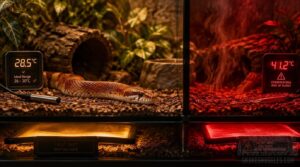
Your snake’s belly needs 88–92°F to digest, and a heating pad is how you get there. But here’s the catch: an unregulated mat can hit 140°F and burn your snake badly. Before you pick one, you need to understand what these pads can do, where they fail, and which enclosures they actually work with.
Understanding how hot a reptile heat mat should get can mean the difference between a thriving snake and a costly, painful vet visit.
A heating pad keeps your snake alive; an unregulated one can kill it
Heating Pad Benefits
When you place a heating pad under your snake’s enclosure, you get steady, belly-level warmth that mimics how snakes bask in nature. This creates a proper thermal gradient, letting your snake move between warm and cool zones to regulate its own temperature.
It’s beginner-friendly, stays out of the habitat visually, and helps digestion by keeping the warm side consistent.
That’s reptile husbandry basics working for you.
Thermostat Safety Limits
Here’s the catch: a heating pad without a thermostat controller is a burn waiting to happen. Your thermostat safety limits should cut power when floor temps hit 90–95°F. Choose a model with an external probe and an audible alarm that sounds if temperatures exceed your set limit for more than 5 minutes. That’s your overheating prevention plan.
Before your snake moves in, verify heater-off behavior with a multimeter and a thermal test.
Glass Enclosure Compatibility
Glass looks like an ideal surface, but here’s the problem: thick glass panels slow heat transfer, so your pad’s warmth pools on the glass instead of reaching substrate. Worse, some snake heating pads aren’t rated for glass contact at all. Check the manufacturer’s label before buying.
Position the pad 2–3 inches from glass edges, add a thermal barrier, and keep your thermostat probe coupled tightly. Sealed glass terrarium fronts also trap humidity, so confirm screened vents exist. Otherwise, your enclosure temperature climbs near the floor while the heat source for snakes struggles to perform.
Substrate Heat Transfer
So your pad’s warm but the floor stays cold? Blame your substrate heat transfer. Loose coconut fiber insulates like a down jacket; heat pools beneath it. Compact it lightly or switch to tile or reptile carpet for even heat distribution. Keep substrate under two inches so your thermal gradient reaches the surface. Damp substrate conducts better, but watch humidity. Remember, reptile thermoregulation depends on it.
Monitoring And Maintenance
When your snake’s habitat is live, temperature monitoring becomes your daily ritual. Follow these five habits:
- Check pad surface temps at a fixed time daily.
- Log thermostat setpoint and readings in a journal.
- Verify thermostat calibration monthly with a secondary sensor.
- Inspect cords and plugs weekly.
- Flag fluctuations over 2°C within 24 hours.
Consistent maintenance and troubleshooting keeps your setup safe.
How to Choose The Right Snake Heating Pad Size and Wattage

Getting the right size and wattage matters more than picking a brand name. Too big, and your snake can’t escape the heat; too small, and it can’t digest properly. Here’s exactly what to check before you buy.
Match Pad To Enclosure
Your heating pad size must fit your snake enclosure setup, not just your budget. Measure the enclosure dimensions first, then buy a mat that covers roughly a third of the floor.
Too small? You’ll get weak, patchy heat distribution. Too big? Your thermostat will fight constant overshoot. Match the mat to one side, never the whole tank, so your snake can thermoregulate properly.
For a practical starting point, a 4–8 watt heat mat sized for a 20-gallon tank gives most snakes a reliable warm side without overwhelming the enclosure.
Choose Proper Floor Coverage
Picture a blanket covering only half your bed. Cold spots everywhere, right? Your snake feels the same when floor coverage falls short.
Aim for 70–100% coverage of your enclosure’s base so heat distribution stays even and no cold voids hide behind décor. Measure your enclosure dimensions first, then pick a heating pad size that matches your snake enclosure layout. Gaps mean hotspots.
Select Appropriate Wattage
Imagine a tiny sun taped under glass, roaring while your ball python cowers at the cool end. That’s what wrong wattage does.
Your heat mat wattage calculation starts with tank size: match the mat’s output to your enclosure’s floor area within ±15%. Underpowered mats underheat; oversized ones scorch.
Check your snake heating requirements, then pair with a thermostat for safe temperature control.
Consider Substrate Depth
Here’s a fact that trips up beginners: bury your pad under 3 cm of substrate, and your basking zone can drop several degrees cooler. Why? Thick bedding insulates and slows substrate heating.
Keep depth at 1.5–2.5 cm under the pad, uniform across the floor. Burrowing species tolerate more, but recalibrate your thermostat whenever you change depth by 1 cm or more.
Verify Enclosure Compatibility
Not all tanks play nice with snake heating pads. Check these before you buy:
- Measure your tank size first.
- Confirm glass terrariums suit under-tank heat.
- Verify pad fits inside the floor footprint.
- Check enclosure compatibility with adhesive backing.
A pad overhanging the substrate edge traps heat, warps plastic, and risks burns. Continuous contact matters. Air gaps kill heat transfer.
Pair With Thermostat
Never run a pad without a thermostat. Unregulated heat burns snakes fast. Your digital thermostat probe belongs on the floor near the pad, not in ambient air. Check thermostat compatibility before buying.
| Thermostat | Best For |
|---|---|
| BN-Link digital | Budget setups |
| iPower | Glass tanks |
| Thermostat with alarm | Sleep safety |
| Proportional dimmer | Precise temperature control |
Verify safety features daily, first week especially.
Top 8 Snake Heating Pads for Beginners
Ready to pick the right heating pad without gambling on your snake’s safety? I’ve tested and narrowed the market down to eight reliable options that pair well with a digital thermostat. Each one below suits a glass terrarium and a beginner’s budget, so you can match wattage to your tank and move on to setup.
For a head start on comparison shopping, browsing a curated selection of snake under-tank heaters can help you spot the wattage and size your setup actually needs.
1. Aiicioo Reptile Heat Mat
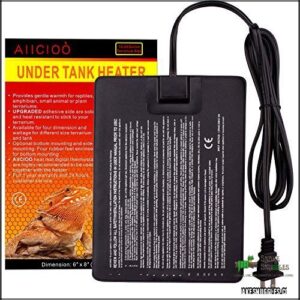
Warmth that stays consistent matters more than raw power, and the Aiicioo Reptile Heat Mat gets that balance right. At just 8 watts, this pad suits 10-20 gallon glass tanks, pushing surface temps between 104°F and 122°F. That’s plenty for small snakes once you dial things in with a thermostat.
Here’s the catch: there’s no built-in temperature control. You must pair it with a reliable thermostat, or you’re gambling with your snake’s safety. Don’t skip that step.
The solid-state nichrome heating wire spreads heat evenly, so you won’t battle hot spots that burn bellies. Upgraded adhesive grips the glass bottom firmly, and the energy-efficient design keeps 24/7 running costs low.
One warning: it’s strictly for glass. Plastic and acrylic tanks can warp or crack, so verify your setup first. For beginner-friendly, safe setup in a glass terrarium, this mat delivers dependable, even warmth.
| Wattage | N/A |
|---|---|
| Dimensions | N/A |
| Thermostat Included | N/A |
| Adhesive Type | N/A |
| Tank Compatibility | N/A |
| Waterproof | N/A |
| Additional Features |
|
2. Aiicioo Reptile Heating Pad
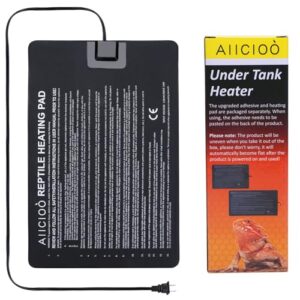
So your snake has outgrown that starter tank? The 16-watt Aiicioo Heating Pad is the natural next step up from the 8-watt model, built for 30-40 gallon enclosures. At 8" x 12", it covers enough floor space to give a growing ball python or corn snake a proper warm zone, holding surface temps between 104°F and 122°F.
The same solid nichrome wire spreads heat evenly, and the PVC shell shrugs off daily wear. Rubber feet lift your tank just enough for heat to escape underneath, protecting that glass bottom. You can mount it sideways or underneath, whichever fits your safe setup.
But listen carefully: there’s no built-in thermostat. Pair it with one or you’re risking burns.
- Your snake’s belly can’t detect heat the way you do, so burns happen silently
- An unregulated pad can climb past safe temps overnight while you sleep
- A $20 thermostat costs less than one emergency vet visit
- Peace of mind is worth every penny when it’s your pet’s life
Stick to glass terrariums only. Plastic and acrylic warp or crack under sustained heat. For beginners wanting dependable warmth in a bigger snake enclosure, this reptile heating pad earns its spot.
| Wattage | N/A |
|---|---|
| Dimensions | N/A |
| Thermostat Included | N/A |
| Adhesive Type | N/A |
| Tank Compatibility | N/A |
| Waterproof | N/A |
| Additional Features |
|
3. BN Link Reptile Heat Pad
Want the thermostat built in? The BN Link Reptile Heat Pad has you covered. No separate shopping trip, no compatibility worries. This 8" x 12" pad pairs with a digital thermostat, so you set your target temp and walk away.
Here’s what you get: 16 watts on 120V power, sized for 10-20 gallon tanks. That’s your starter corn snake or juvenile ball python setup. The display toggles between Fahrenheit and Celsius, and temps hold steady in a safe range instead of climbing overnight while you sleep.
The strong adhesive backing grips glass firmly, and the waterproof surface wipes clean after messes. Auto-shutoff adds a backup layer if something goes wrong.
One rule you can’t bend: glass terrariums only. Wood won’t conduct heat properly, and plastic can warp. Cover the pad with substrate, check it with an infrared thermometer, and you’re set.
| Best For | Beginners setting up a 10-20 gallon glass terrarium who want a built-in thermostat and hassle-free temperature control for a starter corn snake or juvenile ball python. |
|---|---|
| Wattage | 16W |
| Dimensions | 8″×12″ |
| Thermostat Included | Yes |
| Adhesive Type | Strong backing |
| Tank Compatibility | Glass only |
| Waterproof | Yes |
| Additional Features |
|
- Built-in digital thermostat with Fahrenheit/Celsius display means no separate purchase or compatibility concerns
- Strong adhesive backing and waterproof, wipe-clean surface make installation and maintenance simple
- 16-watt pad sized for 10-20 gallon tanks holds temperatures steady without overnight spikes
- Restricted to glass terrarium surfaces only—won’t work on wood or plastic
- Not compatible with water aquariums
- Requires covering with substrate and verification with an infrared thermometer for safe use
4. iPower Reptile Heat Mat
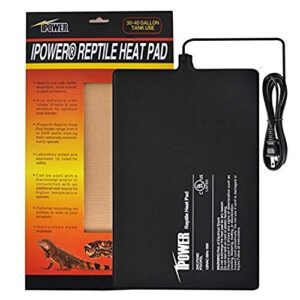
The iPower Reptile Heat Mat is the budget-friendly workhorse I recommend to first-time snake keepers who want dependable warmth without a big spend. Its 8 x 12 inch, 16-watt footprint suits small to medium terrariums, and the PTC heating material spreads heat evenly instead of cooking one hot spot while the edges stay cold. Setup is simple. The full-surface 3M adhesive backing grips the underside of your glass tank, and the flexible vinyl film warms up in minutes, not hours. Expect a temperature bump of roughly 6–10 degrees, then dial in your species-specific basking range with a thermostat, because this mat ships without one.
Two cautions before you plug in. Lift the tank with rubber feet if you mount the mat underneath, since trapped heat against a solid surface is a genuine fire risk. And check the adhesive weekly; some owners report it peeling within days. The 6-foot cord and 120V plug keep placement flexible.
| Best For | First-time snake keepers who want dependable, even heating for a small to medium terrarium on a budget. |
|---|---|
| Wattage | 16W |
| Dimensions | 8″×12″ |
| Thermostat Included | No |
| Adhesive Type | 3M full-surface |
| Tank Compatibility | Glass only |
| Waterproof | N/A |
| Additional Features |
|
- PTC heating material spreads heat evenly across the mat instead of creating hot spots
- Full-surface 3M adhesive backing attaches securely to the underside of glass tanks
- 6-foot cord and 120V plug offer flexible placement at a budget-friendly price
- Ships without a thermostat, which is required to prevent overheating
- Adhesive may peel off within days of installation
- Poses a fire risk if mounted on the tank bottom without rubber feet elevation
5. PeSandy Reptile Heat Pad
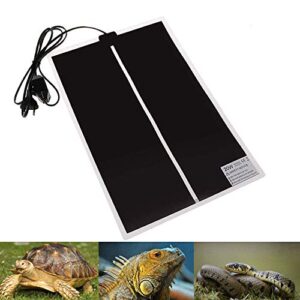
Grab the PeSandy if you want a repositionable heat source that doesn’t leave sticky residue all over your enclosure. This 20-watt mat measures 16.81 x 12.76 inches and weighs just 5.9 ounces, covering a solid footprint for medium to large tanks housing snakes, geckos, lizards, or tortoises.
Its slow heating design prevents dangerous temperature spikes and distributes warmth evenly across the entire surface. You can mount it under the tank or on the side, depending entirely on your species. Ball python? Under-tank. Arboreal gecko? Side mount. That flexibility matters more as your collection expands.
One critical rule: don’t cover this pad with wood chips or any non-thermally conductive substrate. You’ll quickly trap heat and destroy your thermal gradient. Pair it with a reliable thermostat, and you’ve got a safe, adaptable belly heat source that earns its place in any beginner setup.
| Best For | Reptile and amphibian owners who need a flexible, residue-free heat mat that works with medium to large enclosures for snakes, geckos, lizards, tortoises, and more. |
|---|---|
| Wattage | 20W |
| Dimensions | 16.81″×12.76″ |
| Thermostat Included | No |
| Adhesive Type | Residue-free |
| Tank Compatibility | Medium-large tanks |
| Waterproof | N/A |
| Additional Features |
|
- Slow heating design prevents dangerous temperature spikes and spreads warmth evenly across the full surface
- Versatile mounting options — under-tank or side-mounted — to suit a wide range of species and setups
- Lightweight and repositionable without leaving sticky residue behind
- Requires a separate thermostat to regulate temperature safely
- Cannot be covered with non-thermally conductive substrates like wood chips without risking heat buildup
- No included rubber spacers or digital temperature display
6. Reptile Heat Pad Mat
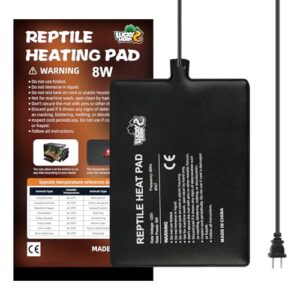
Fancy features don’t equal better heating." If you’ve been avoiding simpler pads because they look too basic, reconsider. This LUCKY HERP mat measures 10.98 x 6.22 inches, runs at just 8 watts, and delivers exactly what beginners need: quiet, consistent floor warmth.
Its waterproof PVC construction stands up to moisture and routine cleaning without degrading over time. The dual temperature protection system adds a real safety layer, cutting power before temperatures climb too high. That’s genuine peace of mind when you’re still dialing in your setup.
The surface is soft and foldable, which makes repositioning easy when needed. The adhesive backing holds on most surfaces but can struggle on glass, so keep extra reinforcing tape nearby.
You absolutely need a thermostat paired with this pad. It runs at a constant rate, meaning without one, you’re guessing at your snake’s actual floor temperature. Don’t guess.
| Best For | Beginners setting up their first reptile or amphibian terrarium who need reliable, affordable floor heating without complicated features. |
|---|---|
| Wattage | 8W |
| Dimensions | 10.98″×6.22″ |
| Thermostat Included | No |
| Adhesive Type | Single patch |
| Tank Compatibility | Most surfaces |
| Waterproof | Yes (PVC) |
| Additional Features |
|
- Dual temperature protection system prevents overheating, adding a genuine safety layer for new keepers still learning their setup.
- Waterproof PVC construction holds up to moisture and regular cleaning, making long-term maintenance easy.
- Low 8-watt power draw keeps energy costs minimal while still reaching effective heating temperatures quickly.
- Adhesive backing frequently fails on glass surfaces, often requiring additional tape or reinforcement to stay in place.
- Only one adhesive patch is included, so a misplaced first attempt can be a real problem.
- No built-in thermostat control means you must purchase a separate thermostat to avoid dangerous temperature guessing.
7. Pawfly Reptile Heat Pad Thermostat
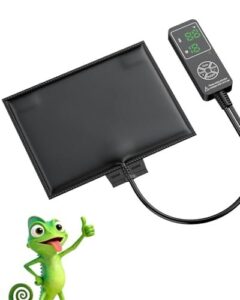
You can’t manage what you can’t measure, and that’s precisely where the Pawfly steps up. This integrated heat pad thermostat covers a 20-57°C (68-135°F) range using a graphene element that pulls just 7W, heating surfaces quickly without drawing heavy power. The IPX7 waterproof rating and flame-retardant PVC cover make it a legitimate option for humid enclosures. Its built-in timer takes care of heat cycles up to 12 hours, which cuts one more daily chore from your routine.
Know the limits, though. Heating pools in the center, so always supplement with a handheld infrared thermometer. Keep the probe exposed, never buried under substrate, or your readings won’t reflect actual surface temps. Some keepers flag accuracy drift over time, so cross-check weekly. At 8" x 5.9" with a 5.8-foot cord, it’s a solid fit for small-to-medium tanks.
| Best For | Reptile and small animal keepers who want a single device that combines a heat pad and timer-controlled thermostat for small-to-medium enclosures. |
|---|
- Built-in thermostat and 12-hour timer in one unit, reducing the need for separate equipment
- IPX7 waterproof rating and flame-retardant PVC cover make it safe for humid vivariums
- Energy-efficient 7W graphene element heats up quickly without a heavy power draw
- Heat concentrates in the center, leaving edges of the pad significantly cooler
- Thermostat accuracy can drift over time, requiring regular cross-checking with a separate thermometer
- Non-adhesive design means you’ll need tape or fasteners to keep it in place
8. ReptiKing Reptile Heat Pad
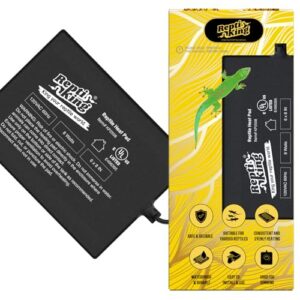
The ReptiKing sits flat under your substrate, its carbon film heating element spreading warmth evenly across a compact 6.38 x 2.83-inch surface. No dangerous hot zones, no cold patches; just a consistent warm spot your snake can actually use.
Its waterproof, durable construction stands up to humidity spills without flinching, and the adhesive backing keeps it firmly anchored to the bottom of glass tanks. One caveat: the adhesive isn’t pre-applied, so you’ll need to apply it separately before installation. Small inconvenience, easy fix.
Here’s what matters most: pair it with a thermostat. The pad’s low-energy design offers mild warming, ideal for small glass terrariums up to 20 gallons. Without a thermostat, you’re guessing at temperatures. With one, you’re maintaining that critical 85-90°F basking zone your snake needs for healthy digestion and thermoregulation. Don’t ever skip that step.
| Best For | Owners of small reptiles like snakes, geckos, bearded dragons, and lizards who want a reliable, low-energy heat source for glass terrariums up to 20 gallons. |
|---|
- Even heat distribution across the entire surface eliminates hot spots and cold patches
- Waterproof, durable construction holds up well in humid enclosures
- Adhesive backing keeps the pad securely anchored to the bottom of glass tanks
- Adhesive is not pre-applied, requiring extra steps before installation
- Mild heat output means it’s not suitable for high-temperature incubation needs
- Must be paired with a thermostat to avoid unsafe or ineffective temperature guessing
How to Install a Snake Heating Pad Safely With a Thermostat
Installing snake heating pads wrong is one of the fastest ways to cook your reptile alive. No drama, just fact.
Position the pad on the warm side floor, covering no more than 50% of the enclosure floor. Slide the thermostat probe between the mat and the floor, not on top. This allows for accurate temperature monitoring from day one.
Before powering up, run through this checklist:
- Plug into a GFCI-protected outlet, never a daisy-chained strip
- Keep the pad clear of water bowls
- Prioritize reptile enclosure safety: use non-flammable substrate under the mat
- Inspect cords for cracks before every use
- Set your thermostat 2-4°C below target, then adjust slowly
Done right, heat mat installation means your snake thermoregulates exactly as it should.
Monitoring, Maintaining, and Troubleshooting Snake Heating Pads

Once the mat’s running, your job isn’t done. Temperature monitoring devices for reptiles do the heavy lifting here. Use a digital thermometer under the substrate and check multiple spots daily, especially in the first 72 hours.
Your reptile thermal gradient only works if you’re verifying it regularly. Log temps every four hours for the first week. Irregular readings? Check your thermostat pairing before blaming the mat itself.
Monthly, inspect cord routing and edge adhesion. That’s your reptile heating equipment maintenance baseline. Clean the surface with a damp cloth, never soak it.
For reptile heating system troubleshooting, always swap the thermostat first. Thermostats fail more often than mats. If surface temps look right but enclosure temps still drift, that’s your culprit.
Frequently Asked Questions (FAQs)
Should you use a heat mat for snakes?
Yes, and it’s one of the most beginner-friendly heating options out there. Reptile heat mats create a warm belly zone your snake needs for digestion. Pair one with a thermostat controller and you’re genuinely sorted.
What should my snakes heating pad be set at?
Your thermostat should keep belly temps between 30–32°C (86–90°F) for most small snakes. That’s your exact target. Too hot risks burns; too cool and digestion shuts right down. Always verify with a surface thermometer first.
What is the best heat pad for snakes?
No single pad wins every setup. For most beginners, a thermostated reptile heating mat that covers 25-50% of your snake enclosure floor consistently delivers the safest, most reliable thermal gradient without any dangerous overheating risks.
What are the best heat mats for snakes?
Picture warmth pooling steadily beneath cold glass: that’s exactly what a reptile heating mat does well. The best snake heat pads, like Aiicioo, iPower, and ReptiKing, pair with a thermostat for a reliable thermal gradient.
Where to put a heating pad for a snake?
Like a compass pointing north, your reptile heating pad belongs under one warm side of the enclosure floor. This creates a proper snake enclosure gradient, giving your snake full control over its own temperature range.
What is the best heating for snakes?
The best heating for snakes pairs an under-tank reptile heating pad with a ceramic heat emitter or radiant heat panel. This combo builds a proper thermal gradient, letting your snake thermoregulate safely across its snake enclosure.
How to keep a snake warm in a cold house?
Worried your snake’s shivering through winter? Use a reptile heating pad with a thermostat to build a proper temperature gradient. Keep snake enclosure temperature stable year-round. It’s beginner-friendly and safe.
How long can a snake go without a heating pad?
Most healthy adults handle 8 to 24 hours without heat, but hatchlings suffer faster. Once temperatures drop below your snake’s minimum, digestion stalls and lethargy sets in. Check your thermostat for reptiles immediately.
Can I use heating pads with glass tanks?
Yes, glass terrariums pair perfectly with a reptile heating pad. Place it under the tank’s exterior, cover only one third of the floor, use a thermostat, and lift corners for airflow. Monitor your thermal gradient with a thermometer.
How long do snake heating pads typically last?
Like a well-worn trail, your heating pad fades with every journey. Expect 2–5 years of lifespan. Quality waterproof designs last longer, but overheating cycles, moisture, and neglect shorten durability fast. Inspect connectors monthly.
Conclusion
Picture a corn snake curled over an unregulated pad, unaware. That’s the scenario you’re preventing.
Pick a pad sized to a third of your enclosure, pair it with a reliable thermostat, and probe the surface weekly. Snake heating pads for beginners aren’t complicated, but they demand respect for wattage, substrate, and glass compatibility.
Do those three things and your snake gets steady belly heat without risk. You’ve got this.