This site is supported by our readers. We may earn a commission, at no cost to you, if you purchase through links.
A classroom snake changes everything—students crowd around the terrarium during free moments, asking questions about shedding skin and hunting behavior, suddenly invested in concepts like thermal regulation and habitat requirements.
But that educational magic depends entirely on choosing the right enclosure, one that keeps both your snake secure and your students safely engaged. Poor ventilation leads to respiratory infections, flimsy locks invite escape attempts during presentations, and cramped dimensions create stressed animals that won’t display the natural behaviors you’re hoping students will observe.
The difference between a thriving classroom ecosystem and a constant source of anxiety comes down to understanding what separates adequate terrariums from outstanding ones, from the gauge of the screen top to the accessibility of front-opening doors when twenty curious faces are watching you clean.
Table Of Contents
- Key Takeaways
- Best Snake Terrariums for Classrooms
- Essential Features of Classroom Snake Terrariums
- Setting Up a Bioactive Terrarium in Schools
- Maintenance Tips for Classroom Snake Terrariums
- Educational Benefits of Snake Terrariums
- Frequently Asked Questions (FAQs)
- What is the best snake for a classroom?
- Can you use a terrarium for snakes?
- Can a snake plant survive in a terrarium?
- How big of a terrarium does a snake need?
- What snake species are best for classroom beginners?
- How often should classroom snakes be fed?
- Can multiple snakes share one classroom terrarium?
- What are the startup costs for classroom terrariums?
- Do classroom snakes require veterinary checkups regularly?
- Conclusion
Key Takeaways
- Classroom snake terrariums must prioritize secure locks and escape-proof designs—dual front-opening doors with automatic latches prevent accidents while allowing easy access for feeding and cleaning during tight lesson windows.
- The right terrarium size directly correlates to your snake species’ adult length, with terrestrial varieties like ball pythons thriving in 40-gallon enclosures once they reach 3-4 feet, while arboreal species demand vertical climbing space.
- Bioactive setups transform terrariums into self-sustaining ecosystems where springtails and isopods handle waste breakdown, cutting maintenance time by roughly 30% while teaching students about natural decomposition and microbial balance.
- Weekly spot checks combined with proper humidity monitoring (40-60% RH) and temperature gradients (78-95°F) keep your classroom snake healthy and turn abstract scientific concepts into observable daily learning opportunities.
Best Snake Terrariums for Classrooms
Choosing the right terrarium for your classroom snake means balancing safety, visibility, and ease of maintenance with the specific needs of your species.
Glass terrariums also make it easier to set up snake enclosures for hatchlings with the right temperature gradients and humidity zones they need to thrive.
A good enclosure should keep your animal secure while giving students clear opportunities to observe natural behaviors and ecosystem dynamics. Below, you’ll find five terrariums that meet classroom standards for durability, ventilation, and student-friendly design.
1. Exo Terra Glass Reptile Terrarium Kit
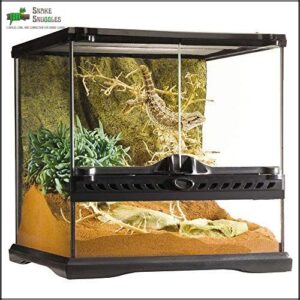
The Exo Terra Glass Reptile Terrarium Kit delivers classroom-ready features that simplify daily management while keeping your snake secure. You’ll appreciate the dual front-opening doors with lock mechanisms, which prevent accidental escapes and cut maintenance time by roughly 30%.
The raised bottom frame accommodates substrate heaters, and the patented front window ventilation promotes healthy airflow without creating drafts. At 12 x 12 x 12 inches, it’s ideal for smaller species like juvenile corn snakes or rosy boas, giving students clear visibility for observation.
| Best For | Educators or hobbyists looking for a secure, well-ventilated starter habitat for small snakes like juvenile corn snakes or rosy boas. |
|---|---|
| Material | Glass |
| Dimensions | 12x12x12 inches |
| Weight | 13.2 pounds |
| Ventilation | Full screen top |
| Door Type | Dual front doors |
| Color | Transparent |
| Additional Features |
|
- Dual front-opening doors with locks make feeding and cleaning easy while preventing escapes
- Raised bottom frame fits substrate heaters perfectly, and the patented front ventilation keeps airflow steady
- Compact 12 x 12 x 12 inch size offers great visibility for observation without taking up too much classroom or desk space
- Struggles to hold humidity without extra equipment like a humidifier, so it’s not ideal for tropical species
- Styrofoam background might feel flimsy or look cheap to some users
- Gets heavy once you add substrate and decorations, making it tough to relocate
2. Exo Terra Glass Terrarium Tank
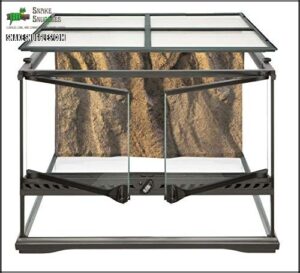
If you’re working with small terrestrial reptiles or planning a paludarium setup, the Exo Terra Glass Terrarium Tank (18L x 18W x 12H) offers the space and accessibility your classroom needs.
The front-opening dual doors allow you to feed and clean without disturbing your snake, while the full screen top ventilation facilitates healthy air exchange and permits UVB and infrared penetration. You’ll find five closable wire inlets on the back, which keep heating and humidity accessories organized and out of sight during student observation sessions.
| Best For | Small classrooms or educators housing terrestrial reptiles, amphibians, or creating paludarium setups who need easy access for feeding and cleaning without disturbing their animals. |
|---|---|
| Material | Glass |
| Dimensions | 18x18x12 inches |
| Weight | 27.5 pounds |
| Ventilation | Full screen top |
| Door Type | Front opening doors |
| Color | Black/Clear |
| Additional Features |
|
- Front-opening dual doors make maintenance and feeding simple without disrupting your reptile during student observations
- Full screen top ventilation allows proper UVB and infrared light penetration while maintaining healthy airflow
- Five closable wire inlets keep heating cables and humidity accessories neatly organized and hidden from view
- Screen lid may not hold humidity well if you’re keeping tropical species that need high moisture levels
- Background included with the tank often looks artificial and some users remove it entirely
- Ships as a glass product so there’s potential for damage in transit, requiring careful inspection upon delivery
3. Exo Terra Glass Terrarium Kit
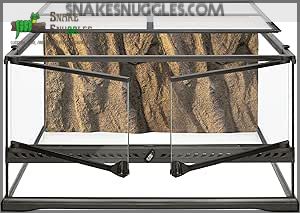
Another excellent option is the Exo Terra Glass Terrarium Kit, which combines secure front-opening doors with escape-proof locks—a feature you’ll appreciate when curious students gather around.
The raised bottom frame accommodates a substrate heater for gradual warmth, while the waterproof base prevents leaks during daily classroom cleaning. You can run cables and tubing through the back inlet system, keeping wires organized and safely out of reach.
The ventilation design promotes airflow without sacrificing security, making it practical for busy educational environments.
| Best For | Classroom settings and educational environments where secure access, organized cable management, and escape-proof design are essential for housing reptiles or amphibians. |
|---|---|
| Material | Glass |
| Dimensions | 24x18x12 inches |
| Weight | 13.66 kg |
| Ventilation | Mesh top |
| Door Type | Front opening doors |
| Color | Black/Clear |
| Additional Features |
|
- Front-opening doors with escape-proof locks keep animals secure even when curious students gather around
- Raised bottom frame fits substrate heaters while the waterproof base prevents leaks during daily cleaning
- Back inlet system routes cables and tubing neatly, keeping wires organized and out of reach
- Glass construction can break easily during shipping or handling
- Higher price point compared to similar terrariums on the market
- Units may arrive damaged, requiring returns or replacements
4. Repti Zoo Glass Terrarium Tank
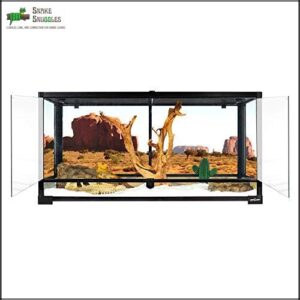
For a classroom-friendly enclosure that balances visibility with security, the Repti Zoo Glass Terrarium Tank offers dual front-opening doors that let you service the habitat without giving an excited snake a wide escape route. The anti-escape lock prevents accidental openings by curious students, while the raised bottom frame safely holds under-tank heaters for proper thermoregulation.
The front-opening design also simplifies weekly cage maintenance and spot-cleaning routines, keeping the habitat hygienic without stressing your snake during handling.
At 36 x 18 x 18 inches, it provides roughly 50 gallons of space—enough for young adult pythons or boas—and the clear front panel keeps observation engaging at eye level.
| Best For | Teachers and educators who need a secure, easy-to-maintain terrarium for classroom reptiles like young pythons, boas, or larger lizards. |
|---|---|
| Material | Glass |
| Dimensions | 36x18x18 inches |
| Weight | 51.9 pounds |
| Ventilation | Screen mesh top |
| Door Type | Double hinge door |
| Color | Black |
| Additional Features |
|
- Dual front doors let you feed and clean without opening the entire top, reducing escape opportunities in busy classroom settings
- Raised bottom frame accommodates under-tank heaters safely, keeping heating elements off direct floor contact
- Anti-escape locks and separate door operation add extra security when students are nearby
- Screen side panels may struggle to hold humidity for rainforest species that need 70% levels
- Top frame can feel flimsy under heavy lighting fixtures, so you may need external lamp stands
- Corner joints sometimes arrive damaged in shipping, requiring careful inspection on delivery
5. Carolina Custom Glass Terrarium Cage
 View On Amazon
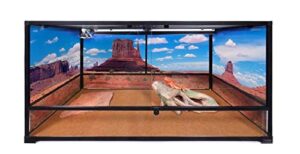
When your class needs something built for long-term use, the Carolina Custom Glass Terrarium Cage delivers reinforced corners, a waterproof base tray up to 7.5 inches deep, and recessed door tracks that keep substrate out of hinges.
That tray depth matters—it lets you layer bioactive soil mixes for Western Hognoses or Rosy Boas without mess spilling into the doorway, and the full steel mesh top maintains airflow while preventing escape.
Front-opening glass doors simplify feeding and cleaning during tight lesson windows, and the key-lock design reassures administrators watching for safety.
| Best For | Educators setting up permanent classroom habitats for medium-sized reptiles like bearded dragons or species requiring deep substrate for burrowing. |
|---|---|
| Material | Tempered Glass |
| Dimensions | 48x24x24 inches |
| Weight | 73 pounds |
| Ventilation | Steel mesh top |
| Door Type | Sliding doors |
| Color | Clear |
| Additional Features |
|
- Waterproof base tray holds up to 7.5 inches of substrate, making it perfect for bioactive setups without spillage into door tracks
- Front-opening glass doors with key-lock security allow quick access during class while keeping the enclosure secure when unsupervised
- Full steel mesh top provides excellent ventilation and prevents escapes while accommodating various UVB and heat lamp fixtures
- At 73 pounds and 48 inches wide, moving or repositioning the terrarium requires careful handling and possibly extra help
- Included suction cups for accessories may not hold well, requiring users to purchase stronger alternatives
- Door locks can malfunction if not installed precisely during assembly, requiring attention to detail during setup
Essential Features of Classroom Snake Terrariums
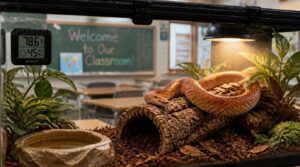
Not all terrariums work well in a classroom setting, and picking the wrong one can lead to preventable headaches down the road.
You need an enclosure that keeps your snake secure, stands up to curious hands and daily activity, and makes routine care manageable without disrupting lessons. Here are the essential features every classroom snake terrarium should have.
Secure Locks and Escape Prevention
When you’re responsible for twenty-five students, escape routes aren’t just about fire drills—they’re about keeping your snake safely inside its reptile enclosure.
Lock mechanisms matter here: choose grade 1 cylinders with reinforced strike plates anchored deep into studs, and add magnetic latches that re-lock automatically after 5 to 10 seconds. Secure latches prevent credit card style bypass, while your safety protocols should include badge reader access for terrarium setup and maintenance accountability.
Durable Materials for Daily Classroom Use
Your terrarium will face a daily gauntlet—curious fingers, accidental bumps, and the relentless humidity that comes with any classroom habitat. That’s why selecting reptile enclosures with battle-tested components protects both your investment and your class pets.
- Glass Panels: Tempered glass resists scratches and impact, maintaining clarity through years of student demonstrations.
- Durable Frames: Welded metal with powder-coated finishes won’t corrode or chip under humidity.
- Seal Materials: UV-resistant silicone gaskets prevent leaks while allowing easy removal for cleaning cycles.
- Easy Cleaning: Non-porous, anti-microbial coatings wipe clean with common disinfectants between classes.
- Hardwearing Substrates: High-density options like ReptiChip maintain structure under routine handling without crumbling.
Front-opening Doors for Easy Maintenance
When you’re juggling lesson plans and twenty-five curious students, top-lifting lids become a daily hassle.
Front-opening doors cut your maintenance time by roughly 30%, letting you spot-clean waste or refresh water bowls without disturbing decorations or stressing your snake.
Multi-point locking mechanisms guarantee door security while self-closing hinges keep the enclosure sealed between class periods, blending access ergonomics with reliable reptile care.
Proper Ventilation and Airflow
Think of airflow as the invisible lifeline your snake terrarium needs—screen vents positioned high on the enclosure promote natural convection, preventing mold and keeping CO2 levels below 1000 parts per million during classroom activities.
Aim for 4-6 air changes per hour using intermittent fans, balancing humidity control with reptile enclosure air quality monitoring so you won’t trigger shedding issues or respiratory stress in your classroom snake.
For deeper insight into maintaining effective ventilation strategies, consider how proper airflow enhances indoor environments.
Size Requirements for Different Snake Species
Choosing the right terrarium size isn’t guesswork—it’s a direct match between your snake’s adult dimensions and floor space that allows natural movement patterns.
Here’s what you’ll need for common classroom species:
- Hatchling enclosures start at 10-20 gallons, progressing upward as juveniles add 6-12 inches yearly
- Terrestrial ball pythons thrive in 40-gallon tanks once they reach 3-4 feet
- Arboreal needs demand vertical space—green tree pythons require tall reptile enclosures with climbing branches
- Corn snakes need 4-6 feet of horizontal length in adult dimensions for proper snake care and housing
Proper enclosure selection should always account for, as undersized tanks can substantially impact wellbeing.
Setting Up a Bioactive Terrarium in Schools
Setting up a bioactive terrarium transforms your classroom into a living laboratory where students can watch natural processes unfold right before their eyes.
You’ll need to build layers of substrate, introduce helpful organisms, and balance environmental systems to create a self-sustaining ecosystem. Here’s how to get your bioactive setup running smoothly from the ground up.
Choosing Substrates (e.g., ReptiChip Coconut Reptile Substrate Bedding)
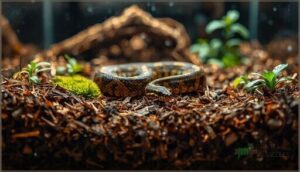
Your classroom’s foundation starts beneath your snake’s belly.
ReptiChip coconut substrate stands out because it hydrates to about 72 quarts from one 10-pound brick, holds moisture well for humidity control, and stays low-dust for young lungs.
You can layer bioactive mixes 3–4 inches deep to encourage natural burrowing behavior while supporting the microorganisms that keep your terrarium thriving between cleanings.
Selecting Live Plants and Safe Decor
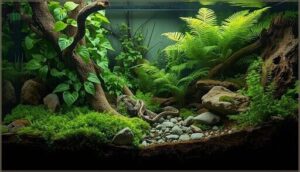
Once your substrate is in place, focus on plant toxicity and decor safety to protect both snakes and curious hands. Non-toxic ferns, mosses, and pothos thrive in bioactive terrariums without chemical leaching, while natural stones and untreated cork maintain microclimate balance.
Anchor smooth-edged pieces firmly to prevent shifting, layer taller plants toward the back for terrarium layout visibility, and group species by humidity control needs to simplify ecosystem management across your bioactive habitats.
Introducing Microorganisms and Clean-up Crews
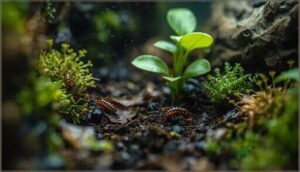
After plants settle, beneficial microbe benefits emerge when you add springtails and isopods—tiny cleanup roles stars that digest waste, maintain ecosystem balance, and support waste cycling throughout your bioactive substrate. These crews boost biodiversity while breaking down feces and shed skin, so your bioactive terrariums stay fresh with minimal intervention.
- Introduce tropical springtails for mold control and humidity tolerance
- Add dwarf white isopods to process organic debris efficiently
- Monitor microbial safety by watching for excess moisture or odor
- Refresh populations every few months to sustain ecosystem management
Balancing Humidity, Lighting, and Heating Systems
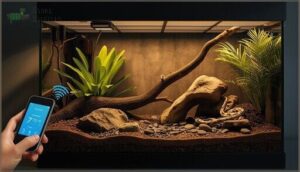
Once your cleanup crew gets rolling, you’ll need to fine-tune humidity control, lighting cycles, and heat management so your terrarium design creates stable climate zones. Install sensors to monitor conditions in real time, then calibrate them quarterly for accuracy. Heating systems should create a warm basking zone around 90–95°F while ambient areas stay 78–85°F. Use timers for 12-hour lighting schedules, and always position heat sources away from water features to prevent condensation buildup in your reptile enclosure design.
| System | Target Range | Control Method | Monitoring Frequency | Seasonal Adjustment |
|---|---|---|---|---|
| Humidity | 40–60% RH | Substrate moisture + drainage | Daily hygrometer checks | Increase ventilation in summer |
| Lighting | 12-hour day/night | Dimmable LED with timer | Weekly visual inspection | Adjust intensity for cloud cover |
| Heating | 78–95°F gradient | Thermostat-controlled mat or emitter | Continuous probe monitoring | Raise basking temp in winter |
| Ventilation | Moderate airflow | Screened vents + fan | Weekly mold checks | Boost airflow in humid months |
| Sensors | Calibrated readings | Digital network with manual override | Quarterly calibration | Record trends for proactive tweaks |
Maintenance Tips for Classroom Snake Terrariums
Keeping a classroom snake terrarium in top shape doesn’t have to eat up your planning time, but it does require consistency. A few simple routines each week, paired with careful monitoring, will keep your snake healthy and your students engaged without adding stress to your day.
Here’s what you need to stay on top of to maintain a thriving classroom habitat.
Weekly Cleaning and Spot Checks
You’ll keep your snake terrarium thriving when you stick to consistent cleaning schedules that protect both students and your scaly classroom companion. Weekly terrarium sanitation combined with daily spot check protocols creates a safe learning environment while maintaining proper ventilation management and animal welfare standards.
- Wipe glass panels weekly to remove condensation and fingerprints that block student observation of natural behaviors
- Inspect locking mechanisms and ventilation during each cleaning to prevent escapes and respiratory issues
- Remove waste within two hours to reduce odor, mold risk, and maintain healthy reptile enclosure design
- Document observations in maintenance logs tracking temperature, humidity, and any unusual behavior for early intervention
Substrate Replacement Schedules
Regularly scheduled substrate changes keep your classroom terrarium healthy and odor-free while supporting student learning. Replacement frequency depends on terrarium size, humidity control needs, and whether you’re maintaining a bioactive substrate with microfauna balance.
| Substrate Type | Replacement Frequency |
|---|---|
| ReptiChip coconut fiber | Every 3-5 weeks |
| Cypress mulch | Every 2-3 weeks |
| Bioactive substrate with cleanup crew | Refresh surface monthly, deep layers 4-8 weeks |
| Paper towel liners | Weekly or when soiled |
| Coconut fiber blends | Every 2-4 weeks |
Strong ammonia odors, visible mold, or damp clumps signal immediate replacement needs regardless of schedule, protecting substrate longevity and your snake’s respiratory health while teaching students about odor management and ecosystem balance.
Monitoring Temperature and Humidity
Daily sensor checks give you real-time snapshots of temperature control and humidity management, ensuring climate zones stay stable for reptile health and wellness.
Mount humidity sensors away from heat sources to avoid skewed readings, then use digital thermometers to confirm temperature gradients across your terrarium size.
Proper ventilation systems prevent mold while balancing humidity control, so students can track shifts and adjust heating elements as needed.
Safe Feeding Routines in Educational Settings
Feeding schedules that work in classrooms mean setting specific days—often weekends—to handle snake nutrition away from students, maintaining hygiene practices and student safety.
You’ll assign trained staff to thaw prey safely, use separate utensils for each class pet, and wash hands before and after to protect reptile health.
Document every meal to track animal welfare and ethics, ensuring your snake care promotes strong animal care routines.
Emergency Protocols for Snake Escapes
No teacher wants to face a Snake Escape, but having a Crisis Management plan turns panic into calm, coordinated action. Your Lockdown Procedures should include:
- Close classroom doors, post warning signs, and restrict student access to guarantee Snake Containment
- Notify administration immediately and contact licensed animal control within 24 hours for safe Snake Care
- Document the incident with time, location, and snake behavior for responders and future Enclosure Security improvements
- Never attempt solo retrieval; wait for professionals equipped with proper tools and Animal Welfare training
Emergency Alerts protect everyone when Reptile Enclosures fail, and a solid Escape Response keeps your bioactive Snake Terrariums educationally safe.
Educational Benefits of Snake Terrariums
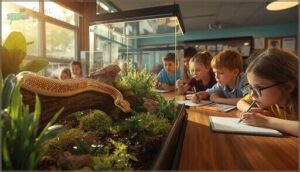
A snake terrarium in your classroom isn’t just a glass box with bedding—it’s a living laboratory that transforms abstract science concepts into observable, touchable reality. Your students won’t just read about ecosystems or animal behavior; they’ll witness predator-prey relationships, track temperature regulation, and document biological processes as they unfold right before their eyes.
A classroom snake terrarium transforms abstract science into a living laboratory where students witness ecosystems and animal behavior in real time
The educational value extends far beyond biology, touching on responsibility, empathy, and the kind of hands-on engagement that textbooks simply can’t replicate.
Promoting Hands-on Science Learning
A living terrarium turns abstract science concepts into hands-on learning that sparks real student engagement. You’ll see your class pets become powerful educational technology as students collect data, measure humidity, and document ecosystem changes.
These classroom dynamics shift when learners test hypotheses through science experiments, building critical thinking skills that textbooks alone can’t deliver. That’s the promise of authentic science education in your teaching profession.
Observing Ecosystems and Animal Behavior
Your students will watch ecosystem dynamics unfold as snakes use burrows to regulate temperature and shift between microhabitats based on prey availability. They’ll record behavioral patterns like tongue flicking for olfactory cues and heat-sensing during feeding, documenting species interactions that reveal animal adaptations.
These habitat observations transform your terrarium into a living laboratory where natural habitats illustrate reptile behavior, habitat selection, and the interconnected web of class ecosystems.
Teaching Responsibility and Animal Welfare
Beyond observation, your classroom snake becomes a daily lesson in humane education and animal welfare. Caring for a living creature teaches students that responsibility lessons extend beyond feeding schedules—they’re about meeting welfare standards through consistent action.
Here’s how snake terrariums build animal ethics skills:
- Daily health monitoring develops empathy and empirical observation, helping students detect appetite loss or behavioral changes
- Cleaning routines reinforce classroom safety protocols while demonstrating how environment directly impacts animal welfare and ethics
- Handling guidelines emphasize consent and stress reduction, modeling respectful animal care and conservation practices
- Record-keeping tracks welfare needs—diet, temperature, behavior—building accountability in teaching profession and pedagogy
- Emergency drills incorporate reptile care considerations, integrating classroom management and organization with animal welfare priorities
You’ll watch your students transform from passive learners into thoughtful advocates who understand that welfare needs aren’t abstract concepts—they’re daily commitments.
Enhancing Classroom Engagement and Curiosity
That spark of curiosity you’re cultivating turns into sustained engagement when students encounter a live snake. Student reactions—widened eyes, spontaneous questions—signal emotional investment in science education in the classroom.
These hands-on learning experiences sharpen inquiry skills as learners observe molting, feeding, and thermoregulation firsthand. You’re not just teaching animal care and conservation; you’re dispelling myths through active learning that transforms passive listeners into engaged scientists.
Frequently Asked Questions (FAQs)
What is the best snake for a classroom?
Ball pythons remain the top choice for classroom pets thanks to their calm temperament and reluctance to bite, while corn snakes offer similar handling tolerance with slightly more active behavior.
Can you use a terrarium for snakes?
Yes, terrariums work well for snakes when properly sized and equipped.
Glass terrariums provide visibility for observation, while bioactive systems can create naturalistic reptile habitats that support both snake welfare and hands-on reptile care.
Can a snake plant survive in a terrarium?
A snake plant can thrive in a glass terrarium or reptile terrarium if you provide proper ventilation and avoid overwatering—its drought-tolerant roots need slightly drying substrate between waterings to prevent rot.
How big of a terrarium does a snake need?
Your snake’s enclosure should match its adult length—aim for terrarium size at least 5 times the snake length, with proper enclosure depth and ventilation needs to support humidity control in any reptile enclosure or snake habitat.
What snake species are best for classroom beginners?
Corn Snakes stand out as the top beginner species, reaching 3 to 5 feet with calm temperaments that tolerate student engagement.
While Ball Pythons and Rosy Boas offer similarly manageable sizes and docile reptile behavior.
How often should classroom snakes be fed?
Most classroom specimens thrive on feeding schedules of once every 7 to 14 days, with juveniles requiring meals every 5 to 7 days to support healthy growth and digestive health.
Can multiple snakes share one classroom terrarium?
Most species are solitary by nature, so cohabitation risks include aggression, stress, and competition for resources.
Garter snakes may tolerate shared housing with doubled space, though individual terrariums simplify classroom safety and reptile health monitoring.
What are the startup costs for classroom terrariums?
Budget planning for glass terrariums requires careful cost analysis of your initial investment: terrarium kits run $100–$350, heating and lighting systems add $50–$180, and substrate materials total $30–$120 per setup.
Do classroom snakes require veterinary checkups regularly?
Yes, snakes need veterinary care—annual or semiannual checkups help catch respiratory infections, parasites, and weight issues early, ensuring animal wellness and reptile health through preventive measures that support pet health and happiness.
Conclusion
Picture your fourth graders discovering a corn snake’s freshly shed skin one Monday morning, their excitement turning abstract lessons about growth into tangible wonder.
That transformation happens when you’ve chosen snake terrariums for classrooms that balance security with visibility, durability with accessibility. The right enclosure doesn’t just house an animal—it becomes a living laboratory where responsibility, observation skills, and genuine scientific curiosity develop naturally, one terrarium check at a time.