This site is supported by our readers. We may earn a commission, at no cost to you, if you purchase through links.
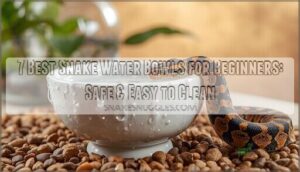
Your snake’s water bowl isn’t a detail you can afford to get wrong. Within 24 to 48 hours of inadequate hydration, a healthy snake can show sunken eyes, wrinkled skin, and lethargy—early warnings that cortisol is spiking, white blood cell function is dropping, and pathogens are gaining ground.
Dehydration doesn’t just make shedding harder; it compromises digestion, nutrient transport, and immune defense at a cellular level. Beginners often underestimate how fast small snakes lose fluids or how bacterial biofilm colonizes the wrong bowl material, turning what should be a lifeline into a contamination risk.
Choosing the right water bowl means understanding materials, stability, cleaning protocols, and placement—decisions that directly affect whether your snake thrives or struggles with preventable health setbacks.
Table Of Contents
- Key Takeaways
- Why Snake Water Bowls Matter for Beginners
- Choosing The Right Water Bowl Material
- Key Features to Look for in Snake Water Bowls
- Top Snake Water Bowls for Beginners
- Cleaning and Maintaining Snake Water Bowls
- Frequently Asked Questions (FAQs)
- Why put a penny in a snake water bowl?
- How big of a water bowl do snakes need?
- Why does my snakes water bowl get slimy?
- How often should I change my snake water bowl?
- How often should I replace my snakes water bowl?
- Can snakes drink tap water safely?
- Do all snake species need soaking bowls?
- What if my snake never uses the water bowl?
- Should I use distilled or spring water instead?
- Conclusion
Key Takeaways
- Dehydration in snakes triggers within 24-48 hours and crashes immune function by spiking cortisol, suppressing white blood cells, and compromising digestion, shedding, and pathogen defense at the cellular level.
- Non-porous materials like stainless steel, glass, or glazed ceramic prevent bacterial biofilm colonization that plastic and porous bowls harbor in scratches, turning water sources into contamination risks.
- Weighted, stable bowl designs with wide bases (3-4 inch diameter, 1-1.5 inch depth) prevent tipping and drowning while daily water changes and weekly deep cleans stop slimy biofilm buildup that doubles bacterial colonies every 20 minutes.
- Strategic bowl placement at least 6 inches from feeding stations, away from loose substrate, and at appropriate heights for arboreal versus terrestrial species directly determines whether your setup becomes a hydration zone or a bacterial hotspot.
Why Snake Water Bowls Matter for Beginners
Your snake’s water bowl isn’t just a container—it’s the foundation of hydration, healthy shedding, and immune defense. Without consistent access to clean water, dehydration sneaks in fast, triggering stress responses that compromise your snake’s ability to fight off illness.
Regular bowl cleaning also reduces the risk of scale rot and respiratory infections—two issues closely tied to proper ball python water requirements.
Let’s break down why this simple piece of equipment deserves your attention from day one.
Hydration’s Role in Snake Health
Water quality shapes everything about reptile wellness, from digestion to skin health. Your snake’s water bowl isn’t just a drinking spot—it’s central to hydration therapy that fuels nutrient absorption, regulates body temperature, and aids kidney function during waste removal.
Here’s what proper reptile hydration delivers:
- Smoother, more complete shed cycles with fewer retained patches
- Stable blood osmolality supporting immune cell function and mucous membranes
- Enhanced metabolism, growth patterns, and daily activity levels
Snake nutrition depends on adequate water intake to break down prey and transport nutrients through the bloodstream. Owners should regularly monitor for to guarantee healthy reptile health.
Risks of Dehydration in Captive Snakes
Without steady access to clean water, your snake faces serious trouble—sunken eyes, wrinkled skin, and lethargy signal advancing dehydration. Small snakes lose fluids faster due to higher surface area relative to body mass, making daily water quality checks and humidity control non-negotiable.
Dehydration signs often appear within 24 to 48 hours of low humidity or poor reptile water bowl selection, triggering digestive slowdown, kidney stress, and incomplete sheds that compromise snake behavior and long-term health monitoring.
You can learn more about the key signs of dehydration in snakes to watch for as part of routine care.
Stress and Immune Function Linked to Water Access
Beyond physical decline, your snake’s immune response crashes when water access becomes unpredictable. Stress from inconsistent hydration therapy elevates cortisol, suppressing white blood cell function and antibody production—leaving your snake vulnerable to respiratory infections and parasites.
Unpredictable water access crashes your snake’s immune response, spiking cortisol and leaving them defenseless against respiratory infections and parasites
Clean reptile water bowls and reliable water quality directly support mucosal immunity, pathogen clearance, and stress management, transforming dehydration risks into preventable problems through proper water bowl safety.
Choosing The Right Water Bowl Material
The material you choose for your snake’s water bowl directly impacts their health, safety, and your cleaning workload. Ceramic, glass, and stainless steel each come with distinct advantages and drawbacks that beginners need to understand before making a purchase.
Let’s break down what works, what doesn’t, and why non-porous surfaces matter more than you might think.
Pros and Cons of Ceramic, Glass, and Stainless Steel

Looking for a bowl that stands up to real life? Here’s what matters:
- Ceramic bowls offer Material Durability and Bowl Stability, but they chip easily.
- Glass is great for Water Quality—simple to clean, but shatters if dropped.
- Stainless steel bowls nail Bowl Maintenance and Water Bowl Safety but can get noisy or cold, impacting Snake Safety and Hydration Needs.
Dangers of Plastic and Porous Materials
Complacency with plastics spells trouble: Toxic Leachings, Microplastic Risks, and Chemical Contamination lurk in every pour.
Switching to safer feeding tools like stainless steel tongs designed for reptile care eliminates plastic exposure while keeping your snake safe during meals.
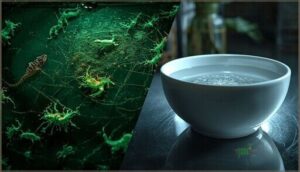
Porous Material Dangers turn ordinary Reptile Water Bowls into bacterial petri dishes—scratches breed Biofilm Formation, hidden pockets of pathogens.
For Water Bowl Safety and Design, ditch anything not a Nonporous Surface. Why risk Bacterial Infections when prevention lies in your hands?
Importance of Non-reactive, Non-porous Surfaces
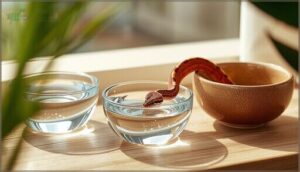
Material Safety begins at the surface—your snake’s health hinges on using a Water Bowl with Chemical Resistance and a true Nonporous Surface. That’s why glass, stainless steel, or glazed ceramic reign dominant for Reptile Hydration.
These bowls repel bacteria, guarantee easy Bowl Sanitization, and defend Water Quality. Surface Durability also means your Snake Water Bowls last through daily disinfecting.
Key Features to Look for in Snake Water Bowls
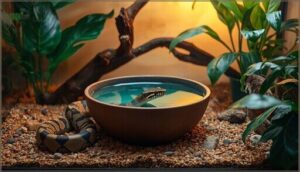
Choosing a water bowl for your snake isn’t just about what looks good in the enclosure. You need something that balances stability, easy cleaning, and safety every single day.
Let’s break down the features that make each bowl a smart pick for your setup.
Weighted and Stable Designs to Prevent Tipping
A snake water bowl that tips isn’t just a mess—it’s a threat. Prioritize Stable Base Designs and Weighted Bowls with a low center of gravity for real tipping prevention. Counterweight systems in reptile water bowls add extra security, so your snake’s water stays where it belongs.
For water bowl safety and design, insist on wide, weighted, non-slip bases—nothing less.
Correct Bowl Size and Depth for Safety
If you’re still using a bowl that’s too big, too deep, or too easy to tip, you’re gambling with your snake’s safety.
Stick with Bowl Depth Guidelines: 3 to 4-inch top diameter, 1 to 1.5-inch depth—these Safe Water Levels offer reliable Snake Access, promote Bowl Stability, and guarantee precise Water Volume Control for every sip.
Easy-to-clean Features and Maintenance Tips
A water bowl that’s truly easy to clean should have surface materials smooth as glass, not a rough trap for biofilm. Choose a bowl size you can scrub thoroughly with your dedicated cleaning tools.
Stick closely to your maintenance schedule—daily water change, weekly bowl sanitizing. Consistency isn’t just about water quality. It’s your frontline defense against contamination and costly health setbacks.
Bowl Placement to Avoid Contamination
Placement determines whether your water bowl becomes a contamination hotspot or a safe hydration zone. Position the bowl on a stable, non-slipping surface at least 6 inches from feeding stations to prevent bacterial infections from fecal matter.
Substrate management around the water zone matters—avoid loose materials that stick to rims and compromise water quality. Smart enclosure design respects snake behavior while protecting reptile hydration.
Top Snake Water Bowls for Beginners
You’ve nailed the fundamentals—material, stability, and ease of cleaning—so now it’s time to match those priorities with actual products that won’t let you down.
The bowls below span different sizes, designs, and price points, but they all share the non-porous surfaces, weighted bases, and maintenance-friendly construction that prevent tipping, contamination, and bacterial colonization. Each option has been selected for beginners who need reliable hydration solutions without the trial-and-error headaches that come with subpar designs.
1. Exo Terra Reptile Water Dish
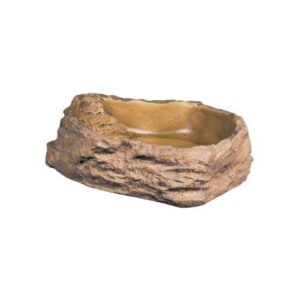
This rock-finished bowl brings natural aesthetics without sacrificing safety—its smooth, non-porous interior resists biofilm and bacterial colonization, while the realistic exterior blends seamlessly into desert or tropical setups.
You’ll appreciate the wide, stable base that prevents tipping even when your larger snake climbs in for a soak. Made from food-grade resin, it eliminates chemical leaching concerns, and the subtle safety steps inside deter crickets or pinkie mice from drowning.
At 8.7 x 6.7 x 2 inches, it fits most beginner enclosures comfortably.
| Best For | Beginner to intermediate keepers looking for a stable, low-maintenance water dish that fits smaller to medium-sized reptiles and amphibians in standard enclosures. |
|---|---|
| Material | Plastic |
| Easy to Clean | Yes |
| Target Species | Reptiles & Amphibians |
| Indoor Use | Yes |
| Color | Multi |
| Weight | 1 kg |
| Additional Features |
|
- Non-porous surface prevents bacterial buildup and makes cleaning straightforward
- Wide, stable base stops tipping when animals climb in, even larger snakes
- Built-in safety steps help prevent drowning for feeders and smaller tank inhabitants
- Textured rock finish can trap debris in crevices despite the smooth interior
- Weight makes frequent lifting and cleaning more of a chore for some users
- Reported sizing inconsistencies mean it might not fit your setup as expected
2. Boao Reptile Food Water Bowls
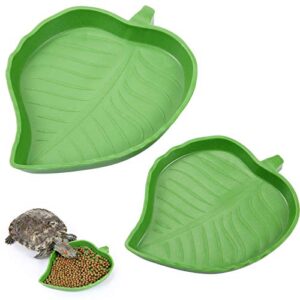
For budget-conscious keepers, these leaf-shaped plastic bowls deliver surprising functionality—the two-piece set lets you dedicate one to water, the other to food, while the smooth surfaces resist typical staining and wipe clean in seconds.
At 6.06 x 4.88 x 0.59 inches for the large size, they suit corn snakes, ball pythons, and similarly sized species without crowding smaller enclosures. The striped texture and broad base discourage tipping on aspen or paper substrate, though you’ll want to secure them against enthusiastic climbers.
| Best For | Budget-conscious reptile keepers with small to medium snakes, lizards, or tortoises who want separate food and water dishes without breaking the bank. |
|---|---|
| Material | Plastic |
| Easy to Clean | Yes |
| Target Species | Small Reptiles |
| Indoor Use | Yes |
| Color | Green |
| Weight | 2.89 oz |
| Additional Features |
|
- Two-bowl set at an affordable price gives you dedicated food and water stations right out of the box
- Smooth plastic surface cleans up quickly and resists the staining you’d get with porous materials
- Textured base and low profile help prevent tipping, even with active pets moving around the enclosure
- Plastic construction feels lightweight and may not hold up to larger, stronger reptiles over time
- Larger pets will outgrow these quickly—the big size maxes out around 6 inches
- You’ll likely need to anchor them down for climbers or particularly active species
3. SLSON Gecko Feeder Ledge
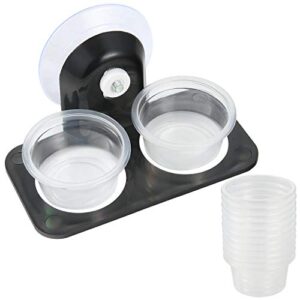
If your arboreal species needs elevated hydration—think green tree pythons or emerald tree boas—this magnetic ledge breaks the substrate-contamination cycle that plagues floor bowls. The 1-ounce cups snap into resin slots, magnets lock to glass without adhesive residue, and you can reposition the entire unit in seconds when reorganizing vertical space. At roughly 4.5 x 2.4 inches, it won’t accommodate large constrictors, but for juveniles and slim-bodied climbers, it delivers clean water at canopy height where they actually drink.
| Best For | Keepers of arboreal geckos, tree pythons, or other climbing reptiles that need elevated water access without cluttering vertical terrarium space. |
|---|---|
| Material | Plastic |
| Easy to Clean | Yes |
| Target Species | Small Reptiles & Amphibians |
| Indoor Use | Yes |
| Color | Black |
| Weight | Light |
| Additional Features |
|
- Strong suction cup keeps the ledge stable on glass surfaces, so you can position it at canopy height where arboreal species actually drink
- Comes with 20 replacement cups, making it easy to swap out dirty bowls and maintain clean water without constant scrubbing
- Compact 4.5-inch design fits neatly in smaller terrariums without blocking climbing routes or sight lines
- Suction cup loses grip on dirty or textured surfaces, so you’ll need to clean the glass and reattach it periodically
- The 1-ounce cups are too small for larger snakes or multiple animals, limiting its use to juveniles or slim-bodied climbers
- Replacement cups don’t always fit snugly in the ledge holes, which can lead to wobbly bowls or spills
4. Zoo Med Reptile Rock Dish
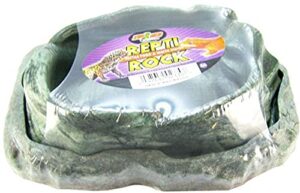
Terrestrial snakes prefer ground-level access, and Zoo Med’s resin rock dish delivers stability without the brittle risk of ceramic. Its non-porous surface resists biofilm colonization, cleans fast with warm water and reptile-safe disinfectant, and dries between daily changes to prevent bacterial growth.
Multiple sizes accommodate hatchlings through adult colubrids, the wide footprint fights tipping when curious heads nudge edges, and shallow depth eliminates drowning hazards. The textured exterior mimics natural basking surfaces, blending into naturalistic setups while keeping substrate and fecal matter out of drinking water.
| Best For | Snake keepers who need a stable, easy-to-clean water dish that won’t tip over and fits naturally into terrariums. |
|---|---|
| Material | Plastic |
| Easy to Clean | Yes |
| Target Species | Reptiles |
| Indoor Use | Yes |
| Color | Natural Rock |
| Weight | Medium |
| Additional Features |
|
- Non-porous surface resists bacteria buildup and cleans quickly with warm water
- Wide, shallow design prevents tipping and eliminates drowning risks for snakes of all sizes
- Rock-like texture blends into naturalistic setups while keeping substrate out of water
- Color options aren’t available when ordering online
- Medium size may be too large for baby or juvenile snakes
- Some feeders like mealworms can climb out easily
5. Fluker’s Reptile Corner Bowl
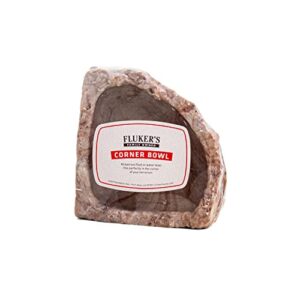
Tight terrarium real estate calls for corner placement, and Fluker’s Corner Bowl maximizes footprint with a flush-fit design that nests into edges without protruding into high-traffic zones. The nonporous resin surface mimics natural rock while resisting bacterial absorption between cleans, tolerates dishwasher-safe sanitizing, and stays lightweight for quick removal during daily water changes.
The large version spans around nine inches, offering practical capacity for mid to larger snakes without drowning-depth risk, while the weighted base fights tipping on gravel or liner substrates during routine climbing activity.
| Best For | Reptile owners with limited terrarium space who need a dual-purpose food and water dish that fits neatly into corners. |
|---|---|
| Material | Plastic |
| Easy to Clean | Yes |
| Target Species | Reptiles |
| Indoor Use | Yes |
| Color | Gray |
| Weight | 14.4 oz |
| Additional Features |
|
- Corner design saves valuable floor space in smaller terrariums
- Fade-resistant plastic is easy to clean and dishwasher-safe
- Provides enough depth for reptiles to soak while maintaining a natural look
- Color may vary slightly from what’s shown online
- Medium 6-inch size may be too small for larger reptiles
- Plastic construction lacks the durability and natural feel of ceramic or stone alternatives
6. Flushbay Reptile Bathing Pool Dish
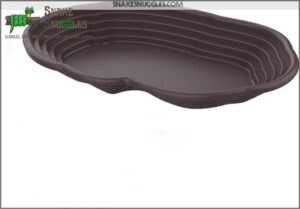
Soaking benefits multiply with Flushbay’s design, which eliminates drowning anxiety for smaller snakes while offering a spacious 15-inch platform for hydration, bathing, and casual lounging. The shallow basin reaches just two to four centimeters deep, preventing submersion accidents during shed cycles, while the gradual incline accommodates nervous hatchlings and adults alike without barriers to entry.
Constructed from durable ABS plastic with smooth, non-porous surfaces, this dish resists bacterial colonization and rinses clean with warm water and reptile-safe disinfectants, maintaining hygiene between deep cleans.
| Best For | Snake owners seeking a safer shallow-water dish that prevents drowning during sheds while accommodating multiple reptile species in one easy-to-clean basin. |
|---|---|
| Material | ABS Plastic |
| Easy to Clean | Yes |
| Target Species | Tortoise & Reptiles |
| Indoor Use | Yes |
| Color | Black |
| Weight | Heavy |
| Additional Features |
|
- Shallow 2-4cm depth eliminates drowning risk for hatchlings and smaller snakes during vulnerable shed cycles
- Large 15-inch platform works as water bowl, food dish, and soaking area with integrated ramp for easy access
- Non-porous ABS plastic resists bacteria and cleans quickly with warm water between deep sanitizing sessions
- Takes up considerable room in smaller enclosures due to 15-inch length
- Limited depth won’t satisfy reptiles needing deeper water for full-body soaking
- Not completely watertight, which could cause leakage issues in some setups
7. Hakchert Reptile Corner Water Bowl
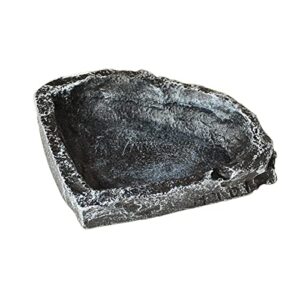
Corner setups conserve floor space without sacrificing water access, and this triangular design takes advantage of dead zones in your terrarium while offering a three-to-four-inch drinking surface for small to medium snakes.
Expect to fill about eight to twelve ounces weekly, maintaining 0.9 to 1.2 inches of depth to prevent overflow and drowning incidents during shed cycles. The non-porous plastic construction resists bacteria colonization, while rounded edges eliminate snagging on climbing branches, making daily top-ups and weekly deep cleans straightforward for nervous first-time keepers.
| Best For | Small to medium reptile owners who want to maximize terrarium space while providing a safe, easy-to-clean water source for their pets. |
|---|---|
| Material | Resin |
| Easy to Clean | Yes |
| Target Species | Reptiles |
| Indoor Use | Yes |
| Color | Natural Rock |
| Weight | 1 lb |
| Additional Features |
|
- Corner design saves floor space and fits into unused areas of your tank
- Non-porous ABS plastic resists bacteria and makes cleaning simple
- Rounded edges prevent snagging and are safe for reptiles during shedding
- Shallow depth may not work well for larger reptiles or those that like to soak
- Plastic material might not hold up to pets that chew or dig aggressively
- Small size limits use to compact species like geckos and young snakes
Cleaning and Maintaining Snake Water Bowls
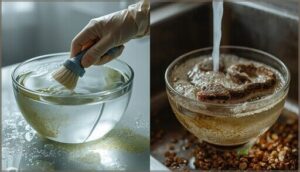
Your snake’s water bowl can become a breeding ground for biofilm and pathogenic bacteria within 24 to 48 hours if you skip basic maintenance routines.
Daily water changes and weekly deep cleans aren’t optional—they’re the difference between a thriving snake and a sick one fighting preventable infections.
Here’s how to keep your water bowl safe, clean, and free from the slimy buildup that compromises your snake’s health.
Daily Water Changes and Weekly Deep Cleans
Keeping your snake water bowls free of biofilm and pathogens demands consistent effort, not guesswork. Daily water changes involve removing 10 to 25 percent of the bowl water to dilute waste, maintain hydration schedules, and prevent bacterial colonization.
Weekly deep cleans require scrubbing with hot water to eliminate slimy buildup, rinsing thoroughly, and inspecting for cracks—simple cleaning techniques that safeguard reptile hydration and water quality.
Safe Disinfectants and Cleaning Methods
Proper disinfectant safety begins with EPA-registered products that list bactericidal and virucidal activity—your first line of defense against bacterial infections and mold prevention.
Sanitizing techniques for water bowl sterilization demand pre-cleaning with soap, exact dilution per label directions, and complete contact time on non-porous surfaces like ceramic or stainless steel. Rinse thoroughly after cleaning protocols to remove residues, protecting your snake from chemical exposure while maintaining water purification standards.
Inspecting for Cracks and Replacing Bowls
Crack detection starts with weekly inspections of the outer surface and interior for hairline fractures wider than 0.5 millimeters—these compromise water safety and harbor pathogens. Apply gentle lateral pressure near suspected damage to test bowl integrity.
Choose non-porous ceramic or stainless steel replacements with weighted bases, prioritizing reptile water bowls that resist bacterial colonization and support ongoing snake care and maintenance. Bowl replacement becomes urgent when cracks penetrate the wall thickness or show expansion, threatening snake hydration.
Preventing Slimy Buildup and Contamination
Biofilm prevention requires hands-on microbe control beyond replacing cracked bowls—wash your hands before handling water bowls to stop introducing bacteria, then rinse enclosure surfaces post-cleaning to eliminate residual slime.
Daily water changes and dedicated brushes prevent cross-contamination in bowl sanitizing routines. Maintain consistent temperature and humidity for reptile hydration while keeping substrate away from bowl edges, ensuring water quality and management fosters long-term snake care and maintenance through disciplined hygiene practices.
Frequently Asked Questions (FAQs)
Why put a penny in a snake water bowl?
Some breeders claim copper-rich pennies reduce algae and bacteria in snake water bowls, but veterinary experts warn copper toxicity outweighs purported benefits.
Daily water changes remain the safest, proven method for maintaining reptile hydration quality.
How big of a water bowl do snakes need?
Hatchlings need small fruit-cup-sized bowls, 1-2 centimeters deep. Adults require 3-6 inch diameter bowls with 2-4 centimeter depth.
Bowl size depends on your snake’s species, head size, and whether soaking occurs during shedding.
Why does my snakes water bowl get slimy?
That slimy film is biofilm—a colony of bacteria, algae, and fungi thriving in stagnant water.
Warm temps and organic matter accelerate microbe growth, turning your bowl into a slippery bacterial breeding ground within days.
How often should I change my snake water bowl?
You need to change your snake’s water daily—bacterial colonies double every 20 minutes in stagnant water.
Weekly deep cleaning with reptile-safe disinfectant prevents biofilm buildup, maintains water quality control, and protects hydration needs.
How often should I replace my snakes water bowl?
Replace your snake water bowl when cracks, chips, or scratches appear—these defects harbor bacteria and compromise water quality.
Even with daily cleaning, bowl maintenance demands replacement every one to three months to guarantee proper snake hygiene and reptile hydration.
Can snakes drink tap water safely?
Is tap water safe for your snake? Most tap water works fine for snake hydration when dechlorinated through conditioning or 24-hour settling, ensuring water quality while avoiding distilled water that lacks essential minerals for reptile water bowls.
Do all snake species need soaking bowls?
Tropical species often soak during shed cycles to maintain skin moisture, but desert snakes rarely require soaking bowls—they rely on ambient humidity instead.
Individual snake behavior varies, so tailor water bowl depth and access accordingly.
What if my snake never uses the water bowl?
Like a canary in a coal mine, your snake’s refusal to drink signals stress, poor bowl placement, or environmental issues.
Check hydration signs, adjust temperatures, verify water quality, and consult a vet if dehydration persists.
Should I use distilled or spring water instead?
You can use either spring water or distilled water for your snake.
Spring water offers natural mineral content that promotes reptile hydration, while distilled water prevents mineral buildup in reptile water bowls and simplifies water bowl selection and maintenance.
Conclusion
Like a locked door without a key, the wrong bowl can seal off your snake’s path to health—no matter how perfect the rest of your setup.
Snake water bowls for beginners aren’t accessories; they’re survival tools that determine whether dehydration, infection, or stress derail months of progress.
Choose stable materials, clean relentlessly, and place strategically. Your snake’s immune system, digestion, and shedding cycles depend on decisions you make today—not tomorrow.