This site is supported by our readers. We may earn a commission, at no cost to you, if you purchase through links.

You can’t just eyeball it and hope for the best. Whether you’re housing a ball python or installing electrical components, getting the dimensions wrong means compromised safety, reduced lifespan, and potential regulatory violations.
Minimum enclosure size requirements exist because cramped spaces lead to overheating, poor airflow, stress, and in some cases, outright danger. The math isn’t complicated, but the consequences of skipping it are.
From calculating component clearances to understanding species-specific needs, proper sizing protects what’s inside while keeping you compliant with welfare standards and electrical codes. Let’s break down exactly how to determine the right dimensions for your setup.
Table Of Contents
- Key Takeaways
- What Are Minimum Enclosure Size Requirements?
- Key Factors Influencing Enclosure Size
- Calculating The Right Enclosure Dimensions
- Impact of Material and Design on Space
- Regulatory and Safety Considerations
- Species-Specific Housing Requirements
- Common Mistakes in Enclosure Size Selection
- Frequently Asked Questions (FAQs)
- How big should an animal enclosure be?
- What is the bare minimum size for a hamster cage?
- What are the common enclosure sizes?
- How do humidity levels affect enclosure size?
- What clearances are required around electrical enclosures?
- Can multiple species share the same enclosure?
- How often should enclosure size be reassessed?
- What are portable enclosure minimum size requirements?
- Conclusion
Key Takeaways
- Proper enclosure sizing isn’t optional—cramped spaces lead to overheating, stress, poor airflow, and serious safety violations for both animals and electrical equipment.
- Calculate dimensions by listing all components, adding clearance for airflow (at least 5mm per side), factoring in wiring space, and reserving volume for thermal management to prevent future problems.
- Common mistakes like underestimating space needs, ignoring cooling requirements, and failing to plan for future expansions result in equipment failure, animal welfare issues, and costly replacements.
- Species-specific minimums matter: ball pythons need 4x2x2 feet, corn snakes need 40 gallons or 36x18x18 inches, and small mammals like guinea pigs require 0.5-1.0 square meters with proper ventilation and enrichment space.
What Are Minimum Enclosure Size Requirements?
In the process of choosing the right enclosure size, size matters more than you might think.
A hognose snake’s adult size can range from 14 to 24 inches depending on species, so checking Petco’s hognose snake care guide helps you plan ahead for the right habitat dimensions.
These requirements help guarantee every animal has enough space to move, rest, and feel secure.
Here’s what you need to know before picking the best fit.
Definition and Purpose
Think of minimum enclosure size requirements as the blueprint for safe housing. These guidelines spell out the smallest space an animal or equipment must have—your starting point for Welfare Standards, Safety Protocols, and Regulatory Compliance.
By establishing Minimum Volumes and Baseline Dimensions, you’re following animal welfare standards and pet care recommendations that keep housing consistent, functional, and safe from the start.
Importance for Animal Health and Safety
Setting the right enclosure size is all about animal welfare and reducing health risks. When you follow these safety protocols, you’re protecting animal health and peace of mind.
Minimum enclosure sizes support:
- Better temperature and humidity control
- Lower stress and safer postures
- Improved airflow and less harmful buildup
- Room for enrichment, hiding, and cleaning
Key Factors Influencing Enclosure Size

When choosing an enclosure, there are a few important things you’ll want to keep in mind. The right size isn’t just about fitting everything inside—it’s also about keeping things safe and running well.
Here are the key factors to look at before making your decision.
Component Size and Quantity
Component size and quantity play a key role in enclosure size, much like arranging puzzle pieces. Start with Quantity Planning—make a bill of materials, consider Part Tolerance, and double-check each item’s actual size.
Smart Footprint Optimization prevents wasted internal component space. Use box fill calculation to manage Component Density and Space Allocation safely.
| Sizing Term | Why It Matters |
|---|---|
| Component Density | Ensures all parts fit safely |
| Space Allocation | Allows for neat cable routing |
| Part Tolerance | Accounts for size variation |
| Footprint Optimization | Maximizes enclosure space |
| Box Fill Calculation | Prevents dangerous crowding |
Space for Airflow and Heat Management
Once you know every part will fit, it’s time to focus on keeping things cool. Airflow Optimization and Heat Dissipation aren’t just nice-to-haves—they keep your setup from overheating.
Simple steps like choosing an affordable snake habitat setup with built-in ventilation can prevent costly cooling problems down the road.
A well-sized enclosure allows:
- Good Ventilation Systems for cooling efficiency
- Space between electronics for thermal balance
- Smooth airflow channels to aid heat management and control
For more insights into optimal airflow in electronic enclosures, consider how heat transfer methods and design principles impact effective cooling.
Without thoughtful thermal management, everything else falls apart.
Mounting and Installation Constraints
Mounting techniques aren’t just about attaching a box to a wall. Your enclosure size, its wall thickness, and even the space around the enclosure all tie back to structural integrity and safety protocols.
Sturdy mounting plates reduce installation costs and risks while giving room for safe access. Smart space optimization now saves headaches during maintenance and future upgrades.
For more information on reliable practices, see PCB mounting techniques and considerations.
Calculating The Right Enclosure Dimensions
Getting the right enclosure size is easier than it might seem. You just need to follow a few practical steps and use some handy tools.
Here’s what to keep in mind as you look at your options.
Step-by-Step Sizing Calculation

Ever wondered why enclosure size calculations feel like a puzzle? Here’s a straightforward sizing methodology to get Enclosure Volume right:
- List every component, measuring size and shape.
- Add required Component Clearance for airflow—at least 5 mm each side.
- Factor in extra Space Allocation for wiring and upgrades.
- Reserve volume for Thermal Management, ensuring steady operation.
Smart sizing means safety and future space optimization.
Box Fill Calculations for Safety
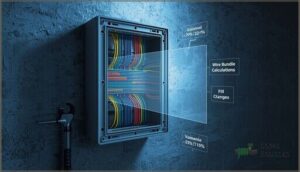
Box Volume isn’t just a number on a label—it’s your best friend for making sure every conductor fits safely.
Conductor Sizing and Fill Calculations protect your wiring from overheating by leaving breathing room for cooling space.
Safety Margins built into every sizing calculation guarantee you meet Code Compliance and safety standards, so your enclosure size promotes both reliability and peace of mind.
Using Online Enclosure Size Calculators
Think of online enclosure size calculators as your shortcut to precision—they turn a pile of measurements into a customized enclosure design in seconds. With just a few details, these online tools run sizing calculations, check for thermal management needs, and flag space optimization risks.
For custom electrical enclosures, calculator accuracy means you catch the big mistakes before cutting metal or ordering parts.
Impact of Material and Design on Space
The materials and design features you choose can change how much usable space you actually get inside an enclosure.
Review this guide to choosing the right enclosure size before finalizing dimensions for seals, insulation, and wall thickness.
Thicker walls, added doors, and special cable options can eat into the area your equipment or animals need. Here’s how those factors stack up when you’re deciding on the best fit.
Wall Thickness and Internal Volume
Imagine this: wall thickness quietly chips away at your usable enclosure volume. Even adding a millimeter or two for Wall Stress or Thermal Expansion can shrink essential component space inside.
Your material selection also matters—a thin aluminum wall holds up better than plastic but alters enclosure sizes. For minimum enclosure sizes, always balance structural integrity with volume optimization to guarantee safe, reliable housing.
Doors, Cable Management, and Design Features
Choosing the right door style or door materials isn’t just about looks—it shapes how easily you access equipment and maintain security.
Cable routing and cable management panels keep wires tidy, preventing blockages in airflow from ventilation systems.
Thoughtful access controls plus clever modular designs help you adapt your enclosure selection to fit the job, balancing security, airflow, and safe maintenance without hassle.
Planning for Future Upgrades
With doors and cable routing handled, it pays to set an Upgrade Roadmap right from the start. By favoring Modular Design and Flexible Architecture, your enclosure selection does more than hold today’s gear—it leaves room for future additions.
Futureproofing also means smart Change Management and built-in space, so tomorrow’s component density won’t catch you off guard when it’s time to grow.
Regulatory and Safety Considerations

Making the right enclosure choice isn’t just about space—it’s also about keeping everything safe and up to code.
As you compare options, there are a few important regulations and safety factors you’ll want to keep in mind.
Here’s what you should look for before you decide.
Checking things like husbandry knowledge, healthy enclosures, and clear record-keeping can help you spot a reputable snake breeder near you instead of a risky impulse buy.
IP and NEMA Ratings
When you’re picking enclosures, understanding IP ratings and NEMA ratings isn’t optional—it’s essential for meeting ingress protection, hazardous ratings, and environmental sealing needs.
IP ratings show how well an enclosure keeps out dust and water. NEMA ratings, often used in North America, dive deeper into environmental protection and electrical codes—think of them as certification standards shaped by real-world risks.
Electrical and Mechanical Safety Standards
Once you’ve checked IP and NEMA ratings, make sure your enclosure meets key safety benchmarks. Electrical and mechanical safety standards cover:
- Circuit protection and proper overcurrent devices
- Solid electrical insulation and dielectric integrity
- Adequate fire suppression measures
- Material and design impact on space and durability
- Rigorous mechanical strength for mounting and vibration
These Electrical Enclosure Sizing Factors safeguard people and equipment.
Avoiding Overcrowding and Overheating
Safety goes beyond electrical specs—poor ventilation and cramped layouts can trigger serious heat buildup.
When you pack too many components into an enclosure without proper airflow optimization, you risk overheating that damages equipment and creates fire hazards.
Plan for thermal management by leaving clearance around heat sources, installing ventilation systems, and ensuring space efficiency accommodates cooling needs, not just wiring requirements.
Species-Specific Housing Requirements

Each animal has its own unique housing needs based on size, behavior, and natural habits. What works for a ball python won’t work for a hamster, and getting these specifics right protects both the animal’s health and your peace of mind.
Here’s what you need to know about minimum enclosure sizes for reptiles, small mammals, and other common pets.
Reptile Enclosure Minimums (e.g., Ball Python, Corn Snake)
Your ball python needs a minimum enclosure of 4 by 2 by 2 feet to thrive, while corn snakes do well in a 40-gallon terrarium or 36 by 18 by 18 inches.
These snake enclosures must allow room for two hide boxes, a water dish, and full stretching.
Proper terrarium design promotes reptile welfare and housing by including vertical space for climbing and exploration behaviors essential to ball python care and corn snake housing.
Guidelines for Small Mammals and Other Pets
Your guinea pig or rabbit needs at least 0.5 to 1.0 square meters of floor space, with cage dimensions supporting vertical enrichment and natural behaviors.
Small mammal care requires secure latches and chew-resistant enclosure materials to prevent escapes. Include a horizontal retreat, hiding space, and activity zone in your pet habitat design.
Proper ventilation and 2 to 4 inches of bedding support animal enrichment while meeting pet safety standards for small animals.
Veterinary and Welfare Recommendations
Your veterinarian plays a pivotal role in animal ethics and welfare standards, providing species-specific guidance on enclosure dimensions and husbandry practices.
UK reptile keeping standards and animal welfare regulations require routine health checks and veterinary care that support species conservation and animal rights. Follow veterinary recommendations for reptiles and other pets to guarantee your enclosure meets current guidelines for pet enclosure sizes and proper reptile husbandry.
Common Mistakes in Enclosure Size Selection
Even with the best intentions, it’s easy to make mistakes when choosing an enclosure size. These errors can lead to overheating, safety issues, and expensive replacements down the line.
Let’s look at the most common missteps and how to avoid them.
Risks of Underestimating Space Needs
When you underestimate enclosure sizes, you’re setting up a chain reaction of problems.
Space constraints trigger animal stress through crowded habitats, while overcrowding risks compromise electrical safety standards and heat management.
Tight layouts create ventilation issues and increase hazards, from fire risk to poor animal welfare. You’ll face higher maintenance costs and compliance headaches.
Planning properly from the start protects both safety and well-being.
Ignoring Airflow and Cooling Requirements
Forgetting about cooling systems turns your enclosure into a pressure cooker. Without proper airflow design and thermal control, heat pockets build near walls and trigger emergency shutdowns. Ventilation strategies aren’t optional—they’re essential for thermal dissipation and equipment longevity.
- Fans run harder to compensate for poor airflow, wearing out bearings faster
- Internal temperatures spike, degrading insulation and raising energy costs
- Hot zones concentrate around power supplies, accelerating component failure
Plan cooling systems from the start to avoid costly retrofits.
Failing to Plan for Future Expansions
Locking yourself into a fixed enclosure sizes layout limits future upgrades and forces expensive replacements. Adaptive designs with modular fixtures and spare capacity let you add equipment without rebuilding. Capacity management starts with growth projections—estimate expansion planning needs early to avoid choosing too small.
Custom solutions and flexible component layout turn design considerations into opportunities, not obstacles.
| Planning Element | Short-Term Impact | Long-Term Benefit |
|---|---|---|
| Modular racks | Quick setup | Easy expansion |
| Spare capacity | Higher upfront cost | No retrofit delays |
| Documentation | Clear baselines | Smooth scale-up |
Frequently Asked Questions (FAQs)
How big should an animal enclosure be?
Your enclosure should provide at least two to three times the animal’s body length in floor space, plus vertical clearance for standing and stretching, ensuring natural movement and welfare compliance.
What is the bare minimum size for a hamster cage?
Choosing a hamster cage is like picking a running track—cramped quarters ruin the race.
Syrian hamsters need at least 100 cm by 50 cm floor space, while dwarf hamster needs start around 4500 square centimeters of unbroken area.
What are the common enclosure sizes?
Common enclosure sizes span Small Enclosures (75x125x35mm to 150x200x100mm), Medium Sizes (up to 300x400x200mm), Large Cabinets (600x800x300mm and beyond), Specialty Housings for outdoor use, and Freestanding Models reaching 2200mm tall for industrial applications.
How do humidity levels affect enclosure size?
Higher humidity increases moisture inside equipment housing, reducing usable volume as condensation forms on walls.
You’ll need extra airflow management space and clearance for thermal regulation, especially when calculating enclosure volume and space with online enclosure size calculators.
What clearances are required around electrical enclosures?
You’ll need at least 3 feet of front clearance and 30 inches of side access around electrical equipment rated 600 volts or less, following NEC safety standards to protect anyone working nearby.
Can multiple species share the same enclosure?
Mixing species in one animal enclosure is risky business. Predatory and prey animals should never cohabitate.
Some calm herbivores or similarly sized species may share space if housing requirements align, resources are plentiful, and you monitor animal behavior closely.
How often should enclosure size be reassessed?
Studies show 60 percent of young animals outgrow their housing within their first year.
You should conduct annual reassessment alongside growth monitoring, environmental checks, health evaluations, and safety inspections to maintain proper animal welfare.
What are portable enclosure minimum size requirements?
Portable enclosures must meet minimum depth standards and volume standards to maintain structural integrity and proper ventilation systems.
Space requirements depend on the equipment or animal housed, with thermal management and surface area critical for safe operation.
Conclusion
What’s the real cost of cutting corners on space stress, sickness, or worse? Understanding minimum enclosure size requirements isn’t about following arbitrary rules. It’s about creating environments where animals thrive and electrical systems function safely.
Whether you’re measuring for a ball python or planning component clearances, the right dimensions prevent problems before they start. Do the math once, get it right, and everything inside stays protected for the long haul.