This site is supported by our readers. We may earn a commission, at no cost to you, if you purchase through links.

A rattlesnake doesn’t give you much room for error—its strike reaches half its body length in under a second, and your reflexes won’t beat that math. That’s why snake handlers use hooks: these long-handled tools keep their hands at a safe distance while giving them precise control over where the snake goes and how it moves.
Whether you’re relocating a venomous species from someone’s backyard or performing routine health checks on captive snakes, a hook lets you guide the animal without triggering its defensive instincts or putting yourself in the danger zone. The design isn’t complicated, but the difference between competent handling and a trip to the emergency room often comes down to understanding when and how to use this essential piece of equipment.
Table Of Contents
- Key Takeaways
- Why Snake Handlers Use Hooks
- How Snake Hooks Work
- Situations Requiring Snake Hook Use
- Benefits of Using Hooks Over Bare Hands
- Risks and Limitations of Snake Hooks
- Essential Safety Protocols for Snake Handling
- Top Snake Handling Tools to Consider
- Frequently Asked Questions (FAQs)
- Why do snake handlers use a hook?
- What are the risks of using snake hooks?
- Are snake hooks only for venomous snakes?
- What materials are snake hooks typically made from?
- How long should a snake hook be?
- Can snake hooks be used on all species?
- When should tongs be used instead of hooks?
- How do you clean and maintain snake hooks?
- Conclusion
Key Takeaways
- Snake hooks create a critical safety buffer between handlers and venomous species by keeping strikes at arm’s length while providing precise control over the animal’s movement and positioning.
- Using hooks instead of bare hands reduces stress for both parties—warm hand contact triggers defensive reactions in snakes, while the tool’s support from below mimics natural branch contact and prevents injury-causing stress spikes.
- Proper hook technique requires mid-body placement and smooth lifting motions, but the tool’s effectiveness depends entirely on structured training since poor form can still result in dropped snakes, defensive strikes, or handler injuries.
- Hooks aren’t universal solutions—they struggle in confined spaces, can injure snakes when misused, and must be paired with protective gear, emergency protocols, and species-specific knowledge to truly protect both handler and animal.
Why Snake Handlers Use Hooks
Snake hooks aren’t just a convenience—they’re a critical piece of equipment that protects both you and the snake during handling. Whether you’re relocating a venomous species or managing a captive snake, the hook gives you control while keeping everyone safe.
If you’re deciding between tools, understanding the key differences between snake hooks and snake tongs will help you choose the right one for your situation.
Let’s look at the four main reasons handlers reach for this tool.
Ensuring Handler Safety
Distance is your greatest ally when working with snakes. You’ll substantially reduce close encounters by using long hooks that create a buffer zone between you and the animal. This approach backs proven Safety Protocols and smart Risk Assessment.
Key components of snake handling safety include:
- Protective Gear like puncture resistant gloves and reinforced clothing
- Handler Training through accredited courses and supervised practice
- Emergency Response plans with first aid kits positioned nearby
- Routine equipment checks to catch wear before incidents occur
It’s also important to recognize the role of in maintaining both handler and animal safety.
Minimizing Stress for Snakes
Hooks protect snakes just as much as they protect you. Direct hand contact triggers defensive reactions because reptiles perceive warm hands as predators. Using proper Handling Techniques with snake hooks keeps your body heat away from the animal, lowering anxiety and preventing stress spikes that compromise immune function.
Snake hooks protect reptiles by preventing warm hand contact that triggers defensive reactions and dangerous stress responses
Providing snakes with environmental enrichment strategies can further promote calm behavior and overall wellbeing.
| Stress Trigger | Snake Behavior | Hook Benefit |
|---|---|---|
| Warm hand contact | Defensive striking | Maintains cool distance |
| Sudden grip pressure | Thrashing, escape attempts | Gentle support underneath |
| Unpredictable movement | Elevated heart rate | Controlled, steady motion |
When you support a snake from below with a hook rather than grabbing from above, you’re mimicking how branches feel in nature. This approach aligns with Environmental Enrichment principles that prioritize natural movement patterns. Your snake stays calmer, sheds properly, and maintains healthy appetite levels—all signs of effective Stress Reduction in your Snake Enclosure.
Reducing Risk of Snake Bites
Beyond stress reduction, you’re slashing your bite risk dramatically. Snake hooks create arm-length separation from venomous species, giving you critical reaction time if the animal lunges. Safe Handling Tips emphasize this buffer zone for effective Risk Assessment during every encounter.
- Keep a minimum arm’s length distance when observing behavior
- Pause and reassess if the snake coils or strikes
- Note the time and identify species if bitten for Emergency Response
Gaining Better Control During Handling
Control comes down to physics and positioning. When you place the hook at mid body, you dictate where the snake’s head moves while keeping your hands clear of fangs. This Hook Techniques approach gives you better Snake Restraint compared to bare-hand grabs.
Handling Strategies like lifting at shoulder level prevent tail thrash, letting you guide even large constrictors smoothly—essential Control Methods that make relocation predictable and safe.
How Snake Hooks Work
Snake hooks aren’t complicated tools, but their design difference makes all the difference when you’re working with reptiles.
The way they’re built gives you leverage and control without putting your hands anywhere near fangs or coils. Let’s break down how these tools actually function and the handling techniques that keep both you and the snake safe during handling.
Design and Structure of Snake Hooks
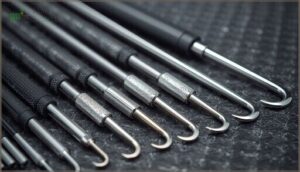
You’ll notice that snake handling tools come in several material variants, each with distinct advantages. Aluminum hooks resist corrosion and won’t tire your arm during extended sessions, while stainless steel accommodates larger snakes with greater durability.
Shaft length usually ranges from 12 to 72 inches, matching your height and the situation. Handle ergonomics matter too—rubber overmold grips prevent slipping, and textured surfaces improve control when you’re sweating.
Tip designs vary from smooth J-curves to tapered heads for precise placement.
Safe Lifting and Relocation Techniques

Before you engage in snake removal, proper lifting techniques protect your back and give you steady control. Start with your feet shoulder-width apart for load balance, and keep the hook near waist height during relocation. Safety gear shields your hands and ankles throughout the process.
- Maintain proper posture by bending your knees, not your waist, as you slide the hook under the snake’s midsection.
- Lift smoothly using your leg muscles while keeping the reptile handling tool close to your body.
- Scan for environmental hazards like uneven ground or obstacles before moving the snake.
- Lower the animal gently at the release site, reversing your lifting motion to avoid jarring movements.
Situations Requiring Snake Hook Use

You don’t need a hook for every snake encounter, but certain situations demand one for your safety and the snake’s well-being.
Venomous species, wild snakes with unpredictable behavior, and even routine care for captive animals all require the distance and control that hooks provide. Let’s look at the specific scenarios where reaching for a hook isn’t just smart—it’s essential.
Handling Venomous Snakes
When you’re working with venomous snakes, hooks aren’t optional—they’re essential. Venomous Snake Behavior can shift without warning, so snake hooks let you maintain distance from striking range during venom extraction or enclosure cleaning.
These reptile handling tools give you controlled lifting without triggering defensive strikes. Before moving any snake, assess its posture and always use proper Handling Techniques with a secure transport container ready for snake safety.
Relocating Wild or Aggressive Snakes
When Wildlife Conservation meets the unpredictable nature of wild or venomous snakes, you’ll rely on snake hooks as your first line of defense. Effective Relocation Strategies combine Habitat Assessment with quick thinking and proper snake handling equipment.
- Use long hooks to keep distance from aggressive snakes showing defensive postures
- Assess Snake Behavior before attempting to guide the animal toward secure containers
- Deploy wildlife management protocols for venomous species in high-traffic areas
- Plan snake control methods that prioritize both handler safety and the animal’s welfare
Routine Care for Captive Snakes
Even routine tank maintenance demands the same herpetology equipment you’d use in the field. Snake hooks let you safely move your pet during Habitat Maintenance, Feeding Strategies, and health checks without triggering defensive strikes.
These reptile handling tools support proper pet snake care while reducing stress for both handler and snake. You’ll maintain control during Environmental Enrichment updates and Captive Breeding programs, ensuring consistent Snake Health monitoring.
Benefits of Using Hooks Over Bare Hands

Using a snake hook instead of your bare hands isn’t just a preference—it’s a fundamental safety practice that protects you and the snake. The distance a hook provides gives you control without putting your fingers in harm’s way, especially when you’re dealing with defensive or venomous species.
Here’s why experienced handlers rely on hooks rather than risking direct contact.
Maintaining a Safe Distance
Snake hooks give you the safe proximity you need when working with venomous snakes. Think of it as your buffer zone—usually three to four feet between you and potential danger.
Here’s how distance management helps:
- You can respond quickly if the snake lunges or strikes unexpectedly
- Risk mitigation increases as the gap widens during relocation
- Spatial awareness improves when you’re not focused on close contact
That extra reach could save your life.
Protecting Both Snake and Handler
Hooks protect everyone involved. When you use proper safe handling techniques with snake hooks and protective clothing like puncture resistant gloves, you’re reducing stress-induced defensive strikes that harm both parties.
Emergency response becomes easier too—if the snake feels supported rather than squeezed, it’s less likely to thrash or bite. Handler safety tips always emphasize understanding snake behavior: calmer snakes mean fewer injuries on both ends.
Managing Large or Unpredictable Species
Large constrictors and venomous snakes demand more than courage—they need calculated risk assessment and proven handling techniques. A seven-foot python can shift unpredictably in seconds, so hooks let you position yourself safely while reading species behavior cues.
Safety protocols emphasize distance: when wildlife control requires managing aggressive or heavy-bodied snakes, your hook becomes essential for maintaining animal welfare and your own survival.
Risks and Limitations of Snake Hooks

Snake hooks are powerful tools, but they’re not perfect. Even experienced handlers can accidentally injure a snake if they scoop too aggressively or position the hook incorrectly.
You’ll also face real challenges using hooks in cramped spaces, and without proper training, you might put both yourself and the snake at risk.
Potential for Snake Injury
Improper technique can turn your safety tool into a source of harm. Snake hooks reduce snake injury risk compared to bare hands, but careless placement near the head or tail can cause the animal to slide off and drop, leading to potential fractures or internal damage.
You’ll need steady hands and proper training to scoop mid-body correctly, preventing unnecessary stress or physical trauma during handling.
Limitations in Tight Spaces
Confined environments pose real challenges for even experienced handlers. Space constraints reduce your reach and limit leverage, while narrow passages snag gear and force awkward body angles that wear you down fast.
Limited visibility makes distance judgment harder, and reduced maneuverability means you can’t respond as quickly when a snake thrashes. Your snake handling equipment works best when you’ve got room to move.
Need for Proper Training
Competence doesn’t appear overnight—you need structured Training Methods and hands-on practice to handle snakes safely. Proper instruction in Handling Techniques cuts incident rates by 40 percent, while Safety Protocols and Emergency Response drills sharpen your reaction time during critical moments.
Risk Assessment skills develop through experience, not guesswork. Without solid training in snake handling techniques and snake handling safety, even the best snake handling equipment won’t protect you from preventable mistakes.
Essential Safety Protocols for Snake Handling

Even with the right tools in hand, safe snake handling comes down to following a few critical protocols every time you work with these animals.
These practices protect both you and the snake, reducing the chance of injury or panic during handling. Let’s walk through the essential safety measures that should become second nature before you ever pick up a hook.
Wearing Protective Gear
Even with the best snake handling equipment at your side, your body remains vulnerable without proper protective gear and equipment. Think of safety helmets, puncture-resistant gloves, and sturdy ankle boots as your first line of defense against venomous strikes and unexpected lunges.
Essential protective clothing includes:
- Puncture gloves that shield your hands from fang penetration while maintaining grip
- Eye shields to guard against venom spray from certain species
- Snake hooks paired with thick leather boots for full lower body protection
Calm and Controlled Movements
Your calm approach transforms snake handling from risky gamble to controlled science. Move in slow, deliberate steps—pausing after each repositioning so the snake adapts without panic. Precise placement under the midsection balances weight and prevents sudden drops.
Spatial awareness keeps your path clear and distractions minimal. Gentle handling with steady, rhythmic motions reduces stress indicators like body flicking, protecting both you and the animal during venomous snake handling.
Emergency Response Planning
A split-second mistake with venomous snakes demands bulletproof emergency protocols before you ever lift that hook. Your crisis management plan transforms panic into precision, ensuring rapid disaster response when bites occur.
- Designate a primary incident commander with 24/7 on-call responsibility and a trained backup
- Store antivenom locations, emergency contacts, and hospital routes within arm’s reach of every handling station
- Practice quarterly tabletop exercises simulating envenomation scenarios to sharpen decision-making speed
- Equip stations with pre-positioned first aid supplies: pressure bandages, splints, and communication devices
- Document every risk assessment update after near-misses or protocol failures to strengthen future safety procedures
Top Snake Handling Tools to Consider
You’ll need the right equipment to handle snakes safely and effectively. A quality snake hook is essential, but there are other tools that can help you build or customize your handling setup.
Here are six products worth considering for your snake handling toolkit.
1. Dutypro Snake Hook Catcher Tool
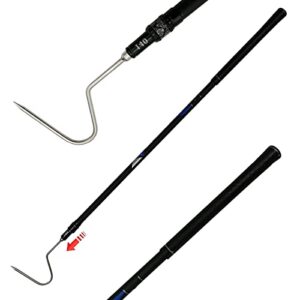
The Dutypro Snake Hook Catcher Tool gives you adjustable reach from 44 to 76 inches, letting you maintain a safe distance while handling venomous species. Its stainless steel construction resists corrosion during humid outdoor work, and the rivet-reinforced head stays secure through repeated use.
You’ll appreciate the rubber grip when your hands are sweaty or wet—it prevents slippage during critical moments. The telescoping design collapses for easy transport, and at under two pounds, you won’t fatigue during extended handling sessions in the field.
| Best For | Outdoor enthusiasts, snake handlers, and wildlife professionals who need a reliable tool for safely relocating venomous and non-venomous snakes during hiking, camping, or pest control work. |
|---|---|
| Material | Carbon |
| Length | 62 inches extended |
| Primary Use | Snake handling |
| Portability | Foldable to 38 inches |
| Durability | Strong and sturdy |
| Weight | Lightweight |
| Additional Features |
|
- Extends from 38 to 62 inches, giving you a safe distance when handling dangerous species like rattlesnakes and copperheads
- Carbon construction keeps it lightweight and easy to carry on long hikes without adding bulk to your gear
- Two-section collapsible design makes storage simple and fits easily in a vehicle or backpack
- Hook attachment may come loose due to weak adhesive, requiring you to check and potentially reattach it before each use
- Thin rod diameter raises concerns about durability when handling larger or heavier snakes
- Quality control issues reported by some users mean you should inspect the product carefully upon arrival
2. Ouronehome Snake Grabber Tool
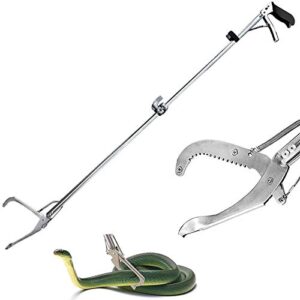
When you need a tool that locks down without hesitation, the Ouronehome Snake Grabber Tool delivers with its 60-inch reach and auto-lock jaws. Its aluminum alloy construction stays light in your hands while the wide jaws grip snakes up to 2.5 inches thick without slippage.
You’ll fold it to 32 inches for storage after fieldwork, and the non-slip handle gives you one-handed control during quick captures. The locking buckle engages fast when you’re relocating aggressive species near parks or lakeside areas.
| Best For | Anyone who needs to safely handle and relocate snakes from a distance, especially in outdoor areas like forests, parks, or lakesides where venomous species might be present. |
|---|---|
| Material | Stainless Steel |
| Length | 60 inches extended |
| Primary Use | Snake catching |
| Portability | Foldable to 32 inches |
| Durability | High-quality |
| Weight | Heavy for some users |
| Additional Features |
|
- 60-inch reach keeps you safely away from the snake while the auto-lock jaws secure your grip without constant squeezing
- Folds down to 32 inches so you can toss it in your truck or storage bin without it taking up half the space
- Wide jaws handle thicker snakes up to 2.5 inches without slipping or causing injury to the animal
- The weight might be a problem if you’re handling it for extended periods or don’t have much upper body strength
- The locking mechanism takes some practice to master, which isn’t ideal when you’re dealing with an aggressive snake
- The spring can fail over time, leaving you with jaws that won’t grip properly when you need them most
3. Fly Hawk Paint Roller Kit
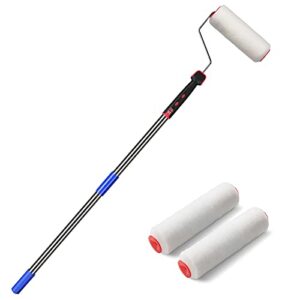
While the Fly Hawk Paint Roller Kit isn’t snake-specific equipment, its 4-foot extendable pole (reaching 8 feet) offers surprising value for handlers needing elevated reach during enclosure maintenance.
You’ll use the stainless steel extension when cleaning tall habitats or inspecting upper ventilation without disturbing your animals below. The pole’s lightweight design won’t tire your arms during prolonged setup work, though the wobbly attachments mean you shouldn’t rely on it for precision tasks requiring steady control.
| Best For | Snake keepers who need an affordable extendable pole for cleaning tall enclosures and performing routine maintenance on elevated sections without using a ladder. |
|---|---|
| Material | Stainless Steel |
| Length | 8 ft extended |
| Primary Use | Painting |
| Portability | Extendable pole |
| Durability | Dense and durable |
| Weight | 2.68 pounds |
| Additional Features |
|
- Extends from 4 to 8 feet, giving you the reach needed for tall habitats and upper ventilation areas
- Lightweight stainless steel construction won’t tire you out during long cleaning sessions
- Easy to assemble and clean between uses, which matters when working around multiple enclosures
- Wobbly attachments make it unsuitable for tasks requiring steady, precise control
- Loose threading between pole segments can be frustrating during detailed work
- Parts may rust over time, especially if exposed to certain cleaning chemicals used in reptile care
4. Gorilla Original Waterproof Polyurethane Glue
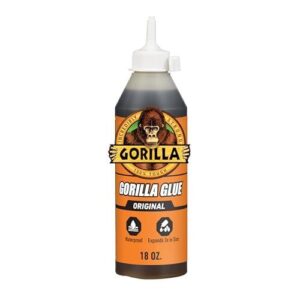
Habitat repairs demand adhesives that survive moisture and temperature swings. Gorilla Original Waterproof Polyurethane Glue bonds wood, stone, metal, ceramic, and glass—materials you’ll encounter when fixing enclosures or building hides.
Its water-activated formula expands three times during curing, filling gaps in uneven surfaces without requiring clamps. Once dry, you can sand or paint the bond to match your setup. Just remember it cures to a tan color and expands substantially, so apply sparingly to avoid messy overflow during structural repairs.
| Best For | DIY enthusiasts and hobbyists who need a waterproof adhesive for outdoor projects, structural repairs, or bonding mixed materials like wood, metal, and stone. |
|---|---|
| Material | Polyurethane Resin |
| Length | N/A |
| Primary Use | Bonding materials |
| Portability | Bottle |
| Durability | Incredibly strong |
| Weight | 1.4 pounds |
| Additional Features |
|
- Waterproof and temperature-resistant formula works in harsh conditions and outdoor environments
- Bonds a wide range of materials including wood, metal, ceramic, glass, and concrete
- Expands to fill gaps in uneven surfaces and can be sanded, painted, or stained after curing
- Expands significantly during curing, which can create messy overflow if you apply too much
- Cures to an opaque tan color that might show on visible surfaces
- Short shelf life once opened—the bottle can harden over time if not used regularly
5. Scotch Vinyl Electrical Tape
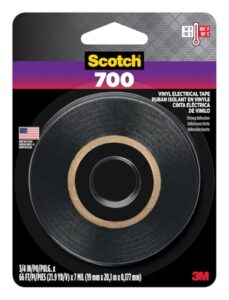
Electrical insulation mightn’t be your first thought when building snake habitats, but it’s essential for controlling heat sources safely. Scotch Vinyl Electrical Tape offers primary insulation up to 600 volts, protecting your heating cables and thermostat wiring from moisture and abrasion.
The 7-mil vinyl backing stays flexible across temperatures from 0°C to 80°C, conforming to irregular surfaces without gaps. Its flame-retardant properties add another layer of protection in enclosures where heat mats or ceramic emitters run continuously. Just apply it with slight tension for the best seal.
| Best For | Reptile keepers who need reliable electrical insulation for heat cables, thermostats, and other heating equipment in snake enclosures. |
|---|---|
| Material | Vinyl |
| Length | 66 ft |
| Primary Use | Electrical insulation |
| Portability | Roll |
| Durability | High-strength |
| Weight | Lightweight |
| Additional Features |
|
- Works safely with heating elements up to 600 volts and stays flexible from 0°C to 80°C
- Flame-retardant vinyl resists moisture, abrasion, and corrosion—important in humid reptile habitats
- Strong stretch (200% elongation) helps it conform tightly around irregular wiring and connections
- Costs more than standard electrical tape
- Won’t lay flat if you need to reposition or reuse it after stretching
- Edges can get bumpy and misshapen after being stretched
6. Olympia Tools Bench Vise
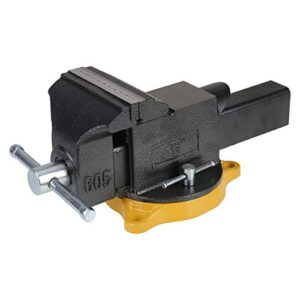
A bench vise isn’t standard snake gear, but it’s invaluable for fabricating custom enclosure hardware. The Olympia Tools model features a 270-degree swivel base and hardened steel jaws that grip materials firmly without slipping.
You’ll use it to cut and shape PVC hide boxes, drill mounting holes for thermostats, and bend metal framework for larger habitats. Its 20,000-pound tensile strength accommodates tough modifications, while the polished anvil lets you form wire mesh panels for ventilation.
| Best For | DIY enthusiasts and professionals who need a stable vise for fabricating custom reptile enclosure hardware, shaping PVC hide boxes, and drilling precise mounting holes for thermostats. |
|---|---|
| Material | Cast Iron |
| Length | N/A |
| Primary Use | Gripping/holding |
| Portability | Stationary |
| Durability | Heavy reinforced |
| Weight | 20.9 pounds |
| Additional Features |
|
- Heavy-duty 20,000-pound tensile strength handles tough materials like metal framework and wire mesh without slipping
- 270-degree swivel base gives you flexibility to position materials at different angles for cutting and drilling
- Replaceable hardened steel jaws and permanent pipe jaws make it versatile for various fabrication tasks
- Not built for heavy industrial applications or high-torque projects, so it has limits on what you can tackle
- Some users report durability issues with the swivel plate over time
- All-steel clamps can leave marks on softer materials, and mounting bolts aren’t included in the package
Frequently Asked Questions (FAQs)
Why do snake handlers use a hook?
Think of a snake hook as your safety shield—it keeps a buffer zone between you and the snake, preventing bites while giving you control during capture or relocation.
What are the risks of using snake hooks?
Using hooks can injure snakes if you apply pressure near the spine or head, especially with heavy-bodied species. Poor technique or low-quality equipment also increases bite risk and causes stress.
Are snake hooks only for venomous snakes?
Snake hooks aren’t just for venomous species. They work with non-venomous snakes too, reducing stress during handling and keeping both handler and animal safe.
You’ll maintain better control while minimizing bite risk.
What materials are snake hooks typically made from?
Most hooks feature stainless steel or aluminum shafts for durability and rust resistance. You’ll find grips wrapped in rubber, foam, or textured grips to prevent slipping during handling sessions.
How long should a snake hook be?
A 46-inch hook works well for general handling, but you’ll want longer options—48 to 66 inches—for venomous species. Shorter hooks around 24 to 30 inches give better control with smaller snakes.
Can snake hooks be used on all species?
Over 70% of hook injuries occur from mismatched tool-species pairings.
You can’t use hooks on all snakes—small, delicate species risk injury, while aggressive or arboreal types may require alternative tools despite training.
When should tongs be used instead of hooks?
You’ll want tongs when you need a firmer grip on small to medium non-venomous snakes, during quick repositioning tasks, or when handling agitated specimens that require controlled restraint at a safe distance.
How do you clean and maintain snake hooks?
After each use, wipe your hook with isopropyl alcohol to disinfect and remove residue.
Inspect for damage, dry thoroughly, and apply light oil to metal joints before storing in a dry location.
Conclusion
Think of a hook as your insurance policy—it keeps distance between you and a defensive strike while giving you the leverage to guide even aggressive snakes with precision.
Understanding why snake handlers use hooks isn’t just about theory; it’s about building the confidence and skill to work safely with reptiles that demand respect.
Master the tool, follow proper protocols, and you’ll handle venomous species without gambling with your safety.