This site is supported by our readers. We may earn a commission, at no cost to you, if you purchase through links.
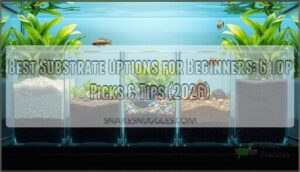
Your first aquarium setup probably won’t fail because of the fish you choose or the filter you buy. It’ll stumble over what’s sitting at the bottom of your tank. Substrate choices can make or break water chemistry, plant growth, and fish health—yet most beginners grab whatever looks decent at the pet store.
Gravel seems safe, sand looks natural, and soil promises lush plants, but each option plays by different rules. The wrong pick can cloud your water for weeks, starve your plants, or stress bottom-feeders who need soft surfaces. Smart substrate selection gives you a stable foundation that works with your setup instead of against it.
Table Of Contents
- Key Takeaways
- What is Aquarium Substrate?
- Benefits of Using Substrate for Beginners
- Key Factors When Choosing Substrate
- Gravel Substrate: Pros and Cons
- Sand Substrate: Pros and Cons
- Soil Substrate: Pros and Cons
- Alternative Substrate Options
- Substrate Color and Grain Size Tips
- How Much Substrate Do You Need?
- Top 6 Substrates and Aquarium Products
- Frequently Asked Questions (FAQs)
- What are the three types of substrates?
- What is the easiest substrate to clean?
- What can I use as substrate?
- How to choose substrate?
- Can I mix different substrate types together?
- How often should substrate be fully replaced?
- Does substrate need rinsing before tank use?
- What substrate works best for shrimp tanks?
- Can substrate cause algae growth problems?
- Conclusion
Key Takeaways
- Substrate choice directly impacts water chemistry, plant nutrition, and fish health—gravel stays neutral and low-maintenance, sand protects bottom-feeders’ delicate barbels, and nutrient-rich soil feeds plant roots for months without extra fertilizers.
- Your substrate hosts 60-80% of beneficial bacteria that convert toxic ammonia into safer compounds through the nitrogen cycle, making it a critical biological filter that keeps your ecosystem stable.
- Match substrate to your setup’s specific needs: community tanks thrive with simple gravel, planted tanks need 2-3 inches of soil for root development, and shrimp tanks require fine sand or pH-buffering active substrates.
- Common beginner mistakes include choosing ultra-fine sand that compacts and suffocates roots, skipping the pre-rinse that causes cloudy water for weeks, and vacuuming too deep during maintenance which destroys beneficial bacterial colonies.
What is Aquarium Substrate?
Aquarium substrate is the material you put at the bottom of your tank—think gravel, sand, or soil. It’s not just there to look pretty; it creates a foundation for plants, helps helpful bacteria, and gives your fish a more natural home.
If you’re thinking about switching things up, here’s how to change substrate without stressing out your fish.
Before you pick one, it helps to understand what substrate actually does and whether you even need it.
Definition and Purpose
Think of aquarium substrate as your tank’s foundation—it’s the material lining the bottom that does way more than look pretty.
Substrate facilitates biological filtering by hosting beneficial bacteria that keep water safe. It anchors plant roots, influences your tank environment, and helps fish feel at home.
Choosing the right substrate materials sets up your whole ecosystem for success from day one.
Role in Aquarium Ecosystem
Your substrate plays host to a bustling microbial world that keeps your ecosystem balanced. Beneficial bacteria colonize those surfaces—up to sixty or eighty percent of all microbial growth happens right there—breaking down waste through the nitrogen cycle.
Your substrate hosts a bustling microbial world where beneficial bacteria colonize surfaces and keep the nitrogen cycle balanced
This biological filter converts toxic ammonia into safer nitrates, stabilizing water quality while nutrient exchange feeds your plants and keeps fish thriving. Maintaining proper aquarium ecosystems involves understanding beneficial bacteria roles and their impact on water quality.
Substrate Vs. Bare-Bottom Tanks
You can go two directions with your aquarium flooring: layering substrate or leaving the tank bottom bare.
Bare bottom pros include simpler cleaning since debris stays suspended instead of sinking into gravel. But substrate depth—even just an inch or two—gives your beneficial bacteria more real estate and lets plants root properly.
Your aquarium setup choice hinges on whether you prioritize ease or ecosystem. For a deeper dive into the impact of substrate on biological filtration, explore the differences in how each approach transforms your tank environment.
Benefits of Using Substrate for Beginners
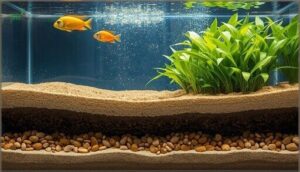
You might wonder if substrate is really worth the effort when you’re just starting out. The truth is, a good substrate does more than look pretty—it actually makes your life easier and your fish happier.
Let’s look at three solid reasons why beginners should embrace substrate instead of skipping it.
Enhancing Aquarium Aesthetics
Your tank becomes a living canvas with the right substrate. Dark gravel makes colorful fish and vibrant plants pop—like setting jewels on velvet.
Layering different textures adds visual depth to your aquascaping, while strategic decor placement guides the eye through your underwater scene. The color schemes and substrate materials you choose set the whole mood, transforming basic tank decoration into genuine artistry.
Promoting Fish and Plant Health
A thriving ecosystem starts at the bottom. Your substrate choice directly shapes fish nutrition, plant stability, and overall aquatic balance—it’s foundational work that pays off daily.
The substrate has several key benefits for the aquarium ecosystem.
- Nutrient-rich substrates deliver nitrogen and potassium straight to plant roots for lush growth
- Smooth grains protect bottom-dwelling fish from injuries during foraging
- Proper depth (2–3 inches) anchors plants and promotes water quality
- Mineral-rich options supply iron and magnesium for vibrant leaves
- Fine textures reduce detritus buildup that degrades aquarium substrate performance
Supporting Beneficial Bacteria
Your aquarium’s invisible workforce needs a home. Beneficial bacteria colonize substrate surfaces, forming biofilms that drive nutrient cycling and biological filtration.
Substrate texture matters—rougher grains offer more attachment sites for microbial balance. This bacterial colonization transforms harmful ammonia into safer compounds, keeping your fish healthy.
Smart substrate selection promotes beneficial bacteria promotion naturally, letting your tank cycle properly without constant intervention.
Key Factors When Choosing Substrate
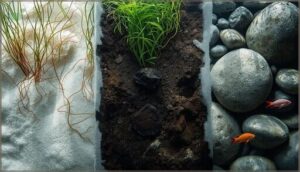
Picking the right substrate isn’t about finding the perfect option—it’s about matching your choices to what’s actually living in your tank. Your fish species, plant needs, and water chemistry all pull you in different directions, and that’s okay.
Let’s break down the three big factors that’ll help you make a choice you won’t regret.
Compatibility With Fish Species
Your fish have opinions about what’s under their fins, and ignoring them can lead to real trouble. Barbel protection matters for bottom feeders like corydoras—smooth, rounded gravel prevents injury during foraging.
Here’s what to watch for:
- Fin safety: Fancy-tailed fish need fine textures to avoid snagging
- Burrower needs: Loaches prefer sand to prevent gill irritation
- Cichlid substrates: African species thrive with crushed coral
- Grain size: Keep it under 4mm for most community setups
Suitability for Aquatic Plants
Your plants won’t lie to you—they show exactly what they need through their root growth.
Root growth thrives in substrates with 1-3mm grain size, while nutrient-rich aquarium soil feeds hungry stems directly.
Substrate depth matters: aim for 2 inches minimum in your planted tank.
Aqua soil delivers iron and potassium for leaf color, transforming your aquatic ecosystem into something special without constant liquid fertilizers.
Impact on Water Chemistry
Think of your substrate choice as the invisible hand shaping your tank’s water chemistry—it can make or break your setup.
Here’s what happens beneath the surface:
- pH levels shift when limestone substrates push alkaline, while inert options stay neutral
- Water hardness rises as calcium and magnesium leach from certain materials
- Nutrient cycling accelerates through bacterial colonies processing ammonia and waste
- Oxygen exchange fluctuates based on grain size and how tightly particles pack together
Smart aquarium substrate selection means matching these chemical reactions to your fish’s needs.
Gravel Substrate: Pros and Cons
Gravel is the classic starter substrate that most beginners grab first—and for good reason. It’s forgiving, widely available, and won’t break the bank or your confidence.
Let’s break down what makes gravel work, where it falls short, and when it’s your best bet.
Advantages for Beginners
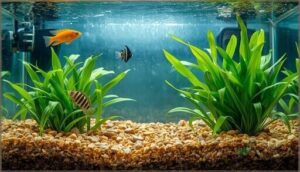
Gravel’s practically bulletproof for newcomers—no fuss, no muss. This inert substrate won’t mess with your water stability, which means fewer headaches while you’re learning the ropes.
It anchors plants reasonably well, gives your fish comfort underfoot, and comes ready to use straight from the bag. For beginner tips on aquarium substrate selection, gravel checks all the right boxes without overthinking your substrate choice.
Maintenance Requirements
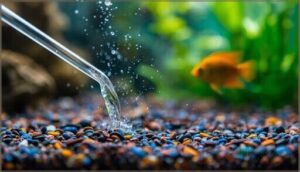
You’ll need to vacuum every 2 to 4 weeks—target the top inch or two to pull out debris without wrecking your bacterial balance.
A gravel siphon paired with weekly water changes keeps tank maintenance simple and your water quality stable. Skip the deep stirring; gentle passes preserve your microbe colonies.
That’s the beauty of gravel: low fuss, high payoff for aquarium maintenance.
Best Uses in Freshwater Tanks
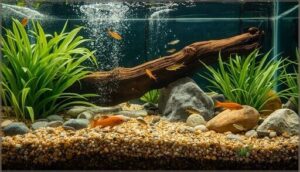
Gravel shines in community freshwater tanks where you’re mixing fish species and simple decorations. It anchors tank decor firmly, fosters a healthy aquatic ecosystem by housing beneficial bacteria, and keeps your water quality stable without fussing with pH.
Your freshwater substrate selection guide ends here if you want reliable fish habitat that won’t complicate your aquatic environment—gravel just works.
Sand Substrate: Pros and Cons
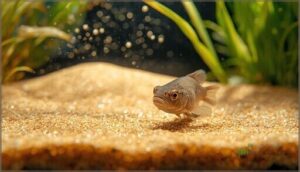
Sand substrate feels more natural under your fish’s fins—especially if you’re keeping bottom-dwellers like corydoras or loaches. It creates that smooth, silty riverbed vibe they’re used to in the wild.
Let’s break down what makes sand work for beginners, how to keep it clean without making a mess, and the rookie errors you’ll want to dodge.
Benefits for Certain Fish Types
Bottom dwellers like corydoras absolutely thrive on sandy aquarium substrate—it protects their delicate barbels during their favorite digging behavior. Your fish comfort skyrockets when substrate choice matches natural fish behavior patterns.
- Neon tetras pop visually against darker sand that boosts tank ecology contrast
- Bettas appreciate fine grains that won’t snag their flowing fins
- Beneficial bacteria colonize sand surfaces, supporting aquatic health and overall fish health
Sand transforms your fish tank into a safer, more natural aquarium equipment setup.
Cleaning and Upkeep Tips
Sand looks gorgeous, but it needs gentle care. Use substrate vacuuming techniques that hover just above the surface—your siphon pulls waste without sucking up grains.
Weekly tank cleaning paired with water testing keeps water quality management on track. Filter maintenance stays easier with sand since debris sits visibly on top.
Smart aquarium maintenance means checking for clumps during your substrate selection guide routine, preventing algae control headaches before they start.
Common Beginner Mistakes
Newcomers often stumble with sand—it’s simpler than gravel, yet trickier than you’d think. Watch out for these aquarium substrate pitfalls:
- Choosing ultra-fine silica that compacts like concrete, choking plant roots
- Skipping the rinse, leaving cloudy water chemistry disasters for days
- Vacuuming too deep during maintenance, disrupting your beneficial bacteria colonies
- Ignoring substrate type compatibility with bottom-dwelling fish who need coarser inert substrate
Soil Substrate: Pros and Cons
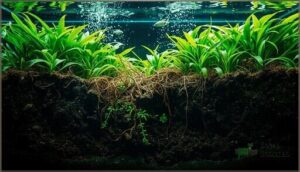
Soil substrate is the powerhouse option for planted tanks, packing serious nutrition right where your plants need it most.
It’s not the easiest choice for beginners, but if you’re planning a lush underwater garden, it might be worth the learning curve. Let’s break down what makes soil special and whether it’s the right move for your first tank.
Nutritional Value for Plants
Soil composition in Aqua Soil packs the nutritional punch your aquatic plants crave. You’re getting nitrogen for lush foliage, phosphorus for healthy roots, and potassium to power nutrient transport—all essential for plant nutrition.
Micronutrient roles matter too: iron fuels chlorophyll synthesis while manganese aids photosynthesis. This built-in nutrient cycling means healthier plant nutrients without constant fertilizer types, making nutrient management simpler for aquarium soil beginners.
Potential Challenges for Beginners
Patience isn’t always a beginner’s strong suit, but aquarium soil demands it. Your tank cycling period can stretch weeks longer than with inert substrate, and water quality might spike unexpectedly—causing fish stress you didn’t sign up for.
Here’s what trips up newcomers during substrate selection:
- Cloudy water from inadequate pre-rinsing of substrate type particles
- Ammonia spikes overwhelming new beneficial bacteria colonies
- pH crashes from organic material breakdown in aquarium soil
- Substrate selection guide warnings ignored about compaction issues
- Beginner mistakes like overstocking during initial cycling phases
When to Use Soil Substrate
Think of aquarium soil as a plant buffet that keeps refilling itself. You’ll want this substrate selection guide pick for planted tanks where root growth matters most—foreground carpets, heavy feeders, and lush Dutch-style scapes.
Pair it with compatible fish that won’t dig relentlessly, monitor aquarium cycling closely during setup, and watch substrate depth support nutrient-rich plant nutrition over months.
Alternative Substrate Options

Beyond the big three—gravel, sand, and soil—you’ve got some interesting options that work great for specific setups.
These alternatives aren’t as common, but they can solve problems or create effects that standard substrates can’t. Let’s look at what else is out there and when you might actually want to use them.
Pebbles and Stones
Pebbles offer a middle ground between gravel and larger stones—perfect if you want texture without fuss. These inert substrates won’t mess with your water chemistry, making substrate selection easier for beginners.
Try pebble arrangements mixed with gravel alternatives to create decorative layers that catch the eye. Smart rock placement anchors plants and décor while keeping your aquarium substrate stable and inviting.
Clay-Based Substrates
Clay substrates like Laterite pack a porous structure that holds nutrients close to plant roots. This aquarium substrate slowly delivers mineral content—especially iron—over weeks through cation exchange, giving your greens steady fuel.
Clay benefits rooted plants beautifully, but clay maintenance means rinsing thoroughly first to avoid clouding. Smart substrate selection for nutrient release without the mess.
Specialty Substrates (e.g., Water-Changing Types)
Beyond clay, water-changing substrates simplify maintenance while boosting bacterial growth. These substrate materials use porous designs that trap debris yet flush clean during water changes—keeping your water quality steady without heavy scrubbing.
They’re inert substrate choices that won’t mess with chemistry, making planted tank substrate selection easier. For aquatic landscaping that looks sharp and stays low-fuss, these specialty options deliver.
Substrate Color and Grain Size Tips
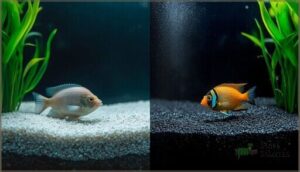
Here’s a truth most beginners overlook: substrate color and grain size aren’t just about looks—they actually shape how your fish behave and how your tank feels.
The wrong choice can stress out bottom-dwellers or make your carefully chosen fish disappear against the background. Let’s break down what actually matters so you can pick substrate that works with your vision, not against it.
Visual Impact on Tank Design
Your substrate choice sets the stage for everything else in your planted tanks. Dark sands anchor the scene, making fish colors pop against a bold backdrop.
Light gravels bounce ambient light upward, softening tank silhouettes and adding visual depth.
Color schemes paired with smart lighting effects create aesthetic balance—think natural aquascaping and decoration that guides the eye without overwhelming your aquarium decor and design.
Effects on Fish Behavior
What you put on the tank floor doesn’t just look good—it shapes fish behavior and tank dynamics in surprising ways. Dark substrates calm light-sensitive species, cutting stress and erratic swimming.
Sandy textures encourage natural foraging, while coarse gravel boosts exploratory movement. You’ll notice tighter fish socialization in shoaling species when substrate texture stays uniform.
Bottom line: your choice directly influences aquatic psychology, behavior patterns, and overall fish health and wellbeing.
Choosing The Right Grain Size
Size matters more than you’d think. Fine grain size gives you easier maintenance and gentler contact for bottom-feeders, while uniform grain uniformity prevents sharp edges that injure delicate fins.
Particle distribution affects water flow and nutrient circulation—coarser substrates trap debris, finer ones compact faster. Your substrate selection should balance aquarium substrate texture with cleaning reality and fish safety.
How Much Substrate Do You Need?
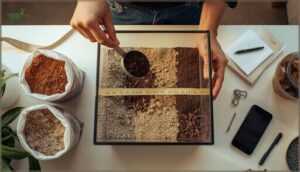
You don’t want to run out of substrate halfway through setup, but you also don’t want bags sitting in your garage for years.
Getting the right amount depends on your tank size, the depth you’re aiming for, and whether you’re layering different materials. Let’s break down how to calculate what you actually need.
Calculating Substrate Depth
Most planted tanks thrive with 2 to 3 inches of substrate depth—that’s your sweet spot for healthy root spread and proper water volume.
For heavy root feeders, bump it to 3 to 4 inches in planted zones. Use the formula: depth (in cm) times tank area for substrate measurement and capacity planning.
A gentle slope from front to back adds visual depth while maintaining depth control for your aquarium soil or inert substrate layering techniques.
Bag Weight and Volume Estimates
You’ll find that bag capacity labels can mislead beginners—a 10-liter bag of aquarium substrate often delivers only 7 to 8 usable liters due to packing efficiency and bulge.
Weight limits vary too: inert substrate like sand runs heavier per volume than fluffy aquarium soil. For accurate size calculations, expect 15 to 25 percent less usable volume than the label promises when planning your aquarium substrates.
Layering Techniques for Beginners
You’ll want a nutrient-rich aquarium soil at the base for your planted tank substrate selection—then cap it with inert substrate like gravel for visual hierarchy.
This layering basics approach creates a proper root zone while keeping your aquarium landscape tidy. Aim for 1-2 inches of substrate depth total, darker tones at the back to add dimension without complicating maintenance.
Top 6 Substrates and Aquarium Products
Now that you know how much substrate you’ll need, let’s look at some solid options that won’t steer you wrong.
I’ve picked six products that actually work for beginners—some handle plants, others keep things simple, and one isn’t even technically a substrate. Each has its place depending on what you’re building in your tank.
1. Api Freshwater Aquarium Test Kit
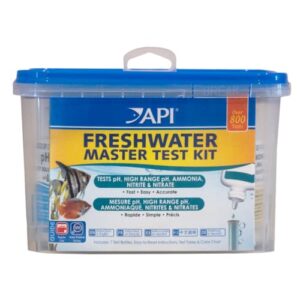
You can’t grow healthy plants without knowing what’s in your water quality. The API Freshwater Master Test Kit tracks five critical parameters: ammonia, nitrite, nitrate, pH, and high-range pH.
You’ll get seven reagent bottles, four glass tubes, and a color comparison chart that delivers quick readings. This kit performs 800 tests, making it perfect for weekly monitoring or troubleshooting fish problems.
It tests both tap water and tank water, helping you establish safe conditions before adding plants or livestock.
| Best For | Freshwater aquarium owners who want affordable, reliable testing to monitor ammonia, nitrite, nitrate, and pH levels without buying separate kits. |
|---|---|
| Weight | 521.63 grams |
| Brand | API |
| Material Type | Plastic |
| Color | Multi-color |
| Primary Use | Water testing |
| Volume/Quantity | 800 tests |
| Additional Features |
|
- Tracks five critical water parameters with 800 total tests, giving you solid value for regular monitoring
- Comes with everything you need—reagents, test tubes, and color chart—so you can start testing right away
- Works for both tap and tank water, helping you catch problems before they harm your fish
- Test chemicals expire over time and lose accuracy, so you’ll need to replace them eventually
- Doesn’t measure GH or KH hardness levels, which matter for certain fish and planted tanks
- Plastic test tubes can be harder to clean than glass and may stain with repeated use
2. Ada Amazonia Aqua Soil
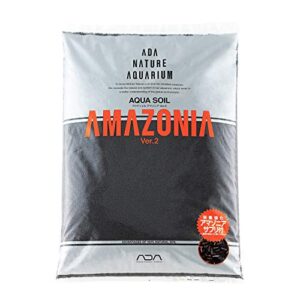
ADA Amazonia Ver 2 transforms your tank into a nutrient powerhouse. This Japanese black soil lowers pH to 5.5-6.5 and softens water—ideal conditions for lush plant growth.
You’ll get 9L of irregular granules that promote fast root development. The included Amazon concentrate supplement adds an extra nutrient boost when layered underneath.
Expect an ammonia spike during setup, so test frequently. It’s pricier than gravel, but the vibrant plant colors and crystal-clear water make it worth every penny.
| Best For | Aquascapers who want dense, healthy plant growth and don’t mind the extra setup work of monitoring ammonia levels and water parameters. |
|---|---|
| Weight | 15.4 pounds |
| Brand | ADA |
| Material Type | Japanese black soil |
| Color | Black |
| Primary Use | Planted aquariums |
| Volume/Quantity | 9L |
| Additional Features |
|
- Lowers pH and softens water naturally, creating ideal conditions for most aquatic plants
- Nutrient-rich black soil promotes fast root development and vibrant plant colors
- Includes Amazon concentrate supplement for an extra nutrient boost
- Causes ammonia spikes during initial setup that require frequent water testing
- Significantly more expensive than standard aquarium substrates
- Not suitable for fish or plants that need higher pH and hardness levels
3. Black Diamond Blasting Abrasive Medium Grade
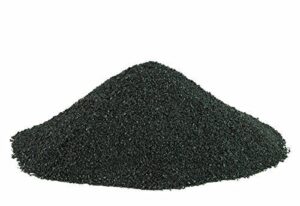
Black Diamond Medium Grade flips an industrial blasting material into a bold aquarium substrate. You’ll rinse a 50-pound bag thoroughly—expect dust—but the jet-black color makes fish pop like neon signs.
The 12-40 grit settles heavy, so it won’t cloud your water. It’s chemically inert and dirt cheap compared to fancy soils.
Just know it won’t feed plants. Some bags have brownish bits mixed in. Test your pH after adding it, then watch your setup transform into a sleek, modernscape.
| Best For | Aquarium owners who want a dramatic black substrate that highlights colorful fish without breaking the bank, and don’t mind rinsing out some dust upfront. |
|---|---|
| Weight | 50 lbs |
| Brand | U.S. Minerals |
| Material Type | Coal slag |
| Color | Black |
| Primary Use | Blasting abrasive |
| Volume/Quantity | 50 lbs |
| Additional Features |
|
- Jet-black color makes fish colors pop and creates a sleek, modern aquarium look
- Heavy 12-40 grit settles quickly and won’t cloud your water during maintenance
- Significantly cheaper than specialty aquarium substrates while being chemically inert and safe
- Requires thorough rinsing before use due to dustiness from the industrial-grade material
- Won’t provide nutrients for live plants, so you’ll need root tabs or water column fertilizers
- Some bags contain brownish bits mixed with the black, and you may need to test pH after adding
4. Mr Aqua Water Plant Soil
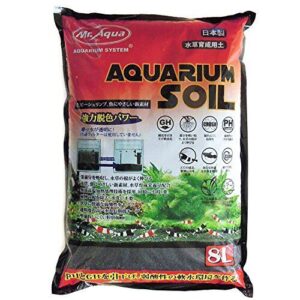
Mr Aqua Water Plant Soil feeds your greenery for 12 to 18 months straight. This black granular substrate blends organic and inert ingredients, buffering pH around 6.6 to 6.8 while softening water.
You’ll get strong root systems without adding fertilizers. It even clears tannin-stained water from driftwood. Expect some ammonia during cycling, and refill your tank gently to avoid cloudiness.
The 8-liter bag runs pricier than budget options, but it’s worth it if you’re serious about planted tanks.
| Best For | Aquarium hobbyists who want low-maintenance planted tanks with healthy root development and natural pH buffering. |
|---|---|
| Weight | 10.8 Pounds |
| Brand | N-MAR-068 |
| Material Type | Organic soil |
| Color | Black |
| Primary Use | Planted tanks |
| Volume/Quantity | 8L |
| Additional Features |
|
- Feeds plants for 12-18 months without extra fertilizers
- Buffers pH and softens water naturally
- Clears tannin stains from driftwood
- Leaches ammonia during initial cycling
- Clouds water if disturbed during refills
- More expensive than competing substrates
5. Dennerle Scapers Soil
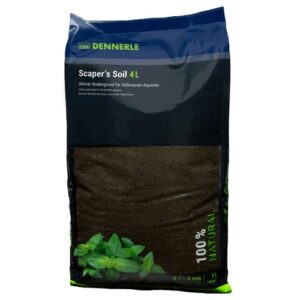
Dennerle Scapers Soil pushes pH down to 6.0–6.5 and softens water to near-zero hardness. That’s perfect for carpeting plants and shrimp setups.
The volcanic soil is baked twice, so you won’t fight clouds of dust during setup. You’ll see roots spread fast in those porous grains. The 4-liter bag accommodates smaller tanks, though some buyers grumble about the price.
If you’re running CO2, this substrate holds pH steady without wild swings.
| Best For | Aquascapers running soft-water setups with carpeting plants, shrimp colonies, or CO2 injection who want stable pH and fast root development. |
|---|---|
| Weight | 7.7 pounds |
| Brand | Dennerle |
| Material Type | Volcanic soil |
| Color | Dark brown |
| Primary Use | Aquarium substrate |
| Volume/Quantity | 4 Liters |
| Additional Features |
|
- Volcanic soil baked twice means minimal dust and cloudiness during setup
- Drops pH to 6.0–6.5 and softens water to near-zero hardness—ideal for demanding plants and shrimp
- Porous grains encourage rapid root spread and work well with CO2 systems
- 4-liter volume feels overpriced compared to other substrates
- Product listing can be confusing (some show 8L instead of actual 4L)
- Dark brown color limits visual contrast with certain hardscape materials
6. E P Minerals Safe T Sorb Clay
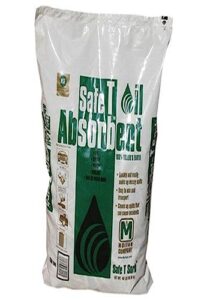
Safe T Sorb started as an oil-spill cleanup product, but planted-tank hobbyists figured out it’s calcined montmorillonite clay—the same stuff in pricey aquarium soils. You’ll pay around $8 for a 40-pound bag at farm stores.
The gray grains soak up nutrients and stabilize pH near neutral. They’re dusty during setup, so rinse hard. Some report packaging damage on delivery, and you might get a reformulated version that differs from older batches.
Budget-friendly? Absolutely. Predictable? Not always.
| Best For | Budget-conscious aquarium hobbyists who don’t mind rinsing dusty clay and are okay with some inconsistency between batches. |
|---|---|
| Weight | 40 lb |
| Brand | E P MINERALS |
| Material Type | Clay |
| Color | Gray |
| Primary Use | Spill cleanup |
| Volume/Quantity | 40 lb |
| Additional Features |
|
- Extremely affordable at around $8 for 40 pounds compared to specialty aquarium substrates
- Absorbs nutrients effectively and helps stabilize pH near neutral levels
- Same active ingredient (calcined montmorillonite clay) as expensive planted-tank products
- Very dusty and requires thorough rinsing before use in your tank
- Product formulation may vary between batches, leading to unpredictable results
- Packaging often arrives damaged during shipping
Frequently Asked Questions (FAQs)
What are the three types of substrates?
You’ll encounter three main substrate categories: inert materials like gravel and sand that don’t affect water chemistry,
nutrient-rich soils designed for planted tanks, and specialty substrates that actively alter pH or mineral content.
What is the easiest substrate to clean?
Here’s the straight scoop: bare-bottom tanks win hands down for easy cleaning.
But if you want substrate, loose gravel takes the crown—waste sits on top, so you just siphon and go.
What can I use as substrate?
You can use gravel, sand, soil, clay pellets, pebbles, or specialty blends.
Each works differently—gravel’s easy to clean, sand suits bottom feeders, and soil feeds plants like a slow-release fertilizer.
How to choose substrate?
Choose substrate by matching it to your fish and plants first. Consider whether you need nutrients for roots, check how it affects water chemistry, and think about cleaning ease.
Can I mix different substrate types together?
Sure, you can mix substrates—though your tank might look like a geological experiment.
Layer nutrient-rich soil under decorative sand or gravel. Just test compatibility first to avoid compaction and cloudy water surprises.
How often should substrate be fully replaced?
You won’t need a full replacement on a fixed schedule. Replace substrate when you spot persistent ammonia spikes, compaction, foul odors, or plants that won’t root—usually every one to three years.
Does substrate need rinsing before tank use?
Most substrates benefit from a quick rinse to remove dust and fine particles that cloud your water.
You’ll save yourself cleanup headaches by washing gravel and sand until the water runs clear.
What substrate works best for shrimp tanks?
Fine sand or inert gravel works well for beginner shrimp keepers raising Neocaridina. Caridina varieties thrive on active buffering soils that lower pH and soften water gently.
Can substrate cause algae growth problems?
Your tank’s bottom layer can become algae‘s best friend if you’re not careful. Fine substrates trap organic waste and nutrients, feeding algae when you skip regular siphoning and water changes.
Conclusion
Imagine this: your tank thrives while your neighbor’s crashes—same fish, different floors. That’s substrate power.
You’ve got the blueprint now—gravel for low-maintenance setups, sand for bottom-dwellers, soil for planted dreams. The substrate options for beginners you choose today determine whether your ecosystem hums or struggles six months down the road. Don’t overthink it, but don’t wing it either. Pick what matches your vision, then build something worth staring at.