This site is supported by our readers. We may earn a commission, at no cost to you, if you purchase through links.
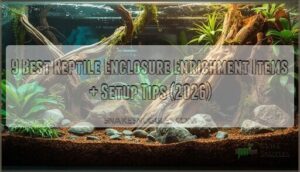
Most captive reptiles spend their entire lives in spaces smaller than a suburban bathroom, yet their wild counterparts traverse territories spanning hundreds of square miles. This dramatic confinement creates a unique challenge: you must condense an entire ecosystem’s worth of stimulation into a few cubic feet of glass or plastic.
Without proper reptile enclosure enrichment items, your scaled companion faces the reptilian equivalent of solitary confinement—reduced muscle tone from lack of climbing, stress-induced immune suppression, and stereotypic behaviors like glass surfing or repetitive pacing.
Strategic enrichment transforms sterile boxes into vibrant microhabitats that support thermoregulation, foraging instincts, and species-specific behaviors, from arboreal geckos exploring vertical terrain to fossorial skinks excavating multilayered burrows.
Table Of Contents
- Key Takeaways
- Best Reptile Enclosure Enrichment Items
- 1. Reptile Terrarium Plant Decor Set
- 2. Zoo Med Reptile Water Dish
- 3. Snake Climbing Toy Accessory
- 4. Sukh Sphagnum Moss for Reptiles
- 5. Fri4free Long Aquarium Tweezers
- 6. Natural Coral Driftwood Aquarium Decor
- 7. Pranovo Snake Climbing Rope Toy
- 8. Jedew Digital Hygrometer Thermometer
- 9. Snake Climbing Rings for Reptile Enclosures
- Essential Features for Enrichment
- Choosing The Right Substrate
- Creating Naturalistic Terrarium Designs
- Interactive Enrichment Techniques
- Frequently Asked Questions (FAQs)
- What are the enrichment ideas for reptiles?
- What are the enrichment items for lizards?
- What additional items should you have in a lizard vivarium?
- How to keep a lizard entertained?
- How often should I change my reptiles substrate?
- What temperature range is ideal for basking spots?
- Do all reptiles need UVB lighting?
- How do I maintain proper humidity levels?
- Can I use household items for enrichment?
- Conclusion
Key Takeaways
- Captive reptiles face significant health risks from inadequate environmental enrichment, including reduced muscle tone, stress-induced immune suppression, and stereotypic behaviors like glass surfing, because their natural territories span hundreds of square miles while most enclosures measure smaller than a bathroom.
- Effective enrichment requires species-specific substrate depth (four to twelve inches for burrowers), proper hiding spots with textured interiors, climbing structures anchored securely, and water features maintained between 85-90°F to support thermoregulation, foraging instincts, and natural behaviors.
- Interactive techniques like puzzle feeders, rotating decor every four to eight weeks, and brief training sessions under five minutes prevent habituation and boredom while strengthening natural problem-solving abilities and handler-animal bonds.
- Essential monitoring tools include digital hygrometers with ±1°C accuracy updating every 10 seconds, substrate replacement schedules ranging from two weeks for tropical species to three months for arid species, and basking spots maintained at 42-45°C with cooler zones at 25-29°C.
Best Reptile Enclosure Enrichment Items
You can’t expect your reptile to thrive in a bare enclosure, no matter how precise your temperature gradients are. Enrichment items transform static habitats into environments that encourage natural behaviors, from climbing and exploring to foraging and thermoregulation.
From creative DIY snake habitat ideas to commercially available décor, the options for building an engaging setup are nearly endless.
Enrichment items transform bare enclosures into thriving habitats that encourage climbing, foraging, and natural reptile behaviors
Here are nine enclosure enrichment products that provide measurable improvements in activity levels, stress reduction, and overall quality of life for captive reptiles.
1. Reptile Terrarium Plant Decor Set
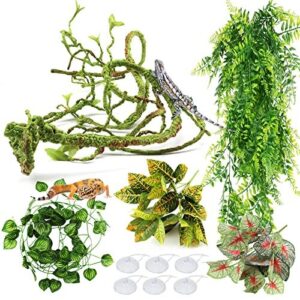
Artificial foliage transforms sterile glass into a functional microhabitat, and the PietyPet terrarium plant set delivers precisely that. You’ll get four distinct pieces—bendable jungle vines, large hanging leaves, and mini ivy plants—each molded from non-toxic plastic and foam with realistic green hues.
The flexible metal core inside the vine lets you shape climbing routes, while six suction cups secure everything to tank walls without adhesive damage. This set works well for bearded dragons, chameleons, and arboreal geckos in 10- to 40-gallon enclosures, providing vertical structure and visual cover.
| Best For | Reptile owners who need flexible, ready-to-install foliage to add climbing structure and hiding spots to 10- to 40-gallon terrariums without complicated setup. |
|---|---|
| Primary Material | Plastic/Foam |
| Color | Green |
| Easy Installation | Yes – Suction cups |
| Maintenance Required | Regular cleaning |
| Durability | Moderate – Foam tears |
| Versatility | Multiple reptile types |
| Additional Features |
|
- Bendable metal core lets you shape custom climbing paths and rearrange the layout as your reptile’s needs change
- Suction cups make installation quick and damage-free, with no drilling or permanent modifications to your tank
- Non-toxic materials are safe for direct contact with bearded dragons, chameleons, geckos, and other common terrarium pets
- Foam covering can tear if you bend the vine too aggressively or reposition it frequently
- Suction cups may lose grip over time, especially in high-humidity enclosures, requiring occasional reattachment
- Initial chemical smell from the plastic and foam may linger until you rinse and air out the pieces before use
2. Zoo Med Reptile Water Dish
While plant decor builds vertical habitat, your reptile needs a stable hydration station at ground level.
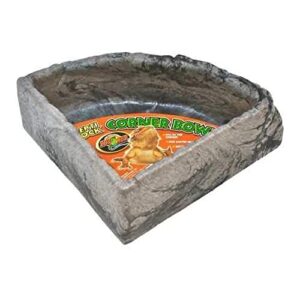
Zoo Med’s corner water dish, measuring 9.3 by 8.2 by 3 inches, holds about a gallon and fits snugly in tank corners to save floor space. The rock-textured plastic surface mimics natural stone, resists algae buildup, and wipes clean with warm water and mild soap.
You’ll find it suitable for bearded dragons, ball pythons, and similar species, though the depth requires monitoring for smaller amphibians to prevent drowning risk.
| Best For | Reptile owners with bearded dragons, ball pythons, or similar mid-sized species who need a space-saving corner dish that handles both drinking and soaking. |
|---|---|
| Primary Material | Plastic |
| Color | Assorted |
| Easy Installation | Yes – Place and fill |
| Maintenance Required | Regular cleaning |
| Durability | High – Durable plastic |
| Versatility | Multiple species |
| Additional Features |
|
- Corner design maximizes floor space in smaller enclosures
- Easy-clean surface resists algae and wipes down quickly
- One-gallon capacity works well for soaking and hydration needs
- Depth may pose drowning risk for smaller amphibians without supervision
- Size doesn’t fit all species—too shallow for adult ball pythons, too large for tiny geckos
- Assorted colors mean you can’t choose your preferred shade
3. Snake Climbing Toy Accessory
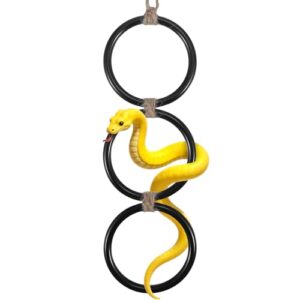
Beyond water, your snake needs vertical terrain that encourages natural climbing behavior and muscle development. This black climbing accessory, measuring 17.1 by 3.5 inches, attaches to terrarium walls with easy-to-use mounting hardware and creates elevated routes between perches.
The textured PP material resists moisture, bite marks, and daily humidity without warping, making it suitable for corn snakes, ball pythons, and other arboreal species. You’ll want to secure all connection points before introducing your snake, then rotate the configuration every few weeks to maintain exploration interest and prevent habituation.
| Best For | Snake owners with corn snakes, ball pythons, or other climbing reptiles who want to add vertical enrichment and natural exploration opportunities to their terrarium setup. |
|---|---|
| Primary Material | PP Plastic |
| Color | Black |
| Easy Installation | Yes – User-friendly |
| Maintenance Required | Easy cleaning |
| Durability | High – Quality PP |
| Versatility | Climbing reptiles |
| Additional Features |
|
- Durable PP material resists moisture, bite marks, and humidity without warping or degrading over time
- Textured surface and irregular shape mimic natural terrain, encouraging climbing behavior and muscle development
- Easy installation with user-friendly mounting design that fits standard terrarium walls
- May not accommodate larger ball pythons or bigger snake species due to its 17.1×3.5 inch size
- Requires additional hardware like zip ties for completely secure installation
- Color and measurements may vary slightly from product images due to monitor settings and manual production
4. Sukh Sphagnum Moss for Reptiles
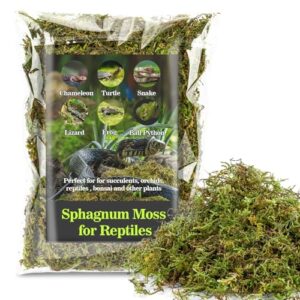
Tropical species demand consistent humidity through shedding cycles, and Sukh Sphagnum Moss provides moisture retention at five times its dry weight, creating stable microclimates inside hides or under climbing structures.
Pairing it with coconut coir creates a layered substrate for snake habitats that balances drainage with moisture control across different terrarium zones.
This 5-ounce green substrate measures 13.5 by 9.13 by 0.55 inches and works best as a supplementary layer, not a primary floor covering, because it can degrade into powder over time.
You’ll want to rehydrate the moss with room temperature water, monitor for mold growth, and replace sections every two to three weeks to maintain hygiene.
| Best For | Reptile keepers with tropical species like tree frogs, crested geckos, or ball pythons that need extra humidity during shedding or nesting. |
|---|---|
| Primary Material | Natural Moss |
| Color | Green |
| Easy Installation | No – Requires prep |
| Maintenance Required | Regular replacement |
| Durability | Low – Degrades over time |
| Versatility | Humid-loving species |
| Additional Features |
|
- Holds moisture at five times its dry weight to maintain steady humidity in hides and climbing areas
- Soft, natural texture works well for egg-laying spots and shedding surfaces
- Compact 5-ounce size fits easily into enclosure corners or under decorations
- Breaks down into dusty powder over time, so it’s not ideal as a main substrate
- Needs replacing every two to three weeks to prevent mold and keep things sanitary
- Not safe for reptiles that nibble on their surroundings or eat greens
5. Fri4free Long Aquarium Tweezers
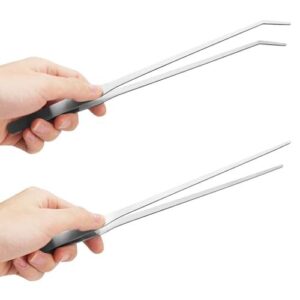
Feeding insects or repositioning delicate decor demands precise control, and the Fri4free Long Aquarium Tweezers deliver 10.6 inches of reach without forcing your hand into humid enclosures. Each stainless steel pair—one straight, one curved—features serrated tips that grip worms, crickets, or moss patches with controlled pressure, reducing stress on both keeper and animal.
You’ll appreciate the corrosion resistance in tropical setups and the slim profile that navigates between plant fronds. Rinse and dry after each use to maintain tip integrity and prevent substrate buildup.
| Best For | Aquarium and terrarium owners who need precise reach for feeding small animals, arranging plants, or handling delicate items without disturbing their setup. |
|---|---|
| Primary Material | Stainless Steel |
| Color | Silver |
| Easy Installation | No – Manual use |
| Maintenance Required | Cleaning after use |
| Durability | High – Stainless steel |
| Versatility | Reptiles/fish/amphibians |
| Additional Features |
|
- 10.6-inch reach keeps your hands dry and away from bites or scratches during feeding
- Serrated tips grip crickets, worms, and small decor securely without slipping
- Stainless steel construction resists rust in both saltwater and freshwater environments
- Can bend under pressure when handling heavier objects or applying too much force
- Struggles with slippery items like frozen feeders that lack texture
- Not built for heavy-duty tasks beyond routine aquarium and terrarium maintenance
6. Natural Coral Driftwood Aquarium Decor

Branching structures that mimic reef formations bring three-dimensional complexity to arid and semi-arid enclosures, and Natural Coral Driftwood pieces measuring 6 to 10 inches offer intricate knobs and smooth sweeps for climbing species.
You’ll receive three unique pieces in light beige to rich brown tones, each suitable for medium to large terrariums. Soak the wood 24 to 48 hours before placement to reduce buoyancy and leach excess tannins, then secure with aquarium-safe adhesive or substrate anchoring to prevent shifts during basking or exploration.
| Best For | Aquarium and terrarium hobbyists looking for natural decor that adds vertical interest and creates hiding spots for fish, reptiles, or invertebrates. |
|---|---|
| Primary Material | Natural Wood |
| Color | Natural Brown |
| Easy Installation | No – Requires prep |
| Maintenance Required | Boiling/soaking needed |
| Durability | High – Natural wood |
| Versatility | Aquarium/terrarium use |
| Additional Features |
|
- Three unique pieces give you flexibility to arrange custom layouts that fit your tank’s size and style
- Natural driftwood texture provides climbing surfaces and shelter for various species
- Reasonably priced at $22.99 for a multi-piece set that works in different enclosure types
- Releases tannins that discolor water and require 24–48 hours of pre-soaking or boiling to minimize
- Size and shape vary between shipments, so you won’t know the exact look until it arrives
- May float initially and needs anchoring with adhesive or substrate weight to stay in place
7. Pranovo Snake Climbing Rope Toy
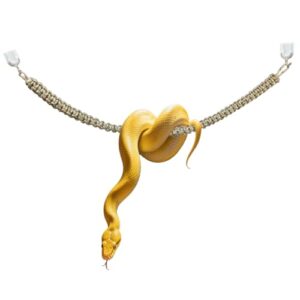
Suspended vertical pathways encourage snakes to exercise climbing muscles while mimicking branch-canopy movement, and this 24.4-inch braided nylon rope features textured knots along its length to aid grip during ascent.
You can anchor it with adhesive hooks or suction cups at diagonal or vertical angles, creating routes for corn snakes, milk snakes, and pythons up to moderate weight. Inspect weekly for fraying and maintain taut placement to prevent entrapment, then rinse with lukewarm water during routine cleaning to remove substrate dust without compromising fiber integrity.
| Best For | Snake owners looking to add vertical enrichment and climbing exercise to their reptile’s enclosure, especially for corn snakes, milk snakes, and lighter python species. |
|---|---|
| Primary Material | Paracord |
| Color | Yellow |
| Easy Installation | Yes – Hooks/suction |
| Maintenance Required | Minimal |
| Durability | High – Paracord |
| Versatility | Various snake species |
| Additional Features |
|
- Textured knots along the rope help snakes grip securely during climbing
- Easy setup with adhesive hooks or suction cups that can be repositioned as needed
- Durable braided nylon withstands regular use and cleans easily with water
- May detach from glass with heavier snakes, limiting use for larger species
- Hooks sometimes need manual bending to prevent snakes from unhooking the rope
- Some snakes may ignore it entirely depending on their individual activity preferences
8. Jedew Digital Hygrometer Thermometer
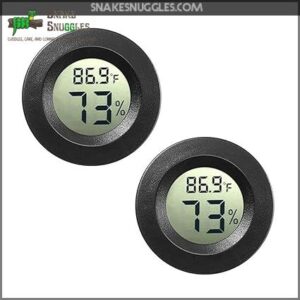
Precision climate monitoring transforms guesswork into proactive care, and this compact gauge delivers both temperature (0–70°C) and humidity (10–99% RH) readings every 10 seconds with ±1°C and ±5% RH accuracy.
You’ll position the 1.78-inch LCD unit near basking zones or humid retreats to track microclimate shifts, enabling immediate adjustments to misting schedules or ceramic emitter output.
Battery-powered LR44 cells eliminate cord clutter, while the simultaneous dual display lets you confirm thermal gradients and moisture levels at a glance during daily wellness checks.
| Best For | Reptile keepers who need continuous monitoring of temperature and humidity in terrariums to maintain precise environmental conditions for their pets’ health. |
|---|---|
| Primary Material | Plastic/Electronic |
| Color | White/Digital |
| Easy Installation | Yes – Placement |
| Maintenance Required | Battery replacement |
| Durability | Moderate – Electronic device |
| Versatility | Any terrarium setup |
| Additional Features |
|
- Updates readings every 10 seconds so you can catch environmental changes quickly and adjust heating or misting equipment before conditions drift too far
- Compact 1.78-inch design fits easily inside tanks or near basking spots without taking up valuable space or blocking your view
- Shows both temperature and humidity simultaneously on one screen, eliminating the need to check multiple devices during daily care routines
- ±5% humidity accuracy means readings could be off by several percentage points, which matters for species requiring very specific moisture levels
- Battery life isn’t listed anywhere, so you won’t know when to expect replacements or if you’ll need backups on hand
- Indoor-only rating and 0–70°C range might not handle extreme desert setups or specialized cold-climate enclosures
9. Snake Climbing Rings for Reptile Enclosures
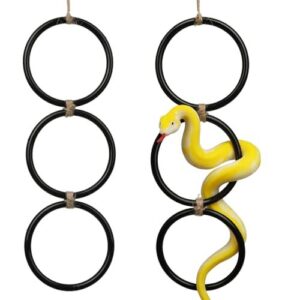
Interlocking triple-ring architecture invites arboreal species like Ball Pythons and Corn Snakes to navigate vertical pathways, building core muscle while satisfying instinctive climbing urges. At 9.25 × 5.2 inches, these ABS rings mount via hooks to mesh lids, creating a customizable network 6–12 inches apart.
Rounded 360° edges prevent scale abrasion, and reinforced connectors support active movement. You’ll check mounting stability weekly and wipe rings with reptile-safe disinfectant after each enclosure cleaning to maintain durability and reduce waste transfer.
| Best For | Owners of young Ball Pythons, Corn Snakes, or other climbing reptiles who want to add vertical enrichment without taking up floor space. |
|---|---|
| Primary Material | ABS Plastic |
| Color | Black |
| Easy Installation | Yes – Hooks included |
| Maintenance Required | Periodic cleaning |
| Durability | Moderate – ABS plastic |
| Versatility | Multiple snake species |
| Additional Features |
|
- Triple-ring design lets you arrange custom climbing routes that match your snake’s skill level
- Rounded edges and reinforced joints keep scales safe during active movement
- Hooks onto mesh lids easily, so you can reconfigure the setup as your snake grows
- Works better for juveniles than full-grown adults due to size limitations
- Some customers received incomplete sets (one ring instead of two)
- Needs weekly stability checks and regular cleaning to stay secure and hygienic
Essential Features for Enrichment
You can’t expect your reptile to thrive in a bare box, no matter how clean you keep it. Enrichment features transform static enclosures into vibrant environments that support physical health, mental stimulation, and species-specific behaviors.
Let’s examine the essential components that turn basic housing into a habitat your reptile will actually use.
Hiding Spots and Shelter Options
Your reptile’s naturalistic habitat depends on secure, species-appropriate hiding spots that reduce stress and encourage natural retreat behavior. Effective cavern design and plant cover benefits work together to create a layered reptile environment where animals feel protected while maintaining behavioral flexibility.
- Hide Material Choices: Cork bark, slate panels, and hollow driftwood provide breathable, temperature-stable shelters
- Plant Cover Benefits: Dense artificial or live foliage creates visual barriers around hides
- Substrate Burrow: Four to six inches of digging medium facilitates fossorial species’ burrowing instincts
- Cavern Design: Textured interiors with dim entrances mimic wild refuges in reptile habitat design
Climbing Structures and Ramps
Once your animal feels secure in its hiding spots, you can expand its naturalistic habitat upward with climbing structures that encourage muscle development and exploration.
Textured climbing wall panels, wooden ramp designs, and net structures create vertical climbers for arboreal species, while bridge systems link elevated zones in your enclosure design. Install sturdy anchors to prevent shifting, and rotate modular components monthly to sustain engagement in your reptile habitat design.
For inspiration on safe and innovative designs, you can learn more about the features of freestanding climbing structures commonly used in public venues.
Water Features for Hydration and Bathing
After establishing vertical terrain, you’ll want to integrate water features that support hydration systems and bathing techniques for superior reptile health. Clean, shallow pools with graduated ramps promote safe access, while maintaining water temperature between 85 and 90 degrees Fahrenheit prevents thermal shock during environmental enrichment sessions in your reptile enclosure.
- Change drinking water daily to guarantee water quality and prevent bacterial buildup
- Install textured exit ramps so animals can safely climb from bathing areas
- Position pools behind natural décor to reduce stress and mimic wild microhabitats
For creative design inspiration, consider the possibilities of modern bathroom water features that augment both aesthetics and functionality.
Varied Substrates for Digging and Burrowing
Below the water line, your fossorial species need soil texture and substrate type options that support tunnel engineering and burrow stability. Loam-based mixes balance sand, silt, and clay, enabling digging behavior without collapse risk.
You’ll want substrate moisture levels that clump when pressed but remain loose enough to excavate. Depth matters—burrowers require eight to twelve inches to construct full retreat systems, transforming your reptile enclosure into true environmental enrichment infrastructure.
Sensory Stimulation With Plants and Decor
Beyond substrate depth, sensory stimulation through plant texture variety and decor rotation strategies turns static terrariums into vibrant sensory zone creation laboratories. Combine tactile contrasts—soft moss cushions, rough bark samples, smooth glassy elements—with visual stimulation techniques like brightly colored foliage and high-contrast plant patterns.
Here’s how to layer olfactory enrichment methods and environmental enrichment throughout your habitat design:
- Place aromatic herbs near hides so brushing releases mild thyme or oregano scents during exploration.
- Rotate hanging greenery every two to three weeks to maintain novel aerial climb opportunities and shade coverage.
- Pair shallow water features with leafy understories to blend acoustic feedback from gentle splashes with touch experiences.
These animal enrichment zones encourage foraging, climbing, and investigatory behavior across multiple senses simultaneously.
Choosing The Right Substrate
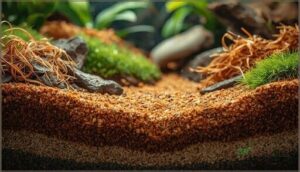
Choosing the right substrate isn’t just about aesthetics—it directly impacts your reptile’s ability to burrow, thermoregulate, and express natural behaviors.
Different species have evolved to thrive on specific terrain types, from arid sand blends to moisture-retaining mosses, and selecting the wrong one can lead to stress or health complications.
The following substrate options will help you match your enclosure setup to your reptile’s biological needs while maintaining proper hygiene.
Substrate Types for Different Species
Your substrate choice shapes your reptile habitat design more than almost any other feature in reptile care. Desert dwellers like leopard geckos thrive on sand blends that prevent mold growth, while tropical species such as anoles need cypress mulch or coconut coir for humidity control.
Match substrate materials to species specificity—forest floor skinks require leaf litter, and semi-aquatic turtles benefit from river sand with gravel pieces.
Benefits of Deep Substrates for Burrowers
Burrowing species don’t just tolerate deep substrate—they demand it for complete environmental enrichment and natural reptile behavior.
You’ll reveal complex tunnel systems when you provide four to six inches of substrate depth, enabling your sandfish skinks or hognose snakes to engineer stable burrow architecture. Deep layers deliver enhanced humidity control and thermal buffering, creating microclimates that support thermoregulation, shedding cycles, and digestive health in terrarium design.
Hygiene and Maintenance Considerations
Regular maintenance routines separate thriving colonies from pathogen reservoirs—your substrate choice directly impacts cleaning schedules and waste management efficiency.
Execute these core disinfection methods to maintain enclosure sanitization:
- Perform spot cleaning daily, removing feces and uneaten food to prevent bacterial proliferation in your terrarium design and maintenance program.
- Complete full substrate replacement every four to eight weeks, adjusting frequency based on species-specific waste loads and animal welfare requirements.
- Sanitize all decor monthly using reptile-safe cleaners, ensuring complete drying before reintroduction to support reptile health and wellness.
Creating Naturalistic Terrarium Designs
A naturalistic terrarium replicates your reptile’s wild habitat through carefully arranged plants, terrain features, and layered environmental elements that encourage exploration, thermoregulation, and species-specific behaviors.
You’ll need to balance aesthetic appeal with functional design, ensuring each component fulfills a biological purpose rather than simply decorating the space. The following design strategies help you create enriching, multi-dimensional habitats that support your reptile’s physical and psychological well-being.
Incorporating Live and Artificial Plants
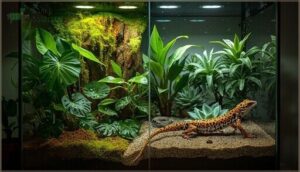
Live plant care demands attention to light levels, substrate moisture, and routine pruning, but it transforms your terrarium into a thriving microhabitat. If you want low-maintenance enrichment activities, faux plant benefits include UV resistance, zero watering, and realistic foliage that still offers hiding spots and climbing structures.
Match species-specific plants to your reptile’s needs—crested geckos thrive with broadleaf tropical options, while leopard geckos prefer arid-compatible artificial greenery in their reptile habitat design.
Designing for Exploration and Activity
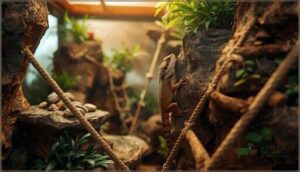
Environmental complexity fuels natural behaviors, so you’ll want to build multiple activity zones with varied terrain and sensory play opportunities.
Install exploration routes using rope ladders, staggered ledges, and vertical nets to encourage three-dimensional movement across your enclosure. Position hiding spots and climbing structures at different heights to promote behavioral stimulation, creating a lively habitat that rewards investigation and meets species-specific reptile enrichment needs.
Enhancing Terrain With Rocks and Driftwood
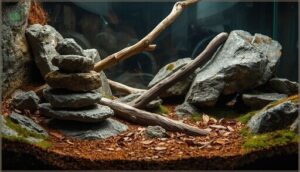
Rock placement anchors your hardscape design—stabilize each stone with a flat base on firm substrate, then group them in odd-numbered clusters (three or five) to create focal points and climbing structures.
Driftwood safety demands thorough scrubbing and drying before installation, while terrain layering with gentle slopes and hidden crevices promotes natural foraging.
Visual balance comes from angled hardscape that guides movement, transforming your reptile enclosure into a vibrant landscape that enhances environmental enrichment through habitat design.
Interactive Enrichment Techniques
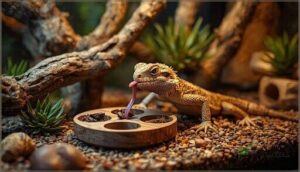
Interactive enrichment takes your reptile’s habitat beyond static decor by introducing engaging challenges that tap into their natural problem-solving abilities.
Puzzle feeders, rotated furnishings, and structured training sessions encourage foraging behaviors, reduce monotony, and strengthen the bond between you and your animal.
The following techniques offer practical ways to keep your reptile mentally engaged while promoting species-appropriate activity.
Using Puzzle Feeders and Foraging Toys
Puzzle feeders slow down eating by requiring multiple movements to release food, promoting natural hunting behaviors while boosting reptile problem solving skills.
You’ll find treat balls, maze-style dispensers, and foraging toys with rotating compartments that hide insects or vegetables. Choose designs with openings smaller than your reptile’s head, use nonporous materials for easy sanitization, and supervise initial sessions to monitor stress responses and track foraging behavior progress.
Rotating Decor to Prevent Boredom
Beyond puzzle feeders, you can swap hides, climbing branches, and substrate textures every four to eight weeks to sustain animal interest through environmental variety. Alternate color schemes, adjust basking spot orientations, and introduce new rope diameters to create fresh visual stimulation and texture changes.
Document each rotation on a calendar, limit handling to under five minutes, and observe behavioral responses to perfect your environmental enrichment techniques.
Training Sessions and Safe Handling
Once you’ve refreshed the habitat, you can introduce structured training sessions to strengthen handler safety and animal acclimation. Start with species-specific handling steps that keep sessions under five minutes, use calm, slow movements to prevent defensive responses, and observe tongue flicking, color shifts, or tail movements to gauge stress reduction. Apply positive reinforcement through gentle contact, wash hands before and after each session, and log behavioral observations to fine-tune your training techniques over time.
- Begin training with clear, species-specific objectives to minimize stress during reptile behavior and enrichment interactions.
- Demonstrate slow, deliberate handling movements to reduce defensive reactions and improve animal welfare.
- Record session duration, mood, and triggers in a log to tailor future animal behavior and psychology assessments.
Frequently Asked Questions (FAQs)
What are the enrichment ideas for reptiles?
Enrichment ideas rooted in behavioral research promote animal welfare through environmental stimulation—puzzle feeders encourage foraging, climbing structures trigger arboreal instincts, and rotated decor prevents habituation, all supporting natural reptile behavior and enrichment beyond basic husbandry.
What are the enrichment items for lizards?
You’ll want hiding spots, climbing structures, water dishes for bathing, varied substrates, and puzzle feeders to trigger natural foraging behaviors.
Live or artificial plants add sensory enrichment while improving humidity and air quality.
What additional items should you have in a lizard vivarium?
You’ll need Vivarium Lighting for thermal gradients, Reptile Hides for security, humidity control tools like moss, and Environmental Textures including climbing structures—all essential terrarium design and maintenance elements supporting environmental enrichment techniques beyond basic hiding spots.
How to keep a lizard entertained?
Like a restless child in an empty room, a lizard thrives when its enclosure offers climbing structures, hiding spots, and rotated decor, stimulating reptile enrichment through environmental stimulation and mental exercise that mirrors animal behavior.
How often should I change my reptiles substrate?
You should perform a full substrate replacement every two to four weeks for tropical species, extending to one to three months for arid species like leopard geckos, depending on waste management and odor control.
What temperature range is ideal for basking spots?
Your basking surface temps should reach 42 to 45°C (108 to 113°F), while cooler area needs stay around 25 to 29°C (77 to 85°F), creating essential temperature gradients for healthy thermoregulation.
Do all reptiles need UVB lighting?
Different reptile species have vastly different UVB requirements—desert and savanna inhabitants like bearded dragons absolutely require strong UVB exposure for vitamin D3 synthesis and calcium metabolism.
While nocturnal species often need minimal supplementation.
How do I maintain proper humidity levels?
You maintain proper humidity levels by placing humidity gauges in your enclosure, running a humidifier or dehumidifier as needed, misting substrate regularly, and ensuring adequate air exchange through screened vents.
Can I use household items for enrichment?
You can absolutely repurpose household items for reptile enrichment—Budget Friendly Options that are non-toxic, clean, and safe spark Enrichment Creativity while encouraging natural behaviors, provided you supervise sessions and remove items after use.
Conclusion
Your reptile won’t file a formal complaint about inadequate housing, but its immune system will—through respiratory infections, lethargy, and premature mortality.
The difference between a sterile holding cell and a thriving microhabitat lies in thoughtful implementation of reptile enclosure enrichment items that honor your animal’s evolutionary heritage. Each climbing branch, humid retreat, and textured substrate represents a commitment to replicating the complex sensory landscape your scaled companion was designed to navigate across millennia.