This site is supported by our readers. We may earn a commission, at no cost to you, if you purchase through links.
Most snake bites during feeding happen within the first 18 inches of the snake’s body — and most happen to keepers who thought they knew their animal well enough to get casual. That confidence gap is where accidents live.
A ball python in feeding mode doesn’t recognize your hand as something familiar; it registers heat, movement, and proximity. The rules change the moment prey enters the enclosure. Knowing how far to stay when feeding your snake isn’t overly cautious — it’s what separates a smooth feeding session from an unplanned trip to urgent care.
Table Of Contents
- Key Takeaways
- Factors Affecting Safe Feeding Distance
- Recommended Distances for Feeding Snakes
- Safe Feeding Tools and Best Practices
- Post-Feeding Safety and Handling Guidelines
- Top Products for Safe Snake Feeding
- Frequently Asked Questions (FAQs)
- How long should I leave my snake alone after feeding?
- How do I know if I’m over feeding my snake?
- What not to do when feeding a snake?
- What is the proper way to feed a snake?
- Can feeding distance vary by enclosure size?
- Should feeding distance change during breeding season?
- Does prey scent affect how far snakes strike?
- How does age affect a snakes strike accuracy?
- Can feeding distance be reduced with regular training?
- Conclusion
Key Takeaways
- Most snake bites happen because keepers get too comfortable — the moment prey enters the enclosure, your snake stops seeing your hand as familiar and starts tracking heat and movement.
- Safe feeding distance scales with body length: most snakes can strike one-third to two-thirds of their total length, so a 4-foot snake can cover 24 inches before you react.
- The right tong length isn’t optional — use 12–18 inches for ball pythons, 18–24 inches for boas, and 36–48 inches for any snake over 6 feet.
- After feeding, leave your snake alone for at least 48–72 hours — handling too soon spikes regurgitation risk and stresses digestion when the snake is most vulnerable.
Factors Affecting Safe Feeding Distance
Safe feeding distance isn’t one-size-fits-all — it shifts depending on a few key things about your snake.
Age, size, and metabolism all play a role, so checking a species-specific snake feeding frequency guide helps you dial in the right approach for your individual snake.
Size, species, temperament, and body mechanics all play a role in how much space you actually need.
Here’s what to keep in mind before you pick up those tongs.
Snake Size and Species Differences
Size changes everything in terms of safe snake feeding distance. A Kenyan sand boa at under 0.9 m has a short strike zone — manageable with basic tong technique.
A red-tailed boa pushing 2.4 m? That’s a completely different equation. Snake length, body proportions, and species characteristics all shape how far your safe distance needs to be from the strike zone.
When planning your setup, consider the space requirements for different species to guarantee both safety and proper care.
Temperament and Feeding Response
Species matters, but so does personality. Two ball pythons from the same clutch can show completely different food motivation levels — one lazy, one locked on like a missile. Snake temperament shapes your safe distance just as much as body length.
Watch for these feeding cues before opening the enclosure:
- Rapid tongue flicking while tracking movement
- Body tensing or shifting toward the glass
- Head raised and weaving in feeding mode
Be aware that snakes can display various aggressive and defensive behaviours when approached, especially during feeding.
Strike Range and Body Length
Temperament tells you when to watch — but body length tells you how far back to stand. Most snakes strike between one-third and two-thirds of their total body length. A 4-foot snake can cover 16 to 24 inches fast. That’s your strike zone.
Body length defines your strike zone — a 4-foot snake can cover 24 inches before you react
For feeding safety, treat the full body length as your minimum safe distance from the enclosure front.
Defensive Postures and Warning Signs
Your snake’s body is basically a mood ring — if you know what to look for. Before a strike happens, most snakes telegraph it clearly.
Watch for:
- Coiling behavior into a tight S-curve
- Head displays like elevated necks or cobra-style hoods
- Tail vibrations or rapid rattling against enclosure décor
- Hissing sounds paired with inflated body posture
Back off when you see any of these.
Recommended Distances for Feeding Snakes
Safe feeding distance isn’t one-size-fits-all — it shifts depending on your snake’s age, size, and species.
A young ball python needs very different handling than a large adult boa, so checking a safe snake feeding distance guide tailored to your specific species can save you a nasty surprise.
A hatchling corn snake and an adult boa need very different amounts of breathing room between you and the food. Here’s what those numbers actually look like across common situations.
Minimum Distance for Hatchlings, Juveniles, and Adults

Distance isn’t one-size-fits-all in snake feeding — it scales with your animal. Hatchlings under 30 cm need roughly 20–30 cm of clearance; juveniles between 30–90 cm require 30–45 cm.
Adults 90–150 cm long need at least 45–60 cm. These snake size guidelines exist because strike zone management depends on body length — most snakes can lunge one-third of it instantly, faster than you can react.
Adjustments for Large and Aggressive Species
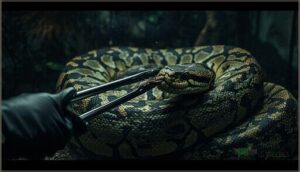
Once your snake hits 6 feet, the rules change fast. Large snake handling demands longer tools, more clearance, and sharper attention to defensive behavior.
Here’s how to adjust:
- Use 36–48 inch feeding tongs for snakes over 6 feet
- Maintain 3–4.5 feet of strike distance for large pythons
- Watch for coiling and raised heads — classic strike zone warnings
- Never rush post-strike; stay back until the snake fully commits
Aggressive species and venomous care require the same logic: more snake, more distance, better feeding safety.
Feeding Distance for Ball Pythons Vs. Boas

Ball pythons and boas aren’t interchangeable in terms of snake feeding — and Snake Size Variance is the first reason why. A 3-foot ball python’s Feeding Response is usually cautious, even hesitant. A 6-foot boa’s Strike Mechanics are faster and heavier.
Adjust your Handling Techniques accordingly: 12–18 inch tongs for ball pythons, 18–24 inches minimum for boas. Species Temperament shapes every feeding decision.
Guidelines for Venomous Vs. Non-venomous Snakes

Venomous or not — that distinction changes everything about snake feeding distance. Non-venomous species like corn snakes need 12–18 inch tongs and basic safety protocols.
Venomous snakes demand an entirely different approach to reptile handling:
- Stay one full body length away minimum
- Use 1.0–1.8 meter hooks, never bare hands
- Have a second trained person present
- Watch defensive postures constantly — coiling means back off
Snake behavior doesn’t forgive shortcuts.
Safe Feeding Tools and Best Practices

Distance only gets you so far — the right gear matters just as much. Having the right gear closes the gap between a smooth feeding session and an accidental strike.
Here’s what you should have on hand before you ever open that enclosure.
Choosing The Right Length of Feeding Tongs
Tong length is one of the simplest snake feeding safety upgrades you can make. For small snakes, 10–12 inch feeding tongs give solid control precision without awkward reach.
Step up to 16–20 inches for adults and large boas. Material choices matter too — stainless steel holds heavy prey firmly, while rubber tips protect your snake‘s face on a missed strike. Balance and safety margin go hand in hand.
Proper Use of Barriers and Enclosures
Your enclosure design is your first line of defense. Sliding glass doors let you open just a narrow gap for snake feeding — enough for tongs, not enough for a lunge. Secure lids with reliable locks prevent escape during strikes.
Safety screens block snout-sized gaps. Feeding ports on professional setups go further, delivering prey without direct arm exposure. Barrier materials like acrylic and glass absorb strikes cleanly, protecting you during reptile care.
Ensuring Clear Line of Sight and Lighting
Good barriers give you safety. Good lighting gives you information. Turn on your enclosure lights 20 to 30 minutes before feeding — your eyes need time to adjust, and so does the snake.
Ideal lighting in the 6000 to 7000 K range reveals body language cues clearly: tongue flicks, a tight S-coil, defensive postures. Glare reduction matters too. Skip colored bulbs. Use visual positioning — angle yourself slightly to one side so shadows don’t hide the head.
Avoiding Hand Placement in Strike Zone
Seeing the snake clearly is half the job. The other half is keeping your hand out of the picture entirely.
A coiled snake with an S-shaped neck can launch strikes faster than you can react — hand placement isn’t a guessing game.
Route your wrist to the side, extend only the tongs forward, and let the tool do the work your fingers shouldn’t.
Post-Feeding Safety and Handling Guidelines

The feeding is done, but your job isn’t quite finished.
What happens in the next 48 to 72 hours matters just as much as the distance you kept during the meal.
Here’s what to watch for and how to keep both you and your snake safe after the food goes down.
Waiting Period Before Handling After Feeding
After feeding, resist the urge to pick your snake up right away. Digestion time varies by species — ball pythons need 48 hours, boas with large meals need 72.
Handling risks spike when you rush it. Your feeding schedules should always build in that rest window.
Postfeeding snake care is simple: leave them alone, keep temps warm, and let their body do its job.
Signs of Stress and Regurgitation Risks
Even after the waiting period, watch your snake closely. Stress signals like rigid posture, rapid breathing, or constant head-tracking mean digestion time isn’t going smoothly. These snake behavior red flags often precede regurgitation risks.
A snake regurgitating it loses a full meal’s calories — plus risks esophageal damage. Repeated episodes cause serious health consequences. Calm surroundings aren’t optional; they’re how you prevent feeding complications entirely.
Preventing Accidents During and After Feeding
Three small habits cut most snake feeding accidents. Wash your hands before handling tools — food scents trigger feeding responses fast.
Open enclosure doors from the side, not above, to avoid looming triggers. After feeding, skip the tub transfer entirely; post-feeding handling is when defensive postures spike and handling risks peak.
Keep the enclosure quiet, latched, and leave your snake alone.
Monitoring Digestion and Health
Digestion issues don’t always announce themselves loudly. Most snakes process a meal in 3 to 5 days — track that feeding window.
Log feeding dates, prey size, and when your snake defecates. Skipped stools, repeated regurgitation, or soft watery feces are gut health red flags worth a vet call.
Postfeeding care is simple: watch, document, and act early when something’s off.
Top Products for Safe Snake Feeding
The right tools make safe feeding a lot easier — and a few products stand out for actually doing the job well.
Whether you’re working with a nervous hatchling or a heavy-bodied adult, having the proper gear in your corner matters. Here are some top picks worth keeping on your radar.
1. The Prepared Pantry White Bread Mix
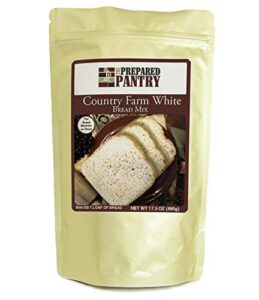
This one’s a bit of an odd fit on a snake feeding list — but hear me out. The Prepared Pantry Country Farm White Bread Mix is listed here as a product example, and honestly, it doesn’t belong in your reptile supply cabinet.
It’s a dry bread mix for home bakers, producing soft white sandwich loaves in a bread machine or oven. Your ball python won’t touch it — and shouldn’t. Stick to species-appropriate prey for your snake’s actual meals.
| Best For | Home bakers who want fresh, soft white sandwich bread without starting from scratch. |
|---|---|
| Brand | The Prepared Pantry |
| Weight | 1.08 pounds |
| Origin | USA |
| Format | Mix |
| Use Case | Home baking |
| Limitations | High sodium content |
| Additional Features |
|
- Works in both a bread machine and a regular oven — flexible and convenient
- Makes a classic, soft loaf that tastes like homemade bread
- Everything you need is included, just add water and butter
- The yeast can sometimes arrive dead, so you might need to buy extra just in case
- Sodium is on the higher side, so it’s not great if you’re watching your salt intake
- Shipping costs can sting, even with Prime
2. Gargeer Land Snail Veggie Diet
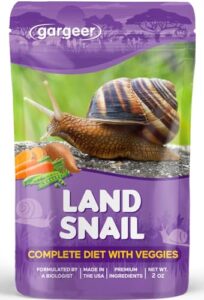
Another odd entry here — Gargeer Land Snail Veggie Diet is formulated for land and garden snails, not snakes. It’s a finely ground powder made from non-GMO oats, hemp seeds, pumpkin seeds, and black soldier fly larvae, with 22.4% crude protein and no copper sulfate, which is smart since copper is toxic to mollusks.
Your snake won’t benefit from it. If you keep pet snails alongside reptiles, it’s worth having. Otherwise, it doesn’t belong in your snake feeding toolkit.
| Best For | Snail keepers who want a clean, non-GMO diet for their land or garden snails. |
|---|---|
| Brand | Gargeer |
| Weight | 2.08 ounces |
| Origin | USA |
| Format | Powder |
| Use Case | Pet nutrition |
| Limitations | Mixed results reported |
| Additional Features |
|
- Made with real ingredients like oats, hemp seeds, and pumpkin seeds — no sketchy additives
- No copper sulfate, which matters a lot since copper is toxic to snails
- Works for all kinds of land snails, so it’s handy if you have a mixed collection
- Some snails just won’t touch it — picky eaters are a real thing
- The powder can cloud up your terrarium water and mess with the moss if you’re not on top of cleanup
- Results are hit or miss, and a few owners found their snails only ate it when nothing else was available
3. Ahab Live Prey Vinyl Album

This one’s a curveball — Ahab Live Prey is a funeral doom metal vinyl album, not a feeding product. Recorded at Death Row Fest 2017 in Jena, Germany, it’s a double LP running about 63 minutes across five tracks, all drawn from Ahab’s 2006 debut.
It retails around $29.98 and belongs in a doom metal collection, not your reptile supply cabinet. Great record if that’s your genre. Zero relevance to snake feeding safety.
| Best For | Fans of AHAB and funeral doom metal who want to relive the band’s haunting live performance from Death Row Fest 2017. |
|---|---|
| Brand | Napalm Records |
| Weight | 1.25 pounds |
| Origin | Germany |
| Format | Vinyl |
| Use Case | Music collection |
| Limitations | Incomplete live set |
| Additional Features |
|
- Captures a rare live recording of AHAB performing tracks from their iconic 2006 debut
- Double LP format with a cool etching on Side D makes it a collector’s piece
- At $29.98, it’s a solid pickup for any doom or black metal vinyl collection
- Only pulls from one album, so it’s not a full career retrospective
- Doesn’t cover their entire live set, so you’re getting a slice, not the whole show
- If you’re not already into slow, heavy, atmospheric doom metal, this probably isn’t your entry point
Frequently Asked Questions (FAQs)
How long should I leave my snake alone after feeding?
Give your snake the cold shoulder for at least 48 hours after feeding. Most keepers stretch that to 72 hours for larger meals. Watch for roaming behavior — that’s your green light.
How do I know if I’m over feeding my snake?
Check your snake’s body shape. If it looks sausage-like with skin spreading between scales, you’re feeding too much, too often.
Cut back on meal size or frequency before real damage sets in.
What not to do when feeding a snake?
Skipping tongs, standing too close, and striking up a snack session bare-handed are the fastest ways to get bit. Don’t handle your snake within 48 hours of feeding either.
What is the proper way to feed a snake?
Thaw frozen prey in warm water, warm it to body temperature, then offer it with feeding tongs.
Wiggle gently to trigger interest, hold still once the snake strikes, and step back.
Can feeding distance vary by enclosure size?
Yes, enclosure size changes everything. A spacious tank lets you stay 2–3 feet back with tongs. Tight tubs force closer positioning, so longer tools become your only real buffer.
Should feeding distance change during breeding season?
Absolutely. During breeding season, hormones make snakes faster, less predictable, and more strike-prone. Add at least one extra body length to your usual feeding distance, and switch to longer tongs.
Does prey scent affect how far snakes strike?
Prey scent doesn’t extend a snake’s physical reach, but it absolutely sharpens its willingness to use every inch of it.
A highly food-motivated snake will commit fully to its maximum strike range.
How does age affect a snakes strike accuracy?
Age matters more than most keepers expect.
Hatchlings strike fast but miss often.
Adults hit with more precision and reach farther — so don’t assume a younger snake means a safer feeding session.
Can feeding distance be reduced with regular training?
Training can make feeding more predictable, but it won’t eliminate safe distance requirements. Your snake’s strike range is fixed by biology, not behavior — tongs and margins stay non-negotiable.
Conclusion
A pilot doesn’t eyeball clearance — they follow exact margins, every time, because “close enough” isn’t a standard. Knowing how far you should stay when feeding your snake works the same way.
Eighteen inches of respect, the right tongs, and a consistent routine aren’t signs of nervousness — they’re signs of experience. The keepers who never get bit aren’t lucky. They just never let familiarity talk them into skipping the steps that keep them safe.