This site is supported by our readers. We may earn a commission, at no cost to you, if you purchase through links.

One in three captive reptiles dies from causes tied to poor water sanitation. That’s not a rare worst-case scenario; it’s a pattern repeating in tanks across the country, often because owners underestimate how fast standing water turns dangerous.
Bacterial populations spike within hours. A bowl that looked clean this morning can become a source of waste compounds, biofilm, and microbial load by evening. Reduced drinking follows, then failed shedding, then organ stress.
Knowing how often to change your snake’s water bowl and exactly how to do it right keeps that chain from ever starting.
Table Of Contents
- Key Takeaways
- How Often Should You Change Your Snake’s Water Bowl?
- Why is Fresh Water Essential for Snake Health?
- How Should You Clean and Disinfect a Snake Water Bowl?
- What Water is Safe for Your Snake?
- How Do Bowl Material, Size, and Placement Affect Water Cleanliness?
- Frequently Asked Questions (FAQs)
- How often should I change my snakes water bowl?
- Why put a penny in a snake water bowl?
- Where should a snakes water bowl be placed?
- How should I clean my snakes water bowl?
- Can snakes drink too much water daily?
- Should hatchlings have smaller water bowls?
- Do snakes need water during brumation?
- Can a dirty bowl affect shedding?
- How does humidity impact snake hydration needs?
- Can multiple snakes share a single water bowl?
- Conclusion
Key Takeaways
- Change your snake’s water bowl daily at minimum, and immediately if you spot feces, shed skin, cloudiness, or debris—clear water is not the same as clean water.
- Bacterial growth can make standing water dangerous within hours, and a snake that stops drinking quickly spirals into dehydration, failed shedding, and organ stress.
- Weekly deep cleaning with a reptile-safe disinfectant (such as F10SC or diluted bleach) is essential because rinsing alone won’t break down the biofilm that shields pathogens on bowl surfaces.
- Bowl material, size, and placement all affect how fast water degrades—use smooth glass or plastic, keep the bowl on the cool side of the enclosure, and avoid porous materials that trap bacteria between cleanings.
How Often Should You Change Your Snake’s Water Bowl?
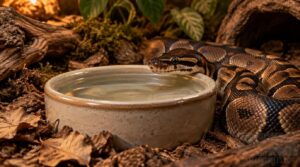
The answer isn’t one-size-fits-all — frequency depends on your setup. Your snake’s species, enclosure conditions, and what ends up in that bowl all affect how often you need to act. Here’s what drives the schedule.
Tracking your snake’s normal rhythm is a good starting point — signs of irregular bowel movements in snakes can help you spot when something’s off before it becomes a real health concern.
Daily Change Schedule
Every day, you need to change your snake’s water bowl completely. Not top it off. Discard every drop.
Daily water changes stop bacterial growth before it starts. Standing water accumulates waste within hours, and clear water isn’t clean water. Biofilm forms fast on bowl surfaces, raising microbial load silently.
Pick a consistent time each day. Remove, empty, rinse, then refill.
Species and Habitat Factors
That daily schedule is your baseline. But species-specific needs shift how fast water becomes unsafe.
Semi-aquatic snakes contaminate bowls constantly. They enter, defecate, and return. Change twice daily with those animals.
Desert species still need a full bowl, but their low-humidity enclosures slow evaporation. Tropical snakes soak frequently, accelerating bacterial buildup. Match your routine to the species, not the calendar.
Beyond bowl changes, some arboreal species rely on rain misting for hydration rather than standing water altogether.
Immediate Change Triggers
Schedule aside, certain immediate change triggers don’t wait for your routine.
If you notice condensation pooling, persistent fog, or a sudden spike in your real-time logs, those are signals to act now — and brushing up on proven terrarium humidity reduction techniques can help you respond confidently before conditions stress your snake.
Change the water now if you notice:
- Visible feces or fecal contamination
- Cloudy water or biofilm
- A sour or musty odor
- Shed skin in the bowl
- Food debris after feeding
Dirty water isn’t just unpleasant. Bacterial loads build fast. Water toxicity develops before obvious contamination signs appear. Act immediately.
Why is Fresh Water Essential for Snake Health?
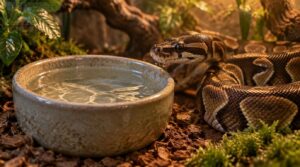
Stagnant water isn’t just unappetizing. It’s a direct threat to your snake’s health. Within hours, microbial populations spike, waste compounds break down, and the water shifts from clean to contaminated. Your snake can smell and taste that change, and it will drink less, or stop entirely.
That’s where dehydration risk takes hold. Reptile hydration depends on your snake actually choosing to drink. Cut that off and osmoregulation breaks down, shedding quality suffers, and organ function deteriorates. Don’t underestimate how fast that spiral starts.
When a snake stops drinking, dehydration unravels everything — shedding, organs, survival
Water quality also drives pathogen prevention. Fecal matter, shed skin, and dissolved organics turn the bowl into a breeding ground fast. Fresh water keeps the contamination load low and gives your snake a reason to stay hydrated.
How Should You Clean and Disinfect a Snake Water Bowl?
Changing the water isn’t enough on its own. How you clean the bowl determines whether bacteria stay gone or just get diluted. There are three levels of cleaning you need to follow.
Daily Bowl Cleaning
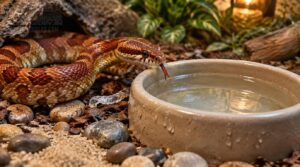
Water bowl cleaning isn’t optional. Tongue contact deposits bacteria with every drink, and bedding debris adds more. Biofilm formation starts on plastic within hours.
Daily water changes protect reptile hydration even when the bowl looks clean. Prioritize:
- Replace immediately after any soiling, spill, or shed debris
- Clean before the enclosure’s warmest period ends
- Treat slime or odor as sanitization cues
Weekly Deep Cleaning
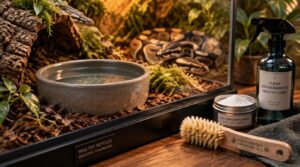
Beyond daily rinsing, your bowl needs a weekly deep clean to stop biofilm formation. That slimy residue shields pathogens from soap alone.
Scrub with a baking soda paste to break down buildup, then follow with a reptile-safe disinfectant. Fecal contamination accelerates biofilm quickly. Consistent water bowl cleaning isn’t optional. It’s the line between a safe enclosure and a sick snake.
Reptile-Safe Disinfectants

One in three captive reptile deaths ties to poor water sanitation and basic cleaning failures. That’s exactly why your reptile-safe disinfectant choice matters. The Wisconsin Herpetological Association’s reptile enclosure cleaning guide breaks down exactly which disinfectants protect your animals and which quietly put them at risk.
- F10SC at 1:250 covers biofilm removal and full pathogen control.
- Chlorhexidine at 1:30 kills bacteria safely.
- Bleach at 1:32 works; rinse completely and dry.
- Phenols, ammonia, and Lysol are toxic.
Apply these disinfection protocols every single week.
What Water is Safe for Your Snake?
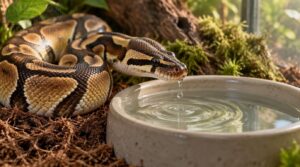
Not all water is created equal, and choosing the wrong kind can cost your snake its health. Tap water is convenient, but it commonly contains chlorine or chloramine that can irritate your snake’s system. Chlorine disperses after standing 24 hours. Chloramine doesn’t. You’ll need a reptile-grade dechlorinator specifically formulated for chloramine.
Filtered water removes chemical contaminants without stripping the trace minerals your snake needs for healthy reptile hydration. RO-filtered water is your cleanest daily option, but avoid relying solely on distilled water long-term. It lacks minerals and can cause imbalances over time.
| Water Type | Safety for Snakes | Key Notes |
|---|---|---|
| Tap (untreated) | Low | Chlorine/chloramine risk |
| Tap (dechlorinated) | Moderate | Treat chloramine separately |
| Bottled drinking | Moderate | Check mineral consistency |
| RO filtered | High | Best overall option |
| Distilled only | Low | Lacks minerals; avoid long-term |
Water quality matters more than convenience. Always use water at near-room temperature, not cold coming straight from the tap. Cold water can chill your snake when it drinks.
How Do Bowl Material, Size, and Placement Affect Water Cleanliness?
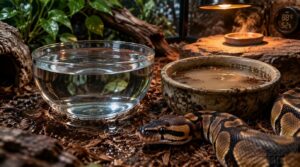
Your bowl choice matters more than most keepers think.
Porous materials trap microbes in surface gaps that rinsing can’t reach. For water bowl material, glass or smooth plastic is the right call. Water bowl hygiene begins with that choice. A glass snake water dish gives you a non-porous, easy-to-sanitize surface that won’t harbor bacteria between cleanings.
Water bowl size affects fouling speed. Small bowls concentrate waste fast. Large, wide bowls expose more surface to dust and substrate splash, but they dilute debris better.
Bowl placement shapes how quickly water degrades:
- Near basking spots, evaporation concentrates waste rapidly
- Loose substrate beside the bowl invites direct contamination
- High-airflow areas deposit dust onto the water surface
- Low floor-level placement increases debris splash-in
- Bowls used as wet zones accelerate microbial growth
Nail these details, and enclosure maintenance stays under your control.
Frequently Asked Questions (FAQs)
How often should I change my snakes water bowl?
Change it at least once daily.
If you spot feces, shed skin, or debris floating in the water, replace it immediately, not tomorrow. Stagnant, contaminated water is a direct health risk your snake can’t escape.
Why put a penny in a snake water bowl?
Bacteria can double every 20 minutes in warm standing water.
A penny dropped in your snake’s dirty water bowl won’t slow that bacterial growth down, and it won’t prevent biofilm buildup either. It’s pure superstition.
Where should a snakes water bowl be placed?
Placement matters far more than most keepers consider.
Keep it on the cool side of your enclosure, away from heat lamps and defecation spots. Position it along your snake’s natural travel path, not beside hides.
How should I clean my snakes water bowl?
That slick film lining the bowl is biofilm. Scrub it with hot water and a dedicated brush, then dry completely. Weekly, disinfect with a reptile-safe disinfectant, rinse until no odor remains, and dry before refilling.
Can snakes drink too much water daily?
Picture a snake drinking freely from its cool bowl. Overhydration risk is virtually nonexistent. Healthy kidneys regulate excess fluid efficiently.
Your snake’s hydration needs are naturally self-regulated. Unrestricted daily access helps reptile health without danger.
Should hatchlings have smaller water bowls?
Keep your water bowl under 5 inches deep for hatchlings. Exhausted neonates drown in deeper water faster than you’d expect.
Bowl size determines their safety, so match footprint to body size to cut dehydration risk.
Do snakes need water during brumation?
Yes. Brumation slows metabolism, but cutaneous water loss doesn’t stop. Your snake will still rouse to drink, so dehydration remains a genuine threat throughout. Leave a small, clean bowl in the enclosure at all times.
Can a dirty bowl affect shedding?
Dirty water disrupts the shedding process from the start. Poor water quality irritates skin, raises microbial load, and prevents even moisture contact. Without regular biofilm removal, that residue builds, and scale health breaks down fast.
How does humidity impact snake hydration needs?
Humidity doesn’t hydrate your snake. It slows water loss by reducing the vapor pressure pulling moisture through the skin and breath. Low humidity accelerates that loss, pushing your snake toward dehydration faster than you’ll notice.
Can multiple snakes share a single water bowl?
Multiple snakes sharing one bowl multiplies fecal contamination fast. One fouled bowl becomes a bacterial culture every snake drinks from. Separate bowls aren’t optional; they’re how you prevent waterborne pathogen outbreaks.
Conclusion
Stagnant water has a smell before it has a victim. That’s the warning. Knowing how often to change your snake’s water bowl is what keeps you acting before the damage quietly starts.
Change the water daily. Deep-clean it weekly. Match the bowl size to your species and the full enclosure conditions. These aren’t optional steps; they’re the margin between health and a preventable death. Your snake can’t tell you when something’s wrong. The bowl can.