This site is supported by our readers. We may earn a commission, at no cost to you, if you purchase through links.

Your ball python doesn’t wag its tail when you walk in the room. It doesn’t nuzzle your hand or lean into a scratch behind the ears. So do snakes like to be petted, or are you just imagining the connection?
Here’s the honest answer: snakes don’t feel affection the way dogs or cats do, but they can absolutely learn that your touch means safety, not danger. That shift, from wary to relaxed, happens through scent recognition and repeated calm handling, not warm fuzzy feelings.
Once you understand how a snake actually reads touch, you’ll know exactly when to pet, when to back off, and how to build real trust one gentle session at a time.
Table Of Contents
- Key Takeaways
- Do Snakes Like to Be Petted? Usually, They Tolerate It
- How to Pet a Snake Safely
- Signs Your Snake is Comfortable or Stressed
- When Should You Avoid Petting a Snake?
- How to Build Trust Through Gentle Handling
- Frequently Asked Questions (FAQs)
- Can snakes feel when you pet them?
- Can snakes bond with humans?
- Which snake is most affectionate?
- How can you tell a snake is happy?
- Can snakes be pets?
- How do you bond with a snake that doesn’t like to be pet?
- When should you not pet a snake?
- Can you pet a snake with the scales?
- Which direction should you pet a snake?
- What are some signs that a snake enjoys being petted?
- Conclusion
Key Takeaways
- Snakes don’t feel affection like dogs or cats do, but they can learn that your touch means safety through scent recognition and calm, repeated handling.
- Always stroke your snake from head to tail with light, steady pressure, since going against the grain feels abrasive and can trigger a defensive reaction.
- Watch your snake’s body language closely—relaxed muscles and easy tongue flicks signal comfort, while hissing, freezing, or coiling mean it’s time to back off.
- Skip handling during shedding, right before or after meals, during illness, or right after your snake gets defensive, since these are the moments it needs space, not touch. If you ever need to handle a stressed or unpredictable snake, knowing when gloves are worth using can keep both of you safer.
Do Snakes Like to Be Petted? Usually, They Tolerate It
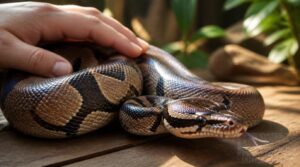
So, do snakes actually like being petted, or are they just putting up with it? The honest answer sits somewhere in between, and it depends on how your snake processes touch in the first place. Here’s what’s really going on under those scales.
In fact, research suggests only about 5% of snakes genuinely tolerate touch, which ties into whether snakes can recognize their owners at all.
Touch Tolerance Versus Affection
So does your snake actually enjoy the pets, or just put up with them? Mostly, it’s tolerance, not affection. Reactions like a slow sway or unhurried retreat mean comfort, not love.
- Gentle, brief sessions beat marathon petting
- Head, neck, midbody handle touch best
- Individual tolerance varies snake to snake
- Calm routines build trust over time
- Watch body language, not assumptions
How Snakes Sense Physical Contact
Here’s the thing about that slow sway you noticed: it’s not magic, it’s mechanosensory scales at work. Vibration detection through tactile receptors lets your snake read pressure and texture the moment skin meets scale. Thermal cues matter too. Scale sensitivity varies widely, so gentle head strokes or light massage along their bodies land differently for every snake.
Snakes use their forked tongue collects airborne to sample chemical cues in their environment.
Recognition Through Scent
Forget faces. Your snake knows you by smell, thanks to the Jacobson organ picking up pheromone-like cues. That tongue flick? Owner recognition in action, not affection.
Repeated calm handling builds scent memory formation, so habituation happens gradually. Your familiar scent, paired with predictable movements, becomes shorthand for "safe," not proof of reptile emotional capacity.
Individual and Species Differences
No two snakes read the same. Ball pythons often show docile temperament, while some colubrids stay jumpy no matter what. Juveniles adapt fastest with consistent handling, and gravid or breeding-season females often turn defensive. Personality matters too, some snakes just prefer head strokes over body contact. Read your snake’s signals, not a general script.
How to Pet a Snake Safely
Petting a snake isn’t complicated, but a few small habits make all the difference between a relaxed reptile and a defensive one. Your snake can’t tell you what feels good, so technique matters more than instinct here. Here’s exactly what to do, step by step, to keep the experience calm for both of you.
Wash Hands Before Handling

Before you even reach into the enclosure, wash your hands with warm water and soap for a full 20 seconds. This strips away food scent that might trigger a bite, and removes Salmonella bacteria snakes commonly carry, even the healthy-looking ones. Clean hands protect you, your snake, and everyone else in the house from cross-contamination.
Approach Slowly and Calmly

Once your hands are clean, move toward the enclosure like you’re sneaking up on a nap you don’t want to end. Approach from the side, not straight overhead, since hovering reads as predatory. Speak softly, skip sudden noises, and pause between movements.
If you want a deeper dive into reading body language before you reach in, this guide on snake handling safety tips for pet owners covers the subtle cues worth watching for.
This slow, calm approach invites relaxed muscles instead of a startled coil.
Stroke Head to Tail
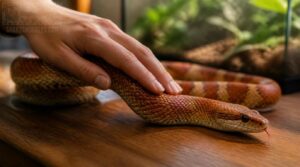
Direction matters here. Scales lie flat from head to tail, so always stroke head to tail, never against the grain, which can feel abrasive and trigger defensive posturing.
Use gentle head strokes first, brief and light. Watch for relaxed body language before continuing. Timing matters too, keep sessions short so your scent stays linked to calm, stress-free handling rather than something to escape.
Use Light, Steady Pressure
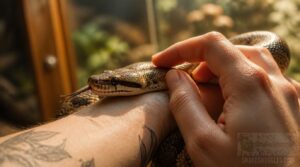
Think finger pads, not a full grip. Light, steady pressure keeps scales happy since too much force bruises delicate skin.
Soft head strokes behind their eyes, light belly rubs with circular motions, all work best with barely-there touch.
Keep pressure consistent as your snake moves, watch for relaxed body language, and ease off at the first sign of tension.
Support The Snake’s Body
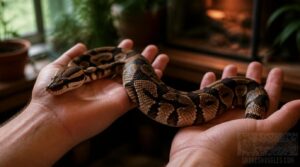
A snake’s spine isn’t built for hammocking, so proper hand placement matters. One hand under the midsection, one under the tail base, distributing weight evenly along the whole body.
Avoid neck support entirely; cradling near the head restricts breathing and spikes stress. Keep them close to you, gentle pressure throughout, preventing vertebrae injury while your snake feels secure.
Signs Your Snake is Comfortable or Stressed
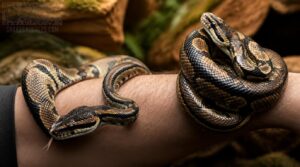
Your snake can’t tell you how it feels, but its body will. Every muscle, movement, and flick of the tongue is a clue, once you know what to look for. Here’s what comfort looks like next to what stress looks like, so you can tell the difference in the moment.
A snake that slowly comes out of hiding when you walk in is often showing it knows you, and it helps to understand how snakes recognize their owner’s scent.
Relaxed Muscles and Calm Movement
A calm snake feels almost boneless in your hands. Relaxed muscles mean comfort, not tension, gliding smoothly with no jerks.
Watch for:
- Fluid, unhurried movement
- Steady, level head position
- Soft, pliable body with no resistance
That’s gentle handling working. Consistent, calm sessions build this trust, letting your snake explore your hands instead of bracing against them.
Exploratory Tongue Flicking
That gliding body often comes with a flicking tongue, and that’s not nerves. It’s chemical cue detection, sampling scent molecules for the Jacobson’s organ to process.
Frequent flicks mean active environmental assessment, curiosity rather than fear.
A relaxed snake exploring your hand this way is gathering information, not plotting an escape.
Hissing, Striking, or Biting
Not every signal is subtle. A hiss is your snake pushing air hard through its glottis, sometimes loud even with a closed mouth, warning you before anything else happens.
Watch for:
- Raised, elevated head with a coiled body
- Strikes launching within inches, aimed to create distance
- Bites following raised posture, often needing prompt attention
Give retreat space. Cornered snakes strike; roomy enclosures prevent it.
Freezing or Heavy Breathing
A hiss warns you outright. Freezing is quieter, a sudden stillness paired with rapid, shallow breathing. Heart rate drops, muscles stiffen.
| Signal | What’s Happening |
|---|---|
| Freeze | Threat response, reassessing |
| Fast breathing | Fight-or-flight arousal |
| Freeze >few seconds | Pause handling |
| Repeated freezing | Chronic stress baseline |
Give it recovery time in a warm, secure spot.
Escape Attempts and Defensive Postures
Freezing is quiet. This is loud.
A snake heading for the door isn’t shy, it’s telling you something. Watch for:
- Head raised threat display, neck lifted, body stiff
- Coiling readiness, muscles bunched to guard or bolt
- Tail flick defense, a warning shake
- Biting posture, compact and aimed
- Bolting toward cover, plain and simple
Timing matters. Back off now.
When Should You Avoid Petting a Snake?

Knowing when to reach for your snake matters just as much as knowing how. Some moments call for leaving your snake alone entirely, no matter how calm you’re feeling. Here are the times you’ll want to keep your hands to yourself.
During Shedding and Poor Vision
Cloudy eyes mean blurry vision, so your snake leans on smell and heat cues instead. Handling now adds stress it doesn’t need.
| Shedding Sign | What’s Happening | Your Move |
|---|---|---|
| Dull, milky eyes | Eye cap loosening | Skip handling |
| Slower movement | Reduced activity | Give space |
| More tongue-flicking | Scent replacing sight | Watch, don’t touch |
Wait 24-48 hours after shedding completes before petting again.
Before and After Feeding
Right before mealtime, your snake’s brain shifts into hunt mode, and that mealtime feeding response can trigger bites aimed at your hand instead of dinner. Timing matters for safe interactions here.
Afterward, give a post-feed rest period of 48-72 hours. Digestion slows movement and raises regurgitation risk, especially in warmer enclosures where feeding response lingers longer.
During Illness or Injury
When sick or injured, healing takes priority over bonding time. Handling techniques shift entirely: support the mid-body, never the head or tail, and use a snake hook for guidance instead of grabbing.
Illness and injury precautions matter for transport too. Keep containers warm (85-88°F), quiet, and padded. Watch stress indicators like erratic tongue flicking or pale skin, and schedule a vet exam within 24 hours.
After Defensive Behavior
Just hissed or struck? Give your snake real recovery time before touching it again. Most snakes need 10 to 20 minutes to move past a defensive display, often coiling tight or freezing while reassessing the room.
You might hear faint hisses as stress fades. Watch for relaxed posture and normal exploring before handling resumes, that’s your real green light.
When Your Snake Hides
A hiding snake isn’t sulking, it’s regulating. Hides let your snake pick a microclimate, so leave it be.
Skip handling if hiding pairs with weight loss or lethargy, that’s worth a vet check.
- Stable temps
- Reduced stimuli
- Scent security
- Digestive rest
Offer short, silent check-ins instead of forcing contact. Let it emerge on its own terms.
How to Build Trust Through Gentle Handling
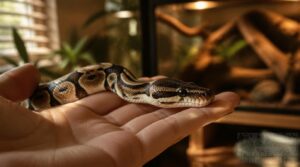
Trust with a snake isn’t something you earn in one afternoon — it’s built session by session. Your snake is watching how you handle things, quite literally, and picking up on patterns over time. Here’s what actually helps that bond grow.
Trust with a snake isn’t earned in one afternoon; it’s built session by session, one calm pattern at a time
Keep Interactions Short and Predictable
Five minutes, tops, that’s your ceiling for any session. Better yet, aim for two to three minutes, one gentle touch, then pause and watch.
Same time, same spot, same routine every visit. Predictability calms snakes fast. If stress signals pop up (freezing, hissing, escape attempts), end the session and return your snake to its enclosure, no exceptions.
Handle Consistently, Never Forcefully
Once that routine’s set, stick to it. Snakes learn through consistent calm interactions, not one big session followed by silence.
Never force contact if your snake pulls away. Relaxed muscles mean go ahead. Defensive posturing means stop, full stop.
Timing matters too. Grab your snake mid-nap or mid-explore and you’ll undo weeks of trust in seconds.
Respect Individual Touch Preferences
Timing means nothing if you ignore who you’re handling. Every snake’s got its own personality, some lean into gentle pressure, others tense up at first contact.
Ball pythons often tolerate strokes fine. Tree-dwelling species may prefer brushing over direct petting. Relaxed muscles mean comfort. Defensive posturing means back off, no exceptions.
Create Low-Stress Associations
Respecting preferences sets the stage, but the real trust builder is predictability. Use the same slow approach, same lateral reach, same calm voice every time. Pair petting with quiet rest periods, not excitement. A stable scent and steady room temperature help too.
Track comfort signs, relaxed muscles versus stiffening, and stretch handling time only when your snake stays calm.
Provide Enrichment Between Sessions
Trust isn’t only built hand-on-scale. Environmental enrichment between sessions matters too: rotate hides and climbing branches, swap in scented cloths every few days for scent exploration, and vary substrate textures. Keep the enrichment schedule as steady as your handling routine.
These small changes give your snake something to investigate on its own, reinforcing that its world (and you) are predictable, not threatening.
Frequently Asked Questions (FAQs)
Can snakes feel when you pet them?
Yes. Rough scales carry mechanical pressure detection, picking up your fingers as vibration and touch. Sensory perception in snakes leans on nerves under the skin, not fur or whiskers, so gentle contact registers clearly across their whole body.
Can snakes bond with humans?
Not quite affection, not quite indifference either. Snakes build scent-based recognition and grow calmer around familiar handlers over weeks of gentle, consistent contact, a real bond of tolerance, shaped by individual personality and a stable, low-stress environment.
Which snake is most affectionate?
Ball pythons and corn snakes usually top the list, prized for calm temperaments and steady tolerance. Rosy boas and king snakes follow close behind.
Before settling on one, check out this beginner-friendly guide to picking the right pet snake, since even mellow species need a routine that genuinely fits your day-to-day life.
Early socialization and regular handling shape this more than species alone, since personality varies snake to snake.
How can you tell a snake is happy?
Look for relaxed muscles, smooth coiling, and calm exploration around the enclosure. Regular tongue flicks, clear eyes, healthy skin, and steady eating all point to contentment, especially during calm confident handling sessions built on patient trust.
Can snakes be pets?
Snakes make scale-y good companions if you’re ready for the commitment. Corn snakes and ball pythons suit beginners, but legal considerations, proper enclosure setup, feeding requirements, and veterinary care matter more than a cute photo op.
How do you bond with a snake that doesn’t like to be pet?
Not every snake warms to touch, and that’s fine. Build trust through routine instead: consistent presence, scent familiarity, calm proximity, and patience. Let your snake set the pace, comfort grows slowly, like a garden blooming on its own schedule.
When should you not pet a snake?
Think of it like a VHS tape stuck on pause, timing matters. Skip petting during shedding or meal time, when sick, injured, or showing defensive posturing. Let recovery periods pass first, respecting these stress indicators keeps your snake calm and safe.
Can you pet a snake with the scales?
Yes, but only head to tail. Going against the grain tugs on mechanosensory scales, causing discomfort or damage. Gentle pressure and correct scale direction keep muscles relaxed instead of triggering defensive posturing, since tolerance varies by individual.
Which direction should you pet a snake?
Always stroke from head to tail, following the scale direction with light, gradual pressure along the midline. Brushing backward catches each scale’s edge, which stresses scale sensitivity and can trigger defensive posturing instead of a relaxed posture.
What are some signs that a snake enjoys being petted?
Your snake’s giving you the green light when its muscles stay loose instead of tensing, movements slow down, breathing evens out, and tongue flicks settle into a steady, unhurried rhythm rather than frantic sampling.
Conclusion
Your snake isn’t cuddling you, it’s simply deciding you’re not a threat, and that’s its own quiet compliment.
So do snakes like to be petted? Not the way a dog does, but they can learn your hands mean calm, not danger.
Watch the body language, respect the shed cycle, skip the digestion window, and let trust build session by session.
That relaxed, unhurried snake in your palm? That’s as close to affection as scales get.