This site is supported by our readers. We may earn a commission, at no cost to you, if you purchase through links.
A snake refusing to shed cleanly isn’t just an aesthetic problem—retained skin can cut off circulation, cloud vision permanently, and signal deeper husbandry failures.
Most keepers blame bad luck. The real culprit is almost always humidity.
Get that wrong, and the old skin dries out before it can slide free, clinging like plastic wrap to scales, eye caps, and tail tips.
The stuck shed humidity fix isn’t complicated, but it does require precision: the right levels, the right timing, and the right environment adapted to your specific species.
Here’s exactly how to diagnose the problem, remove retained shed safely, and prevent it from happening again.
Table Of Contents
- Key Takeaways
- Causes of Stuck Shed in Snakes
- Recognizing Signs of Stuck Shed
- Fixing Humidity for Stuck Shed
- Safe Stuck Shed Removal Techniques
- Preventing Stuck Shed Recurrence
- Frequently Asked Questions (FAQs)
- How does humidity affect a shed?
- How to help snakes with stuck shed?
- Does moisture change in a shed?
- Can a dehumidifier dry a shed?
- How to get humidity out of a shed?
- Will a stuck shed eventually come off?
- How long to soak for a stuck shed?
- Can stress alone trigger a stuck shed episode?
- How often should enclosure humidity be checked daily?
- Does age affect how frequently snakes shed?
- Conclusion
Key Takeaways
- Low humidity — not bad luck — is the root cause of stuck sheds, and keeping it at species‑specific levels (like 70–80% for ball pythons during shed) prevents most problems before they start.
- A dehydrated snake can’t loosen old skin from the inside, so moisture‑rich prey, consistent water access, and the occasional warm soak matter just as much as enclosure humidity.
- 15–20 minute lukewarm soak or a damp‑substrate sauna box solves most stuck sheds at home, but retained eye caps and blackened tail tips need a vet — don’t wait on either.
- Daily humidity checks, a well‑placed humid hide, and quick visual scans of the head and tail after every shed keep problems small and prevent permanent damage.
Causes of Stuck Shed in Snakes
Stuck shed rarely happens by accident — something in the environment is usually off.
If your snake keeps having trouble, walking through the stuck shed soaking method step by step can help you figure out exactly where things are going wrong.
Most of the time, it comes down to a handful of fixable problems.
Here’s what’s actually causing it.
Low Humidity and Environmental Factors
low humidity is the number one reason snakes get stuck shedding. When relative humidity drops below 30 percent — common with central heating, overhead heat lamps, or screen-top lids — skin dries before it can release.
poor substrate moisture and weak airflow patterns make it worse.
Using a room humidifier near the enclosure, combined with smart ventilation management and heating effects monitoring, helps you stay in control. Ensuring proper low humidity levels is essential for preventing dysecdysis.
Species-Specific Humidity Needs
Not every snake needs the same air. Species‑Specific Humidity Needs matter more than most keepers realize — and mismatching them is a direct path to a stuck shed.
- Ball pythons (tropical species ranges): 55–65% daily, up to 80% during shed
- Corn snakes (temperate species levels): 40–50% normally, ~60% while shedding
- Rainbow boas: 70–80% consistently
- Boa constrictors: 55–75%, spiking to 85% during shed
- Desert species requirements: mostly dry, with one localized microclimate hide placement
A humidity gradient design — drier on one end, a humid hide on the warm side — lets your snake self‑regulate. Relative humidity affects environmental factors and shedding more than anything else in the enclosure. Match it to your species, not your neighbor’s ball python setup.
Dehydration and Poor Nutrition
Humidity levels aren’t the whole story. Internal water balance matters just as much.
A dehydrated snake can’t produce enough lymph fluid to loosen the old skin — so it cracks and sticks instead of peeling clean.
Sunken eyes and yellow urates are warning signs.
Dysecdysis also links directly to reptile nutrition: Vitamin A deficiency causes dull eyes and retained skin.
Prioritize prey moisture content, consistent feeding frequency, and electrolyte supplementation when needed.
A warm electrolyte baths can quickly restore hydration.
Recognizing Signs of Stuck Shed
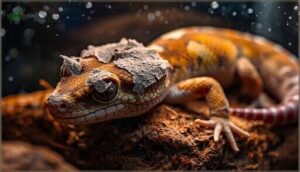
Stuck shed doesn’t always announce itself loudly — sometimes the signs are easy to miss until things get worse.
A closer look at humidity requirements for reptiles can help you catch the early warning signs before a stuck shed turns into a real health problem.
Knowing what to look for early makes a real difference.
Here’s what to watch for.
Retained Skin and Eye Caps
Retained skin is the most obvious red flag after a shed.
Check the entire body, tail tip, and — critically — the eye caps.
Snake eye cap anatomy is unique: each eye is covered by a fused, transparent spectacle that sheds with the skin.
If it sticks, you’ll see an opaque or wrinkled layer over one or both eyes.
Mite infestations, nutritional deficiencies, and skin infections all make dysecdysis worse.
Dull Appearance and Cloudy Eyes
Before a normal shed, cloudy eyes are temporary — the spectacle fluid layer separates old and new tissue, then clears.
With dysecdysis, eye cap retention persists after the shed, leaving a matte finish instead of glossy scales.
Color fading patterns linger too, especially on the neck and tail.
That dullness signals microclimate effects from low humidity levels disrupting healthy reptile skin shedding.
Behavioral and Health Changes
Stuck shed doesn’t just affect your snake’s skin — it changes its whole personality. Watch for these red flags:
- Increased hiding for days, barely emerging from hides
- Lethargy with little to no movement or curiosity
- Appetite refusal lasting one to two weeks
- Heightened irritability, striking more frequently than usual
Infection risk climbs fast. Retained skin traps bacteria within 48 hours, turning a humidity problem into a reptile health emergency.
Fixing Humidity for Stuck Shed

first real tool is your first real tool when stuck shed shows up.
Getting it right isn’t complicated, but it does look different depending on your species, your setup, and where your snake is in its shed cycle. Here’s what to dial in.
Optimal Humidity Levels by Species
Every species has its own comfort zone.
Ball pythons need 50–60% baseline, bumping to 70–75% during shed.
Corn snakes do well at 40–60%, with a humidity boost to 70% when shedding starts.
Keeping a reliable hygrometer in the enclosure makes it much easier to catch these shifts early, and this snake habitat health guide walks through simple ways to fine-tune humidity as shedding season approaches.
Kingsnakes and rosy boas prefer drier setups — 40–60% daily.
Getting species humidity ranges right is the foundation of smart microclimate design and preventing dysecdysis before it starts.
Using Digital Hygrometers
Your hygrometer is only as useful as where you put it. A probe near the water bowl gives you a false reading every time. Set yours up right:
- Probe Placement — position at substrate level, mid-enclosure, away from water
- Calibration Procedures — run the salt test every six months; replace if it drifts over 10%
- Trend Logging — use min/max or Mobile Integration features to catch humidity drops before stuck shed happens
Adjusting Humidity During Shedding
When your snake hits blue phase, don’t wait — act immediately. Boost humidity levels by misting twice daily, covering 70–80% of any screen top with foil for better humidity control.
Substrate moisture from dampened cypress mulch creates a natural humidity gradient.
Adjust your misting schedule seasonally; winter heating dries enclosures fast.
Keep relative humidity at 75–80% until shedding finishes.
Creating and Maintaining a Humid Hide
A humid hide is your snake’s best self‑help tool during shed. For container selection, grab a 2–6 quart opaque plastic tub with a snap lid — cut the entry hole 1.5 times your snake’s body width.
For moss preparation, soak sphagnum moss, then squeeze it damp‑not‑dripping. For hide placement, set it on the warm side. Check moisture every 2–3 days.
Safe Stuck Shed Removal Techniques
Once you’ve got humidity dialed in, it’s time to actually get that stuck shed off.
The good news is you’ve got a few solid options depending on how bad the situation is.
Here’s what works.
Soaking and Sauna Methods
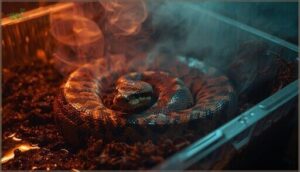
Soaking works fast when you do it right. Use lukewarm water at 85–88°F, shallow enough that your snake touches the bottom easily. For tougher cases, sauna beats a plain soak every time.
Build one in four steps:
- Fill a ventilated plastic bin with damp coco husk chips
- Add warm water to raise humidity levels inside
- Close the lid and let substrate moisture do the work
- Check after 15–20 minutes — repeat if needed
Manual Removal: Do’s and Don’ts
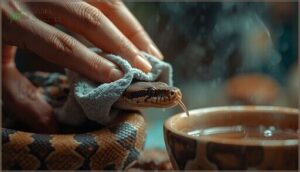
Once your snake is softened from the soak, manual removal can help — but tool safety matters here. Use a damp washcloth, never metal tweezers. Apply gentle pressure only, head-to-tail. Stop when resists; forced shedding tears new skin.
Skip eye cap caution work at home—retained spectacles need a vet.
Tail tip care is urgent: constriction cuts off circulation fast.
Shedding Aids and Moisturizing Sprays

Once the loose skin softens, a shedding aid spray can finish the job. Products like Repti Shedding Aid use ingredient benefits of glycerine, jojoba oil, and Vitamin E — humectants that pull moisture into dry scales.
For application techniques, spray affected areas once daily, then rub gently into the scales. Follow frequency guidelines: daily during a problem shed, monthly for moisture control and prevention.
Choosing The Right Substrate
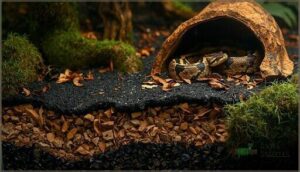
What’s under your snake matters as much as what’s around it. Moisture-retentive substrate choices like coconut fiber or cypress mulch keep humidity levels steady between misting sessions — key for a clean rehab shed.
For tropical snakes benefit from bioactive substrate benefits using coir-and-leaf mixes.
Apply substrate layering techniques with a drainage base to support reptile health and simplify mold-control strategies long-term.
Preventing Stuck Shed Recurrence
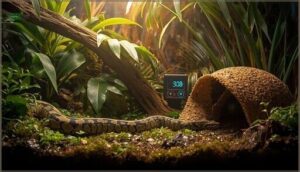
Getting your snake through a stuck shed once is a win — keeping it from happening again is the real goal. The fix comes down to a few consistent habits you can build into your routine.
Here’s what to focus on going forward.
Ongoing Humidity and Habitat Management
Prevention isn’t a one-time fix — it’s a system you run consistently.
- Daily Humidity Logging: Check and record readings at snake level, same time each day
- Substrate Moisture Rotation: Rehydrate lower layers weekly without soaking everything
- Ventilation Balance: Cover part of the screen lid to reduce evaporation while keeping airflow
- Temperature‑Humidity Sync: Place humid hides near, not on, the warm zone
- Seasonal Habitat Adjustments: Tighten enclosure conditions when indoor air dries out in winter
Nutrition and Hydration Best Practices
What your snake eats directly affects how it sheds.
Moisture-rich prey, like fully thawed whole rodents, adds internal hydration that no water bowl alone can match.
Water bowl placement near a hide encourages regular drinking.
Vitamin A deficiency causes dull skin and retained skin patches, so balanced reptile nutrition and diet matters.
Electrolyte supplementation only under vet guidance — overdo fat‑soluble vitamins, and you create new problems.
Regular Inspections and Early Intervention
Catching problems early is the real breakthrough in reptile health. A quick daily visual check takes under two minutes but protects your snake’s entire shedding cycle.
Build this into your animal husbandry and welfare routine:
- Daily visual checks — scan the head, tail tip, and body for retained patches
- Skin texture monitoring — smooth between sheds is normal; flaky or puckered means adjust humidity control now
- Eye clarity assessment — clear and glossy after a shed; cloudy lingering past day two needs attention
- Behavioral log — track appetite, activity, and temperament shifts tied to each shed
- Weight trend tracking — unexpected drops often signal stress or incomplete sheds before visible signs appear
When to Seek Veterinary Assistance
Some signs mean home care isn’t enough. Call a reptile vet if you notice severe eye infection, tail necrosis, persistent skin rot, significant weight loss, or behavioral distress lasting beyond a week.
Retained eye caps can cause permanent blindness. Blackened tail tips mean circulation is already cut off. Don’t wait on these. Prompt veterinary advice is the difference between recovery and permanent damage.
Retained eye caps cause permanent blindness — when blackened tail tips appear, only a vet can prevent lasting damage
Frequently Asked Questions (FAQs)
How does humidity affect a shed?
Ironically, the one thing your snake needs most during a shed is invisible: moisture in the air.
Without it, skin elasticity drops, scale adhesion increases, and that old layer simply won’t release.
How to help snakes with stuck shed?
Soak your snake in shallow, lukewarm water for 15–20 minutes. Afterward, gently guide loosened retained skin toward the tail. Never force it. A humid hide fixes most cases fast.
Does moisture change in a shed?
Yes — moisture levels shift throughout a shed cycle. Humidity spikes naturally as the snake’s body releases fluids.
Microclimate shifts inside the enclosure create moisture gradients that change daily, especially with seasonal fluctuations affecting ventilation and condensation.
Can a dehumidifier dry a shed?
A dehumidifier can dry a shed effectively.
Choose a desiccant model for cold seasons and a compressor unit for warm months.
Proper insulation and regular filter maintenance keep moisture levels stable year‑round.
How to get humidity out of a shed?
Think of moisture as a slow leak — invisible until damage shows.
Use a dehumidifier, improve ventilation, add moisture absorbers, insulate walls, and seal gaps to control humidity and simplify shed maintenance.
Will a stuck shed eventually come off?
Sometimes, stuck shed does come off naturally — but don’t count on it. Thin, lifting patches may resolve within a cycle or two if you fix humidity fast.
Tight bands risk constriction. Retained eye caps rarely self-resolve.
How long to soak for a stuck shed?
Soak your snake for 15 to 20 minutes in shallow, lukewarm water. That’s the sweet spot for most species — long enough to soften stuck shed, short enough to avoid chilling.
If your snake struggles with dysecdysis regularly, preventing stuck shed before it starts often comes down to dialing in the right humidity and hide placement.
Can stress alone trigger a stuck shed episode?
Yes, stress alone can trigger stuck shed. Chronic stress releases hormones that disrupt skin renewal.
Behavioral stress cues like hiding and reduced drinking cause stress-induced dehydration, quietly undermining your snake’s ability to shed cleanly.
How often should enclosure humidity be checked daily?
Check humidity at least twice daily — a Morning Check and Evening Check cover most fluctuations. During active shed, add a Midday Spot check.
Log Trends to catch patterns before problems start.
Does age affect how frequently snakes shed?
Absolutely — age drives Growth Rate and Juvenile Shedding frequency dramatically.
Hatchlings shed every 4–6 weeks. Adult Shedding slows to every few months. Senior Shed Delays tied to Age‑Related Metabolism mean less frequent, patchier sheds.
Conclusion
Think of shedding like a zipper—humidity keeps it running smooth. The moment conditions drop, everything jams.
Your stuck shed humidity fix starts long before your snake enters the blue phase: dialed-in humidity, a reliable humid hide, and consistent monitoring.
Catch the warning signs early, and removal stays simple. Let problems stack, and you’re risking permanent damage.
You now have everything you need to keep every shed clean, complete, and simple.