This site is supported by our readers. We may earn a commission, at no cost to you, if you purchase through links.
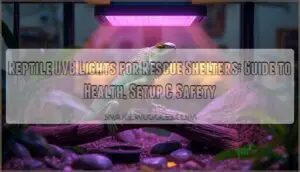
A rescued iguana with brittle bones and sluggish appetite isn’t just unlucky—it’s missing something key in its environment.
Without proper UVB lighting, reptiles in shelters can’t absorb calcium or synthesize vitamin D3, leaving them vulnerable to disease and slow recovery.
Reptile UVB lights for rescue shelters aren’t a luxury—they’re the backbone of rehabilitation, directly shaping immune strength, bone health, and behavior.
Choosing the right bulb, setting it up with care, and keeping it running safely makes all the difference for these animals.
Understanding the science and practical steps behind UVB lighting means you’re giving every reptile a real chance to heal.
Table Of Contents
- Key Takeaways
- Why UVB Lighting Matters for Rescued Reptiles
- Types of UVB Lights Suitable for Shelters
- Choosing The Right UVB Lighting for Different Species
- Setting Up and Maintaining UVB Lighting Systems
- Best Practices for UVB Lighting in Rescue Environments
- Frequently Asked Questions (FAQs)
- Does reptilighting sell reptile lights?
- Do Reptiles need UVB light?
- Do Reptiles need a light bulb?
- Can UVB lights be used with other heat sources?
- How does natural sunlight compare to artificial UVB?
- Are UVB bulbs harmful to reptiles with injuries?
- What signs indicate UVB overexposure in reptiles?
- How should shelters dispose of old UVB bulbs?
- Conclusion
Key Takeaways
- Proper UVB lighting is essential for rescued reptiles, supporting bone health, immune function, and recovery.
- Choosing the right bulb type, spectrum, and placement ensures each species gets the UVB intensity they need to thrive.
- Regular maintenance, including bulb replacement and monitoring with UV meters, keeps lighting effective and safe for both animals and staff.
- Training shelter staff on UVB management and safety practices helps prevent health issues and creates a nurturing environment for reptiles.
Why UVB Lighting Matters for Rescued Reptiles
Rescued reptiles need the right UVB lighting to heal and stay healthy. Choosing the proper setup can make all the difference in their recovery.
For tips on monitoring your reptile’s environment and spotting signs of improvement, check out this guide on UVB lighting’s role in reptile health and recovery.
The right UVB lighting is vital for rescued reptiles, making all the difference in their healing and long-term health
Let’s look at some enclosure options that help meet these needs.
Role of UVB in Reptile Health
Although you might not see the effects right away, UVB lighting is essential for rescued reptiles.
It drives:
- Vitamin D3 synthesis for strong bones,
- Calcium metabolism so dietary supplements are absorbed,
- Immune function, helping fight infections,
- Behavioral activity and circadian regulation, keeping routines steady.
Proper UVB and UVA lighting forms the foundation of reptile health and care.
For smaller setups, a children’s python in compact living spaces still needs consistent UVB exposure to thrive just like any other reptile.
Understanding the UVB lighting necessity helps prevent metabolic bone disease.
Preventing Metabolic Bone Disease
Strong UVB lighting forms the backbone of metabolic bone disease prevention. You need to pair proper Vitamin D3 Synthesis with careful Calcium‑Phosphorus Ratio management, using UVI Monitoring Protocols to check basking zone design.
Reptile health hinges on shelter staff training, ensuring UVB and UVA lighting meet reptile lighting requirements. This approach keeps bones sturdy and promotes lasting reptile care.
Decreased appetite symptom is a common early sign of metabolic bone disease.
Supporting Recovery and Well-being in Shelters
Beyond preventing metabolic bone disease, UVB Lighting for Reptiles enhances broader recovery in shelter animals.
Proper lighting solutions for reptiles deliver:
- Immune Boost through antimicrobial peptide production
- Wound Healing via upregulated cell multiplication
- Stress Reduction as reptiles maintain natural rhythms
- Color Enrichment and Behavioral Enrichment encouraging exploration
These benefits improve Reptile Health, Reptile Care outcomes, and overall Animal welfare during rehabilitation.
For practical tips on identifying and treating common reptile illnesses, check out this guide to reptile illness symptoms and rehabilitation strategies.
Types of UVB Lights Suitable for Shelters
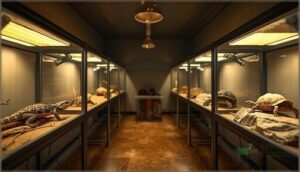
When you’re choosing UVB lights for a shelter, it’s important to know which types work best for your reptiles. Different bulbs offer unique benefits and suit various setups.
Here’s what you’ll want to think about before making your selection.
Fluorescent Vs. LED UVB Bulbs
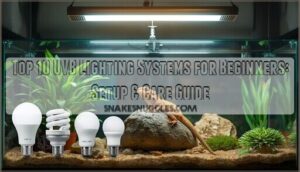
Ever wondered why shelters often debate between LED UVB bulbs and T5 UVB bulbs? LEDs cut energy consumption and stay cool, lasting up to 50,000 hours, while fluorescents offer wider light coverage but need frequent swaps.
For reptile health, choosing UVB lighting for reptiles means weighing cost over time, lifespan comparison, and heat output.
| Feature | LED UVB Bulbs |
|---|---|
| Energy Consumption | Low (20-60 watts) |
| Lifespan Comparison | 20,000-50,000 hrs |
| Heat Output | Minimal |
| Light Coverage | Narrow beam |
| Cost Over Time | Lower |
Recommended UVB Spectrum and Intensity
When setting up UVB Reptile Lighting in shelters, you want UVB bulbs that deliver UVB wavelengths between 295 and 320 nm.
Aim for Best UVI Ranges using Gradient Intensity Design, matching Species-specific UVI Goals from Ferguson Zone Targets.
Meter Calibration Protocols help guarantee UVB Radiation hits the right basking spots, supporting healthy vitamin D3 synthesis for rescued reptiles.
Lifespan and Replacement Cycles of UVB Lamps
Track your UVB bulbs with hour-based reminders—most degrade after 3500 hours, even if visible light stays bright.
Bulb degradation rates mean T5 tubes last 10–12 months, while compacts fade in 6–8 months.
Species-specific lifespans matter: tortoise lamps hold up longer than bearded dragon setups.
Regular fixture maintenance impacts UVB radiation, so swap bulbs yearly for reliable reptile lighting systems and solutions.
Choosing The Right UVB Lighting for Different Species
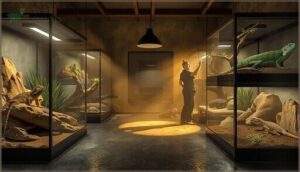
Different reptiles need specific UVB lighting to stay healthy and thrive. The right setup depends on the species, their natural habitat, and the size of their enclosure.
Here’s a look at what works best for each type in a shelter setting.
Factors Influencing UVB Effectiveness (Distance, Reflectors)
Did you know the Inverse Square Dropoff means UVB radiation fades fast with distance? Fixture Height Optimization matters—raise basking platforms to stay in the UVB “cone.”
Mesh Barrier Loss can cut output by half, so mounting inside helps. Reflector Material Impact boosts Terrarium Lighting, focusing T5 UVB bulbs for a strong Basking Gradient Design.
Smart Lighting Solutions make all the difference.
Species-Specific Lighting Recommendations
Imagine each reptile species as a puzzle piece in your shelter’s lighting plan.
Desert lizard UVB needs are high—think strong T5 tubes for bearded dragons. Tropical arboreal lighting must filter through foliage, while forest shade UVB stays gentle for crested geckos. Nocturnal UVB needs are subtle, and aquatic turtle UVB should focus on basking platforms.
Tailor Terrarium Setup and Maintenance for best reptile health and wellness.
Setting Up and Maintaining UVB Lighting Systems
Getting UVB lighting right means more than just picking a bulb.
You need to think about where to place fixtures, how long the lights stay on, and how to check if the levels are safe.
Here’s what you’ll want to keep in mind for your setup.
Proper Placement and Mounting of Fixtures
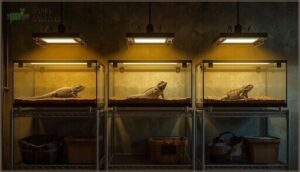
Ever notice how a misplaced UVB fixture can turn a sunny spot into a shadow? For your terrarium setup, getting Mounting Height Guidelines right is essential.
Mesh Screen Considerations often mean adjusting for UVB loss, while Fixture Orientation Strategies help balance light and shade. Use Adjustable Bracket Systems and Safety Securing Methods to keep lighting fixtures stable in every reptile habitat.
- Mount fixtures 25–45 cm above basking spots
- Place UVB lights directly over basking areas
- Secure fixtures with brackets or cages for safety
Daily Light Cycles and Exposure Duration
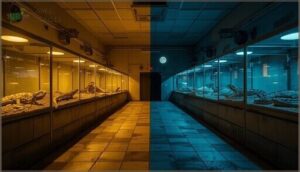
A steady rhythm of light and dark shapes how reptiles eat, bask, and sleep in your care. With Photoperiod Scheduling and Basking Window Timing, you’ll mimic nature—delivering 10–12 hours of UVB Lighting daily, then true nighttime darkness.
Use Gradual Light Transitions and Seasonal Light Adjustment to support healthy cycles, making your Reptile Habitat Creation feel both safe and predictable.
Monitoring UVB Levels With Meters
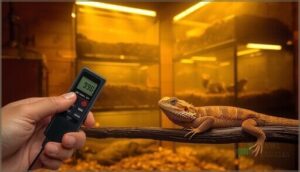
Just as you fine‑tune daily light cycles, you’ll want to use UV Index meters for gradient mapping and data logging at basking spots. Calibration procedures keep readings accurate, helping you track UVB wavelengths and seasonal adjustments.
Meter safety—hold the sensor at reptile eye level.
These steps guarantee your Reptile Lighting Solutions support UVB Radiation and Reptile Care and Health.
Best Practices for UVB Lighting in Rescue Environments
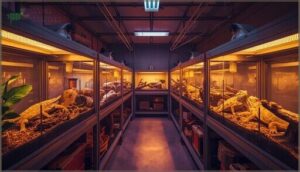
Setting up UVB lighting in a rescue shelter takes some planning and care.
You want solutions that keep reptiles healthy, save energy, and make life easier for staff.
Here’s what to look for when choosing the right options for your enclosures.
Paying attention to their size, coloring, and behavior can help you spot cues, and our guide on carpet python facts and care essentials breaks down what those traits actually mean for enclosure setup.
Budget-Friendly and Energy-Efficient Solutions
While you’re working to stretch every dollar, smart choices in reptile lighting solutions make a big difference for shelters. Try these strategies:
- Use T5 UVB Tubes for efficient coverage.
- Choose LED Hybrid Bulbs to cut energy use.
- Enhance reflectors for maximum UVB radiation.
- Automate light cycles with timers.
- Practice bulk purchasing strategies for Zoo Med and T5 lighting.
Ensuring Safety for Animals and Caretakers
After saving on lighting, you still need to protect everyone in the shelter. Secure fixtures above mesh lids and follow Fixture Placement Guidelines to prevent thermal burns.
Eye Protection Measures mean never letting reptiles or staff stare into UVB wavelengths. Handling Protocols call for gloves and cool bulbs. Staff Hygiene Practices—like washing hands after pet care and maintenance—keep the Animal Care and Welfare top priority.
Training Staff on UVB Lighting Management
After securing fixtures, your next step is hands-on staff training. Teach Meter Calibration for accurate UVB Radiation readings, and practice Fixture Inspection to spot issues early.
Keep Record Keeping simple—log lamp swaps and the UV Index. Staff Certification ensures everyone knows Emergency Procedures. With consistent training, your team stays prepared, making Reptile Lighting Systems a reliable part of Animal Care and Welfare.
Regular Assessment of Reptile Health and Lighting Effectiveness
Although reptiles can’t tell you when something’s off, regular health checks make all the difference.
Weight Monitoring and Behavior Scoring link directly to UVI Trend Analysis and Fixture Age Tracking.
Staff Training Metrics guarantee your team catches issues fast.
By connecting UVB Radiation and Reptiles with Reptile Lighting Systems, you build a foundation for ongoing Reptile Care and Maintenance, and reliable Reptile Health Assessment.
Frequently Asked Questions (FAQs)
Does reptilighting sell reptile lights?
Yes, Reptilighting specializes in reptile lights.
Their product catalog includes brands like Arcadia, Exo Terra, and Zoo Med.
With online ordering, varied pricing options, and customer support, they cover ReptiSun UVBLED, fixtures, and all reptile lighting needs.
Do Reptiles need UVB light?
Like sunlight to a plant, UVB radiation is essential for reptiles. Without it, Vitamin D3 synthesis falters, impacting calcium metabolism, immune function, and circadian rhythm.
Proper UVB facilitates behavioral changes, vision, color perception, and overall reptile lighting and care.
Do Reptiles need a light bulb?
Most reptiles absolutely need a light bulb — not just for warmth, but for UVB radiation and reptile vision and color perception.
Without it, vitamin D3 synthesis fails, and calcium metabolism quickly follows.
Can UVB lights be used with other heat sources?
UVB lights work well alongside other heat sources. Pair them with heat lamps, ceramic heat emitters, or mercury vapor bulbs to cover both warmth and UV needs effectively.
How does natural sunlight compare to artificial UVB?
Natural sunlight delivers a full electromagnetic spectrum, including UVA wavelengths, visible light, and UVB radiation.
but its Sunlight UV Index and spectrum variability shift with seasons, making artificial UVB the more consistent choice indoors.
Are UVB bulbs harmful to reptiles with injuries?
Much like a double-edged sword, UVB radiation and reptiles with injuries require careful balance.
Too much UVB, especially at close lamp distance, increases wound healing risks and eye injury concerns, so shelter protocols must prioritize UVB gradient design and lamp safety.
What signs indicate UVB overexposure in reptiles?
Signs of UVB overexposure include eye irritation, skin burns, behavioral avoidance, abnormal shedding, and systemic illness.
You may notice swollen eyelids, restless hiding, patchy skin, incomplete sheds, or weight loss—key concerns in Reptile Keeping and Breeding.
How should shelters dispose of old UVB bulbs?
Before you toss a UVB bulb, remember mercury’s hidden risk.
Shelters must use hazardous waste labeling, universal waste storage, and recycling program selection, training staff on safe handling, and keeping compliance documentation procedures up-to-date for Zoo Med lighting solutions.
Conclusion
Imagine a world where a single bulb can transform a reptile’s fate—reptile UVB lights for rescue shelters are that powerful. It’s not magic, but science, bridging the gap between survival and thriving.
When you set up UVB lighting correctly, you’re rewriting the story for every iguana, gecko, or turtle under your care.
Every detail matters: from spectrum to placement, maintenance to monitoring.
Your commitment lights the path to recovery, making shelter a true sanctuary for reptiles.