This site is supported by our readers. We may earn a commission, at no cost to you, if you purchase through links.

Mold doesn’t announce itself. One week your enclosure looks clean, and the next you’re pulling back a hide to find fuzzy white patches spreading across the substrate.
For snake keepers, that’s not just an aesthetic problem—mold spores compromise air quality and can trigger respiratory infections in animals that already have sensitive lungs.
The conditions that breed mold aren’t random either: excess moisture, stagnant air, and organic debris create a perfect incubator.
Preventing mold in your snake enclosure comes down to understanding those conditions and cutting them off before they take hold.
Table Of Contents
Key Takeaways
- Mold thrives on three conditions—excess moisture, stagnant air, and organic debris—so cutting off any one of them breaks the cycle before it starts.
- Your material choices matter from day one: non-porous surfaces like glass, HDPE, and PVC give mold nowhere to grip, while unsealed wood and porous décor work against you.
- Humidity control isn’t guesswork—calibrate your hygrometer, match target RH to your species, and let surfaces fully dry between misting sessions.
- Early warning signs like musty odor, fuzzy patches, or your snake wheezing mean act now—isolate the animal, strip the enclosure, and call a reptile vet if breathing symptoms appear.
Why Mold Forms in Snake Enclosures

Mold doesn’t just appear out of nowhere — your enclosure creates the conditions for it. specific factors work together to turn a clean setup into a problem fast.
Understanding the full cycle of buildup is easier when you walk through a complete corn snake habitat cleaning guide that breaks down each trigger step by step.
what’s actually driving it.
High Humidity and Poor Airflow
Mold doesn’t need much of an invitation — just warm air, poor circulation, and a little neglect.
In snake enclosures, four conditions create the perfect setup:
- Condensation hotspots form on glass and plastic where temperature differentials cause surfaces to cool below dew point.
- Airflow shadowing traps stagnant air in corners and behind décor.
- Pressure imbalance through ill-fitting lids slows moisture control.
- Moisture accumulation from humidity regulation gaps above 70% RH accelerates mold growth.
Ventilation design is your first line of defense. Ensuring adequate air changes per hour can prevent condensation buildup.
Wet Substrate and Standing Water
Poor ventilation sets the stage—but wet substrate keeps it going.
Substrate saturation locks moisture at floor level for days. Capillary wicking pulls water sideways and downward, so the underside stays wet long after the surface looks dry. Condensation pools form beneath hides and bowls, where standing water can’t evaporate.
| Problem | Mold Risk |
|---|---|
| Over-misting | Saturated bedding |
| Fine-particle substrate | Reduced water drainage design |
| Pooled water under hides | Persistent moisture retention |
| Smooth liners underneath | Blocked evaporation |
Substrate hygiene and ventilation design together are your real defense.
Food Waste and Shed Buildup
Wet substrate creates the foundation—but dead food and shed skin hand mold everything it needs to thrive. Prey residue management matters here: uneaten prey left overnight drips blood and moisture into cracks you won’t notice until fuzz appears.
Shed skin accumulation adds dry-but-porous material; mold colonizes fast. Your feeding schedule impact is real—frequent meals without daily feces and food removal compound the problem quickly.
Watch your bowl contamination control and probe hidden cracks, cleaning during every maintenance round.
Organic Décor and Hide Boxes
Organic décor brings the same trap as food waste — just slower. Rattan Hide Boxes and cork shells look great, but their porous fibers absorb moisture and feed spores fast without Cork Box Sealing. Water‑Based Sealers close that door.
- Seal all cork and rattan with water‑based sealers before use.
- Swap Mesh Insert Swaps seasonally to manage humidity shifts.
- Pull Detachable Base Trays weekly for spot sanitation.
- Avoid unsealed wood in bioactive substrate setups.
- Wipe all cleaning decor and hides surfaces to stay moldfree.
Choose Mold-Resistant Materials
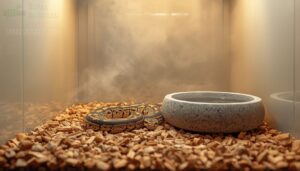
The materials you build with set the tone for everything that follows. Some hold moisture like a sponge—others simply don’t give mold anywhere to take hold.
Here’s what to look for when choosing your enclosure components.
Glass, PVC, HDPE, and Sealed Plywood
Your enclosure material is your first line of defense.
Tempered glass offers excellent impact resistance and stays chemically inert under humidity swings—critical for mold prevention in reptile enclosures.
PVC panels resist moisture intrusion and clean easily.
HDPE absorbs less than 0.1% of its weight in water, won’t warp, and manages thermal expansion well.
That durability makes HDPE a top pick for enclosures, as you can see in this guide to choosing the best hide materials for ball pythons where hygiene and moisture resistance really matter.
Sealed plywood works too, but demands thorough epoxy coating at every seam.
Non-porous Hides, Bowls, and Décor
Your hides, bowls, and décor carry as much mold risk as the walls themselves. Choose non-porous options—and stay consistent:
- Glass or HDPE hides resist absorption and tolerate repeated disinfection.
- Resin or porcelain hides offer zero VOC coatings and easy surface inspection.
- Tempered glass bowls sterilize completely between feedings.
- Resin artificial plants maintain color stability and resist biofilm.
- Stainless steel accents support modular design with edge finishing already handled.
Safe Sealants and Silicone Seams
Seams are where moisture sneaks in — so don’t cut corners here. Use aquarium-grade silicone with zero VOC coatings; its RTV cure duration runs 48–72 hours, and your snake stays out until it’s fully set.
Clean and dry every surface first — surface preparation determines adhesion.
Run masking tape for clean bead geometry optimization, then inspect every joint.
Sealant and adhesive safety for terrariums depends on that final seam inspection checklist.
Corrosion-resistant Hardware and Fasteners
Hardware might seem minor — but a rusted screw leaches contaminants and traps moisture at joints.
For stainless steel hardware, A2-304 tolerates moderate humidity well; A4-316 is your go-to above 80% RH. Polymer fasteners like PEEK offer chemical resistance and easy removal for cleaning cycles. Titanium alloy advantages include pitting resistance in damp organic substrates.
Always run coating integrity checks — chipped finishes invite corrosion quickly.
Control Humidity The Right Way
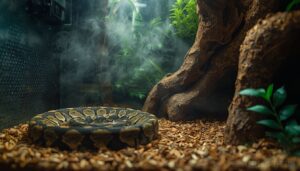
Humidity is the variable that makes or breaks mold control in a snake enclosure. Get it wrong — too high, too inconsistent — and mold doesn’t just show up, it moves in.
Here’s how to keep it in check.
Use a Calibrated Hygrometer
A guessing game has no place in mold prevention. Use a hygrometer — a calibrated one — so your readings actually mean something.
- Reference Standards: Calibrate using a 75% RH salt test or a sealed calibration kit for 8–12 hours.
- Sensor Placement: Position it at snake eye level, away from misting streams.
- Calibration Frequency: Recheck every six months minimum.
- Data Logging: Record readings to spot humidity trends before mold finds them first.
Match Humidity to Your Snake Species
Every snake species has a humidity sweet spot — miss it, and you’re either inviting mold or stressing your animal.
| Species Type | Target Humidity |
|---|---|
| Desert snakes | 20–40% |
| Temperate (corn snakes) | 50–70% |
| Ball pythons | 60–70% |
| Tropical snakes | 70–90% |
Apply a humid hide strategy during shedding for a localized shedding humidity boost without soaking the whole enclosure.
Reduce Misting When Levels Stay High
Once you’ve dialed in the right range for your species, the next step is knowing when to stop adding moisture. If your hygrometer stays at target or above, skip the mist — adding more just causes droplets to condense on surfaces instead of evaporating.
A Misting Scheduler with adjustable Nozzle Output and timed bursts manages this automatically, giving surfaces dry cycles that mold prevention strategies for vivariums depend on.
Fix Leaks and Spilled Water Quickly
Skipping mist when humidity holds is smart — but leaks don’t ask permission.
A dripping water bowl or faulty misting line can undo moisture control in snake habitats fast.
Rapid Water Extraction with a shop vac or microfiber towel matters immediately.
Then use Heat Drying with airflow to clear residual dampness.
Finish with Sealant Reapplication on any compromised seams, then run Dryness Confirmation before your snake goes back in.
Improve Ventilation and Drying
Humidity control only goes so far if stale air has nowhere to go. Ventilation is what keeps moisture from settling into corners, hides, and substrate — turning a damp enclosure into a mold-free one.
Here’s how to get airflow right without putting your snake at risk.
Add Screened or Cross-vented Openings
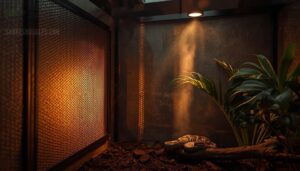
Ventilation and airflow design in snake habitats starts with two things: where you put the openings and how you cover them. Place one vent low, one high on opposite walls—that vent placement height difference drives a natural airflow path through the enclosure.
Use metal hardware cloth for screen frame design; it won’t sag. Mesh size selection matters too—coarser mesh lowers airflow resistance, moving humid air out faster.
Prevent Stagnant, Damp Microclimates
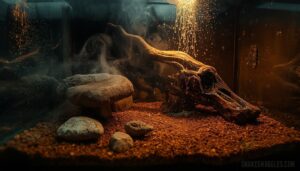
Good vent placement manages bulk airflow—but hidden moisture pockets form in corners, under hides, and behind décor regardless. These spots get no airflow channel design benefit, so edge condensation builds fast.
Rotate décor weekly as part of your accessory drying routines, and tuck desiccant packs into low corners for passive humidity control. Microclimate management in reptile terrariums depends on eliminating these overlooked damp zones.
Use Airflow Without Direct Drafts
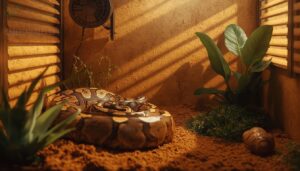
Airflow and drafts aren’t the same thing.
Induced Airflow Design moves air through the enclosure without blasting one spot—use variable speed fans set low, positioned at the perimeter so circulation reaches the full space.
Cross‑Vent Placement and Diffuser Spread Techniques, like louvered panels, distribute movement evenly.
Vent Path Optimization keeps humidity regulation steady without chilling your snake or disrupting the basking zone.
Let Surfaces Dry Between Misting Sessions

Every mist you add before surfaces dry is just stacking moisture—don’t do it. Run your Touch Test along corners and the floor; any dampness means wait.
A Visual Sheen Check on glass or PVC catches water still evaporating. Warm Air Boost from your enclosure’s heat speeds drying.
Corner Drainage spots and adjust Fan Timing so surfaces fully clear between sessions.
Pick Safer Substrates

What you put on the floor of the enclosure matters more than most keepers realize. The wrong substrate holds moisture like a sponge—and mold doesn’t need much of an invitation.
Here’s what to use instead.
Use Low-moisture, Easy-to-replace Bedding
substrate selection is the foundation of moisture management in snake enclosures. Paper towel dries fast, costs nothing, and replaces in seconds — no tools, no hassle. Ceramic tile offers a non-absorbent liner effect, shedding moisture rather than trapping it.
dust-free bedding to protect your snake’s lungs, and commit to a 2–4‑week substrate replacement schedule for consistent mold prevention strategies for vivariums.
Avoid Substrates That Hold Excess Water
Some bedding works against you from the start. Peat-heavy mixes and fine organic blends rely on capillary action to stay damp long after misting — that’s substrate moisture retention working against your mold prevention strategies for reptiles.
Choose coarse grain mixes or add perlite additives to improve drainage layer design and capillary action reduction. Control substrate thickness, too — deep beds trap hidden moisture pockets where mold quietly establishes itself first.
Remove Soiled Spots Before Mold Spreads
Mold doesn’t wait — it moves in the moment waste sits. Rapid spot removal is non‑negotiable: use a dedicated cleaning tool or paper towel blotting to lift soiled material immediately, keeping contamination localized.
Dry the cleared zone fully before moving on; damp patches are open invitations.
Swap gloves between spots to prevent cross‑contamination.
These cleaning and sanitation protocols for corn snake habitats stop mold before it starts.
Replace Substrate on a Regular Schedule
Even the cleanest spot-cleaning routine can’t outrun a substrate that’s quietly breaking down beneath the surface. A full change interval of every three to four weeks keeps contamination from compounding.
Use a partial replacement strategy when conditions stay stable—swap half, monitor moisture, then finish the rotation. Adjust seasonal timing when humidity climbs.
Consistent substrate rotation plan beats reactive cleanup every time.
Clean and Disinfect Regularly
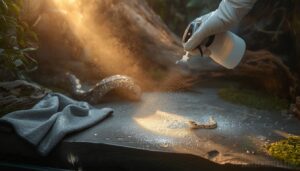
Cleaning isn’t just about appearances — it’s the most direct line of defense against mold taking hold. A consistent routine, done right, keeps conditions hostile to spores before they ever get a chance to spread.
Here’s exactly what that routine should look like.
Remove Waste and Uneaten Prey Daily
Your daily waste schedule is the first line of defense against mold. Feces left even a few hours release moisture and feeds bacterial colonies fast.
- Remove feces and dirty water dishes every day—no exceptions.
- Set a prey removal timing window: pull uneaten prey within 2 hours.
- Use dedicated spot cleaning tools to avoid smearing residue.
- Wipe feeding zones to eliminate organic film prevention issues.
- Apply immediate drying methods—replace damp substrate on the spot.
Do Weekly Spot Cleaning
weekly spot cleaning catches what daily waste removal misses—biofilm on walls, moisture pooling under bowls, and organic residue in corners. Use Targeted Surface Spraying on problem areas only, then follow with Microfiber Dry Wiping before surfaces stay damp. Practice Tool Segregation: keep enclosure tools separate from room tools. Your Spot Inspection Checklist should hit every seam, edge, and hide.
| Zone | Tool | Method |
|---|---|---|
| Walls and corners | Microfiber cloth | Wipe dry after misting |
| Under water bowls | Absorbent Spot Cloths | Lift, wipe, replace |
| Décor and hides | Soft-bristle brush | Scrub, rinse, air-dry |
| Substrate edges | Plastic scraper | Lift residue, discard |
| Lid and vents | Disposable wipe | Single-use, then toss |
Consistent weekly spot clean habits drive Mold and bacteria prevention better than reactive deep scrubbing.
Schedule Full Deep Cleans
Spot cleaning keeps things tidy, but a full deep clean resets the entire enclosure. Build a Cleaning Frequency Calendar and treat your Seasonal Deep Clean as non‑negotiable—every three to four weeks minimum.
Your Pre‑Clean Setup matters: snake out, equipment unplugged, tools separated.
Follow this step‑by‑step reptile enclosure deep cleaning sequence:
- Disassemble hides, bowls, and décor from top to bottom
- Remove and bag all substrate before scrubbing walls and seams
- Complete Post-Clean Drying fully before returning anything inside
Use Reptile-safe Disinfectants Correctly
Once the enclosure is scrubbed clean of organic matter, disinfection is where mold prevention actually sticks.
Choose a reptile-safe disinfectant—F10SC or diluted bleach works well—and follow Dilution Accuracy to the letter. Too strong leaves residue; too weak misses pathogens.
| Step | What To Do | Why It Matters |
|---|---|---|
| Dilution Accuracy | Match exact label ratio | Prevents toxic residue and ensures kill rate |
| Contact Time | Keep surface wet 10–15 min | Pathogens need full exposure to die |
| Ventilation Control | Open windows, run fans | Clears fumes before your snake returns |
| Rinsing Thoroughness | Rinse with clean water after | Removes chemical film from all surfaces |
| Material Compatibility | Check label for surface type | Wrong product can damage hides or bowls |
If you can still smell bleach, the enclosure isn’t ready.
Dry Everything Fully Before Reuse
Disinfection means nothing if you put damp hides back in. Touch Dry Confirmation isn’t just "looks fine"—corners and cavities hold moisture long after surfaces appear clear.
Fan Assisted airflow on all sides. cavity drying strategies, follow this order:
- Drain and invert hides
- Separate bowls and removable inserts
- Confirm zero dampness before reassembly
Moisture Indicator Strips remove the guesswork entirely.
Spot Mold Early and Respond
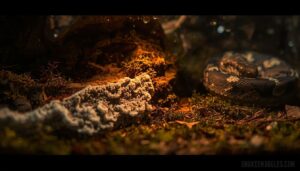
Mold doesn’t announce itself—it creeps in quietly, and by the time you notice it, your snake may already be at risk. Catching it early means knowing exactly what to look for and acting fast when something’s off.
Mold creeps in silently — by the time you notice it, your snake is already at risk
what to watch and do.
Watch for Fuzz, Odor, or Staining
Mold rarely announces itself loudly—it starts quietly. Train your eye to catch the fuzz pattern early: cottony white or gray patches in corners, under hides, along silicone seams.
Odor spotting matters just as much; a musty smell signals active mold spores before staining appears. Track stain progression on wood or décor—dark spots spreading near damp zones mean moisture mapping and microclimate sampling are overdue.
Isolate The Snake During Cleaning
Before you scrub a single seam, move your snake. Transfer it gently into a secure temporary container—a ventilated transfer box with smooth interior walls and no escape gaps.
This pre-cleaning snake transfer keeps your animal away from aerosolized spores during spot cleaning or deep cleaning, and it’s a core mold prevention strategy for vivariums. Gentle handling minimizes stress; keep the escape-proof enclosure covered throughout.
Inspect Seams, Corners, and Hides
Corners and seams are where mold hides longest. Corner moisture accumulation happens because air barely moves there—condensation clings, stays wet, and feeds growth.
Run your finger along every seam gap detection point: lifted silicone, staining, or soft spots signal seal integrity checks are overdue.
Flip hides for hide box condensation and inspect edge crack monitoring zones beneath décor.
Catch it early—before it spreads.
Check for Respiratory Illness Signs
Your snake can’t tell you it’s sick—so watch for what the body shows.
Wheezing sounds, labored breathing, and persistent cough are early signs that mold and bacteria prevention strategies for reptiles have failed. Nasal discharge, decreased appetite, and open-mouth breathing point to respiratory infections already taking hold.
Snake respiratory diseases—including serious respiratory disease from mold exposure—escalate fast.
Don’t wait.
Contact a Reptile Vet if Needed
When respiratory distress indicators appear, a vet call isn’t optional — it’s the next step.
- Visible mold symptoms, appetite loss, or lethargy after exposure all warrant vet consultation.
- A reptile vet uses a vet assessment checklist to evaluate skin, airways, and hydration.
- Diagnostic sample collection identifies infections that cleaning alone won’t resolve.
- Post-treatment care guidance aids snake health monitoring and safer herpetology husbandry practices going forward.
Frequently Asked Questions (FAQs)
What kills mold but not mycelium?
Most disinfectants stop visible growth but leave mycelium intact beneath the surface.
Targeted oxidizers and UV light exposure can help, but silver ion treatment — like MesoSilver spray — penetrates deeper for lasting mold remediation.
Can mold hurt the vivarium or help?
Like a double-edged blade, mold can help or harm.
Light fungal activity facilitates nutrient recycling and a balanced fungal food web — but toxic mold spreads fast, disrupts temperature stability, and threatens your snake’s health.
Will mold hurt my snake?
Yes, mold can seriously hurt your snake. Respiratory symptoms, skin irritation, mycotoxin exposure, and behavioral changes are all real risks — long-term health risks worsen the longer mold growth goes unaddressed.
How often should silicone seams be inspected for damage?
Inspect silicone seams at least every two weeks—and every time you open the enclosure. High-stress points like corners and door edges need extra attention after misting or spills.
When should stainless steel grade be upgraded for humidity?
Upgrade to 316 stainless when chloride contamination, condensation duration, or cleaning residue is a factor. Crevice moisture and fastener corrosion accelerate in high-humidity builds—316 manages those conditions where 304 starts to pit.
Conclusion
Mold is opportunistic—moves into any gap you leave it. Preventing mold in snake enclosures isn’t a one-time fix; it’s a maintenance rhythm you build until it becomes second nature.
Control the moisture, refresh the substrate, clear the waste, and inspect the corners you’d rather ignore. Your snake can’t tell you when something’s wrong until it already is.
Regular calibration checks matter more than most keepers realize — subtle drift is one of the most common mistakes with snake habitat temperature that quietly undermines an otherwise healthy setup.
Stay ahead of the conditions, and mold never gets the foothold it needs.
- https://www.cdc.gov/healthy-pets/about/reptiles-and-amphibians.html
- https://www.fda.gov/animal-veterinary/animal-health-literacy/salmonella-feeder-rodents-and-pet-reptiles-and-amphibians-tips-you-should-know-prevent-infection
- https://dictionary.cambridge.org/us/dictionary/english/imbalance
- https://my.clevelandclinic.org/health/diseases/14770-aspergillosis
- https://reptilesmagazine.com/cleaning-reptile-cages/