This site is supported by our readers. We may earn a commission, at no cost to you, if you purchase through links.
A boa constrictor arrived at a rescue facility last spring coiled so tight inside a 20‑gallon tank that staff couldn’t tell where her head ended and her body began. She wasn’t aggressive—was compressed. That single image tells you everything about what wrong housing does to these animals.
Rescue shelters carry a different weight than pet stores or hobbyist setups. Every boa coming through your doors arrives stressed, often malnourished, and desperately in need of space that lets them decompress.
Getting boa constrictor enclosures for rescue shelters right isn’t a luxury—it’s the first step in actual rehabilitation. The details ahead will help you build housing that works for boas at every life stage.
Table Of Contents
Key Takeaways
- Matching enclosure size to each life stage — from a 2.5×1 ft juvenile setup to an 8×4×4 ft space for large adults — is the foundation of real boa rehabilitation, not just a housing preference.
- Solid-wall enclosures with non-reflective finishes, durable sanitation surfaces, and tamper-resistant latches aren’t extras — they’re what keep stressed rescues safe and staff protected during recovery.
- Maintaining warm-side gradient of 85–90°F, stable humidity measured at snake level, and a layout with multi-angle hides gives a rescue boa the physical and psychological conditions it needs to decompress.
- Watching for behavioral cues like pacing or reduced appetite — not just body length — tells you when it’s time to upgrade an enclosure before confinement stress sets in.
Sizing Boa Enclosures for Shelters
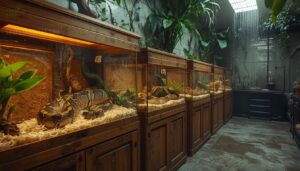
Getting the size right is the first thing that matters when housing boas in a shelter setting. A snake that’s cramped is a stressed snake, and a stressed snake is harder to rehab and rehome.
Getting the dimensions right from the start makes a real difference, and these factors that affect snake terrarium selection can help you choose a setup that supports both recovery and long-term wellbeing.
Here’s what you need to know about sizing at every stage of a boa’s life.
Juvenile, Subadult, and Adult Boa Space Needs
Every boa moves through three distinct life stages, and your enclosure size and design for boas must keep pace.
Juveniles start in snug 2.5 × 1 ft setups, but subadults need 4 × 2 × 2 ft for real looping space needs.
Adult boa size standards call for 6 × 3 × 3 ft minimum — enough to prevent coil tension and support healthy habitat zoning design.
For boas exceeding 8 ft, the large adult enclosure size should be at least 8 ft L × 4 ft W × 4 ft H.
Minimum Floor Space for Secure Shelter Housing
Beyond life stage, shelter housing adds another layer to your space allocation guidelines. Safety codes often call for at least 50 square feet of floor space per individual — and your enclosure size and design for boas should reflect that same mindset.
Solid floors, rigid materials, and sealed walls aren’t optional. They’re the floor area requirements that keep both animals and staff safe.
When to Upgrade to Larger Enclosure Sizes
Knowing when to upgrade comes down to tracking Growth Milestones consistently. When a boa’s length hits the 25–30% growth threshold within a year, that’s your cue.
Watch for Behavioral Changes too, pacing and reduced appetite signal confinement stress before the tape measure does. Weight Indicators matter equally.
Upgrade Scheduling works best when you plan ahead, matching enclosure size options to each animal’s next stage, not their current one.
Stacking and Expansion for Growing Boas
Once you’ve nailed the upgrade timing, Modular Rack Design makes the next step easier.
Stackable and expandable modular reptile enclosure systems let you scale vertically without losing floor space — a real advantage in crowded shelters.
Use Adjustable Shelf Heights and Expandable Divider Shelves to reshape individual enclosures as boas grow.
Mobility Casters Integration keeps units easy to reposition, and thoughtful Vertical Space Planning facilitates heat gradient management for boas across every level.
Stress-Reducing Enclosure Materials
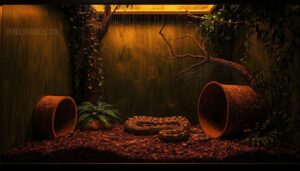
The materials you choose for a rescue enclosure matter more than most people realize. A stressed boa is harder to assess, harder to handle, and slower to recover — and the wrong cage can make that worse from day one.
The wrong enclosure materials don’t just inconvenience a stressed boa — they slow its entire recovery
Here’s what to look for when selecting materials that actually support your animals’ wellbeing.
Solid-wall Designs Instead of Screen Cages
Screen cages don’t belong in shelter settings — solid walls are non-negotiable for rescue boas. They lock in your thermal gradient, block stressful drafts, and make low stress handling far easier.
Here’s what solid-wall designs give you:
- Sealed Joint Benefits — no debris traps between panels
- Vertical Climbing Space — taller walls, smaller footprint
- Integrated Drain System — waste management without relocating the animal
- Modular Panel Interlock — quick disassembly for transport
- Reptile Enclosure Safety — tamper-resistant, escape-proof construction
Non-reflective Finishes for Calmer Behavior
What your boas see matters more than you’d think. Nonreflective surfaces reduce anxiety by eliminating the glare that triggers defensive responses during handling and routine checks. matte color palette in earthy tones promotes reptile stress reduction naturally — no harsh hotspots, no sudden light bursts.
Light diffusion benefits extend to UV stability and durability under sanitation, so low stress handling and enclosure features hold up shift after shift.
PVC Vs Wood for Heat Retention
Both materials work — but they behave differently under pressure.
- Thermal Conductivity — PVC reptile enclosures run 0.19–0.25 W/mK, slowing heat loss efficiently.
- Mass Heat Storage — 120-gallon wood reptile enclosures hold warmth longer after heaters cycle off.
- Insulation Thickness — multiwall PVC adds air pockets that improve thermal retention in wood and PVC cages.
- Moisture Swelling & Expansion Sealing — wood warps under humidity; PVC stays sealed, supporting consistent heat gradient management for boas.
Durable Surfaces for Frequent Sanitation
Rescue shelters clean hard—surfaces have to keep up.
Nonporous Coatings on PVC reptile enclosures and Epoxy Flooring resist repeated disinfectants without breaking down.
Stainless Steel Panels and Quartz Composite Tops won’t absorb bacteria between washes.
If damage happens, Modular Repair Panels let you replace one section, not the whole wall.
| Surface | Shelter Benefit |
|---|---|
| Epoxy Flooring | Withstands chemical cleaners daily |
| Stainless Steel Panels | Corrosion-resistant, fast to wipe |
| Quartz Composite Tops | Won’t dull under chlorine-based sanitizers |
| Modular Repair Panels | Replace damaged sections without full teardown |
Secure Doors and Tamper-resistant Latches
A door that can be pried open isn’t a door — it’s a liability.
Your enclosures need Latch Guard Design and Strike Plate Reinforcement to hold under pressure.
Tamper-Resistant Screws prevent easy removal, while Magnetic Contact Sensors and Smart Lock Integration add accountability.
Front opening doors on modular reptile enclosure systems support low-stress handling and enclosure features, and secure latching doors keep every animal exactly where they belong.
Top 5 Shelter Setup Products
Getting the right products makes shelter setup a lot less stressful — for you and the animals in your care. These five items cover the essentials: light, heat control, and clean water.
Here’s what belongs in every boa rescue enclosure.
1. Zoo Med Rock Corner Water Dish
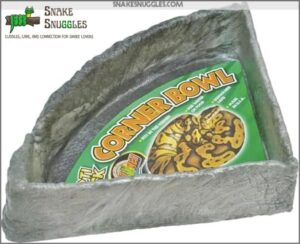
The Zoo Med Rock Corner Water Dish earns its place in any shelter setup. Its triangular shape tucks neatly into a corner, freeing up floor space that your boas actually need.
At roughly one gallon capacity, it’s deep enough for a full soak — which matters for shedding and hydration.
The non-porous surface won’t harbor bacteria, and it’s dishwasher safe, so turnaround between animals stays fast.
Just keep in mind: smaller or less mobile rescues may struggle with the high sides.
| Best For | Owners of large reptiles like ball pythons, bearded dragons, and turtles who need a roomy, stable soaking dish that’s easy to clean. |
|---|---|
| Brand | Zoo Med |
| Material | Rigid plastic |
| Weight | 3.8 lb |
| Max Wattage | N/A |
| Warranty | Not specified |
| Ease of Use | Dishwasher safe |
| Additional Features |
|
- Fits snugly in the corner, keeping the enclosure floor open and clutter-free
- Holds about a gallon of water — plenty of room for a full soak
- Dishwasher safe, so cleaning between uses takes almost no effort
- High sides can be tough for smaller or less agile reptiles to climb in and out
- You get a random color, so it might not match your setup
- Heavy when full, which makes moving or repositioning it a bit of a hassle
2. Zoo Med ReptiSun T5 HO Terrarium Hood
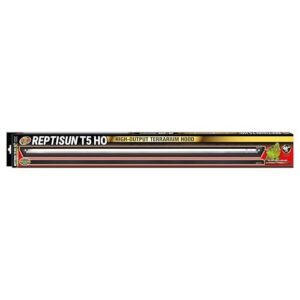
Lighting matters more than most people expect in a shelter setting. The ReptiSun T5 HO Terrarium Hood covers the full 48-inch length of a standard 4×2 enclosure, so there are no dim corners where stress can hide.
Its polished curved reflector pushes UVB deeper into the habitat — useful for large rescues that rarely move toward the surface. The built-in electronic ballast keeps energy use low, and the on/off rocker switch makes daily checks fast and simple.
| Best For | Owners of large reptiles like bearded dragons or chameleons who need strong, even UVB coverage across a full 48-inch enclosure. |
|---|---|
| Brand | Zoo Med |
| Material | Molded plastic |
| Weight | Not specified |
| Max Wattage | 50 W |
| Warranty | Not specified |
| Ease of Use | Tool-free bulb swap |
| Additional Features |
|
- Covers the entire length of a 4×2 tank with no dim spots, thanks to the polished curved reflector pushing UVB deep into the habitat.
- The built-in electronic ballast keeps energy use down compared to older fixtures — better for your wallet over time.
- Swapping bulbs is tool-free and straightforward, so maintenance doesn’t turn into a whole project.
- Some units ship with damaged parts or a defective bulb right out of the box, so you might be dealing with a return before you even get started.
- The glass components can shatter if they get wet before installation, so you need to be careful during setup.
- It only works with T5 HO bulbs — no flexibility there if you want to experiment with other lighting options.
3. Zoo Med Reptisun UVB Fluorescent Lamp

The hood provides coverage — but without the right bulb, it’s just a fancy frame. The Zoo Med ReptiSun UVB Fluorescent Lamp is what actually makes the light work.
Rated at 5.0 UVB, it delivers moderate output suited for boas in tropical setups, supporting calcium metabolism and natural behavior over time.
Replace it every six to twelve months, because UVB output fades long before the bulb burns out. A working schedule keeps your rescues protected without guesswork.
| Best For | Reptile owners with larger enclosures who need stronger UVB coverage for iguanas, tortoises, or turtles prone to metabolic bone disease. |
|---|---|
| Brand | Arcadia |
| Material | Fluorescent glass tube |
| Weight | Not specified |
| Max Wattage | 54 W |
| Warranty | Not specified |
| Ease of Use | Direct replacement tube |
| Additional Features |
|
- Puts out serious UVB at the 5.0 rating — enough to actually prevent or reverse metabolic bone disease in bigger setups
- Trusted by zoos and vets, so you know it’s not just marketing fluff
- The T5 HO format means more intensity over distance, great if your animal isn’t right under the lamp
- Shipping damage and early burnouts (sometimes within 2 months) have been reported more than you’d hope
- Needs replacing every 6 months to stay effective, which adds up over time
- Some Amazon stock may be older, so you could get a lamp that’s already past its prime before you even open the box
4. Zoo Med Dual Deep Dome Lamp Fixture
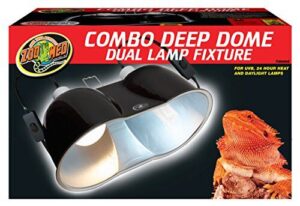
Once you’ve got your UVB sorted, you still need reliable heat — and the Zoo Med Dual Deep Dome covers both in one mount. Two ceramic sockets, each rated to 160W, let you run a basking bulb and a UVB lamp side by side.
Separate power cords mean you can switch each off independently, which matters when you’re managing day/night cycles across multiple rescues.
The polished aluminum dome keeps heat focused downward while the outer surface stays cool to the touch.
| Best For | Reptile and invertebrate keepers who want to run a basking bulb and UVB lamp from a single mount without cluttering their enclosure with multiple fixtures. |
|---|---|
| Brand | Zoo Med |
| Material | Plastic and aluminum |
| Weight | 2.43 lb |
| Max Wattage | 300 W |
| Warranty | Not specified |
| Ease of Use | Independent power cords |
| Additional Features |
|
- Two independent sockets mean you can run heat and UVB at the same time — no extra hardware needed.
- Separate power cords make day/night cycles dead simple, especially if you’re using timers.
- The deep aluminum dome keeps heat focused where it belongs, and the outside stays cool enough to touch safely.
- It’s a chunky fixture — make sure you’ve got the clearance for it before you buy.
- Struggles to heat the lower levels of bigger tanks (80 gal), so you may need higher-wattage bulbs or a backup heat source.
- Running high-wattage bulbs on both sides at once can shorten bulb life, so keep an eye on your total wattage and stay under 300W.
5. Sazomdon Plug In Dimmer Switch
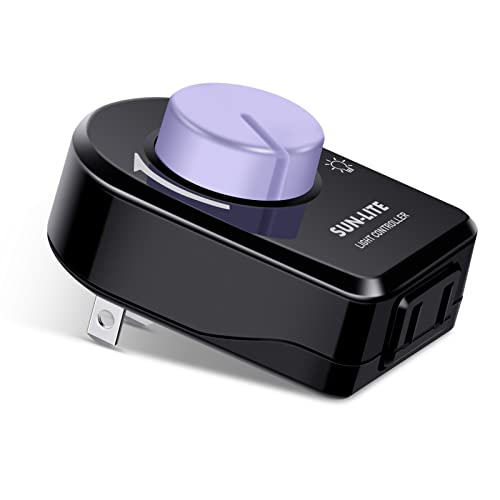
Controlling heat and light timing doesn’t have to mean complicated wiring. The Sazomdon Plug In Dimmer Switch sits between your lamp and the outlet — no electrician needed.
A single rotary knob lets you dial brightness down during feeding or inspections, reducing stress for the snake and for you.
It supports up to 300 watts, works with dimmable LEDs and incandescents, and costs almost nothing to set up.
For shelter budgets, that kind of flexibility matters.
| Best For | Anyone who wants simple dimming control for lamps, soldering irons, or small motors without touching a single wire. |
|---|---|
| Brand | Lutron |
| Material | Plastic housing |
| Weight | Not specified |
| Max Wattage | 200 W |
| Warranty | 1 year |
| Ease of Use | Plug-and-play rotary knob |
| Additional Features |
|
- Dead simple setup — just plug it in, no wiring or electrician required
- Works with LEDs, CFLs, and incandescents, plus motors and soldering irons
- UL listed and compact enough to go anywhere
- Only has a 2-prong plug, so grounded outlets are a no-go
- Some LEDs and halogen bulbs don’t play nice with it
- A few buyers have reported units dying earlier than expected
Heating, Humidity, and Security
Getting the environment right is what separates a stressed boa from a thriving one. Temperature, humidity, and security all work together — and each one matters more than you might think.
Here’s what you need to have in place before the first snake arrives.
Creating Warm and Cool Side Gradients
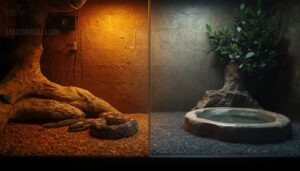
Temperature gradient zones make or break a rescue boa’s ability to self-regulate. Your warm side should sit between 85–90°F using a radiant heat panel or heat mat linked to a thermostat — never guessing. The cool side targets 75–80°F. Use temperature sensor mapping at multiple heights to confirm accuracy.
- Heat lamp zoning keeps warmth isolated to one side
- Gradient visual cues like cork bark help boas locate microclimates fast
- Nighttime red lighting and heat sink materials support natural cooling cycles without disruption
Keeping Humidity Stable for Healthy Shedding

Stable humidity starts with where you measure it. Hygrometer placement matters — keep it at snake level, not near the top where readings run dry.
Use localized humidity zones like a humid hide with a removable liner for liner refresh frequency on schedule. Targeted misting paired with moisture buffer substrate gives you steady humidity control without waterlogging the whole enclosure.
Balancing Ventilation With Heat Retention
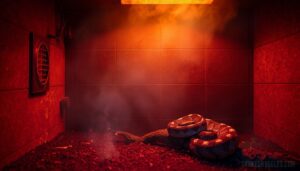
Fresh air is essential, but every time it enters, heat tries to leave with it. That’s why solid-wall panels, Insulation Gasket Sealing, and Thermal Curtain Usage work together to hold your thermal gradient control steady.
Smart Fan Controls and Airflow Zoning Strategies let you manage reptile enclosure ventilation without cold flushes. Heat Recovery Units take it further — exchanging stale air while keeping warmth exactly where your boas need it.
Hides, Enrichment, and Low-stress Layout
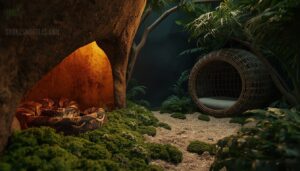
A calm boa is a healthy boa.
Use multi-angle hides so they can retreat without feeling cornered — one warm side, one cool.
Tactile enrichment like damp moss and coconut husk adds real comfort.
Rotate olfactory scent enrichment weekly to keep curiosity alive.
A single dominant retreat point reduces stress during checks.
Keep your non-reflective backdrop consistent, and your layout does half the work for you.
Cleaning Routines and Escape-proof Checks
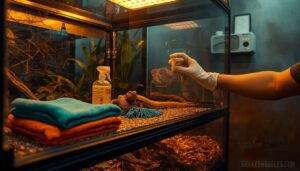
Your cleaning routine is your first line of defense. Wipe exteriors daily with disinfectant protocols in place, and use color-coded cloths to prevent cross-contamination between surfaces.
Hand hygiene stations must stay stocked before and after every interaction.
Waste seal handling keeps pathogens contained.
Run inspection checklists at shift start and end — latches, seals, substrate depth. No gaps, no escapes.
Frequently Asked Questions (FAQs)
How often should water dishes be cleaned and refilled?
Refill water dishes daily — that’s your baseline Water Turnover Rate. Apply Temperature Refills on warmer days.
Scrub weekly for Biofilm Prevention. Replace immediately if cloudy.
Dish Material Impact matters: nonporous surfaces clean faster and stay sanitary longer.
Can multiple boas safely share one enclosure?
Two boas in one enclosure are a recipe for trouble. Boas are solitary — aggression management becomes a daily challenge, and territory partitioning rarely holds long-term.
Separate housing is always the safer call.
How do you prevent mold in high-humidity boa enclosures?
Mold thrives where air sits still and surfaces stay wet. Keep ventilation steady, spot-clean waste fast, and position your water dish away from substrate.
A dry fallback area breaks the cycle before it starts.
Conclusion
That boa who arrived coiled into herself like a closed fist? She was in a spacious enclosure within 48 hours—and staff watched her stretch for the first time in what veterinarians estimated had been years.
That stretch wasn’t just physical relief. It was the moment rehabilitation actually began.
Thoughtfully designed boa constrictor enclosures for rescue shelters don’t just house animals—they signal safety to a nervous system that has forgotten what safe feels like.