This site is supported by our readers. We may earn a commission, at no cost to you, if you purchase through links.

A corn snake thriving in a clean enclosure lives longer, sheds better, and stays noticeably calmer than one sitting in a neglected habitat.
Most keepers underestimate how quickly bacteria, mold, and ammonia build up—even in enclosures that look fine.
Spot cleaning daily and deep cleaning every four to six weeks isn’t just good practice; it’s the difference between a healthy snake and a vet bill.
This cleaning a corn snake habitat guide walks you through every step, from safely removing your snake to reassembling a properly balanced environment it’ll want to explore.
Table Of Contents
- Key Takeaways
- How Often to Clean Corn Snake Habitats
- Essential Tools and Supplies for Cleaning
- Removing Your Corn Snake Safely
- Spot Cleaning Vs. Deep Cleaning
- Step-by-Step Deep Cleaning Instructions
- Cleaning and Disinfecting Hides and Decor
- Washing and Refilling Water Bowls
- Properly Changing and Disposing Substrate
- Maintaining Temperature and Humidity After Cleaning
- Monitoring Your Snake After Cleaning
- Frequently Asked Questions (FAQs)
- Is Dawn dish soap safe for corn snakes?
- Do I need to mist my corn snake enclosure?
- How do you clean a corn snake habitat?
- Are corn snakes easy to care for?
- How does a corn snake care sheet work?
- How often should you clean a corn snake’s habitat?
- How do you treat a corn snake?
- How do you keep a corn snake scaly?
- Can I use vinegar to clean snake tanks?
- How to prevent bacterial growth between deep cleans?
- Conclusion
Key Takeaways
- Daily spot cleaning and a deep clean every 4–6 weeks work together to stop bacteria, mold, and ammonia before they become a health problem.
- Your snake’s behavior after cleaning is one of your best diagnostic tools—hiding, erratic movement, or mouth breathing all signal something’s off.
- Not all cleaners are safe; stick to reptile-specific disinfectants and skip household products like Dawn, which can irritate your snake’s skin and respiratory system.
- Substrate, water bowls, hides, and décor all need attention—overlooking any one of them lets pathogens quietly build up between deep cleans.
How Often to Clean Corn Snake Habitats
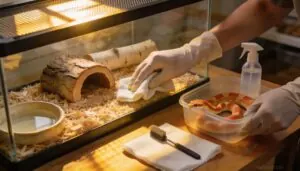
Cleaning your corn snake’s habitat isn’t a one-size-fits-all routine — different tasks happen on different timelines. Knowing when to do what keeps your snake healthy without turning maintenance into a guessing game.
Pairing a solid cleaning schedule with the right setup from the start makes everything easier — check out these corn snake starter kits designed with daily care routines in mind.
Here’s what a solid cleaning schedule actually looks like.
Daily Spot Cleaning Schedule
Think of spot cleaning as your snake’s daily hygiene reset.
Every morning, do a quick Morning Inspection—check corners, under hides, and near the water bowl for droppings or damp substrate. Evening Wipe takes care of any mess you missed.
Log findings in a Waste Log, set a Cleaning Reminder, use a reptile-safe cleaner, and always allow a full Drying Period before your snake returns.
Deep Cleaning Frequency
Spot cleaning takes care of the daily mess, but deep cleaning resets everything. Aim for every 4–6 weeks as your baseline cleaning frequency.
- Seasonal Timing – Clean sooner in warmer months; heat speeds odor buildup.
- Post-Shed Interval – Schedule a deep cleaning after each shed cycle.
- Odor Trigger – Persistent smell means don’t wait.
- Health-Driven Schedule – Illness demands immediate deep cleaning for Mold Prevention.
Signs Your Enclosure Needs Cleaning
Your schedule matters, but so does what you see and smell. Ammonia odor hitting you when you open the lid? That’s bacteria buildup talking.
Watch for visible urate stains, Water Bowl Biofilm, or Mold Growth on hides.
Insect Presence near the substrate signals neglect.
Biofilm in the water bowl can trigger skin problems and respiratory issues fast.
Essential Tools and Supplies for Cleaning
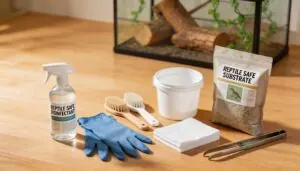
Before you start scrubbing, it helps to have the right gear within arm’s reach. Cleaning a corn snake habitat goes much smoother when you’re not scrambling for supplies mid-process.
Here’s what you’ll want to have ready before you begin.
Reptile-safe Cleaners
Not every cleaner on the shelf is safe for your corn snake. Choosing the wrong product can irritate their sensitive respiratory system fast.
Stick to these reptile-safe cleaning products:
- Diluted reptile disinfectants — follow contact time guidelines carefully
- pH-Neutral Formulas — gentle on all surface material compatibility
- Biodegradable Surfactants — break down waste without harsh residue
- 3% hydrogen peroxide — effective with residue-free rinsing
For a proven broad-spectrum option, consider using hypochlorous acid cleaner which is safe when dry.
A solid cleaning routine starts with the right cleaner.
Gloves and Brushes
Your gloves and brushes matter more than most keepers realize. For nitrile glove selection, go powder-free and 4–6 mil thick — they handle reptile-safe cleaner without tearing. Disposable vs. reusable comes down to preference, but disposable wins for contamination control during deep cleaning.
For brush bristle types, soft bristles protect surfaces; sanitize reusable brushes with reptile-safe cleaning products between sessions.
Temporary Snake Housing
Before you touch a single piece of décor, you need somewhere safe to put your snake. A clear plastic tub works perfectly as an Emergency Tub Enclosure — just make sure the Secure Lid Design won’t pop open mid-clean.
Keep these essentials ready:
- Drill Ventilation Hole Size small enough to prevent escapes
- Use Paper Towel Substrate for quick, clean swaps
- Set a Portable Heat Pad on one side only
- Add one hide for stress reduction and observation
Safe handling and temporary housing during cleaning keep your snake calm while you work.
Removing Your Corn Snake Safely
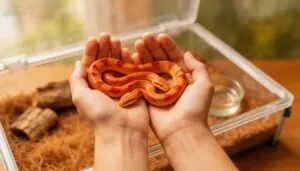
Before you start scrubbing, your corn snake needs to be somewhere safe and calm. How you pick them up matters more than most people think.
Here’s what to keep in mind when it’s time to move them.
Handling Tips to Reduce Stress
Your snake feels every bit of nervous energy you bring to the interaction. That’s why a Predictable Handling Schedule matters so much — snakes settle faster when routine replaces surprise.
| Do This | Avoid This |
|---|---|
| Gentle Body Support from below | Grabbing by the tail |
| Warm Room Temperature environment | Handling in cold, drafty spaces |
| Post-Feeding Avoidance (48 hrs) | Picking up mid-digestion |
Minimize Visual Distractions by keeping other pets away. Calm, confident handling reduces stress naturally.
Using Secure Holding Containers
While you clean, your corn snake needs a safe place to wait. A temporary secure container with secure lids keeps them calm and prevents escapes. Look for options with Weatherproof Steel Construction and Tamper-Resistant Locks — these hold up during enclosure sanitation sessions without risk of compromise.
A Modular Tray System makes cleanup inside the container easy too. Follow basic Inspection Protocols before placing your snake inside. GPS Tracking Integration is optional but helpful for peace of mind during longer deep cleans.
Spot Cleaning Vs. Deep Cleaning
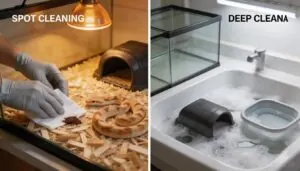
Not all cleaning is created equal, and knowing the difference can save your snake a lot of unnecessary stress. Your enclosure actually needs two kinds of attention — quick daily tidying and the occasional full reset.
Here’s how to tell which one your setup needs and when.
When to Spot Clean
Spot cleaning isn’t complicated — it’s just about acting fast. The moment you notice fresh feces detection, urine spot timing matters. Remove it now.
| Trigger | Action |
|---|---|
| Shed skin accumulation | Remove clumps immediately |
| Water bowl contamination | Replace water; scrub bowl |
| Mold smell cues | Clear damp substrate; wipe surfaces |
Daily hygiene practices using a reptile‑safe cleaner keep your cleaning schedule simple and your snake healthy.
When to Deep Clean
Some messes don’t wipe away — they grow. When Visible Waste sticks to surfaces after routine cleaning, it’s time for a deep clean. Trust Odor Indicators and Substrate Saturation as your early signals.
| Warning Sign | Action Needed |
|---|---|
| Mold Growth on décor | Deep cleaning immediately |
| Health Alerts from waste buildup | Full Substrate removal and replacement |
Your cleaning schedule depends on reading these cues correctly.
Benefits of Both Methods
Think of spot cleaning and deep cleaning as partners — one covers daily Odor Reduction, the other targets Microbial Control at the root. Together, they support Stress Minimization, Thermal Efficiency, and Habitat Longevity.
Spot cleaning tackles daily odor while deep cleaning eliminates hidden pathogens — together, they extend your snake’s habitat lifespan
| Method | Core Benefit |
|---|---|
| Spot cleaning | Reduces odor daily |
| Deep cleaning | Eliminates hidden pathogens |
| Both combined | Extends habitat lifespan |
Establishing a regular cleaning schedule using reptile safe cleaning products keeps your corn snake’s enclosure consistently healthy.
Step-by-Step Deep Cleaning Instructions
Deep cleaning your corn snake’s habitat doesn’t have to feel overwhelming once you break it into clear steps. Think of it like resetting the whole space — methodical, top to bottom, nothing skipped.
Here’s exactly how to work through it.
Removing Substrate and Décor
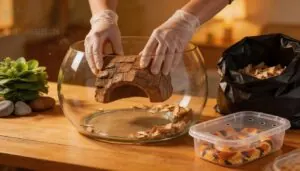
Before anything touches the enclosure walls, everything inside has to go. Wear gloves — glove use isn’t optional here. Pull out cork hides gently from the base, remove decor, and scoop out all old substrate.
- Lay temporary liners down during removal to catch debris
- Seal waste in a closed bag for sealed disposal
- Swap paper bedding completely — no partial changes
- Lift cork hide removal pieces carefully to avoid snapping
Scrubbing Enclosure Surfaces
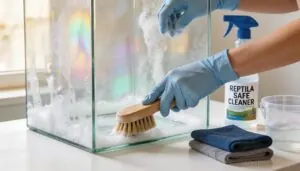
Now that everything’s out, it’s time to scrub. Apply your reptile safe cleaner and let it sit — disinfectant contact time matters, usually five to ten minutes.
Use soft brushes for textured surfaces, and pay close attention to seam cleaning where biofilm hides.
Surface material compatibility guides your pressure; go gentle on acrylic, firmer on glass.
Drying and Reassembling Habitat
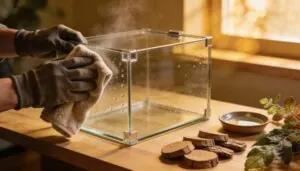
Once scrubbing’s done, drying is your next job — and it matters more than most keepers expect.
- Use Drying Equipment like microfiber cloths and paper towels for Moisture Detection in corners and seams.
- Practice Airflow Management by letting the enclosure breathe before reassembly.
- Do an Odor Inspection — soapy smells mean rinse again.
Follow Layout Consistency when returning décor, so your snake feels at home instantly.
Cleaning and Disinfecting Hides and Decor
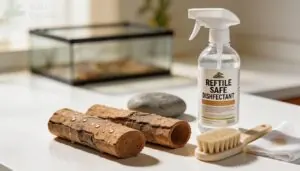
Hides and décor are easy to overlook during cleaning, but they collect bacteria just as fast as the substrate does. Getting them properly disinfected isn’t complicated once you know what works — and what to avoid.
Here’s what you need to cover.
Safe Cleaning Solutions
Not every cleaner on the shelf is safe for your snake. Stick to reptile safe disinfectant products with non-toxic ingredients and pH balanced formulas — they clean effectively without leaving dangerous residue.
Always follow dilution guidelines and practice label reading before use. Choosing reptile safe cleaning products with clear biosecurity and cleaning protocols means your disinfection methods won’t put your corn snake at risk.
Rinsing and Drying Techniques
After applying your reptile safe disinfectant, rinsing matters just as much as the clean itself. Use a gentle water flow and work top to bottom — that’s your sectional rinsing method keeping loosened grime from resettling.
- Rinse porous items, like cork, longer than plastic
- Do a dechlorinated final rinse to avoid chlorine residue
- Towel-dry nonporous surfaces first, then air-dry
- Follow a material specific drying approach — let airflow do the work
Inspecting for Mold or Damage
Before you return any item to the enclosure, give it a thorough once-over.
Check corners and shaded spots for mold spotting — fuzzy green, black, or white patches signal humidity problems and bacterial growth. Run your fingers along edges for surface cracks where hidden moisture hides.
Rust indicators on metal parts mean replacement time.
Trust your nose too — odor detection catches contamination your eyes might miss.
Washing and Refilling Water Bowls
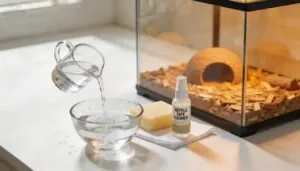
Your snake’s water bowl does more work than it looks like. Bacteria and biofilm can build up fast, making what seems clean actually kind of gross.
Here’s what you need to know to keep it truly fresh.
Preventing Biofilm Buildup
Biofilm doesn’t announce itself — it just quietly takes over your water bowl. That slick, slimy film is a microbial colony, and once it matures, regular cleaning of water bowls to prevent biofilm formation becomes much harder.
- Bowl Rim Cleaning — wipe rims after every refill
- Surface Drying — dry bowls fully before refilling
- Inspection Routine — check for cloudy film daily
Moisture-resistant materials and anti-biofilm cleaners stop bacterial growth before it threatens water quality and infection control.
Using Hot Water and Safe Cleaners
Hot water is your first line of defense — aim for 60 to 70°C to cut through grime without warping plastic. Pair it with reptile-safe cleaning products free of phenols or ammonia.
Follow dilution ratios on the label, and don’t rush contact time requirements.
Vinegar works for mineral buildup. Always clean with steam ventilation nearby to protect yourself.
Ensuring Bowls Are Dry and Clean
damp bowl is never truly clean. Bowl Material Choice matters here — ceramic and food‑grade plastic resist residue far better than porous surfaces.
After washing, use Airflow Drying Techniques: set bowls on a rack so air circulates underneath. Wipe the rim thoroughly; Rim Residue Prevention stops biofilm before it starts.
Dry completely, then refill. That’s your best Biofilm Prevention Strategy.
Properly Changing and Disposing Substrate
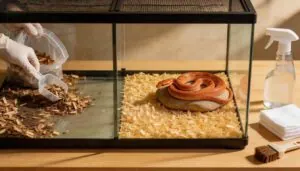
Changing your substrate is one of those tasks that’s easy to put off — but it matters more than you might think. Done right, it keeps bacteria at bay and gives your corn snake a fresh, comfortable home.
Here’s what you need to know about choosing the right substrate, removing it safely, and laying down the new bedding properly.
Best Substrate Options
Choosing the right substrate sets the foundation for a healthy habitat. Each option brings something different to the table:
- Aspen Shavings — dust-free, easy to spot clean, and dries quickly
- Coconut Coir — holds moisture evenly; great for humidity stability
- Paper Substrate — low-dust, inert, and simple to swap out
Activated Charcoal additives reduce odor, while Sand Grit Mix improves drainage. Best substrate choices for corn snake enclosures balance cleanliness, safety, and ease.
Safe Removal and Disposal
Once you’ve picked your substrate, removing the old stuff the right way matters just as much. Waste segregation keeps contaminants from spreading beyond the enclosure.
Follow bagged substrate removal — scoop everything into a lined bag and seal it before moving it anywhere.
| Step | Method | Why It Matters |
|---|---|---|
| Remove substrate | Scoop into sealed bag | Prevents contamination spread |
| Handle soiled décor | Use decontamination bins | Avoids drips on surfaces |
| Dispose gloves | Disposable gloves protocol — peel off carefully | Reduces cross-contact risk |
Wash hands after, even with gloves on.
Spreading Fresh Bedding Evenly
Once the old substrate is out, spreading fresh substrate evenly makes all the difference. Aim for a uniform depth of one to two inches across the full floor.
Use the flat edge of a card for leveling techniques — it’s a simple bedding tool that keeps things flat. Low-dust options support dust control and better enclosure hygiene throughout.
Maintaining Temperature and Humidity After Cleaning
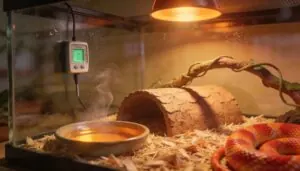
Once the cleaning is done, your work isn’t quite finished. The enclosure’s temperature and humidity can shift during the process, and your snake needs those conditions stable before going back in.
Here’s how to get everything back on track.
Resetting Heat Sources
After a deep clean, your enclosure is basically starting from scratch thermally. Don’t rush to put your snake back.
Follow these steps for safe Temperature Stabilization:
- Unplug and restart your heat lamp for a clean Heat Lamp Cycle reset.
- Reposition the probe carefully for accurate Probe Recalibration.
- Confirm your Thermostat Reset before powering back up.
- Allow 30–60 minutes for full Basking Reheat.
- Verify your thermal gradient before reintroducing your snake.
Monitoring Humidity Levels
Once the enclosure is reassembled, humidity control becomes your next priority. Place your hygrometer away from heat sources for accurate Sensor Placement Tips.
Watch for RH Trend Logging patterns over several hours. Set Alarm Threshold Settings between 40–50%.
Misting Impact Analysis helps you see how quickly moisture fades. Calibration Frequency matters too — a drifting sensor gives you false confidence.
Using Moist Hides During Shedding
When your corn snake starts looking cloudy, that’s your Shedding Cue Timing signal — act fast. A moist hide gives them a personal hydration management zone without soaking the whole enclosure.
- Moss Material Choice holds moisture longer than most inserts
- Paper Towel Insert works as a quick, affordable option
- Warm Side Placement helps the snake find it naturally
- Refresh your Hide Hygiene Cycle after every shed
- Consistent humidity control prevents patchy, stuck shed
Monitoring Your Snake After Cleaning
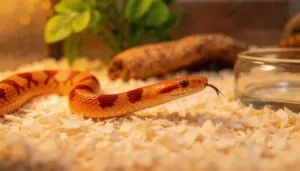
Once your corn snake is back in its freshly cleaned home, the real work begins — watching. How your snake behaves in the next 24 to 48 hours tells you a lot about whether the clean went smoothly.
Here’s what to look for.
Behavioral Signs of Stress
Your snake’s behavior tells you everything. Watch for increased Hiding Frequency, Defensive Posture, or Erratic Movement—these are classic stress signs in captive snakes after enclosure cleaning.
Monitoring snake behavior after enclosure cleaning helps you catch handling stress early.
Mouth Breathing and Abnormal Shedding are also key snake stress indicators.
Any of these behavioral signs of illness means it’s time to reassess your setup.
Recognizing Health Issues
Some health issues sneak up quietly. Watch for respiratory distress — wheezing, open-mouth breathing, or mucus near the nose.
skin color changes, scale rot, and dysecdysis all signal enclosure problems.
Eye issues like cloudy or stuck shed need prompt attention.
stool abnormalities, weight loss, and suspected impaction are serious.
Salmonella bacteria risk rises in dirty habitats, so proper veterinary care for sick snakes is essential.
When to Contact a Reptile Vet
Don’t wait and hope things improve on their own—some symptoms demand a vet call today.
- Respiratory distress: wheezing or open-mouth breathing needs same-day veterinary care
- Sudden anorexia or unexplained weight loss signals internal illness
- Abnormal discharge from eyes, mouth, or nose warrants prompt attention
- GI emergencies: repeated regurgitation, bloody stool, or suspected impaction require immediate help
- Lethargy signs, twitching, or coordination loss need urgent veterinary care for sick snakes
Frequently Asked Questions (FAQs)
Is Dawn dish soap safe for corn snakes?
Dawn dish soap is basically a chemical minefield for your corn snake. It risks residue toxicity, skin irritation, and respiratory effects.
Choose reptile-safe cleaning products instead to guarantee proper pathogen prevention without health risks.
Do I need to mist my corn snake enclosure?
Not always. If your enclosure stays in the 40–60% humidity range, routine misting isn’t necessary. Use a hygrometer to monitor levels, a humid hide during shedding, and moisture-retentive substrate instead.
How do you clean a corn snake habitat?
Spot cleaning addresses daily messes. Deep cleaning resets everything.
Remove waste fast, scrub surfaces well, replace substrate fully, and do a post-cleaning temperature check to confirm your snake’s home is ready.
Are corn snakes easy to care for?
Yes, corn snakes are beginner friendly and low maintenance. Simple enclosure setups, affordable setup costs, and stable health make them ideal for new keepers. Basic reptile husbandry keeps them thriving.
How does a corn snake care sheet work?
corn snake care sheet covers key topics like enclosure size, feeding schedule, lighting requirements, health indicators, and morph identification — giving you a reliable reference for maintaining hygiene in corn snake enclosures.
How often should you clean a corn snake’s habitat?
Clean daily by removing waste and uneaten food. Deep clean every 4 to 6 weeks. Replace substrate monthly. Adjust your schedule based on waste accumulation indicators and humidity impact timing.
How do you treat a corn snake?
Treat your corn snake with calm, steady handling. Support its body fully.
Watch for shedding problems, respiratory infections, and stress signs. Clean surroundings prevent parasites and disease.
Use nutritional supplements as needed.
How do you keep a corn snake scaly?
Keep your corn snake’s scales healthy by controlling humidity, doing spot cleaning daily, and scheduling deep cleaning monthly.
Prevent scale rot, support shedding, and consider calcium supplementation and regular soak sessions for best results.
Can I use vinegar to clean snake tanks?
Yes, you can. Think of vinegar as a light broom — great for surface grime, not deep disinfection. Dilute it, rinse thoroughly, and use reptile-safe disinfectants when stronger pathogen prevention matters.
How to prevent bacterial growth between deep cleans?
Spot clean daily. Remove feces, shed skin, and food spills fast. Dry all surfaces fully.
Manage humidity and moisture to prevent bacterial growth. Wash water bowls to prevent biofilm formation. Maintain airflow optimization always.
Conclusion
A clean habitat is a snake’s sanctuary. Just as a gardener nurtures a garden, you cultivate a thriving environment for your corn snake.
By following this cleaning a corn snake habitat guide, you guarantee a healthy space for your pet to flourish. Regular cleaning prevents disease and stress.
Your snake relies on you for a safe haven. Keep its home clean, and it will thrive.
A well-maintained habitat is a symbol of your care and dedication.