This site is supported by our readers. We may earn a commission, at no cost to you, if you purchase through links.
A ball python coiled tight in its hide, tail tip swollen and faintly purple, isn’t sulking—it’s telling you something went wrong days ago. That patch of dull, grayish skin near the vent didn’t just look off; it acted like a tourniquet, quietly choking off circulation while you assumed shed season was finished. Snake retained shed skin causes more tissue damage through neglect than through any single mistake in husbandry.
Most cases trace back to humidity levels that dipped for a week, or a water bowl that sat empty one afternoon too long. The fix rarely requires a vet visit, but knowing which signs demand one matters more than any home remedy you’ll try first.
Table Of Contents
- Key Takeaways
- What Retained Shed Looks Like
- Why Snake Shed Gets Stuck
- Safe At-Home Shed Help
- Retained Eye Caps and Tail Tips
- Preventing Future Retained Shed
- When to See Your Vet
- Frequently Asked Questions (FAQs)
- Can you help a snake shed its skin?
- When a snake sheds its skin, does it leave the area?
- Is it painful for a snake to shed its skin?
- Is it safe to touch shedded snake skin?
- How often do healthy snakes normally shed skin?
- Can retained shed increase risk of infection?
- Are certain snake species more prone to dysecdysis?
- Does age affect a snakes shedding frequency?
- How long does a full shed cycle take?
- Conclusion
Key Takeaways
- Retained shed most often stems from low humidity, poor hydration, incorrect temperatures, or a lack of rough surfaces for your snake to rub against.
- Tail rings and retained eye caps are the most dangerous forms of stuck shed, since they can cut off circulation or threaten vision if left untreated. Soaking your snake in lukewarm water is often the first step to safely loosening problem areas, as outlined in this guide to bathing a snake after shedding.
- Home fixes like humid hides, brief lukewarm soaks, and damp towel boxes can safely loosen stubborn shed, but you should never peel or force skin off.
- Persistent cloudy eyes, tight tail bands with discoloration, discharge, breathing changes, or ongoing appetite loss all signal it’s time to see a vet rather than wait it out.
What Retained Shed Looks Like
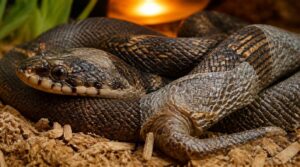
Retained shed doesn’t always look the same way twice, so knowing what to watch for matters more than you’d think. Some signs are easy to spot, while others hide in places you might not think to check, like the tail tip or the eyes. Here’s what to look for when you’re checking your snake after a shed.
If you spot retained eye caps or leftover tail skin, check this guide on signs of a healthy boa constrictor to know when it’s worth a closer look.
Dull Flaky Skin Patches
Often the first clue something’s off is a dull, faded patch where skin should gleam. Spotting shed residue and color muting early helps.
Watch for:
- Grayish or matte scales
- Rough, sandpapery texture
- Small lifting flakes
- Uneven thickness
Low humidity usually drives this retained shed pattern—your hygrometer’s telling you something.
Papery Stuck Shed
Once those matte patches go untreated, dysecdysis often progresses into papery, translucent sections that crackle rather than peel. Run your fingers along joint areas and tail creases—retained shed clings hardest where friction can’t reach.
A quick skin texture assessment tells you a lot: healthy shed lifts freely, while stuck patches feel brittle. A humid hide and mechanical shedding aids (rough bark, stone) restore the friction your snake’s missing.
Tail Tip Skin Rings
Beyond flaky patches, check the tail’s very tip—where dysecdysis often leaves a distinct retained skin ring. This tight band signals stuck shed that didn’t slough off evenly.
Watch for:
- Ring constriction risks cutting off blood supply
- Tail circulation loss, seen as discoloration
- Ring infection signs like crusting or swelling
- Rubbery ring texture versus healthy scales
Preventing tail rings starts with proper humidity and hydration.
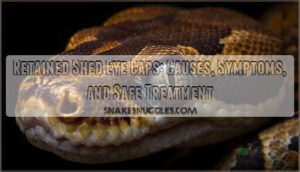
Cloudy Retained Eye Caps
Retained spectacles show up as milky, opaque eyes that don’t clear after shedding—unlike normal shed haze.
Trapped fluid and spectacle debris buildup between old and new scale layers block optical clarity, raising eye infection risks and subspectacular infections.
Maintaining high humidity levels in the habitat can help prevent these difficult shedding processes.
Persistent opacity, especially in one eye, signals genuine vision impairment risk. Veterinary ophthalmology evaluation is warranted; this isn’t cosmetic dysecdysis, it’s a protective barrier failing at its job.
Swelling or Discoloration
Why does a shed problem sometimes look like an injury? Because it often is one. Tissue fluid buildup under stuck skin causes puffiness, while trapped blood produces bruising color patterns—red, purple, or blue.
Check for warmth (inflammation heat detection) and matte, blotchy patches from desiccation damage. Watch constriction point markings near the tail closely; unresolved swelling risks tissue necrosis, skin infection, and warrants veterinary diagnostics.
Why Snake Shed Gets Stuck
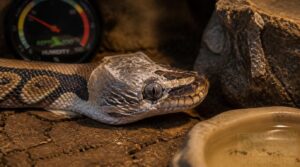
Retained shed rarely happens by accident, and the reasons usually trace back to something in the enclosure itself. Ecdysis depends on a precise combination of moisture, warmth, and physical conditions working together. Here’s what usually goes wrong when shedding doesn’t go as it should.
Low Enclosure Humidity
Dry air is often the real culprit behind stuck shed. Snakes need moisture to trigger the enzymatic separation of old skin, and low humidity stalls that process entirely.
Since surface moisture can throw off your readings, keeping tabs on how thermometers help prevent reptile illness ensures your humidity levels stay accurate enough to support a healthy shed.
- Poor hygrometer placement skews readings
- Room air seeping in lowers RH
- Dry substrate offers no moisture
- Sparse live plants limit transpiration
- Fluctuations over 10% RH add stress
Consistent humid hide access and careful monitoring make all the difference.
Poor Hydration
Hydration works from the inside out. Without enough systemic moisture, your snake can’t produce the shed separation fluids needed to loosen old skin, leading to skin elasticity loss and stuck shed at pressure points.
Think of dehydration as starving the process at its source—no amount of humidity fixes what nutrient-driven hydration should’ve handled first. Ongoing moisture shortfalls raise tissue necrosis risks if retained rings tighten unnoticed.
Incorrect Temperatures
Ecdysis is a heat-dependent process, so a habitat running even a few degrees off can stall shedding entirely. Thermostat calibration drift and heat source malfunctions create cold pockets or uneven basking spots, disrupting thermoregulation.
Poor thermal zonal variability, along with sensor accuracy issues, means your snake never reaches the metabolic threshold needed to loosen skin properly—correcting husbandry starts with reliable microclimate management.
Missing Rough Surfaces
Think of shedding as a physics problem, not just biology: without cork bark, rough rock, or textured branches, your snake has nothing to grip and pull against, so micro asperity contact never happens.
That missing friction coefficient variability means less tactile feedback during rubbing, leaving papery patches stuck. Even ideal humidity won’t fix retained shed if your enclosure feels smooth as glass.
Parasites or Illness
Sometimes stuck skin isn’t a husbandry problem at all—it’s a health one. Skin parasites like mites cause redness, scabs, and patchy dullness, while internal parasites drain nutrients, producing weight loss despite normal eating.
Watch for loose stool, lethargy, or Inclusion Body Disease signs. When retention persists despite correct humidity, ask your vet about fecal testing or skin cytology to rule out infection.
Safe At-Home Shed Help
Once you’ve spotted retained shed, you can take real steps at home to help your snake shed the rest safely. Most fixes center on restoring the moisture and texture your snake needs to finish the job naturally. Here are five ways to set your enclosure up for success.
Add a Humid Hide
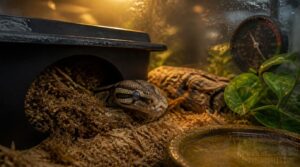
Give your snake a humid hide on the warm side of the enclosure, filled with damp sphagnum moss kept firm, not soggy.
Inadequate humidity is the leading cause of dysecdysis, so this microclimate management step matters.
Keep it large enough to turn around in, away from vents or lamps, and check moisture every 24–48 hours during shedding.
Offer Lukewarm Soaks
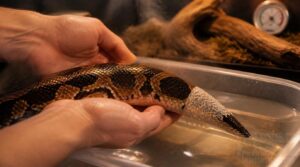
A humid hide controls ambient moisture, but stubborn patches often need direct water contact. Fill a shallow container with dechlorinated water between 77°F and 85°F, positioning the retained shed area for direct soaking.
- Keep soaks brief—5 to 15 minutes
- Watch for softening skin edges
- Avoid over-soaking, which irritates skin
- Support your snake gently throughout
- Dry thoroughly afterward to prevent chilling
Try a Damp Towel Box
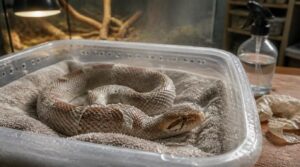
Not every snake tolerates a soak, and that’s where a damp towel box earns its place. Line a ventilated container with a moistened (not soaked) towel using dechlorinated water, then let your snake rest inside for 20 to 40 minutes.
This localized microclimate loosens dysecdysis without saturating the whole enclosure. Watch closely for gaping or restlessness, and remove the box if stress signs appear.
Improve Enclosure Texture
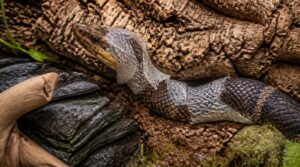
Rough surfaces matter as much as moisture. Cork bark, driftwood, and textured slate give your snake something to rub against during ecdysis.
Try mixing substrate with crushed walnut shell for microtopography, and rotate enrichment surfaces every couple weeks. Clean textures monthly with reptile-safe solutions.
- Coiling against rugged bark
- Sliding along ridged slate
- Pressing tail rings into gritty substrate
Never Peel Stuck Skin
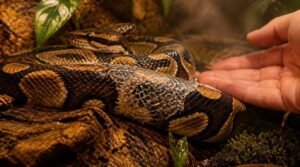
Resist the urge to pick, tape, or tweeze at stuck patches. Forceful removal trauma tears healthy tissue beneath dysecdysis-affected skin, risking bleeding, infection, and lasting skin barrier damage.
Instead, address root causes: inadequate humidity, poor hydration, missing texture. Let softening methods work naturally. Improper peeling consequences outweigh a slightly delayed shed—reptile skin integrity depends on patience, not force.
Retained Eye Caps and Tail Tips
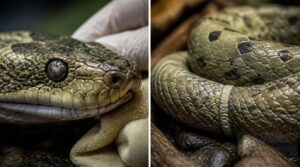
Two problem spots deserve extra attention when shed doesn’t come off clean: the eyes and the tail. Retained caps and tight skin bands aren’t just cosmetic issues, they can threaten your snake’s vision and circulation.
Here’s what to watch for, and where home care needs to stop and vet care needs to start.
Why Spectacles Matter
Your snake’s eyes have no lids—just a fixed transparent scale, the spectacle, that sheds along with everything else. When ecdysis stalls there, the retained cap dries rigid and cloudy, distorting light reflection and vision.
That’s a real navigation problem: a snake striking or hunting with obscured sight risks missed prey and higher stress, plus subspectacular infections if irritation sets in underneath.
Tail Constriction Risks
Picture a rubber band left on a growing tail—that’s basically what a constricting band of retained shed becomes. As the tail tip grows, the keratin ring stays fixed, compressing soft tissue underneath.
Like a rubber band on a growing tail, retained shed forms a constricting ring that squeezes the tissue beneath it
This mechanical pressure disrupts:
- Blood flow, causing edema and swelling
- Tissue oxygenation
- Skin integrity
- Normal healing capacity
Left alone, this progression risks ischemic necrosis—and eventually, auto-amputation.
Signs of Circulation Loss
How do you catch it early? Watch for pale skin indicators around the band — the tissue looks washed out and often feels cooler than surrounding scales, hinting at impaired blood flow.
Progressive band tightening brings localized tissue swelling above the ring, plus abnormal texture changes: dry, rough, sharply defined skin. Any discoloration or dehydration signs here warrant prompt veterinary assessment before skin integrity worsens further.
When Removal is Unsafe
Not every retained cap or tail ring calls for a home fix — some situations demand you stop and step back.
Once you see fluid, pale tissue, or a fully constricted band, pulling risks tissue tearing or eye surface damage. Dry peeling worsens dysecdysis rather than solving it.
- Watching your snake wince during handling
- Discoloration spreading up the tail
- Cloudy eyes that won’t clear
- Skin that smears instead of lifting
- Signs of circulation loss setting in
These warrant veterinary assessment, not another soak attempt.
Vet Care Priorities
Knowing where to draw the line makes all the difference between a quick fix and a costly emergency.
| Sign | Action | Cost |
|---|---|---|
| Retained eye caps | Vet exam | $80–$180 |
| Skin necrosis | Specialist referral | $700+ |
| Discharge or sores | Diagnostics/cytology | $50–$200 |
Retained shed near the eyes or tail isn’t cosmetic; it’s a triage signal. Watch for infectious dermatological issues and behavioral shifts, then seek veterinary assessment promptly.
Preventing Future Retained Shed
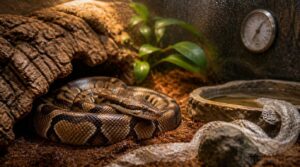
Once a stuck shed has been resolved, your attention should shift toward keeping it from happening again. Prevention comes down to a handful of consistent habits rather than any single fix. Here’s what should become part of your regular husbandry routine.
Track Humidity Daily
Rarely do keepers realize how much stuck shed traces back to inconsistent readings rather than truly low humidity. A digital hygrometer with logging catches hourly swings a glance never would.
Keep sensors away from misters, calibrate per manufacturer guidelines, and place a second unit in another microclimate. Logging humidity cycles this way, within that 40–60% baseline, turns guesswork into genuine reptile husbandry—not a shot in the dark.
Raise Humidity During Shed
Once your hygrometer confirms baseline readings, bump humidity to that 60–70% range right as shedding begins. A humid hide with damp sphagnum moss creates the microclimate needed for enzymatic separation.
Mist twice daily rather than once, and check substrate moisture retention so it stays damp, not soggy. Low humidity remains the top culprit behind stuck shed, so don’t wait for visible dulling.
Keep Fresh Water Available
Humidity gets the spotlight during shedding, but hydration from the inside out matters just as much. Dehydration stiffens skin and blocks separation fluids from forming properly.
- Use gravity-fed systems for constant access
- Choose ceramic, chip-resistant dishes
- Place away from heat sources
- Check for cloudiness daily
- Replace water to prevent contamination
Watch for tongue moisture and skin elasticity — key hydration monitoring signs signaling husbandry correction is needed.
Check Every Shed Skin
Shed integrity inspection after every cycle catches trouble before it becomes dysecdysis. Check eye caps for cloudiness, verify tail tip detachment, and confirm the skin came off in one piece.
| Body Part | Healthy Sign | Warning Sign |
|---|---|---|
| Eyes | Clear, glossy | Cloudy caps |
| Tail | Fully shed | Ringed skin |
| Body | Even sheen | Dull patches |
Tracking shedding patterns over time flags husbandry corrections early.
Clean The Enclosure Regularly
Rarely do keepers connect enclosure hygiene with shedding trouble, yet a dirty environment breeds the bacteria and mites that disrupt ecdysis. Effective cleaning rhythms matter: spot-clean daily, deep clean monthly, and follow substrate replacement cycles every 2–4 weeks.
Sanitizing decor items and dishes controls microbial growth, while maintaining water hygiene helps skin elasticity. Good husbandry correction starts with a clean microenvironment.
When to See Your Vet
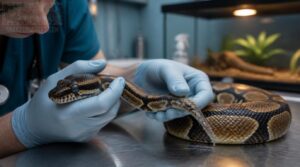
Most shed problems resolve on their own with a little humidity and patience, but some cases call for professional hands. Certain signs tell you the situation has moved past home care and into medical territory. Here’s what should send you straight to the vet’s office.
If you’re unsure whether your snake’s sluggishness is normal pre-shed behavior, brushing up on safe snake handling during the pre-shed stage can help you tell the difference between typical lethargy and something worth a vet visit.
Retained Eye Caps
Cloudy eyes after a shed should never be ignored — the spectacle scale protects the eye, and when it stays stuck, vision and comfort suffer. Watch for:
- Persistent cloudiness beyond normal shedding
- Bluish or milky film
- Head-shy behavior
- No improvement after 24-48 hours
Retained spectacles raise infection risk. Don’t attempt removal at home — this dysecdysis complication needs veterinary evaluation.
Tight Tail Bands
Ever notice a ring of skin cinched around your snake’s tail tip that just won’t budge? That’s a tight tail band — retained shed acting like a tourniquet, cutting circulation.
Watch for swelling, darkening, or paleness past the band. Left alone, poor husbandry and dehydration worsen constriction, risking necrosis. Never attempt mechanical removal yourself; call your vet if color changes appear.
Sores or Discharge
Discharge changes everything. Milky drainage signals purulent infection; clear fluid is normal serous healing. Watch for:
- Thick, opaque discharge with odor
- Persistent oozing after shedding
- Yellow-white crusting or slough
- Raw, worsening friction ulcers
These point to skin infection needing veterinary diagnostics — cytology or cultures, not home remedies. Schedule an exotic exam promptly.
Breathing Changes
Breathing changes deserve immediate attention. A snake stretching its neck upward, gaping repeatedly, or straining its ribs with each breath isn’t just uncomfortable — it’s struggling. Add noisy, wheezy inhales to the mix, and you’re likely looking at airway complications from dehydration or dysecdysis, possibly involving retained spectacles.
Skip the wait-and-see approach; these signs call for veterinary diagnostics right away.
Ongoing Appetite Loss
A snake that won’t eat is telling you something, even without a single visible mark. Dehydration makes swallowing harder, dysecdysis causes lingering discomfort, and vision loss from retained caps can suppress prey response.
If loss of appetite continues past the shed cycle, don’t wait it out.
- Check hydration and humidity
- Watch for tail swelling
- Minimize handling stress
- Schedule veterinary diagnostics
Frequently Asked Questions (FAQs)
Can you help a snake shed its skin?
A ball python with a stuck cap once regained clear vision after just one humid hide session. Yes — a lukewarm soak, added humidity, and rough textures can safely ease dysecdysis. Never peel skin; it risks trauma and infection.
When a snake sheds its skin, does it leave the area?
Not really. During ecdysis, shedding stays near the hiding spot, with skin often found in one piece nearby. Discarded fragments close to a hide usually signal normal shedding behavior, not relocation or dysecdysis-related distress.
Is it painful for a snake to shed its skin?
Good news first: normal shedding doesn’t hurt. The outer keratin layer lacks nerve endings, so old skin separates painlessly. Discomfort only creeps in when dysecdysis strikes—stuck eye caps or retained tail rings cause irritation, not true pain, unless dehydration or poor humidity complicates things.
Is it safe to touch shedded snake skin?
Not bare-handed. Salmonella contamination can linger on shed surfaces, so wear gloves, wash hands after, and disinfect counters. This applies especially to retained shed from snakes with dysecdysis, where eye caps and skin fragments may harbor more bacteria.
How often do healthy snakes normally shed skin?
Fast-growing juveniles often complete their shedding cycle every 2-3 weeks, while adults settle into a rhythm of 4-8 weeks, varying by species, metabolic rate, and seasonal shifts affecting the ecdysis cycle.
Can retained shed increase risk of infection?
Ever wonder why a small patch of stuck skin can spiral into a vet visit? Yes — retained shed traps moisture, encouraging bacterial biofilm growth and microbial skin invasion, while tight rings risk tissue necrosis, turning simple dysecdysis into real infection concerns.
Are certain snake species more prone to dysecdysis?
Yes. Ball Python Humidity drops trigger frequent dysecdysis, while Corn Snake Textures issues cause patchy sheds.
King Snake Temperatures inconsistencies delay shedding, and Viper Stress Factors or illness often mean retained eye caps despite good husbandry.
Does age affect a snakes shedding frequency?
As the old saying goes, you can’t rush a growing snake. Age drives ecdysis timing directly: hatchling molt cycles occur every 2-4 weeks, subadults shed every 4-8 weeks, while adults slow to 3-6 annual sheds, and seniors even less.
How long does a full shed cycle take?
A complete ecdysis cycle runs 7 to 14 days, with juveniles finishing faster than adults due to higher metabolic rate. Humidity between 60-70% shortens this window, while completion shows through clear eyes and one-piece shed skin.
Conclusion
An ounce of prevention beats a pound of cure, and nothing proves that faster than a snake fighting its own skin.
Snake retained shed skin isn’t cosmetic; it’s a warning about humidity, hydration, and husbandry gaps you can close today. Check the tail tip, check the eyes, act before dull patches become dead tissue. A hygrometer costs less than a vet visit.
Your snake’s next shed should slide off whole, leaving nothing behind but confidence.