This site is supported by our readers. We may earn a commission, at no cost to you, if you purchase through links.
That ammonia smell hitting you before you even open the enclosure lid? It’s not just unpleasant—it’s a warning sign. Anaerobic bacteria thrive in damp, poorly ventilated substrate, and by the time you catch the odor, waste has already been building for days.
Most keepers blame the snake. The real culprit is usually reptile substrate for odor control chosen without matching your species’ humidity needs, particle size, or moisture-wicking capacity.
Get the substrate right, though, and you get daily spot-cleaning instead of weekly deep-scrubs, stable microclimates instead of mold, and an enclosure that smells like nothing at all. Here’s what actually works.
Table Of Contents
- Key Takeaways
- Top 9 Odor-Control Reptile Substrates
- 1. Exo Terra Bioactive Volcanic Substrate
- 2. Natural Coconut Chip Reptile Substrate
- 3. Natural Coconut Fiber Reptile Substrate
- 4. Organic Coconut Chip Reptile Substrate
- 5. Sukh Natural Desert Sand Substrate
- 6. Natural Sphagnum Moss Reptile Bedding
- 7. Galápagos Aspen Digs Natural Bedding
- 8. Natural Coconut Coir Animal Bedding
- 9. Premium Natural Aspen Pet Bedding
- Best Substrates by Snake Habitat
- Odor Control Features to Compare
- Safe Substrate Buying Tips
- Keeping Snake Enclosures Fresh
- Frequently Asked Questions (FAQs)
- How to keep a reptile tank from smelling?
- What is repti fresh odor eliminating substrate?
- What helps eliminate odor from terrariums?
- What is the hardest smell to get rid of?
- Why does my reptile enclosure smell like ammonia?
- Can bioactive isopods and springtails fully control odor?
- How much drainage layer do bioactive tanks need?
- What causes rotten egg smells in reptile tanks?
- Can zeolite additives reduce ammonia in enclosures?
- Conclusion
Key Takeaways
- Match your substrate to your snake’s humidity needs—desert species require 20-40% humidity with sand-based substrates, while tropical species need 60-80% humidity with coconut-based materials that retain and slowly release moisture.
- Ammonia odor signals bacterial waste breakdown, so daily spot-cleaning, proper drainage (2-4 inches in bioactive setups), and good airflow (6-12 air changes hourly) prevent buildup before it starts.
- Avoid pine and cedar bedding entirely, since they release toxic volatile compounds and resins that irritate your snake’s respiratory system.
- Natural additives like activated charcoal, zeolite, and baking soda tackle odor at the molecular level through adsorption and pH buffering, offering more effective control than fragrance-based masking products.
Top 9 Odor-Control Reptile Substrates
Odor control starts with picking the right substrate for your snake’s specific setup, whether that’s a desert tank or a humid rainforest replica.
This guide to choosing the best snake tank substrates breaks down which materials trap moisture best and which dry out fast, so odors never get the chance to settle in.
Some materials absorb moisture fast and neutralize ammonia on contact, while others work best paired with proper ventilation and cleaning habits.
Here are nine substrates worth putting in your enclosure.
1. Exo Terra Bioactive Volcanic Substrate
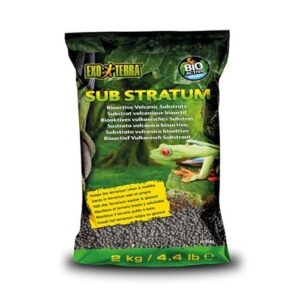
Pulled from soil near Japan’s Aso Volcano, this substrate packs live nitrifying bacteria and active carbon that break down waste continuously, provided moisture stays consistent. Its porous andesitic structure drains fast, so anaerobic pockets and that rotten-egg reek don’t get a foothold.
Start with a 2.5-5cm layer to kick-start bioactivity, and expect to do a partial rinse-and-refresh around the 12-month mark. It’s a solid pick for planted, self-sustaining setups where roots and microfauna need real nutrition, not just filler.
| Best For | This substrate is best for reptile keepers and hobbyists setting up bioactive, planted terrariums who want a self-sustaining ecosystem with healthy root growth. |
|---|---|
| Material Type | Volcanic soil |
| Odor Control | Ammonia elimination |
| Moisture Retention | High |
| Burrowing Support | Yes |
| Dust Level | Low |
| Format | Bagged soil |
| Additional Features |
|
- Porous andesitic/rhyolitic volcanic structure allows excellent aeration and drainage
- Supports nitrifying organisms that break down waste naturally
- Helps control ammonia buildup and unpleasant odors
- Intended for indoor use only
- Needs established biological activity to work as a self-sustaining system
- At just over 4 pounds per bag, larger enclosures may require multiple bags
2. Natural Coconut Chip Reptile Substrate
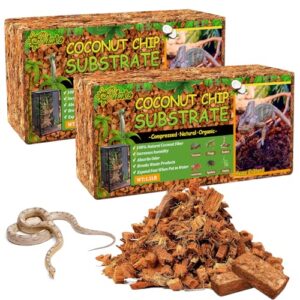
Coconut chip substrate works by staying loose and chunky, so tunnels hold their shape without collapsing on burrowing snakes. Chips absorb ammonia through their natural lignin and cellulose content, then slowly release moisture instead of dumping it all at once.
You’ll want to swap soiled chips weekly and pair this with spot cleaning. Particle sizes running 1-3cm keep impaction risk low, while the low compaction rate preserves airflow — no soggy, stagnant pockets forming underneath.
| Best For | Reptile and amphibian keepers who want a natural, expandable substrate for snakes, tortoises, frogs, and lizards that supports burrowing and humidity control. |
|---|---|
| Material Type | Coconut husk |
| Odor Control | Odor absorbing |
| Moisture Retention | High |
| Burrowing Support | Yes |
| Dust Level | Dust-free |
| Format | Compressed brick |
| Additional Features |
|
- Chunky texture holds burrow shapes while preventing scratches or cuts to your pet’s skin
- Naturally absorbs odors and manages moisture for healthier enclosure conditions
- Doubles as garden mulch or soil amendment once you’re done using it in the tank
- Requires manual hydration and periodic water spraying to stay effective
- Final usable volume depends on how much water you add, so results can vary
- Comes compressed, meaning some setup time is needed before it’s ready to use
3. Natural Coconut Fiber Reptile Substrate
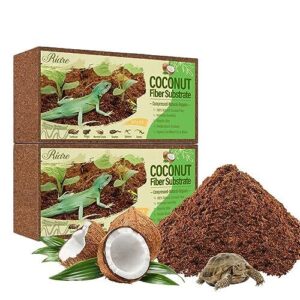
If chips give you structure, fiber gives you finesse — this ground-down version packs a finer, more absorbent texture that suits snakes needing steady humidity over burrow architecture.
Its porous makeup pulls moisture in fast, then releases it gradually, stabilizing your enclosure’s microclimate without soggy patches. Being pH neutral, it won’t irritate skin or scales.
Refresh full substrate every few months, spot-clean between. Skip fragranced or treated versions; plain fiber, rinsed for dust, is what keeps things safe and odor-free.
| Best For | This coconut fiber substrate is best for reptile, amphibian, and invertebrate keepers who need steady humidity and a fine, absorbent burrowing medium for pets like snakes, frogs, and hermit crabs. |
|---|---|
| Material Type | Coconut fiber |
| Odor Control | Odor absorbing |
| Moisture Retention | High |
| Burrowing Support | Yes |
| Dust Level | Dust-free |
| Format | Compressed brick |
| Additional Features |
|
- Retains and gradually releases moisture to keep humidity stable without soggy spots
- Naturally absorbs odor and waste while staying biodegradable and compostable
- Compressed brick format makes it easy to store and simple to rehydrate as needed
- Needs to be soaked in water before use, which adds prep time
- Expanded volume may not be enough to fully fill larger enclosures
- Requires periodic re-moisturizing and full substrate changes every few months to stay fresh
4. Organic Coconut Chip Reptile Substrate
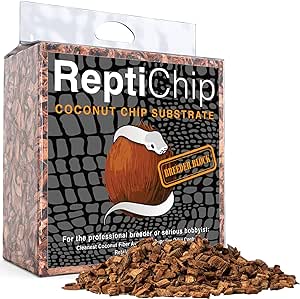
If fiber’s about finesse, chips bring back the structure — pure coconut husk pieces sized 1 to 3 centimeters, chunky enough to hold burrow shape while still doing serious odor work.
That larger surface area binds ammonia and organic odors effectively, and it dries slower than fiber, so humidity holds steadier for tropical species. Keep depth at 2 to 4 inches for layered filtration, spot-clean regularly, and skip the fillers. It’s basically a compromise substrate: burrow-friendly texture with fiber-grade odor control baked in.
| Best For | tropical reptile and amphibian keepers who want a burrow-friendly substrate that also keeps humidity and odors under control. |
|---|---|
| Material Type | Coconut husk |
| Odor Control | Odor absorbing |
| Moisture Retention | High |
| Burrowing Support | Yes |
| Dust Level | Dust-free |
| Format | Compressed brick |
| Additional Features |
|
- Chunky 1–3 cm coconut husk pieces hold burrow shape well
- Large surface area binds ammonia and organic odors effectively
- Dries slower than fiber, helping humidity stay steady for tropical species
- Compressed brick must be manually broken apart and expanded with water before use
- Requires regular spot-cleaning to maintain odor control
- Moisture levels need individual adjustment based on species needs
5. Sukh Natural Desert Sand Substrate
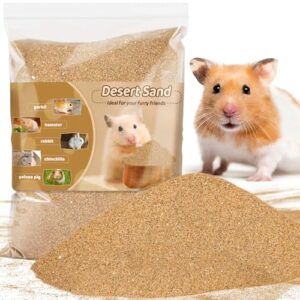
Ball pythons and other desert-adapted species need something that mimics home turf, and Sukh Natural Desert Sand delivers that arid microclimate without added dyes or chemicals. Its uniform, sifted grains conduct heat evenly and let urine moisture dissipate fast, which dilutes ammonia before it lingers.
For spot-cleaning between full changes, pair this sand with a routine like safely removing snake waste from substrate to keep ammonia levels low long-term.
Fine grade keeps impaction risk low for sensitive digestive systems. Spot-clean daily, replace every 1 to 3 months, and skip enclosures needing high humidity — this one’s strictly for dry to semi-dry setups.
| Best For | small rodents needing a dust-free dry bath and reptile, amphibian, or hermit crab owners setting up naturalistic, dry to semi-dry enclosures. |
|---|---|
| Material Type | Sand |
| Odor Control | Odor reducing |
| Moisture Retention | Low |
| Burrowing Support | Yes |
| Dust Level | Dust-treated |
| Format | Loose bag |
| Additional Features |
|
- Fine, sifted texture conducts heat evenly and lets moisture dissipate fast, helping dilute ammonia odors
- Specialized dust removal supports better respiratory and eye health for pets
- Soft, natural consistency encourages digging, rolling, and enrichment behaviors
- Not suitable for species or setups that require high humidity
- Needs daily spot-cleaning and full replacement every 1 to 3 months to stay hygienic
- Best suited to small animals and specific reptile environments, not a universal substrate
6. Natural Sphagnum Moss Reptile Bedding
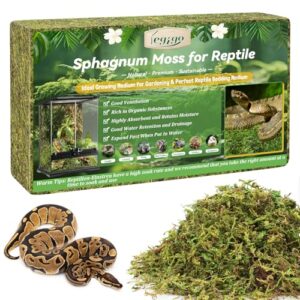
Humidity-loving species like ball pythons in shed cycle need moisture without stagnation, and sphagnum moss delivers exactly that. Soak it 10-15 minutes, squeeze until damp (never dripping), and you’ve got a microclimate that absorbs waste moisture while resisting mold.
Its fibrous structure traps odor between spot-cleanings better than loose substrates. Replace every 1-2 weeks, watch for compaction, and skip dyed or treated moss entirely — untreated sphagnum keeps your enclosure smelling like forest floor, not decay.
| Best For | reptile and amphibian keepers who need reliable humidity control for shedding, molting, and respiration-sensitive species like ball pythons and tree frogs. |
|---|---|
| Material Type | Forest moss |
| Odor Control | Odor neutralizing |
| Moisture Retention | High |
| Burrowing Support | Yes |
| Dust Level | Not specified |
| Format | Compressed brick |
| Additional Features |
|
- 100% natural, dye-free moss that’s safe for sensitive species and won’t introduce harmful chemicals
- Excellent moisture retention and odor neutralization thanks to its porous, fibrous structure
- Compressed brick form makes storage simple and lets you expand only what you need
- Requires prep time — soaking 10-15 minutes and squeezing to the right moisture level before use
- Needs frequent upkeep, including spot-cleaning and full replacement every 1-2 weeks
- Not a ready-to-use substrate, so it’s less convenient for keepers wanting a low-maintenance setup
7. Galápagos Aspen Digs Natural Bedding
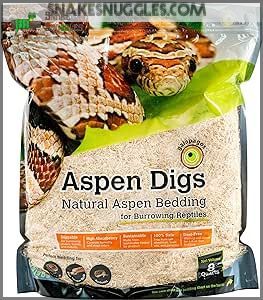
Eight quarts of washed, sieved aspen gives you low-dust bedding built for burrowers. The washing process strips salt, oils, and parasites before packaging, so ammonia buildup stays minimal even in glass or plastic enclosures.
Aspen fibers resist compaction naturally, which keeps airflow moving through the substrate instead of trapping stale pockets underneath. That’s ideal for snakes and lizards who like tunneling, though you’ll still want weekly spot-checks since it lacks the moisture punch of coconut-based options.
| Best For | This bedding is best for owners of snakes, lizards, hamsters, guinea pigs, and rabbits who want a natural, low-dust substrate that supports burrowing and nesting behaviors. |
|---|---|
| Material Type | Aspen wood |
| Odor Control | Odor control |
| Moisture Retention | High |
| Burrowing Support | Yes |
| Dust Level | Low-dust |
| Format | Loose bag |
| Additional Features |
|
- Made from 100% natural aspen wood with no added chemicals, oils, or resins
- Low-dust formula helps protect respiratory health for both pets and owners
- Strong moisture absorbency and odor control cuts down on how often you need to clean
- Not designed for aquatic or semi-aquatic setups
- Still needs regular spot cleaning to stay hygienic between full changes
- Doesn’t hold as much moisture as coconut-based substrates, so it may need more frequent monitoring in humid enclosures
8. Natural Coconut Coir Animal Bedding
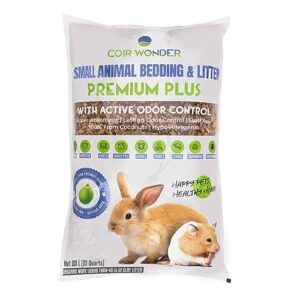
Coir absorbs several times its own weight in moisture while staying dry on the surface, which keeps ammonia from building up between spot-cleanings. That dryness-at-the-surface trait matters most if you’re housing ball pythons or other species prone to skin irritation from damp bedding.
It’s largely dust-free, expands into a soft, forest-floor texture once hydrated, and composts easily when you’re done. Neutral pH keeps things balanced long-term. Pair it with a charcoal pouch for sharper odor control in glass enclosures.
| Best For | Reptile keepers, small pet owners, and poultry keepers who want a natural, low-dust bedding that manages moisture and odor without added chemicals. |
|---|---|
| Material Type | Coconut husk |
| Odor Control | Charcoal odor control |
| Moisture Retention | High |
| Burrowing Support | Yes |
| Dust Level | Dust-free |
| Format | Loose bag |
| Additional Features |
|
- Absorbs moisture while staying dry on the surface, helping prevent ammonia buildup between cleanings
- Dust-free and chemical-free, making it gentle for sensitive species like ball pythons
- Fully biodegradable and compostable, so disposal is easy and eco-friendly
- Loose texture may not suit species that need a firmer or harder substrate
- Odor control relies on a separately included charcoal pouch rather than being built into the bedding itself
- Requires hydration to reach its ideal soft texture, adding a prep step before use
9. Premium Natural Aspen Pet Bedding
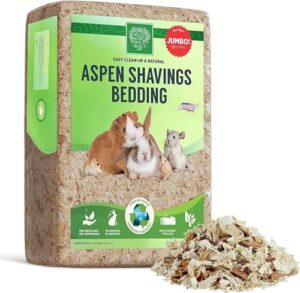
Kiln-dried and 99% dust-free, this aspen bedding gives you the softest nestable texture on the list without stirring up respiratory irritation for you or your snake.
It absorbs several times its weight, diluting ammonia before it turns into that telltale sour smell. Skip aromatic oils and splinters entirely here—this batch is processed clean.
Replace damp spots every 1-2 days, since aspen lacks the moisture-locking density of coconut husk. Great for ball pythons and colubrids in drier microclimates, less ideal for humidity-loving species.
| Best For | Reptile and small pet owners—especially those keeping ball pythons, colubrids, rabbits, guinea pigs, or chinchillas in drier environments—who want a soft, low-dust bedding that’s gentle on the lungs. |
|---|---|
| Material Type | Aspen wood |
| Odor Control | Odor control |
| Moisture Retention | Moderate |
| Burrowing Support | Yes |
| Dust Level | Low-dust |
| Format | Loose bag |
| Additional Features |
|
- 100% natural, heat-dried aspen with no dyes, chemicals, or artificial scents
- Low-dust formula supports better respiratory health for pets and owners alike
- Highly absorbent, helping neutralize odor before it sets in
- Damp or soiled spots need to be replaced every 1-2 days to avoid urine scald
- Doesn’t retain moisture as well as denser substrates like coconut husk, so it’s less suited to humidity-loving species
- Must be stored in a dry place, or it can lose its effectiveness
Best Substrates by Snake Habitat
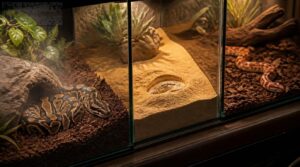
No single substrate works for every snake, since a ball python’s needs and a sand boa’s needs couldn’t be more different.
Your habitat’s humidity, burrowing behavior, and enclosure size all decide which bedding actually controls odor instead of making it worse.
Here’s how to match the right substrate to your specific setup.
Dry Desert-style Setups
Desert species don’t just tolerate dry conditions—they need them, targeting 20 to 40 percent humidity to stay healthy. Quartz sand and fine desert sand blends, sized between 0.5 and 2.0 millimeters, support burrowing without dust. Ground limestone buffers pH naturally.
Products like ReptiFresh curb ammonia in bare setups, keeping odor control tight while your reptile enclosure supplies stay dust-free and low-maintenance.
You can also use non-spiny cacti plants to improve the aesthetic of a desert terrarium.
Tropical Humidity-loving Snakes
Flip the script for rainforest species: you’re now chasing 60-80% humidity, not fighting it. Coconut husk earns its keep here, holding moisture and releasing it slowly to stabilize microclimate zones.
Add sphagnum moss patches for pre-shed hydration, branches for arboreal climbing space, and good ventilation—skimp on airflow and you’re inviting respiratory risks along with sluggish, humidity-driven appetite.
Burrowing Snake Species
Species built for tunneling need substrate that mimics packed earth, not loose fluff. Their fossorial snout shape pushes soil aside during natural digging and burrowing behavior, so a firm, moisture-retentive mix helps subterranean nesting stability and hunting tactics targeting soil-dwelling prey.
A coconut husk and cypress mulch mix, moderately dampened, holds tunnel walls together while resisting mold—critical for odor control in enclosures where waste sits underground longer.
Large Terrarium Needs
Scale changes everything once you’re managing 6-foot enclosures instead of 20-gallon tanks. Heavy duty stands rated for total weight capacity (glass, substrate, water) keep things stable, while reinforced access panels simplify cleaning without disturbing your snake.
Thermal insulation prevents heat loss across larger square footage. Pair this setup with modular filtration systems and a coconut husk-cypress mix for effective odor control and manageable substrate maintenance.
Bioactive Enclosure Compatibility
Once you’re running a full bioactive setup, your substrate has to feed a living system, not just soak up mess.
Waste decomposition depends on isopods and springtails surviving in coconut fiber-based mixes with stable pH, proper drainage layer design, and coarse texture that helps root penetration, nutrient cycling, and long-term microbiome health across your naturalistic enclosure.
Odor Control Features to Compare
Not every substrate fights odor the same way, and knowing why matters just as much as knowing which one to buy.
If you’re still weighing your options, this breakdown of how substrate liners actually help with odor control explains why some materials trap smells while others just mask them.
Some materials work fast on moisture, others hold their own against mold, and a few rely on additives that do the heavy lifting behind the scenes.
Here’s how the top contenders stack up across the features that actually keep your snake’s tank smelling clean.
Moisture Absorption Speed
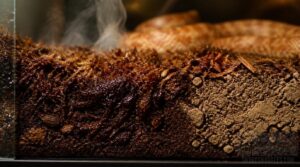
Not every substrate soaks up moisture at the same clip, and that speed determines how fast odors take hold. Fiber-based materials, like coconut chip and coir, absorb quicker than compacted or mineral substrates thanks to capillary action working through open pore networks.
Higher surface area ratios and warmer, humid conditions speed uptake further—though saturation timing means every substrate eventually hits its moisture retention limit.
Ammonia Reduction Potential
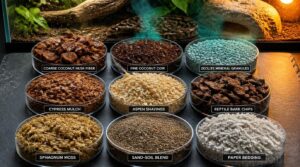
Because ammonia toxicity builds fast in sealed enclosures, your substrate’s chemistry matters as much as its absorbency. Porous surface area feeds microbial nitrogen cycling, letting bacteria drive nitrification-denitrification balance instead of dead-end fermentation.
Coconut-based substrates and mineral additives like zeolite boost ammonium ion adsorption through cation exchange capacity, binding NH3 before it volatilizes—real ammonia control, not just masked smell neutralization.
Mold and Fungus Resistance
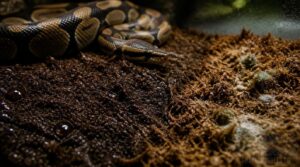
Since damp bedding invites trouble fast, mold resistance separates substrates you’ll fight all season from ones that just work. Porosity directly affects mold—dense coconut fiber resists fungal colonization better than loose, fibrous material trapping moisture.
Look for:
- Quick moisture wicking away from surfaces
- Antifungal additives creating hostile spore conditions
- Texture that discourages anaerobic decomposition pockets
Skip substrates smelling musty within days—that’s bacterial growth signaling poor hygiene protocols, not just bad luck.
Airflow and Compaction
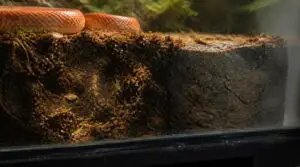
Picture a substrate so packed down it can’t breathe—that’s when trouble starts. Pore space reduction from dead weight raises substrate pressure drop, and vertical airflow resistance builds faster than horizontal layers.
| Compaction Level | Airflow Effect |
|---|---|
| Loose | Good gas diffusion |
| Packed | Ammonia buildup risk |
Fluffing daily maintains aeration channels, preventing anaerobic pockets where trapped moisture turns your enclosure sour.
Natural Odor-filtering Additives
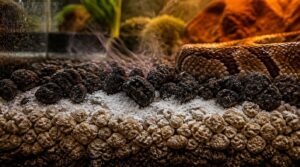
Not all substrate additives just mask smells—some actually break odors down at the molecular level.
Activated charcoal offers over 1,000 m²/g of surface area, trapping compounds before they escape. Baking soda buffers pH near 8.3-8.6, targeting ammonia. Zeolite’s ion exchange locks moisture and odor molecules together, while enzyme cleaners dismantle proteins.
Use essential oils sparingly—safety matters for sensitive species.
Safe Substrate Buying Tips
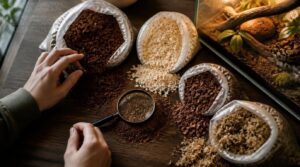
Not every bag labeled "reptile bedding" deserves a spot in your enclosure, and some can quietly put your snake’s health at risk. Before you buy anything, you need to know what to avoid, what to check, and what your specific species actually needs. Here are five buying tips that’ll keep you from making a costly mistake.
Avoid Pine and Cedar
Sweet-smelling wood chips can quietly poison your snake. Pine and cedar release volatile organic compounds and resins causing respiratory irritation; cedar’s thujone content is especially toxic when inhaled.
Sweet-smelling pine and cedar chips release toxic compounds that can quietly harm your snake’s respiratory health
Skip these:
- Pine shavings
- Cedar chips
- Scented wood blends
- Resin-heavy mulches
- Untreated softwood bedding
Choose coconut husk or aspen instead—proven safe for reptile husbandry and effective odor control without respiratory risk.
Watch Impaction Risks
Toxic fumes aren’t the only hidden danger—particle size safety matters just as much. Burrowing species sample substrate with their mouths, so coarse wood chips or crushed coral raise ingestion hazard risks fast.
Stick to fine coconut fiber or sphagnum moss, keep depth under 3 inches, and skip dusty bedding that irritates airways and triggers sneezing that dislodges swallowed particles.
Match Humidity Requirements
Particle size isn’t the only fit to check—moisture retention matters just as much. Tropical species need 70-90% humidity, so pick coconut fiber or sphagnum moss for substrate moisture-exchange. Desert dwellers want 30-50% RH, favoring sand mixes.
Track your microclimate with a calibrated hygrometer, since mismatched substrate creates humidity swings your snake simply can’t handle.
Choose Dust-free Bedding
Getting humidity right keeps your snake comfortable, but airborne dust can still trigger respiratory irritation even in a perfectly calibrated tank.
Look for microfiber or high thread count liners—they block particulates while resisting dust mites naturally.
Choose hypoallergenic fabric covers with moisture wicking to prevent dust mite proliferation.
Machine-washable, dust-free bedding protects your snake’s lungs between full substrate replacement cycles.
Consider Cleaning Frequency
Dust-free bedding buys you time, but it doesn’t replace a real substrate turnover schedule. Match cleaning cadence to species: burrowers need weekly surface checks, desert setups stretch to 6-12 weeks.
- Spot-clean daily, remove waste fast
- Run moisture probe tests weekly
- Log odors to spot patterns early
- Replace substrate every 3-6 months
Keeping Snake Enclosures Fresh
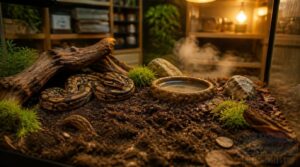
Picking the right substrate is only half the battle; keeping that enclosure fresh day-to-day is what actually keeps odors from creeping back in. A few consistent habits, done on the right schedule, make the difference between a tank that smells like forest soil and one that smells like trouble.
Here’s exactly how to build that routine, step by step.
Daily Spot-cleaning Routine
Five minutes a day beats a weekend scrub-down every time.
Scoop fresh waste immediately with dedicated waste removal tools, then wipe dishes and glass to stop biofilm before it forms. Blot damp spots dry, brush loose substrate from hides, and sanitize your tongs after each use.
Log the date and area cleaned—patterns in your daily log flag odor problems before they spiral.
Monthly Substrate Replacement
Every four to eight weeks, swap out loose substrates like coconut fiber before waste buildup turns into a hygiene problem.
Watch for compaction, slow drainage, or lingering ammonia—these signal it’s time.
- Check waste accumulation weekly
- Preserve microfauna in bioactive layers
- Sanitize decor between cycles
- Adjust frequency for breeding setups
Substrate replacement on schedule keeps odor control consistent and your reptile’s habitat genuinely healthy.
Prevent Damp Odor Zones
Musty corners rarely announce themselves until the smell’s already spread.
Keep relative humidity under 60%, and check moisture gradients weekly near hides and water bowls. Raise bowls on platforms to stop perpetual damp zones, and spot-clean wet substrate immediately to curb ammonia.
Coarser substrates dry faster than fine ones, cutting waste buildup and stagnant pockets that fuel odor.
Improve Tank Ventilation
Stale air holds odor like a sponge holds water, so cross ventilation matters as much as substrate choice. Place intake and exhaust vents on opposite sides to keep air moving, targeting 6-12 air changes hourly.
A small desiccant breather curbs condensation, while passive vents plus an occasional exhaust fan prevent dead zones—protecting both odor control and your snake’s respiratory health.
Odor Warning Signs
Your nose is your best diagnostic tool—learn its language. A sharp ammonia scent signals urine buildup and demands immediate spot-cleaning. Rotten egg smells mean anaerobic bacteria; replace substrate fully, don’t just fluff it.
Moldy odor cues point to trapped moisture, while metallic odor detection near feeding zones flags spoiled prey. Any sudden scent shifts warrant full substrate replacement—your snake’s respiratory health depends on it.
Frequently Asked Questions (FAQs)
How to keep a reptile tank from smelling?
Balance substrate moisture retention with airflow, spot-clean daily, and manage ammonia buildup before it starts.
Effective ventilation plus microfauna waste breakdown in bioactive setups keeps odors down naturally, and catching rotten smells early prevents full teardown cleans.
What is repti fresh odor eliminating substrate?
Think of it as kitty litter’s desert-dwelling cousin: ReptiFresh uses fine, sand-like mineral composition to trap and reduce odors through ammonia trapping, suits desert species like uromastyx, and needs zero perfumes—delivering up to 12 months of reliable habitat maintenance.
What helps eliminate odor from terrariums?
Combining microfauna waste breakdown, charcoal filtration, and zeolite ammonia trapping hits odor at the source.
Add enzyme cleaning during spot checks and regular substrate aeration, and your terrarium maintenance routine keeps ammonia control consistent without constant deep cleans.
What is the hardest smell to get rid of?
Ask any skunk-sprayed dog owner and they’ll say thiol residue wins the smell Olympics. But for terrariums, dried uric acid crystals rank hardest—crystallized ammonia that resists neutralization, mimicking nicotine’s stubborn grip on porous surfaces.
Why does my reptile enclosure smell like ammonia?
That sharp ammonia bite comes from bacterial metabolism breaking down urine and waste. Warm, humid microclimates speed decomposition cycles, spiking ammonia gas concentration.
Without daily spot-cleaning or bioactive microfauna managing waste breakdown, odor builds fast, threatening reptile health and habitat hygiene.
Can bioactive isopods and springtails fully control odor?
Not entirely. Your cleanup crew slows odor buildup by processing waste biologically, but overstocking, moisture imbalance, or waste surges outpace their capacity—requiring routine spot-cleaning, humidity checks, and substrate rotation alongside isopods and springtails for genuine odor control.
How much drainage layer do bioactive tanks need?
Ironic, isn’t it? The layer you never see does the most work. Your ideal drainage depth runs 2-4 inches, preventing anaerobic conditions while managing humidity, supporting microfauna, and keeping bioactive setups smelling like forest floor, not swamp.
What causes rotten egg smells in reptile tanks?
That rotten egg smell comes from hydrogen sulfide production, triggered by anaerobic bacteria breaking down waterlogged substrate and decaying organic matter.
Poor drainage traps moisture, starving oxygen flow, so full substrate replacement and better hygiene protocols are essential immediately.
Can zeolite additives reduce ammonia in enclosures?
Yes—zeolite adsorption captures ammonium ions fast, often within 1-2 hours.
Products like ReptiFresh Odor Eliminating Substrate use this mechanism, absorbing odors while proper application rates and substrate pH keep hygiene protocols effective long-term.
Conclusion
What’s really costing you—the smell, or the hours spent scrubbing tanks that never seemed clean anyway? Get the substrate matched to your species, and both problems disappear together.
That ammonia warning you noticed on day one becomes a non-issue when moisture-wicking, particle size, and airflow all work in your favor. Reptile substrate for odor control isn’t a luxury upgrade; it’s the foundation of a healthy enclosure. Choose it right once, and your snake’s home stays fresh for weeks, not days.