This site is supported by our readers. We may earn a commission, at no cost to you, if you purchase through links.
A snake’s skin tells you things it can’t say out loud. Some color shifts mean nothing at all, just an old shed clouding the eyes before it peels away clean. Others mean trouble is already spreading under the scales.
That’s what makes snake scale discoloration causes tricky to judge on sight alone. Red patches might signal scale rot digging into tissue, while a dull gray sheen could just be Tuesday’s shed cycle running its course. Get the two confused, and you either panic over nothing or ignore a real infection warning sign.
Knowing which is which starts with reading color, texture, and location together, not one in isolation.
Table Of Contents
- Key Takeaways
- Why Snake Scales Change Color
- Common Scale Discoloration Causes
- Habitat Problems Behind Discoloration
- What Different Colors May Mean
- Fixing and Preventing Scale Issues
- Frequently Asked Questions (FAQs)
- Will scale rot heal on its own?
- How to get rid of scale rot on snakes?
- What does scale rot look like on snakes?
- Can snake scales change color?
- How long does scale discoloration take to heal?
- Can scale discoloration spread between snakes in different tanks?
- Is scale discoloration painful for snakes?
- Will discolored scales return to normal after shedding?
- How can I tell if discoloration is contagious?
- Conclusion
Key Takeaways
- Distinguishing normal shedding dullness or stress-related color changes from true infection requires reading color, texture, and location together rather than judging color alone.
- Red discoloration, yellow crusting, white patches, or black necrotic tissue on scales typically signal active infection (scale rot, fungal growth, or bacterial invasion) that needs prompt treatment rather than waiting it out.
- Habitat conditions like excess humidity, dirty substrate, low basking temperatures, poor ventilation, and sharp decor are common root causes of scale discoloration and infection risk.
- Effective treatment involves quarantining the snake on paper towels, gently cleaning affected scales, correcting humidity and heat, disinfecting the enclosure, and calling a vet immediately if discoloration spreads quickly or is accompanied by lethargy or labored breathing.
Why Snake Scales Change Color
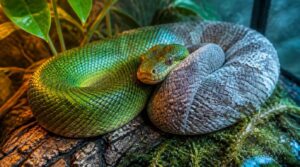
Your snake’s scales can shift color for a handful of different reasons, and not every change means trouble. Some are perfectly normal, while others signal something you need to address fast. Here’s what’s actually going on beneath those scales.
If you notice unusual color shifts alongside a lack of bowel movements, it’s worth reading up on common reasons your snake won’t poop before assuming the worst.
Normal Shedding Dullness
Every spring and autumn, you’ll likely notice your snake’s scales losing their usual gloss — that’s ecdysis at work, not disease. As new skin forms beneath, old cells push outward, dulling the coat. Watch for eye cap clouding first.
Dry air worsens dullness, so keep moisture balanced.
Once shedding finishes, expect post-shed brightness and restored skin integrity naturally.
Stress Color Changes
Not all dulling comes from shedding. If you spot darkening or a flush of red discoloration after a vet visit or cage move, that’s often stress talking. Melanophores shift pigment fast, triggered by hormonal signaling — reversible once things calm down. Captive-bred snakes react more visibly. Watch for lethargy alongside color shifts; that combo, plus temperature fluctuations or poor humidity control, warrants closer temperament assessment.
Research shows that elevated corticosterone levels can noticeably alter skin coloration in reptiles.
Injury-related Darkening
Stress isn’t the only culprit behind color shifts. A hard strike against decor or a rough feeding response can bruise tissue, turning scales red, then purple within 24 hours as blood pools. By day 3, expect blue-black darkening from hemoglobin breakdown.
- Larger impacts mean darker, longer-lasting bruises
- Watch for swelling near the injury
- Microabrasions invite bacteria fast
Infection Warning Colors
Bruising fades on its own, but infection colors don’t wait around.
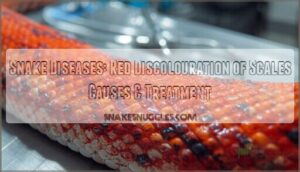
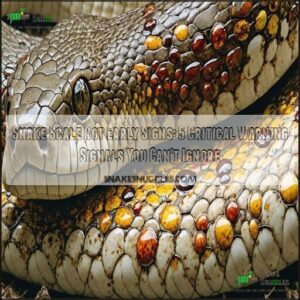
Red discoloration on your snake’s scales signals active inflammation, often with oozing centers — scale rot in its early stage. Yellow crusting means pus. White patches point to fungal overgrowth. Green suggests biofilm. Black tissue is necrotic. Left untreated, any of these risk septicemia.
Species Color Variation
How do you know if that odd hue is just genetics? Genetic pigment drivers control melanin and pattern, so morphs vary naturally by species and even by locality through geographic isolation.
Ontogenetic color shifts happen as juveniles mature. Diet-driven carotenoid influence adds reds and yellows. Sexual dimorphism patterns show up in breeding season.
None of this causes skin lesions or threatens skin integrity.
Common Scale Discoloration Causes
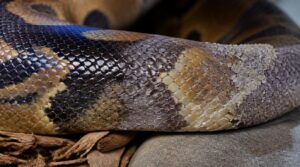
Once you know discoloration signals a problem, the next step is figuring out what’s actually causing it. Several culprits show up again and again in pet snakes, from bacteria to mites to simple nutrient gaps. Here’s what usually triggers those color changes on your snake’s scales.
Scale Rot Bacteria
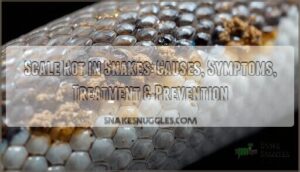
Bacteria don’t wait for an invitation — they exploit any weak spot in your snake’s skin. Scale rot begins when bacteria breach damaged tissue, secreting enzymes that break down cells and burrow under ventral scales. Left untreated, it spreads into ulceration, foul odor, and necrotic tissue. Worse, untreated infections risk septicemia. Dirty, moist substrate acts as a bacterial reservoir, so environmental management matters as much as treatment.
Poor shedding conditions often go hand-in-hand with scale rot, so it’s worth reading up on causes and treatment for dysecdysis while you clean up your snake’s habitat.
Bacteria don’t wait for an invitation—they exploit any weak spot to breach skin, breed under scales, and risk fatal septicemia if untreated
Fungal Skin Infections
Fungal skin infections often follow bacterial scale rot, since damaged tissue and prolonged microbial growth invite secondary invaders.
Ophidiomyces ophiodiicola causes crusty, pustular lesions, especially near the head.
Keratin-targeting dermatophytes and yeast thriving in warm, damp folds worsen discoloration and irritation.
Left untreated, fungal spread increases transmission risks and demands weeks of antifungal treatment—far longer than typical bacterial infections need to clear.
Snake Mite Irritation
Snake mites (Ophionyssus natricis) are tiny ectoparasites that puncture skin to feed, causing inflammation at attachment sites—especially the gular region, periocular folds, and lower jaw.
Feeding-induced inflammation triggers redness, dysecdysis, and excessive soaking behavior as your snake tries drowning mites.
Watch for:
- Black flecks (drowned mites) in water
- Restlessness
- Anemia symptoms
- Retained shed
- Visible skin lesions
Thermal Burns
Hot rocks and unregulated heat pads can char skin in minutes, not hours.
Protein denaturation starts fast, creating a coagulation zone that whitens or blackens scales permanently. This happens when your snake’s thermal gradient breaks down—no cool zone to escape to.
Superficial burns redden; deeper ones blister or char, risking systemic shock. Immediate cooling with cool water helps, but call a vet. Prevent this with a properly thermally regulated habitat and daily temperature checks.
Vitamin a Deficiency
Not all discoloration comes from an outside attacker—sometimes the problem starts on your snake’s dinner plate. A diet missing vitamin A disrupts epithelial keratinization, causing dull, flaky patches and weakening skin integrity.
Watch for:
- Retained shed
- Cloudy eyes
- Respiratory infections
These signal mucosal barrier breakdown and immune suppression, threatening dermal homeostasis and overall metabolic health.
Habitat Problems Behind Discoloration
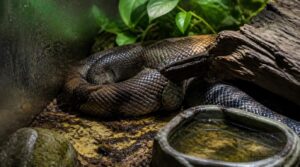
Sometimes the discoloration isn’t coming from your snake at all. It’s coming from the enclosure around it. Here are five habitat problems worth checking first.
Excess Enclosure Humidity
Ever wonder why your tank’s glass keeps fogging up? That’s humidity creeping past safe limits, and it’s often the first sign of trouble.
When levels climb too high, condensation forms on cooler surfaces, feeding microbial growth and softening ventral scales. You’ll spot red discoloration setting in fast. Excess humidity invites scale rot within days—keep a calibrated hygrogrmeter checked regularly, since drift causes silent damage.
Damp Dirty Substrate
Foggy glass tells only half the story—what’s under your snake matters just as much. Damp dirty substrate traps waste and moisture together, feeding scale rot bacteria. Porous materials like coconut fiber hold dampness long after the surface looks dry.
- Mold spore risks rise fast
- Microbial load climbs unseen
- Retained shed worsens
- Enclosure hygiene slips
Swap substrate every 1–3 months.
Low Basking Temperatures
Substrate isn’t the only culprit—cold enclosures cause just as much trouble. If your basking spot dips below 26°C, metabolic slowdown follows fast, and digestion impairment shows up as poor appetite. Insufficient temperature disrupts your snake’s thermally regulated habitat, wrecking the temperature gradient it needs. Watch for inactive basking behaviors and circadian rhythm disruption—both signal thermoregulation struggles requiring immediate correction.
Poor Ventilation
Cold spots aren’t the only threat—stale air compounds the problem fast. Low air exchange rates let ammonia buildup and microbial spores collect in stagnant zones, especially corners with poor circulation.
This raises humidity control issues and thermal distribution problems simultaneously.
- Elevated humidity near enclosure walls
- Ammonia irritating softened scales
- Stagnant air zones behind decor
- Uneven heat spread
- Microbial spore accumulation
Sharp Cage Decor
Where’s that red discoloration coming from? Often, it’s a jagged rock edge or splintered branch you never suspected.
| Decor Type | Risk Level |
|---|---|
| Rough resin caves | High |
| Sanded driftwood | Low |
| Sharp plastic plants | High |
| Smooth stone | Low |
Damaged scales invite bacteria fast. Run your fingers over every piece before placing it—smooth decor selection protects skin barrier integrity.
What Different Colors May Mean
Color is one of the fastest clues your snake gives you when something’s wrong. Different shades point to different problems, from simple irritation to serious infection. Here’s what each color pattern usually tells you.
Red Irritated Belly Scales
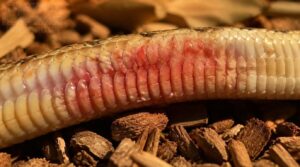
Pink to red patches on your snake’s belly are usually the first visible sign of ventral inflammation, showing up on the ventral scales of the mid to rear body. Check for warmth, tenderness, or foul odor—early clues distinguishing simple irritation from scale rot or vesicular dermatitis.
- Substrate abrasion
- Poor thermal gradient
- Bacterial buildup
- Excess humidity
- Handling injury
Address causes within 7–10 days to prevent worsening red or brown discoloration.
Brown or Black Patches
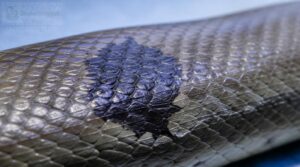
Ever wonder why one dark patch matters more than another? Context is everything here.
Simple substrate staining wipes away with cleaning; bacterial tissue necrosis doesn’t. Bruised scales heal evenly, while scale rot shows sharp, spreading edges with foul odor and mushy tissue. Mite-induced scratching leaves scattered marks along scale rows. Persistent patches, especially raised or crusty scales, warrant veterinary wound management before bacterial infections spread deeper.
Yellow Crusting Areas
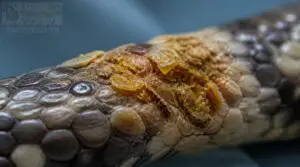
That crumbly yellow flaking isn’t just dirt — it’s dried exudate, a mix of serum, bacteria, and cellular debris sitting over healing skin. It’s normal after shedding, but if it persists, smells foul, or sits atop raised scales, you’re likely looking at scale rot or fungal infection.
Monitor crust persistence closely; if it doesn’t clear within days, schedule veterinary wound management.
White Burn Marks
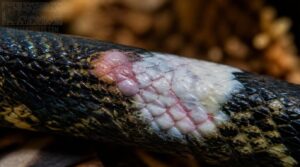
Chalky, pale patches on your snake’s scales usually mean heat got there first. Thermal protein denaturation destroys pigment cells, cutting off capillary flow and leaving scar tissue behind instead of normal color.
Sharp white borders point to localized burns; surrounding redness suggests vesicular dermatitis or blister disease. Don’t pop blisters yourself. Clean gently, watch for spreading, and get veterinary wound management if the area doesn’t improve within a week.
Dull Retained Shed

A grayish film that won’t lift usually means moisture fell short during shedding. Humidity balance is the fix: raise it to 60-70%, add a damp hide, and soak your snake 10-20 minutes to loosen stuck patches.
Check eye caps closely — retained ones risk corneal damage. Skin barrier integrity depends on proper substrate and hydration, not forced peeling.
Fixing and Preventing Scale Issues
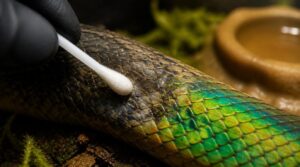
Once you’ve spotted discoloration, quick action makes all the difference. You don’t need to panic, but you do need a plan that moves from cleanup to correction. Here’s what that plan looks like, step by step.
Quarantine on Paper Towels
Isolating a discolored snake stops the problem from spreading. Quarantine your snake on plain paper towels instead of loose substrate, since it’s disposable and easy to inspect.
Replace towels daily, or sooner if damp, and seal used ones in a lined bin. Disinfect surrounding surfaces after each swap and dispose of waste per local sanitation protocols to prevent cross-contamination.
Clean Affected Scales
Once your snake’s on paper towels, clean the affected scales directly. Use lukewarm water with a soft cloth, adding diluted chlorhexidine or a five-minute Betadine soak for red discoloration signaling scale rot.
Skip scrubbing; it causes micro-tears. Pat dry fully, then monitor 24-48 hours for returning color changes before proceeding to enclosure fixes.
Correct Humidity and Heat
Once scales look clean, shift focus to the environment causing the problem. Keep humidity between 40 and 60 percent daytime, checking your hygrometer at mid-enclosure height for accurate readings.
Maintain a basking spot of 28-32°C with a stable thermal gradient, and a cool zone of 22-26°C. Insufficient temperature slows healing, so verify with multiple thermometers before proceeding.
Disinfect The Enclosure
Fixing humidity and heat won’t help if the enclosure itself stays contaminated. Clean first, then disinfect—these are separate steps, not one.
- Scrub debris, rinse, apply disinfectant with correct contact time
- Use proper dilution, not "stronger is better"
- Rinse thoroughly to prevent residue
- Dry completely before return
- Keep tools reptile-only, preventing cross-contamination
Daily spot cleaning plus weekly deep cleans keep conditions sanitary long-term.
Call a Reptile Vet
Some cases outrun home care fast. If discoloration spreads within hours, or you notice open-mouth breathing and lethargy, call a vet immediately—these signal possible septicemia.
Have your symptom report ready: species, temperatures, humidity, and when color changes began. Expect skin scrapes or cultures for clinical diagnosis. Transport calmly in a warm, secure container. Deep ulcers need real veterinary intervention, sometimes antibiotic therapy you simply can’t replicate at home.
Frequently Asked Questions (FAQs)
Will scale rot heal on its own?
No, watchful waiting won’t fix it. Scale rot needs active treatment—correcting humidity, cleaning affected areas, and sometimes antibiotic therapy.
Left alone, bacterial infections spread deeper, risking tissue damage and complications that early intervention could’ve easily prevented.
How to get rid of scale rot on snakes?
Quarantine on paper towels, then soak in a 1:3 Betadine dilution for five minutes daily. Dry thoroughly, apply antibiotic ointment, control humidity, and disinfect the enclosure. Persistent cases need veterinary intervention before bacterial infections spread further.
What does scale rot look like on snakes?
Scale rot starts as ventral scale discoloration—red, brown, or blackened patches—with raised scales, fluid-filled blisters, pus and oozing, and necrotic tissue signs in severe ulcerative dermatitis.
Early red discoloration on your snake’s scales signals inflammation worth treating fast.
Can snake scales change color?
Yes — color shifts happen naturally through ontogenetic pigment shifts, camouflage adaptation, thermal pigment absorption, stress-induced blanching, and post-shed vibrancy.
But red discoloration on your snake’s ventral scales, raised scales, or unusual discoloration often signals scale rot, not normal change.
How long does scale discoloration take to heal?
Mild cases fade in 1 to 2 weeks; bacterial scale rot needs 2 to 6 weeks of antibiotic therapy. Regeneration timelines vary by severity—full color normalization can take up to 3 months, so monitor recovery closely and consult a vet if unchanged.
Can scale discoloration spread between snakes in different tanks?
Two tanks apart, one shared towel: that’s how trouble travels. Direct contact rarely spreads it, but cross-tank contamination happens through dirty tools, hands, or damp substrate carrying bacterial pathogens between enclosures without proper equipment disinfection protocols.
Is scale discoloration painful for snakes?
It can be, if scale rot, blistering, or ulceration accompanies it. Watch for swelling, tenderness, reduced movement, or appetite loss — these distress behaviors signal pain, especially with chronic infection or noticeable locomotion changes during severe discoloration episodes.
Will discolored scales return to normal after shedding?
Often, like a snake shedding its old skin to reveal a brand-new self underneath. Superficial dulling on ventral scales usually clears up post-shed, restoring skin barrier integrity.
Persistent discoloration across multiple sheds signals a deeper cause needing veterinary evaluation.
How can I tell if discoloration is contagious?
Watch for oozing lesion signs, foul odor, or rapid spread — hallmarks of scale rot and secondary bacterial infections risking septicemia.
Firm bumps suggest viral spread.
Quarantine your snake immediately, monitor symptom spread, and prevent cross-contamination through shared hides, bowls, or towels.
Conclusion
So how do you tell a bad shed from a real problem? Trust the pattern, not the panic. Most snake scale discoloration causes trace back to humidity, hygiene, or a shed cycle running its course, and each leaves its own signature in color and texture. Learn that signature, and you’ll catch trouble early.
Fix the habitat, watch the scales, and call your vet when color turns to concern. Your snake’s skin keeps talking. Now you know how to listen.