This site is supported by our readers. We may earn a commission, at no cost to you, if you purchase through links.
That crusty, gray patch clinging to your snake’s tail? It’s not decoration. It’s retained shed, and left alone, it can cut off circulation like a rubber band left on too tight.
Most keepers spot the problem only after the tail tip swells or an eye cap clouds over for days. By then, you’re playing catch-up instead of prevention. The fix isn’t complicated, but it does demand the right humidity, the right touch, and knowing when to stop pulling and start soaking.
Get those snake skin leftover removal tips right, and you’ll turn a stressful ordeal into a five-minute routine your snake barely notices.
Table Of Contents
- Key Takeaways
- Identify Leftover Shed Before Removal
- Rehydrate Stuck Snake Shed Safely
- Remove Retained Skin Without Injury
- Prevent Leftover Shed Next Time
- Seek Veterinary Help for Complications
- Frequently Asked Questions (FAQs)
- What can I do with shedded snake skin?
- How long does a shedded snake skin last?
- Is it safe to touch shedded snake skin?
- How to get snake skin off?
- How long can retained shed safely stay on?
- Can stuck shed heal or fall off on its own?
- Does diet affect how well a snake sheds?
- How often should sheds be checked for problems?
- Can stress cause repeated shedding problems in snakes?
- Conclusion
Key Takeaways
- Never yank dry retained shed—soak your snake in lukewarm water and gently rub with damp fingers along the scale direction instead.
- Raise humidity gradually (toward 70-80%) using a hygrometer, humid hide, or shedding box to soften stuck skin before you try removing it.
- Watch cloudy eyes, swollen tail tips, or discharge closely, and call a vet if cloudiness lasts past 48 hours or drainage appears.
- Prevent future stuck sheds by matching humidity to your snake’s species, keeping fresh water available, and adding rough surfaces for natural rubbing.
Identify Leftover Shed Before Removal
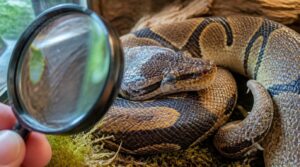
Before you touch a single piece of retained skin, take a good look first. Not all leftover shed looks the same, and some spots hide bigger problems than others. Here’s exactly what to check before you start the removal process.
If you spot torn scales or stuck patches that won’t budge, it’s worth learning the signs of a sick pet snake before continuing.
Inspect The Shed Skin
Grab a flashlight and take a slow look at that leftover shed. Retained skin looks dry, papery, and opaque, not smooth like healthy scales underneath. Run a finger along the body, checking for wrinkled edges or curled patches where moisture missed the mark. This quick shed skin check tells you exactly where to focus your rehydration efforts next.
Shed skin samples can serve as non-invasive vouchers for species identification in wildlife surveys, as noted in studies on shed snake skin identification.
Check Eyes and Tail Tip
Once you’ve scanned the body, zero in on two trouble spots: the eyes and tail tip. Cloudy eye caps signal retained shed blocking clear vision. Check the tail tip for a tight, darker band—early sign of tail tip retention.
- Eyes that look permanently squinted
- A tail tip that’s swelling or discolored
- Shed that won’t budge near the eye cap
Locate Dry Body Patches
Eyes and tail checked, now run your fingers down the body. Dry patches feel harder, matte, almost crusty—like old glue. Try the scale flexibility test: press gently; rigid scales crack instead of bending. Tilt the shed under a lamp for light reflection analysis—dull spots absorb light where healthy skin gleams. That contrast means dysecdysis.
Watch for Swelling or Redness
Beyond dry patches, check for swelling or redness—early signs of trouble brewing underneath. Fluid-filled blisters near the head or neck, warmer than surrounding skin by a degree or two, point to trapped moisture. A sharp red border, especially with crackling, glossy skin, suggests edema.
Photograph daily. Persistent redness past 48 hours, or any odor or pus, means it’s vet time.
Rehydrate Stuck Snake Shed Safely
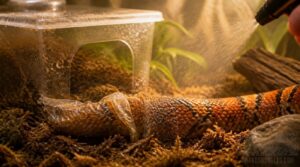
Dry, stuck shed won’t budge with force, but it will with moisture. Think of it like softening old tape before you peel it off a wall. Here’s how to bring the humidity back up, step by step.
Raise Humidity Gradually
Think of humidity like turning up a shower slowly, not blasting cold water. Start around 50 percent, easing toward 70 over several days.
Use a digital hygrometer at eye level, checking twice daily. Match targets to your species—desert snakes need less.
This gradual humidity increase prevents respiratory stress while softening stuck shed safely.
Prepare a Humid Hide
A shedding box works wonders here—grab a plastic tub with a snug lid and one small entry hole.
Line the box with damp moss or paper towels to boost humidity, since proper moisture is one of the key fixes for stubborn ball python sheds.
Container Selection Criteria: smooth edges, tight fit, easy cleaning.
Pack it with damp sphagnum moss or cypress mulch, keeping humidity levels between 70-80%. Use a hygrometer for monitoring, and check daily.
Offer a Lukewarm Soak
Sometimes a humid hide just isn’t enough, and that’s your cue for a soak. Fill a shallow tub with lukewarm water, 90-100°F, keeping the head clear. Let your snake sit 5-15 minutes—soaking behavior like gentle swimming is normal.
This softens patches left from incomplete shedding, prepping skin for the next step without shocking it.
Use Damp Paper Towels
Grab a paper towel, dampen it, and gently rub stubborn patches after soaking. This loosens retained skin without scraping delicate scales raw.
- Provides gentle skin cleaning on tricky spots
- Offers controlled moisture control for precise work
- Disposable, so no cross-contamination between sheds
- Helps lift patches from incomplete shedding fast
Work along the belly and tail—problem zones for skin retention.
Keep Temperatures Stable
A wobbly thermal gradient stresses your snake right when it needs calm. Keep the warm side at 85-90°F and the cool side at 75-80°F, with a stable basking zone your snake can trust.
Calibrate thermostats monthly. Skip nighttime temperature drops during shedding—consistency beats perfect results, and steady heat keeps that stuck skin softening on schedule.
Remove Retained Skin Without Injury
Once the shed is hydrated, removal is all about technique, not force. Get this part wrong, and you risk tearing skin or hurting your snake underneath. Here’s how to do it safely, step by step.
Rub With Scale Direction
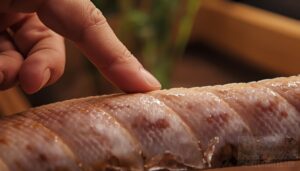
Think of scales like shingles on a roof—rub the wrong way and you’ll lift, not smooth. Always stroke head to tail, following scale growth alignment.
- Use gentle pressure, about the weight of a fingertip
- Rub each spot 10-15 seconds, pause, repeat
- Keep your hand position steady, thumb resting lightly on top
Stop if your snake hisses—that’s your cue to back off.
Let Snake Move Through Towels
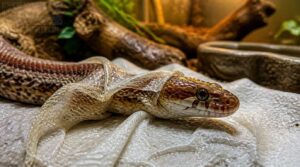
Sometimes your hands aren’t the best tool. Lay damp paper towels in the enclosure and let your snake move through them on its own.
Natural shedding aid works through friction and moisture combined—towel friction loosens edges while dampness softens what’s left. This self-guided path often finishes the shedding process better than manual rubbing, especially for spots you can’t reach safely.
Brush Hydrated Patches Gently
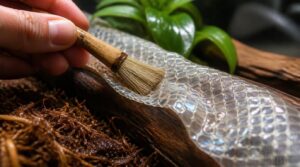
Once towels loosen the edges, switch to a soft brush technique for what’s left. Brush gently in scale direction only—never against it.
Use light contact technique, not scrubbing. Check moisture as you go; moist coconut husk nearby keeps patches pliable.
Good patch release timing matters: hydrated skin lifts easily. Dry skin won’t. Stop if it resists.
Never Pull Dry Skin
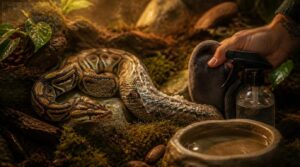
That patch not budging? Leave it. Avoid dry pulling—it tears ventral scales up to 2 cm, exposing tissue and risking infection.
- Bleeding capillaries
- Aeromonas exposure
- Sensory pit damage
- 24–48 hr immune dip
Re-soak instead. Patience beats brute force every time—your snake’s skin isn’t wrapping paper.
Patience beats brute force—your snake’s skin isn’t wrapping paper to be torn away
Avoid Peeling Eye Caps
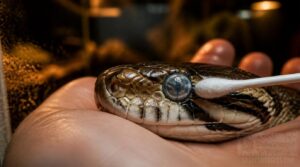
Eyes need extra caution—never peel a stuck eye cap like plastic wrap. Rely on Warm Moist Application and gentle rubbing instead.
| Sign | Action |
|---|---|
| Cloudy eye | Soak, wait |
| Clear eye | Detached |
| Still opaque 48hrs | Call vet |
Retained caps cause incomplete shedding. Patience protects vision—your snake’s eyes aren’t cellophane to unwrap.
Prevent Leftover Shed Next Time
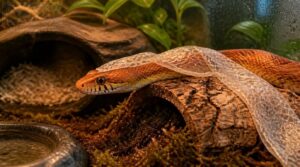
A stuck shed is annoying to fix, but it’s easy to prevent. Most causes trace back to the same handful of setup issues in your snake’s enclosure. Here’s what to check and adjust so next shed cycle goes off without a hitch.
Match Humidity to Species
A desert species baking at 30% humidity sheds fine; a rainforest python at that same level won’t. That’s Species Specific Humidity in action. Skip the one-size-fits-all number and match speciesspecific ranges instead.
Use Digital Hygrometer Placement at snake level, adjust misting or vents, and build a real Humidity Gradient Design—not guesswork.
Provide Fresh Drinking Water
Since hydration works from the inside out, keep that water dish full and fresh daily. Use treated, potable water—same standard you’d drink yourself—and rinse the bowl often to prevent bacterial buildup.
Good water quality maintenance helps shed health directly. A well-hydrated snake sheds cleaner, with fewer stuck patches needing rescue later.
Add Safe Rubbing Surfaces
Give your snake something rough to lean into. A rubber mat with raised nubs near the warm side, or cork bark, lets it rub freely. Felt cloths and untreated wood chips work too—just clean surfaces daily, ditch worn ones, and skip anything with sharp edges or loose fibers.
Choose Moisture-Friendly Substrate
Think of substrate as your snake’s humidity battery. A 60/40 coconut coir and orchid bark mix stores moisture while draining well. Coconut coir holds more water than peat, cutting dry patches fast.
Add a sphagnum moss hide for humidity pockets. Swap substrate every 6-12 months, or when it looks compacted or smells off.
Limit Handling During Shed
Handling isn’t a bonding exercise right now—it’s a stressor. Cap sessions at 5 minutes daily, same time each day.
- Opaque, cloudy eyes
- Restlessness or hiding
- Skin dulling
- Refusing food
- Rubbing on décor
Skip the 48-72 hour shedding window entirely. Watch tongue-flicking and dilated pupils—those signal stress hormones spiking. Distance builds trust; patience prevents torn shed.
Seek Veterinary Help for Complications
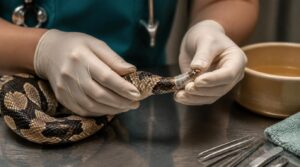
Most stuck shed problems clear up with a good soak and a little patience. But some situations need more than a warm bath and a soft towel. Here’s when it’s time to call your vet instead of handling it yourself.
Retained Eye Caps
Cloudy eyes lingering past 48 hours? That’s a retained eye cap, and soaking alone won’t always fix it.
Don’t attempt eye cap removal with mineral oil or tweezers yourself—untrained tools risk corneal scratches.
See a reptile vet if cloudiness persists, eyes look sunken, or discharge appears. Left alone, retained caps cause lasting vision damage.
Tight Shed Around Tail
Eye caps aren’t the only trouble spot—the tail tip is a classic retention zone too, thanks to its 30-40% scale overlap.
Weak tail muscle contraction or humidity swings past 10% often causes tight sheds here.
If a soak plus gentle scale-direction rubbing doesn’t free it within five days of head shedding, call your vet before it damages tail tip shielding.
Blood, Pus, or Odor
A tight tail is one thing—drainage is another story entirely. Milky discharge signals infection, and green pus (thanks to bacteria like Pseudomonas) means urgent care.
Watch for:
- Blood-tinged or pink fluid
- Foul odor near shed skin
- Swelling around open wounds
Any of these calls for antimicrobial treatment from your vet—don’t wait it out.
Repeated Incomplete Sheds
One bad shed happens. Three in a row means something deeper’s going on—call it dysecdysis if you want the fancy term.
Rule out low humidity first, then think nutritional deficiencies (calcium, vitamin A) or genetics—albino ball pythons shed rough more often. Log shedding dates to track patterns. Repeated incomplete sheds deserve a vet visit, not another soak-and-hope cycle.
Skin Damage After Removal
Forced peeling causes torn scales, dermal separation, and open skin lesions—get vet care fast.
Torn scale prevention beats treatment: never yank dry shed. Redness past 1cm or pus signals infection risk; expect scar tissue and reduced mobility after healing. Humidity aids regeneration and elasticity, but deep wounds need antiseptics and monitoring, not guesswork.
Frequently Asked Questions (FAQs)
What can I do with shedded snake skin?
Don’t toss that shed! Try craft art projects, jewelry making, or home decor pieces. Clean it first, then seal for preservation. Great for educational displays too, teaching kids about growth and molting firsthand.
How long does a shedded snake skin last?
Like a fingerprint fading in the sun, a shed’s lifespan depends on its world. Decomposition timeline ranges from weeks to months—warm, humid spots speed microbial breakdown, while dry, shaded areas slow decay and improve skin shedding preservation.
Is it safe to touch shedded snake skin?
Handle with care—shed skin can carry Salmonella, mites, or sharp scale edges. Wear gloves, wash hands 20 seconds after, and always follow proper shed disposal to keep your workspace and enclosure genuinely clean.
How to get snake skin off?
Soak your snake in lukewarm water, then gently rub retained patches with damp fingers, following scale direction. A soft toothbrush lifts stubborn spots after hydration—this eases stuck shed without tearing delicate skin underneath.
How long can retained shed safely stay on?
Give it 72 hours max at 70%+ humidity. Below 50%, it dries unsafe within 24 hours. Watch eye caps closely—permanent damage risk climbs fast after 72 hours of dysecdysis.
Can stuck shed heal or fall off on its own?
Yes, sometimes. Above 65% humidity, enzyme breakdown softens keratin, and minor stuck shed often self-resolves within 48 hours.
Younger snakes with better elasticity fare best—older ones or genetically prone species may need shedding assistance to avoid dysecdysis.
Does diet affect how well a snake sheds?
Absolutely—nutrient balance drives smooth molts. Poor protein or calcium intake causes patchy sheds.
Prey variety, hydration, and steady feeding frequency keep skin supple, preventing vitamin deficiencies that trigger appetite fluctuations and disrupt your snake’s normal shedding frequency.
How often should sheds be checked for problems?
How often’s enough? Stick to a biweekly inspection schedule, tightening up during seasonal shed monitoring. Pair it with regular humidity check frequency and log-based tracking so incomplete shedding gets caught early, not weeks later.
Can stress cause repeated shedding problems in snakes?
Stress spikes cortisol, blocking ecdysone and causing incomplete shedding. It’s a real cortisol impact shedding cycles feel directly. Combined with humidity stress interaction, stressed snakes hide more, soak less, and end up with stuck shed again and again.
Conclusion
A patient soak heals; a rushed tug tears. That single difference separates a calm shed from a real injury.
Mastering snake skin leftover removal tips isn’t about strength, it’s about patience and timing. Raise humidity, let hydration do the work, and never force what isn’t ready yet.
Your snake trusts you to catch the small signs before they turn into big problems. Get this right, and shedding becomes a quiet, five-minute ritual instead of a crisis.