This site is supported by our readers. We may earn a commission, at no cost to you, if you purchase through links.
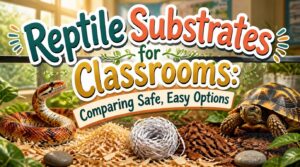
Twenty-eight kids watch the corn snake shed its skin, and one parent asks what’s under the bedding. Cedar shavings, it turns out, the same kind a well-meaning volunteer grabbed at the pet store last week. That mistake sends phenol fumes into a snake’s lungs and can trigger a respiratory crisis within days.
Classroom reptiles depend on you to get this right, and the substrate choice matters more than most teachers realize. The wrong bedding causes impaction, mold, or worse. Picking smart reptile substrates for classrooms means balancing safety, cost, and cleanup time, without a biology degree.
Here’s how to compare your options and land on bedding that keeps your class pet, and your sanity, intact.
Table Of Contents
- Key Takeaways
- Choosing Safe Classroom Reptile Substrates
- Best Classroom Substrates Compared
- Matching Substrates to Classroom Snakes
- Cleaning and Managing Classroom Bedding
- Comparing Costs and Sustainable Options
- Frequently Asked Questions (FAQs)
- What are some good substrates for reptiles?
- What are the best substrates for reptiles?
- What is a cheap substrate for reptiles?
- How can I make homemade reptile substrate?
- Can students safely handle substrate during enclosure cleaning?
- How should teachers dispose of contaminated substrate materials?
- What substrate signals its time for immediate replacement?
- Are there substrates suitable for multiple reptile species simultaneously?
- How does substrate choice affect classroom allergy concerns?
- Conclusion
Key Takeaways
- Never use cedar or pine bedding—the phenols in these woods can irritate a snake’s lungs and trigger respiratory distress within days.
- Match substrate to species: aspen works for dry-climate snakes, while coconut fiber or cypress mulch holds humidity for tropical species like corn snakes and ball pythons. Keeping humidity and temperature steady also helps prevent stress-related problems, and you can read more about why snakes sometimes eat themselves and how to prevent it if your snake ever seems unsettled.
- Watch depth and feeding habits closely—burrowing species need 3-4 inches of substrate, and using a separate bare-paper feeding enclosure helps prevent impaction from swallowed bedding.
- Stay ahead of mold and odor by spot-cleaning daily, doing full substrate changes every 4-8 weeks, and swapping bedding immediately if you spot surface mold or smell ammonia.
For a deeper look at how each option affects humidity, odor control, and ease of cleaning in smaller spaces, check out this guide to snake bedding choices for apartment living.
Choosing Safe Classroom Reptile Substrates
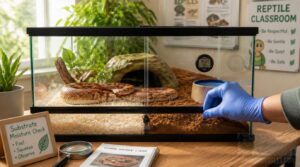
Not every substrate belongs in a classroom tank. The wrong choice risks sick snakes, messy cleanups, or a health scare you don’t want to explain to a principal. Here’s what actually matters before you pick a bedding for your enclosure.
Before you grab whatever’s cheapest at the pet store, this rundown of safe substrate options for classroom snake enclosures can help you weigh moisture control, odor, and impaction risk side by side.
Species and Habitat Needs
Every classroom snake has its own idea of home. Match substrate to species first, then worry about looks.
Tropical snakes need 60-80% humidity, so coconut fiber holds moisture well. Desert species want dry conditions below 40%, so aspen suits them better. Keep a thermal gradient with basking spots near 85-95°F, hides for security, ventilation to prevent mold, and fresh water always available.
Toxicity, Dust, and Chemicals
Skip cedar and pine: phenols in these woods irritate snake lungs and trigger respiratory distress.
Dust matters too. Airborne particles and mold spores from damp bedding aggravate eyes and airways in kids and snakes alike.
- Choose low-dust reptile bedding
- Check for chemical off-gassing
- Avoid pesticide residue
- Watch for VOCs
- Ventilate to cut inhalation risk
Impaction and Feeding Risks
Feeding time is when substrate turns dangerous. A snake striking prey often mouths bedding too, and loose particles ride along into the gut.
Prey size regulation matters most: keep meals no wider than your snake’s midsection. Try a feeding enclosure on bare paper, skip handling for 24 hours after, and watch gut motility for bloating or regurgitation.
Humidity and Mold Prevention
Once feeding’s handled, moisture becomes your next watch point. Mold takes hold above 60% humidity within 24-48 hours, so keep a hygrogrometer near enclosures. Wipe condensation, run exhaust fans, and rotate damp substrate fast.
- Monitor RH daily
- Boost airflow weekly
- Toss damp bedding immediately
- Inspect corners for spores
Substrate Depth and Burrowing
A corn snake pushing through bedding isn’t just cute, it’s instinct.
Substrate depth should run 2-3 times the snake’s body height, so plan 4-6 inches for classroom staples.
Pack it too tight and tunnels collapse.
Measure with a ruler at setup, not guesswork.
Shallow bedding means restless, stressed reptiles.
Giving your snake plenty of substrate to burrow into, like cypress mulch, mimics natural hiding instincts and is one of the easiest fixes covered in this ball python care guide for beginners.
Depth also locks in moisture, keeping humidity steady between mistings.
Best Classroom Substrates Compared
Not every substrate fits every tank—or every teacher’s schedule. Some options win on price, others on moisture control, and a few make burrowers happy. Here’s how the five most common classroom choices actually stack up.
Paper Towels: Easy Monitoring
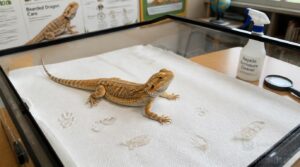
White paper towels win on visibility. Droppings, spills, and shed skin show up fast against that plain surface, no digging required.
- Quick waste detection protects student safety
- Easy visual inspection builds confidence
- Simple hygiene lowers disease risk
- Fast cleanup means less handling stress
Layers soak up moisture too, though depth and burrowing needs push most classrooms toward other substrates for daily housing.
Aspen: Dry and Affordable
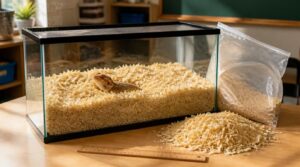
When budget matters, aspen shavings deliver. This dry substrate resists mold, keeps dust low, and costs roughly 15-17 euros per 26.4-liter bag, covering multiple changes.
| Feature | Aspen | Benefit |
|---|---|---|
| Moisture | Dries fast | Prevents scale rot |
| Depth | 2-4 inches | Helps with burrowing |
| Cleanup | No clumping | Easy spot cleaning |
Affordable bedding that simplifies classroom reptile care without sacrificing safety.
Coconut Fiber: Humidity Control
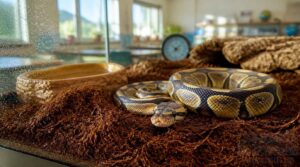
Tropical species need steady humidity, and coconut fiber delivers. It buffers moisture slowly, holding levels near 60-70% while easing shedding and skin health.
Damp but never soggy: that’s the goal. This substrate swells slightly, releases moisture as air dries, and resists mold when spot-cleaned. For classroom reptile care, that stability means fewer misting emergencies and calmer, more comfortable snakes.
Cypress Mulch: Moisture Retention
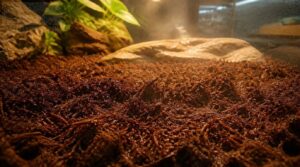
Moisture retention is where cypress mulch earns its keep. A 2-3 inch layer buffers humidity, cools substrate surface temps, and resists mold if kept properly dry between mistings.
Slow decomposition means fewer full changes: 6-12 months per batch. Porous texture keeps airflow steady, so gas exchange continues even at full substrate depth.
Jungle Mix: Burrowing Support
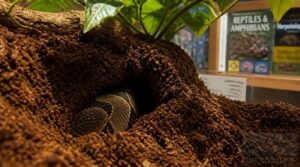
Want a snake that actually acts like a snake? Jungle Mix delivers tunnel network formation through loose, fibrous particles in varied sizes, fine to chunky, letting bodies anchor mid-dig.
Burrow walls hold their shape under normal activity, so you get real burrow stability observation for lessons. At 3-4 inches deep, moisture retention stays steady without waterlogging, simulating a natural burrow safely.
Matching Substrates to Classroom Snakes
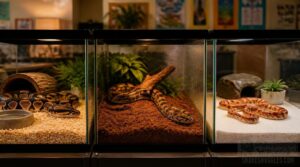
Not every classroom snake wants the same bedding. A ball python’s needs look nothing like a boa’s, and mixing that up causes real problems. Here’s how to match your species to the right substrate, tank by tank.
Ball Python Substrate Needs
Ball pythons don’t need deep digging room, but they do need humidity regulation between 50-60% for clean sheds. Keep substrate 2-3 inches deep using coconut fiber, a moisture-retentive, low-dust option. Skip the impaction worry here: pythons prioritize secure hides over burrowing. Spot-clean daily and watch for mold, the real substrate safety concern in humid setups.
For a deeper comparison of ball python substrate options, including which materials to avoid, it helps to weigh moisture retention against ease of cleaning.
Corn Snake Substrate Needs
Corn snakes want to dig, unlike their python neighbors. Give them 3 to 4 inches of substrate depth so tunnels hold their shape.
Coconut fiber works best: it’s low-dust, holds humidity for shedding, and won’t cause impaction if swallowed during feeding. Skip aspen if burrowing matters most. Spot-clean daily, watch for sogginess.
Boa Constrictor Substrate Needs
Boas dig differently than corn snakes: shallow burrows, not deep tunnels. Give them 2 to 4 inches depth with loose compact bedding.
Natural fiber blends stay safe if swallowed and keep fine texture for comfortable exploring. Check moisture status daily by pinching substrate. In a standard boa constrictor enclosure, this humidity regulation prevents scale rot while supporting nontoxic bedding needs.
Tropical Versus Arid Species
Tropical species and desert species need opposite substrate strategies. Humidity tolerance splits sharply: tropical snakes handle 60%+ moisture, arid ones prefer 15-40%. Substrate moisture control reflects this.
Skin texture varies too. Tropical species shed every 2-4 weeks, needing humidity regulation in terrariums. Desert species shed slower, tolerating drier bedding.
Quick contrasts:
- Burrowing depth: shallow for tropical, deeper for arid
- Water source reliance: prey moisture vs. direct drinking
- Activity periods: steady warmth vs. cooler nights
Bioactive Enclosure Compatibility
Want a classroom terrarium that runs itself? Bioactive substrate makes it possible. Layer soil, leaf litter, and drainage stone, then add springtails and isopods for microfauna involvement.
Beneficial fungi break down waste, while plant toxicity screening keeps roots safe. Watch substrate pH balance and depth (3-4 inches) for burrowing, humidity regulation, and a lighter terrarium maintenance schedule overall.
Cleaning and Managing Classroom Bedding
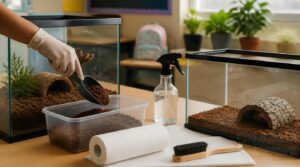
Picking the right substrate is only half the job. Bedding still needs upkeep, or all that careful planning goes to waste. Here’s what a solid cleaning routine looks like, step by step.
Daily Spot-Cleaning Routine
Sixty seconds. That’s your window for spot cleaning before stress builds in the enclosure.
- Remove waste fast, under a minute
- Wipe with a damp cloth, no soaking
- Replace substrate to match original depth
- Log the spot on your cleaning sheet
- Sanitize cloths before the next enclosure
Quick waste removal protects hygiene daily. Skip it, and bacteria wins.
Full Replacement Schedule
Every 4 to 8 weeks: that’s the baseline for full substrate changes, though your exact substrate dictates the window. Aspen and coconut fiber run 4-6 weeks; cypress mulch stretches to 6-8. Humidity, odor, and activity level all shift timing earlier.
Build a weekly inspection schedule, keep a spare liner rotation ready, and treat new-specimen introductions as automatic biosecurity refresh triggers.
Waste and Odor Checks
Your nose knows before your eyes do. Ammonia hitting you at the door means waste buildup, full stop.
Your nose knows before your eyes do: ammonia at the door means waste has already built up
- Log a baseline odor reading right after setup
- Run spot checks each shift for hidden waste pockets
- Watch corners and under hides, where mess collects
- Flag odors past 24 hours for immediate cleaning
Persistent smell signals bacteria, not just mess. Don’t ignore it.
Safe Misting Practices
A fine mist beats a heavy spray every time. Droplet size matters most, aim for 0.5 to 2.0 microliters, avoiding pooled water on moisture-retentive substrates.
| Practice | Target | Why |
|---|---|---|
| Timing | Active hours | Reduces stress |
| Bottle care | Weekly clean | Stops microbes |
| Placement | Away from heat | Prevents burns |
Skip shedding periods. Precision protects both humidity and health.
Supervised Feeding Protocols
Feeding time isn’t free time. Assign one supervisor per snake to watch every bite, log prey size and strike time, and pause at signs of distress. Use tongs, keep tools ready. Match prey to 80-100% girth. Feed in a separate, secure area. Afterward: cooling period, then handwashing, then health notes.
Comparing Costs and Sustainable Options
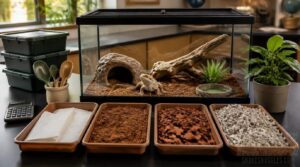
Safety matters, but so does your budget. A good substrate choice saves you money and cuts down on waste over time. Here’s what to weigh before you buy.
Cost Per Substrate Change
Money talks in the classroom budget, and substrate cost per change depends on more than the price tag.
| Substrate | Cost Range | Change Frequency |
|---|---|---|
| Aspen | 15-17 euros/26.4L | 4-8 weeks |
| Coconut Fiber | Moderate | 4-8 weeks |
| Paper Towel | Low | Daily |
Bulk buying cuts per-unit costs. Higher absorbency means fewer changes, lower labor and disposal fees.
Bulk Storage Requirements
Bulk buying only saves money if storage doesn’t ruin the batch.
Airtight totes with desiccant packs hold humidity between 20-50%. Keep pallets off the floor, 6-8 inches clear, under cover. Temperature range: 60-85°F, checked weekly for pests or clumping.
Label containers with batch numbers and use-by dates. Coconut fiber bricks expand fast, so plan storage space accordingly.
Staff Cleaning Workload
Storage saves cash, but labor decides the real cost.
Spot cleaning runs 5-10 minutes daily. Full changes add 8-12 minutes per enclosure, more with poor ventilation.
Training cuts fumbling: a 1-2 hour module keeps timing consistent. Clear SOPs shave 5-8 minutes off setup and cleanup.
Two to three staff during peak hours keeps workload manageable.
Compostable Bedding Options
Staff time matters, but so does what happens after the bedding’s tossed.
Coconut fiber substrates like Riare Coconut Fiber or Zilla Coconut Husk Brick absorb moisture well, run low-dust, and support burrowing. Cypress mulch and Zilla Jungle Mix compost too, though slower. Once feces are removed, used substrate can go straight into a compost bin, cutting landfill waste and closing the sustainability loop.
Classroom Purchasing Checklist
Before you buy anything, run through this list: shelf life and purchase date labeling, supplier reliability, storage space away from sunlight, and set reorder points so stock never runs dry.
Budget for aspen (15–17 euros per 26.4L bag) plus coconut fiber.
Check bags for mold.
That’s classroom pet safety in short.
Frequently Asked Questions (FAQs)
What are some good substrates for reptiles?
Safe, sensible substrates set the standard: paper towels for easy monitoring, aspen for dry-climate species, coconut fiber for tropical humidity, and cypress mulch or jungle mix for burrowers needing low-dust, moisture-balanced bedding.
What are the best substrates for reptiles?
Paper towels, aspen, and coconut fiber top the list. They balance Substrate Safety, low-dust reptile bedding, and moisture-wicking needs.
Match Species Suitability, Cost Efficiency, and Maintenance Ease, and you’ve got safe, nontoxic bedding options for any classroom enclosure.
What is a cheap substrate for reptiles?
Aspen shavings win on price, around 15-17 euros per 4-liter bag, covering several changes.
For budget-friendly options, paper towel costs even less and simplifies spot cleaning.
Coconut fiber runs a bit higher but earns its keep through humidity control.
How can I make homemade reptile substrate?
Like Goldilocks testing porridge, get the mix "just right": organic topsoil, sifted sand at 1:2, coconut fiber for moisture wicking, baked to kill pests. Layer dry-to-moist zones over 3 inches depth.
Can students safely handle substrate during enclosure cleaning?
Yes, with supervision. Gloves are required, hands get washed right after, and cleaning stays slow and controlled. Teachers watch technique closely, keeping dust down and stopping students from stirring up waste or touching their face mid-task.
How should teachers dispose of contaminated substrate materials?
Trash it like ordinary litter? Not a chance. Seal it in a labeled, leak-proof bag, segregate from recyclables, and route it through your school’s hazardous waste hauler with dated documentation for compliance.
What substrate signals its time for immediate replacement?
Surface mold within 24 hours, sour odor by day two or three, clumping, caking, or slick waste buildup all signal immediate replacement. Food debris breeding bacteria within 48 hours means don’t wait for the scheduled change.
Are there substrates suitable for multiple reptile species simultaneously?
Think of it like roommates sharing an apartment, everyone needs their own space. Multi-species compatibility works with layered bedding: dry aspen up top, coconut fiber below, giving arid and tropical snakes safe, humidity-zoned options in one classroom setup.
How does substrate choice affect classroom allergy concerns?
Low-dust bedding cuts airborne allergens fast. Coconut fiber and paper towels beat wood chips for air quality.
Stable humidity limits mold spores, and daily cleaning plus handwashing keeps allergy and toxicity risks low for sensitive students.
Conclusion
A million bedding bags line pet store shelves, but only a handful belong in your classroom. Smart reptile substrates for classrooms aren’t about brand names or bright packaging. They’re about phenols, mold, and impaction risks you can actually control.
Paper towels or aspen won’t win design awards, but they’ll keep your snake breathing easy and your students learning safely. Get the substrate right, and everything else, feeding, cleaning, trust, follows naturally.