This site is supported by our readers. We may earn a commission, at no cost to you, if you purchase through links.

Some ball python combos exist only because a breeder stacked the odds perfectly. A Sunset Clown with cream-to-peach flanks, or a Monsoon Clown so desaturated it looks airbrushed, can take years and thousands in investment to produce. That’s what makes rare ball python morph combos so fascinating: each one is a genetic lottery where carriers look completely normal until two recessive alleles finally line up. The math is brutal, the wait is long, and the payoff is an animal almost nobody else owns.
Below you’ll find twelve of the rarest combos, what makes each one tick, and what they actually cost.
Table Of Contents
- Key Takeaways
- What Makes Ball Python Combos Rare?
- 12 Rare Ball Python Morph Combos
- How Rare Morph Genetics Work
- Compare Appearance, Rarity, and Prices
- Avoid Unhealthy or Lethal Morph Combos
- Top 3 Products for Morph Keepers
- Frequently Asked Questions (FAQs)
- What is the rarest ball python morph?
- What are some cool morphs for ball pythons?
- What ball python morphs to avoid?
- What snake is worth $100,000?
- How long until double recessive combos hatch?
- Can Banana males produce female-only clutches?
- Which morphs should never be bred together?
- Do Sunset clowns keep their color as adults?
- What enclosure size suits an adult clown pied?
- Conclusion
Key Takeaways
- Rarity in ball python combos comes from stacking two or more recessive alleles, so normal-looking carriers must be paired over years before the odds line up and a visual animal hatches.
- Top-tier combos like Sunset Clown, Monsoon Clown, and Axanthic Clown Pied command $1,500 to $5,000-plus because small breeder pools and brutal genetics keep annual production extremely low.
- Price doesn’t track looks alone—clean head stamps, high contrast, and a breeder’s documented lineage can shift value even between genetically identical animals.
- Ethical breeding matters as much as rarity: skip pairings like spider x spider or super champagne that produce wobble and deformities, and always demand molecular screening and lineage records before buying.
What Makes Ball Python Combos Rare?
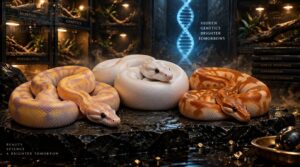
Rarity in ball pythons isn’t random. It’s the product of multirecessive genetics, breeding logistics, and market forces colliding at once. When a morph requires two, three, or even four rare alleles to express visually, the odds drop fast.
A full ball python morphs and colors guide breaks down which combos demand those stacked alleles—and why some pairings still stump breeders.
Most of what drives genetic scarcity is simple math. Carriers don’t look like what they carry. Two ordinary-looking snakes can hold the genetic keys to something stunning, but building true morph combinations from those carriers takes knowledge, patience, and a little luck.
Then there’s engineered scarcity. Small breeder pools, speculative pricing, and limited pairing opportunities inflate perceived value beyond real odds. Your rarity assessment needs to weigh both the biology and the market carefully. They’re not always telling you the same story.
12 Rare Ball Python Morph Combos
These twelve combos sit at the top of the hobby for good reason — they’re rare, visually stunning, and genetically complex. Each one brings together multiple recessive or incomplete dominant genes that can take years to produce. Here’s what you’re working with.
Sunset Clown
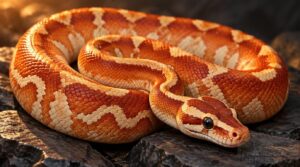
Collectors hunting rare ball python morphs won’t overlook the Sunset Clown. Sunset’s warm red-orange ground color meets Clown’s reduced dorsal patterning, yielding those unmistakable high-contrast facial masks.
Traits that define it:
- Cream to peach body tones
- Broken flank striping
- High-contrast facial stripe
- Merry-go-round eye patches
- Reduced dorsal bands
Epistatic genetics keep this combo genuinely scarce, with prices generally around $1,500.
Sunset Pied
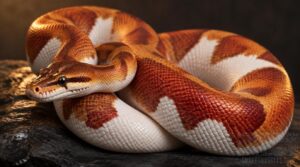
pairs that warm orange-red base with pied’s stark white sectoring. The result is a snake where faded peachy dorsal tones give way to bright white belly patches, a patchwork no other ball python morph combo quite achieves.
Backcrossing is often needed to stabilize both traits, and germline sectoring means pattern consistency isn’t guaranteed. Prices usually sit around $2,000.
Monsoon Clown
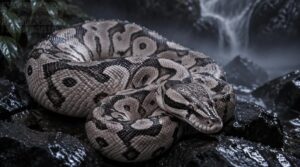
Where Sunset Pied warms you up visually, Monsoon Clown does something far more unusual. It stacks recessive Monsoon and Clown alleles together, producing a desaturated, washed-out look with sharp high-contrast clown patterning beneath.
- Requires confirmed heterozygous parents for both traits
- Expression shifts dramatically with background color genetics
- Annual production numbers stay extremely low
- Prices generally range from $3,000 to $5,000
Monsoon Pied
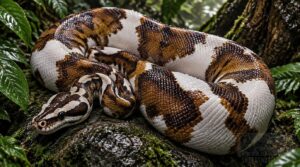
The Monsoon Pied combines recessive Pied genetics with Monsoon’s autosomal influence to produce high-contrast patchy patterning you simply won’t find in simpler combos.
If you want to see how the Monsoon Pied stacks up against other patchy combos, our guide to ball python morphs with unique patterns breaks down the visuals side by side. It’s also worth understanding how super form genetics drive these dramatic looks, since our guide to super form ball python genetics explains the inheritance behind combos like this. Seeing the Monsoon Pied in context also helps, which is why our ball python morphs guide compares patchy combos like this side by side with prices and genetics.
Dorsal splotches run noticeably larger and more irregular than on standard Pieds, making this one of the most visually arresting rare and expensive ball python morphs currently available.
Budget at least 20–40% above standard single-gene Pied prices.
Lavender Albino Pied
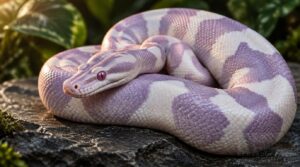
Stack lavender, albino, and piebald alleles in one animal and you get the lavender albino pied, a visually stunning triple recessive combo. That muted lavender base, broken by crisp white pied patches and tinted by red or pink eyes, is genuinely hard to replicate.
Prices usually land above $2,500, and production rates stay low, keeping this a true collector prize.
Lavender Albino Clown
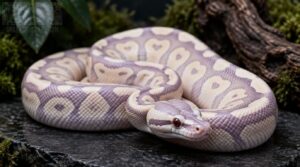
Picture a snake that looks airbrushed: pale lilac ground edging close to leucism, albino pigment loss clearing every last dark scale, and clown patterning laying crisp contrast over it all.
This designer combination demands three recessive alleles stacking cleanly across proven genetic lineage. It’s one of the rarest and most expensive ball python morphs you’ll encounter. Morph pricing reflects it.
If you want to study how combos like this are built, a good ball python morphs reference book makes the genetics far easier to follow.
Desert Ghost Clown
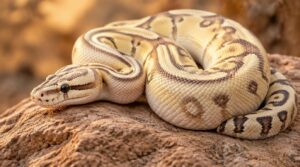
Imagine a Desert Ghost Clown from one of the UK’s few proven lines, pale and almost luminous in hand. That high-contrast dorsal pattern, without the lavender tint of other morphs, is distinctive.
- Reduced melanin yields a crisp, ghostly pattern
- Clown genetics produce irregular tail banding
- First-generation animals carry the steepest prices
Expect $1,500 or more, and always verify lineage certificates.
Desert Ghost Pied
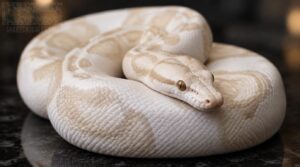
Few ball python morphs demand as much precision as Desert Ghost Pied. This combo stacks two recessive alleles, meaning both parents must carry Desert Ghost and Pied to produce visual offspring.
The Desert Ghost allele fades the base to soft, pale cream, while Pied floods the body with white and eliminates pattern complexity.
Prices generally start around $1,500 or higher.
Axanthic Clown Pied
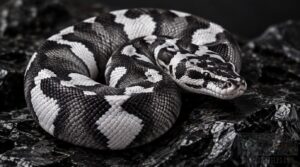
Three recessive alleles, one breathtaking snake. The Axanthic Clown Pied strips yellow pigment while layering clown head stamps over pied spots, producing a muted, high-contrast designer combination that stops collectors cold.
Getting there requires parents carrying all three recessives simultaneously. That’s rare genetics, and the pricing reflects it. Verified lines easily exceed $3,000 among rare and expensive ball python morphs.
Ultramel Clown Pied
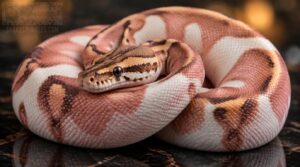
Ultramel adds a co-dominant twist to the triple-recessive formula. Here, blush tones wash across pied white patches while clown head stamps remain readable but softened in contrast.
What makes this rare:
- Co-dominant genetics require confirmed parental testing
- Blush saturation shifts under heat variation
- Homozygous ultramel deepens color dramatically
- Verified lines start around $2,500+
Very few breeders work these lines consistently.
Leopard Clown Pied
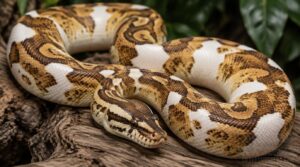
Where Ultramel plays co-dominant games, Leopard Clown Pied goes fully recessive, stacking three rare traits at once.
Bold leopard reticulation cuts across a clown pied base in warm caramel tones, with fine speckling along the flanks.
Getting consistent offspring means your lines carry homozygous alleles for every trait.
Expect hatchling prices above $3,000 and limited seasonal availability from established breeders.
Banana Clown Pied
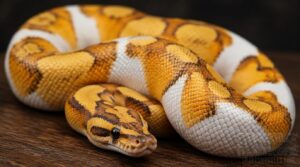
Leopard stacks three recessives; Banana Clown Pied pulls a different card. Banana is co-dominant, meaning het-banana offspring still carry that glowing yellow base with rich orange saddle markings. Add clown’s bold head patterns and pied’s high-contrast white patches, and you’ve got one of the most visually explosive combos in the hobby.
Expect prices above $3,500 from breeders with documented lineage.
How Rare Morph Genetics Work
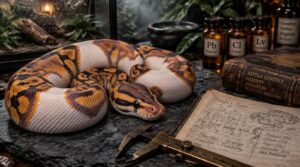
Every combo above relies on stacking genetics in precise, deliberate ways. Recessive alleles like Clown and Pied won’t express unless your animal carries two copies of the gene. That’s basic Mendelian inheritance, and it’s why these combos take so long to produce. Dominant traits need just one copy, but real morph stacking means layering both types strategically.
Here’s what drives rarity at the genetic level:
- Two recessive genes must coincide in the same animal
- Genetic variation can shift phenotype expression unpredictably between clutches
- Codominant alleles interact, sometimes producing phenotypes absent in single-gene morphs
- Breeding direction and verified pedigree affect how often rare combos surface
You’re playing long odds, repeatedly. One wrong pairing sets your project back a full generation.
That’s exactly why a dedicated snake breeding record book matters—every pairing, clutch, and outcome should be logged so your genetics stay traceable across generations.
Compare Appearance, Rarity, and Prices
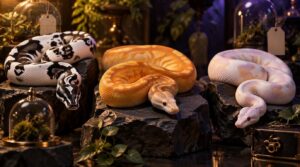
Appearance, rarity, and price don’t always move in lockstep, and that’s what makes comparing these designer combinations so worth studying.
The Sunset Clown delivers high-contrast visual impact at moderate rarity, keeping demand steady without stratospheric pricing. Monsoon Pied flips that equation: the visuals are striking on a pied canvas, but extreme genetic scarcity pushes prices well above what aesthetics alone justify.
Lavender Albino Pied sits in both camps. Pastel lavender on white ground gives it serious shelf appeal, and dual recessive allele requirements keep it underrepresented in the market, compounding cost.
One thing stays consistent across all of them: clean head stamps and clear contrast command premiums, and breeder reputation can meaningfully shift value even between two genetically identical animals.
Avoid Unhealthy or Lethal Morph Combos

When you chase the flashiest combos, you can accidentally stack genes that harm the animal. Ethical breeding means knowing which pairings to skip before you ever set up the pairing.
Watch for these red flags:
- Two dominant lethal alleles in one pairing, like Super Spider lines.
- Morphs prone to neurological wobble, especially when stacked again.
- Combos causing skin complications, such as scaleless crossed with thin-scaled lines.
- Homozygous states at multiple fragile loci, which crush genetic stability.
- Sellers who can’t produce lineage records or test results.
Ask for molecular screening before you commit. Heterozygous carriers often express beautifully without the homozygous risks. If a breeder dodges health questions, walk away. Rare should mean impressive, never suffering.
A reliable reptile disease testing kit lets you verify a snake’s health status before the pairing ever happens.
Always demand molecular screening before buying, because rare should mean impressive, never suffering
Top 3 Products for Morph Keepers
You’ve got your dream combo picked out, so now let’s talk gear. The right setup protects your investment and keeps your breeders producing year after year. Here are the three products I trust in my own rack and grow-out room.
At the top of that list is a solid ball python snake rack system, which keeps heat and humidity stable without eating your whole wall.
1. Ball Python Manual by De Vosjoli
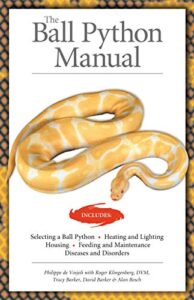
Want the book that started half the hobby’s libraries? The Ball Python Manual by Philippe de Vosjoli and his team of herpetologists is your 88-page foundation, covering selection, quarantine, housing, feeding, and captive reproduction. It even explains the genetics behind albino and ghost patterns, with color illustrations of morphs.
Fair warning: it leans toward imported animals, and it’s often sold used.
Still, for troubleshooting feeding refusal and disease basics, it’s indispensable.
| Best For | First-time ball python owners who want a compact, foundational guide to selection, care, and troubleshooting common problems. |
|---|---|
| Primary Purpose | Snake care guide |
| Suitable Animals | Ball Pythons |
| Color/Finish | N/A |
| Dimensions | 5.5 x 8.5 in |
| Power Input | N/A |
| Mounting Type | N/A |
| Additional Features |
|
- Covers all the essentials in one place: selection, quarantine, housing, feeding, and captive reproduction
- Explains the genetics behind popular morphs like albino and ghost, with color illustrations
- Offers practical troubleshooting advice for feeding refusal and disease basics
- Focuses more on imported pythons than captive-raised individuals
- Often sold as a used book, so quality may vary
- Lacks detailed coverage of shedding phases and behavior patterns
2. Vivarium Electronics VE-100 Reptile Thermostat

Picture your Sunset Clown clutch at 88.5°F, dead steady, all night long. That’s what the VE-100 delivers. It cycles power on and off based on probe readings, holding your rack’s heat tape right where you set it, and it remembers your settings if the power blinks.
You get a bright back-lit display showing both probe temp and set point, a 700-watt capacity on 110 volts, and a 10-foot probe cord. Units stack vertically on a tabletop, so your rack stays tidy without mounting hardware. Probes and power cords swap out without opening the case.
Fair warnings: it’s on/off control, not proportional, so heat lamps wear faster. Night Drop needs a separate ND Module, and that display stays lit around the clock. For heat tape and flexwatt? Still a workhorse.
| Best For | Reptile keepers running heat tape or flexwatt in tabletop racks who want reliable on/off temperature control with easy stacking and memory backup. |
|---|---|
| Primary Purpose | Temperature control |
| Suitable Animals | Reptiles broadly |
| Color/Finish | Black |
| Dimensions | N/A |
| Power Input | 110V, 700W |
| Mounting Type | Tabletop, stackable |
| Additional Features |
|
- Holds temperatures steady and retains settings during power failures
- Stacks vertically on a tabletop, keeping racks organized without mounting hardware
- Probe and power cords are user-replaceable without opening the case
- On/off cycling only, which wears out heat lamps faster
- Night Drop feature requires buying a separate ND Module
- Back-lit display stays bright at all times and can’t be dimmed at night
3. Zoo Med ReptiBreeze Large Aluminum Screen Cage
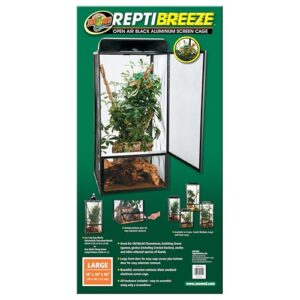
Chameleons get all the glory with this cage, but your morphs benefit too. The Zoo Med ReptiBreeze measures 18 x 18 x 36 inches and weighs just 3.4 pounds, so you can move it solo during deep cleans. Its black anodized aluminum screen resists corrosion, and the white plastic base tray catches mess without fuss.
Assembly? One screwdriver. All hardware included.
Fair warning: the mesh tears if you’re rough, and there’s no internal mounting for vines. Still, for arboreal juveniles, it’s airflow heaven.
| Best For | Keepers of Old World Chameleons, juvenile Green Iguanas, and other arboreal lizards who want a lightweight, well-ventilated indoor cage. |
|---|---|
| Primary Purpose | Reptile enclosure |
| Suitable Animals | Chameleons, Iguanas |
| Color/Finish | Black anodized |
| Dimensions | 18 x 18 x 36 in |
| Power Input | N/A |
| Mounting Type | Freestanding |
| Additional Features |
|
- Corrosion-resistant black anodized aluminum screen provides excellent airflow.
- Large front door and bottom door make access and substrate removal easy.
- Lightweight at 3.4 pounds, with simple screwdriver-only assembly and all hardware included.
- Screen mesh is fragile and tears easily if pushed or scratched.
- No internal mounting points, so attaching vines or equipment takes creativity.
- Open bottom design won’t work with standard water drip systems without modification.
Frequently Asked Questions (FAQs)
What is the rarest ball python morph?
The Sunset Clown takes the crown. With double-recessive genetics and barely a handful verified worldwide, it’s the holy grail ball python. Expect prices well into five figures when one surfaces.
What are some cool morphs for ball pythons?
Ever seen a snake that looks airbrushed?
Cool ball python morphs include Banana, Clown, Pied, and Desert Ghost.
Designer morphs stack genetics beautifully.
Price ranges vary wildly, from affordable singles to rare and expensive ball python morphs.
What ball python morphs to avoid?
Avoid spider and woma combos, which cause severe head wobble, plus super sable, caramel albino, and super black pastel lines tied to ocular defect monitoring and deformities. Screen breeders’ ethics and demand genetic testing before buying.
What snake is worth $100,000?
You’re looking at the Sunset ball python, the famous holy grail ball python. This single-gene morph sold for approximately $100,000, its genetics type (recessive) and jaw-dropping orange color making it the priciest snake ever.
How long until double recessive combos hatch?
Picture a pip cracking open months after you stopped checking daily. Most double recessive combos hatch in 5 to 5 months, though some, like Lavender Albino Clown, stretch to 3 to 4 months.
Can Banana males produce female-only clutches?
A breeder once claimed his Banana sire threw all females. Genetics says otherwise. Ball pythons use ZW/ZZ determination, and the Banana allele’s mode of inheritance shows no sex-linked drive. Expect mixed-sex clutches.
Which morphs should never be bred together?
Two spider-line animals together can hatch kinked-spine, head-wobbling babies.
Skip spider x spider, super champagne, and super lessers pairing plans.
Demand genetic verification, practice ethical breeding, and protect your clutch’s genetic stability.
Do Sunset clowns keep their color as adults?
Sunset is the last ember of dusk refusing to fade, and your clown keeps that promise. Yes, most retain their sunset hues into adulthood. Selective breeding and stable environments preserve that phenotype stability.
What enclosure size suits an adult clown pied?
Your adult clown pied needs a 40-gallon breeder minimum, ideally 36" x 18" of floor space. Height matters less than footprint; 12–18 inches works. Keep that habitat snug, insulated, and securely lidded for reliable thermal gradients.
Conclusion
Picture a clutch of four eggs, all het for Sunset and Clown, and only one hatches looking like a living sunrise. That’s the gamble behind rare ball python morph combos, and it’s why breeders keep rolling the dice.
Study the genetics, buy from honest sources, and house your animals right. Whether you chase a Monsoon Clown or simply admire one, you’re part of a craft where patience outbreeds luck every single time.