This site is supported by our readers. We may earn a commission, at no cost to you, if you purchase through links.

A boa constrictor stuck in a bad shed looks like it’s wearing a patchwork quilt of old skin, and that’s not just unsightly. Those retained fragments tighten around tissue as your snake moves, cutting off circulation and opening the door to infection.
Why boa constrictors need high enclosure humidity comes down to biology. Their skin, their eyes, and their immune system all depend on moisture to function. Get the humidity wrong in either direction and you’re not just dealing with a rough shed; you’re managing a health crisis.
Here’s what the science says, and exactly how to keep the numbers right.
Table Of Contents
- Key Takeaways
- Why Do Boa Constrictors Need High Humidity?
- What Humidity Range Suits Boa Constrictors?
- How Does Humidity Help Boas Shed?
- What Happens When Boa Humidity is Wrong?
- How Can You Maintain Boa Enclosure Humidity?
- Top 4 Products for Boa Humidity Control
- Frequently Asked Questions (FAQs)
- Is 90% humidity too high for a ball python?
- How hot is too hot for a boa?
- What is the ideal enclosure setup for a boa constrictor?
- How humid is too humid for a snake?
- How does enclosure type affect boa humidity control?
- Should boa humidity levels change with the seasons?
- Do baby boas need higher humidity than adults?
- Conclusion
Key Takeaways
- Boas evolved for tropical moisture, so humidity between 65–75% isn’t a preference — it’s a biological requirement that keeps their skin, eyes, and respiratory tissue functioning properly.
- Low humidity causes failed sheds where retained skin tightens around tissue, cutting off circulation and risking permanent eye damage from stuck eye caps.
- Too much humidity (consistently above 70–75%) is equally dangerous, creating conditions for mold, scale rot, and respiratory infections if ventilation isn’t adequate.
- Layering passive substrates like cypress mulch with active misting systems and dual hygrometers gives you the most reliable, consistent humidity control across the enclosure.
Why Do Boa Constrictors Need High Humidity?

Why does humidity matter so much for boas? Put simply, their skin and physiology evolved for tropical moisture, and replicating that in captivity isn’t optional. Without consistent humidity requirements met, their skin loses suppleness fast, and you’ll notice the consequences during shedding periods when tight, papery scales refuse to release cleanly. That’s dysecdysis, basically a failed shed, and it’s more than just cosmetic.
Retained moisture during pre-shed is especially critical, as the boa constrictor shedding process depends on hydrated skin separating cleanly from the new layer beneath.
Beyond shedding, boas rely on ambient moisture to keep mucous membranes healthy and properly functional. Dry enclosure air irritates respiratory tissue, quietly raising the risk of respiratory infections that start with a wheeze and escalate fast. Staying ahead means regular hydration signs monitoring, checking eyes, skin texture, and behavior before small issues turn into very expensive ones.
What Humidity Range Suits Boa Constrictors?

So now you know why moisture matters, let’s talk numbers. For adult boas, the ideal humidity range sits between 65% and 75%, with 65% being a reliable daily target. That 6070 humidity zone is where adults stay comfortable, hydrated, and stable without pushing into territory that causes problems.
Juveniles want it a little higher, closer to the upper end of that band, so don’t treat one setting as universal.
The 7585 humidity range isn’t necessarily harmful short-term, but sustained exposure above 85% invites mold and scale rot fast. Keep humidity levels consistent rather than reactive. Place digital hygrometers in at least two enclosure zones and build humidity monitoring into your routine, because a single reading rarely tells the full story.
How Does Humidity Help Boas Shed?
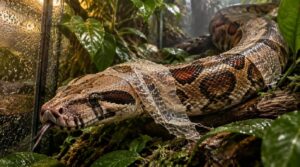
Those numbers aren’t arbitrary. During the preshed phase, your boa’s outer skin layer begins separating from the tissue beneath, and that process needs moisture to happen cleanly.
Think of the old skin like a tight, stiff sleeve. Adequate humidity softens it by hydrating the epidermis, reducing friction so the whole shed slips off in one piece during active shedding.
Here’s exactly what that moisture does:
- Maintains a sebaceous film between skin layers, enabling scale-to-scale separation
- Helps tear-film lubrication around the eye capsule so eye caps release without sticking
- Prevents dry patches that lead to retained shed fragments and dysecdysis
Without it, shedding periods turn into partial, incomplete molts. Postshed recovery is far smoother when the old skin comes off whole.
Retained eye caps and patchy, bunched sheds often signal something more serious — reviewing snake fungal infection symptoms and treatment options can help you determine whether incomplete molting points to underlying disease.
What Happens When Boa Humidity is Wrong?

When that shed process breaks down, you’re dealing with dysecdysis: retained patches that can constrict circulation and damage tissue over time. Eye caps that don’t release create serious eye problems, from chronic inflammation to permanent corneal scarring if you leave them unaddressed.
Failed sheds don’t just look bad — retained eye caps can scar a boa’s corneas permanently
Too dry isn’t the only problem, though. Push humidity too high without ventilation, and you’ve created a breeding ground for bacteria and fungi. Scale rot appears as discolored, soft patches along the belly, often needing veterinary treatment. That same stagnant moisture can trigger respiratory infections, recognizable by wheezing, nasal discharge, or open-mouth breathing.
Chronic low humidity also stacks dehydration risks: tacky skin, sunken eyes, and noticeably reduced appetite. Both extremes hit harder than most new keepers expect.
A large terrarium water bowl gives your boa constant access to fresh water, helping combat dehydration before those warning signs even appear.
How Can You Maintain Boa Enclosure Humidity?
How you manage moisture comes down to layering your tools. Start with substrate moisture retention as your baseline, using cypress mulch or coconut fiber to buffer RH swings passively. Then build on that with active misting methods, running two to four short cycles daily during shed cycles.
Think of the humidity gradient as your enclosure’s climate zone: warmer areas evaporate faster, so placement of fogger systems on the cool side helps balance distribution naturally. If condensation builds on the walls, a ventilation increase solves it better than cutting mist cycles abruptly.
- Mist 1-2x daily during molts
- Position fogger systems near the cool end
- Check substrate moisture depth every week
- Adjust vents before reducing mist frequency
Consistency wins every single time.
Top 4 Products for Boa Humidity Control
Once you’ve got your methods sorted, the right gear makes maintaining humidity far less of a guessing game. These four products cover the main approaches, from passive humidity control to fully automated misting. Pick what fits your setup and budget.
1. VIVOSUN 62% RH Humidity Packs 8g
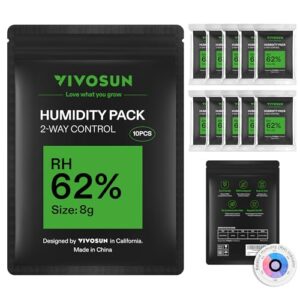
These VIVOSUN packs use two-way humidity control, absorbing moisture when things get muggy and releasing it when the enclosure air dries right out. At 62% RH, they land comfortably in your boa’s ideal zone without nudging things toward mold territory.
You get ten 8g packs made from natural, compostable plant fibers, plus an indicator card that signals when it’s replacement time. Some keepers do report inconsistent performance, so pair these with a reliable hygrometer to confirm what’s actually happening inside.
| Best For | Reptile keepers, instrument owners, and anyone storing moisture-sensitive items like coffee, spices, or vintage books who want a hands-off way to maintain stable humidity levels. |
|---|---|
| Control Type | Passive 2-way |
| Target RH | 62% |
| Primary Use | Food & instruments |
| Water Source | None (passive) |
| Unit Count | 10 packs |
| Key Drawback | Inconsistent performance |
| Additional Features |
|
- Two-way humidity control automatically absorbs or releases moisture to stay at 62% RH
- Made from natural, compostable plant fibers that are safe for direct food contact
- Includes a humidity indicator card so you know exactly when to swap packs
- Some users report inconsistent humidity performance compared to competing brands
- Mixed reviews on long-term effectiveness and overall value for the price
- Hygrometer inaccuracies can make it hard to judge whether the packs are actually working
2. Moistenland Automatic Reptile Misting System
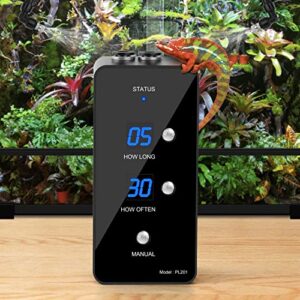
Want a genuinely hands-off approach to humidity? The Moistenland delivers. Its 360° rotating nozzles blanket your enclosure evenly, and the timer lets you dial in cycles from one hour to 30 days, with up to five minutes of spray per cycle. Since it pulls from an external reservoir, you’re not constantly refilling a tiny built-in tank. That 16-foot hose gives you flexible nozzle placement.
Just expect some pump noise, and pair it with a hygrometer to avoid overshooting your RH target.
| Best For | Reptile and amphibian keepers who want a set-it-and-forget-it misting system with flexible scheduling and minimal daily upkeep. |
|---|---|
| Control Type | Active misting |
| Target RH | N/A |
| Primary Use | Reptile terrariums |
| Water Source | External reservoir |
| Unit Count | 1 unit, 2 nozzles |
| Key Drawback | No built-in tank |
| Additional Features |
|
- 360° rotating nozzles distribute mist evenly across the entire enclosure
- Highly flexible timer lets you customize spray frequency anywhere from hourly to once every 30 days
- External reservoir support means far fewer refills compared to systems with small built-in tanks
- No built-in water tank — you’ll need to source and set up a separate reservoir
- Pump noise during operation may be disruptive in quiet spaces
- Some users report inconsistent mist duration and concerns about long-term durability
3. BETAZOOER 2.5L Reptile Humidifier Fogger
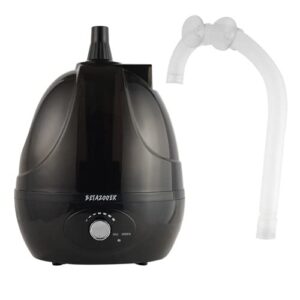
Picture a low-lying fog rolling across your boa’s enclosure floor, just thick enough to keep air moist without drowning the substrate. That’s exactly what this fogger does.
At up to 320ml per hour from a 2.5L ultrasonic tank, output is substantial. The stretchable tubes reach up to 5.3 feet for precise nozzle placement. It’s quiet and shuts off automatically when empty. Use distilled water only, or mineral buildup becomes a problem. Some buyers report leaks and inconsistent control knob performance.
| Best For | Reptile and amphibian keepers who need steady, quiet humidity across one or two enclosures and want a hands-off fogger that shuts itself off safely. |
|---|---|
| Control Type | Ultrasonic fog |
| Target RH | N/A |
| Primary Use | Reptile enclosures |
| Water Source | 2.5L built-in tank |
| Unit Count | 1 unit |
| Key Drawback | Leakage & reliability |
| Additional Features |
|
- High output of up to 320ml per hour keeps humidity levels consistent even in larger enclosures
- Stretchable tubes reach up to 5.3 feet, giving you flexibility in how and where you direct the mist
- Automatic dry-run shutoff protects the unit and your animals when the tank runs empty
- Some units have failed within hours or stopped working entirely after just a couple of months
- Leaks from the tank or seals have been reported, which can be a real problem near electronics or wooden stands
- The control knob doesn’t always deliver consistent mist output, making fine-tuning humidity levels unreliable
4. Essential Values Humidity Packs 10-Pack 8g
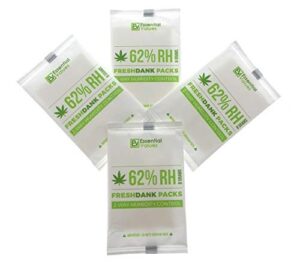
If you need a simple, low-maintenance humidity option, these packs won’t let you down. They maintain 62% relative humidity using plant-based fibers, organic salts, and purified water. Each box comes with ten 8-gram packs, and each one usually lasts 4 to 6 months under normal conditions. The two-way design absorbs excess moisture and releases it back when humidity drops.
One caveat: some users report the packs can feel oddly dry or develop an unpleasant odor over time, so monitor them.
| Best For | Anyone who wants a set-it-and-forget-it humidity solution for keeping herbs fresh in humidors or storage jars without constant monitoring. |
|---|---|
| Control Type | Passive 2-way |
| Target RH | 62% |
| Primary Use | Herbs & humidors |
| Water Source | None (passive) |
| Unit Count | 10 packs |
| Key Drawback | Incompatible with other humidifiers |
| Additional Features |
|
- Maintains a consistent 62% relative humidity using natural, plant-based ingredients
- Two-way moisture control prevents both over- and under-humidification automatically
- Each pack lasts 4–6 months, and you get ten in a box for long-term value
- Some users report packs feel unusually dry or develop an unpleasant odor over time
- Customer reviews are mixed on how consistently and how long they actually perform
- Cannot be used alongside other humidification products in the same container
Frequently Asked Questions (FAQs)
Is 90% humidity too high for a ball python?
Yes, 90% is too high for a ball python. They do best at 40–60% RH, rising briefly to 65–70% only during active shedding. Sustained 90% invites mold, bacterial growth in damp substrate, and respiratory issues.
How hot is too hot for a boa?
Think of 90°F as your boa’s hard ceiling. Once ambient temps consistently exceed 88–90°F, expect reduced feeding and lethargy. Keep the temperature gradient intact, with your basking spot at 90–95°F and cool side at 78–85°F.
What is the ideal enclosure setup for a boa constrictor?
Use a vertically oriented enclosure with cypress mulch to retain substrate moisture, place a humid hide at the cool end, allow ventilation increase through screened vents, and track your humidity requirements with a digital hygrometer.
How humid is too humid for a snake?
Can a snake actually drown in its own humidity? Once RH consistently exceeds 70%, you’re creating ideal conditions for mold growth and serious skin infections. Condensation forming on the glass is your clearest warning sign.
How does enclosure type affect boa humidity control?
Your enclosure’s design directly shapes its humidity microclimate. Glass tanks trap moisture well but risk stagnation, while adjustable ventilation lets you dial in airflow. A humidity gradient naturally forms vertically, so substrate choice matters equally.
Should boa humidity levels change with the seasons?
Boas benefit from slight seasonal adjustments. During dry winter months, nudge humidity up by 5-10% to prevent shedding problems. In humid summers, you can ease off misting. Daily humidity swings are fine; sustained extremes aren’t.
Do baby boas need higher humidity than adults?
Surprisingly, yes. Baby boas need higher humidity levels than adults do, staying around 65–75%. Their shedding cycles demand consistent moisture to loosen skin cleanly, while adults comfortably handle the occasional drier pocket without much drama.
Conclusion
When it comes down to it, understanding why boa constrictors need high enclosure humidity is less about memorizing a target number and more about genuinely respecting your snake’s biology. Moisture isn’t a luxury; it’s the infrastructure keeping your animal alive and comfortable.
Get it right and your boa sheds clean, stays healthy, and moves without restriction. Let it slip and you’re managing a health crisis. Monitor, adjust, and repeat. That’s quite simply the whole game.