This site is supported by our readers. We may earn a commission, at no cost to you, if you purchase through links.

A dry shed that peels off in patches is one of the earliest warnings your enclosure’s humidity has dropped too low. By the time you notice wrinkled skin or your snake coiled in its water bowl for hours, the imbalance has already been building.
Humidity stability matters more than most keepers realize at first. The signs your snake enclosure is too dry are easy to miss if you don’t know what to look for, and the fixes are straightforward once you do.
This guide walks through every indicator, what causes them, and how to correct the problem without guesswork.
Table Of Contents
- Key Takeaways
- Signs Your Snake Enclosure is Too Dry
- Check Humidity Against Your Snake’s Needs
- Why Your Snake Enclosure Dries Out
- Raise Humidity Without Sacrificing Airflow
- When Dryness Calls for Veterinary Care
- Frequently Asked Questions (FAQs)
- How do I rehydrate my snake?
- How to humidify a snake enclosure?
- What does a dehydrated snake look like?
- How to tell if your snake is too cold?
- Can low humidity affect my snakes appetite?
- Do hatchlings need higher humidity than adult snakes?
- How does winter indoor heating affect enclosure humidity?
- Does substrate depth influence how well humidity holds?
- Conclusion
Key Takeaways
- Patchy or stuck shed, wrinkled skin, excessive soaking, and open-mouth breathing are the four clearest signs your snake’s enclosure is running too dry — and they often appear before your hygrometer catches the drop.
- Substrate choice drives ambient humidity more reliably than misting alone; moisture-retaining materials like coconut fiber or cypress mulch create a steady humidity baseline between sessions.
- Humidity needs are species-specific, so dial in your snake’s target range first — corn snakes thrive at 40–60%, while ball pythons need 60–80% — and place your hygrometer at your snake’s primary resting zone, not near heat sources or glass.
- Retained eye caps beyond 48 hours, darkening toes, audible wheezing, or visibly sunken eyes all signal conditions serious enough to require a vet, not just an enclosure adjustment.
Signs Your Snake Enclosure is Too Dry
Your snake’s behavior and appearance often signal humidity problems before your hygrometer does. Four key signs point to an enclosure that’s too dry, and each one is worth knowing. Learning to recognize them early gives you a real chance to correct the issue before it affects your snake’s health.
A reliable hygrometer is your first line of defense — pairing it with a solid understanding of ideal humidity levels for snake enclosures means you’ll catch problems well before they become serious.
Patchy or Stuck Shed
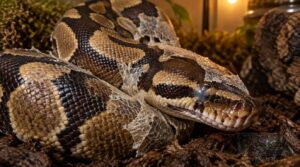
When humidity drops too low during a shed, the old skin can’t loosen evenly, leaving irregular patches instead of a clean, single-piece release. Retained shed often concentrates around your snake’s toes and eye caps, since those are the spots where skin fits tightest. Lightly misting the affected areas with a reptile shed aid spray can help loosen stubborn patches around toes and eye caps without forceful pulling.
If your misting schedule isn’t compensating for substrate moisture loss, stuck shed will keep coming back.
Upgrading to an automatic reptile misting system takes the guesswork out of humidity maintenance, keeping levels consistent even when substrate dries faster than expected.
Dull, Wrinkled Skin
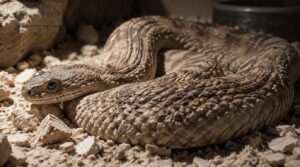
Beyond shed quality, dull, wrinkled skin tells you moisture loss is outpacing replenishment. When the enclosure air stays too dry, skin loses flexibility and looks creased along the sides and belly.
Substrate moisture drives dehydration prevention. Dry bedding absorbs vapor instead of releasing it, pulling humidity down. Humidity monitoring at your snake’s resting spot shows where the shortfall actually sits. Switching to a coconut fiber substrate for reptiles helps bedding hold and release moisture steadily, reducing humidity dips between mistings.
A moisture meter reading for snake substrate takes the guesswork out of bedding conditions before dehydration becomes a problem.
Frequent Water Bowl Soaking
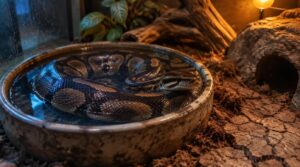
Wrinkled skin and frequent soaking usually appear together. When your snake spends long stretches in the water bowl, it’s compensating for dry ambient air the enclosure fails to provide. Soaking becomes a dehydration prevention strategy, with the bowl offering near-saturation humidity at skin level.
Water bowl evaporation adds some moisture but won’t prevent chronic dehydration if ambient air stays dry.
Noisy or Open-Mouth Breathing
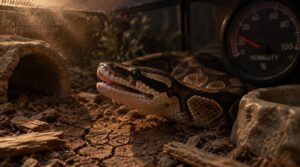
When your snake’s mucous membranes dry out, airflow through the respiratory tract becomes harder. Open-mouth breathing is often the result. Noisy, wheezing breaths signal respiratory tract irritation from dried airways or airborne particulates in dry substrate.
Better humidity control and ventilation management often reduce the noise. If it persists after you’ve corrected conditions, see a vet to rule out infection.
Check Humidity Against Your Snake’s Needs
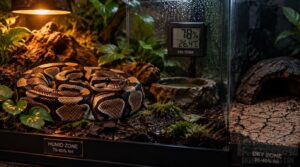
Before measuring anything, know your snake’s baseline needs. A corn snake thrives at 40-60% relative humidity, while a ball python or green tree python needs 60-80%. Species-specific setups matter because what’s "dry" for one species is completely normal for another.
For a full breakdown by species, snake tank humidity levels by species makes it easy to dial in the right range before you even set up your enclosure.
Use a calibrated hygrometer placed in your snake’s primary microclimate zone, not against glass or directly above a heat element. Readings shift across the enclosure, so check both the warm and cool sides.
Four practices that improve your reading accuracy:
- Take readings across the full day/night cycle, not just once
- Position the sensor at mid-enclosure height, away from any heat sources
- Calibrate against a known reference before trusting any reading
- Factor in enclosure ventilation, which can pull moisture out quickly
Why Your Snake Enclosure Dries Out
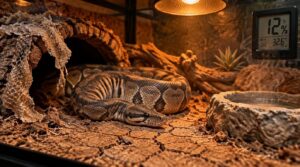
Think of your enclosure as a system where heat, airflow, and substrate choice each work against moisture retention.
| Driver | Effect |
|---|---|
| Strong enclosure ventilation | Carries humidity out with stale air |
| Dry substrate choice | Absorbs moisture without releasing it back |
| Infrequent misting schedule | Allows the humidity floor to drop between cycles |
| Heat source placement | Draws moisture away from substrate and surfaces |
Your enclosure ventilation needs to cycle air, but every exchange carries humidity out with it. A heat source on one side of the enclosure accelerates this, creating a drying loop that even a consistent misting schedule can’t always counteract alone.
Substrate choice compounds the overall effect. Dry, loose substrates absorb moisture from the air and push your humidity floor even lower.
Raise Humidity Without Sacrificing Airflow
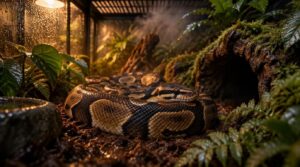
Picture a forest floor after rain: damp, breathable, alive. That balance is what you’re after inside the enclosure, and it’s more achievable than it might sound.
Chase the balance of a forest floor after rain: damp, breathable, alive
The mistake most keepers make is chasing humidity by sealing ventilation. That traps moisture but also stagnant air, which breeds bacteria fast. Instead, address both levers at once:
- Switch to a moisture-retaining substrate like coconut fiber or cypress mulch.
- Add a moist hide on the cool side to create a localized humidity zone.
- Adjust your misting schedule to mist lightly in the evening when temperatures drop.
- Keep your ventilation partially open so air moves without stripping moisture too quickly.
Your substrate choice drives ambient humidity more steadily than any misting schedule alone ever will.
When Dryness Calls for Veterinary Care
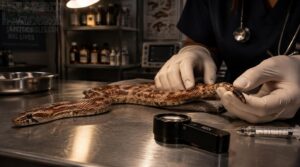
A toe darkening to black, a tail tip going cold, a wheeze you can hear across the room. These aren’t warning signs you can wait out.
Persistent retained eye caps after 48 hours of home soaking need a vet’s help. Leaving them risks corneal damage.
Constriction or dark discoloration at the toes or tail tip signals ischemia. Tail necrosis moves fast, and once tissue dies, surgery is often the only solution.
Lethargy, sunken eyes, wrinkled skin, or skin lesions all point to dehydration serious enough to need subcutaneous fluids from a vet. Respiratory problems like wheezing or open-mouth breathing suggest bacterial infection from chronically dry airways.
Chalky or absent urates alongside poor shedding indicate renal stress and need diagnostic workup.
Frequently Asked Questions (FAQs)
How do I rehydrate my snake?
Ball pythons need 60–80% humidity to stay properly hydrated. If your snake’s dehydrated, a lukewarm water soak for 20–30 minutes is the most direct fix. Switch to a moisture-retaining substrate to stabilize enclosure humidity afterward.
Low humidity is also the leading cause of stuck shed in reptiles, as moisture is essential for forming the enzymatic fluid layer that allows old skin to separate cleanly.
How to humidify a snake enclosure?
A keeper switching to coconut fiber immediately noticed fewer stuck sheds. Substrate moisture retention does the heavy lifting, but combining it with misting systems or a small humidifier keeps humidity stable without soaking the enclosure.
What does a dehydrated snake look like?
A dehydrated snake has dull, wrinkled scales and visible creases along the torso. Skin loses its normal sheen and may look slightly sunken. You’ll also notice patchy stuck shed, increased lethargy, and eye cap retention.
How to tell if your snake is too cold?
Studies suggest over 90% of captive reptile illness stems from poor husbandry choices. Watch for persistent lethargy, disrupted basking behavior, and noticeably slowed digestion as the clearest signs your temperature gradient is running too low.
Can low humidity affect my snakes appetite?
Like a river reduced to a trickle, low humidity quietly undermines your snake’s appetite over time. Dehydration impairs digestion and triggers lethargy, while compounding shedding issues and respiratory problems until your snake simply stops eating.
Do hatchlings need higher humidity than adult snakes?
Yes. Hatchlings have a higher surface area relative to their body volume, so they lose moisture much faster. This makes hatchling hydration more critical. Use species-specific setups with elevated ambient humidity to support healthy shedding.
How does winter indoor heating affect enclosure humidity?
Many keepers assume home heating doesn’t affect their enclosure, but it does. Winter heating systems strip indoor humidity. Drier room air pulls moisture through ventilation gaps, so monitor your hygrometer and plan a seasonal adjustment.
Does substrate depth influence how well humidity holds?
Think of a 2-cm coconut husk layer: it’ll dry out in just a few hours. Deeper substrate selection dramatically slows your evaporation rate, building a moisture reservoir that smooths the humidity gradient between regular mistings.
Conclusion
A humid hide packed with damp moss, a reliable gauge on the glass, and a keeper who knows what to watch for: those three things protect your snake better than almost anything else.
The signs your snake enclosure is too dry aren’t always dramatic. A tight shed here, a soaking session there. Catch them early, act on them directly, and your snake keeps moving, shedding, and thriving the way it should.