This site is supported by our readers. We may earn a commission, at no cost to you, if you purchase through links.
A day gecko that won’t shed cleanly or a boa with retained eye caps signals the same root problem: the air inside the enclosure isn’t holding enough moisture. Understanding how foggers work in reptile habitats closes that gap, and it starts at a vibrating metal disc smaller than a coin that shatters water into droplets just a few micrometers wide.
Get the mechanism wrong, and you trade one problem for another. Stagnant oversaturated air breeds bacterial infections faster than dry air causes a bad shed. This guide walks you through the physics, the tradeoffs, and the practices that keep your animals healthy.
Table Of Contents
- Key Takeaways
- What is a Reptile Habitat Fogger?
- How Does a Reptile Fogger Work?
- How Does Fogging Affect Humidity and Temperature?
- Which Reptiles Benefit From Foggers?
- Fogger or Mister: What’s The Difference?
- How Do You Use a Fogger Safely?
- Frequently Asked Questions (FAQs)
- How does a reptile fogger work?
- Which is better for chameleons, a fogger or a mister?
- What are the disadvantages of fogging?
- How long does Repti Fogger last?
- Do reptile foggers make noise during operation?
- Can foggers damage live plants in bioactive enclosures?
- How long does a reptile fogger typically last?
- Can fogger moisture affect substrate composition over time?
- Are foggers safe to use near UVB lighting?
- Conclusion
Key Takeaways
- Ultrasonic foggers raise humidity by vibrating a tiny metal disc at high frequency, breaking water into microdroplets small enough to stay suspended in the air and slowly raise moisture levels across your enclosure.
- Oversaturation is just as dangerous as low humidity — without proper ventilation and a timed misting schedule, stagnant air breeds bacterial infections and mold that can harm your reptile’s respiratory health.
- Your fogger’s water quality matters as much as its settings: stagnant reservoir water can develop harmful bacterial colonies within 24 hours, so daily water changes and weekly equipment cleaning aren’t optional.
- Match your fogging schedule to your species’ native climate — tropical reptiles like day geckos need sustained high humidity, while dryland species only need brief, periodic boosts to prevent respiratory infections from excess moisture.
What is a Reptile Habitat Fogger?
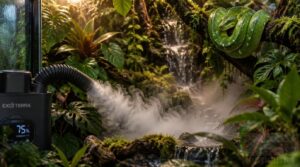
Foggers are small electronic devices that introduce fine water droplets into a reptile habitat, raising the moisture level in both the air and across the substrate. Unlike a spray bottle or a basic drip system, they operate automatically on a set schedule, making consistent humidity management far easier to maintain day to day.
For snakes with stricter humidity requirements, understanding whether your snake actually needs a fogger can help you decide if this level of automation is worth it for your setup.
Most foggers sit outside the enclosure and push cool mist through a flexible tube into the interior. They’re compact, relatively quiet, and built for ongoing use across a wide range of enclosure sizes.
Not every reptile keeper needs one. But for species that require sustained high humidity, particularly tropical arboreal reptiles and certain amphibians, a fogger can be the most reliable tool for meeting those environmental demands.
How Does a Reptile Fogger Work?
Most units you’ll find today are ultrasonic foggers. They use a small metal disc that vibrates at high frequency, breaking water drawn from an internal water reservoir into microdroplets usually 1 to 5 micrometers across. That mist then travels through a flexible tube and into the enclosure, where it disperses into the air.
The size of those droplets is what sets foggers apart. They’re fine enough to remain suspended for several seconds before evaporating, which is what makes humidity regulation gradual and sustained rather than a quick surface soak.
A number of factors will affect your mist output:
- Water level in the reservoir
- Disc condition and mineral buildup
- Tube length and placement angle
- Enclosure ventilation and air exchange rate
How Does Fogging Affect Humidity and Temperature?
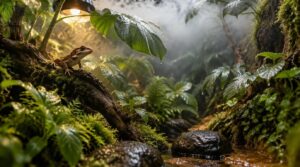
Once that mist is in the enclosure, it raises ambient relative humidity quickly, sometimes to near-saturation. After the fogger stops, RH usually falls as condensation and evaporation cycle through.
Tracking these fluctuations over time helps you fine-tune your misting schedule, and a solid overview of corn snake humidity and temperature balance can clarify what ranges to actually aim for.
Temperature effects are modest. Evaporative cooling creates a brief temperature dip near the fog outlet, but well-sealed enclosures see little shift.
Five factors shape how fogging affects your enclosure:
- Fog duration and interval drive cumulative humidity buildup.
- Upper zones tend to stay more humid than lower air.
- Ventilation balance controls how quickly RH drops between cycles.
- Porous substrates hold moisture longer, affecting hides and basking spots.
- Heat sources create microgradients, pairing warm zones with cooler, wetter areas.
Track both RH and temperature to understand what’s actually happening between fog events. A reptile hygrometer thermometer combo gives you real-time readings in one device, making it easy to catch humidity spikes or drops before they become a problem.
Pairing your logs with guidance on reptile habitat humidity control helps you spot patterns faster and make smarter adjustments before conditions affect your pet’s health.
Which Reptiles Benefit From Foggers?
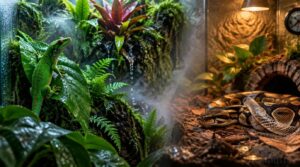
Not every reptile needs the same humidity profile, and that’s where knowing your animal’s natural habitat matters. Tropical species like day geckos (Phelsuma) and poison dart frogs thrive with sustained high humidity, often between 70 and 90%, and foggers help maintain that consistently throughout active periods.
Snakes benefit too. Without adequate moisture, sheds come off in patches rather than one clean piece, which can cause retained eye caps and skin constriction, common shedding problems worth preventing.
Nilotic snakes and other dryland species need only brief, periodic humidity boosts, particularly around feeding windows. Running a fogger continuously for these animals risks respiratory infections.
Match your fogging schedule to your species’ native climate, and you’ll see cleaner sheds and healthier behavior overall.
Fogger or Mister: What’s The Difference?
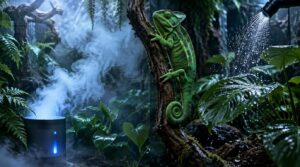
Setting up the right system starts with knowing what each tool actually does. A fogger disperses fine, airborne droplets (usually 5–20 microns) that stay suspended, raising ambient humidity across the enclosure quickly. A mister delivers larger droplets directly onto leaves, substrate, or enclosure walls, providing targeted surface wetting rather than saturating the air.
That distinction matters for your reptile habitat. Foggers suit species that need consistently elevated ambient humidity, but they’ll require adequate ventilation to prevent stagnant, oversaturated air and mold growth. Misters work better for spot-wetting specific areas without dramatically shifting the overall humidity level.
Regarding runtime and energy use, foggers often run longer duty cycles, while misters use localized bursts and usually draw considerably less power.
How Do You Use a Fogger Safely?
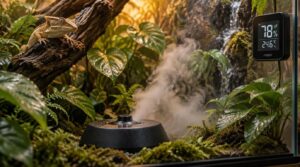
Using a fogger safely comes down to two key practices. You’ll need to think about how you set up the unit and control humidity levels, and how you keep the water and equipment clean.
Both areas matter equally if you want to avoid problems like mold, bacterial growth, or respiratory issues in your animals.
Setup and Humidity Control
Placement is everything. Put your fogger at the enclosure base, away from basking lamps and electrical connections. Build your schedule around three main targets:
- Cycle 4-8 times daily, running 10-60 minutes each.
- Hold baseline humidity at 60-70%, peaking to 80-95% when active.
- Allow nighttime dips down to 40-60%.
A reliable hygrometer confirms you’re hitting those targets daily.
Water Quality and Cleaning
Stagnant fogger water can develop bacterial colonies within 24 hours. If you’re not prioritizing water quality management, you’re risking your animal’s health. Adding a reptile water conditioner treatment to your routine helps neutralize harmful chlorine and detoxify heavy metals before they reach your animal.
Stagnant fogger water breeds bacterial colonies within 24 hours—neglect water quality and you risk your animal’s life
| Parameter | Target | Recommended Action |
|---|---|---|
| TDS | Below 200 mg/L | Use RO or filtered water |
| pH | 6.5–7.5 | Test weekly with strips |
| Residual chlorine | Below 0.2 mg/L | Age tap or dechlorinate |
| Cleaning cycle | Every 7 days | Scrub, rinse, and air-dry |
| Water change | Every 24 hours | Discard and refill daily |
Avoid distilled water alone; it depletes trace minerals, and you’ll notice mineral buildup faster than expected. RO water’s the better choice. Factor your enclosure design into drainage planning, and don’t skip filter replacement just because output seems fine.
Frequently Asked Questions (FAQs)
How does a reptile fogger work?
It looks almost too simple to matter much. Ultrasonic foggers use a high-frequency transducer to vibrate water into extremely fine microdroplets that rise as mist, rapidly spiking your enclosure’s relative humidity without warming the air.
Which is better for chameleons, a fogger or a mister?
For chameleons, a misting system generally wins. It delivers humidity quickly and mimics rainforest rain bursts more naturally. Ultrasonic foggers work best as a supplement at night, maintaining steady background humidity without saturating the enclosure.
What are the disadvantages of fogging?
Foggers risk oversaturation and condensation on the glass, which fuels mold or mildew growth in poorly ventilated enclosures. Mineral buildup also clogs nozzles, and bacterial growth in dirty reservoirs can harm your animal’s respiratory health.
How long does Repti Fogger last?
Most units last 6 to 12 months with regular use. Your maintenance habits matter, though. Monthly descaling and using distilled water can extend that lifespan by up to 40%, keeping your mist output consistent longer.
Do reptile foggers make noise during operation?
Ironically, most reptile foggers are among the quietest devices you’ll run near an enclosure. Ultrasonic foggers usually hum at around 40 dB. Loose mounts or vibrating panels add far more noise than the unit itself.
Can foggers damage live plants in bioactive enclosures?
Yes, live plants can suffer. Mineral-laden or contaminated water leaves deposits on foliage, blocks photosynthesis, and invites fungal growth. In bioactive vivariums, use distilled water and carefully limit your fog cycles to keep plants healthy.
How long does a reptile fogger typically last?
Like most tools, foggers reward the care you give them. With regular maintenance, most consumer models last 6 to 12 months. Hard water, high enclosure humidity, and constant operation can all cut that timeline short.
Can fogger moisture affect substrate composition over time?
Does your fogger run daily? Over time, substrate moisture accumulates steadily, encouraging mineral deposition and bacterial biofilm growth. Waterlogged substrate also loses its porosity and shifts in chemical composition, particularly when you’re using hard water.
Are foggers safe to use near UVB lighting?
Water and electricity don’t mix well.
Keep foggers at least 15-20 cm from your UVB fixtures to prevent condensation, mineral buildup, and electrical hazards. Adequate ventilation also helps you maintain safe, consistent humidity control overall.
Conclusion
A keeper running a fogger inside a bioactive Amazon basin setup often makes more progress solving humidity swings by cleaning the transducer weekly than by buying a second unit. That’s the lesson how foggers work in reptile habitats teaches once you understand the mechanics.
Consistent, clean moisture delivery keeps respiratory infections low and sheds clean. Respect airflow, monitor with a reliable hygrometer, and use distilled water. The disc is small, but the consequences of neglecting it aren’t.