This site is supported by our readers. We may earn a commission, at no cost to you, if you purchase through links.
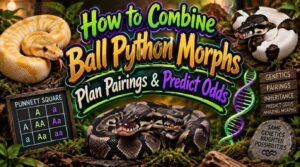
Pairing two ball pythons without a genetic plan doesn’t make you a breeder; it makes you a gambler. The difference between a clutch that sells out and one that leaves you holding seventeen near-identical normals often comes down to decisions made weeks before the animals ever meet.
Knowing how to combine ball python morphs means reading inheritance patterns, catching incompatible pairings before they cost you animals, and running the math on offspring odds with nothing fancier than a Punnett square. This guide walks you through every step, from locking in a goal to logging your last hatchling.
Table Of Contents
- Key Takeaways
- Set a Goal for Your Ball Python Combo
- Identify Each Parent’s Morph Genetics
- Verify Parent Morphs and Het Claims
- Choose Pairings That Avoid Harmful Combos
- Calculate Your Offspring’s Morph Odds
- Record Hatchlings and Plan Future Pairings
- Frequently Asked Questions (FAQs)
- What’s the rarest ball python morph?
- How many morphs can a ball python have?
- What is a holy grail ball python?
- What ball python morphs to avoid?
- How long does a typical combo project take?
- Should I start with visual morphs or hets?
- How do I price and sell combo hatchlings?
- How many eggs will my ball python lay?
- Conclusion
Key Takeaways
- Before pairing any animals, define a specific target phenotype and understand each parent’s inheritance type — dominant, incomplete dominant, or recessive — because that knowledge drives every breeding decision and offspring prediction you’ll make.
- Treat documentation as non-negotiable: a "possible het" and a "proven het" are not the same thing, and buying or breeding on unverified claims is how projects fail before they start.
- Certain pairings — Spider × Spider, Champagne × Champagne, and matched recessive-disorder carriers — produce offspring with serious welfare outcomes, so ruling these out before breeding season is an ethical and practical requirement, not an afterthought.
- Recording every hatchling’s phenotype, parentage, and unconfirmed het status immediately after a clutch hatches turns raw outcome data into a compounding reference that makes each future pairing smarter than the last.
Set a Goal for Your Ball Python Combo
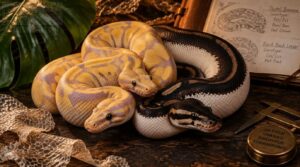
Define your target phenotype before you buy a single animal. Knowing what you’re breeding toward, whether a pastel lesser banana or a triple-gene recessive project, shapes every purchasing decision and generational timeline you’ll commit to.
Mapping out your project goals early also means researching which morphs carry genetic health risks — a ball python breeding morph guide can help you weigh visual payoff against the welfare trade-offs of certain combinations.
Morph combination goals fall into two categories: market-driven and mastery-driven. Market projects prioritize combos with broad visual appeal and proven buyer demand. Mastery projects push toward something novel, accepting multi-generational timelines and uncertain offspring prediction odds. Be honest about which one you’re doing, because that distinction drives your budget.
Start your goal setting by naming at least two visually distinct traits for your target combo. That specificity lets you build out accurate genetic notation and run meaningful Punnett square projections before committing to any pair.
Identify Each Parent’s Morph Genetics
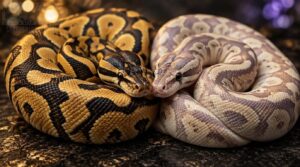
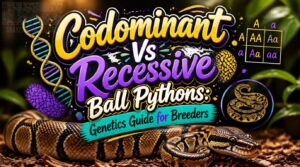
Before you plan any pairing, you need to know exactly what genes each parent carries and how those genes behave. Ball python morphs fall into three distinct inheritance categories, and each one changes your math and your expectations. Understanding which category applies to each animal you’re working with is the foundation everything else builds on.
Dominant Traits
Allele dominance is straightforward: one copy of the allele is all it takes for the trait to appear in your offspring. That makes dominant morphs predictable and easy to plan around.
For a deeper look at how dominant traits show up across different morphs, this rare snake morph identification guide walks through real examples that make inheritance patterns much easier to visualize.
Common dominant ball python traits:
- Spider
- Pinstripe
- Woma
- Champagne
- Hidden Gene Woma
With dominant inheritance, you’ll never produce invisible carriers, and your pairing outcomes stay consistent across every clutch.
Incomplete Dominant Traits and Supers
Unlike fully dominant traits, incomplete dominant traits work on a spectrum. The heterozygous carrier shows a visible but intermediate phenotype, while the homozygous super form produces something more extreme and visually distinct.
Pastels, Mojaves, and Lessers are common examples. When you pair two of the same morph, that allelic interaction yields roughly 25% supers, 50% single-gene animals, and 25% normals.
Understanding why some pairings—like Cinnamon × Cinnamon—are avoided despite following the same math is explained well in this guide to ball python co-dominant morph traits and breeding outcomes.
Recessive Traits and Het Carriers
Recessives behave differently. A heterozygous carrier looks wild-type, so your pairing decisions rely entirely on lineage records and offspring ratios, not appearance.
When both parents carry the same recessive, you’re looking at 25% visual odds per clutch. That’s where test breeding earns its place: pair suspected carriers and use the results to upgrade a percentage het to a proven het.
Verify Parent Morphs and Het Claims
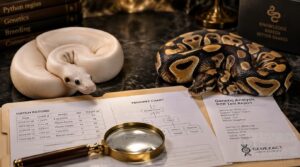
The single most costly mistake in this hobby is buying a "possible het" and treating it like a proven het (the two are not interchangeable). To verify parent morphs and het claims, you need documentation, not a seller’s word.
In ball python breeding, documentation separates a proven het from an expensive gamble
Reputable breeders provide:
- Hatch dates and source records tied to specific clutches
- Parent morph photos showing visual confirmation
- Genetic notation listing confirmed and percentage het status separately
- PCR test results where commercial assays currently exist
- Lineage records from the het-to-visual pairing that produced the animal
A percentage het without supporting paperwork is basically an educated guess at best. If breeding records don’t exist, plan for test breeding first to confirm carrier status before you build any combos around those unverified genetics.
Keeping a dedicated reptile breeding log journal makes building that paper trail far easier, so you’re never left relying on memory when lineage questions come up later.
Choose Pairings That Avoid Harmful Combos

Once you’ve confirmed each parent’s genetics, the next step is ruling out pairings that carry known welfare risks. Some morph combinations produce offspring with chronic wobble, permanent kinking, or a lethal super outcome that ends viability before a hatchling even feeds. These aren’t fringe concerns.
Three pairings that can devastate a clutch:
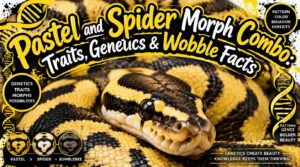
- Spider x Spider produces offspring with amplified wobble so severe that many hatchlings can’t feed reliably.
- Champagne x Champagne results in a lethal super, eliminating roughly 25% of eggs.
- Any two carriers of a recessive trait that causes locomotor or respiratory damage risk compounding welfare problems in homozygous offspring.
Genetic compatibility is your filter here. If a pairing’s best-case outcome still includes a welfare penalty, that’s your answer.
Calculate Your Offspring’s Morph Odds
A Punnett square resolves roughly 90% of morph breeding questions breeders encounter, yet most people skip it entirely. Don’t. A solid ball python genetics reference book can sharpen your Punnett square skills and make those pairing decisions far less guesswork.
When you pair a heterozygous recessive carrier to a visual, each offspring slot carries a 25% chance of producing a visual morph, 50% het, and 25% wild-type. For incomplete dominant traits, the math shifts: one copy gives you the base morph, two copies produce the homozygous form (the super), and allele interactions here follow a clean 1:2:1 ratio.
Work out every pairing on paper before breeding season. Two-morph combos are manageable mentally, but add a third gene and your offspring outcome probability compounds fast. A free calculator helps, but grasping the basic genetic inheritance lets you catch errors those tools miss.
Record Hatchlings and Plan Future Pairings
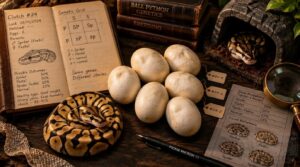
Say your clutch yields six hatchlings from a Pastel het Clown x Spider het Clown pairing, and three look like clean Spiders. You won’t know which carry the Clown het until you test-breed them. That’s exactly why you must record hatchlings immediately, assigning each a unique ID alongside phenotype notes, parental IDs, and any unconfirmed het statuses.
Clutch outcome data drives smarter decisions. Track trait expression per morph combo, update your probabilistic notes as hatchlings grow, and you’re building a living reference that sharpens every subsequent pairing and informs your broader program.
Plan future pairings using what each clutch teaches you about genetic inheritance. Log recommended mates, desired traits, and all known incompatibilities. Your records separate intentional breeding from guesswork.
Frequently Asked Questions (FAQs)
What’s the rarest ball python morph?
True rarity comes down to pedigree depth, not morph pricing alone. The BlueEyed Leucistic (BEL) and the rarest designer morphs with documented genetic diversity are genuinely among the hardest combos to verify and reliably source.
How many morphs can a ball python have?
Like layers of paint on a single canvas, a ball python can carry multiple morph traits at once. There’s no fixed biological ceiling; your skill, your pairings, and the market demand set the real limit.
What is a holy grail ball python?
It doesn’t exist yet. A holy grail ball python is a theoretical morph combo, the single most coveted combination of genetic traits and designer morphs your breeding projects ultimately aim to achieve in one animal.
What ball python morphs to avoid?
A cracked egg always warns you first. Avoid albino-based lines, Candy/Calico with codominant patterns, and sunset morphs in tight inbreeding pools. These risk wobble, neurological disorder, inner ear deformity, kinking, and spine deformity in hatchlings.
How long does a typical combo project take?
A single dominant trait project can wrap up in 6–18 weeks. Stack recessives across multiple genetic loci, and you’re realistically looking at 12–24 months, often much longer depending on het verification and clutch outcome timing.
Should I start with visual morphs or hets?
Start with visual morphs. You’ll confirm what you’re working with immediately, and clutch outcomes stay predictable. Introduce proven het carriers once you understand how your foundational pairings consistently behave across at least one full season.
How do I price and sell combo hatchlings?
Ironically, the hardest part isn’t producing the combo.
Price by trait rarity: common combos run $25 to $100, rare stacks reach $350 to $ Provide lineage certificates, use tracked shipping, and sell through breeder forums.
How many eggs will my ball python lay?
Planning a combo but forgetting clutch size? Typical. Your female will likely lay 4 to 10 eggs, averaging 6 to 8 if she’s a healthy adult with a strong feeding history and appropriate body weight.
Conclusion
Pairing a pastel to a hidden gene het clown, then watching a visual clown emerge from that clutch, is the moment the math clicks into something real.
Knowing how to combine ball python morphs turns that moment from luck into an expected result. Read the genetics, avoid the lethal pairings, run the odds, and keep records that outlast your memory. The animals in your care deserve that rigor, and your future pairings will prove it paid off.