This site is supported by our readers. We may earn a commission, at no cost to you, if you purchase through links.
A single Blue-Eyed Leucistic ball python can fetch over $1,000, yet the recipe behind it comes down to two genes stacked just right. That’s the strange magic of morph genetics: swap one allele, and you turn a common Mojave into something collectors chase for years.
Ball python breeding morphs reward breeders who understand inheritance patterns, not just luck. Master the difference between dominant, recessive, and incomplete-dominant traits, and you’ll predict clutch outcomes before the first egg drops.
What follows breaks down the genetics, the pairings, and the welfare tradeoffs that separate a calculated project from a guessing game.
Table Of Contents
- Key Takeaways
- Ball Python Morph Genetics Explained
- Common Ball Python Morphs and Gene Complexes
- How to Plan Ball Python Morph Pairings
- Breeding Conditions and Hatchling Care
- Ethical and Healthy Morph Breeding
- Frequently Asked Questions (FAQs)
- What are the best ball python morphs to breed?
- What is the rarest ball python morph?
- Which ball python morphs to avoid?
- What is a holy grail ball python?
- What are the startup costs for breeding ball pythons?
- How long until ball pythons reach breeding maturity?
- What temperature and humidity are needed for breeding?
- How do you incubate ball python eggs properly?
- Which morphs have the highest market value currently?
- How much does a ball python morph typically cost?
- Conclusion
Key Takeaways
- Understanding whether a gene is dominant, recessive, codominant, or incomplete-dominant lets you predict clutch outcomes with Punnett squares instead of just hoping for the best.
- Flashy morphs come with real health tradeoffs—Spider carries near-universal head wobble, Super Cinnamon causes craniofacial defects in about 25% of hatchlings, and Caramel Albino spinal kinking hits roughly 60%.
- Successful breeding depends as much on husbandry as genetics, meaning proper weight (700g+ for males, 1,500g+ for females), age (24-36 months), temperature cycling, and humidity control all have to line up before pairing.
- Responsible breeding means backing up genetics with proof—DNA testing, pedigree tracking, and transparent buyer disclosures protect both animal welfare and long-term genetic diversity.
Ball Python Morph Genetics Explained
Before you pick out a pastel or chase a bumblebee project, you need to know what’s actually happening at the genetic level. Every morph you’ll ever breed comes down to how alleles interact—dominant, recessive, or somewhere in between. Here’s the foundation you’ll build every pairing decision on.
For a deeper dive into how these traits stack together, this guide to albino ball python morphs breaks down the inheritance patterns behind each combination.
Dominant, Recessive, and Incomplete-Dominant Genes
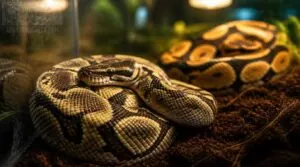
Why do two pastels never make a super pastel by accident? Allele expression patterns decide everything: Dominant needs one copy, Recessive needs two, Codominant blends partway, Incomplete-Dominant intensifies further.
Genotype vs Phenotype splits what’s inherited from what’s seen. Recessive carrier states hide silently until paired. This same logic underlies human genetics, where Mendelian inheritance principles predict a 3:1 phenotypic ratio in monohybrid crosses. Punnett squares predict:
- Dominant traits
- Recessive traits
- Codominant blends
- Incomplete-dominance results
- Carrier ratios
Heterozygous, Homozygous, and Visual Traits
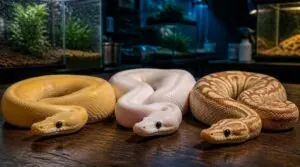
Zygosity decides how loudly a gene speaks. A heterozygous morph carries two different alleles, so expression depends on dominance. A homozygous morph carries identical alleles, locking in homozygous stability across generations.
This genotype phenotype link drives visual trait blending, where allele interaction produces intermediate patterns rather than one gene simply overpowering another in trait inheritance.
Mendelian Ratios and Breeding Odds
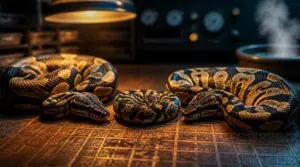
Ready to run the numbers? Pair two heterozygous Pastels and Mendelian inheritance patterns predict a 1:2:1 genotype probability ratio, roughly 25% homozygous, 50% heterozygous, 75% phenotype expression.
A genetic calculator sharpens phenotype prediction accuracy before pairing animals near breeding maturity, turning guesswork into odds you can actually plan a clutch around.
Wild-Type Versus Morph Phenotypes
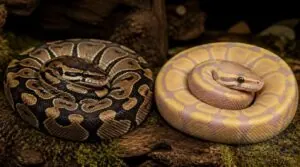
Before those odds mean anything, you need a phenotype baseline reference: wild-type. Natural browns, blacks, and tans, stable saddles, checkered bellies, generation after generation.
Morph phenotype expression shifts that baseline through pattern variation and color dilution or enhancement. Genetic variation drives it, but wild-type stays your control group, the animal every mutation gets measured against.
Polygenic Traits and Variable Expression
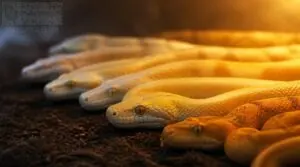
Several morphs defy clean Mendelian math because they’re polygenic inheritance patterns, not single-gene switches. Multigene designer morphs show continuous phenotypic variation from gene interaction effects and environmental influence. Consider:
- Pastel intensity varies by lineage
- Temperature affects pigment expression
- Heritability estimation predicts trends, not certainties
- Genetic compatibility shapes trait consistency across clutches
Breeding for uniformity? Expect variation anyway.
Even careful pairings of spider morphs can surprise breeders with unexpected patterns, which is why exploring 15 fascinating spider ball python facts helps set realistic expectations before you breed.
Common Ball Python Morphs and Gene Complexes
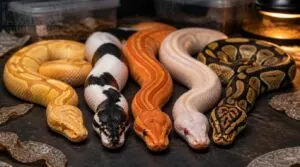
So what do all those Punnett squares actually build? Once you understand dominant, recessive, and co-dominant inheritance, the real fun starts with the morphs themselves. Here’s a rundown of the gene complexes every serious breeder should know cold.
Albino and Piebald Morphs
Two recessive genes, wildly different looks: Albino strips melanin for that red-eyed, ivory glow, while Piebald splashes unpigmented white patches wherever the gene lands. Both need two copies to show, so genetic testing and solid bloodline documentation matter before pairing.
Combine them thoughtfully with a genetic calculator, and you’re breeding lemon or phantom composites, always with ethical breeding practices guiding the project.
Pastel and Super Pastel
Where Albino hides and Piebald splashes, Pastel simply glows: it’s a codominant gene diluting pigment for creamy, sunlit tones. Stack two copies and you get Super Pastel, boosting brightness 10-15%.
- Softer contrast
- Brighter yellows
- Stable pattern
- Predictable phenotype expression
Run a genetic calculator before pairing. Breeding outcome probabilities favor confident, informed choices.
Banana, Coral Glow, and Combos
Yellow, cream, peach: Banana and Coral Glow turn the genetic lottery bright. Banana deepens with age and light; pairing it with dark morphs or Pastel sharpens contrast. Coral Glow stays softer, brightening under stable heat and feeding routines.
Combos boost both, but mind line health and genetic diversity. Track every pairing before chasing the next designer morph.
Spider and Bumblebee Morphs
Want that netlike, low-contrast look? Spider is a dominant gene, one copy shows instantly, but it carries a serious catch: near-universal head wobble, a neurological quirk tied to inner-ear development.
Since two spider copies (a “super”) don’t exist without lethal complications, breeding decisions hinge on ratios explained in this ball python super form genetics breakdown.
Pair Spider with Pastel and you get Bumblebee, sharper yellows, bolder blotches. Same wobble risk applies. Breed thoughtfully, screen for symptoms, and never prioritize looks over welfare.
Blue-Eyed Leucistic Gene Complex
A snow-white body with piercing blue eyes, that’s the payoff breeders chase for years.
Blue-Eyed Leucistic needs two copies of the linked allele; carrier identification relies on pedigree tracking or shed-skin testing, since visual traits won’t show in heterozygotes.
Outcrossing dilutes intensity, so compound heterozygotes and careful allelic pairing matter more than luck ever will.
How to Plan Ball Python Morph Pairings

Randomly pairing morphs is how you end up with surprises you didn’t budget for—literally. Smart pairings start with a plan, not a hunch, whether you’re chasing a specific visual or building toward a genetic combo years down the line. Here’s what that planning actually looks like in practice.
Setting Clear Breeding Goals
Before you pair a single snake, ask yourself: what’s the endgame? Define breeding objectives with exact phenotypes, timelines, and seasonal review points. Align every pairing with welfare and genetic diversity, never sacrificing captive population health for a flashy combo. Weigh market viability too. A written plan, shared among all breeders involved, keeps selective breeding purposeful instead of accidental.
Recessive and Double-Recessive Pairings
A written plan means nothing if you can’t predict outcomes, and recessive genetics are where breeders test that skill. Recessive allele inheritance requires two copies for visual expression; carrier parents (heterozygous, no visible trait) hold 25% odds per clutch. Double-recessive pairings stack this math further.
Shed-skin genetic verification confirms hidden alleles before visual identification proves it hatchside, since a homozygous morph doesn’t always announce itself immediately.
Super Forms and Allelic Pairings
Ever wonder why some morphs look "extra"? That’s homozygous expression at work. Pair two identical alleles and you boost color, contrast, or pattern beyond the single-allele form. Super Pastel exemplifies this allelic pairing payoff.
But codominant genes don’t play the same game as dominant alleles or recessive traits, so know your allelic series before betting on a super form.
Multi-Gene Designer Morph Projects
Stacking genes takes real planning: know each trait’s inheritance (recessive, co-dominant, dominant) before combining, like Clown with Pastel for Pastel Clown, or three-plus genes for names like Banana Pastel Clown.
Phenotype expression varies even among siblings.
Track lineage carefully, since documentation protects proven het status and guides smarter, market-savvy morph combination decisions down the road.
Genetic Calculators and Punnett Squares
Want odds before you pair? A Punnett square lays parental alleles across top and side, four cells for a monohybrid cross, predicting genotype ratios like 1 AA, 2 Aa, 1 aa. Gamete formation follows simple rules (Aa yields A or a).
Calculators like the WOB Genetics Wizard auto-generate gametes, crunching dihybrid 9:3:3:1 ratios instantly.
Breeding Conditions and Hatchling Care
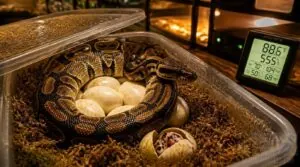
Nailing the genetics on paper means nothing if your conditions don’t back it up. Every successful clutch traces back to timing, weight, and temperature decisions made months before eggs ever appear. Here’s what actually needs to line up, from that first pairing to the moment hatchlings show their colors.
Breeding Age and Weight Targets
Rushing a pairing wastes a season. Puberty onset usually lands between 24 and 36 months, so track growth, not just birthdays. Males need 700+ grams; females want 1,500 grams and three or more ovulations behind them. Aim for a body condition score of 2.5-3.5. That’s genuine breeding maturity, not just a number on the scale.
Seasonal Cycling and Temperature Gradients
Once your pair hits breeding maturity, temperature cycling takes over. Drop nighttime lows to 75-80°F for 4-6 weeks, keep warm zones at 88-92°F.
- Basking: 90-92°F
- Mid zone: 87-89°F
- Cool side: 84-86°F
- Humidity: 50-60%
- Adjustments: gradual, 1-2 weeks
Monitor gradients with digital probes. Gradual shifts prevent stress, protect appetite, and prep ovulation readiness for breeding season.
Pairing, Ovulation, and Egg Laying
So how do you know it’s working? Introduce compatible morphs together for days to weeks; tail vibrating and coiling signal courtship.
Post-mating hormonal shifts trigger ovulation, visible as a mid-body swell. Clutch size runs 4-10 eggs, tied to female size and health.
Once you spot that telltale swell, it’s time to prep a proper nesting box, and this corn snake breeding and care guide walks through setting up the right conditions for gravid females.
She’ll linger with translucent eggs briefly afterward, coiling protectively before incubation duties begin.
Egg Incubation and Hatching
Sixty days of vigilance start now. Hold incubation temperature control at 88-90°F, humidity near 90%, turning eggs 2-3 times daily.
Candle around day 7-14 for a clear air cell.
- Calibrated hygrometers
- Elevated large end
- Gentle alternating turns
- Prompt cracked-egg removal
- Watch for shrink-wrapping
Hatchling emergence timing runs 45-60 days, tail-first unzipping signaling success.
Hatchling Care and Morph Identification
That tail-first unzip is just the beginning. Check eye caps and shed within days, watch for wrinkled skin or sunken eyes, and confirm feeding response by 48 hours.
House hatchlings in a 20-gallon long, warm side 88-92°F, cool side 78-80°F.
Identify morphs early: albino hatchlings show pale orange tones, piebald shows patchy white, spider shows thin fiber patterning.
Ethical and Healthy Morph Breeding
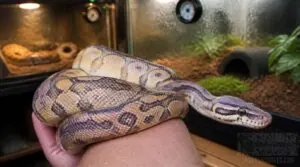
Every impressive morph on your wishlist comes with a genetic price tag, and pretending otherwise isn’t breeding—it’s gambling with an animal’s quality of life.
Every flashy morph carries a genetic price tag—ignore it, and you’re gambling with an animal’s quality of life
Chasing the flashiest combo without understanding the risk behind it’s how wobble, kinking, and craniofacial defects end up in someone’s collection.
Here’s what you need to know before you pair for looks alone.
Spider Wobble and Neurological Risk
Watched a Spider tilt sideways and paw at air after a meal? That’s genetic wobble syndrome, tied directly to the Spider allele itself.
Severity assessment means tracking tremors, righting ability, and feeding coordination over time, since no lab test confirms it.
Ethical breeders monitor symptoms closely, adjust husbandry for wobble snakes, and think hard before pairing two Spider carriers.
Risky Super Forms and Defects
Stacking two visual genes into a "super" form isn’t just cosmetic roulette. Super Cinnamon craniofacial defects appear in roughly 25% of hatchlings, while Caramel Albino spinal kinking hits closer to 60%. Add Spider morph head wobble or Blue Eye Leucistic complex traits to the mix, and you’re compounding neurological irregularities. Genetic health issues demand ethical breeding disclosure before any sale.
Genetic Testing for Recessive Alleles
Why gamble on visuals alone when DNA testing reveals what’s hiding underneath? Shed skins or cheek swabs enable carrier status detection for Albino and Lavender Albino, no surgery required.
Recessive allele panels screen known genetic markers before you commit a female’s cycle to a pairing.
Combine results with informed consent from your lab, and test-driven breeding planning replaces guesswork entirely.
Bloodline Records and Genetic Diversity
Test results mean nothing without lineage to anchor them. Pedigree tracking links each hatchling to a dam, sire, and stable lineage code, mapping inheritance across generations.
Monitor allele frequency and effective population size to catch genetic bottlenecks before they take hold. Diverse breeding pools, not just flashy morphs, protect long-term lineage health and prevent inbreeding.
Ethical Pairings and Buyer Transparency
Would you buy a car with no title? Ethics Approved Pairings, Signed Record Disclosure, and Buyer Orientation Sessions build trust before money changes hands.
Genetic diversity and welfare disclosures matter as much as morph names. Postpurchase Support Access and Welfare Audit Publishing keep breeders accountable long after the sale, proving buyer transparency isn’t just a policy, it’s a relationship.
Frequently Asked Questions (FAQs)
What are the best ball python morphs to breed?
Best in show doesn’t mean best in genes. Prioritize health-focused breeding: Pastel, Banana, and simple recessive Albino pairs offer beginner-friendly, low-risk outcomes over designer combos carrying documented craniofacial or spinal defects.
What is the rarest ball python morph?
No single champion holds the crown. Rarity shifts with lavender pied combos and complex recessives, verified through pedigree records, not flashy claims, since inconsistent registries and private bloodlines make true scarcity hard to confirm reliably.
Which ball python morphs to avoid?
Steer clear of pure super spider and heavy multi-gene combos. Neurological defect risks, severe wobble, and rare allele pairings raise health concerns fast.
Ethical breeders prioritize transparency and genetic diversity over chasing unproven, unstable visual traits.
What is a holy grail ball python?
Picture the unicorn of the reptile world: a holy grail is that once-in-a-lifetime morph, like Blue-Eyed Leucistic or a perfect Pastel Banana Coral Glow combo, prized for genetic rarity, visual superiority, and serious collector prestige.
What are the startup costs for breeding ball pythons?
Budget $260-$780 for enclosures, heating, and supplies, plus $50-$300 per snake. Add $80-$260 for incubation gear and $100-$300 yearly for vet care. Total startup: roughly $700-$1,900 for a modest pair.
How long until ball pythons reach breeding maturity?
Patience pays off here. Males hit breeding readiness near 16-18 months at 700g, but females need 27-31 months and 1,500 grams. Weight, not just age, determines true maturity.
What temperature and humidity are needed for breeding?
Dial in a thermal gradient of 88-92°F warm side, 78-80°F cool, with humidity near 60-70%. Ovulating females need slightly higher moisture, so bump toward 70% until eggs arrive.
How do you incubate ball python eggs properly?
Hold 88-92°F with humidity at 80-99%, using perlite or vermiculite substrate. Mark egg orientation, avoid rotating, and candle at two to three weeks to confirm viability without disturbing the clutch.
Which morphs have the highest market value currently?
Money grows scales here: the Blue Eye Leucistic complex tops charts at $8,000-$15,000, with high-white Piebald and multi-gene designer morphs close behind, since morph rarity and proven genetics drive investment potential and collector preferences skyward.
How much does a ball python morph typically cost?
Basic visuals run $50 to $150, while designer combos and rare genetics can top $1, Rarity, lineage, and clutch variability all shift market prices, so budget ranges depend heavily on which genes you’re chasing.
Conclusion
Only 25% of a clutch may show your target recessive trait, yet that single Punnett square result can fund an entire collection. That’s the pull of ball python breeding morphs: math meets money meets obsession.
Chase the stack, but never at the cost of the animal’s health. The sharpest breeders track genetics like a ledger and welfare like a promise.
Master both, and every hatch tub becomes proof of real skill, not luck.